

From Tiny Seeds to Fragrant Umbels and a Jar Full of Spice
A friendly guide to sowing, growing, harvesting and enjoying anise in Hungary.
|
A LITTLE PROMISE |
Come Into the Garden With Me…
Today, we're growing anise. And before we start, I want you to forget the little star-shaped spice you may have seen in Christmas drinks or Asian cooking. That is star anise, and it comes from a completely different plant.
Our plant is Pimpinella anisum: true anise, an annual herb with delicate leaves, pretty white summer flowers and wonderfully aromatic seeds. Those seeds are the part most of us are waiting for, because they carry that unmistakable sweet, warm, liquorice-like fragrance.
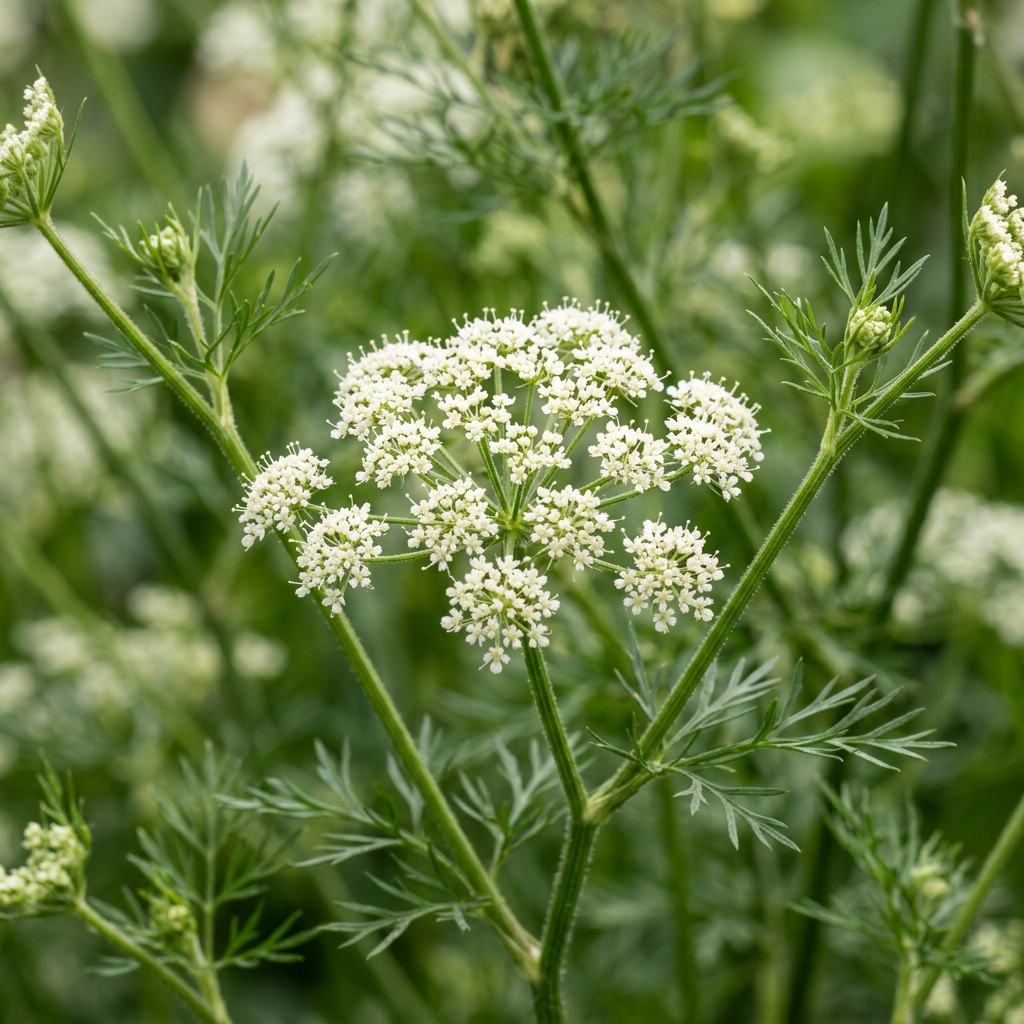
Anise has been used in European kitchens for centuries, but it is also a beautiful garden plant in its own right. It grows into a light, airy plant rather than a heavy clump. The leaves change shape as the plant matures, and later the stems carry little white flowers in umbrella-shaped clusters called umbels.
If you've grown dill, coriander, parsley or fennel, you'll notice a family resemblance. They're all members of the carrot family, Apiaceae. But anise has its own personality: smaller than fennel, sweeter in scent than dill, and grown mainly for its aromatic seeds.
Why grow it?
Because it gives us more than one kind of pleasure. First we grow it. Then we watch those delicate white flowerheads attract small beneficial insects. Then we wait for the seedheads to ripen. And finally we take a jar of our own anise seeds into the kitchen.
|
GOOD TO KNOW |
1. Meet Anise
Anise usually reaches around 40–60 cm in ordinary garden conditions, sometimes taller in rich soil. It prefers full sun and fertile, moist but well-drained soil. The plant dislikes having its roots disturbed, which is one reason direct sowing is such a good method for beginners.
2. Finding the Right Place
Let's walk around the garden before we open the packet. For anise, we're searching for warmth, sunshine and soil that drains well but doesn't become bone dry every afternoon.
Sunshine first
Choose one of your sunnier positions. A south- or west-facing part of the garden is often ideal. In Hungary, that can mean very strong summer sun, but anise is a warmth-loving herb and needs a reasonably long season to ripen seed well.
What it doesn't appreciate is a dark corner where stems stretch toward the light and seed ripening is delayed. If you're growing anise primarily for the kitchen, think of sunshine as part of the recipe.
What kind of soil?
Anise likes fertile, reasonably moisture-retentive soil, but it also wants drainage. That sounds contradictory until you picture good garden loam: it holds enough moisture for roots without remaining waterlogged after rain.
If your soil is very heavy clay, loosen it and improve the structure before sowing. If it's extremely sandy and dries almost immediately, adding mature compost can help it hold moisture. We aren't trying to create perfect laboratory soil—just a comfortable middle ground.
A Hungarian summer detail
A young anise seedling in May and a mature plant in July have different needs. The seedling has a small root system and can dry out surprisingly quickly. Later, established plants cope better, but a prolonged hot, dry spell on the Great Hungarian Plain can still stop good seed development if the plants remain thirsty for too long.
|
A COMMON MISTAKE |
Can I grow it in a pot?
Yes, but choose a reasonably deep container and sow directly into it. Anise forms a taproot and is happier when we don't keep moving it from one pot to another. A sunny balcony in Budapest can work beautifully—just remember that containers dry much faster than garden beds.
3. The Anise We Grow With You
At Holland Kertészet, our current anise is Anise – 3 g, Pimpinella anisum, from Horti Tops. It is exactly the sort of packet I like for this series because it gives us enough seed to make a proper little row, rather than treating anise as a rare curiosity.
The sowing advice on our packet is nicely suited to Hungarian gardening: sow outdoors from around the middle of April until the end of May, preferably in rows. That timing gives the soil a chance to warm while still leaving enough season ahead for flowering and seed ripening.
Why rows?
Rows aren't compulsory because the garden police won't arrive if you sow in a loose patch. But they make life easier. When seedlings appear, you know where the anise is supposed to be, so you are less likely to weed it out by mistake. Rows also make thinning, watering and later harvesting easier.
What are we growing it for?
Mostly for the aromatic seed. Once dry, anise seed can be used whole or ground. It is lovely in biscuits, cakes, sweet breads and herbal infusions. The Holland Kertészet listing even mentions a wonderfully Dutch use: grinding anise into warm milk. Simple, old-fashioned and comforting.
And while we are waiting for the seeds, we also get those decorative white flowers. They have the light, airy appearance that makes members of the carrot family so useful in an informal herb garden or mixed border.
|
GROW WITH US |
Anise is not star anise
This is worth repeating because the names are so similar. True anise is Pimpinella anisum, a soft annual herb grown from seed. Star anise is the woody Asian tree Illicium verum, whose dried star-shaped fruits are used as a spice. Similar flavour family, completely different plants.
4. Let’s Sow Some Anise
This is one of the easiest sowing chapters in the series because anise would rather we keep things simple.
When?
For Hungary, mid-April through May is a practical window for direct sowing, once the soil has begun to warm and severe frost is no longer the normal expectation. If spring is unusually cold and wet, wait a little. A seed packet can't see your weather forecast, but you can.
Prepare the row
Rake the soil into a fine surface and remove large stones and stubborn weeds. Make a shallow drill—a little straight groove in the soil. Sow the seeds thinly rather than pouring the whole packet into one spot, cover lightly with soil, then water gently.
The exact depth doesn't need to become a mathematical exercise. Anise seed is small, so a shallow covering is enough. Deep burial only makes the seedling work harder to reach daylight.
Keep the seedbed evenly moist
Until germination, don't allow the top layer to stay completely dry for long periods. At the same time, don't turn the row into mud. A watering can with a fine rose is much kinder than a powerful jet that rearranges all your careful sowing.
Then comes thinning
When seedlings are large enough to handle, thin them so the strongest plants have breathing room—roughly 15–20 cm apart is a useful home-garden guide. It can feel cruel to remove healthy little plants, but a crowded row gives you thin, competing stems and poorer airflow.
|
DON’T PANIC |
Should I start it indoors?
You can, especially if your growing season is short, but anise dislikes root disturbance. If you do start early, sow into individual modules or small pots and transplant very carefully while the plants are still young. For most Hungarian home gardens, direct sowing is beautifully straightforward.
5. From Seedling to Fragrant Plant
The first leaves may not look like the fine, feathery foliage you were expecting. That's normal. Anise changes its leaf shape as it grows. Lower leaves are broader; the upper leaves become increasingly divided and delicate.
Watering
During establishment, pay attention. A young row can dry quickly in warm spring wind. Water deeply enough to moisten the root zone, then allow the surface to begin drying rather than constantly sprinkling it.
By early summer, the plants should be more independent. Still, during a prolonged Hungarian heatwave, don't assume that an herb grown for seed needs to suffer. Severe drought at flowering and seed formation can reduce the harvest.
Feeding
If you prepared ordinary fertile garden soil with a modest amount of compost, anise usually doesn't need constant feeding. Excess nitrogen can encourage lots of leafy growth at the expense of strong seed production.
Weeding matters early
Once anise is tall, it can hold its own reasonably well. While seedlings are small, weeds can easily steal light, moisture and space. This is another reason rows are helpful: you can see exactly where your crop should be.
Does it need support?
Often no, but plants in rich soil or exposed windy locations can become taller and may appreciate a little discreet support as the seedheads become heavier. The goal isn't to cage the plant. We just don't want a summer storm laying all our ripening seedheads onto wet soil.
|
WHAT I WOULD DO |
And then the flowers arrive
By summer, small white flowers appear in rounded umbels. If you're accustomed to growing herbs only for leaves, don't cut these off. The flowers are exactly what we need because after flowering come the seeds we're waiting for.
6. Flowers, Insects and the Road to Seed
Anise flowers are not enormous or dramatic. They don't behave like dahlias demanding to be photographed. Their charm is lighter: many tiny white flowers held together in airy umbels above the foliage.
Look closely and you'll often find small insects visiting them. Plants in the Apiaceae family are famous for open flower structures that are accessible to many beneficial insects. So even though we're growing anise for ourselves, the flowers can make the herb garden feel much more alive.
Don't harvest too early
The temptation begins as soon as the green seedheads form. They smell promising, and we start wondering whether they're ready.
For dry spice seed, patience wins. Allow the seedheads to mature on the plant. The umbels gradually turn from green toward straw-brown, and the seeds themselves become firmer and aromatic.
Watch several heads, not just one
A whole plant rarely ripens every seedhead on the same afternoon. Lower or earlier flowerheads may be ready while later ones are still green. Harvesting in stages is completely normal.
|
GOOD TO KNOW |
The scent test
Gently crush one mature seed between your fingers. That sweet, unmistakable anise fragrance should be there. This little test is more satisfying than any calendar date because you're checking the harvest itself.
A note on companion planting
Anise is sometimes surrounded by confident companion-planting claims online. I prefer a simpler approach. Grow it where its own needs are met: sunshine, decent soil, airflow and enough water. Enjoy the insects that visit the flowers, but don't expect one row of anise to magically solve every pest problem elsewhere in the garden.
7. When Something Goes Wrong
Anise is not especially difficult, but every plant has its moments. Let's troubleshoot without assuming that one yellow leaf means disaster.
The seedlings never appeared
First ask about temperature and moisture. Was the soil still very cold? Did the seedbed dry completely? Was the seed buried deeply? Or did birds, mice or heavy rain interfere? Re-sowing a short row is often easier than conducting a crime investigation.
My plants are weak and stretched
Usually I look first at light and crowding. Too much shade or too many seedlings competing in one spot can give you thin stems. Thin crowded plants and make sure the bed receives plenty of sun.
Aphids
Aphids may gather on tender growth and flower stems. Check plants regularly, especially as flowerheads develop. Small populations can often be removed by hand or with a gentle jet of water. If treatment becomes necessary, use only a product currently authorised for the intended edible crop use in Hungary and follow the label exactly.
Slugs and snails
Young seedlings can be attractive to slugs and snails. The danger is greatest while plants are small. Check after damp evenings and protect seedlings with a method appropriate to your garden, especially where children, pets or wildlife are present.
Powdery or downy mildew
Anise can suffer from mildews. Crowded plants, poor airflow and stressed growth make problems more likely. Thin properly, water the soil rather than repeatedly soaking leaves, and remove badly affected material when necessary.
The plant flowered but seed didn’t ripen
This often comes down to timing and weather. Anise needs a warm enough, long enough season after flowering for seed to mature. Late sowing, persistent cool weather or early autumn rain can all work against us.
|
A COMMON MISTAKE |
8. Harvest Day
This is the moment that turns a pretty herb into something you can carry into the kitchen.
When are the seeds ready?
Watch for the flowerheads to become dry and brownish rather than fresh green. Choose a dry day if possible. Cut whole umbels with a little stem attached and place them upside down in a paper bag or spread them on a clean tray somewhere dry, airy and out of direct rain.
Why a paper bag?
Because as the seedheads finish drying, loose seeds can fall. A paper bag catches the harvest while still allowing some air movement. Plastic can trap moisture, which is exactly what we don't want around stored seed.
Cleaning the seed
Once everything is thoroughly dry, rub or shake the seedheads so the seeds fall free. Pick out larger pieces of stem and chaff. You don't need industrial perfection; you simply want clean, dry seed.
Storage
Store your anise in an airtight container somewhere cool, dark and dry. Label it with the year. Dried spices slowly lose aroma, so use your home-grown seed rather than keeping it forever because it feels too special.
|
TRY THIS |
Into the kitchen
Use anise seed in sweet breads, cakes, biscuits and tea. Add it thoughtfully—the flavour can be powerful. And if you'd like a little Dutch garden-to-kitchen moment, try finely ground anise stirred into warm milk, inspired by the traditional use mentioned on our Holland Kertészet product page.
Save some for next year?
Absolutely. Keep a portion of fully ripe, healthy seed separately for sowing. Store it cool and dry, clearly labelled. Next spring, you can begin again with seed you harvested yourself.
9. Your Anise Cheat Sheet
Anise in Hungary: from seed to spice jar
1. Choose true anise: Pimpinella anisum, not star anise.
2. Give it full sun and a warm position.
3. Choose fertile, moist but well-drained soil.
4. Direct sow from around mid-April through the end of May.
5. Sow in rows if you want easy weeding and thinning.
6. Cover the seeds lightly rather than burying them deeply.
7. Keep the seedbed evenly moist during germination.
8. Thin seedlings to roughly 15–20 cm apart.
9. Avoid unnecessary transplanting because anise dislikes root disturbance.
10. Water young plants during dry spells; established plants still appreciate moisture during flowering and seed filling.
11. Don’t overfeed with nitrogen.
12. Keep weeds under control while plants are small.
13. Allow the white umbels to flower—those flowers become your seed crop.
14. Watch for aphids, slugs, snails and mildew.
15. Let seedheads ripen toward brown on the plant.
16. Harvest on a dry day in stages as different heads mature.
17. Finish drying seedheads in a paper bag or on a tray.
18. Clean and store completely dry seed in an airtight jar.
19. Use the seeds in tea, baking, bread and other dishes.
20. Save a little seed for next year—and begin the circle again.
If You Remember Only Five Things…
1. Give anise sunshine
It needs warmth and a reasonably long season if we want fully ripe seed.
2. Sow it where it will grow
Anise dislikes root disturbance, so direct sowing is usually the simplest approach.
3. Don’t let seedlings dry out
Mature herbs may look tough, but small seedlings still need us.
4. Let the flowers finish their job
If we cut off the umbels, we cut off our future spice harvest.
5. Harvest dry, store dry
Moisture is the enemy of stored seed. Dry thoroughly before putting the harvest into a jar.
One Last Walk Around the Garden
We started with a packet of small brown seeds. We made a row, waited for the first green shoots, thinned them, watered them, and watched the foliage become lighter and more delicate as the plants grew.
Then came those quiet white umbrellas of flowers. Insects found them. Summer passed. The green seedheads slowly turned dry and brown, and one day we cut them and carried them inside.
Now there's a jar on the shelf that smells of anise—and you grew every seed in it yourself. Next April, you may look at the same sunny patch and know exactly what to do. That's the point of this series: not just to grow one plant once, but to understand it well enough that the next season feels familiar.
So make the tea. Bake something. Try the warm milk. Save a few seeds for spring. And when you're ready to grow something new…
Come into the garden with me.


