

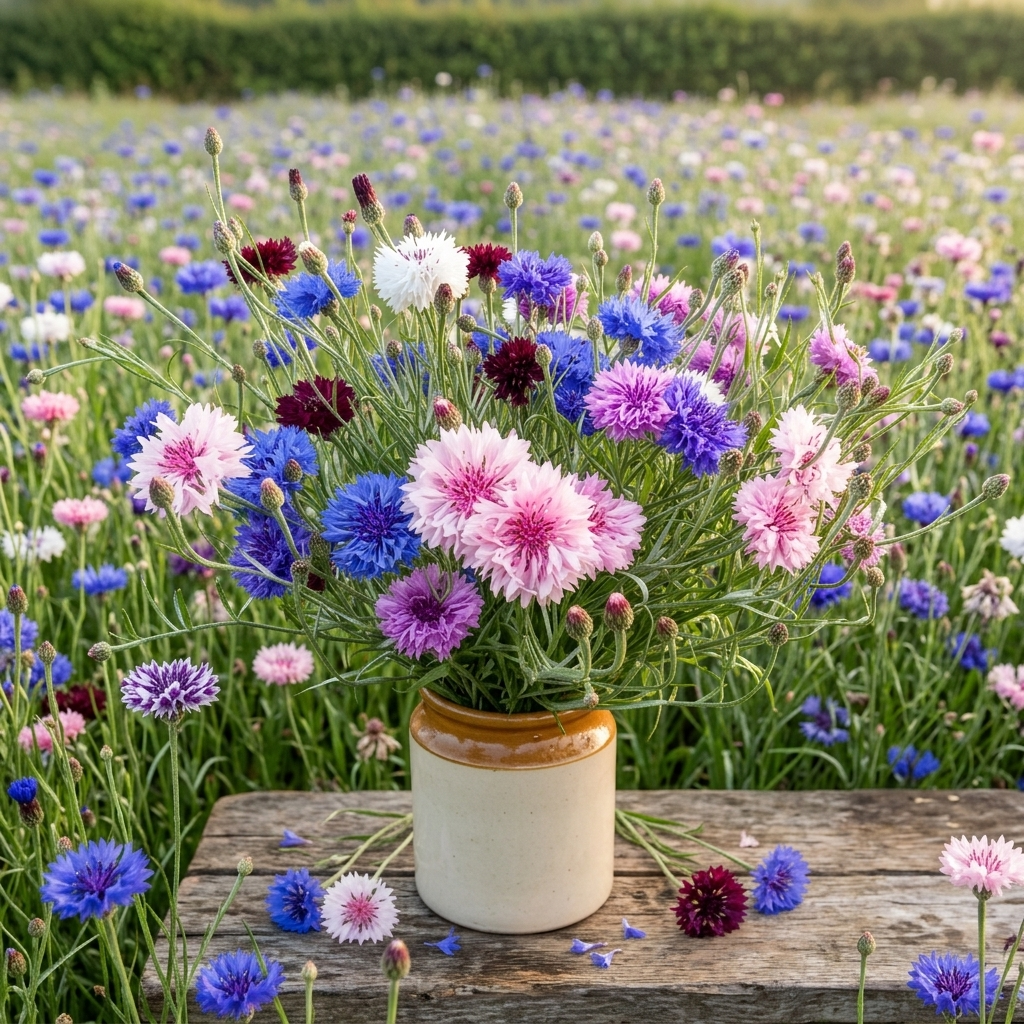
From a Scatter of Seeds to a Cottage-Garden Summer
A friendly guide to sowing, growing, cutting and enjoying cornflowers in Hungary.
Come Into the Garden With Me…
Today, we're growing cornflowers.
And this is one of those flowers that can make a garden feel instantly more relaxed. A few blue, pink or white cornflowers weaving through a border and suddenly everything looks a little more like a summer meadow and a little less like we planned every centimetre.
Cornflowers are wonderfully straightforward. They are annuals, they like sunshine, they prefer well-drained soil, and they are happiest when we sow them more or less where we want them to flower.
They are also excellent cut flowers. Their wiry stems and slightly wild-looking flowerheads slip beautifully between roses, poppies, yarrow, calendula and grasses. Bees and butterflies like them too, which means a patch of cornflowers tends to feel busy even when we're doing absolutely nothing.
For gardeners in Hungary, cornflowers are especially useful in spring and early summer. They enjoy the cooler beginning of the season and can cope with ordinary soil without demanding endless feeding or pampering.
We'll go from sowing those small seeds to thinning, watering, cutting, deadheading, saving seed and deciding whether to let them sow themselves for next year.
And because Holland Kertészet currently offers Pink Ball, White Ball and Polka Dot, we'll also look at how different colours can completely change the mood of the same easy flower.
Ready? Let's scatter a little cottage-garden magic.
1. Meet the Cornflower
The cornflower we are growing is Centaurea cyanus, sometimes called bachelor's button. It belongs to the daisy family, although at first glance the flowers look much more thistle-like than daisy-like.
The classic blue flower
The wild form is famous for an intense clear blue that has made cornflowers a traditional favourite in meadows and cottage gardens. But modern garden strains have expanded the palette into pink, white, purple, burgundy and mixed shades.
The flowers sit on slender stems above narrow grey-green leaves. The whole plant has a light, airy habit, which is one reason cornflowers combine so easily with other plants.
Annual, quick and uncomplicated
Cornflowers are annuals. They germinate, grow, flower, make seed and finish their life cycle in one season. That sounds short, but it also means they are quick enough to sow directly outdoors and still give a generous show.
|
GOOD TO KNOW Cornflowers often look better in loose groups than as single plants. Sow enough to make a drift, then thin the seedlings so each plant has room to branch and produce plenty of flowers. |
2. Finding the Right Place
Sunshine first
Cornflowers flower best in full sun. A bright open bed, cutting patch, vegetable-garden edge or sunny cottage border is ideal.
In Hungary, spring sunshine suits them beautifully. By the time the hardest summer heat arrives, the earliest sowings may already be giving you their best flowers.
Keep the soil simple
They are not demanding about fertility. In fact, cornflowers can thrive in quite ordinary soil as long as it drains well. Very rich soil can give you lots of leafy growth and tall plants that need more support.
Heavy clay is workable if it drains, but avoid low spots where water sits after rain. Cornflowers cope much better with a slightly dry spell than with roots sitting in soggy ground.
A little space helps
When seedlings are crowded, they stretch, compete and produce fewer side branches. Thin them so the remaining plants have roughly 20-30 cm of space, depending on the variety and how full you want the bed to look.
|
A COMMON MISTAKE Sowing a thick blue carpet and refusing to thin because every seedling feels precious. Keep the strongest plants and give them room. Fewer well-spaced cornflowers usually give you more usable stems than a crowded tangle. |
3. The Cornflowers We Grow With You
In the current Holland Kertészet range, Pink Ball, White Ball and Polka Dot give us three very different ways to use the same easy annual.
Pink Ball
Pink Ball is a tall Centaurea cyanus selection with soft pink flowers and stems around 90 cm. Holland Kertészet recommends sowing outdoors from late March to late May, either broadcast or in rows, then thinning later.
It is especially lovely in romantic planting with white cosmos, pale calendula, baby's breath and soft grasses. The stems also last well in the vase, so this is one I would happily grow in a cutting patch.
White Ball
White Ball gives you the same easy cornflower character in clean white. White flowers are incredibly useful because they calm down bright mixtures and make small bouquets feel lighter.
Try it with blue salvia, pink poppies, burgundy scabiosa or even just a handful of green foliage. It is one of those flowers that makes everything around it look a little more intentional.
Polka Dot
Polka Dot is a mixed cornflower selection, perfect if you like surprise. A packet can give you a range of colours rather than one uniform bed, which works beautifully in an informal cottage or meadow-style planting.
|
GROW WITH US Choose Pink Ball for soft romantic colour, White Ball for a clean neutral note, or Polka Dot if you enjoy a cheerful mixture. Better still, grow two or three together and let the garden do some of the arranging for you. |
4. Let's Sow
Direct sowing is easiest
Cornflowers are happiest when sown directly into the ground where they will flower. Their roots dislike unnecessary disturbance, and direct sowing saves us a whole stage of potting on.
In Hungary, spring sowing from March into May works well once the soil can be prepared. Pink Ball, for example, is listed for outdoor sowing from late March to late May.
Prepare the soil
Rake the bed into a fine, crumbly surface and remove obvious weeds. Make shallow drills around 1 cm deep, or scatter seed more informally if you want a meadow effect.
Water the soil first if it is very dry, sow thinly, then cover lightly. Keep the bed gently moist while germination begins.
Autumn sowing
Cornflowers can also be sown in autumn in suitable well-drained ground. Seedlings that establish before winter can flower early the following season. In colder or wetter Hungarian gardens, spring sowing is the safer beginner option.
|
DON'T PANIC The seedlings look small and grassy at first. That's normal. Keep the bed weeded so you don't accidentally pull out your cornflowers while removing everything else. |
5. From Seedling to Flowering Plant
Thin without guilt
Once the seedlings are large enough to handle, thin crowded patches. Keep the strongest plants and remove the extras carefully.
If you hate throwing healthy seedlings away, try transplanting a few while they are still very small. Some will cope. But don't build your whole plan around moving large cornflowers later; they prefer to stay put.
Watering young plants
Young seedlings need reliable moisture while their roots establish. Check the soil regularly, especially during a dry Hungarian spring.
Once the plants are larger, they become much more tolerant of ordinary dry spells. Water deeply when necessary rather than giving a tiny splash every evening.
Do they need feeding?
Usually, very little. In normal garden soil, cornflowers are happiest without heavy feeding. Too much nitrogen can make them tall, soft and floppy.
|
WHAT I WOULD DO Sow a short row every two or three weeks through spring instead of emptying the whole packet at once. Succession sowing spreads the flowering season and gives you fresher stems for cutting over a longer period. |
6. Growing Through a Hungarian Summer
When the heat arrives
Cornflowers enjoy sunshine, but extreme summer heat can shorten the flowering season, especially if the soil becomes completely dry. Early sowing lets the plants make the most of our milder spring and early-summer weather.
Water deeply, not constantly
Established plants generally cope with modest dryness. During a prolonged hot spell, give them a proper soak at soil level and then wait until they need water again.
Do they need support?
Tall cornflowers can lean after heavy rain or wind, particularly in rich soil. Growing them in groups helps the stems support one another. In an exposed cutting patch, a discreet grid or a few twiggy supports can keep stems upright without making the bed look engineered.
Deadheading
Removing faded flowers encourages the plants to keep producing new buds. If you are cutting regularly for the house, you are already doing much of the deadheading without realising it.
|
GOOD TO KNOW Cornflowers often give their best performance before the hottest part of a Hungarian summer. Think of them as a bridge between spring and high summer rather than expecting them to behave like zinnias in August heat. |
7. When Something Goes Wrong
The plants are tall and floppy
Too much shade, rich soil or very close spacing can all create weak growth. Give the plants more sun, avoid heavy feeding and thin crowded seedlings earlier next time.
White powder on the leaves
Powdery mildew can appear, particularly when plants are stressed or airflow is poor. Thin crowded growth, water the soil rather than constantly wetting leaves, and remove badly affected material when appropriate.
Leaves show rust or mildew
Cornflowers can occasionally suffer from rust or downy mildew. Good spacing and sensible watering reduce the risk. Avoid repeatedly growing a dense patch in exactly the same unhealthy conditions.
Hardly any flowers
Check sunlight first. Then ask whether the plants have been overfed. Cornflowers are not plants that reward luxury; they often flower best when life is reasonably simple.
|
A COMMON MISTAKE Trying to rescue a weak, overfed cornflower by giving it more fertiliser. If the plant is already lush and floppy, more food is unlikely to be the answer. |
8. Flowers, Bees and the Vase
For pollinators
Cornflowers are excellent for a wildlife-friendly garden. Their open flowerheads attract bees and butterflies, and a loose patch can stay busy from morning until evening in good weather.
For cutting
Cut stems when the flowers are freshly open and the centres still look clean and bright. Use sharp snips and place the stems into water promptly.
Pink Ball makes a soft bouquet with baby's breath and yarrow. White Ball works with almost anything. Polka Dot is perfect when you want a handful that already looks like a miniature cottage garden.
Keep cutting
Regular cutting encourages more stems. Don't wait for every flower to be fully open on the plant; harvest often and let new buds take their place.
|
TRY THIS Cut five cornflower stems and put them in the smallest vase you own. Their charm is in the looseness. They don't need a grand arrangement to look special. |
9. Seed, Self-Sowing and the End of the Season
Let a few flowers finish
If you want seed, stop deadheading a few healthy flowerheads and let them mature fully on the plant. The heads will dry and the seeds inside will harden.
Saving seed
Collect on a dry day, rub the dried heads gently to release the seeds and store them somewhere cool and dry in a labelled envelope.
Named colour strains can vary when saved, especially if several cornflower colours are flowering together. If you enjoy surprises, that is part of the fun. If you want a very predictable Pink Ball or White Ball bed, fresh seed is the safer route.
Self-sowing
Cornflowers can sow themselves where conditions suit them. In a relaxed border, that can be lovely. If you prefer control, remove most seedheads before they scatter and save only what you need.
|
WHAT I WOULD DO Leave a small corner to self-seed and collect some seed as backup. Next spring, you may get volunteer seedlings exactly where the garden decided they belonged. |
10. Your Cornflower Cheat Sheet
Choose Pink Ball, White Ball or Polka Dot from the Holland Kertészet range.
Sow directly outdoors from spring into May in a sunny, well-drained position.
Cover seed lightly - around 1 cm is enough.
Keep the seedbed gently moist while germination begins.
Thin seedlings so the strongest plants have room to branch.
Avoid heavy feeding; ordinary soil is usually enough.
Water young plants regularly, then become more relaxed once they are established.
Deadhead or cut flowers often to encourage more blooms.
Sow successionally for a longer flowering season.
Leave a few flowerheads to mature if you want seed or self-sowing.
If You Remember Only Five Things…
1. Sow them where they will flower
Cornflowers are happiest with direct sowing and minimal root disturbance.
2. Give them sunshine
Strong light gives sturdier stems and far more flowers.
3. Thin the seedlings
Crowding feels generous at sowing time but usually gives weaker plants later.
4. Keep cutting
Freshly cut stems are part of the joy, and regular harvesting encourages more flowers.
5. Let a few make seed
One dry flowerhead can become next year's little patch of summer.
One Last Walk Around the Garden
Do you remember where we started? With a packet of small seeds and a patch of bare soil that didn't look particularly romantic.
We scratched a few shallow lines into the earth, scattered the seeds and covered them lightly.
Then came the seedlings. We thinned them, even though it felt slightly cruel. We watered when spring turned dry and tried not to feed them simply because feeding something feels productive.
The stems rose. Buds appeared. And then the first cornflower opened.
Perhaps yours was the soft pink of Pink Ball. Perhaps White Ball gave you clean white flowers that somehow made every other colour in the garden look better. Or perhaps Polka Dot surprised you with a mixture you hadn't planned at all.
Soon there were bees in the patch. Then there were stems in a vase on the kitchen table.
By high summer, the earliest plants began to tire. We deadheaded some, cut some, and left a few flowers alone long enough to make seed.
That is what I like about cornflowers. They don't ask for much, but they give the garden a feeling that is difficult to manufacture: a little looseness, a little movement, a little sense that the flowers simply arrived because summer wanted them there.
Next year, perhaps a few seedlings will appear before you even open the packet.
And when they do, you'll know exactly what they are and exactly what to do with them.
When you're ready for the next plant…


