

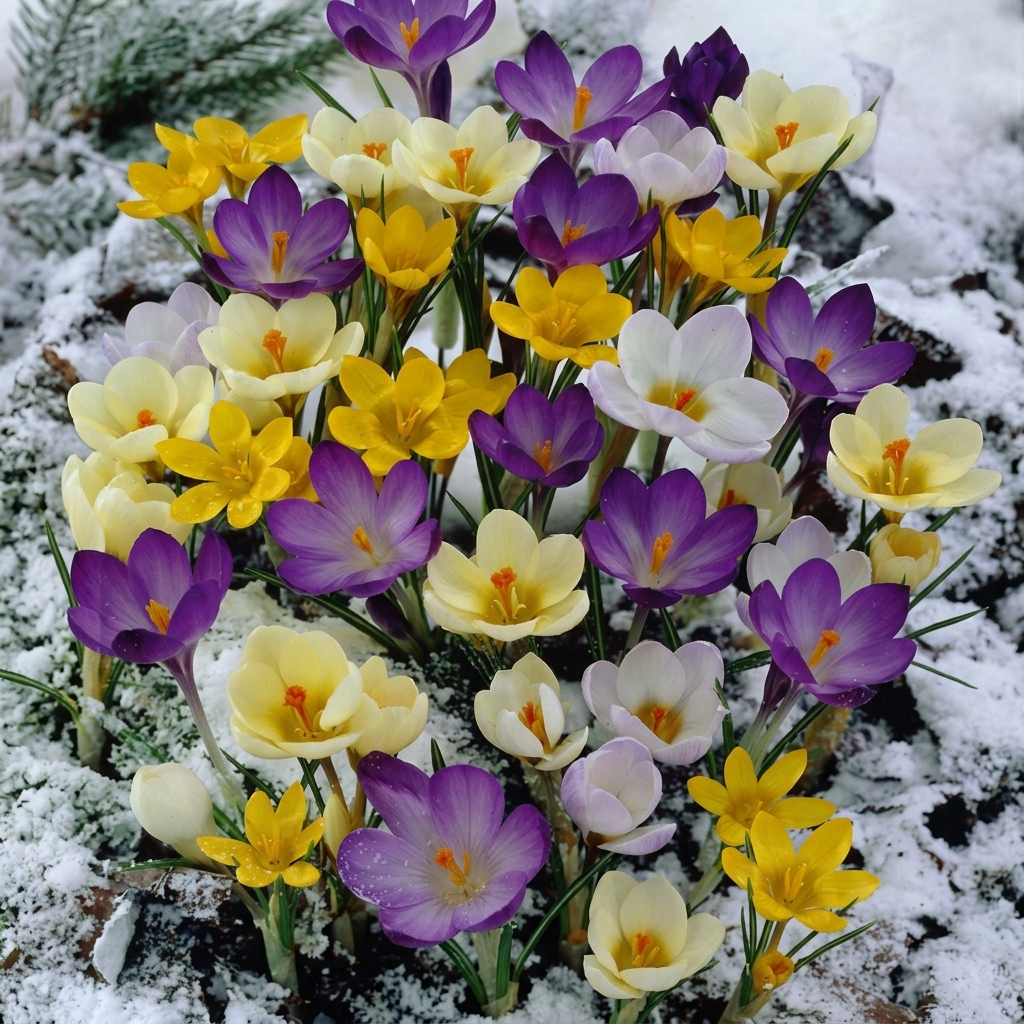
From Sleeping Corms to the First Colour of Spring
A friendly guide to planting, growing, naturalising and enjoying crocuses in Hungary.
Come Into the Garden With Me…
Today, we're growing crocuses - those small flowers that can make a February or March morning feel as though the whole garden has suddenly remembered spring.
Crocuses are among the easiest spring flowers to grow. We do not start with seed this time. We begin with small, firm corms planted in autumn, then let winter do most of the work for us.
For gardeners in Hungary, that is a lovely bargain. Plant them before winter, give them drainage and a little patience, and they can return year after year, often multiplying into larger clumps.
We'll learn what a crocus really is, when and how deep to plant it, how to use it in borders, lawns and pots, what to do when the flowers finish, why leaves must be left alone, and what can go wrong.
We'll also look at colour and the main crocus groups, including the Botanical Mix currently offered by Holland Kertészet.
Ready? Put on a jumper. This part of the garden begins in autumn.
1. Meet the Crocus
Crocus is a genus of small perennial plants in the iris family. Most garden crocuses grow from a corm - a swollen underground stem - rather than a true bulb.
A corm, not quite a bulb
Gardeners usually call crocuses 'bulbs', and nobody needs to correct the label every time. But botanically the little planting piece is a corm. Each season it stores energy, flowers, grows leaves and can produce replacement corms and small offsets.
Spring crocus and autumn crocus
Most crocuses sold for spring gardens are autumn-planted and flower from late winter into spring. There are also true Crocus species that flower in autumn, including saffron crocus, but their calendar is different. In this book our main journey is with the familiar spring-flowering crocus.
|
GOOD TO KNOW |
|
Crocus flowers can appear surprisingly early. In a mild Hungarian winter, the first noses may show while the garden still looks asleep. A cold spell may pause them, but established crocuses are built for early-season weather. |
2. Choose Their Place Before You Dig
Crocuses are small, so where you put them matters almost as much as how you plant them.
Sun in spring
Choose full sun or light partial shade. Under deciduous trees can work beautifully because the crocuses receive plenty of light before the tree canopy fills in.
Drainage matters
The soil should drain freely. Winter wet is a greater danger than winter cold. If your garden has heavy Hungarian clay, choose a raised area, improve the structure, or grow crocuses in a well-drained container rather than leaving corms in a waterlogged hollow.
Plant them where you will see them
A crocus is only 10-15 cm tall. Put a group near a path, entrance, terrace or window. Ten flowers scattered across a huge border can disappear; the same ten planted as a small cluster suddenly look intentional.
|
A COMMON MISTAKE |
|
Planting crocuses one by one in a straight line. They usually look much more natural in loose groups and drifts. Tip the corms gently onto the soil and plant roughly where they fall. |
3. Crocus Colours and Types
Crocuses may be small, but their colour range is wonderfully generous.
Botanical crocuses
These are often smaller, earlier and wonderfully suited to naturalising. Colours include white, creamy yellow, golden yellow, lilac, violet and striped combinations. Their scale makes them excellent for rock gardens, lawns and the front of borders.
Large-flowered Dutch crocuses
These generally flower a little later and make bigger cups in white, purple, lavender and striped forms. They are useful when you want a stronger block of spring colour.
The Holland Kertészet Botanical Mix
The current Holland Kertészet bulb range includes Crocus - Botanical Mix. A mixture is perfect if you enjoy a more natural spring effect: rather than deciding every colour in advance, you plant the group and let the first flowering reveal the combination.
Try colour in drifts
Yellow crocus looks especially cheerful against dark soil. Purple and white feel cooler and calmer. A mixed planting gives the impression that spring arrived on its own.
|
GROW WITH US |
|
Crocus - Botanical Mix - 5/6 is part of the Holland Kertészet seasonal bulb range. For a convincing display, plant several corms together rather than expecting one tiny crocus to carry an entire border. |
4. Let’s Plant the Corms
This may be the easiest planting chapter in the whole series.
When to plant in Hungary
Plant spring-flowering crocus corms in autumn, ideally from September into November while the soil is workable and before it freezes hard. Autumn planting gives the corms their winter chilling and time to establish roots.
How deep?
For ordinary garden planting, about 7-10 cm deep is a useful target, with roughly 5-8 cm between corms. In very light soil you can plant toward the deeper end; in heavy soil, excellent drainage matters more than chasing an exact centimetre.
Which way is up?
The pointed end goes upward and the flatter root end downward. If one is difficult to read, place it on its side rather than spending ten minutes interrogating a crocus corm.
Water once, then let autumn help
After planting, water if the soil is dry so it settles around the corms. After that, normal autumn and winter weather usually provides what garden-grown crocuses need.
|
DON’T PANIC |
|
You will not see much happening after autumn planting. That is exactly right. The important work is underground. Roots establish while the garden above them becomes quiet. |
5. Crocuses in Lawns, Borders and Pots
One packet of crocuses can behave very differently depending on where we plant it.
In a border
Plant in groups at the front of beds, between deciduous perennials, or around later bulbs. By the time summer plants need the space, crocus foliage is already fading.
In a lawn
Crocuses can naturalise beautifully through grass. Scatter corms for an irregular effect and plant them where they land. The important rule comes later: do not mow the leaves off immediately after flowering. The foliage needs time to feed next year’s corm.
In pots
Use a container with drainage holes and free-draining compost. Crocuses look best planted generously. They can also sit above or around larger spring bulbs in a layered container, filling the surface with early colour.
How many?
For a strong carpet, Holland Kertészet recommends roughly 70-100 crocus corms per square metre. In a mixed border you can use fewer, but always think in groups rather than isolated dots.
|
WHAT I WOULD DO |
|
Put one pot close to the door. Crocuses flower when we are not yet spending hours outside, so bring some of that early colour to a place you pass every day. |
6. Spring Care: Mostly, Leave Them Alone
The great charm of crocuses is that they do not ask for much once planted.
Watering
In open ground, spring rain is often enough. Water only if conditions are unusually dry during active growth. Containers dry faster, so check them rather than assuming winter means wet compost.
Feeding
Crocuses in reasonable garden soil need little fuss. If you feed spring bulbs, choose a bulb or balanced feed rather than a nitrogen-heavy fertiliser that encourages leaves at the expense of flowers.
Do not tidy too early
After flowering, the leaves remain green for a reason. They are collecting energy and returning it to the corm for next year. Leave the foliage until it has yellowed and dies back naturally.
Deadheading?
You do not need to deadhead crocuses obsessively. In a naturalised planting, simply let them complete their cycle. The important aftercare is protecting the leaves.
|
GOOD TO KNOW |
|
The flowers are the part we notice, but the leaves are doing next year’s work. If you remember only one after-flowering rule, remember this: green crocus leaves stay. |
7. When Something Goes Wrong
Crocuses are forgiving, but a few problems can turn a spring carpet into a puzzle.
Nothing came up
First ask whether the corms rotted in wet soil or were eaten or moved by rodents. Poor-quality or badly dried corms can also fail. Dig carefully in one small area rather than disturbing the whole planting.
Leaves but few flowers
The clump may be overcrowded, the leaves may have been removed too early in previous years, or the site may have become too shady. Lift and divide congested clumps after the foliage dies back.
Flowers collapse quickly
Crocus flowers are delicate. Heavy rain, wind and sudden warmth can shorten the display. That does not mean the corm is unhealthy.
Corms are dug up
Mice and other rodents may investigate freshly planted corms. In problem areas, physical protection such as wire mesh laid over a planting can help while the ground settles.
|
DON’T PANIC |
|
A crocus flower may last only a short time, but a clump flowers in succession. Judge the planting over the whole spring display, not by one flower after a rainstorm. |
8. The Secret Is Naturalising
The first spring is lovely. The real magic begins when a good planting starts to settle in.
Let the clump build
Happy crocuses can form offsets and gradually become larger groups. Leave them undisturbed while they flower well.
When to divide
If flowering declines because a clump has become crowded, wait until the foliage has yellowed. Lift the corms, separate healthy offsets and replant them with fresh spacing.
Growing beneath deciduous plants
Crocuses combine beautifully with snowdrops, early daffodils, hellebores and other early spring plants. Their foliage disappears before the border becomes crowded later in the year.
A lawn that changes with the season
Naturalised crocuses can turn an ordinary patch of grass into a spring event. Just accept that the first mowing must wait until the crocus foliage has finished feeding the corms.
|
TRY THIS |
|
Plant several small groups rather than one enormous block: one near the gate, one beneath a deciduous shrub and one in the lawn. Next spring, notice which place flowers longest and multiplies best. Your garden will tell you where crocuses are happiest. |
9. After Flowering and Through Summer
By late spring, our crocuses begin disappearing. This is not the end; it is dormancy.
Let foliage yellow
Do not tie, braid or cut green leaves. Wait until they turn yellow and pull away easily.
Summer dormancy
Once dormant, established crocuses generally prefer not to sit in permanently wet soil. A well-drained border can simply be left alone.
Do I need to lift them?
Usually no. If the soil drains well and the crocuses flower freely, leave them in place for years. Lift only if you need to divide them, move them, or rescue them from a site that stays too wet.
Mark the place
When the foliage vanishes, it is remarkably easy to forget where a crocus clump lives. A small discreet marker can prevent an enthusiastic summer spade from discovering it the hard way.
|
A COMMON MISTAKE |
|
Digging up healthy crocuses every year because we think all flower bulbs must be stored. Crocuses are happiest when a suitable planting is allowed to establish and naturalise. |
10. Your Crocus Cheat Sheet
We've gone from a dry autumn corm to one of the first flowers of spring. Here's the whole journey in one place.
1. Plant spring-flowering crocuses in autumn.
2. Choose full sun or light partial shade.
3. Prioritise well-drained soil.
4. Plant roughly 7-10 cm deep.
5. Space about 5-8 cm apart, or plant more densely for a carpet.
6. Plant in groups and drifts for the best effect.
7. Water after planting if the soil is dry.
8. Let winter provide the chilling period.
9. Expect flowers from late winter into spring, depending on type and weather.
10. Water containers when needed; garden plants usually need little extra.
11. Avoid heavy nitrogen feeding.
12. Leave green foliage after flowering.
13. Delay mowing naturalised lawn crocuses until leaves yellow.
14. Watch for rodent damage in problem gardens.
15. Divide crowded clumps only after foliage dies back.
16. Leave happy crocuses undisturbed to naturalise.
If You Remember Only Five Things…
1. Autumn is planting time
The spring show begins months before we see a flower.
2. Drainage matters more than fuss
Cold is normal; sitting wet for long periods is the bigger problem.
3. Plant a group
Crocuses are tiny. Together they become a display.
4. Keep the leaves
Green foliage is feeding next year’s flowers.
5. Let them settle
If a clump is flowering well, leave it alone and let it multiply.
One Last Walk Around the Garden
Do you remember where we started? With a handful of small brown corms in autumn and a garden preparing for winter.
We planted them while the trees were losing their leaves. Then we did almost nothing. Winter arrived, the ground cooled, and all the important work happened where we could not see it.
Then one day, perhaps in a sunny corner near Budapest, beside a path in Győr, or in a pot by the kitchen door, a narrow green shoot appeared. Soon after came a cup of yellow, white, lilac or purple.
That is why crocuses feel so generous. They arrive before the garden is impressive. They do not wait for perfect weather or for us to have finished our spring plans. They simply announce that the season is changing.
And now you know how to help them do it again: plant in autumn, give them drainage, leave the leaves after flowering, divide only when crowded, and let a good clump become part of the garden.
Next year there may be more. A few years from now, the little group you planted may be the patch of spring colour you look for first.
So leave them to their work. Spring has started. And when you're ready for the next plant…
Come into the garden with me.


