

From Ten Tiny Seeds to a Lemon-Scented Summer Tree
A friendly guide to sowing, growing, pruning and overwintering Lemon Bush in Hungary.
Come Into the Garden With Me…
Today, we're growing something that does not look quite like anything else in this series.
It is not really a bedding flower. It is not a hardy Hungarian tree. And although you will often see the word eucalyptus on the packet, botanists now usually place it in the genus Corymbia.
Our plant is Lemon Scented Gum - 'Lemon Bush' - Corymbia citriodora, also widely known by its older name Eucalyptus citriodora. It comes from Australia and has long, elegant leaves with one very memorable trick: touch or gently rub the foliage and a fresh lemon-citronella fragrance rises immediately.
That scent is the reason many people fall for this plant. But I think the growth is just as exciting. From a few tiny seeds we can raise a fast-growing, upright plant that can reach around two metres in a season under good conditions. In Hungary we will normally grow it in a large pot, enjoy it outdoors through the warm months, and then decide in autumn whether to let frost end the season or attempt to overwinter it indoors.
The Holland Kertészet packet contains 10 seeds. That may sound like very little, but you do not need a forest. One well-grown Lemon Bush beside a sunny terrace can become a real feature plant.
There is also a little myth to clear up. Oil of lemon eucalyptus, which is refined from this species, is used in proven insect-repellent formulations. A living plant on the terrace is wonderfully fragrant, but it should not be treated as a substitute for a properly formulated mosquito repellent when protection really matters.
|
GOOD TO KNOW |
1. Meet Lemon Scented Gum
In its native climate, Corymbia citriodora can become a very large evergreen tree. Our Hungarian garden version is a completely different experience. Here, frost is the limiting factor, so we enjoy its juvenile foliage, fragrance and rapid growth in a pot or sheltered summer position.
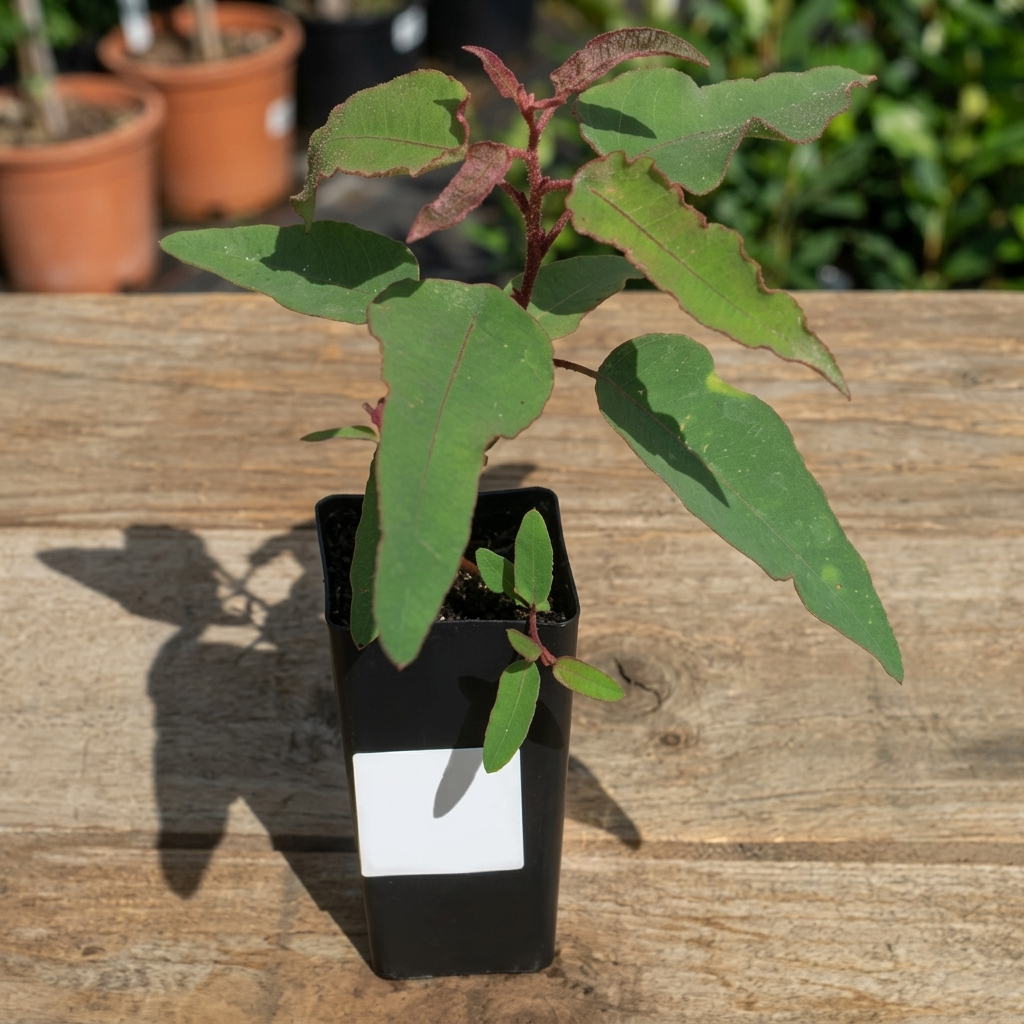
The young leaves are narrow to lance-shaped and grey-green to green. They have a clean, aromatic look that works beautifully with flowering plants. Unlike a plant grown only for one dramatic bloom, Lemon Bush earns its place with foliage every day of the season.
2. Finding the Right Place
Let's walk around the garden before we sow anything. Lemon Scented Gum wants light, warmth and drainage. In Hungary that usually means a sunny terrace, courtyard, balcony or sheltered place close to the house.
Sun and warmth
Give it plenty of light. Strong light encourages compact, sturdy growth and good leaf production. A plant kept too dark indoors becomes stretched and weak; outdoors in summer it should receive several hours of direct sun, although a newly hardened-off seedling must be introduced to strong sunshine gradually.
A south- or west-facing terrace can be excellent once the plant is established. Near Budapest, Pécs, Szeged or here in western Hungary, summer heat itself is rarely the problem. The challenge is keeping a container watered without turning the root zone into a swamp.
Why I prefer a pot
A pot gives us control. We can move the plant after a cold spring night, turn it for even growth, and bring it into shelter before autumn frost. Start small, then pot on as the roots fill the container. Do not place a tiny seedling straight into an enormous tub of constantly wet compost.
Choose a container with generous drainage holes. A heavy pot is useful later because a two-metre plant catches wind. If the container is tall and narrow, a summer storm may teach us a lesson we only need once.
|
A COMMON MISTAKE |
Soil and compost
Use a good-quality, free-draining potting mix. Adding a little coarse mineral material can help if your compost tends to stay wet. The aim is a root zone that holds enough moisture to support quick growth but also drains freely after watering.
If you experiment with planting it in the ground for summer, choose a warm sheltered bed and remember that you will have to lift it or take cuttings before frost if you want to keep that exact plant.
3. Let's Sow the Ten Seeds
Open the packet carefully. Ten seeds make us a little more attentive than a packet containing hundreds. I would sow them in individual small modules or in a tray where each seed can be found easily.
When can we sow?
The Holland Kertészet listing says the seeds can be germinated all year round at about 20°C. That is useful, but for an outdoor summer plant in Hungary I would normally start in late winter or spring, when increasing daylight will help the seedlings once they emerge.
If you sow in the darker months, give the seedlings the brightest possible position after germination. Warmth without enough light produces thin, leaning plants.
How to sow
Fill small pots or modules with fine seed compost and moisten it before sowing. Place the seeds on or very close to the surface and cover only very lightly. Keep the compost evenly moist and maintain a warm temperature around 20-25°C. Germination can be uneven, so do not throw the tray away simply because the first seedling has appeared and the others have not.
Some sources report germination taking several weeks. This is a plant where patience is more useful than constant poking at the compost.
|
DON'T PANIC |
After germination
As soon as seedlings appear, light becomes critical. Give them a bright position and good air movement. Water from below or very gently so the fine roots are not disturbed. When a seedling has several true leaves and is easy to handle, move it into its own small pot if it is not already growing separately.
Do not bury the stem deeply. Keep the plant at roughly the same level it was growing before and water it in gently.
4. From Seedling to a Small Tree
This is where Lemon Bush becomes fun. Once the roots are established and temperatures are warm, growth can accelerate quickly.
Potting on
Move the plant into a slightly larger pot when roots begin filling the current container. Repeat as necessary. Gradual potting-on makes watering much easier because there is less unused compost staying wet around a small root system.
Hardening off in Hungary
Do not take a tender seedling from a warm room and leave it in full May sunshine all day. Start with sheltered outdoor periods on mild days and gradually increase the time outside over one to two weeks.
Wait until frost danger has passed before leaving it outdoors permanently. In much of Hungary that means being cautious through April and early May. One cold night can damage a plant that has spent months growing beautifully indoors.
Do we pinch it?
That depends on the look you want. If you want one upright, tree-like stem, allow the leader to keep growing. If you prefer a fuller bush for the terrace, pinch or prune the growing tip once the plant is well established, which encourages side shoots.
This is one of the pleasures of container-grown Lemon Bush: you can shape it. It does not have to become the enormous tree it would eventually become in Australia.
|
WHAT I WOULD DO |
Support
A young stem can be flexible. In an exposed location, use a slim cane temporarily and keep the pot itself stable. Tie loosely; the stem should not be strangled as it thickens.
5. Summer: Water, Food and Fragrance
By June and July, your small seedling may be behaving more like a young tree. The rhythm becomes simple: light, water, occasional food, and regular observation.
Watering
Water thoroughly, then allow excess water to drain. Check again when the upper layer of compost begins to dry. During a hot Hungarian spell, a large leafy plant in a pot may need water frequently, especially if there is wind.
Never leave the pot permanently standing in a saucer full of water. Lemon Bush likes moisture while actively growing, but stagnant wet roots invite trouble.
Feeding
A container plant has a limited nutrient supply. During active growth, use a balanced liquid feed at a sensible rate. We are encouraging healthy foliage, not forcing weak, overfed growth. If the plant is making long, soft stems, ease back and check whether it also needs more light.
The lemon scent
Now comes the part everyone wants to try. Gently brush or rub a leaf between your fingers and smell. The aroma can be distinctly lemony, fresh and citronella-like. Put the plant somewhere you naturally pass - beside a terrace path or seating area - and you will enjoy it far more than if it is hidden at the back of the garden.
|
GOOD TO KNOW |
Can it flower?
In a container in Hungary, flowers are not the main event. This species is grown primarily for its foliage and scent, and young pruned plants may never flower. That is not failure. A beautifully shaped, fragrant two-metre plant is already doing exactly what we asked of it.
6. When Something Goes Wrong
Fast-growing plants are wonderfully expressive. When something is wrong, they often tell us quickly.
Leaves are yellowing
First check the compost. Is it constantly wet? Poor drainage and overwatering are common causes of yellowing. If the roots are healthy and the compost is draining well, consider feeding, light and whether the plant has simply outgrown its pot.
The plant is wilting
A large container specimen can wilt surprisingly fast in summer. Check the root ball rather than guessing. If it is dry, water thoroughly. If it is wet, do not add more water just because the leaves droop; investigate drainage and root health.
Long, weak, pale growth
Usually this means insufficient light, especially indoors. Move gradually to a brighter position. Do not suddenly place pale indoor foliage into fierce noon sun or you may exchange one problem for leaf scorch.
Brown leaf edges
Irregular watering, hot dry wind, root restriction or salt build-up from overfeeding can all contribute. Look at the whole growing situation rather than blaming one factor automatically.
Aphids, scale or spider mites
Indoor overwintered plants can attract sap-sucking pests. Check leaf undersides and stem joints regularly. Early detection is much easier than trying to rescue a heavily infested plant in February.
|
A COMMON MISTAKE |
Root rot
A sour-smelling, permanently wet root ball is a warning sign. Improve drainage, remove badly rotted roots if practical, and repot into fresh free-draining compost. Prevention is much easier: holes in the pot, no standing water, and watering only when the plant actually needs it.
7. Autumn Arrives - What Now?
This is the moment when Lemon Bush reminds us that it is Australian.
In Hungary, outdoor frost is the real limit. This is not a plant I would trust in the ground through winter. If you want to keep it, act before the first frost rather than after the foliage has been blackened.
Option 1: Treat it as an annual
There is nothing wrong with enjoying it for one magnificent summer. You grew a tree from seed, enjoyed months of fragrance, and learned how fast a warm-climate plant can grow. Compost the plant after frost and sow again next year.
Option 2: Overwinter the whole plant
Bring the pot into a bright, frost-free place before cold nights arrive. A cool conservatory, bright stairwell or greenhouse kept safely above freezing can work. Reduce watering because growth slows dramatically in lower winter light.
Before bringing it indoors, inspect carefully for pests. One aphid colony coming inside in October can become a surprisingly large family by Christmas.
Option 3: Prune to keep it manageable
If the plant has reached two metres and the only available winter space is a bright room, pruning may be unavoidable. Shorten long growth gradually and keep a balanced framework. It can reshoot when warmth and light return.
|
TRY THIS |
Winter watering
This is where many overwintering attempts fail. In cool, low-light conditions the plant uses far less water. Keep the root ball from becoming bone dry, but do not keep it constantly wet. The colder and darker the position, the more cautious the watering.
8. The Plant We Grow With You
At Holland Kertészet, our Lemon Scented Gum 'Lemon Bush' packet contains 10 seeds and is sold under Buzzy code C190. The packet is an invitation to grow something a little unexpected: not simply a flower, but a fragrant Australian tree adapted to life in a Hungarian pot.
The product recommends germinating all year at around 20°C, transplanting into pots, and lists a height of approximately 200 cm. That height is very realistic for a vigorous summer-grown container plant if you allow it to keep growing.
Where would I use it?
Beside a sunny terrace, where brushing the leaves releases the scent. In a large pot by the garden entrance. As a tall foliage accent behind summer bedding. On a bright balcony with enough space and a stable container. Or as a movable screen that gives height without a permanent construction.
What should we plant with it?
The grey-green foliage is a beautiful background for white, blue, purple and soft pink flowers. Try it with lavender, verbena, gaura, heliotrope or pale pelargoniums. Because the foliage has such a clean shape, it also works well beside more exuberant flowers such as dahlias and cosmos.
Can we use the leaves?
For this series, I recommend enjoying the plant as an ornamental and fragrant foliage plant. Essential oils are highly concentrated substances and should not be improvised for internal use. The safest garden pleasure here is very simple: grow the leaves, touch them, smell them, and enjoy the plant.
|
GROW WITH US |
9. A Year With Lemon Bush
Late winter or spring: sow warm at about 20°C. Spring: pot seedlings on and give them bright light. May: harden off and move outside after frost danger. June-August: water, feed lightly, shape and enjoy the fragrance. September-October: decide whether to keep the plant. Before frost: bring your chosen specimen indoors. Winter: bright, cool, frost-free, and much less water.
10. Your Lemon Scented Gum Cheat Sheet
• Botanical name: Corymbia citriodora (syn. Eucalyptus citriodora).
• Holland Kertészet product: Lemon Scented Gum 'Lemon Bush' - 10 Seeds, Buzzy C190.
• Germination: possible year-round at around 20°C; spring is especially convenient for a Hungarian summer plant.
• Light: bright light and plenty of sun after gradual hardening off.
• Soil: fertile enough for container growth but sharply draining.
• Water: regular during active summer growth; never leave the roots standing in water.
• Feeding: light, balanced feeding during strong container growth.
• Height: around 200 cm is possible in a season if allowed to grow.
• Pruning: optional; leave one leader for a small-tree shape or pinch for a bushier plant.
• Frost: not reliably winter-hardy outdoors in Hungary.
• Overwintering: bright, frost-free and cooler if possible; reduce watering.
• Main attraction: lemon-citronella scented foliage, especially noticeable when touched.
• Mosquito claim: enjoy the scent, but use a proven repellent product when personal insect protection is needed.
• Best use: large pots, terraces, balconies, entrances and summer foliage displays.
If You Remember Only Five Things…
1. Give it warmth and light. A warm seed tray and a bright summer position make all the difference.
2. Grow it in a pot in Hungary. That gives you control over watering, size and autumn frost.
3. Do not confuse drainage with drought. It likes regular summer water, but never stagnant wet roots.
4. Shape it to suit your space. One leader gives a little tree; pinching creates a leafy bush.
5. Bring it in before frost if you want to keep it. Winter survival is an indoor project, not an outdoor gamble.
One Last Walk Around the Garden
We began with ten tiny seeds and a name that sounded as though it belonged in an Australian forest. A few months later, we have a tall, fragrant plant beside the terrace, leaves moving in the warm Hungarian air and releasing lemon scent whenever we brush past.
And that, to me, is the magic of growing from seed. We do not need to own an Australian landscape. We can grow one little piece of it in a pot, learn what it wants, shape it to our garden, and decide in autumn whether this summer visitor deserves a place indoors for winter.
When you're ready for the next plant…


