

Klip Dagga - Rings of Orange in the Summer Garden
A friendly guide to sowing, growing and enjoying Leonotis nepetifolia in Hungary.
Come Into the Garden With Me…
Today, we're growing a flower that looks as though it has wandered into our garden from somewhere much warmer and more exotic.
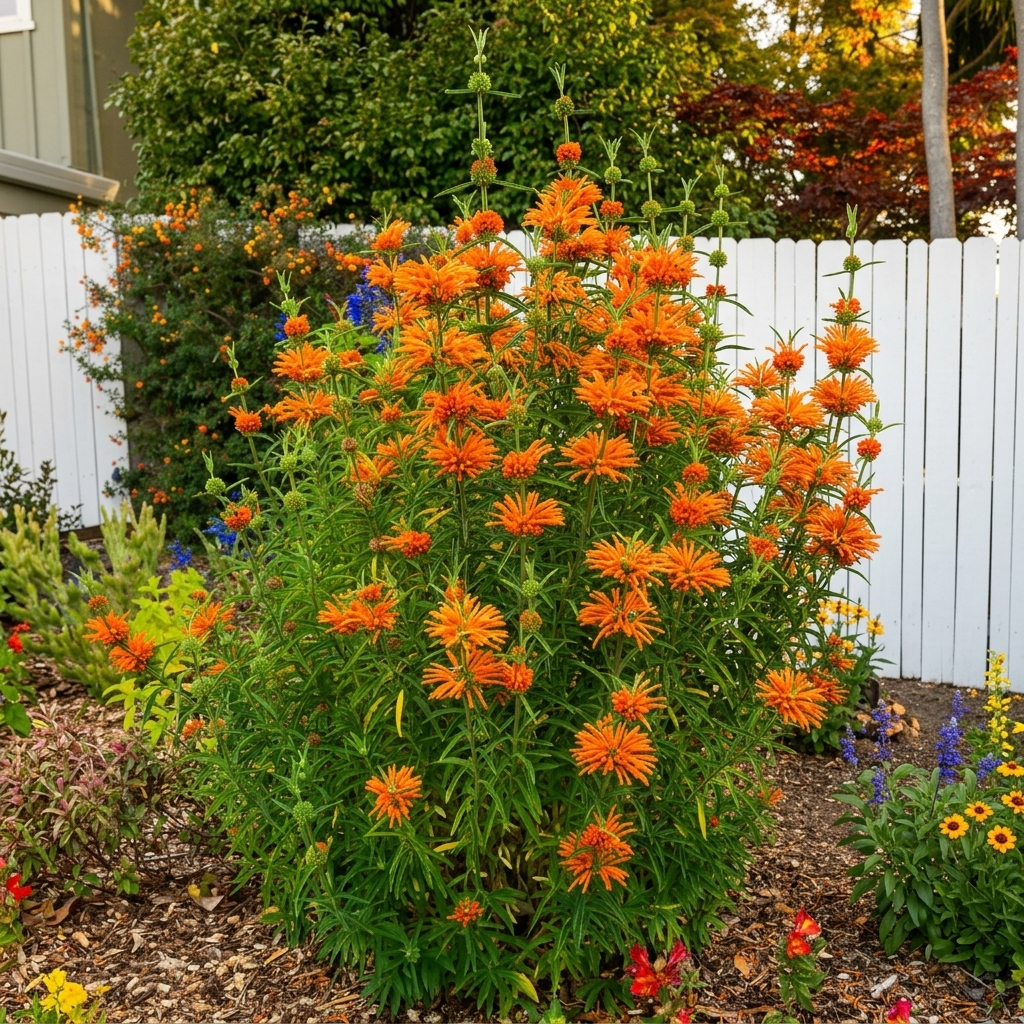
Lion's Ear, or Klip Dagga, is Leonotis nepetifolia - a tall annual in Hungary with upright stems and extraordinary circles of orange tubular flowers stacked one above another. From a distance the flower clusters look like bright orange crowns floating around the stems.
It is native to tropical parts of Africa and Asia, so it loves warmth. That makes our hot Hungarian summers surprisingly suitable for it. What it does not love is frost, which means we grow it as a one-season plant: sow in spring, enjoy the spectacular display through summer and autumn, then collect seed before winter arrives.
The Holland Kertészet packet contains 20 seeds. That is enough to create a small group at the back of a sunny border, grow a dramatic specimen in a large container, or raise a few plants and share the extras with another gardener.
Lion's Ear is also a wonderful pollinator plant. Its nectar-rich tubular flowers attract bees and butterflies, and the tall stems bring movement and architecture to a border when many earlier flowers are beginning to fade.
So this is not a shy little edging plant. Give it room, sunshine and a strong start, and it can become one of those plants visitors stop to ask about.
1. Meet Lion's Ear
Leonotis nepetifolia belongs to the mint family, Lamiaceae. If you look closely at the stems and leaves, you may notice some of that family resemblance. But the flowers are unmistakably its own: vivid orange tubes emerging from round, spiky-looking whorls arranged at intervals up the stem.
The foliage is fresh green and lightly aromatic. The plant grows upright and can become impressively tall in a warm season, so think of it as a vertical accent rather than a compact bedding flower.
2. Finding the Right Place
Before we sow, let's choose where our Lion's Ear will eventually live. This is a sun-and-warmth plant. In Hungary, a sunny border, wildlife garden, cottage garden or large container in a sheltered warm position can suit it beautifully.
Sun and warmth
Give it full sun if you can. Strong light encourages sturdy stems and good flowering. A plant in too much shade may stretch, lean and produce fewer flowers.
Hungarian summers around Budapest, Szeged, Pécs and the warmer parts of western Hungary can give Lion's Ear the heat it enjoys. The important part is to wait until spring frost has truly passed before young plants stay outside permanently.
Space and support
Do not squeeze it between low plants and expect it to behave politely. Give each plant enough room for air to move around the stems. In a windy garden, place it near discreet support or stake the main stems before they become top-heavy with flower whorls.
A group of three plants can make a wonderful late-summer statement at the back of a border. In a container, choose a large, heavy pot with drainage holes so the plant has enough root room and does not topple in a storm.
|
A COMMON MISTAKE Planting it in a cramped or shady place. Lion's Ear wants sunshine and vertical room. Give it the back of the border or a generous container where those orange flower rings can be seen properly. |
Soil and drainage
Lion's Ear is not especially fussy, but it does best in reasonably fertile, well-drained soil. Heavy ground that remains waterlogged after rain is a poor choice. Improve drainage before planting rather than trying to rescue unhappy roots later.
A little compost is useful in very poor soil, but we do not need to create an over-rich bed. Too much nitrogen can give us enormous green growth when what we really want is a strong plant covered in orange flower rings.
3. Let's Sow the Twenty Seeds
Twenty seeds invite us to sow carefully. Use small modules or a seed tray filled with fine, moist seed compost, and label it immediately - spring seed trays have a remarkable talent for making us forget what we put where.
When should we sow?
The Holland Kertészet listing recommends sowing from March to May indoors, or outdoors after frost. For Hungary, I prefer an indoor spring start because it gives this warm-season plant more time to grow and flower before autumn cold arrives.
Aim for warmth and good light. If you start in March, the seedlings can develop indoors while nights outside are still too cold. By May, after gradual hardening off and once frost danger has passed, they can move into the garden.
How to sow
Moisten the compost first, sow the seeds thinly, and cover them lightly with fine compost or vermiculite. Keep the tray warm and evenly moist, not soaking wet. A clear cover can help retain moisture, but remove or ventilate it once seedlings appear.
The product gives roughly 14-18 weeks from sowing to maturity. Do not read that as a stopwatch. Temperature, light, pot size and spring weather all influence how quickly a young plant develops.
|
DON'T PANIC The seedlings look small while spring is still cool? This is a warmth-loving plant. Keep them bright, protected and growing steadily. Once nights warm and the roots settle outdoors, growth can accelerate quickly. |
After germination
As soon as the seedlings emerge, give them the brightest position you can. Turn trays regularly if the light comes from one side. Water gently, and let a little air move around them so stems become sturdy rather than soft.
When seedlings have several true leaves and are easy to handle, move them into individual pots. Hold them by a leaf rather than squeezing the delicate stem, settle the roots gently, and water them in.
4. From Seedling to a Tall Summer Plant
Once Lion's Ear has warmth, light and root room, it begins to show its ambition. What started as a modest seedling can become a tall, architectural plant by late summer.
Potting on
If you are raising plants indoors, pot them on when roots fill the first container. Do not leave a vigorous seedling cramped for weeks. At the same time, avoid jumping from a tiny module into an enormous wet pot; gradual potting-on makes watering easier.
Hardening off in Hungary
Young plants raised indoors need to meet the outdoor world slowly. Begin with a sheltered place for a few hours, then increase the time outside over a week or two. Protect them from cold nights and fierce midday sun at first.
Plant out only after the danger of frost has passed. Mid-May is a useful mental marker in much of Hungary, but watch your local forecast rather than the calendar alone.
Do we pinch it?
You can pinch a young plant if you want more branching, but do not overdo it. Lion's Ear is naturally valued for its tall upright structure. If you want dramatic vertical stems, allow the plant to rise and branch naturally.
If a plant becomes very lanky before planting out, the first question is usually light, not scissors. Give it brighter conditions and rotate the pot regularly.
|
WHAT I WOULD DO I would plant three together near the back of a sunny border and stake them early. The group will look intentional, the stems will support the design, and the orange whorls will float above lower flowers by late summer. |
Staking
In a sheltered garden, strong plants may stand without help. In exposed places, stake early and loosely. It is much easier to support a growing stem in June than to repair a snapped one after an August thunderstorm.
5. Summer: Water, Food and Those Orange Rings
By summer, the plant changes character. Tall stems rise above neighbouring flowers and the first round whorls begin to form. Then the orange tubes appear, and suddenly you understand why we made room for it.
Watering
Water young plants regularly while they establish. Once rooted, they can tolerate short dry spells better, but flowering is best when the plant is not repeatedly allowed to wilt. In containers, check moisture often during hot Hungarian weather.
Water deeply at the root zone rather than giving a tiny splash every day. Good drainage still matters: moist soil is useful, permanently soggy soil is not.
Feeding
In ordinary garden soil, modest feeding is enough. Container plants benefit from a balanced liquid feed during active growth. Avoid pushing too much leafy growth with excessive high-nitrogen fertilizer.
The flowers
The flower whorls are the reason Lion's Ear feels so exotic. Bright orange tubular flowers emerge in rings around the stem, with new tiers appearing higher as the plant grows. The effect is almost architectural - part flower, part sculpture.
|
GOOD TO KNOW The tubular orange flowers are rich in nectar. Lion's Ear is an excellent choice when you want a dramatic ornamental that also gives bees and butterflies something useful late in the season. |
Pollinators
Those tubes are full of nectar. Bees and butterflies quickly discover them, so place the plant where you can watch the visitors. In its native range, nectar-feeding birds also use Leonotis; in Hungary, our insects will be the main audience.
6. When Something Goes Wrong
Lion's Ear is generally straightforward once warm weather arrives, but a few problems are worth recognising early.
Leaves are yellowing
Check the soil first. Constant wetness can stress roots, while a hungry container plant can also pale. Look at drainage, watering and feeding together rather than reaching immediately for more fertilizer.
The plant is wilting
In summer heat, a large plant can use plenty of water. Push a finger into the soil before deciding what to do. Dry soil needs a thorough drink; wet soil plus wilting suggests a root problem rather than thirst.
Tall but not flowering
Too much shade, excessive nitrogen, late sowing or a cool summer can delay flowers. Give the plant as much sun and warmth as possible and be patient - this is naturally a later-season performer.
Stems are leaning
Wind and soft growth are common reasons. Add support before stems bend badly, and avoid overfeeding. A sunny position produces sturdier growth than a shaded one.
Aphids, whitefly or spider mites
Inspect young shoots and leaf undersides. A strong jet of water can dislodge small aphid colonies, and early intervention is far easier than waiting until pests cover every growing tip.
|
A COMMON MISTAKE Giving a tall plant lots of nitrogen because we want it to grow faster. Too much feed can create soft, leafy stems. Sun, root room and sensible watering are more valuable than constant fertilizer. |
Root problems
Poorly drained soil can cause decline. If a container smells sour or stays wet for days, improve drainage and reduce watering. Outdoors, avoid planting in a low spot where water collects after heavy rain.
7. Late Summer, Autumn and Seed
Lion's Ear often becomes most impressive just when the garden begins to feel that summer is turning toward autumn.
Keep watering during dry September weather and continue enjoying the flowers as long as the plant remains active. Because it is frost tender, the first real cold will eventually bring the season to an end.
Should we deadhead?
If you want the longest tidy display, remove spent flower sections selectively. But if you want seed, leave some of the best whorls to mature fully toward the end of the season.
Saving seed
Allow selected flower heads to dry on the plant as far as autumn weather permits. Cut them on a dry day, place them in a paper bag, and finish drying indoors before gently separating the seed from the chaff.
Label the envelope with the plant name and year. Store seed cool, dry and dark. Seed saving turns a tropical-looking annual into something you can invite back each spring.
What happens at frost?
Leonotis nepetifolia is not reliably hardy outdoors in Hungary. After frost blackens the foliage, remove the plant and compost healthy material. There is no need to feel that the plant has failed - it has completed exactly the annual cycle we expected.
|
TRY THIS Leave two or three of the best late flower whorls untouched. Let them mature for seed while you continue deadheading the rest. One plant can then give you both a tidy display and next year's seed. |
Can we overwinter it?
You can experiment with a container specimen in a bright frost-free place, but for most gardeners the simplest and most reliable method is to save seed and start fresh plants in spring. Seed-grown plants are vigorous and avoid the problem of finding indoor space for a very tall specimen.
8. The Plant We Grow With You
At Holland Kertészet, Lion's Ear 'Klip Dagga' is sold as 20 seeds under Horti Tops code B296. The product identifies it as Leonotis nepetifolia and recommends March-May indoor sowing or sowing outdoors after frost.
The listing describes the plant as suitable for sunny borders, wildlife gardens, cottage gardens and large containers, with well-drained soil and warm conditions. That is exactly how I would use it in Hungary.
Where would I use it?
At the back of a sunny border, where the orange flower rings can rise above lower plants. Beside a terrace in a large pot. In a pollinator garden. Or as an exotic vertical accent among softer cottage-garden flowers.
What should we plant with it?
Orange looks wonderful with purple and blue. Try Lion's Ear with Verbena bonariensis, lavender, blue salvia or heliotrope. White gaura can soften the combination, while ornamental grasses echo the tall vertical shape without competing with it.
Is it edible or medicinal?
For this series, grow Klip Dagga as an ornamental garden plant. Leonotis species have histories of traditional use, but that is not the same as established safe home use. Do not improvise teas, extracts or smoking preparations from a garden plant; our purpose here is flowers, pollinators and beauty.
|
GROW WITH US Twenty seeds are enough for a proper experiment. Grow a small group in the border, one in a large pot, and perhaps give a seedling to a friend. By autumn you will know exactly where this extraordinary plant belongs in your own garden. |
9. A Year With Lion's Ear
March-April: sow indoors in warmth and good light. April-May: pot seedlings on and begin hardening off on mild days. Mid-May onward: plant outside after frost. June-July: water, support and feed lightly. July-October: enjoy the orange flower whorls and pollinators. September-October: leave selected heads for seed. First frost: collect remaining seed and clear the plants.
10. Your Lion's Ear Cheat Sheet
• Botanical name: Leonotis nepetifolia.
• Holland Kertészet product: Lion's Ear 'Klip Dagga' - 20 Seeds, Horti Tops B296.
• Sowing: March-May indoors, or outdoors after frost.
• Maturity: approximately 14-18 weeks from sowing, depending on conditions.
• Light: full sun and warmth.
• Soil: reasonably fertile and well drained.
• Water: regular while establishing and during hot dry periods; avoid waterlogging.
• Height: tall and architectural; allow generous vertical space.
• Support: useful in windy or exposed gardens.
• Flower colour: vivid orange tubular flowers in circular whorls.
• Flowering: mainly summer into autumn.
• Pollinators: excellent for bees and butterflies.
• Frost: tender; normally grown as an annual in Hungary.
• Seed saving: allow selected whorls to mature and dry before collecting.
If You Remember Only Five Things…
1. Start it warm in spring. An early indoor start gives this heat-loving plant time to become spectacular before autumn.
2. Give it full sun and room. Lion's Ear is a tall accent plant, not a little front-of-border flower.
3. Support before the storm. A discreet stake is easier than rescuing a broken flowering stem.
4. Water well but drain well. Established plants enjoy summer moisture, but their roots should never sit in stagnant water.
5. Save some seed. Frost ends the plant in Hungary, but a paper envelope of ripe seed starts the story again next spring.
One Last Walk Around the Garden
We began with twenty small seeds and a plant name that sounded almost imaginary. By late summer, tall green stems are carrying bright orange rings, bees are moving from flower to flower, and the whole plant seems to glow when the low evening sun catches it.
That is what I love about Lion's Ear. It gives us the feeling of an exotic garden without asking us to live in the tropics. We simply give it a warm start, a sunny Hungarian summer, enough room to rise, and permission to be a little dramatic.
When you're ready for the next plant…


