

From Round Seeds to a Cascade of Edible Summer Colour
A friendly guide to sowing, growing and enjoying nasturtiums in Hungary.
Come Into the Garden With Me…
Today, we're growing nasturtiums - one of the easiest, happiest flowers you can put in a summer garden.
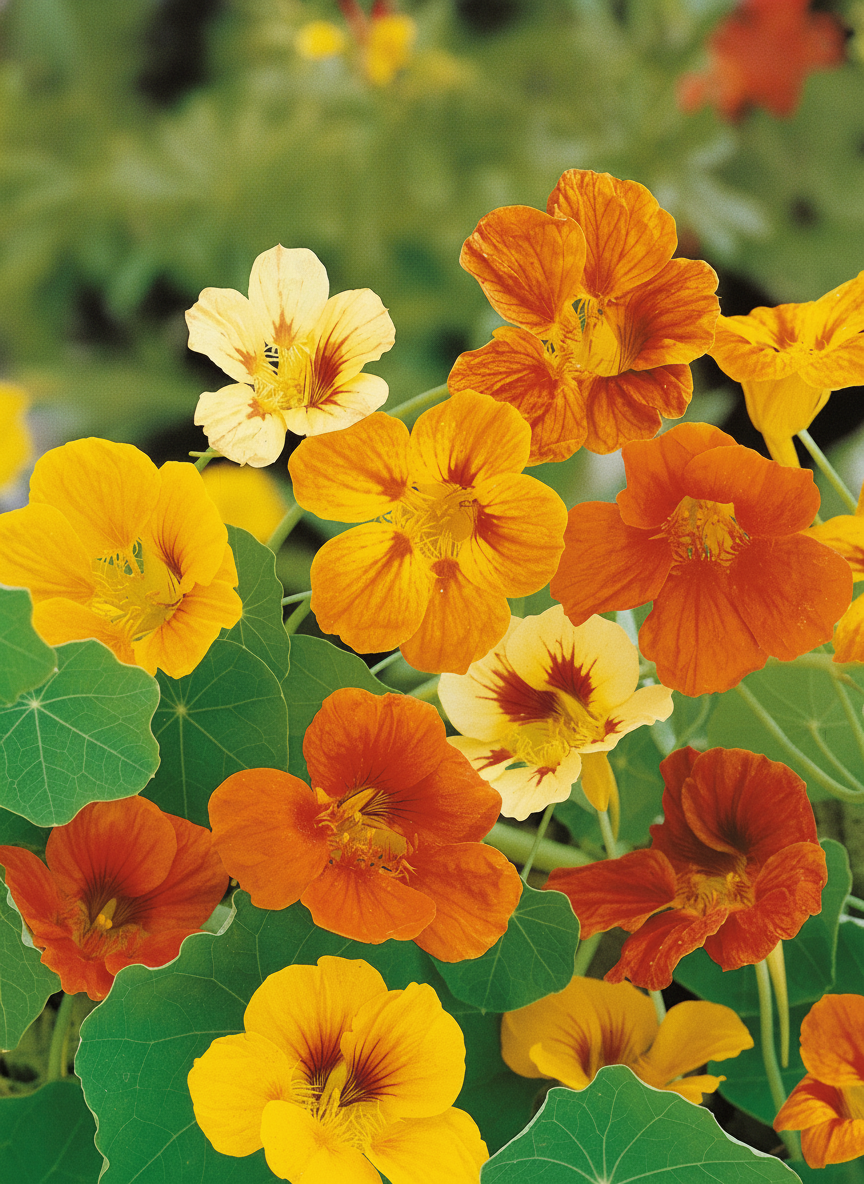
They have round leaves like little green umbrellas, bold flowers in glowing shades of yellow, orange, red, cream and salmon, and a wonderfully relaxed way of spilling over the edge of a pot or softening the front of a border.
Nasturtiums are also one of those plants that make beginners feel successful. The seeds are large enough to hold comfortably between your fingers. They germinate quickly in warm soil. They do not need rich compost or complicated feeding. And once they begin flowering, they can keep going until autumn frost arrives.
For Hungary, that is a very useful combination. Our summers can be hot and dry, and nasturtiums are quite content in sunshine as long as they receive enough water to keep growing. In fact, too much rich feeding often gives you masses of leaves and disappointingly few flowers.
There is another surprise too: nasturtiums are edible. The flowers and leaves have a fresh, peppery taste, so the plant can move from the flower bed straight onto a summer salad.
The variety in the Holland Kertészet range is Nasturtium 'Alaska TT Salmon', a compact form with salmon-coloured flowers and beautifully variegated foliage. It is especially well suited to borders, containers and balcony boxes.
So this book is going to be practical, cheerful and very hands-on. We will start with that chunky little seed, grow it into a strong young plant, learn how much sun and water it really needs, and finish with flowers, seed pods and a few leaves for the kitchen.
Ready? Let's sow something that almost refuses to be difficult.
1. Meet the Nasturtium
The common garden nasturtium is usually Tropaeolum majus. Despite the common English name, it is not related to watercress, even though the botanical name Nasturtium is used for watercress. In the flower garden, when we say nasturtium, we mean Tropaeolum.
What does it look like?
The leaves are nearly round, with veins radiating from a point near the centre. Raindrops often sit on the surface like tiny glass beads. The flowers have five petals and a characteristic spur at the back.
Depending on the variety, plants may stay compact and bushy or produce long trailing and climbing stems. 'Alaska TT Salmon' belongs to the compact group and grows to roughly 30 cm high, making it particularly useful near the front of a border or in pots.
|
GOOD TO KNOW Nasturtiums are annuals in Hungary. They grow, flower and set seed in one season, then the first proper frost ends the show. Save seed in autumn and you can begin again next spring. |
2. The Nasturtium We Grow With You
At Holland Kertészet, the nasturtium in our current seed range is Buzzy Nasturtium 'Alaska TT Salmon' .
Why 'Alaska TT Salmon'?
This is a compact, very easy-to-grow form with a long flowering season. The flowers are soft salmon to pinkish-salmon, while the leaves are attractively splashed and marbled with creamy white. That foliage makes the plant decorative even before the first bud opens.
Because it does not make long vigorous runners like climbing nasturtiums, it is ideal for containers, edging, low borders, raised beds and balcony boxes.
Packet growing rhythm
The standard Buzzy guidance is simple: sow directly outside from early spring until early summer. In practice, for Hungary, April to the end of June is a sensible window, depending on soil temperature and frost risk.
|
GROW WITH US If you want the easiest possible first nasturtium, sow Alaska TT Salmon directly where it is going to flower. Large nasturtium seeds are easy to space and the seedlings dislike unnecessary root disturbance. |
3. Finding the Right Place
Sun first
Nasturtiums flower best in full sun. A little light shade is tolerated, especially in a very hot courtyard, but too much shade produces more leaves and fewer flowers.
Do not spoil them with rich soil
This is where nasturtiums are different from many bedding plants. Rich, heavily fertilised soil often encourages lush green growth at the expense of flowers. Ordinary garden soil is usually quite enough.
If you have a bed that has been heavily enriched with manure or high-nitrogen fertiliser, choose a leaner spot for your nasturtiums or grow them in a container with ordinary potting compost.
Drainage
They like regular moisture while actively growing, but they do not want roots sitting in stagnant water. Good drainage matters, especially in containers after summer storms.
|
A COMMON MISTAKE Feeding nasturtiums because you want more flowers. Too much nitrogen often gives you enormous leaves and fewer blooms. With nasturtiums, less can genuinely be more. |
4. Sowing the Big Round Seeds
Nasturtium seed is one of the friendliest seeds for beginners. It is large, pale brown and wrinkled, so you can actually see where each seed goes.
Direct sowing outside
• Wait until the soil has begun to warm and hard frost is no longer likely.
• Make a small hole around 1.5-2 cm deep.
• Place one seed in each hole and cover with soil.
• Space compact plants roughly 25-30 cm apart.
• Water gently and keep the soil lightly moist while germination begins.
In much of Hungary, April and May are excellent sowing months. You can continue sowing into June for later flowers.
Starting in pots
You can start a few seeds indoors or under protection if you want an earlier start, but do not begin ridiculously early. Nasturtiums grow quickly and soon become awkward on a windowsill.
Use individual small pots so roots are disturbed as little as possible at planting time.
|
TRY THIS Sow three seeds in three small pots and three seeds directly outdoors. Compare them. You will quickly learn which method works best in your own garden and microclimate. |
5. The First Seedlings
The first leaves do not yet look exactly like the famous round nasturtium leaves, but the plant soon becomes recognisable.
Light
Give seedlings plenty of light. Weak, stretched seedlings are usually telling you that they are too warm and not receiving enough light.
Water
Keep young plants evenly moist but not saturated. Once roots become established, they are more forgiving, but a tiny seedling in a small pot can dry out surprisingly quickly on a sunny spring day.
Hardening off
If you started indoors, gradually accustom the plants to outdoor sun, wind and cooler nights before planting them permanently outside.
|
DON'T PANIC A seedling with one damaged leaf is not a disaster. Nasturtiums grow quickly. Look for healthy new growth rather than judging the whole plant by one imperfect leaf. |
6. Planting Out in Hungary
Nasturtiums dislike frost, so do not rush tender seedlings into the garden simply because one April afternoon feels like summer.
For many Hungarian gardens, planting out in late April or May is safer, depending on local conditions. Gardeners in colder or exposed areas should be prepared to wait a little longer.
How far apart?
For compact Alaska TT Salmon, around 25-30 cm between plants gives each one room to develop into a rounded mound without becoming congested.
After planting
Water thoroughly after planting, then keep an eye on moisture during the first couple of weeks. Once the roots spread into the surrounding soil, care becomes much easier.
|
HUNGARIAN GARDEN NOTE Our spring weather can change quickly. Warm days do not always mean warm nights. Nasturtiums grow fast once conditions are right, so there is little advantage in planting them into cold soil too early. |
7. Watering Through a Hot Hungarian Summer
Established nasturtiums are tougher than their soft leaves suggest, but they still need water during prolonged heat.
In the ground
Water deeply rather than giving tiny splashes every day. A thorough watering encourages roots to explore deeper soil and makes the plant more resilient.
In pots and balcony boxes
Containers are different. They can dry out rapidly during a Hungarian heatwave, particularly on south- and west-facing balconies. Check them frequently and water when the upper compost begins to dry.
If a potted nasturtium wilts dramatically in afternoon heat, do not immediately assume it is dying. Check the compost first. If it is dry, water thoroughly and the plant may recover surprisingly quickly.
|
WHAT I WOULD DO Put a finger into the compost before watering. If it is still damp below the surface, wait. If it is dry a few centimetres down, give the pot a proper drink. |
8. Flowers, Leaves and the Kitchen
One of the joys of nasturtiums is that they are both ornamental and edible.
The flavour
Fresh leaves and flowers have a peppery, slightly mustard-like flavour. Young leaves are usually milder than older ones.
How to use them
• Scatter clean petals over a summer salad.
• Use whole flowers as a colourful garnish.
• Add young leaves sparingly to sandwiches or salads.
• Use unopened buds or young green seed pods in small quantities for pickling experiments.
Only eat flowers and leaves from plants you know have not been treated with unsuitable pesticides or other chemicals.
|
KITCHEN NOTE Start small. One or two flowers on a salad are enough to discover the flavour. Nasturtium is pleasantly peppery, but it is meant to add interest, not dominate the entire plate. |
9. Keeping the Flowers Coming
Pick and deadhead
Removing faded flowers helps keep the plant tidy and can encourage continued blooming. If you regularly pick flowers for salads or small vases, you are already doing part of the job.
Do I need fertiliser?
Usually not much. If container plants clearly become exhausted late in the season, a very light feed can help, but avoid heavy high-nitrogen feeding.
Too many leaves, not enough flowers
First check light levels. Then think about soil fertility. A shaded, well-fed nasturtium may produce a jungle of leaves and remarkably few blooms.
|
REMEMBER Sun + ordinary soil + sensible watering is usually a better recipe for nasturtium flowers than rich compost + constant feeding. |
10. Aphids, Caterpillars and Other Visitors
Nasturtiums are famous for attracting aphids. That can sound alarming, but it is also one reason gardeners sometimes grow them near vegetable beds.
Aphids
Check soft shoot tips and the undersides of leaves. Small colonies can often be squashed by hand or washed away with a firm jet of water. Ladybirds, hoverfly larvae and other beneficial insects may also arrive to feed on them.
Caterpillars
Cabbage white butterflies may occasionally lay eggs on nasturtium leaves. If you do not mind sharing a few leaves, this can become a fascinating little wildlife lesson. If damage is severe, inspect plants regularly and remove caterpillars by hand.
Yellowing leaves
A few old yellow leaves are normal. Widespread yellowing can point to overwatering, poor drainage, exhausted container compost or simply the natural ageing of the plant late in the season.
|
A HEALTHY GARDEN Not every insect is a problem to eliminate. Nasturtiums are excellent plants for observing the food web: aphids attract predators, flowers attract pollinators, and leaves may feed caterpillars. |
11. Nasturtiums in Pots and Balcony Boxes
Compact Alaska TT Salmon is almost made for containers.
Choose a useful pot
Use a container with drainage holes and enough volume that it does not dry out within an hour on a hot balcony. A wide pot or balcony box works beautifully because the stems can soften the edges.
Position
Give the pot as much sun as possible. In a fiercely hot, enclosed balcony, a little afternoon protection can reduce stress, but do not move the plant into deep shade.
Companions
Try nasturtiums with herbs, compact tomatoes, marigolds or other summer annuals. Their round foliage is especially useful beside plants with fine or upright leaves.
|
DESIGN IDEA Repeat the same salmon nasturtium in three containers rather than using one isolated plant. Repetition makes a balcony or terrace feel much more intentional. |
12. Companion Planting - Useful, but Keep It Sensible
Nasturtiums are often recommended as companion plants in vegetable gardens. They can attract pollinators and they may draw aphids away from some neighbouring plants.
That does not mean they create a magical pest-free zone. Companion planting works best as one part of a diverse garden rather than as a guarantee.
Where I like them
• At the edge of raised vegetable beds.
• Near beans and courgettes where pollinating insects are welcome.
• Around the sunny edge of herb beds.
• In pots beside edible crops on a terrace.
|
KEEP IT REALISTIC Grow nasturtiums because they are beautiful, edible and useful to insects. If they also help distract a few aphids from another crop, consider that a bonus. |
13. Saving Seed
Once you stop deadheading a few flowers, the plant begins making seed. Nasturtium seeds are wonderfully easy to recognise because they are large and knobbly.
When to collect
Allow seed to mature as fully as possible. Mature seeds often drop from the plant, so check beneath the foliage regularly. Collect firm, developed seeds and dry them thoroughly in an airy place before storage.
Storage
Once completely dry, keep seed in a labelled paper envelope somewhere cool, dark and dry. Write the variety name and year on the packet.
If you are growing only one nasturtium variety, saved seed may give you plants reasonably similar to the parent, although variation is always possible.
|
SEED-SAVING HABIT Label first, collect second. A mysterious envelope of brown seeds in February is much less useful than it seemed in August. |
14. A Simple Nasturtium Calendar for Hungary
MARCH Plan containers and beds. Indoor sowing is possible late in the month if you have strong light.
APRIL Begin direct sowing as soil warms and frost risk decreases.
MAY Main sowing and planting month. Keep young plants watered while they establish.
JUNE Continue sowing for later flowers. Watch for aphids and begin enjoying the first blooms.
JULY Peak growth and flowering. Water containers carefully during heat.
AUGUST Keep picking flowers, deadhead, and leave a few blooms for seed.
SEPTEMBER Enjoy late flowers and begin collecting mature seed.
OCTOBER Flowers may continue until frost. Collect remaining seed and clear plants after frost.
NOVEMBER-FEBRUARY Store dry seed and decide where next year’s salmon-coloured plants will go.
|
THE RHYTHM OF THE PLANT Nasturtiums are fast. Sow in spring, enjoy foliage in early summer, flowers through summer and early autumn, then collect the large seed and begin again next year. |
15. Your Nasturtium Cheat Sheet
• Botanical name: Tropaeolum majus.
• Annual in Hungary.
• Compact habit, around 30 cm high.
• Salmon-coloured flowers and variegated foliage.
• Sow directly outdoors from spring to early summer.
• Best in full sun.
• Ordinary, not overly rich soil.
• Water regularly while establishing and during heat.
• Avoid heavy nitrogen feeding.
• Excellent for pots, balcony boxes, edging and raised beds.
• Flowers and leaves are edible when grown without unsuitable chemical treatments.
• Watch for aphids and caterpillars.
• Collect mature seed in late summer and autumn.
|
IF YOU REMEMBER ONLY FIVE THINGS Sow after frost danger. Give them sun. Do not overfeed. Water containers in heat. Pick the flowers - for the garden, the vase or the salad bowl. |
16. And Then One Morning…
There is a flower.
At first, the plant was only a chunky seed pressed into the soil. Then came a stem, a few round leaves and a little mound of green. One morning, tucked beneath those leaves, a salmon-coloured bud begins to open.
Soon there are more. The creamy splashes on the foliage catch the light, the flowers sit above the leaves like little flags, and bees begin visiting the bed.
You pick one flower and carry it into the kitchen. Another stays outside for a pollinator. A third is left to make seed for next year.
That is the charm of nasturtiums. They are generous plants. They give colour, food, movement, wildlife and seeds without asking you to become an expert first.
One last walk around the garden
We began with a large wrinkled seed. We gave it warmth, light and ordinary soil. We learned not to drown it in fertiliser, kept it watered through Hungarian summer heat, watched for aphids, tasted a flower, and saved the first mature seed.
Now you know enough to grow nasturtiums confidently in a border, raised bed, terrace pot or balcony box.
Until then, enjoy the salmon flowers. And whenever you are ready to grow something new…
Come into the garden with me.


