

From Dust-Fine Seed to a Waterfall of Blue
A friendly guide to sowing, growing and enjoying trailing lobelia in Hungarian gardens, pots and hanging baskets.
Come Into the Garden With Me…
Today, we're growing Trailing Lobelia - one of those small flowers that can completely change the feeling of a balcony box, hanging basket or the edge of a summer container.
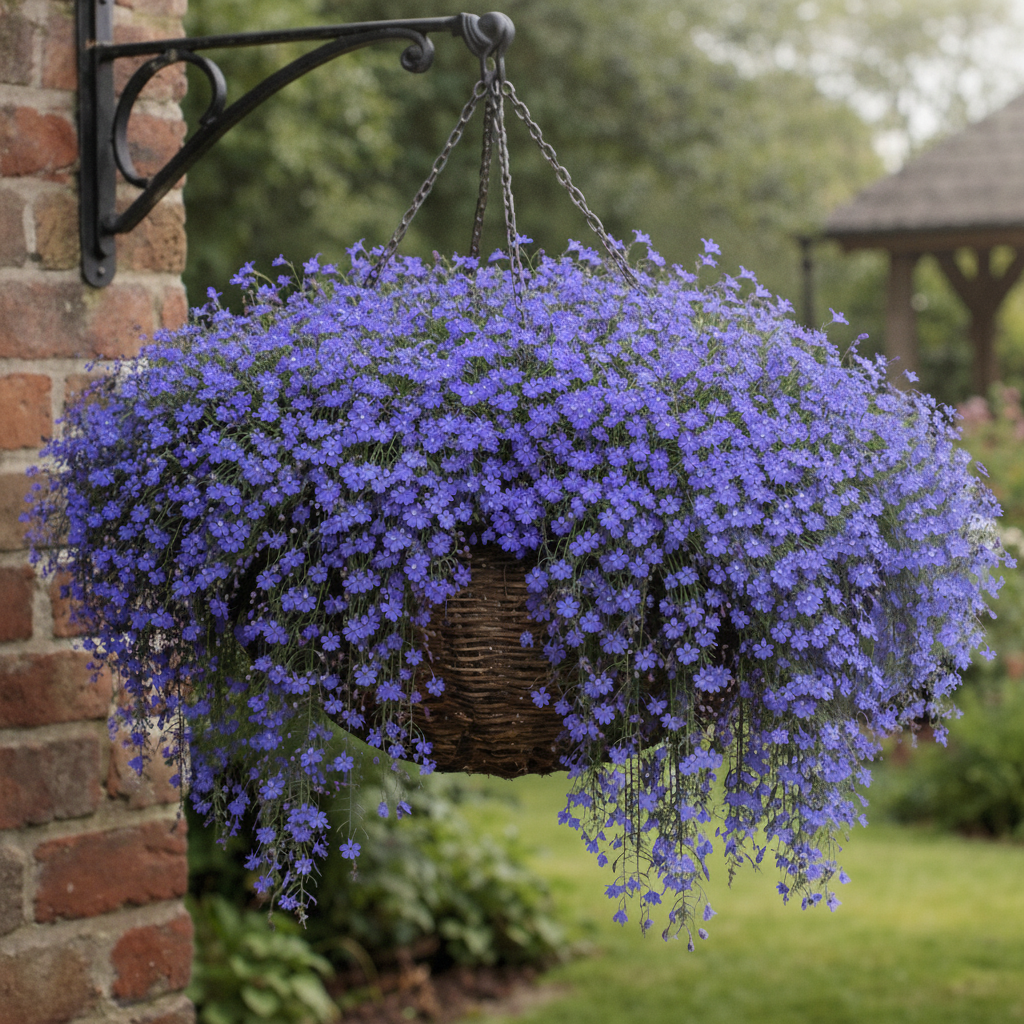
The individual flowers are tiny. The plant itself stays low. But when a healthy trailing lobelia is covered in bloom, those small flowers become a blue waterfall, softening the rim of a pot and filling spaces between larger summer plants.
Our Holland Kertészet packet is Horti Tops Trailing Lobelia 'Saphir', botanically Lobelia erinus pendula. It is an annual with trailing growth of around 30 cm and a naturally cascading habit.
For Hungary, lobelia is especially valuable because it flowers for a long period if we keep it evenly watered and protect it from becoming exhausted in midsummer heat. It likes light, moisture and a little attention.
We'll begin with seed so fine it almost looks like dust, learn why it stays near the compost surface, how to move seedlings in clumps, when to plant outside, and how to revive a tired basket with trimming and water.
And we'll look at how 'Saphir' works in baskets, window boxes, beds and rock gardens, so you can use that intense blue where it has the greatest effect.
Ready? Let's grow something small that makes a very big difference.
1. Meet Trailing Lobelia
Trailing Lobelia is Lobelia erinus pendula, a fine-stemmed annual covered with masses of small blue flowers. It belongs to the group of lobelias grown for summer bedding and containers.
What does it look like?
'Saphir' makes branching stems with small green leaves and clear blue, two-lipped flowers. The stems naturally spread and tumble, so the plant looks more like a curtain than a mound.
The packet lists growth around 30 cm. Much of that is sideways or downward, which is exactly why it works so beautifully over the edge of a basket or window box.
And it is an annual
In Hungary, 'Saphir' is a one-season plant. We sow it in spring, enjoy it through summer and early autumn, and let the first serious frost finish the display.
|
GOOD TO KNOW |
2. Give It Light and Steady Moisture
If trailing lobelia could choose its own address, it would ask for bright light and roots that never become desperately dry.
Plenty of light is best
Give it a bright position for compact growth and generous flowering. Full sun is excellent in spring and early summer; on a very hot Hungarian balcony, a little late-afternoon protection can help in July and August.
Too much shade produces softer growth and fewer flowers. But blazing heat combined with a dry basket can exhaust the plant quickly, so light and moisture need to work together.
Good compost matters
Use fertile but free-draining potting compost in containers. In beds, ordinary garden soil improved with compost is fine as long as water can drain away.
A small hanging basket dries much faster than open ground. In hot weather, check the compost rather than following a fixed watering calendar.
Give the stems somewhere to spill
Place lobelia close to the rim of baskets and boxes. The seedlings look tiny in May, but the whole point is to let those stems reach the edge and cascade naturally.
|
A COMMON MISTAKE |
3. The Trailing Lobelia We Grow With You
The Holland Kertészet variety in this book is Horti Tops Trailing Lobelia 'Saphir'.
It is a rich-blue annual with trailing growth around 30 cm. The packet recommends indoor sowing from February to mid-April at about 20°C, or sowing under glass in April and May, with planting outside from early May when conditions are suitable.
Why blue works so well
Blue is an excellent linking colour. 'Saphir' can sit beside white, pink, apricot, yellow or purple flowers without fighting for attention.
In hanging baskets
Plant it around the rim beneath upright geraniums, petunias, verbena or compact salvias. The lobelia softens the container and hides bare compost.
In window boxes
Several small clumps along the front edge create a continuous ribbon of blue rather than a few isolated spots.
In beds and rock gardens
Use it at the front of a border, between stones or where stems can tumble over a low edge. Even in the ground, it still appreciates moisture during long hot periods.
One packet, many uses
This is a small plant with a useful job: it fills gaps, softens hard edges and makes larger summer flowers look more complete.
|
GROW WITH US |
4. Let's Sow the Seeds
Lobelia seed is extremely fine. This is the stage where patience matters more than strength.
When to sow in Hungary
For an early display, sow indoors from February to mid-April at around 20°C. You can also sow under glass in April and May. Starting early gives the tiny seedlings time to build before filling a basket.
How to sow
Fill a tray with fine seed compost, water first, scatter the seed thinly and press it gently onto the surface. Do not bury it under a thick layer of compost.
Keep the surface warm, bright and evenly moist. Because the seed is tiny, bottom watering or a very fine mist is safer than a strong stream from above.
Pricking out
When seedlings have several true leaves, move them in small clumps rather than trying to separate every microscopic plant. This is easier and produces a fuller plant more quickly.
The Horti Tops packet notes that transplanting encourages compact growth, so giving young clumps fresh compost and root space is part of the process.
|
DON'T PANIC |
5. Planting Out in Hungary
Now the seedlings have become little green clumps and May is approaching. This is when we begin turning trays into baskets, boxes and beds.
Wait for damaging cold to pass
Trailing lobelia is frost tender. Early May can still bring cold nights in Hungary, so harden plants off and delay permanent planting if frost is forecast.
Harden them off
Introduce young plants gradually to outdoor wind, stronger light and cooler nights over about a week. Tiny seedlings raised indoors still need time to adjust.
Planting
Place clumps near the edge of baskets and boxes so they can spill. Water thoroughly after planting and keep the root zone reliably moist while plants establish.
In beds, give enough room for the stems to spread without being smothered by larger neighbours. In containers, make sure drainage holes remain open.
|
WHAT I WOULD DO |
6. Summer Care: Keep the Blue Waterfall Going
By June, those tiny seedlings should be turning into proper flowering plants. From here, consistency is the secret.
Water consistently
Keep the root zone evenly moist but not waterlogged. During Hungarian heatwaves, hanging baskets may need checking every day and sometimes watering more than once if they are very small and exposed.
Water thoroughly until excess drains away, then let the surface begin to dry slightly. Repeatedly allowing the whole basket to become bone dry is much harder on lobelia than regular deep watering.
Feeding
Container lobelia flowers for months and eventually uses the nutrients in its compost. A dilute flowering-plant feed every one to two weeks can keep growth active without forcing soft leaves.
Trimming
If stems become long, sparse or brown at the tips, shorten the plant by about one third. This encourages fresh branching and new buds.
The midsummer rescue
A tired July basket is not necessarily finished. Trim lightly, water deeply and feed once growth resumes. Cooler nights later in summer can bring a fresh flush of blue.
|
HUNGARIAN SUMMER NOTE |
7. When Something Goes Wrong
Trailing lobelia is generous when its basic needs are met, but small roots and tiny containers make stress show quickly.
Seedlings are long and weak
They need more light or are being kept too warm after germination. Move them to a brighter place and avoid crowding.
The plant suddenly collapses
Check the compost first. In baskets, complete drying is a common cause. Water thoroughly and move the container out of fierce sun while it recovers.
Yellow leaves
Both overwatering and nutrient exhaustion can cause yellowing. Check drainage and moisture before automatically adding fertiliser.
Aphids or whitefly
Inspect tender shoots and the undersides of leaves. Small outbreaks are easiest to manage before populations build up.
Hardly any flowers
Look first at light, then watering and feeding. Too much shade, too much nitrogen or repeated drought can all reduce flowering.
|
DON'T PANIC |
8. Flowers for Baskets, Boxes and Borders
This is where trailing lobelia earns its place. It does not dominate a planting; it quietly makes everything around it look better.
In a hanging basket
Use 'Saphir' around the rim beneath taller summer flowers. The blue curtain hides the hard edge of the container and makes the whole basket feel fuller.
In a window box
Repeat small clumps along the front edge. White petunias with blue lobelia make a cool classic combination, while pale pink pelargoniums give a softer effect.
On a sunny Hungarian terrace, choose a generous container so the compost does not dry instantly in July heat.
Keep the whole curtain fresh
There are too many tiny blooms for individual deadheading. If the plant becomes tired, trim the entire curtain lightly and let fresh branching replace the old growth.
|
TRY THIS |
9. Seed Saving, Design and Autumn
Trailing lobelia can produce seed, but the seed is extremely fine and collecting it requires patience. This is also the point in the season when we can look back at the container and decide which combinations really worked.
Saving seed
Allow some late flowers to mature instead of trimming everything. When the capsules dry, collect them over a sheet of white paper on a dry, still day so the tiny seed is not lost. Let it dry thoroughly before storing it in a labelled paper packet.
Garden lobelias can cross with nearby forms, so saved seedlings may not all look exactly like 'Saphir'. That can be fun if you enjoy surprises. If you want the same strong blue and trailing habit again, fresh commercial seed is the simplest route.
Designing with blue
Use lobelia as a linking plant between stronger colours. Blue can cool orange and yellow, soften pink and make white flowers look especially crisp. In a mixed basket, it often works best as the quiet colour that connects everything else.
Because the flowers are small, repetition matters more than one isolated clump. Several clumps planted around a rim eventually merge into one continuous curtain, which looks much more generous than scattered blue spots.
Then frost arrives
Trailing lobelia does not overwinter outdoors in Hungary. Once serious autumn cold arrives, the annual display comes to an end. Before you clear it away, take a photograph or make a quick note of the combinations you liked; spring shopping is easier when you remember what actually worked.
Clear finished plants, wash reusable containers, save a little seed if you wish, and refresh old potting compost appropriately. Then the basket can rest until it is time to begin again with another dusting of seed next spring.
|
A COMMON MISTAKE |
10. Your Trailing Lobelia Cheat Sheet
We've gone from dust-fine seed to a curtain of blue. Here's the whole journey in one place.
1. Trailing Lobelia 'Saphir' is Lobelia erinus pendula.
2. Grow it as an annual in Hungary.
3. Expect trailing growth around 30 cm.
4. Sow indoors from February to mid-April at about 20°C.
5. You can also sow under glass in April and May.
6. Keep the tiny seed on or very near the compost surface.
7. Water gently so seed is not washed into clumps.
8. Give seedlings bright light.
9. Prick seedlings out in small clumps.
10. Transplanting encourages compact growth.
11. Harden plants off before outdoor planting.
12. Plant outside when frost risk is low.
13. Use fertile, free-draining compost.
14. Place plants near basket and box edges so they can spill.
15. Keep the root zone evenly moist.
16. Check small containers daily during heatwaves.
17. Feed lightly and regularly in containers.
18. Trim tired stems by about one third.
19. Expect flowering into autumn with good care.
20. Save seed if you enjoy the experiment, but fresh seed keeps 'Saphir' most consistent.
If You Remember Only Five Things…
1. Surface sow
Tiny lobelia seed should remain at or very near the compost surface.
2. Give seedlings light
Warmth starts germination; bright light helps the young plants stay compact.
3. Keep baskets moist
Repeatedly drying out is one of the quickest ways to lose a beautiful lobelia display.
4. Trim when it gets tired
A light midsummer cutback can encourage fresh branching and another flush.
5. Let it spill
Plant near edges so the natural trailing habit can do the work.
One Last Walk Around the Garden
Do you remember where we started?
With seed so small it was almost difficult to believe that anything substantial could come from it.
We learned not to bury it, to keep the surface gently moist, to wait while the seedlings remained tiny, and then to move them in little clumps instead of separating every threadlike plant.
We hardened them off, planted them near the edge of baskets and boxes, and watched those green clumps begin to spread. Then the blue arrived - not as one dramatic flower, but as hundreds of tiny ones working together.
Then Hungary did what Hungary does in summer. The balcony became hot, the compost dried faster, and July tried to turn our hanging basket into a desert. That was when the plant taught us its most important lesson: a small container needs attention long before the leaves begin to collapse. We watered deeply, checked again the next day, and learned the rhythm of our own terrace.
Perhaps 'Saphir' softened white petunias, spilled beneath pink pelargoniums, tumbled over a stone edge or became the blue thread that tied a whole container together. Perhaps you discovered that its best moment came in the evening, when the stronger colours quietened and that clear blue seemed to glow against the green leaves.
By the end of the season, you know something you didn't know in February. You know how quickly your baskets dry, where afternoon shade helps, which neighbouring plants compete too strongly, and when a tired lobelia needs trimming instead of replacing. You also know that a plant grown from seed almost too small to see can become one of the hardest-working plants in a summer display.
That is what this series is really about: not memorising instructions, but learning a plant until it begins to feel familiar. Next year you will sow with more confidence, prick out the little clumps without worrying quite so much, and place the baskets where you already know they will be happiest.
So enjoy the last blue flowers while autumn is gentle. Let a few capsules mature if you want to try saving seed, photograph the combinations you loved, and make a note of the places where watering was easiest. Those small observations are how a garden becomes more personal from one season to the next.
And when you're ready for the next plant…
Come into the garden with me.


