

From Tiny Seeds to Clouds of Summer Flowers
A friendly guide to sowing, growing, cutting and enjoying yarrow in Hungary.
Come Into the Garden With Me…
Today, we're growing yarrow. This time we are starting with something very different from ranunculus claws and anemone corms: seeds. Tiny ones.
Yarrow is one of those plants that makes you wonder why you did not grow it sooner. It likes sunshine, it does not need rich pampering, established plants cope well with dry conditions, pollinators love it, it makes a useful cut flower, and it comes back year after year.
For Hungarian gardens, that combination is particularly attractive. We can have cold winters and increasingly hot, dry summers, and yarrow is far more comfortable with those extremes than many delicate ornamentals.
We will begin with a packet of seeds and go through sowing, transplanting, flowering, cutting, drying, dividing and living with the plant for years to come.
1. Meet Yarrow
Yarrow belongs to the genus Achillea, and the best-known species is Achillea millefolium, commonly called common yarrow. You may already have seen wild forms in meadows, grassy places and roadsides in Hungary.
Look closely
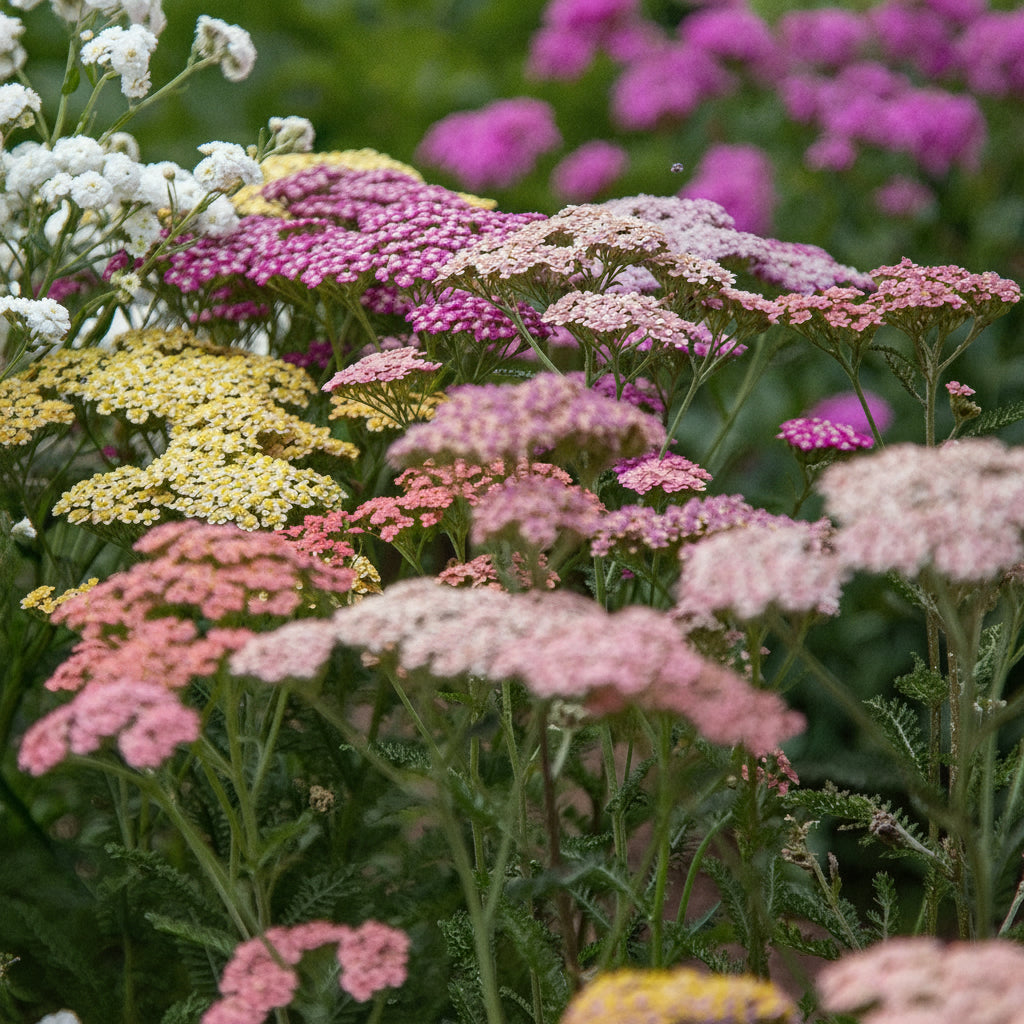
From a distance, a yarrow flowerhead looks like one broad flower. Up close, it is a collection of many tiny flowers grouped into a flat head. That shape is one of the reasons yarrow is so useful in garden design and bouquets.
And those leaves…
The foliage is finely divided, almost fern-like, and often aromatic when touched. Even before flowering, yarrow brings texture to a planting.
Annual or perennial?
Yarrow is a perennial. Plant it once in suitable conditions and it can return year after year. Hungarian winter cold is generally much less of a concern than cold, waterlogged soil.
|
GOOD TO KNOW If I had to describe yarrow in one sentence: give it sunshine, do not drown it, and do not spoil it too much. |
2. Why Yarrow Works So Well in Hungary
Some plants make us work hard to adapt the garden to them. Yarrow often feels as though it is meeting us halfway.
Sunshine, please
Yarrow likes full sun. A hot border beside the house, gravel garden, naturalistic planting or sunny cutting bed can suit it very well.
Do not make the soil too luxurious
Ordinary, well-drained soil is often enough. Very rich soil and lots of fertiliser can produce soft, tall growth that flops. Yarrow does not need a five-star hotel.
What about Hungarian clay?
Heavy soil needs thought because persistent winter wet is something yarrow dislikes. Improve structure and drainage, raise the planting area, or use a bed where water can escape more easily.
|
A COMMON MISTAKE Drought tolerant does not mean a tiny seedling never needs water. We must establish the plant first. Then it can show us how tough it really is. |
3. Which Yarrow Shall We Grow?
Wild yarrow is often white or cream, but garden forms can bring us yellow, apricot, peach, pink, rose, red, terracotta and many shades in between.
White and cream
White yarrow has an easy, natural beauty. It works with ornamental grasses, cosmos, echinacea, scabiosa, verbena and roses, and it is especially useful in bouquets because it gives stronger colours some breathing room.
Warm colours
Yellow and gold bring sunshine into a planting. Apricot, peach and terracotta can look magnificent with cream, dusky pink and burgundy. Many coloured varieties also fade beautifully as they age.
The yarrow we grow with you
The packet in the Holland Kertészet range is Yarrow mix. It is the familiar yarrow with finely divided, feathery foliage. That makes it especially useful for a naturalistic border, pollinator planting, cutting garden or a dry sunny corner where you want a perennial that can return for years.
|
GROW WITH US Sow your yarrow and imagine we are sowing some too. Different soil, different little microclimates, same small seeds - and then we watch what the garden teaches us. |
4. Let’s Sow Some Yarrow
No soaking. No claws. No trying to work out which way is up. We are sowing seed.
When should we sow?
Yarrow can be started under protection in late winter or spring. For beginners in Hungary, a small tray indoors or under cover is often easier to manage than sowing tiny seeds directly into a bed full of weeds, rain and enthusiastic watering.
Sow near the surface
Fill a clean tray or modules with fine seed-starting compost and moisten it before sowing. Scatter the seed thinly and press it gently into contact with the surface. Do not bury it deeply.
Water gently
Use a fine rose, gentle mist or bottom watering where appropriate. We are watering seeds, not putting out a garden fire.
|
DON’T PANIC You sowed too many seeds in one spot? Welcome to gardening. Once seedlings are large enough to handle, thin or separate them carefully. |
5. From Tiny Seedling to Garden Plant
The seedlings develop more leaves, roots fill their modules, and eventually they need more room.
Pricking out and potting on
Move strong seedlings into individual pots or larger modules once they are large enough to handle. Hold them by a leaf rather than squeezing the delicate stem.
Do not rush them outside
Hungarian spring can be deceptive. Harden seedlings off gradually, giving them increasing time outdoors so they adjust to sun, wind and cooler nights.
Planting out
Once plants are sturdy and hardened off, move them into their permanent sunny position. Give them enough room for the mature clump rather than spacing them according to the tiny seedling in your hand.
|
WHAT I WOULD DO Plant several where their flowerheads can weave among neighbouring plants. Yarrow often looks best as part of a community rather than as a lonely soldier in bare soil. |
6. Growing Strong Yarrow
By now, yarrow is established. At first we looked after it. Now it starts looking after itself.
Watering
New plants need regular attention while roots establish. Once mature, yarrow becomes much more drought tolerant. During a hot Hungarian summer, it may cope far better than many thirsty ornamentals.
Feeding
Do not spoil it. In ordinary garden soil, yarrow often needs very little fertiliser. Too much nitrogen can create exactly the lush, floppy growth we do not want.
Does it need staking?
Often no. If plants repeatedly flop, ask whether the soil is too rich, the position too shady or the site unusually exposed. Sometimes the solution is a better place, not more stakes.
Does it spread?
Yes, common yarrow can gradually wander by underground growth and seed. In a naturalistic area that can be delightful. In a very formal bed, you may want to keep an eye on it.
7. When Something Goes Wrong
Yarrow is tough, but tough does not mean indestructible.
My plant is floppy
Check richness, watering, light and recent weather. Too much food and moisture can produce weak growth; too little sun can make stems stretch.
Hardly any flowers
Start with sunlight. Then think about overfeeding. If the plant is young and seed-grown, perhaps it simply needs another season to become impressive.
Powdery mildew and aphids
White powdery growth can appear when conditions encourage mildew, while aphids may gather on young stems. Improve airflow, avoid excessive lush growth and deal with small pest problems early.
The centre looks tired
Older perennial clumps may lose vigour in the middle. Lift and divide them in spring, replanting the healthy outer pieces. One old plant suddenly becomes several fresh ones.
|
GOOD TO KNOW Gardening occasionally gives us free plants as an apology for all the ones we have accidentally killed. |
8. And Then the Garden Changes
A stem rises. Buds form together. Then tiny flowers open across the broad head, and suddenly the whole planting looks different.
Watch who arrives
Yarrow is highly attractive to many insects. Bees, hoverflies, butterflies, beetles and smaller visitors can all make use of the accessible flat flowerheads. You do not need to know every visitor by name to be pleased they came for lunch.
Use it naturally
Let yarrow mingle with ornamental grasses, echinacea, verbena, scabiosa, cosmos, salvia or lavender. The broad horizontal flowerheads make all those other flower shapes more interesting.
Should I deadhead?
Deadheading can encourage more flowers and keep the plant tidy, but you do not have to remove every finished stem. Leaving some seedheads gives autumn and winter structure.
|
TRY THIS Stand several metres away from your border and look at shapes rather than individual flowers. You will begin to see exactly why yarrow is so useful. |
9. Cut It, Dry It, Keep It
Now fetch the secateurs. Yarrow is not only good in the garden; it is also an excellent fresh and dried flower.
Cutting fresh
Choose flowerheads when most of the small flowers have opened and the stems feel strong. Cut in the cooler part of the day if possible, remove foliage below the waterline and place stems into clean water.
What does it add to a bouquet?
Structure. The broad heads contrast beautifully with round dahlias, airy cosmos, scabiosa, zinnias, sunflowers and grasses.
Drying yarrow
Cut good stems before they become brown, remove excess foliage, gather them in small bunches and hang them upside down somewhere dry, shaded and well ventilated. Once fully dry, they can remain in arrangements long after the summer garden has finished.
|
GOOD TO KNOW If you are drying coloured yarrow, keeping it away from strong sunlight while drying usually helps preserve the colour better. |
10. A Simple Yarrow Calendar for Hungary
FEBRUARY–MARCH Start seed under protection if you want to raise plants early. Keep the tiny seed close to the surface and give seedlings plenty of light.
APRIL Continue sowing and begin hardening off stronger seedlings on mild days. Prepare a sunny, well-drained permanent position.
MAY Plant hardened young yarrow outside once the weather is settled. Water regularly while new roots establish.
JUNE–JULY Flowering gathers pace. Cut stems for the vase, watch the pollinators, and water deeply only when prolonged drought makes it necessary.
AUGUST Deadhead if you want a tidier plant or a second flush. Leave a few heads if you want seed and autumn structure.
SEPTEMBER–OCTOBER A very good time to plant or divide established yarrow while the soil is still warm. Reduce watering as temperatures fall.
NOVEMBER–JANUARY Leave some dry flowerheads standing for winter structure. The plant itself rests; drainage matters more than extra care.
THE RHYTHM TO REMEMBER
First year: establish the roots. Following years: expect a tougher, broader clump that needs less watering and gives you more flowers.
11. Your Yarrow Cheat Sheet
Start with good seed. Choose full sun. Prioritise drainage. Do not over-improve the soil. Sow near the surface. Keep seedlings gently moist. Give them light. Pot them on. Harden them off. Water while they establish. Then gradually become less helpful. Do not overfeed. Watch for mildew and aphids. Deadhead some flowers and leave some seedheads. Cut fresh stems, dry others, and divide old clumps when they become tired.
If you remember only five things: yarrow loves sunshine; drainage matters more than luxury; baby yarrow needs more care than established yarrow; do not spoil it with too much food and water; and leave room for the insects.
One last walk around the garden
We began with tiny seeds. We sowed them, watered carefully, potted on the seedlings, hardened them off and planted them. Then something wonderful happened: they stopped needing us quite so much.
Summer arrived. Budapest became hot. The Great Hungarian Plain became dry. Perhaps Lake Balaton glittered under weeks of strong sunshine. And there was our yarrow, still growing and flowering.
That is one of the reasons I love plants like this. Not every flower has to be difficult. Some can become old friends. Next spring, the plant returns, and this time you are not starting from a packet of seed.
So give yarrow sunshine, give it time, and do not worry too much.
When you are ready for the next plant…
Come into the garden with me.


