

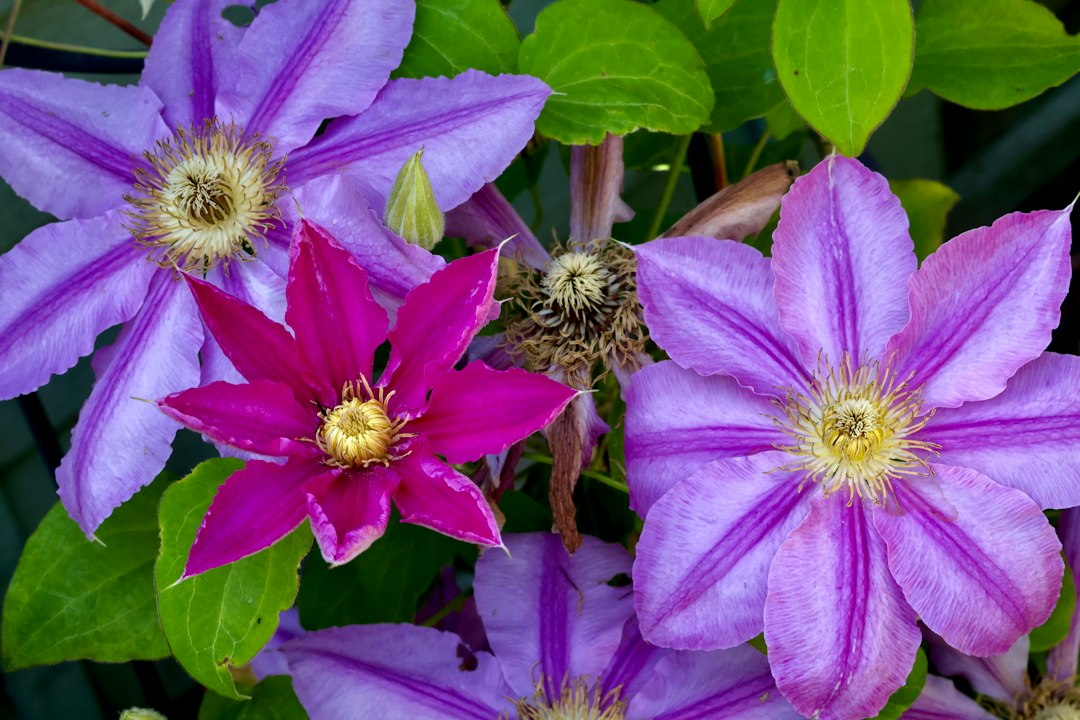
Clematis is one of Europe's most beloved garden climbers, and for very good reason. Known as the 'queen of the vines,' it is perhaps best recognised for its large-flowering, star-shaped blooms on twining vines. Clematis belongs to a genus of about 380 species within the buttercup family, Ranunculaceae, and garden hybrids have been popular among gardeners since Clematis 'Jackmanii' became a staple in 1862. Whether you want to transform a bare fence, soften a pergola, or add vertical drama to a compact garden, there is a clematis for every situation. This complete guide takes you from choosing the right type all the way through to solving common problems, so you can enjoy beautiful blooms year after year.

Key Takeaways
-
Know your pruning group before you do anything else: According to the RHS clematis pruning guide, clematis split into three distinct pruning groups based on flowering time, cutting at the wrong moment costs you a whole season of blooms.
-
Plant the crown deep: The GrowVeg UK and Europe growing guide advises covering the top of the root mass with at least 5 cm of soil and organic matter, deep planting encourages multiple stems and protects against wilt.
-
Feed with potassium, not nitrogen: The Garden Patch UK growing guide recommends a high-potassium fertiliser from early spring; avoid high-nitrogen feeds, which produce leafy growth at the expense of flowers.
-
Colour fading is preventable: Gardener's Path notes that for dark-blossomed varieties, dappled afternoon shade during hot summer months helps retain flower colour and prevents fading, therefore position pastel and dark varieties carefully.
-
Be patient in the first two years: There is an old saying about clematis, as GrowVeg explains, 'the first year they sleep, the second they creep, and the third year they leap.' Plan your expectations accordingly.
Quick-Start Prioritisation Framework
| Your Situation | Best Approach | Effort Level | Time to Results |
|---|---|---|---|
| Complete beginner | Group 3 varieties (e.g. Viticella types) | Low | 1 growing season |
| Small balcony / patio | Compact Group 2 in a large container | Medium | 1-2 seasons |
| Covering a large fence or wall | Vigorous Group 3 (e.g. 'Polish Spirit') | Medium | 2-3 seasons |
| Year-round interest | Mix Group 1 + Group 3 for succession | Medium, High | 2-3 seasons |
| Shady north-facing wall | Alpina or macropetala types (Group 1) | Low | 1-2 seasons |
Start here if you are:
-
A first-time grower: Choose a Group 3 Viticella hybrid. They are cut to the ground each February, so there is no complicated framework to maintain and the reward, masses of flowers from July onwards, arrives quickly.
-
An experienced gardener after spectacular results: Invest in a Group 2 large-flowered hybrid. The double pruning routine is more involved, but the giant blooms in May, June, and again in August, are worth every minute.
-
Gardening in central or eastern Europe (including Hungary): Prioritise fully hardy varieties. Varieties bred in Poland, such as 'Polish Spirit' or 'Niobe', have been proven in central European climates and are widely available from specialist nurseries such as Holland Kertészet.
Choosing the Right Clematis Type
Large-Flowered vs Small-Flowered
Large-flowered clematis are typically characterised by dramatic flowers that are rarely scented, and their foliage is prone to wilt caused by one or more fungi. Small-flowered clematis, by contrast, have an abundance of smaller flowers that are often scented, and their foliage rarely suffers from wilt. For gardeners who want low-maintenance beauty, small-flowered types are the more forgiving choice.
Popular Types for European Gardens
The Atragene group includes early small-flowering clematis that are extremely hardy, undemanding, and among the easiest to grow, featuring delicate bell-shaped flowers in blues, purples, and pinks. They bloom in late spring to early summer and suit rock gardens, borders, and containers.
There are over three thousand large-flowered clematis varieties known, among which a few dozen are of Polish origin. More than a dozen have gained worldwide recognition and are cultivated in millions of gardens across Europe, including Clematis 'Niobe', 'Polish Spirit', 'Jan Paweł II', and 'Błękitny Anioł' (Blue Angel). These central European varieties are notably well-suited to the Hungarian and broader Danubian climate.
Pro Tip: If you are new to clematis, start with a Viticella hybrid or an Alpina type. Both are resistant to clematis wilt, forgiving of imperfect conditions, and absolutely stunning in bloom. The British Clematis Society confirms that small-flowered forms are mostly resistant to the wilt disease that troubles large-flowered hybrids.
Where to Plant Clematis
Sun, Shade, and the 'Head in Sun, Roots in Shade' Rule
Clematis like a sunny location but also prefer cool roots, 'head in the sun and roots in the shade' is the popular saying. If needed, create some shade for the root zone by planting a small shrub or shallow-rooted ground cover in front of the vines.
Flowers of some red, blue, and bicoloured large-flowered hybrids fade if they receive too much sun and should be planted in east-facing exposures or partial shade. Conversely, an eastern exposure is ideal for light-coloured clematis because strong sunlight will fade pastel flowers, while southern and western positions suit clematis in deeper shades of blue, red, and purple. Therefore, before you buy, decide where the plant will live, then choose a variety whose colour suits that position.
Soil Requirements
Clematis prefer slightly alkaline rich soil but tolerate a wide range if it is well-drained and mulched to keep roots cool. The clematis vine is adaptable but struggles in overly acidic soil, as acidic conditions hinder nutrient absorption, leading to stunted growth and diminished blooms. If your garden soil is naturally acidic, consider amending it with lime.

Planting Clematis
Step-by-Step Planting
Plant dormant roots from autumn through to spring, as long as your soil is not frozen. Follow these steps for success:
-
Dig a hole twice as wide and twice as deep as the root ball.
-
Work in well-rotted compost or manure at the base.
-
Plant the crown approximately 7-12 cm below the soil line, this helps encourage stems to emerge from dormant buds, making for a stronger multi-stemmed base.
-
Backfill, firm gently, water thoroughly, and apply a 7-8 cm layer of mulch around the base.
-
Keep the mulch layer away from the base of the plant by about 12-15 cm, and handle the roots with care because damage often kills young plants.
Planting Distances and Support
Leave 2 m between plants when multiple clematis are planted on a fence or wall. Most clematis are grown as single specimens trained up a post or trellis. In containers, plant one plant per 35 cm wide pot, and choose dwarf varieties for container growing.
Pro Tip: Always fix a sturdy support in place before the plant goes in. Tie plants in strongly to the frame, as at full tilt they will carry a lot of weight. Fine-gauge wire mesh or plastic netting works well because the leaf stalks can wrap around small-diameter supports easily.
Watering and Feeding
Watering
Water regularly during the first two seasons while roots establish, and during dry spells in summer when plants are in active growth and flower. Under normal conditions established plants need about 2.5 cm of water weekly. Container-grown clematis dry out far faster than those in the ground, so check the compost daily in warm weather.
Feeding
Feed clematis in early spring as growth resumes with a high-potassium fertiliser, the same feed used for tomatoes works well. Apply a second feed in midsummer to support the second flush of flowers in Group 2 varieties and the main flowering period of Group 3. Avoid high-nitrogen feeds, which produce lush leafy growth at the expense of flowers.
For plants growing in pots, feed twice a month during the growing season to ensure they have all the nutrients they need to thrive. In containers, clematis benefit from being fed throughout spring and summer using an organic-based, general-purpose liquid fertiliser, following the dose rate recommended on the packaging.
Pruning Clematis
The Three Pruning Groups
There are numerous clematis species, hybrids and cultivars, but for pruning purposes they are split into three distinct pruning groups based on the time of flowering and the age of the flowering wood. Getting this right is the single most important skill in clematis growing.
Group 1, Spring bloomers on old wood
Clematis in pruning group one flower early in the year on shoots produced in the previous summer. For this group, no regular pruning is required, but if necessary, prune immediately after flowering in mid- to late spring when the danger of frost has passed. Examples include Clematis alpina and C. montana.
Group 2, Large-flowered repeat bloomers
Clematis in pruning group two are the large-flowered hybrids that flower in May to June and should be pruned in late winter or early spring and after the first flush of flowers in summer. The aim is to retain a framework of old wood and also to stimulate new shoots in order to maximise flowering throughout the season. Examples include 'Nelly Moser' and 'The President'.
Group 3, Late-summer bloomers on new growth
Clematis in pruning group three flower in late summer on growth made in that season and should be pruned in late winter or early spring. These late-flowering clematis are best pruned back hard in February each year to the lowest pair of buds. Examples include 'Polish Spirit' and the Viticella hybrids.
Pro Tip: If you are unsure which group your clematis falls into, observe the flowering time and follow this simple rule: flowering before June, do not prune; flowering from late June onwards, prune in late winter (February). You rarely lose anything by waiting one season to observe before cutting.
First-Year Pruning for All Groups
If young clematis are left unpruned they often produce very long single stems with flowers produced only at the very top. Unless the plant already has three or four healthy stems growing from the base, all newly planted clematis should be pruned back hard the first spring after planting, cutting to just above a strong pair of leaf buds about 30 cm above soil level. This will encourage multiple stems which can be trained into supports to give good coverage.
Changing Flower Colour, What Actually Works
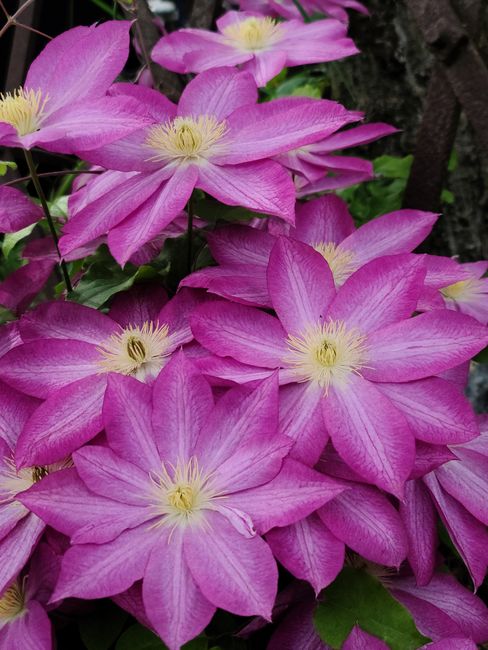
Many gardeners are surprised to discover that their clematis flowers appear paler or more washed-out than on the label. The truth is that clematis flower colour is not stable in the way that hydrangea colour can be manipulated by soil pH. Instead, the biggest influence on colour intensity is light exposure.
The popular 'Nelly Moser' is famed for its stunning 20 cm wide flowers, but since the flower colour fades in strong sun, it is best grown in a more shaded position. For dark-blossomed specimens such as the deep purple C. x jackmanii, a spot with dappled or light afternoon shade in the hot summer months helps to retain flower colour and prevent fading.
Soil nutrition also plays a role. Applying a potash-based fertiliser every 3-4 weeks from April through to the end of September will improve the colour, size, and quantity of clematis blooms. Therefore, if your flowers look dull, check both the position and your feeding routine before changing the variety.
Winter Care
Protecting Established Plants
Most clematis grown across Europe are hardy enough to survive winter without special attention. Cold hardiness varies with cultivar, with many clematis hardy to -34°C. However, the crown and roots benefit from a little extra help in central European winters, especially in Hungary where temperatures can drop sharply.
For cold winters or occasional cold snaps, your clematis will appreciate a generous layer of mulch, which insulates the roots and provides protection from drying winds and extreme temperatures. Place mulch around the base of the plant to insulate the roots, adding a thick layer approximately 10-15 cm deep and spreading it to a 60 cm radius around the base, which helps insulate the roots and protect them from harsh winter weather.
Protecting Container Plants
Container-grown clematis need extra care in winter: move pots to a protected area such as an unheated shed or close to a building foundation, insulate plastic pots by wrapping them in bubble wrap or burlap, and surround pots with bagged leaves, straw bales, or other insulating materials.
It is important to understand that it is not the freezing itself that harms the plant but the freeze-thaw-freeze cycles. Therefore, consistent insulation that prevents temperature swings matters more than total protection from cold.
Common Problems and How to Solve Them
Clematis Wilt
Clematis wilt is a fungal disease of clematis, particularly the large-flowered hybrid cultivars. The fungus causes rapid wilting and can kill the whole plant. Plants with true clematis wilt disease will suddenly completely collapse overnight, the foliage turns black (not brown) and the veins take on a purple colour. If not, then it is more likely to be physical damage to the stems.
Clematis wilt is caused by infection with a fungus which results in the sudden wilting and collapse of the upper parts of the plant. The plant can sometimes be saved by cutting back below the level of infection, even if this means cutting it down to ground level. The infected material should be carefully removed because the fungus can live in it for many months.
The good news, as the British Clematis Society notes, is that wilt is actually relatively rare even though it is usually blamed for any and all collapsed clematis.
Aphids, Slugs, and Other Pests
Various greenfly and blackfly attack clematis, especially during spring and early summer. Heavy infestations at the shoot tips can stunt growth and soil foliage with honeydew. Black, sooty moulds can develop in this substance. Check new growth for aphids and, if necessary, spray with an appropriate pesticide or attract aphid predators such as ladybirds.
If young leaves appear distorted or torn and are full of small, brown-edged holes, the likely culprits are capsid bugs. Slugs and snails also feed on clematis leaves. Protect young shoots at ground level with a collar of pipe or cut plastic bottle, especially in spring.
No Flowers on a Group 3
No flowers on a Group 3 plant is almost always caused by not pruning hard enough, or pruning too late. Cut back to 30 cm in late winter. Too much nitrogen feed can also suppress flowering, switch to a high-potassium feed.
Powdery Mildew
To help prevent fungal disease in general, improve growing conditions by providing plenty of air circulation between plants and structures, and adjust watering methods to allow for evenly moist soils. Water at the base of the plant rather than from above, and thin congested growth in late summer.
Frequently Asked Questions
When is the best time to plant clematis?
Plant dormant roots from autumn through to spring, as long as your soil is not frozen. Container-grown plants can be set out until early summer. Autumn planting is ideal across central Europe, including Hungary, as it gives roots time to establish before the growing season.
How deep should I plant clematis?
Plant the crown approximately 7-12 cm below the soil line. This helps encourage stems to emerge from dormant buds, making for a stronger multi-stemmed base. Deep planting also helps the plant survive a bout of clematis wilt, as new shoots can regenerate from below soil level.
Why are my clematis flowers fading?
Flowers of some red, blue, and bicoloured large-flowered hybrids fade if they get too much sun. These should be planted in east-facing exposures or partial shade. If the plant is already in position, add a low-growing shrub or ground cover plants in front to shade the base and reduce reflected heat on the lower flowers.
How often should I feed my clematis?
Feed clematis in early spring as growth resumes with a high-potassium fertiliser. Apply a second feed in midsummer to support the second flush of flowers in Group 2 varieties and the main flowering period of Group 3. For container plants, feed twice a month during the growing season. Stop feeding after September to allow the plant to harden off before winter.
My clematis has suddenly wilted, is it dead?
Probably not. Whether wilting is caused by disease or by stem damage, providing the plant is otherwise strong, new shoots should be produced from the base of the plant or from below ground level. Cut all affected stems back to ground level, dispose of the material in the bin (never the compost heap), keep the plant watered, and wait. Most clematis recover fully within one season.
A Final Word
Clematis rewards the gardener who takes a little time to understand its needs. Regular pruning encourages strong healthy growth, improves flowering, and keeps clematis plants in check. Match the variety to the position, feed with potassium rather than nitrogen, plant deep, and you will have a climber that puts on a magnificent display year after year. Whether you are starting from scratch or refreshing an existing plant, the team at Holland Kertészet can help you find the right variety for your garden and climate.
Sources
-
How to Grow Clematis, GrowVeg UK and Europe. Growing guide covering planting, spacing, and care. https://www.growveg.co.uk/plants/uk-and-europe/how-to-grow-clematis/
-
Clematis Pruning Guide, Royal Horticultural Society (RHS). Overview of all three pruning groups. https://www.rhs.org.uk/plants/clematis/pruning-guide
-
Clematis Pruning Group One, Royal Horticultural Society (RHS). Detailed advice for spring-flowering clematis. https://www.rhs.org.uk/plants/clematis/group-one-pruning-guide
-
Clematis Pruning Group Two, Royal Horticultural Society (RHS). Large-flowered hybrid pruning advice. https://www.rhs.org.uk/plants/clematis/group-two-pruning-guide
-
Clematis Pruning Group Three, Royal Horticultural Society (RHS). Late-summer clematis pruning guide. https://www.rhs.org.uk/plants/clematis/group-three-pruning-guide
-
Clematis Growing Guide, Royal Horticultural Society (RHS). Feeding, containers, and propagation. https://www.rhs.org.uk/plants/clematis/growing-guide
-
Pests and Diseases, British Clematis Society. Comprehensive guide to clematis wilt, aphids, and other problems. https://britishclematis.org.uk/pests-and-diseases/
-
Clematis Wilt, Notcutts. Symptoms, causes and remedies for clematis wilt disease. https://www.notcutts.co.uk/garden-advice/problems-pests/diseases/clematis-wilt
-
How to Grow Clematis in the UK, The Garden Patch. Month-by-month care calendar including feeding and pruning. https://www.greengaffer.co.uk/raised-garden-beds/how-to-grow-clematis-uk/
-
How to Grow and Care for Clematis, Gardener's Path. Detailed guidance on variety selection, colour retention, and containers. https://gardenerspath.com/plants/flowers/grow-clematis/
-
How and When to Fertilise Clematis, Homes and Gardens. Expert advice on feeding clematis in containers and borders. https://www.homesandgardens.com/gardens/how-and-when-to-fertilize-clematis
-
Feeding and Plant Health, Thorncroft Clematis. Specialist nursery advice on fertiliser timing and potash use. https://www.thorncroftclematis.co.uk/feeding-plant-health
-
Clematis for Shade, Horticulture.co.uk / International Clematis Society. Variety recommendations and colour-fading advice. https://horticulture.co.uk/blogs/growing/clematis-for-shade
-
Clematis Varieties, Clematis.com.pl (Poland). European-bred varieties including Polish cultivars widely grown in central Europe. https://www.clematis.com.pl/en/vines-in-garden/clematis/498-odmiany2/
-
Clematis Winter Care, Gardener's Path. Protecting vines from freezing temperatures and hard frosts. https://gardenerspath.com/plants/flowers/clematis-winter-care/


