

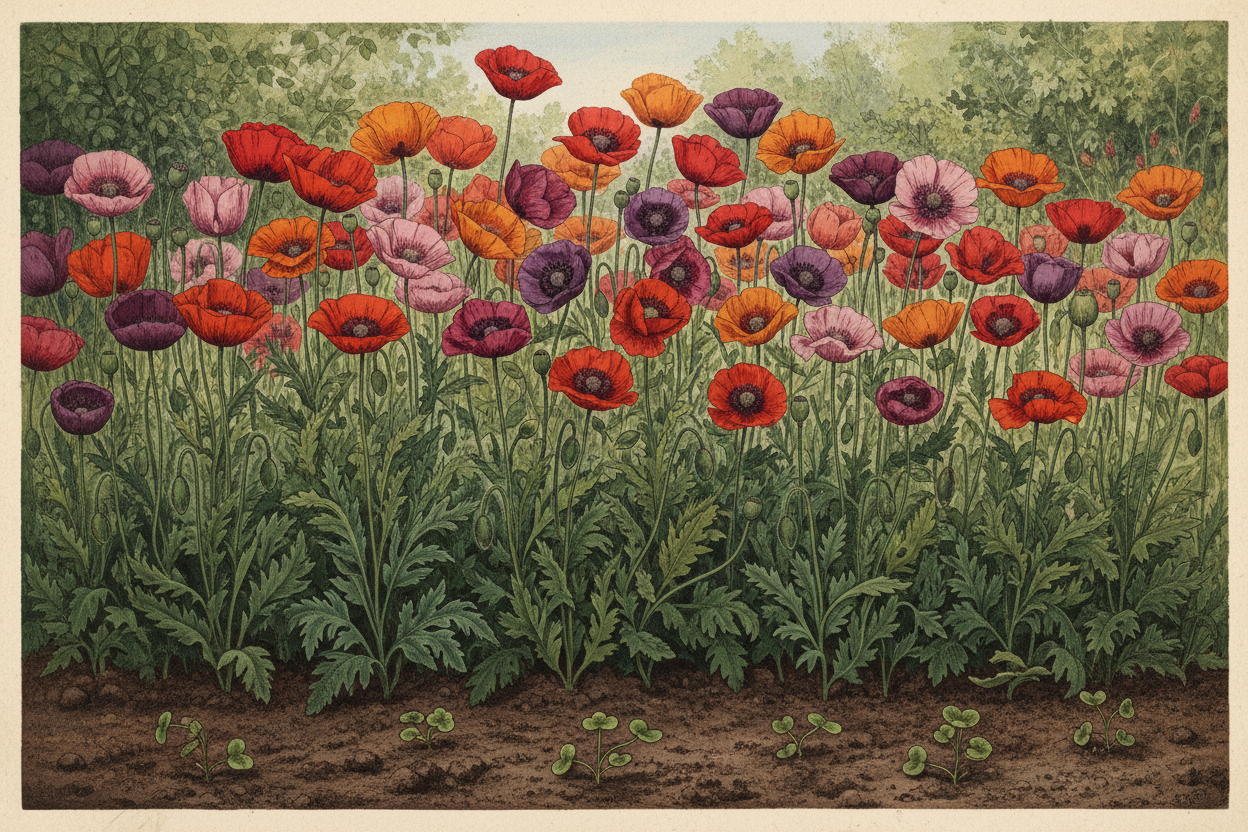
Mohnblumen faszinieren Gärtner seit Jahrhunderten, und das aus gutem Grund. Ihre seidenpapierartigen Blütenblätter, das explosive Farbspektrum und ihre bemerkenswerte Widerstandsfähigkeit machen sie zu einer der lohnendsten Blumen für jeden Gärtner. Um eine beeindruckende Mohnpracht zu erzielen, kommt es vor allem auf die Wahl der richtigen Sorte, die Aussaat zum richtigen Zeitpunkt direkt in gut durchlässigen Boden und die Ernte der Samenkapseln an, sobald sie rascheln. Egal, ob Sie einen weitläufigen Bauerngarten oder ein kleines Hochbeet besitzen, dieser Leitfaden deckt alles ab – vom ersten Samen bis zur letzten Ernte.

Bei Holland Kertészet wissen wir, dass der Start mit hochwertigem Saatgut und fundiertem Gärtnerwissen den Unterschied zwischen einem spärlichen Blühen und einem atemberaubenden saisonalen Schauspiel ausmacht. Meiner Erfahrung nach haben diejenigen Gärtner die meisten Probleme mit Mohn, die den Prozess unnötig verkomplizieren. Diese Blumen gedeihen am besten, wenn man sie nach dem Anwachsen weitgehend sich selbst überlässt.
Wichtige Erkenntnisse
-
Direktsaat ist unumgänglich: Die meisten Mohnarten bilden Pfahlwurzeln und lassen sich nur schwer verpflanzen. Die Direktaussaat ist der beste Weg, um gesunde Pflanzen und eine Fülle papierartiger Blüten zu erhalten. Säen Sie dort, wo sie wachsen sollen, und widerstehen Sie dem Drang, sie im Haus vorzuziehen.
-
Das Timing ist alles: Mohnsamen sollten im zeitigen Frühjahr gepflanzt werden, sobald der Boden bearbeitbar ist – normalerweise etwa einen Monat vor dem voraussichtlichen letzten Frosttermin – oder im Herbst, nachdem bereits mehrere starke Fröste aufgetreten sind. Wenn Sie diese Zeitfenster verpassen, werden die Ergebnisse enttäuschend sein.
-
Licht, nicht Tiefe, löst die Keimung aus: Mohnsamen sollten auf die Erde gestreut statt eingegraben werden, da sie Licht zum Keimen benötigen. Selbst eine zentimeterdicke Erdschicht kann das Lichtsignal vollständig blockieren.
-
Trockentoleranz ist ein echter Vorteil: Sobald der Mohn angewachsen ist, müssen Sie ihn wahrscheinlich gar nicht mehr gießen, außer bei extremer Trockenheit. Sobald sie keine empfindlichen Sämlinge mehr sind, macht trockenes Substrat dem Mohn nichts aus. Übermäßiges Gießen ist die häufigste Ursache für das Scheitern.
-
Die Samenernte folgt einem klaren Signal: Sie erkennen die Reife der Kapseln daran, dass Sie den Stängel schütteln. Wenn die Kapsel raschelt, ist das ein guter Indikator dafür, dass es Zeit für die Ernte ist, normalerweise 80 bis 90 Tage nach der Pflanzung. Ernten Sie an einem trockenen Tag, um die Keimfähigkeit der Samen zu erhalten.
Schnellstart-Priorisierungsrahmen
| Sorte | Ideal für | Aufwand | Zeit bis zur ersten Blüte |
|---|---|---|---|
| Klatschmohn (Papaver rhoeas) | Wildblumenwiesen, Anfänger | Gering | 60–90 Tage |
| Schlafmohn (P. somniferum) | Essbare Samen, Schnittgärten | Gering | 70–90 Tage |
| Pfingstrosenmohn (P. paeoniflorum) | Bauerngärten, gefüllte Blüten | Gering bis Mittel | 70–90 Tage |
| Türkenmohn (P. orientale) | Staudenbeete, Akzente | Mittel | Zweite Saison |
| Kalifornischer Goldmohn (Eschscholzia californica) | Trockene, sonnige Beete, Verwilderung | Gering | 60–75 Tage |
| Islandmohn (P. nudicaule) | Kühle Klimazonen, Schnittblumen | Mittel | 80–100 Tage |
Starten Sie hier, wenn Sie:
-
Ein absoluter Anfänger sind: Klatschmohn (Papaver rhoeas); streuen Sie die Samen im zeitigen Frühjahr auf kahlen Boden und warten Sie einfach ab.
-
Ein Fan von Bauerngärten sind: Pfingstrosenmohn wegen seiner spektakulären gefüllten Blüten und attraktiven Samenkapseln.
-
Ein Staudenbeet anlegen: Türkenmohn; investieren Sie im ersten Jahr für zuverlässige, großflächige Erträge in jeder darauffolgenden Saison.
-
Einen trockenen oder sandigen Garten haben: Kalifornischer Goldmohn, der in kargen Böden gedeiht und sich zuverlässig ohne menschliches Zutun selbst aussät.
Die Wahl der richtigen Mohnsorte
Einjährig, zweijährig und mehrjährig: Was ist der Unterschied?
Weltweit gibt es etwa 250 Mohnarten, darunter einjährige, zweijährige und mehrjährige Sorten. Das Verständnis des Lebenszyklus Ihrer gewählten Sorte verhindert die häufigsten frühen Fehler.
Einige der beliebtesten einjährigen Mohnarten, die man aus Samen ziehen kann, sind Schlafmohn (Papaver somniferum), Klatschmohn (Papaver rhoeas), Pfingstrosenmohn (Papaver paeoniflorum) und Kalifornischer Goldmohn (Eschscholzia californica). Diese schließen ihren gesamten Lebenszyklus in einer einzigen Vegetationsperiode ab, was sie ideal für Gärtner macht, die schnelle und flexible Ergebnisse wünschen.
Türkenmohn gedeiht in Regionen mit kalten Wintern und verträgt Frost-Tau-Zyklen besser als viele andere Stauden. Wenn Sie Jahr für Jahr Farbe wünschen, ohne neu säen zu müssen, ist Türkenmohn eine sinnvolle Investition. Da er ab Mitte des Sommers ruht, planen Sie eine Begleitbepflanzung, um die Lücke zu füllen.
Farbpalette und Wuchshöhe
Die Farben variieren je nach Art und reichen von leuchtenden Tönen wie Karmesinrot und strahlendem Orange bis hin zu sanfteren Pastelltönen wie Rosa, Rosé, Flieder und Creme. Die becherförmigen Blüten können einfach, gefüllt oder halbgefüllt sein, mit unterschiedlichen Texturen, die von Krepppapier-ähnlich bis hin zu seidig reichen.
Mohnpflanzen können je nach Sorte zwischen 30 und 120 cm hoch werden. Sie können 30 bis 60 cm in die Breite wachsen. Positionieren Sie daher höhere Sorten wie Schlaf- und Türkenmohn im hinteren Bereich von Beeten und niedrig wachsende Sorten wie Gold- und Klatschmohn im Vordergrund.
Profi-Tipp: Schlafmohn ist eine pflegeleichte einjährige Pflanze, die sehr einfach aus Samen gezogen werden kann. Die Pflanzen werden 90–120 cm hoch und produzieren große, untertassenförmige Blüten in faszinierenden Schattierungen von Violett, Weiß, Mauve, Lachs, Pink und Rot. Die meisten haben dunkle Flecken an den Blütenblättern, die die zentrale Kapsel umgeben. Die reifen Samen sind essbar und können zum Kochen und Backen gesammelt werden.
Vorbereitung des Bodens und Standortwahl
Lichtbedarf
Wenn Sie wissen möchten, wie man Mohnsamen mit der größten Erfolgsaussicht anbaut, stellen Sie sicher, dass sie viel direktes Sonnenlicht erhalten. Mohnblumen sind klassische Vollsonnenpflanzen; je mehr Sonne sie bekommen, desto kräftiger und blühfreudiger sind sie. Volle Sonne ist entscheidend für starke Stängel, üppige Blüten und leuchtende Farben.
Wählen Sie einen Standort, an dem der Mohn täglich mindestens 6 Stunden Sonnenlicht erhält. Für eine optimale Blüte sind 8 Stunden sogar noch besser. Wenn Ihr gewählter Platz nur Halbschatten bekommt, sollten Sie mit weniger Blüten und dünnen, langen Stängeln rechnen – ziehen Sie den Mohn dann lieber an einen sonnigeren Ort um, anstatt es dort zu erzwingen.
Bodentyp und pH-Wert
Mohn bevorzugt gut durchlässigen Boden mit einem neutralen bis leicht alkalischen pH-Wert (6,5 bis 7,5). Bereiten Sie Ihr Beet vor, indem Sie Unkraut entfernen und organisches Material wie Kompost einarbeiten. Vermeiden Sie schwere Lehmböden, da diese zu viel Wasser speichern und zu Wurzelfäule führen können. Verbessern Sie den Boden bei Bedarf mit Sand oder Kies, um die Drainage zu fördern.
Mohn ist nicht besonders wählerisch, was die Bodenfruchtbarkeit angeht; im Gegenteil, sehr nährstoffreicher Boden mit hohem Stickstoffgehalt führt oft zu üppigem Blattwerk, aber weniger Blüten. Ein magerer, gut durchlässiger Boden imitiert seine natürlichen Lebensräume wie kalkhaltige Felder oder alpine Hänge und führt oft zu intensiveren Blüten. Dies ist ein wichtiger Hinweis: Widerstehen Sie der Versuchung, Ihren Boden vor der Aussaat übermäßig zu düngen.
Ich habe festgestellt, dass dies für Gärtner, die es gewohnt sind, alles stark zu düngen, kontraintuitiv ist. Beim Mohn gilt beim Dünger wirklich: Weniger ist mehr.

Schritt-für-Schritt: Mohnsamen säen und zum Keimen bringen
Schritt 1: Zeitpunkt der Aussaat
Mohnsamen sollten im zeitigen Frühjahr gepflanzt werden, sobald der Boden bearbeitbar ist – normalerweise etwa einen Monat vor dem letzten voraussichtlichen Frost – oder im Herbst, nachdem bereits mehrere starke Fröste aufgetreten sind. Da sie bei kühlem Wetter und kühlen Böden am besten keimen, können im Boden überwinterte Mohnsamen manchmal sogar noch kräftiger ausschlagen als frisch gesäte.
Für eine Herbstaussaat in Ungarn säen Sie am besten zwischen Ende August und Oktober für mehr Blüten in der ersten Saison. Dies ist die Methode, die die meisten erfahrenen Gärtner anwenden, um das dichtestmögliche Frühjahrs-Schauspiel zu erreichen.
Schritt 2: Vorbereitung und Aussaat
Die beste Methode für die Aussaat ist, einen Teil Saatgut mit fünf Teilen Sand zu mischen und über den vorbereiteten Bereich zu streuen. Bei einer Reihensaat halten Sie einen Abstand von 15 bis 20 cm ein. Der Sand verdünnt das feine Saatgut und hilft Ihnen dabei, eine gleichmäßige Abdeckung ohne verschwenderische Klumpen zu erzielen.
Drücken Sie die Mohnsamen sanft auf die Bodenoberfläche; decken Sie sie nicht ab, da sie Licht zum Keimen benötigen. Halten Sie die Samen feucht, aber achten Sie darauf, sie nicht wegzuspülen. Ein feiner Sprühaufsatz für Ihren Schlauch ist hier ideal; ein Strahl mit vollem Druck würde die Samen komplett wegwaschen.
Profi-Tipp: Mohnsämlinge haben einen blau-grünen Schimmer auf ihren Blättern, im Gegensatz zu den meisten jungen Unkräutern in der Umgebung. Wenn Sie lernen, Mohnsämlinge frühzeitig von Unkraut zu unterscheiden, bewahrt Sie das davor, versehentlich eine ganze Saison voller Blumen auszureißen.
Schritt 3: Keimung und Vereinzeln
Das Saatbeet sollte feucht gehalten werden, bis die Pflanzen erscheinen, was je nach Bodentemperatur 7 bis 28 Tage dauert. Lassen Sie sich von einer langsamen Keimung im kalten Frühjahr nicht beunruhigen. Geduld zahlt sich hier aus.
Sobald die Mohnsämlinge erscheinen, vereinzeln Sie diese auf einen Abstand von 15 bis 20 cm. Das Ausdünnen fühlt sich grausam an, aber zu dicht stehende Sämlinge produzieren kleinere Blüten und sind viel anfälliger für Pilzkrankheiten. Dünnen Sie aus, bevor die Pflanzen eine Höhe von 15 cm erreichen.
Pflege von Mohn während der Vegetationsperiode
Richtiges Gießen
Der Wasserbedarf von Mohn variiert je nach Entwicklungsstadium. Während Samen und Sämlinge einen konstant feuchten Boden mögen, sind ausgewachsene Pflanzen toleranter gegenüber Trockenheit und sollten bei Bedarf gegossen werden.
Übermäßiges Gießen ist ein häufiger Fehler; überschüssiges Wasser kann dazu führen, dass die hohen Mohnstängel umknicken und Mehltau auf den Blättern fördern. Die Faustregel: Lassen Sie die oberste Erdschicht zwischen den Wassergaben antrocknen, sobald die Pflanzen etabliert sind, und gießen Sie niemals abends von oben auf die Blätter.
Düngen und Nährstoffzufuhr
Mohn gedeiht generell gut in nährstoffreichem Boden und benötigt keine intensive Düngung. Verwenden Sie während der Wachstumsphase sparsam einen organischen, ausgewogenen Dünger. Zu viel Stickstoff kann zu übermäßigem Blattwachstum auf Kosten der Blüten führen.
In der Praxis habe ich festgestellt, dass ein gut vorbereiteter Boden mit einer moderaten Kompostzugabe bei der Pflanzung meist alles ist, was Mohnsorten benötigen. Übermäßiges Düngen ist einer der häufigsten Fehler von Anfängern.
Verblühtes entfernen (Deadheading) für längere Blütezeit
Islandmohn und Kalifornischer Goldmohn reagieren gut auf das Entfernen von verblühten Blüten und produzieren kontinuierlich neue Wellen von Blüten. Schneiden Sie beim Türkenmohn die Stängel nach der Blüte zurück, um die Pflanze aufzuräumen, aber entfernen Sie nicht die neuen Rosetten, die sich an der Basis bilden.
Mohnpflanzen blühen für einige Wochen, aber die Blühdauer kann durch regelmäßiges Gießen, das Mulchen zur Feuchtigkeitsspeicherung sowie regelmäßiges Entfernen der verwelkten Blüten verlängert werden. Es wird außerdem empfohlen, Samen gestaffelt zu säen, um die Blütezeit zu verlängern. Die Aussaat im Abstand von zwei bis drei Wochen ist eine einfache, effektive Methode, um den Garten länger farbenfroh zu halten.
Schädlinge und Krankheiten
Schwarze Bohnenläuse können die Mohnknospen kurz vor der Blüte befallen. Verwenden Sie Insektizidseife oder einen kräftigen Wasserstrahl, um die Blattläuse von den Pflanzen zu entfernen.
Pilzkrankheiten wie falscher oder echter Mehltau können junge Sämlinge abtöten oder Wachstumsstörungen verursachen. Eine Kapselinfektion führt zur Bildung großer, samtig schwarzer Flecken auf den grünen Samenkapseln. Sobald Symptome sichtbar werden, ist der Schaden bereits irreparabel. Vermeiden Sie feuchte oder nasse Bedingungen sowie Bewässerung von oben, die die Krankheitsentwicklung begünstigen. Gießen Sie daher immer direkt an der Basis der Pflanze und stellen Sie sicher, dass der Abstand für eine ausreichende Luftzirkulation ausreicht.

Ernte von Mohnsamen und Kapseln
Wann man erntet
Mohnsamen sind zur Sammlung bereit, sobald die Samenkapsel getrocknet und braun geworden ist. Es gibt normalerweise kleine Lücken zwischen der Kappe und dem Körper der Samenkapsel, und wenn Sie die Kapsel leicht schütteln, sollten Sie die Samen im Inneren rascheln hören.
Die Blüte beginnt im späten Frühjahr bis zum Frühsommer, gefolgt von der Reifung der Samenkapseln im Hoch- bis Spätsommer, also etwa 80 bis 90 Tage nach der Pflanzung. Ernten Sie bei trockenem Wetter, wenn die Samen in der Kapsel zu rascheln beginnen. Eine Ernte bei feuchtem Wetter birgt das Risiko von Schimmelbildung, bevor Sie die Samen richtig trocknen können.
Wie man Samen sammelt und lagert
Sobald die Kapseln getrocknet und braun sind, können Sie die Mohnsamen für die Aussaat im nächsten Jahr oder für kulinarische Zwecke ernten. Schneiden Sie die Kapseln mit einem kurzen Stängelstück von der Pflanze ab. Legen Sie die Kapseln in eine Papiertüte und bewahren Sie diese ein bis zwei Wochen an einem kühlen, trockenen Ort auf, damit sie weiter trocknen können. Schütteln Sie die Tüte, um die Samen aus den Kapseln zu lösen, trennen Sie sie von Pflanzenresten und bewahren Sie sie in einem luftdichten Behälter an einem kühlen, dunklen Ort auf, bis es wieder Zeit für die Aussaat ist.
Bei richtiger Lagerung bleiben Mohnsamen 2 bis 3 Jahre keimfähig. Die Verwendung im ersten Jahr liefert jedoch die besten Ergebnisse. Beschriften Sie jeden Behälter mit dem Sortennamen und dem Erntedatum – diese Gewohnheit, die Sie nach einigen Saisons entwickeln, wird Ihre jährliche Aussaatroutine erheblich organisierter machen.
Profi-Tipp: Um Samenkapseln zu ernten, schneiden Sie diese, wenn sie hellbraun werden, und lassen Sie sie ein bis zwei Wochen trocknen, bevor Sie sie aufbrechen und die Samen für bis zu zwei Jahre in einem Glas lagern. Wenn Sie eine bestimmte Sorte sortenrein erhalten möchten, umhüllen Sie einzelne Kapseln mit feinem Musselin, bevor sie vollständig trocknen, um eine Fremdbestäubung durch benachbarte Sorten zu verhindern.
Häufige Fehler, die es zu vermeiden gilt
Samen zu tief eingraben
Dies ist der häufigste Grund für das Scheitern der Keimung. Die meisten Mohnarten benötigen Licht zum Keimen. Wenn Sie die Samen zu tief pflanzen, werden Sie enttäuschende Ergebnisse erzielen. Säen Sie oberflächlich, drücken Sie sie leicht an und widerstehen Sie jedem Instinkt, sie mit einer Schicht Kompost zu bedecken.
Zu späte Aussaat im Frühjahr
Mohn bevorzugt kühles Wetter. Die Blühfreudigkeit lässt bei Mohn nach, wenn die Temperaturen in den Sommermonaten steigen. Wenn Sie im späten Frühjahr säen, wenn der Boden bereits warm ist, erhalten Sie eine schlechte Keimung und eine verkürzte Blütezeit. Säen Sie früh oder im Herbst.
Verpflanzen statt Direktsaat
Mohn ist bekannt dafür, dass er sich nur schwer verpflanzen lässt, daher wird das Vorziehen im Haus nicht empfohlen. Wenn Sie unbedingt im Haus starten müssen, verwenden Sie biologisch abbaubare Torf- oder Kokostöpfe, die im Ganzen in den Boden gepflanzt werden können, ohne die Wurzeln zu stören.
Übermäßiges Gießen etablierter Pflanzen
Anzeichen für eine übermäßig gegossene Pflanze sind braun werdende Blätter, welkende Stängel, hängende Blüten und ein fauliger Wurzelballen. Wenn Sie diese Symptome bemerken, reduzieren Sie sofort die Wassergabe und verbessern Sie die Drainage um die Pflanze, bevor das Wurzelsystem dauerhaft geschädigt wird.
Profi-Tipp: Mohn ist ein hervorragender Begleiter für Bestäuber. Der reichhaltige Pollen, der zu schwer ist, um Allergien beim Menschen auszulösen, liefert Honigbienen zudem eine wichtige Energiequelle. Mohn in der Nähe von Gemüsebeeten anzupflanzen, kommt Ihren Nutzpflanzen aktiv zugute, da er Bestäuber früh in der Saison anlockt.

Häufig gestellte Fragen
Wann ist der beste Zeitpunkt, um Mohnsamen in Ungarn zu säen?
Säen Sie Mohnsamen direkt im Frühjahr oder Herbst in Ihren Garten. Bei einer Pflanzung zu Beginn des Jahres ist der Zeitraum zwischen März und Mai ideal, allerdings müssen Sie bis zum nächsten Sommer auf eine gesunde Pracht warten. Säen Sie zwischen Ende August und Oktober für mehr Blüten in der ersten Saison. Die Herbstaussaat produziert im Allgemeinen stärkere Pflanzen und eine frühere Blüte als eine Frühjahrsaussaat.
Kommt Mohn jedes Jahr wieder?
Sobald sich Mohn an einem Ort wohlfühlt, sät er sich leicht selbst aus, um den Bestand Jahr für Jahr zu erhalten. Einjährige Sorten überleben den Winter nicht als Pflanzen, aber sie werfen reichlich Samen ab, die in der nächsten Saison keimen. Mehrjährige Arten wie der Türkenmohn ziehen sich im Winter in den Boden zurück und treiben jeden Frühling zuverlässig neu aus.
Wie lange dauert es, bis Mohn aus Samen blüht?
Das hängt stark von Ihrer Klimazone, dem Pflanzzeitpunkt und den Wetterbedingungen ab. Herbstgesäter Mohn kann insgesamt länger brauchen, produziert aber tendenziell größere, robustere Pflanzen, wenn er blüht.
Kann ich Mohn in Gefäßen anbauen?
Der Anbau von Mohn in Töpfen ist einfach; am besten gedeiht die Pflanze in einem mittelgroßen Gefäß. Da Mohn keine staunassen Böden verträgt, stellen Sie sicher, dass der Topf über ausreichende Abzugslöcher verfügt, damit das Wasser ungehindert abfließen kann. Verwenden Sie eine lehmhaltige Pflanzerde, die mit etwas Sand oder Kies gemischt ist, und stellen Sie den Behälter in die volle Sonne. Mohn in Gefäßen muss häufiger gegossen werden als Pflanzen im Beet, insbesondere bei warmem Wetter.
Ist Mohn giftig für Haustiere?
Einige Mohnsorten, insbesondere der Schlafmohn (Papaver somniferum), können beim Verzehr für Haustiere giftig sein. Es ist ratsam, Ihren Tierarzt zu konsultieren, wenn Sie Bedenken bezüglich bestimmter Mohnsorten und Ihrer Haustiere haben. Pflanzen Sie den Mohn vorsichtshalber in Bereichen, die für Katzen und Hunde nicht frei zugänglich sind, und entfernen Sie abgefallene Blütenblätter und Samenkapseln umgehend.
Fazit
Mohn vom Samen bis zur Blüte zu züchten, ist eines der einfachsten und optisch beeindruckendsten Gartenprojekte. Wählen Sie Ihre Sorte sorgfältig aus, säen Sie sie zur richtigen Zeit direkt in gut durchlässigen Boden, zögern Sie nicht beim Ausdünnen der Sämlinge und vermeiden Sie übermäßiges Gießen. Der Lohn sind wochenlange, leuchtende Blüten, die an Seidenpapier erinnern, sowie ein selbsterhaltender Samenkreislauf, der Jahre anhalten kann. Entdecken Sie das gesamte Sortiment an Mohnsamen und saisonalem Pflanzbedarf bei Holland Kertészet, um die perfekten Sorten für Ihren Garten zu finden.
Quellen
-
How to Grow Poppies From Seed for a Poppy Superbloom, Sow Right Seeds. Anleitung zu Pflanzung, Keimung und Pflege. https://sowrightseeds.com/blogs/planters-library/how-to-grow-poppies-from-seed
-
Seed Poppy in the Garden, Utah State University Extension. Maßgeblicher Leitfaden für Anbau, Ernte und Lagerung. https://extension.usu.edu/yardandgarden/research/seed-poppy-in-the-garden
-
Growing Poppies From Seed, Ultimate Poppy Care Guide, Gardening Know How. Umfassende Informationen zu Sorten und Pflege. https://www.gardeningknowhow.com/ornamental/flowers/poppy/growing-poppy-flowers.htm
-
How to Grow Poppies from Seed, Hudson Valley Seed. Sortenprofile und Technik der Direktsaat. https://hudsonvalleyseed.com/blogs/blog/how-to-grow-poppies-from-seed
-
How to Grow Poppies from Seed (+ how to save seeds!), Unruly Gardening. Praktische Ratschläge zur Aussaat und Samengewinnung. https://unrulygardening.com/grow-poppies-from-seed/
-
How to Plant Poppy Flower Seeds, Gardeners Basics. Sortenauswahl, Bodenvorbereitung und Ernte. https://www.gardenersbasics.com/tools/blog/how-to-plant-poppy-flower-seeds
-
How to Grow Poppies in Your Garden, Thompson & Morgan. UK-spezifische Zeitfenster für die Aussaat und Pflegekalender. Es gibt etwa 250 Arten
-
How to Plant Poppy Seeds, Eden Brothers. Zonenspezifische Aussaat, Abstände und Blütezeitpunkt. Mohnpflanzen blühen für ein paar
-
Growing Poppies From Seed: Expert Tips for Success, Savvy Gardening. Experten-Sortenprofile und Vorteile für Bestäuber. Die meisten Mohnarten bilden
-
Saving Poppy Seeds: How and When to Harvest, Gardening Know How. Erntezeitpunkt und Lagermethoden. https://www.gardeningknowhow.com/ornamental/flowers/poppy/saving-poppy-seeds.htm
-
How to Collect and Store Poppy Seeds, The Happier Garden. Techniken zur Samenernte und -lagerung. https://www.thehappiergarden.com/blog/collecting-poppy-seeds
-
Poppy Seeds: How to Collect, Harvest, Store, and Save, Agrolearner. Daten zur Keimfähigkeit und Lebensdauer der Lagerung. https://agrolearner.com/poppy-seeds/
-
Growing Poppies: A Complete Guide, Grow Organic. Bodenvorbereitung, Schädlingsbekämpfung und nachhaltige Praktiken. https://www.groworganic.com/blogs/articles/growing-poppies-a-complete-guide
-
Tips for Growing Happy and Healthy Poppies, House Digest. Boden-pH-Wert, Gießpläne und häufige Fehler. https://www.housedigest.com/1480168/best-ways-grow-poppy-flower-blooms-garden/
-
How to Plant, Grow, and Care for Poppies, Epic Gardening. Bodenbeschaffenheit, Drainage und Temperaturtoleranz. https://www.epicgardening.com/poppies/
-
How to Grow Poppies: 8 Tips, Growing In The Garden. Praktische Tipps zu Abständen, Keimung und Sortenauswahl. https://growinginthegarden.com/how-to-grow-poppies-8-tips-for-growing-poppies/
-
Poppies: Plant Profile, Care, Toxicity, Vase Life, Your Flowers Guide. Boden-pH-Wert, Gießstrategie und Risiken bei Überwässerung. https://yourflowersguide.com/poppies/
-
Growing Poppies in Pots, Balcony Garden Web. Ratschläge zur Kultivierung in Kübeln und Tipps zur Erdmischung. https://balconygardenweb.com/growing-poppies-in-pots-care-how-to-grow-poppies-in-containers/


