

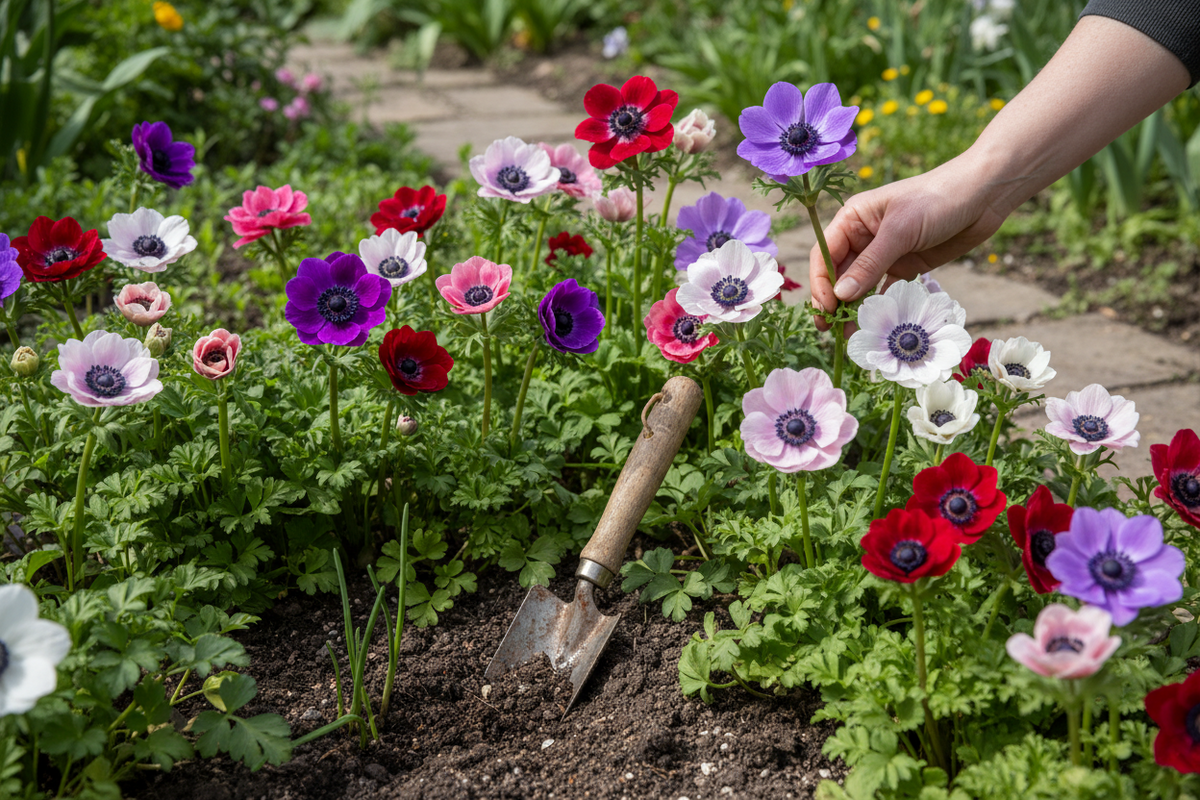
Anemones are one of the most rewarding flowers you can grow, provided you respect a few non-negotiable rules from the start. The name "anemone" comes from the Greek word for "windflower," inspired by petals that flutter open in the lightest breeze. These jewel-bright blooms bridge the gap between tulips and summer perennials, filling vases and borders at exactly the moment when colour is most welcome. To grow them well, the basic process involves soaking your corms before planting, choosing a well-drained spot that receives at least half a day of sun, and harvesting at precisely the right bud stage. Get those three things right and the rest follows naturally.
Flowering just three months after planting, anemone bulbs bloom abundantly throughout the spring, meaning a September or October planting in a milder climate delivers cut flowers by late January or February. That timeline matters because it shapes every decision about soil preparation, corm storage and frost protection you will make along the way.
Whether you are starting your first container planting on a city balcony or expanding a cutting patch in a larger garden, this guide walks you through every stage. The team at Holland Kertészet stocks a wide range of anemone corms suited to the European climate, and many of the principles covered here apply directly to the varieties they offer.
Key Takeaways
-
Soak before you plant: Anemone corms are hard and dry soaking them in lukewarm water for four hours before planting (no longer) makes it far easier for the sprouts to emerge. Do this every time, without exception.
-
Drainage is the single biggest factor: Choose a location where the soil drains well; if water puddles remain five to six hours after heavy rain, scout out another site or amend the soil with organic material to improve drainage.
-
Bloom timing is in your hands: Autumn-planted corms bloom in early spring, and late-winter or early-spring-planted corms will flower by mid-spring. Plan your planting dates around the display or harvest window you want.
-
Harvest at exactly the right stage: Make sure the leaf collar just below the bloom is about a quarter of an inch below the bloom before you harvest; if the collar is still held tightly to the bloom, it is too early to cut.
-
Store lifted corms correctly: Once foliage has yellowed, dig up the corms and let them dry for about two days, then store them in mesh bags in a dark, dry, room-temperature location over the winter.
Start here if you are:
-
A first-time grower: Plant corms directly into well-drained, compost-amended soil. Soak first, plant 2-3 inches deep, and water in well. This gives you the fastest reliable result with the least equipment.
-
In a cooler or frost-prone region: Pre-sprout corms indoors first, then transplant once the last hard frost has passed. This protects your investment and shortens the outdoor growing period.
-
Growing for cut flowers: Choose a cut-flower series such as Meron, Mistral or Galilee, and apply the collar-gap harvesting method described below. A cutting garden or dedicated container gives you full control over spacing and stem length.
Choosing Your Anemone Variety
The Three Main Types
There are three types of anemones popular with gardeners: Anemone blanda, Anemone coronaria and Anemone hupehensis. Understanding the differences saves a great deal of trial and error.
Anemone blanda (the Grecian windflower) is the most frost-tolerant of the three and naturalises beautifully under deciduous trees. It produces small, daisy-like flowers in blue, white and pink and suits informal, woodland-style planting.
There are quite a few cultivars and selections of Anemone blanda (Grecian windflower), although the assortment is generally less complex than Anemone coronaria. Some well-known ones are:
-
Anemone blanda ‘Blue Shades’, Probably the best-known type, producing daisy-like flowers in different shades of blue, from soft lavender-blue to deeper blue.
-
Anemone blanda ‘White Splendour’, Large, pure white flowers, usually with a yellow-green center. A fresh and elegant variety.
-
Anemone blanda ‘Pink Star’, Delicate pink flowers with a charming, natural appearance.
-
Anemone blanda ‘Charmer’, Rich pink to rose-colored flowers, often somewhat deeper in color than other pink selections.
-
Anemone blanda ‘Radar’, Striking deep pink to reddish-magenta flowers with a contrasting pale center.
-
Anemone blanda ‘Ingramii’, Known for its relatively deep blue to violet-blue flowers.
-
Anemone blanda Mixed, A mixture of blue, pink and white flowering forms, often sold for natural-looking spring displays.
Unlike Anemone coronaria, which is especially important as a cut flower, Anemone blanda is primarily valued as a low-growing, early-spring garden plant. It works particularly well for naturalising under deciduous trees and shrubs, in borders and in rock gardens. After flowering, the plants die back and remain dormant underground until the following season.
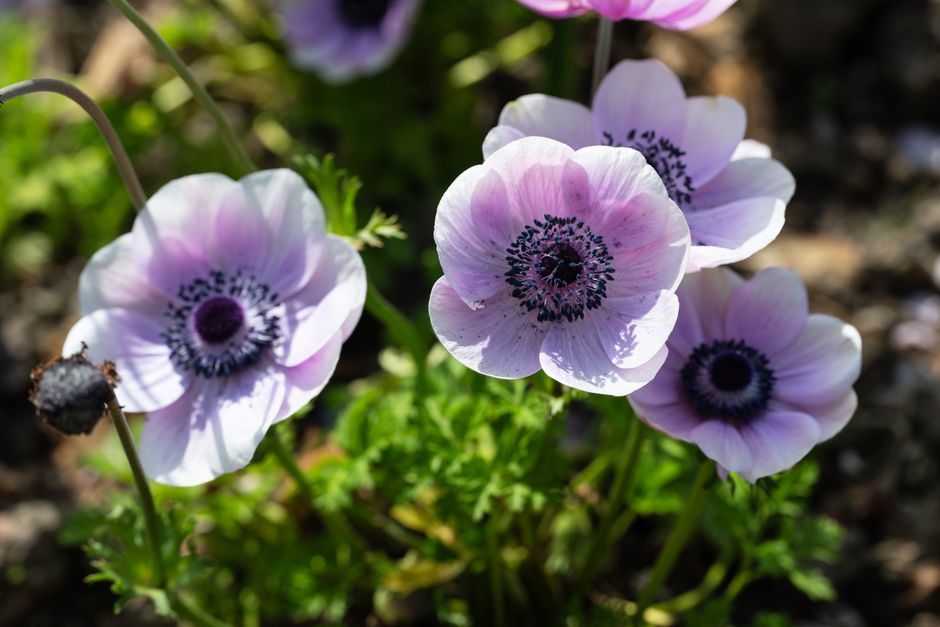
Anemone coronaria is best known as a cut flower; the blossoms have brightly coloured petals and dark centres and bloom in early spring or late summer depending on when the corms are planted. De Caen and St. Brigid are the two most common types, and both are outstanding cut flowers that will last two to three weeks in a vase. These are the varieties stocked by most reputable bulb suppliers, including Holland Kertészet.
Some of the best-known groups are:
-
Mistral, Large, elegant flowers with the classic Anemone coronaria look. Available in many strong and pastel colors.
-
Mistral Plus, A selection related to Mistral, developed for strong growth, good stems and high-quality flowers, making it particularly interesting for cut-flower production.
-
Levante, Characterized by more decorative, often semi-double to double flowers. The additional petals give Levante anemones a fuller and more romantic appearance.
-
Scirocco, Very full, highly decorative flowers with numerous petals and a more ruffled or unusual appearance. These are particularly striking as specialty cut flowers.
-
De Caen, One of the traditional Anemone coronaria groups. These are generally single-flowered, with brightly colored petals surrounding a prominent dark center. Common colors include red, blue, violet, pink and white.
-
St. Brigid, Another traditional group, but with semi-double to double flowers. The blooms are fuller and more irregular than De Caen, creating a colorful, informal appearance.
De Caen and St. Brigid are the classic traditional groups, while Mistral, Mistral Plus, Levante and Scirocco represent more modern breeding series from Italy, offering different flower shapes, colors and characteristics.
Japanese anemones (*Anemone hupehensis* and Anemone x hybrida) are much larger and bloom in late summer and autumn, making them valuable for filling the garden gap between summer perennials and the first frosts.
Selecting Corm Size
Corm size indicates maturity and the likely size of the plant: 5-6 cm is the largest and most resilient, 4-5 cm is best for professional growers to maximize blooming, and 3-4 cm corms flower later but continue blooming for longer. For a home gardener seeking the most impact from a single planting, go for the 5-6 cm grade where budget allows.
Soil Preparation and Planting
Preparing the Ground
Good preparation is where most successful anemone gardens begin. Mix compost into the top 20-25 cm of soil before planting. If your soil is heavy clay, raise your beds or use slopes for heavy clay soils to prevent corms sitting in winter wet. Choose well-draining soil with a pH of 6.0 to 7.0 and adjust with lime or sulphur if your reading falls outside that band, a simple test kit costs very little and prevents a great deal of disappointment.
Soaking and Pre-Sprouting
Before planting, soak your bulbs for two to three hours in lukewarm water, do not oversoak. Over-soaking beyond four to five hours raises the risk of rotting before the corm has even hit the ground.
For gardeners in cooler regions who want to get ahead of the season, pre-sprouting delivers an earlier harvest. To pre-sprout, fill a flat-bottomed seed tray half full of moist potting soil, sprinkle the soaked corms onto the soil, then completely cover them with more soil. Leave the tray in a cool place 4°C-10°C for 10 to 14 days, in an area where rodents cannot reach it. During this time, corms will swell to about twice their original size and develop little white rootlets that resemble hair; once rootlets appear, it is time to plant them in the ground.
Planting Depth and Spacing
Anemone corms should be planted about 5-8 cm deep, which gives them enough soil cover to protect against temperature fluctuations while still allowing them to sprout easily. Spacing them 7-10 cm apart ensures proper airflow and reduces the risk of disease.
Pay no mind to which end is facing up, as anemones will grow regardless of their position, a useful reassurance for anyone who has spent too long squinting at an irregular, dried corm. For maximum impact, plant bulbs in clusters or drifts rather than single rows, as this creates a bold, natural-looking carpet of flowers in spring.

Ongoing Care Throughout the Growing Season
Watering and Feeding
Keep soil evenly moist during active growth and bloom, then reduce watering once foliage fades. In practical terms, this means checking soil moisture every two to three days during spring growth and cutting back to occasional watering once the leaves begin to yellow. While anemones depend on a consistent water supply to grow well, they do not like overwatering or wet feet, so do not plant them in a low-lying spot with poor drainage.
For feeding, top-dress with compost or a balanced organic fertiliser in early spring, and avoid high-nitrogen fertilisers, which promote leafy growth at the expense of flowers.
Mulching and Frost Protection
Apply a 5 cm layer of organic mulch to keep roots cool and retain moisture, avoiding direct contact with crowns. In colder months, this mulch layer also acts as an insulating blanket. During cold stretches, when temperatures dip below freezing, cover the plants with a layer of frost cloth.
If corms are exposed to temperatures below -4°C, they will freeze and ultimately rot once thawed, so keep a close eye on the forecast between November and March, and have frost cloth ready at short notice.
Encouraging Repeat Blooms
Be sure to cut spent flowers down to the base to promote new blooms. This is the most reliable way to extend the flowering season, and it has the happy side effect of keeping your cutting supply going for weeks longer than if you simply left spent blooms on the plant. Unlike other flowers that produce a handful of blooms, anemones often produce twenty or more blooms throughout spring, making them exceptional value per corm when managed correctly.
Harvesting Anemones for the Vase
Timing Your Cut
In my experience, this is where most home growers go wrong, cutting either too early or too late. Harvest the flowers in the early morning; flowers should be harvested when they have just started to open, with petals just beginning to separate.
The definitive test is the collar-gap method. Harvest your anemones when the gap between the bloom and the plant collar is a quarter to a half inch for peak freshness and vibrant colours. If the collar is still flush against the base of the flower head, give it another half-day and check again.
Anemones continue to grow even after cutting, much like tulips. They are also nyctinastic, meaning they open and close in response to light and temperature, so do not be surprised if they close up at night or on cloudy days.
Cutting Technique
Use clean, sharp clippers or a knife to cut stems down to the base of the plant, harvest early in the morning when the flowers are most hydrated, and bundle harvested stems in groups of ten for easy processing and handling.
Pro Tip: According to the Sierra Flower Farm anemone growing guide, fill buckets with only 5-8 cm of water to prevent stems from going mushy, use a floral preservative to reduce bacterial growth, and store flowers in a cooler set to 3-4°C for up to five days. Anemones are also ethylene-sensitive, so keep them away from ripening fruit or other ethylene-producing flowers.
Post-Harvest Vase Life
Change the water in the vase every three to four days; blooms will last up to two weeks with this simple routine. Trim the stems each time for optimal freshness; if your anemones look parched, try submerging them in cool water for 30 minutes, which may help rehydrate them and restore their beauty.
Protecting Anemones from Pests and Diseases
Common Pests
The usual disease lineup for anemones includes powdery mildew, downy mildew, different strains of root rot, rust, crown gall, anemone mosaic, and necrotic spot. On the pest side, slugs and aphids are the most frequent visitors.
Slugs cause irregular holes in leaves and leave slime trails; prevention involves using barriers like copper tape or eggshells. Beer traps are a famous and effective way to drown slugs and snails, which are attracted to the yeast and sugar. For aphids, encourage natural predators like ladybirds and treat active infestations by spraying with soapy water or neem oil.
Fungal Problems
Powdery mildew is one of the most frequent fungal issues, appearing as a white, flour-like coating on leaves and stems. This disease thrives in warm, humid weather, particularly when days are hot and nights are cool and damp. While it is rarely fatal, a severe infection can weaken the plant by interfering with photosynthesis.
Baking soda sprays are a classic home remedy that can be surprisingly effective against powdery mildew. A simple mixture of water, a small amount of baking soda, and a drop of horticultural soap creates an alkaline environment on the leaf surface that fungi find difficult to inhabit. Apply this at the very first sign of infection for best results.
For downy mildew, according to Michigan State University Extension's disease management guidance, the priority is reducing leaf wetness: water at a time of day that allows foliage to dry quickly, and increase airflow between plants by thinning or re-spacing where necessary.
Pro Tip: Plantura's anemone coronaria care guide notes that Anemone coronaria contains a sap that can irritate skin during handling. Always wear gloves when planting, dividing or harvesting, and wash your hands thoroughly after working with the plant.
Root Rot Prevention
Root rot is caused by the same waterlogging conditions that general planting advice works to avoid. Rot usually occurs and spreads in wet conditions; it is a disease caused by Pythium, and it can cause germinating seeds to rot or the roots of plants to become diseased, making plants grow slowly or even die. The solution is straightforward: if you cannot fix the drainage, move the planting.

Overwintering and Corm Storage
Leaving Corms in the Ground
If you are a gardener in USDA zone 7 or above, you can leave your corms in the ground and they may bloom the following year depending on how cold your winter is, how well your soil drains, and how much pest pressure you have in your garden. In European terms, this broadly means milder Atlantic coastal regions and southern climates. In Hungary and other central European locations, lifting is the safer approach.
Lifting and Storing Corms
Anemone corms should be dug after the heat of summer has turned the leaves yellow; once this occurs, remove the foliage, dig up the corms, and let them dry for about two days. Then store the corms in mesh bags in a dark, dry, room-temperature location over the winter.
Avoid packing bulbs in an airtight container; choose something ventilated such as a paper bag or cardboard box, and ensure individual bulbs do not touch. Check stored corms in late winter for signs of rot or damage, discard unhealthy ones, and prepare healthy corms for replanting to ensure a strong start when spring arrives.
I've found that labelling each bag with the variety name and lifting date saves a great deal of guesswork the following spring, particularly when you are growing several cultivars with different bloom timings.
Frequently Asked Questions
How long does it take for anemones to flower after planting?
Anemone bulbs flower just three months after planting and bloom abundantly throughout the spring. The exact timeline depends on when you plant (autumn versus late winter), your local climate, and whether you pre-sprouted the corms before putting them in the ground. Pre-sprouting can shave two to three weeks off the wait.
Can anemones be grown in containers and pots?
Yes, containers work very well for anemones, particularly for growers with limited garden space. Use a quality potting mix and ensure your container has drainage holes; container-grown anemones are great for patios, balconies, or adding bursts of colour to small garden spaces. In cooler climates, the advantage of containers is that you can move them under cover or into a greenhouse during prolonged cold spells.
What is the best time of year to plant anemone corms?
These versatile flowers can thrive in various climates, but their planting schedule depends on your hardiness zone and the specific variety you're growing. As a general rule, in warmer regions (Zones 7 to 9) plant anemones in the autumn; in cold climates (Zones 4 to 6), plant the tubers in early spring, as they will need to settle in before they can tolerate freezing temperatures.
Why are my anemone stems very short at the start of the season?
This is entirely normal. Anemones often start their season by producing shorter stems, but subsequent blooms will grow taller as the plants mature. The flowers bloom on shorter stems at the beginning of the season and on longer stems as the plant matures. Patience is the only remedy, and those early short-stemmed blooms look lovely in small bud vases.
Are anemones toxic to pets or humans?
Like many anemone species Anemone coronaria is toxic to humans and animals; it contains a juice which can cause skin irritation. It is therefore recommended that you wear gloves during care procedures and wash your hands thoroughly after working with the plants. Keep young children and pets away from freshly cut stems and foliage.
A Final Word
Anemones reward careful preparation far more than constant intervention. Soak your corms, sort out the drainage, and time your harvests by the collar gap rather than guessing by eye. Do those three things consistently and you will have stems worthy of any arrangement from late winter through to late spring. For a reliable source of quality corms suited to the European growing season, Holland Kertészet is a strong starting point.
Sources
-
Growing Anemones for Year-Round Color, Anawalt Lumber. Practical planting and care guide for anemone flowers. https://blog.anawaltlumber.com/growing-anemones/
-
How to Grow Anemones, Floret Flowers. Pre-sprouting, planting depth, frost protection and corm storage. https://www.floretflowers.com/resources/how-to-grow-anemones/
-
Anemone Flowers: Planting, Growing & Caring for Vibrant Windflowers, The Old Farmer's Almanac. Harvesting timing, watering and pest guidance. https://www.almanac.com/plant/anemone
-
Planting Anemones: Step-by-Step Guide, Dutch Bulbs. Depth, spacing and orientation guidance. https://blog.dutch-bulbs.com/how-to-plant-anemones-a-complete-anemone-bulb-planting-guide/
-
All About Anemones, Longfield Gardens. Variety types, planting depths and cold-climate growing. https://www.longfield-gardens.com/blogs/all-about-fall-planted-bulbs/all-about-anemones
-
Anemone Planting & Growing Guide, Easy To Grow Bulbs. Soil drainage, container growing and post-bloom care. https://www.easytogrowbulbs.com/pages/anemone-planting-guide
-
How to Grow Anemones, Growing in the Garden. Harvesting technique, vase life and bloom count. https://growinginthegarden.com/how-to-grow-anemones/
-
Anemone Growing Guide, Sierra Flower Farm. Post-harvest care, cooling, ethylene sensitivity. https://www.sierraflowerfarm.com/blog/2017/4/28/flower-of-the-month-anemones
-
When to Harvest Anemones, PetalPickers. Collar-gap harvesting method and cutting stage. https://petalpickers.com/pages/anemone-growing-guide
-
Anemone: Identifying and Naturally Treating Pests and Diseases, Promesse de Fleurs. Downy mildew, aphids, slugs and treatments. https://www.promessedefleurs.ie/gardening-tips/advicesheet/diseases-and-parasitic-pests-of-anemones/
-
Diseases and Pests of the Japanese Anemone, Gardentopia. Powdery mildew management and slug control. https://gardentopia.eu/diseases-and-pests-of-the-japanese-anemone/
-
Common Pests and Diseases of Anemone Flowers, House Digest. Full disease spectrum affecting anemones. https://www.housedigest.com/1583244/prevent-treat-anemone-flower-pests-diseases-damage/
-
Seasonal Care for Anemones, Dutch Bulbs. Year-round care, mulching, corm lifting and winter storage. https://blog.dutch-bulbs.com/seasonal-care-for-anemones-a-complete-guide-to-caring-through-the-year/
-
How to Grow Anemones in Cold Climates, Longfield Gardens. Zone-specific planting, pre-sprouting schedule and corm storage. https://www.longfield-gardens.com/article/how-to-grow-anemones-in-cold-climates
-
Overwintering Tender Bulbs, NC State Extension, Richmond County. Corm drying, packing and storage conditions. https://richmond.ces.ncsu.edu/news/overwintering-tender-bulbs
-
Greenhouse Disease Update for Downy Mildew, Michigan State University Extension. Water mould management and fungicide strategy. https://www.canr.msu.edu/news/greenhouse\\\_disease\\\_update\\\_for\\\_downy\\\_mildew
-
Anemone coronaria, Plantura. Toxicity, variety detail and care guidance. https://plantura.garden/uk/flowers-perennials/anemone/anemone-coronaria
-
All About Anemones, Longfield Gardens. Variety overview, De Caen and St. Brigid cut flower qualities. https://www.longfield-gardens.com/article/all-about-anemones/


