

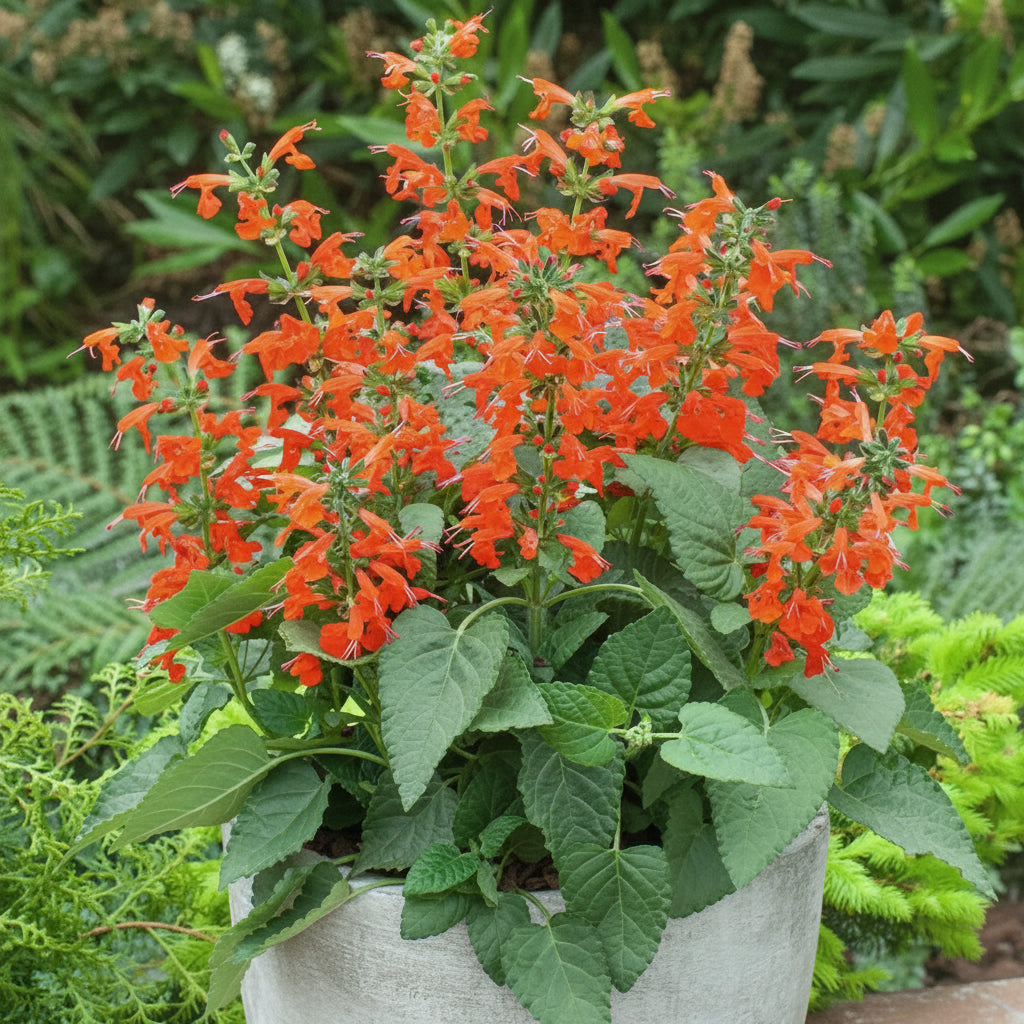
From Tiny Seeds to a Summer of Brilliant Red
A friendly guide to sowing, growing and enjoying Scarlet Sage in Hungary.
Come Into the Garden With Me…
Today, we're growing salvia - and this time our salvia is the bright, compact bedding plant known as Scarlet Sage.
If the word salvia makes you think of the blue-purple perennial spikes of meadow sage, you are not wrong. Salvia is a large genus, and gardeners use the name for everything from culinary sage to tall perennial border plants. But the seed packet in our hands today is something different: Scarlet Sage, grown for intense red flowers all summer long.
At Holland Kertészet, the variety in this book is Salvia - Scarlet Sage. The packet describes an annual plant around 25 cm high, ideal in larger groups, with strong red flowers that respond very well to deadheading.
That compact size makes it useful almost everywhere: front borders, edging, containers, balcony boxes and little pockets of colour between taller plants.
And for beginners, there is another advantage. Scarlet Sage is not complicated once it has warmth, light and regular water. The most important part is getting the young seedlings through spring and waiting until cold nights are behind us before planting them outside.
So we will begin with seed, raise the seedlings under protection, move them into the Hungarian garden at the right time, keep them flowering through heat, and learn how to use that red colour without letting it overwhelm the whole border.
Ready? Let's grow something unapologetically red.
|
GOOD TO KNOW This book is about Scarlet Sage, an annual bedding salvia. Meadow Sage (Salvia nemorosa) is a different, hardy perennial and has its own growing rhythm. |
1. Meet Scarlet Sage
Scarlet Sage is usually known botanically as Salvia splendens. It belongs to the mint family, Lamiaceae, which explains the familiar square stems and opposite leaves you may notice as the plant develops.
Its real garden attraction is not the foliage, though. It is the upright flower spikes, made up of vivid red bracts and flowers that create a dense block of colour.
How big does it get?
The packet in your Holland Kertészet range lists a height of about 25 cm. That is compact enough for the front of a border and practical for pots, but still tall enough to make a strong display when planted in groups.
2. The Salvia We Grow With You
Our seed packet is Salvia - Scarlet Sage.
The packet recommends sowing from February to April under glass, or from April to May outdoors in a seedbed. Young plants can be planted out about five weeks after sowing, provided the weather is suitable.
The label also gives us one of the best care tips before we have even sown a seed: remove faded flower spikes. Scarlet Sage responds strongly to deadheading and will keep producing fresh colour instead of spending its energy on seed.
What makes it different from perennial salvia?
Scarlet Sage is usually treated as an annual in Hungary. It loves warmth and does not tolerate frost. Meadow Sage, by contrast, is a hardy perennial that survives winter in the ground and returns each spring.
That difference matters. With Scarlet Sage, our aim is to build a strong plant quickly, enjoy months of colour, and accept that the first hard frost will usually end the season.
3. Starting From Seed
For the earliest flowers, I would start Scarlet Sage indoors or under glass in late winter or early spring.
Sowing under protection
Use a clean seed tray or small pots filled with fine seed compost. Moisten the compost first, then scatter the seeds thinly across the surface. Cover only lightly with fine compost or vermiculite. The seeds are small, and a deep burial makes germination harder.
Keep the tray warm. Around normal indoor propagating temperatures is suitable, and steady warmth is more useful than sudden bursts of heat followed by cold nights.
Moist, not swampy
Keep the compost evenly moist while the seeds germinate. Do not allow it to become waterlogged. A fine spray or gentle watering from below is safer than pouring water over tiny seedlings.
|
A COMMON MISTAKE Sowing salvia too densely. A thick carpet of seedlings looks impressive for a week, then becomes difficult to separate and much more vulnerable to damping-off. Sow thinly. |
4. Seedlings: Light Matters
As soon as the first seedlings appear, give them as much good light as you can. Warmth starts germination, but light builds sturdy plants.
A salvia seedling kept warm on a dark windowsill quickly becomes long, pale and floppy. We want compact growth, short stems and healthy green leaves.
Pricking out
Once seedlings are large enough to handle and have developed true leaves, move them into individual small pots or modules. Hold them by a leaf rather than squeezing the stem.
Plant each seedling at roughly the same depth it was growing before, firm gently, and water it in.
Pinching for a bushier plant
When plants are established and growing strongly, a gentle pinch of the central growing tip can encourage branching. More branches mean more flowering stems later. Do not pinch weak seedlings; wait until they are actively growing.
|
DON’T PANIC A few seedlings may pause after transplanting. Give them light, moderate warmth and careful watering. If the crown remains firm and green, they usually recover quickly. |
5. Hardening Off in Hungary
This is the stage where impatience causes trouble.
Scarlet Sage loves warmth. A bright April afternoon may feel like summer, but a cold night can still damage tender plants. In much of Hungary, frost risk can continue into early May, and exposed gardens can remain chilly for longer.
About a week or two before planting out, begin hardening the plants off. Put them outside for a few hours on mild days, protected from strong wind. Bring them back under cover at night. Gradually increase the time outside until they are accustomed to full outdoor conditions.
When can they stay outside?
Plant when nights are reliably mild and the danger of frost has passed. In many Hungarian gardens this means around May, but the weather forecast matters more than the calendar.
6. Finding the Right Place
Scarlet Sage flowers best in a bright position. Full sun gives the strongest colour and the most compact growth, although some light afternoon shade can be useful in the hottest urban courtyards or on very exposed balconies.
Soil
Choose fertile but well-drained soil. This is not a dry-rockery salvia. Scarlet Sage flowers for months and appreciates more regular moisture than Mediterranean herbs such as rosemary or thyme.
At the same time, roots should never sit in stagnant water. If your soil is heavy clay, improve the structure before planting. In containers, always use drainage holes.
Spacing
For a dense bedding effect, plant close enough for the plants to meet as they mature, but not so close that air cannot move between them. Around 20 to 25 cm is a practical starting point for a compact 25 cm variety.
|
WHAT I WOULD DO Plant Scarlet Sage in a small group rather than as one lonely plant. Three, five or seven plants repeated along a border create a much stronger and more intentional red rhythm. |
7. Watering Through a Hungarian Summer
Young plants need regular water while their roots establish. Once settled, Scarlet Sage is reasonably robust, but it is not a plant I would deliberately allow to dry to the point of wilting every day.
During hot Hungarian weather, water deeply in the morning and allow the soil surface to begin drying before watering again. Containers may need checking daily during heatwaves because a small pot can dry dramatically faster than garden soil.
Mulch helps
A light organic mulch around plants in the ground can reduce evaporation and keep the root zone cooler. Keep mulch slightly away from the stems so the crown remains airy.
8. Feeding Without Overdoing It
Scarlet Sage is a long-flowering annual, so it appreciates nutrition, especially in containers. But more fertiliser does not automatically mean more flowers.
Too much nitrogen can produce lush green growth at the expense of flowering. In garden soil, a modest balanced feed is usually enough. In pots and window boxes, a diluted flowering-plant fertiliser every couple of weeks during active bloom can be helpful.
Watch the plant
If growth is pale and weak, the plant may be hungry. If it is enormous, soft and leafy but slow to flower, you may be feeding too generously.
|
A SIMPLE RULE Feed for steady growth, not maximum growth. The goal is a compact plant covered with flower spikes, not a giant green salvia. |
9. The Secret to More Flowers
Deadheading is the little job that makes the biggest difference.
As a flower spike fades, cut it back to a healthy set of leaves or a side shoot. The plant responds by producing fresh flowering growth instead of investing energy in seed.
This is especially useful in midsummer. A salvia display that looks tired after several hot weeks can often be refreshed by removing old spikes, watering deeply and giving a light feed.
Do I cut the whole plant back?
If plants become untidy, you can shorten several stems rather than cutting everything at once. This keeps some colour in the bed while new growth develops.
|
TRY THIS Walk past the salvia bed with a small pair of snips once a week. Remove the oldest flower spikes before they look completely exhausted. Five minutes of regular deadheading is easier than a major rescue job in August. |
10. Scarlet Sage in Pots and Balcony Boxes
A compact 25 cm salvia is almost made for containers.
Use a pot with drainage holes and a good-quality potting mix. Give the plants enough root space; a tiny decorative pot may look attractive in May but can become impossible to keep watered in July.
Balcony heat
A south-facing Budapest balcony can become much hotter than the official air temperature. Pots heat from the sides as well as from above, and roots can dry quickly. During heatwaves, check moisture morning and evening.
Good companions
Scarlet Sage looks excellent with white alyssum, silver foliage, blue lobelia, pale petunias or ornamental grasses. Red is powerful, so a calmer neighbour often makes it look even better.
|
DESIGN IDEA For a simple Hungarian balcony box: Scarlet Sage in the centre, white alyssum near the edge, and a trailing silver or green foliage plant to soften the sides. |
11. Pollinators and Wildlife
Salvia flowers are built for pollinators. Their tubular shape and nectar make them attractive to many visiting insects, particularly bees and butterflies when the flowers are open and conditions are warm.
A single small pot is useful. A repeated group is better, because pollinators can spot and work a larger patch efficiently.
Avoid unnecessary spraying
If aphids appear, do not automatically reach for a broad-spectrum insecticide. Start with water, hand removal or a targeted method. A flower planted partly for pollinators should not become a hazard to them.
12. Problems and How to Read the Plant
Few flowers
Check light first. Too much shade, excessive nitrogen or failure to remove old flower spikes can all reduce flowering.
Yellow leaves
Yellowing can come from several directions: waterlogged roots, repeated drought, nutrient shortage or natural ageing of lower leaves. Look at the whole plant before deciding what is wrong.
Wilting in the afternoon
On an extremely hot day, a plant may wilt temporarily even when the soil still contains moisture. Check the soil before watering again. If it is dry several centimetres down, water deeply. If it is already wet, more water is not the answer.
Aphids
Tender new growth can attract aphids. A strong jet of water often removes a small colony. Ladybirds and hoverfly larvae will also help if you allow them to stay.
Damping-off
This mainly affects seedlings. Avoid overcrowding, stagnant air and permanently saturated compost.
|
A COMMON MISTAKE Diagnosing every yellow leaf as a fertiliser problem. Before feeding, check the moisture around the roots. Overwatering and underwatering can both make leaves yellow. |
13. What Happens in Autumn?
Scarlet Sage keeps flowering until cool weather slows it down. The first real frost usually ends the display.
You can leave plants until they are clearly finished, then remove them and add healthy material to the compost heap.
Can I overwinter it?
In theory, Salvia splendens is perennial in frost-free climates. In practice, overwintering it in Hungary requires warm, bright, frost-free conditions and is rarely worth the space for a compact bedding variety. Starting again from seed is usually easier.
14. Saving Seed
If you would like to experiment, stop deadheading a few late flower spikes and allow seed to mature.
Collect only when the seed structures are dry. Store the seed cool, dark and dry in a labelled paper envelope.
Remember that seed-grown offspring may vary, especially if other salvias are growing nearby or if the original strain is not completely stable. That is part of the fun rather than a failure.
|
SEED-SAVING TIP Do not save seed from the first faded flowers if you still want maximum summer colour. Let the plant perform first; reserve a few late spikes for seed at the end of the season. |
15. A Simple Scarlet Sage Calendar for Hungary
FEBRUARY Begin sowing under glass if you want an early start.
MARCH Main protected sowing period. Give seedlings warmth and excellent light.
APRIL Continue protected sowing or start a seedbed outdoors in mild areas. Pot on young seedlings.
MAY Harden plants off and plant outside once frost risk has passed. Later outdoor sowings are still possible.
JUNE Plants establish and begin flowering. Water consistently and start deadheading.
JULY Peak summer colour. Watch containers carefully during heat and feed lightly if needed.
AUGUST Keep deadheading. Refresh tired plants with water, a light feed and removal of old spikes.
SEPTEMBER Enjoy continued flowering while nights remain mild. Allow a few late spikes to set seed if desired.
OCTOBER Cool weather slows growth. Collect ripe seed and remove frost-damaged plants.
NOVEMBER-JANUARY Clean pots, review what worked and choose next season’s combinations.
16. Your Scarlet Sage Cheat Sheet
• Sow February-April under glass, or April-May outdoors in a seedbed.
• Use warmth to germinate, then give seedlings strong light.
• Prick seedlings out once they are large enough to handle.
• Harden off before planting outdoors.
• Plant out only after frost risk has passed.
• Choose sun or very bright light.
• Use fertile, well-drained soil.
• Water regularly during establishment and in containers.
• Feed moderately rather than heavily.
• Deadhead faded spikes to encourage more flowers.
• Expect an annual display in Hungary.
• Collect late seed if you would like to experiment next year.
|
IF YOU REMEMBER ONLY FIVE THINGS Warmth to start. Light for sturdy seedlings. No frost. Regular water. Deadhead, deadhead, deadhead. |
17. And Then One Morning…
The first flower spike starts to colour.
At first it is only a hint of red between the leaves. Then another spike follows, and another, until the little plants you raised from seed become a ribbon of colour along the border.
That is when Scarlet Sage earns its place. It is not subtle. It is not trying to disappear into the background. It gives you a clean, confident block of summer red and keeps going when you keep removing the old flowers.
One last walk around the garden
We began with tiny seeds. We gave them warmth, light and patience. We moved them outside slowly, waited for frost to pass, planted them in the sun, watered them through heat and learned that the simplest job - cutting off an old flower spike - is often the thing that keeps a plant beautiful for the longest time.
Now you know how Scarlet Sage differs from perennial meadow sage, how to raise it from seed in Hungary, how to use it in pots or borders, and what to do when flowering slows down.
Your own garden will teach you the finishing details: whether your balcony needs afternoon shade, how quickly your pots dry in July, and whether you prefer Scarlet Sage as one bold red group or repeated in smaller pockets around the garden.
Until then, enjoy the colour. And whenever you're ready to grow something new…
Come into the garden with me.


