

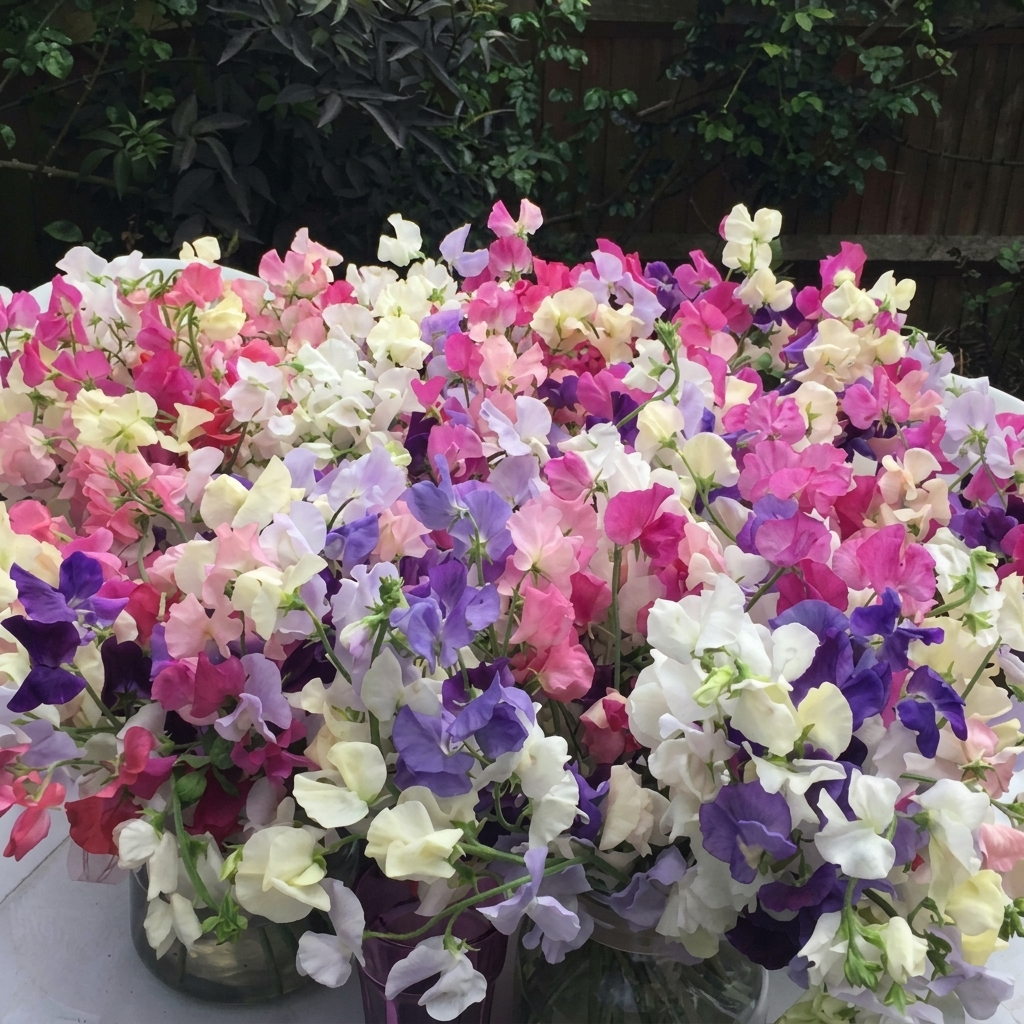
From Fragrant Seeds to a Wall of Summer Flowers
A friendly guide to sowing, growing, cutting and enjoying sweet peas in Hungary.
Come Into the Garden With Me…
Today, we're growing sweet peas - one of those flowers that can turn a simple fence or trellis into something you want to walk past slowly.
A sweet pea begins with a surprisingly sturdy seed, then sends up delicate-looking stems that quickly reach for something to climb. Give those stems cool spring weather, fertile soil, steady moisture and a support, and they reward you with armfuls of fragrant flowers.
For Hungary, timing matters. Sweet peas enjoy the gentler weather of spring and early summer far more than the fiercest heat of July. The trick is to sow early enough for strong roots and flowering before prolonged heat arrives, then keep the root zone cool and watered as summer builds.
The main Holland Kertészet variety in this book is Buzzy Sweet Pea 'Painted Lady'. It is a strongly scented, two-coloured pink annual reaching about 180 cm, suitable for garden soil, large pots and balcony planters.
The range also includes Royal Family sweet peas, including Royal Family Scarlet, so we will learn the shared sweet-pea method while looking at how colour, scent and cutting use can differ between varieties.
Ready? Put up the support before the plants need it. We're going to grow a wall of perfume.
1. Meet the Sweet Pea
Sweet pea is Lathyrus odoratus, a flowering annual in the pea family, Fabaceae. It is grown for ornamental flowers and fragrance, not for eating.
A climber that wants help
Sweet peas climb with tendrils. They do not cling to a flat wall by themselves, so give them netting, twiggy branches, wire mesh or a trellis with narrow places for the tendrils to catch. A support around 180-200 cm suits tall forms such as Painted Lady.
The great pleasure is fragrance
Not every modern sweet pea is equally scented, but 'Painted Lady' is specifically valued for strong perfume. Plant it near a path, terrace, gate or open window where you will actually notice it.
Ornamental peas are not edible peas
Do not confuse sweet peas with garden peas or sugar peas. Sweet pea seeds and pods are not food. Teach children that this climber is for smelling and cutting, not snacking.
|
GOOD TO KNOW Sweet peas are ornamental climbers, not edible peas. Enjoy the flowers and fragrance, but do not eat the seeds or pods. |
2. Give Them Light, Cool Roots and Support
Choose a bright position with good air movement. Sweet peas flower best with plenty of light, but in a very hot Hungarian garden a little protection from the most punishing late-afternoon sun can help extend the season.
Cool roots, sunny flowers
This is the sweet-pea balancing act. The top wants light; the root zone benefits from cool, moisture-retentive soil. Mulch after planting and avoid tiny dark pots that bake in summer sun.
Prepare the soil before sowing
Sweet peas are hungry compared with many easy annuals. Work mature compost into ordinary garden soil, but keep drainage good. Deep preparation is useful because a strong root system supports a surprisingly large climber.
In heavy clay, improve structure and avoid waterlogged hollows. In very sandy soil, organic matter helps the ground hold the moisture sweet peas need during flowering.
Support first, plants second
Install netting, trellis or pea sticks before sowing or planting. Young tendrils can then climb from the beginning instead of becoming tangled on the ground.
|
A COMMON MISTAKE Putting up the support after the plants are already tangled. Install netting or trellis before sowing so young tendrils can climb from the beginning. |
3. The Sweet Peas We Grow With You
Our main packet for this book is Buzzy Sweet Pea 'Painted Lady', Lathyrus odoratus.
'Painted Lady' at a glance
It is an annual climber reaching approximately 180 cm. The packet gives outdoor sowing from mid-March to the end of May. It prefers fertile, well-drained soil, plenty of light and a root zone that stays cool and evenly moist.
'Painted Lady' produces strongly scented, two-coloured pink flowers and is suitable for trellises, fences, cutting gardens, large pots and balcony planters.
Other sweet peas in the range
Royal Family and Royal Family Scarlet give you further colour choices. Royal Family types are useful when you want long stems and bold garden colour; Scarlet is especially striking in a warm red planting.
The basic cultivation is the same: early sowing, support, regular picking and steady water.
|
GROW WITH US Plant 'Painted Lady' where you pass close by: beside a gate, terrace or path. Add pale calendula, nigella or soft blue cornflowers below and let the sweet peas provide the fragrant vertical layer. |
4. Let’s Sow the Seeds
Sweet pea seeds are large, so sowing is wonderfully manageable for beginners.
Direct sowing in spring
The 'Painted Lady' packet recommends outdoor sowing from mid-March to the end of May. In Hungary, the earlier part of that window is especially valuable because plants can establish before summer heat.
Prepare fine, weed-free soil beside the support. Water the ground before sowing if it is dry. Sow seeds about 2-3 cm deep and space sowing stations roughly 10-15 cm apart, or thin later. Keep the soil evenly moist while germination begins.
Starting in pots
You can also start seeds in deep pots or root trainers if spring soil is difficult. Sweet peas make long roots quickly, so deeper containers are better than shallow trays. Harden seedlings off before planting outside.
Do you need to soak the seeds?
There is no need to soak every seed as a rule. Fresh seed usually germinates well in moist compost or soil. If an occasional seed remains stubborn, gently nicking the coat can help, but avoid damaging the embryo.
Birds and mice sometimes discover newly sown seed before it germinates. If that is a problem in your garden, protect the sowing temporarily or start a few backup plants in pots.
|
DON’T PANIC Sweet pea germination is not always perfectly simultaneous. Keep the soil moist but not waterlogged and give slower seeds time before deciding the sowing has failed. |
5. From Seedling to Climber in Hungary
As seedlings grow, guide them toward the support. Tendrils soon begin to catch for themselves, but a soft tie can help a wandering young stem find the netting.
Harden off protected plants
If plants were started under protection, introduce them gradually to outdoor light, wind and cooler nights. Sweet peas tolerate cool weather better than frost-tender summer flowers, but young indoor plants still need acclimatisation.
Give them breathing room
Around 15-20 cm between plants works well for a garden row. In a large container, avoid cramming too many plants into one small root ball of compost.
Pinching for bushier plants
When young plants have several pairs of leaves, pinching out the growing tip can encourage side shoots. It is optional, but useful if seedlings are becoming tall and single-stemmed.
Keep stems moving upward
Check plants once or twice a week. Guide loose shoots back toward the support and prevent a heavy mass from collapsing outward after wind or rain. For containers, anchor the support securely because a tall leafy sweet pea can act like a sail in a summer storm.
|
WHAT I WOULD DO Sow early, put the support in place immediately, and mulch once the plants are established. Those three small decisions make Hungarian sweet-pea growing much easier when spring suddenly turns into summer. |
6. Summer Care: Keep the Roots Cool
Sweet peas are generous when conditions suit them, but they are less forgiving of repeated drought than many warm-season annuals.
Water deeply and regularly
Do not let flowering plants repeatedly dry out. During warm Hungarian weather, water deeply and regularly, especially in containers. Drought stress shortens stems, reduces flowers and pushes plants toward seed production.
Water the root zone rather than constantly wetting the foliage. Morning watering is ideal during hot weather.
Mulch helps
A layer of compost or other organic mulch keeps the root zone cooler and slows evaporation. Keep mulch a little away from the stems themselves.
Feeding
In reasonably fertile soil, avoid excessive nitrogen, which can produce lots of leaves at the expense of flowers. Container plants may benefit from a balanced or flowering-plant feed once growth is vigorous.
The secret to more flowers
Pick them. Then pick them again. Sweet peas are annuals programmed to make seed. If you allow many pods to mature, the plant begins to feel its job is finished. Regular cutting and deadheading interrupt that process and encourage more flowers.
|
GOOD TO KNOW Sweet peas love light but dislike overheated, dry roots. Mulch, water deeply and use the earlier spring sowing window so the main flowering display develops before the fiercest July heat. |
7. When Something Goes Wrong
Sweet peas are fairly straightforward, but spring pests and summer heat can make their complaints obvious.
Seedlings vanish
Slugs and snails often attack tender shoots. Protect seedlings, remove hiding places and check after damp nights.
Leaves develop pale winding trails
Leaf miners can make pale tunnels through leaves. Remove badly affected leaves if necessary and keep plants growing strongly; minor cosmetic damage rarely ruins the flowers.
Buds drop or stems become short
Heat, drought or root stress are common causes. Water deeply, mulch and pick regularly. Sweet peas naturally become less enthusiastic during prolonged high summer heat.
Powdery coating appears on leaves
Powdery mildew often arrives late in the season, especially when plants are stressed. Improve airflow, water roots consistently and remove badly affected foliage.
Lots of pods, few flowers
The plant has switched into seed-making mode. Remove pods and resume regular picking, although very mature plants may not fully return to their earlier performance.
|
DON’T PANIC A few tired leaves late in the season are normal. Concentrate on keeping the root zone evenly moist, removing pods and harvesting flowers while the plant still wants to produce them. |
8. Flowers for the Garden and the Vase
This is where sweet peas earn the space they occupy. The flowers are beautiful on the plant, but cutting them is one of the best ways to keep the display going.
Cut for the house
Harvest when several flowers on a stem are open and the remaining buds are showing colour. Cut in the cool of morning and place stems straight into clean water.
The more consistently you harvest, the more useful the plant becomes as a cut flower. A short row can supply small fragrant bunches for weeks in favourable weather.
Where fragrance matters
Grow 'Painted Lady' beside a place where you sit, pass or open a window. Fragrance hidden at the back of a border is a missed opportunity.
Sweet peas in pots and on balconies
'Painted Lady' is suitable for large pots and balcony planters, but tall sweet peas need more root room than their delicate stems suggest. Use a deep, stable container with drainage holes and install a secure support at planting time.
Containers dry much faster than garden soil. In warm, windy weather, check them daily. Place the pot where you can enjoy the fragrance rather than in a forgotten corner.
|
TRY THIS Grow 'Painted Lady' beside a place where you sit in the evening. The combination of pink-and-white flowers and strong perfume makes even one trellis feel like a little garden room. |
9. Seed Saving, Design and the End of the Season
If you want maximum flowers, keep picking. If you want seed, choose a few healthy plants near the end of the season and deliberately allow some pods to mature.
Let pods ripen fully
Pods should become dry and papery before harvest. Collect them before prolonged wet weather, shell the seeds and allow them to dry thoroughly indoors.
Expect some surprises
Open-pollinated sweet peas can cross with nearby varieties. Saved seed may therefore give you slightly different colours or characteristics the following year. That can be part of the fun in a home garden.
Store dry seed in a labelled paper envelope somewhere cool, dry and dark. Remember: saved sweet pea seed is for sowing, not eating.
Designing with sweet peas
Train them at a gate or along a path where fragrance can be enjoyed up close. In a cutting garden, a simple row against netting is one of the most productive arrangements. On a balcony, a large container and secure trellis can create a temporary flowering screen.
For a romantic cottage-garden look, mix 'Painted Lady' with pale pinks, creams and soft blues, or let Royal Family Scarlet provide a stronger red accent.
|
A COMMON MISTAKE Allowing pods to mature while you still want flowers. Remove spent blooms and young pods regularly; save seed only from selected pods near the end of the season. |
10. Your Sweet Pea Cheat Sheet
We've gone from sturdy seed to a fragrant climbing wall. Here's the whole journey in one place.
1. Sweet pea is Lathyrus odoratus.
2. It is an ornamental annual climber, not an edible pea.
3. Our main Holland Kertészet reference is Buzzy 'Painted Lady' .
4. Painted Lady reaches about 180 cm.
5. Sow outdoors from mid-March to the end of May.
6. Sow seed about 2-3 cm deep.
7. Use deep pots or root trainers if starting under protection.
8. Harden protected seedlings off before planting outside.
9. Give plants a secure support from the beginning.
10. Space garden plants roughly 15-20 cm apart.
11. Choose a bright position with good air movement.
12. Use fertile, well-drained soil that can hold moisture.
13. Keep the root zone cool with mulch.
14. Water deeply and regularly during warm weather.
15. Avoid excessive nitrogen feeding.
16. Pick flowers frequently to encourage more blooms.
17. Remove unwanted seed pods while you still want flowers.
18. Use large, deep containers for balcony growing.
19. Save only fully dry seed and label it clearly.
20. Never eat sweet pea seeds or pods.
If You Remember Only Five Things…
1. Sow early in spring
Sweet peas perform best when they establish before the strongest Hungarian summer heat arrives.
2. Give them something to climb
A tall sweet pea needs netting, trellis, wire mesh or pea sticks from the beginning. Do not wait until the stems are tangled.
3. Keep the roots cool and evenly moist
Mulch and deep watering help the plants continue flowering as spring turns warm.
4. Pick the flowers often
Regular cutting and deadheading delay seed production and encourage the plant to keep making new flowering stems.
5. Never eat the seeds or pods
Lathyrus odoratus is an ornamental plant. It is not the same as edible garden peas or sugar peas.
One Last Walk Around the Garden
Do you remember where we started?
With a handful of hard seeds, a bare support and the promise of fragrance.
We sowed while spring was still cool, gave the seedlings room to root, guided the first tendrils upward, and watched the trellis slowly disappear behind green growth.
Then the flowers came. Perhaps Painted Lady opened first with pink and white petals. Perhaps Royal Family Scarlet gave you the stronger colour. Before long, one flower became ten and the perfume began to follow you along the path.
Hungarian summer then tested the plants in its usual way. The days became hotter, the soil dried more quickly, and we learned that sweet peas need cool roots, deep water and regular picking if we want the display to continue.
By the end of the season, you know more than a sowing date. You know which side of your trellis catches the afternoon heat. You know how quickly your pots dry. You know how often you can cut a bunch and still find more flowers waiting two days later.
That is what this series is really about: not memorising instructions, but learning a plant until it begins to feel familiar.
So cut one last fragrant bunch. Leave a few selected pods for seed if you want them. Then clear the tired vines when the season is finished and remember where you want that perfume next spring.
And when you're ready for the next plant…
Come into the garden with me.


