

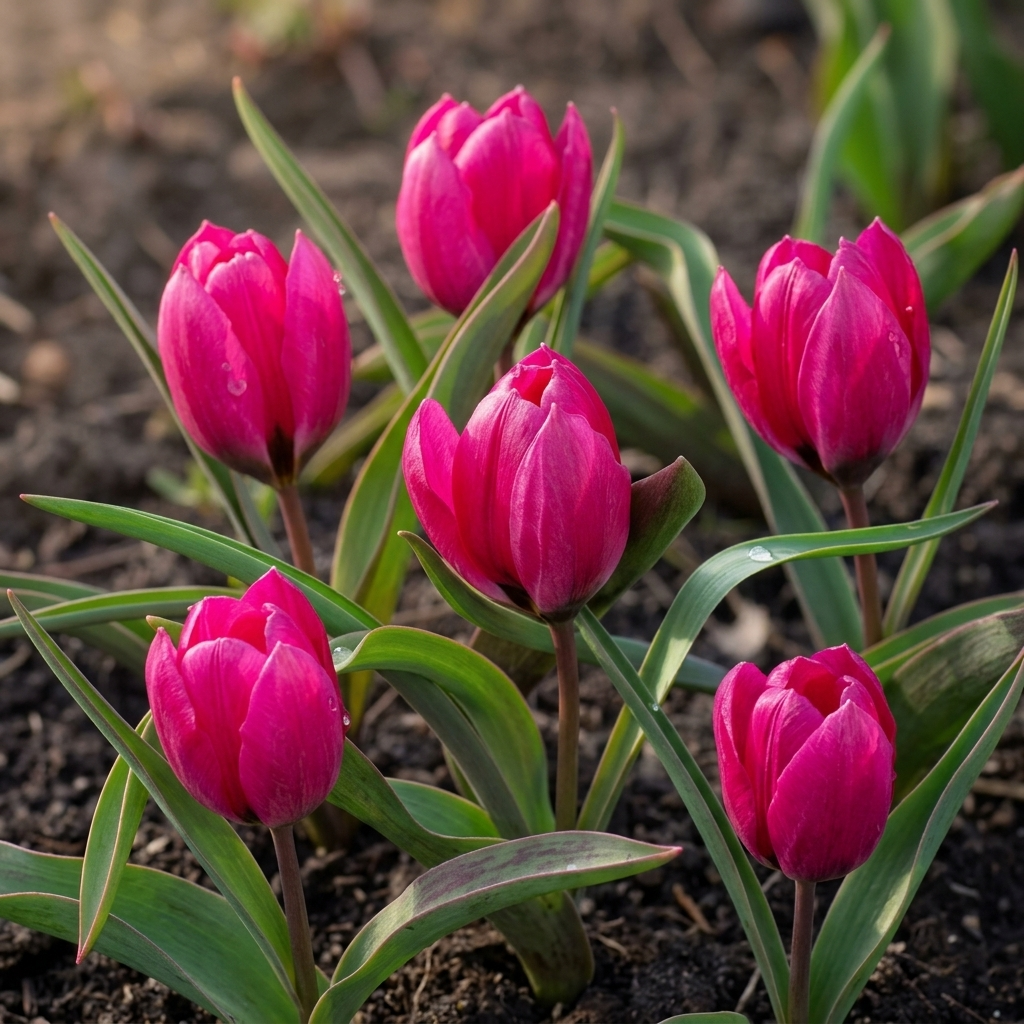
Few spring bulbs command attention quite like Tulipa humilis 'Violacea Black Base'. This gem produces stunning magenta flowers with an eye-catching, unusual black base, and at roughly 15 cm tall, it punches well above its weight in the garden. While towering hybrid tulips grab the headlines every spring, gardeners who have grown this diminutive species tulip know it offers something those flashy cultivars simply cannot: reliability, year after year, without the annual replanting drama.
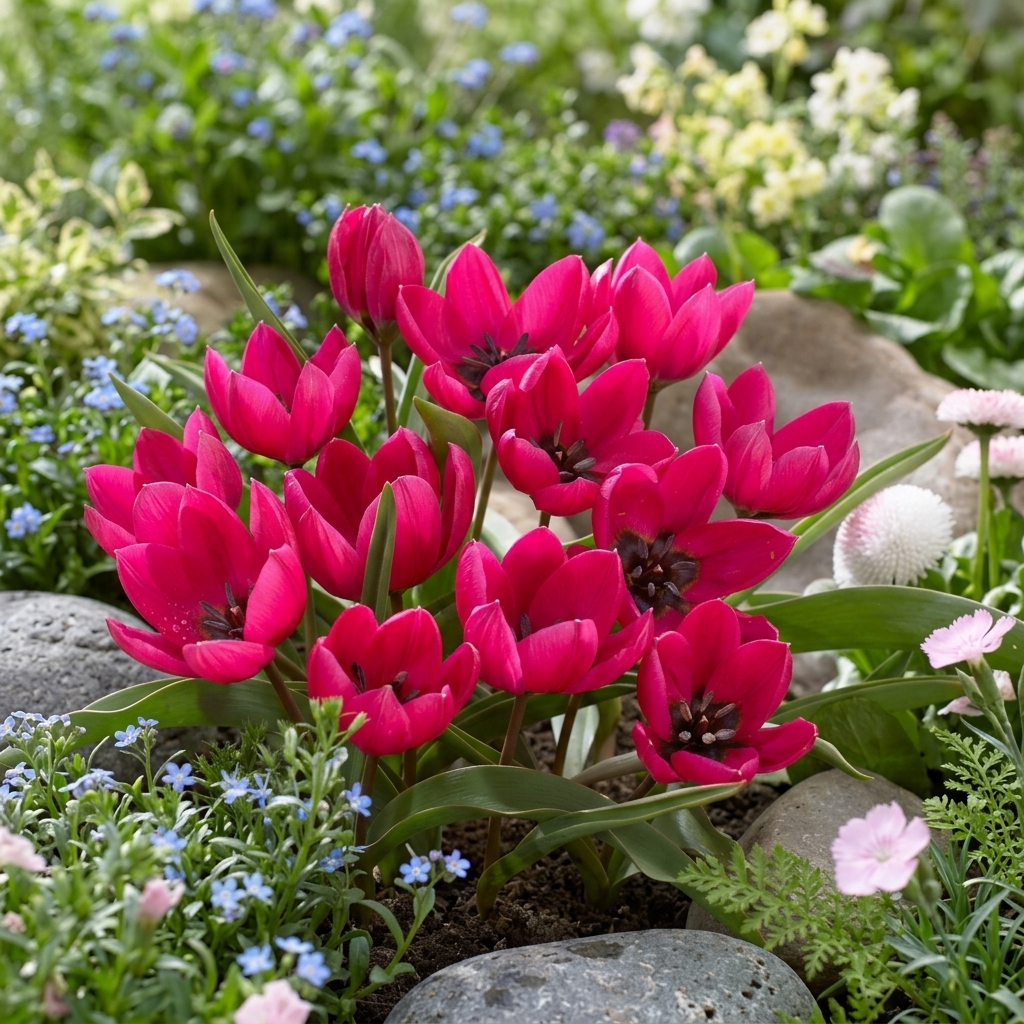
While little can rival the brilliance of modern tulips for size and variety of colour, species (or wild) tulips and their cultivars offer a more delicate display, and are perfect for a rock garden or gravel garden, a meadow and containers. That is the sweet spot where T. humilis 'Black Base' earns its starring role.
Key Takeaways
-
A true perennial performer: Not all tulips are reliably perennial, but most dwarf species tulips such as T. humilis and their hybrids will flower year after year, and many will bulk up into clumps after a few years. Therefore, plant this variety where you want a permanent feature, not a one-season splash.
-
Bloom at the very start of spring: It blooms very early, right after the crocus. This means placing it at the front of a border or in a pot beside the door where you will catch it in its prime, do not bury it behind later-emerging perennials.
-
Compact but tough: Tulipa humilis is a dwarf grower at 10-15 cm, suited for rock gardens and narrow lawn edges where taller species would look oversized. It multiplies reliably through offsets and tolerates the shallow, stony soils where other bulbs struggle. If you have a neglected gravel bed or a sunny wall base, this is your plant.
-
Partial disease resistance is an advantage: For borders, these tulips have some resistance to Tulip Fire and can be planted earlier in the autumn than other species, though a later planting after the first frosts (October) will reduce any risk. Use this to your advantage and plan your planting calendar accordingly.
Quick-Start Prioritisation Framework
| Situation | Best Approach | Effort Level | Time to Results |
|---|---|---|---|
| Rock garden or gravel bed | Plant in drifts of 9+ bulbs, 10-15 cm apart | Low | First spring after planting |
| Patio pots or windowboxes | Use fresh compost; plant September to November | Low-Medium | First spring after planting |
| Naturalising in lawn or meadow | Leave foliage to die back naturally each year | Low (ongoing) | 2-3 years to establish drifts |
| Mixed spring border | Layer with crocus and chionodoxa in same holes | Medium | First spring after planting |
| Cutting or container rotation | Treat as annual, refresh bulbs each autumn | Medium-High | Each spring |
Start here if you are:
-
A beginner: Plant 9 bulbs in a terracotta pot with gritty compost. Place in full sun. Enjoy the show in March or April, then simply let the foliage die back.
-
An experienced gardener: Naturalise in a sunny, well-drained rock garden. Give the bulbs a summer drought and watch them multiply over the seasons.
-
Short on space: Tuck bulbs into the front of an existing border at 10-15 cm spacings. Their compact height means they never obscure anything behind them.
Where T. humilis 'Black Base' Comes From
A Wild Tulip with Mountain Roots
Understanding the origins of this plant tells you almost everything you need to know about keeping it happy. Tulipa humilis is a species from Turkey, Azerbaijan, Lebanon, Syria, Iraq, and Iran that is variable in colour and size, with petal blotches from black to blue to yellow. Specifically, its preferred habitat is rocky mountain slopes.
The origin and centre of diversity for tulips is the Tien Shan Mountain range, a western outcrop of the Himalayas. The countries this range straddles include Kazakhstan, Tajikistan, Turkmenistan, China and Uzbekistan. Other hotspots where many species are found include Iran, Turkey, Armenia and Crete. All these countries have long, hot, very dry summers with cold winters when most of the rainfall occurs. In other words: full sun, sharp drainage and a dry summer rest are what this tulip evolved to need. Give it anything less, and you are working against its nature.
What Makes 'Black Base' So Distinctive
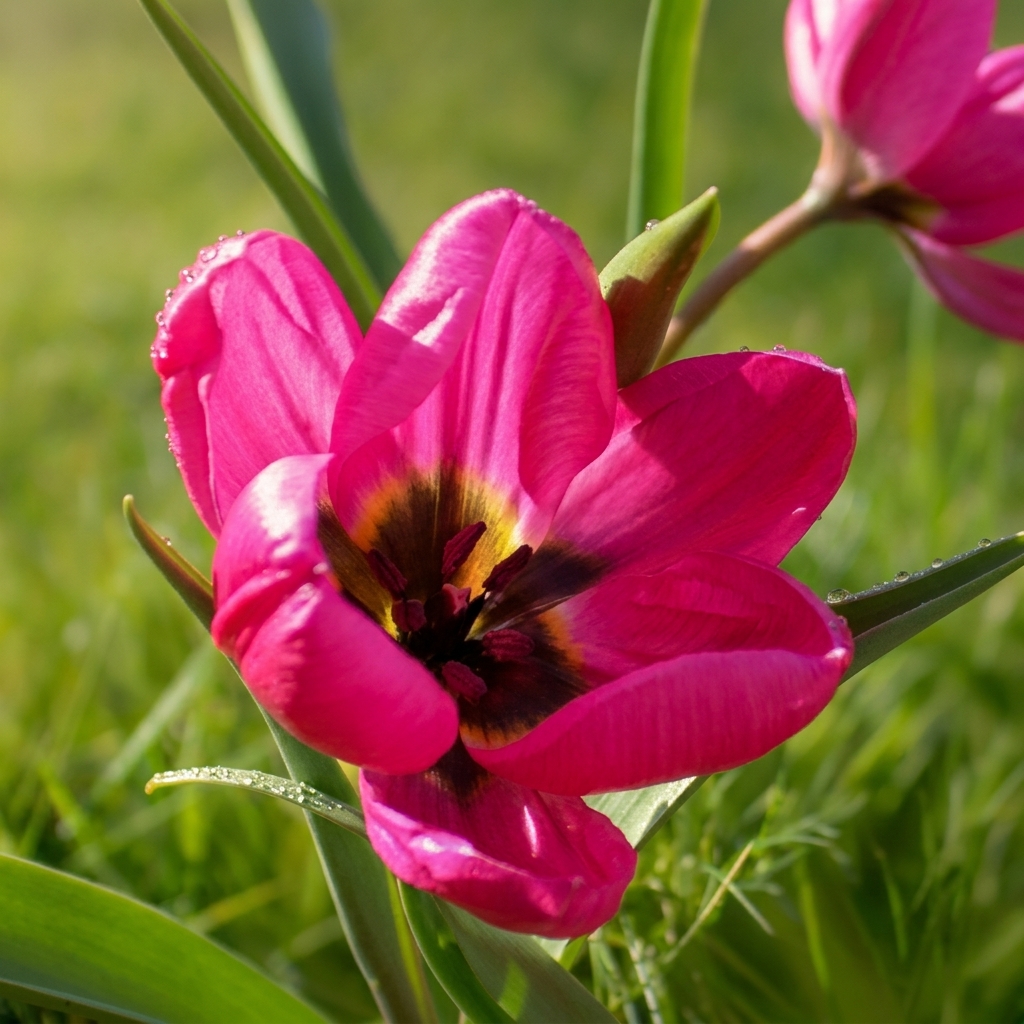
Tulipa humilis Violacea 'Black Base' Base' has deep magenta-pink flowers with black bases in the interiors. The leaves are narrow and blue-green. The flowers open wide on warm sunny days. That dramatic contrast, vivid magenta above a jet-black centre, is why this cultivar consistently draws gardeners in for a closer look. Botanical tulips are miniature to small species tulips, cultivars of species, or dwarf named cultivars not far removed from their wild ancestors. They are strongly perennial in good drainage with full sun and will naturalise when happy.
In my experience, no photograph does justice to the colour. That black base appears almost painted on, and when a cluster of them opens together in early spring sunshine, the effect is genuinely startling.
How to Grow T. humilis 'Black Base' Successfully
Planting Time and Depth
Spring-flowering bulbs should be planted in September and October, as the soil is still warm and the bulbs can develop roots and become established before becoming dormant in winter. The exception to this rule is tulip bulbs, which benefit from a November planting to prevent the fungal disease tulip fire.
Plant bulbs 15-20 cm deep and 10-15 cm apart in fertile, well-drained soil. For a good display, aim to plant in groups of at least six, as the more bulbs that are grouped together, the better the display. Typically, 25 to 50 bulbs may be needed to make an impressive show. Therefore, resist the urge to buy just five bulbs, order at least two to three dozen if you want a true statement planting.
Pro Tip: If you cannot plant your bulbs immediately after buying them, store them in a cool environment with good air circulation. Remove all the packaging and place them in a loose-weave jute sack before labelling and hanging up in a dry, unheated garden shed or well-ventilated greenhouse.
Soil, Sun and Site
store them in a cool environment moist but well-drained, or general-purpose potting compost for containers. Plant in full sun, protect from excessive wet and shelter from strong winds. A south-facing raised bed or a spot at the base of a sunny wall works perfectly. A south-facing wall can create a warmer microclimate ideal for tulip growth, as it shields the plants from wind and offers more consistent warmth.
After-Flowering Care
In spring, when the potted or border tulips are in active growth, apply a high-potash fertiliser each week until the leaves start to die back. Pinch off the spent flower heads as the petals fall, and let the stem and foliage die back naturally.
Avoid excessive nitrogen, which can cause lush foliage at the expense of blooms. Remove spent flowers (deadhead) to prevent seed production and direct energy back to the bulb. Allow the foliage to die back naturally to nourish the bulb for the next season.
Designing with 'Black Base': Where It Shines
Rock Gardens and Gravel Beds
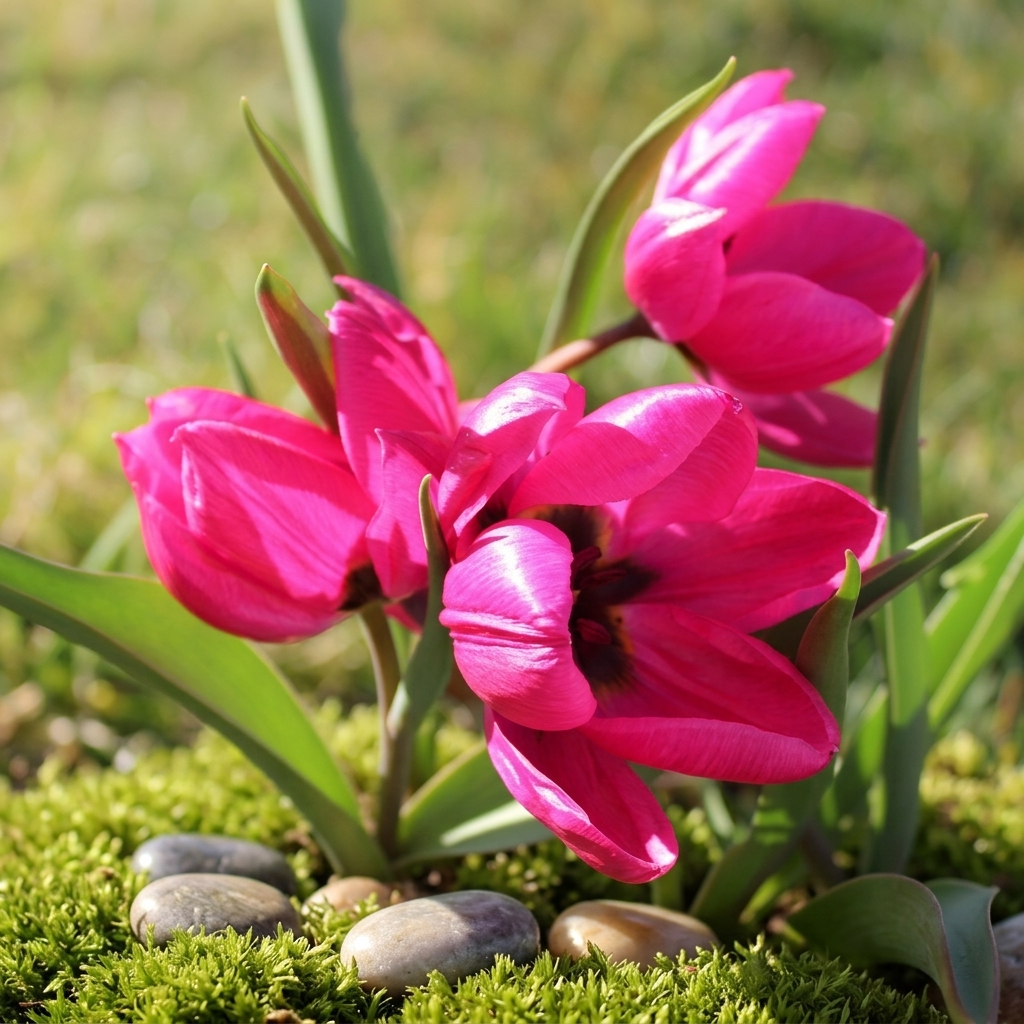
A low-growing species tulip, it is ideal for adding a vibrant splash of colour to patio pots or window boxes, and it also makes a natural addition to rockeries and alpine beds. Excellent choices for rock gardens include grape hyacinth, species tulips and 'tête-à-tête' dwarf daffodils. Plant odd numbers for a relaxed, naturalistic feel, plant in groups of odd numbers for a natural appearance that mimics wild mountain meadows.
Companion Plants That Work
The low height of 'Black Base' means it pairs beautifully with other early-season small-bulb plants. A personal favourite combination: plant chionodoxa and crocus in the same holes a few centimetres shallower, alongside the T. humilis bulbs. The colour is an incredibly vivid pink above a black base. They open under a bright sky, even if the sun is not out. Chionodoxa (Glory of the Snow) and violet crocus planted in the same holes but a little shallower work well together. The three cool colours complement each other beautifully.
For later in the season, ornamental alliums are flowering spring bulbs that tend to bloom a few weeks later than tulips. Alliums with leaves similar to those of your tulips can help keep the greenery area somewhat green as the tulip leaves fade. The succession flowering of the Tulip-to-Allium sequence can also be very satisfying to the gardener who loves always to have something in bloom.
Pro Tip: Shasta daisies make the list of suitable tulip companion plants because they wake up later than spring-blooming perennials and will hide fading tulip foliage as they grow. Position a clump behind your T. humilis drift for seamless seasonal handover.
Protecting Your Bulbs from Tulip Fire
Tulip fire, or Botrytis blight, is caused by the fungus Botrytis tulipae. It attacks all parts of the plant and is by far the most common and serious disease wherever this popular flower is grown. The good news is that T. humilis carries some natural resistance, but it is still worth following best practice.
To prevent Botrytis grey mould and tulip fire, try to encourage good airflow around your plants. According to Gardens Illustrated' tulip fire guide, expert grower Polly Nicholson recommends planting tulips a little further apart than normal to allow air circulation and to prevent diseased parts of one tulip from touching another.
After removing infected tulips, it is essential to remove every bit of the flower from the soil and avoid planting tulips in that spot for at least two years. If symptoms of Botrytis are present, wait three years before planting tulips in that specific spot again. Therefore, rotate your planting location every few years as a matter of routine, even if no disease has appeared.
Pro Tip: Select high-quality, disease-free tulip bulbs from reputable suppliers, inspecting bulbs for signs of damage, decay, or fungal infection before planting. At Holland Kertészet, bulb quality is a key selection criterion, starting with a clean, firm bulb is the single most effective disease-prevention step you can take.
Frequently Asked Questions
How tall does Tulipa humilis 'Black Base' grow?
Tulipa humilis Violacea Group black base black base will reach a height of 15 cm and a spread of 10 cm after 1-2 years. Its compact stature makes it suitable for the very front of a border, containers, rockeries and windowboxes, where taller tulips would look out of proportion.
Can I leave the bulbs in the ground year after year?
Yes, and that is one of the main reasons to grow this variety. Unlike their hybrid cousins, which generally do not flower well after their first year, many species tulips are reliably perennial, coming back year after year in a similar way to daffodils. The key requirement is a free-draining site that dries out reasonably well over summer, mimicking the plant's natural mountain habitat.
When exactly does it flower?
Flowers appear March to April. This positions 'Black Base' as one of the very first tulips in the garden, bridging the gap between late crocuses and the main tulip season. It is an especially welcome sight in a cold spring.
Are the bulbs toxic to pets or children?
Tulips contain toxic compounds if ingested. The bulbs are particularly toxic, containing alkaloids that can cause symptoms such as nausea, vomiting and diarrhoea if eaten by humans or animals. Plant bulbs in areas where pets and young children are unlikely to dig, and always wear gloves when handling them.
Closing Thought
Tulipa humilis 'Black Base' rewards gardeners who appreciate quality over scale. At only 15 cm tall, it is easy to overlook on paper, but in practice, that electrifying magenta-above-black combination, combined with its willingness to return and multiply season after season, makes it one of the most satisfying bulbs you can plant. Give it sun, sharp drainage and a little patience, and it will repay you for years.
For quality bulbs sourced with care, explore the spring bulb range at Holland Kertészet.


