

A practical vegetable garden series
Grow tender Japanese mustard spinach from seed, then enjoy its mild, leafy harvest in spring and autumn.
|
GROW WITH US Komatsuna is a quick-growing Japanese leafy green, also known as mustard spinach. Sow in cool spring or late summer weather, keep the soil evenly moist and pick baby leaves young or let plants grow for bunches. Its mild flavour works raw or cooked, and small repeat sowings give a longer harvest. |
Written for home gardeners in Hungary
CHAPTER WELCOME
Your komatsuna season starts here
This book follows the whole journey: seed → seedling → garden → care → harvest → kitchen → next season.
Komatsuna is a quick-growing leafy vegetable from Japan, also called mustard spinach or Japanese mustard greens. It is not true spinach: it is a leafy brassica related to pak choi, turnip and Chinese cabbage. Its broad, smooth leaves and pale stems have a mild mustard-cabbage flavour. Pick the leaves young for salads, or cook larger leaves like spinach.
Near Győr, sow outdoors from March or April as soon as the soil is workable, then sow again through spring. A late-summer sowing from late July to early September can give an autumn crop. Komatsuna grows best in cool, mild weather; hot, dry spells may make it bolt. Water evenly, protect seedlings from flea beetles with fine mesh and begin picking baby leaves in about three weeks.
Our Hungarian calendar
|
March–April |
Sow outdoors once the ground is workable. |
|
April–May |
Repeat sowings every two or three weeks. |
|
June–July |
Pause sowing during the hottest, driest weeks. |
|
Late July–August |
Sow again for autumn leaves. |
|
September–October |
Harvest leaves while plants are still tender. |
|
Before hard frost |
Cover late plants or pick remaining leaves. |
|
WHAT I WOULD DO I would sow a short row in spring, then make another sowing two or three weeks later. I would keep the soil moist, cover seedlings with fine mesh and pick the leaves young for the mildest flavour. |
The rule for this series: dates guide us, but the plant and the weather make the final decision.
CHAPTER 1
Meet Komatsuna
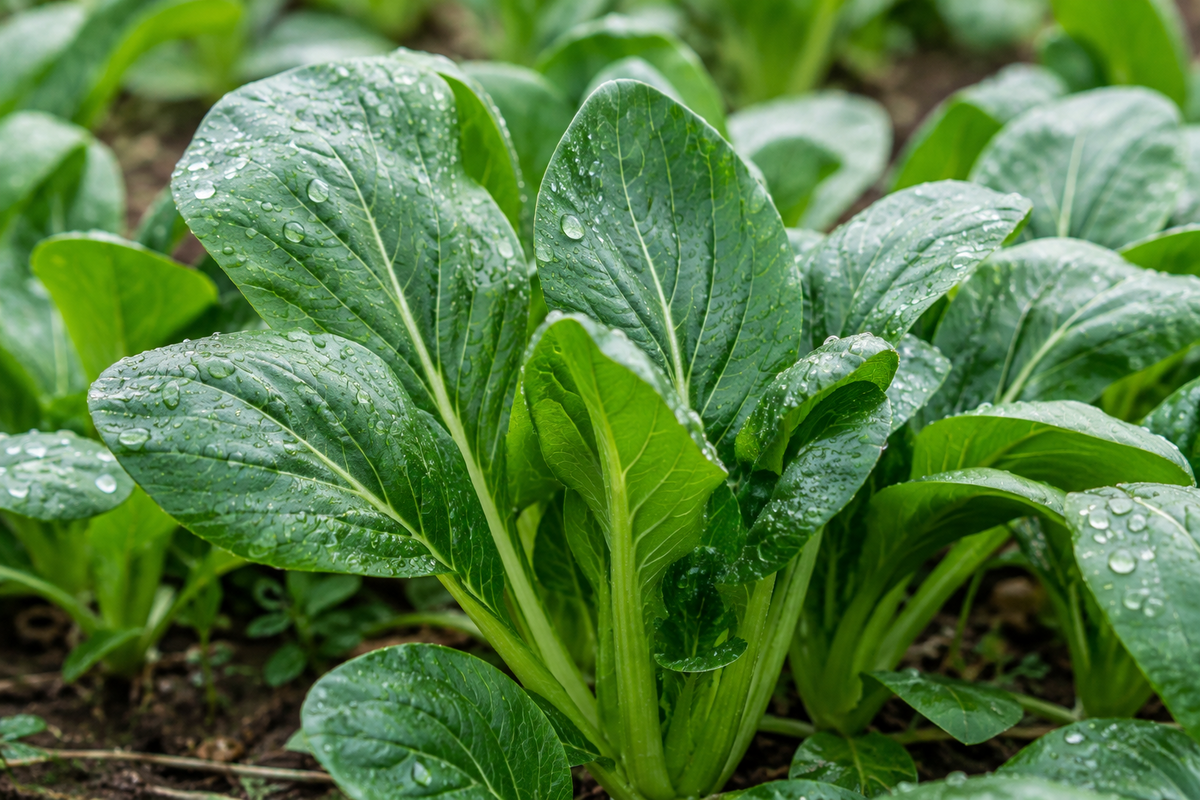
Komatsuna has smooth, broad green leaves and pale stems; pick it young or let it grow for bunching.
Komatsuna (Brassica rapa var. perviridis) is a Japanese leafy brassica, often called mustard spinach. Despite the name, it is not true spinach. It grows as a loose rosette of smooth, dark green leaves with crisp, pale stems. The flavour is mild and gently mustard-like, and the leaves can be eaten raw when young or cooked like spinach. It grows quickly in cool weather and appreciates fertile soil and steady moisture.
Komatsuna or spinach?
|
Komatsuna |
A leafy brassica with broad leaves and pale stems. |
|
Spinach |
A separate leafy crop with thinner leaves. |
Two leafy greens with different plant families
· Komatsuna: a leafy brassica with broad leaves and pale stems.
· True spinach: a different crop with thinner, often arrow-shaped leaves.
· Mild mustard flavour: young leaves are tender enough for salads.
· Cooked greens: mature leaves and stems suit stir-fries and soups.
· Cool-season crop: spring and autumn are its easiest growing windows.
· Quick harvest: baby leaves can be ready in about three weeks.
|
GOOD TO KNOW “Mustard spinach” is a common name, but komatsuna is not true spinach. It is a leafy Brassica rapa, related to pak choi and turnip. |
CHAPTER 2
Choose Your Komatsuna
Pick a cool growing window and decide whether you want baby leaves or full-sized bunches.
Ask yourself five questions
1. Can I give this leafy crop a cool spring or autumn growing window?
2. Can I keep the soil evenly moist, especially in warm weather?
3. Will I sow a short row and repeat it for a longer harvest?
4. Can I cover seedlings against flea beetles and other brassica pests?
5. Will I pick leaves before summer heat makes the plants bolt?
A beginner-friendly first planting
|
Sow in cool weather |
Spring and autumn help keep leaves tender. |
|
Plant little and often |
Repeat sowings spread out the harvest. |
|
Keep moisture steady |
Even water supports quick, gentle growth. |
|
Pick leaves young |
Heat can make plants bolt and leaves stronger. |
|
A COMMON MISTAKE Sowing a large patch all at once. A short row repeated every few weeks gives fresh leaves for longer. |
|
TRY THIS Sow a short row every two or three weeks in spring, then pause during midsummer heat. |
CHAPTER 3
Let’s Sow
Komatsuna is easy to grow from seed and can be sown directly outdoors. For a steady supply, sow a short row in early spring, then repeat every two or three weeks while weather stays mild. Pause during the hottest weeks of summer and start again in late summer for autumn leaves. You can harvest it young as baby leaf or leave plants to make full-sized bunches.
When to sow in Hungary
Rake fine, moist soil and sow seeds about 0.5 cm deep in rows 25–30 cm apart. Sow a few seeds every 2–3 cm, then thin full-size plants to about 10–15 cm apart; closer sowing suits baby leaves. Near Győr, sow from March or April when soil is workable, repeating through May. Sow again from late July through August, or early September for baby leaves. Keep autumn seedlings moist during hot weather.
What you need
· Komatsuna seeds, also labelled mustard spinach
· A sunny bed or a roomy container with drainage
· Fine, fertile soil mixed with mature compost
· A gentle watering can or hose spray
· Labels and fine insect mesh for young plants
Sowing, step by step
1. Rake the bed smooth and remove weeds and stones.
2. Make shallow rows and sow seeds about 0.5 cm deep.
3. Cover lightly, water gently and add a label.
4. Keep the soil moist until seedlings appear, then thin them.
5. Cover the row with fine mesh and sow again later.
|
DON’T PANIC Komatsuna has pale stems and broad leaves. It is related to pak choi, but usually grows as a loose leafy rosette. |
|
A COMMON MISTAKE Letting seedlings dry out or leaving them uncovered. Steady moisture and mesh help protect this leafy brassica. |
CHAPTER 4
Seedling School
Komatsuna seedlings grow quickly; keep them moist and thin them to the space you need.
Recognise young komatsuna
The seedlings begin with two rounded seed leaves, followed by broader true leaves. Keep the soil moist while they establish, then thin full-size plants so their leaves have room to spread. If you started them indoors, harden seedlings off gradually before planting outside. Fine insect mesh from sowing helps exclude flea beetles and many other brassica pests. Weed gently around the shallow roots.
Why are the plants flowering so soon?
Komatsuna can bolt when plants face prolonged heat, dry soil or other stress; long summer days can add to the pressure. Sow in spring or late summer, keep moisture steady and give plants light shade in hot weather. Harvest usable leaves as soon as a flower stalk appears. The leaves are still edible, though older leaves may taste stronger.
Water while they settle
Water after sowing or transplanting, then keep the soil evenly moist while seedlings establish. Leafy plants need steady growth to stay tender, so water whenever the top few centimetres begin to dry. Sandy beds, raised beds and containers dry faster than garden soil; check them more often in warm weather.
Feeding
Komatsuna grows well in fertile soil enriched with mature compost. If the bed is poor, use a balanced vegetable fertiliser according to its label. Avoid strong or excessive nitrogen feeds, which can give soft, overly leafy growth. Good soil and regular water are usually enough for this quick crop.
|
WHAT I WOULD DO I would grow komatsuna in fertile soil, keep it evenly moist and protect the row from flea beetles with fine mesh. |
|
DON’T PANIC A few small holes in the leaves are common. Wash the leaves well and use the undamaged parts. |
CHAPTER 5
Ready for the Real World
Komatsuna likes cool weather and can be sown outdoors as soon as the spring soil is workable.
Before planting: check the plants and the bed
1. Choose sturdy seedlings with several true leaves and healthy green growth.
2. Harden indoor-grown plants off gradually for about a week.
3. Prepare fertile, moisture-retentive soil that drains freely.
4. Choose a sunny position in spring, with light shade in warm weather.
5. Have fine insect mesh ready before flea beetles arrive.
When is it ready in Hungary?
Near Győr, direct sow from March or April as soon as the soil can be worked. Komatsuna tolerates cool conditions, but very cold nights slow young plants; cover them if a hard frost is forecast. For autumn leaves, sow from late July into August. An early-September sowing is most reliable for baby leaves, especially in an exposed garden.
Spring weather and frost risk vary across Hungary. In cooler or exposed gardens, wait until the ground is workable and protect young seedlings; in warmer lowland gardens, sowing can begin earlier. Avoid the hottest weeks, then sow again as summer eases. Use the seed packet for variety-specific spacing and timing.
|
A COMMON MISTAKE Sowing during the hottest weeks. Heat and dry soil can stress plants and encourage early flowering. |
|
GOOD TO KNOW Komatsuna belongs to Brassica rapa. Rotate it away from pak choi, turnips and other cabbage-family crops. |
CHAPTER 6
Give Them a Good Home
Cool weather, fertile soil and even moisture help komatsuna leaves stay tender.
The right place
Choose a sunny position in cool weather, with light afternoon shade if spring or late summer turns hot. Komatsuna likes fertile, moisture-retentive but well-drained soil. Add mature compost before sowing. Avoid waterlogged beds and places recently used for cabbage-family crops. Keep the bed weed-free, and place fine mesh over the row early to keep flea beetles away.
Spacing
For full-size bunches, thin plants to about 10–15 cm apart and leave 25–30 cm between rows. For baby leaves, sow more thickly and harvest young. Check the packet because varieties differ. Good spacing lets leaves spread, improves airflow and makes picking easy. Thin carefully and use edible young seedlings in a salad or stir-fry.
Planting day
1. Water the seedlings and prepare a moist, weed-free bed.
2. Make shallow drills at the spacing recommended for your crop.
3. Set each seedling at the same depth it grew in its pot.
4. Firm gently, water in well and add a label.
5. Cover the bed with fine mesh and secure the edges.
Growing in pots
Komatsuna grows well in a wide container with drainage. A pot about 20–25 cm deep is suitable; leave 10–15 cm between plants for full-size leaves or sow densely for baby leaf. Fill it with fresh potting mix and keep it evenly moist. Containers dry quickly in warm weather, so check them daily. Choose a cooler, lightly shaded spot during summer.
|
TRY THIS Taste a young leaf raw, then cook a few with garlic. Its gentle mustard flavour works both ways. |
CHAPTER 7
Water, Feed & Keep Them Growing
Regular moisture and cool growing conditions help komatsuna stay tender.
Watering
Water when the soil surface begins to dry, especially while the plants are making new leaves. Komatsuna needs steady moisture for tender growth; a dry spell can stress plants and encourage bolting. Water at soil level in the morning and check containers more often. Aim for moist soil, not standing water.
Mulch
Once plants are established, add a light layer of straw or compost around them. Mulch helps reduce weeds and conserve moisture. Keep it away from the stems and leaves so plants stay clean and airy. In early spring, wait until the soil has warmed before adding a thick layer.
Feeding
Compost mixed into the bed before sowing is usually a good start. If growth is poor in low-fertility soil, use a balanced vegetable feed as directed. Komatsuna grows quickly and does not need repeated strong feeds. Too much nitrogen does not replace regular water or cool growing conditions.
Keep plants healthy
Check leaves for flea beetles, cabbage caterpillars and slugs, especially when plants are young. Fine insect mesh laid over the row from sowing is an easy way to deter many pests. Remove damaged leaves, keep weeds down and rotate crops: avoid planting komatsuna where cabbage-family crops grew in the previous three or four years.
|
WHAT I WOULD DO I would pick outer leaves often and sow again as summer heat eases for an autumn harvest. |
CHAPTER 8
Leaves, Stems & “What Is That?”
Komatsuna grows a loose rosette of smooth leaves on pale, edible stems.
Why are my leaves tiny or bitter?
Plants may be crowded, dry, over-mature or stressed by heat. Thin full-size plants to the spacing on the packet and keep soil evenly moist. Pick outer leaves while they are young and tender. If a flower stalk appears, harvest the remaining leaves promptly. In hot weather, give the bed afternoon shade and wait to sow again until late summer.
The beginner’s trouble guide
|
Plants flower early |
Heat, long days or dry soil may be stressing the crop; harvest leaves and sow later. |
|
Leaves have tiny holes |
Flea beetles may be feeding. Cover plants with fine insect mesh. |
|
Leaves have chewed edges |
Look for cabbage caterpillars or slugs and inspect underneath. |
|
Leaves taste strong |
The leaves may be older, stressed or flowering; harvest younger next time. |
|
Plants look crowded |
Thin full-size plants to about 10–15 cm apart. |
|
DON’T PANIC Komatsuna leaves and stems are both edible. Young leaves can be eaten raw; mature leaves are lovely cooked. |
|
A COMMON MISTAKE Waiting for every plant to reach full size. Pick outer leaves as needed for a longer, more flexible harvest. |
CHAPTER 9
Can I Pick It Yet?
Yes—pick baby leaves from about three weeks, or wait for larger bunches in four to seven weeks.
What “ready” looks like
Baby leaves are ready when they are large enough to handle, often around three weeks after sowing. For full-sized plants, look for several broad, healthy leaves and a firm pale stem; many varieties reach bunching size in about 30–45 days, depending on weather. Pick outer leaves as needed or cut the whole plant just above the soil. Harvest promptly if a flower stalk starts to form.
Harvest from spring into autumn
|
Baby leaves |
Pick once leaves are large enough to handle, often in about 3 weeks. |
|
Full-size plants |
Allow about 30–45 days, depending on variety and weather. |
|
How to pick |
Take outer leaves or cut the whole plant near the soil. |
|
Check often |
Harvest promptly if a flower stalk appears. |
How often should I check?
Check the row every few days once the leaves begin to fill out. Pick outer leaves regularly or harvest plants at the size you like. Small repeat sowings give several harvests through spring and autumn. Rinse leaves just before using and refrigerate promptly; tender young leaves can be eaten raw.
|
READY TO HARVEST? Pick baby leaves as soon as they are large enough to handle. For full-size plants, harvest several broad leaves or cut the whole plant at the base before flowering. |
|
TRY THIS Stir-fry komatsuna with garlic: add sliced stems first, then the leaves until just wilted. |
CHAPTER 10
From the Garden to the Kitchen
Komatsuna has a mild mustard flavour and works well raw or cooked.
The first rule: cook stems and leaves together
Rinse the leaves and pale stems well, then shake or pat them dry. Young leaves are tender enough for salads and sandwiches. For cooking, slice stems and leaves into bite-sized pieces; add the stems first because they take a little longer to soften. Stir-fry, steam or add them to soups, noodles and omelettes. Cook just until wilted for a fresh, mild flavour.
Match komatsuna to the dish
· Raw: add young leaves to salads or sandwiches.
· Stir-fry: cook sliced stems briefly, then add the leaves.
· Soup: stir in chopped leaves near the end.
· Side dish: steam and season with sesame or garlic.
|
FROM THE KITCHEN Use young leaves raw in a salad, or add chopped stems and leaves to a quick noodle soup. |
Storing fresh komatsuna
Keep leaves unwashed until you are ready to use them. Wrap loosely in a clean, slightly damp paper towel and place in a bag or container in the refrigerator. Use within about a week for the best flavour and texture. Wash just before preparing. Discard leaves that are slimy, mouldy or badly yellowed.
When you have more than you can use
Komatsuna is best fresh, so sow small rows at intervals rather than growing far more than you can eat. If you have a surplus, blanch leaves briefly, cool quickly, drain well and freeze in labelled portions for soups or cooked dishes. Older leaves are still useful cooked, especially in a stir-fry or soup.
CHAPTER 11
Next Season Starts Now
A few notes about sowing, heat and harvest will help you plan next year’s komatsuna crop.
Keep a tiny garden record
· Seed source and exact komatsuna variety
· Date of each sowing and when seedlings appeared
· Whether spring or autumn sowing gave the best leaves
· How watering and shade affected leaf quality
· When the first baby leaves were ready
· Which spacing suited your kitchen best
· Which sowing dates avoided summer heat
Saving seed and planning another crop
Komatsuna is usually grown as an annual leafy crop, though it can flower and set seed if left in the garden. It belongs to Brassica rapa and can cross with other B. rapa crops flowering nearby, including turnips, pak choi and Chinese cabbage. Saving seed requires isolation and several plants for reliable pollination; seed from hybrids may not come true. For a small home garden, buying fresh seed is simplest.
1. Choose a healthy, open-pollinated plant and let it flower.
2. Protect its flower stalk from wind and heavy rain.
3. Allow seed pods to mature and dry on the plant.
4. Collect dry pods and finish drying them in a warm, airy place.
5. Label the variety and year, then store cool and dry.
|
GOOD TO KNOW Store leaves unwashed in a loose wrap in the refrigerator and use them within about a week for best quality. |
|
WHAT I WOULD DO I would pick only what I need, then sow another small row so fresh leaves keep coming. |
COME GROW WITH ME
KOMATSUNA CHEAT SHEET
The page to come back to when you have soil on your hands and no time to reread the whole book.
|
SOW |
March–May; late July–August |
Direct sow about 0.5 cm deep |
|
POSITION |
Sun; light shade in heat |
Fertile, moist, well-drained soil |
|
THIN |
10–15 cm for full-size plants |
Sow closer for baby leaf |
|
CARE |
Water evenly; cover with mesh |
Rotate away from brassicas |
|
HARVEST |
Spring and autumn |
Baby leaf ~3 weeks; full-size 30–45 days |
|
Sow |
Direct sow in early spring or late summer. |
|
Thin |
Give full-size plants room to spread. |
|
Protect |
Cover young plants from flea beetles. |
|
Water |
Keep soil evenly moist for tender leaves. |
|
Harvest |
Pick outer leaves young or cut whole plants. |
|
Next season |
Rotate beds and buy fresh seed for reliability. |
|
HUNGARY IN ONE LINE Sow komatsuna near Győr in March–May or late July–August, water evenly, protect from flea beetles and harvest leaves young. |
COME GROW WITH ME • KOMATSUNA
Seasonal guidance is adapted for Hungarian home gardens.


