

A practical vegetable garden series
Grow vigorous climbing yardlong beans, then pick their tender, extra-long pods through the warmth of summer.
|
GROW WITH US Longyard bean, also called yardlong bean, is a vigorous climbing crop that loves summer warmth. Wait until the soil is warm and frost has passed, then sow beside a sturdy trellis. Water during dry spells and pick pods while they are long, slim and tender. Frequent harvesting helps the vines keep producing. |
Written for home gardeners in Hungary
CHAPTER WELCOME
Your longyard bean season starts here
This book follows the whole journey: seed → seedling → garden → care → harvest → kitchen → next season.
Longyard bean, usually called yardlong bean, is a warm-season climbing legume related to cowpea. It is not the same species as the common green bean. The vigorous vines climb high and produce slender pods that can grow remarkably long. For the tenderest eating, pick them while the pods are still slim and the seeds inside have not swollen. They are delicious cooked in stir-fries, curries and vegetable dishes.
Near Győr, sow outdoors in late May or early June, once frost risk has passed and the soil is thoroughly warm—ideally at least 18°C. This tropical crop loves summer heat, so it can be a good choice for a sunny, sheltered garden. Give the vines a sturdy trellis at planting time, water during dry spells, and pick pods regularly from midsummer onward. In cooler or exposed parts of Hungary, choose the warmest spot and start seeds in individual pots a few weeks early.
Our Hungarian calendar
|
April–May |
Start a few seeds in individual pots if desired. |
|
Late May–June |
Sow outdoors after frost risk in warm soil. |
|
June–July |
Guide vines up a tall, sturdy trellis. |
|
July–September |
Pick tender pods regularly in warm weather. |
|
Late summer |
Continue harvesting before pods become lumpy. |
|
Before autumn frost |
Pick remaining pods and save mature seed. |
|
WHAT I WOULD DO I would wait for warm soil in late May, sow beside a sturdy trellis and water during dry spells. Once pods begin to form, I would check the vines every day or two and pick them young. |
The rule for this series: dates guide us, but the plant and the weather make the final decision.
CHAPTER 1
Meet the Longyard Bean
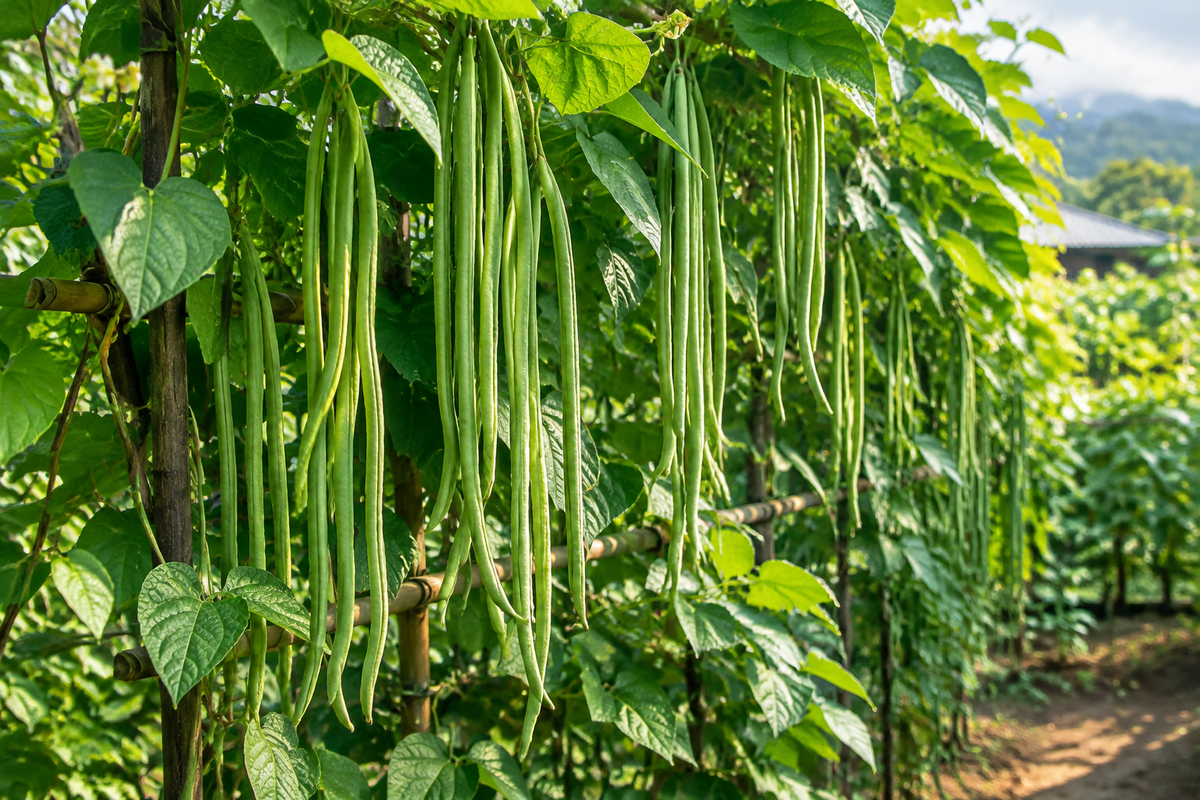
Longyard bean vines climb high and carry clusters of very long, slender pods.
Longyard bean (Vigna unguiculata subsp. sesquipedalis), also called yardlong, asparagus or snake bean, is a tropical annual in the legume family. It is a cultivated form of cowpea, rather than a common green bean. Its twining vines can grow several metres tall and need strong support. The slender pods are usually harvested while young, before their seeds swell; many varieties grow 30–50 cm long. This heat-loving crop grows best in warm soil, full sun and a long, frost-free summer.
Longyard bean or green bean?
|
Longyard bean |
Heat-loving cowpea with extra-long pods. |
|
Green bean |
Common bean with shorter snap pods. |
Two climbing beans with different needs
· Longyard bean: a heat-loving cowpea with very long, slender pods.
· Common green bean: a different species with shorter snap pods.
· Climbing habit: longyard bean vines need sturdy, tall support.
· Tender pods: harvest before the seeds inside become large.
· Warm-season crop: sow only after the soil is properly warm.
· Long harvest: regular picking encourages more pods.
|
GOOD TO KNOW Longyard beans are a kind of cowpea, not a common green bean. They need warmer soil and a long, sunny summer to produce well. |
CHAPTER 2
Choose Your Longyard Beans
Plan for warm weather, give the vines room to climb and pick pods often.
Ask yourself five questions
1. Can I wait until frost risk has passed and the soil is warm?
2. Do I have a sunny, sheltered position for this heat-loving crop?
3. Can I put up a tall, sturdy trellis before sowing?
4. Will I water during flowering and pod formation in dry weather?
5. Can I check the vines often and pick pods while young?
A beginner-friendly first planting
|
Wait for warmth |
Cold soil can delay or rot the seeds. |
|
Give strong support |
Vines climb high and carry many pods. |
|
Water in dry spells |
Moisture matters while flowers set pods. |
|
Pick often |
Young pods stay tender and keep vines cropping. |
|
A COMMON MISTAKE Sowing before the soil is warm. These tropical beans need settled warmth and cannot tolerate frost. |
|
TRY THIS Put the trellis in place before sowing so you do not disturb the roots later. |
CHAPTER 3
Let’s Sow
Longyard beans grow best when sown directly into warm garden soil. Cold, wet ground can delay germination or cause seeds to rot. Choose a sunny, sheltered bed and set up a sturdy trellis before sowing, so young roots are not disturbed later. In cooler parts of Hungary, start a few seeds in individual pots indoors and transplant carefully after the weather warms. Sow a small row first, then add more if your summer is long and warm.
When to sow in Hungary
Wait until the danger of frost has passed and soil is reliably warm—about 18°C or warmer. Near Győr, this is usually late May or early June; cooler, exposed gardens may need to wait until June. Sow seeds about 2–3 cm deep, 10–15 cm apart at the base of a strong trellis, with 60–90 cm between rows. In cooler regions, sow one seed in each small pot in early or mid-May and transplant gently when warm. Do not soak seeds in cold, wet soil.
What you need
· Longyard bean seeds, also labelled yardlong or asparagus bean
· A sunny, sheltered bed with well-drained soil
· A sturdy trellis at least 2 m high
· Compost, a watering can and garden labels
· Individual pots for an early start in cooler areas
Sowing, step by step
1. Choose a warm, sunny bed and prepare the trellis first.
2. Sow seeds about 2–3 cm deep and 10–15 cm apart.
3. Water gently and label the row with the sowing date.
4. Keep the soil slightly moist until seedlings emerge.
5. Guide young vines towards their support as they grow.
|
DON’T PANIC The pods can grow very long. Pick them while they are still slim and tender, before the seeds swell. |
|
A COMMON MISTAKE Using a short or flimsy support. Vigorous vines can climb several metres and become heavy with pods. |
CHAPTER 4
Seedling School
Longyard bean seedlings emerge quickly in warm soil; guide their twining stems to the trellis.
Recognise young longyard beans
The seedlings push up with two large seed leaves, then develop their first true leaves. Once the stem begins to twine, gently guide it around the trellis. Keep young plants watered while they establish and remove weeds without disturbing their roots. If you started seeds in pots, plant them out carefully with the root ball intact. Longyard beans dislike cold nights, so wait for settled warmth before moving them outside.
Why are my vines growing but not making pods?
The vines may still be settling in, or they may be getting too little warmth, sun or water. Longyard beans need a long, hot growing period to flower and set pods. Avoid feeding with a high-nitrogen fertiliser, which can encourage leaves instead of flowers. Keep soil evenly moist during flowering, guide vines up their support and give them time; pod production often picks up as summer heat builds.
Water while they settle
Water seeds after sowing and keep the soil slightly moist until they emerge. Water young plants regularly while roots establish. After that, water deeply during dry spells, especially when flowers and pods are forming. Aim for moist, well-drained soil; constant waterlogging can rot roots. Mulch helps reduce evaporation during hot Hungarian summers.
Feeding
Mix compost into the bed before sowing, but avoid heavy nitrogen feeding. Like other legumes, longyard beans can work with soil bacteria to obtain nitrogen, and too much added nitrogen may produce leafy vines with fewer pods. If the soil is poor, use a modest, balanced vegetable feed as directed on its label.
|
WHAT I WOULD DO I would choose the warmest sunny corner, add compost and avoid feeding with a high-nitrogen fertiliser. |
|
DON’T PANIC The seeds may take longer to emerge if the soil is cool. Keep it lightly moist and wait for warmer weather. |
CHAPTER 5
Ready for the Real World
Move young plants outside only after frost risk has passed and the soil has warmed.
Before planting: check the plants and the bed
1. Choose a sunny, sheltered place with well-drained soil.
2. Wait until frost risk has passed and nights are reliably mild.
3. Install a strong trellis before sowing or transplanting.
4. Prepare soil with mature compost, not a heavy nitrogen feed.
5. Keep young plants watered while they settle in.
When is it ready in Hungary?
Near Győr, sow longyard beans outdoors in late May or early June, after the last frost risk and once the soil is warm. A sudden cold spell can stall or damage this tropical crop, so cover young plants overnight if a late chill is forecast. In cooler or exposed gardens, wait until June or start seed indoors in individual pots. Give plants a full, sunny summer to make pods.
Hungary’s warm lowlands usually provide a better summer window than cool, windy or upland gardens. In cooler districts, use a south-facing wall or sheltered bed, and start seeds under cover to gain a little time. Do not rush planting into cold soil: warmth is more important than the calendar date. Check the seed packet for the variety’s maturity and pod length.
|
A COMMON MISTAKE Leaving pods on the vine until the seeds are large. Pick while young for a tender, crisp texture. |
|
GOOD TO KNOW Yardlong bean vines can tolerate summer heat, making them useful when cooler beans struggle in a hot spell. |
CHAPTER 6
Give Them a Good Home
A warm, sunny position and tall, firm support suit these vigorous climbing vines.
The right place
Choose the sunniest sheltered position you have, ideally protected from cold winds. Longyard beans thrive in warm weather and well-drained soil. Mix in mature compost before planting, but avoid a rich, high-nitrogen bed. Put the trellis in place first: vigorous vines climb several metres and can become heavy when full of pods. Keep the crop away from places where beans grew last year if disease was a problem.
Spacing
Sow seeds about 10–15 cm apart along the base of a trellis, then thin to the strongest seedlings if needed. Leave 60–90 cm between rows so you can reach the vines from both sides. A roomy support lets leaves dry after rain and makes pods easier to spot. Follow the seed packet if it gives different spacing for your variety.
Planting day
1. Water the seedbed and prepare the support before you sow.
2. Sow seeds 2–3 cm deep beside the trellis.
3. Space seeds 10–15 cm apart and rows 60–90 cm apart.
4. Cover lightly, firm gently, water and label the row.
5. When seedlings emerge, guide the stems towards the trellis.
Growing in pots
Longyard beans can grow in a large, deep container if you provide a tall, sturdy trellis. Choose a pot at least 30–40 cm wide and deep, with drainage, and grow one or two plants depending on its size. Use fresh potting mix, water regularly and place the container in the warmest sunny spot. Containers dry quickly in summer, so check them daily.
|
TRY THIS Cut young pods into short lengths and stir-fry them with garlic and ginger until just tender. |
CHAPTER 7
Water, Feed & Keep Them Growing
Warmth, steady moisture and regular pod picking keep the vines productive.
Watering
Water deeply during dry spells, particularly when the plants are flowering and pods are forming. Longyard beans tolerate summer heat, but drought stress can reduce flowering and pod development. Water the soil at the base of the vines and avoid keeping it soggy. Check containers every day in hot weather and water when the surface begins to dry.
Mulch
Once seedlings are growing well, add a light mulch of clean straw or compost around the plants. Mulch conserves water and helps control weeds in summer. Keep it clear of the stems, and do not pile it on before the soil is warm. Weed carefully near the vines so you do not damage their roots.
Feeding
Compost added before planting is usually enough in a reasonably fertile bed. Avoid repeated high-nitrogen feeds, which may encourage lots of leafy growth and fewer flowers or pods. If plants show poor growth in low-fertility soil, use a balanced vegetable feed sparingly according to its label. Healthy soil and steady water matter most.
Keep plants healthy
Check leaves and stems for aphids, leaf damage and signs of mildew, especially during humid weather. Remove badly damaged leaves and keep air moving through the trellis. Harvest pods regularly so they do not over-mature on the vine. Rotate the crop to a different bed next year if bean diseases or pests have been a problem.
|
WHAT I WOULD DO I would harvest every day or two once pods form so the vines stay productive. |
CHAPTER 8
Flowers, Vines & “What Is That?”
Longyard bean flowers are followed by pairs of slender pods hanging from the climbing vines.
Why are the pods short or lumpy?
Pods become lumpy when the seeds inside swell, which means they are past the tender stage. Pick them while young, slim and flexible, before the seed shapes show clearly. Short pods can also be a sign that the weather has not been warm long enough, or that the plants are short of water during flowering. Keep the soil moist, wait for warmth and check the crop often once pods begin to form.
The beginner’s trouble guide
|
Seeds fail to sprout |
Soil may be cold or waterlogged. Wait for warmth and sow into well-drained soil. |
|
Vines make leaves only |
Give them more sun and warmth; avoid high-nitrogen feeds. |
|
Flowers drop |
Very dry soil or stressful weather can interrupt pod set; water during flowering. |
|
Pods are lumpy |
The seeds have swollen and pods may be fibrous; pick younger next time. |
|
Vines tangle or fall |
Guide growth onto a sturdy, tall trellis and tie stems loosely if needed. |
|
DON’T PANIC Longyard beans are slower to start in a cool Hungarian spring. They grow much faster once summer warmth arrives. |
|
A COMMON MISTAKE Watering heavily every day while the soil stays soggy. Keep soil moist but well drained. |
CHAPTER 9
Can I Pick It Yet?
Yes—pick pods while they are slender and tender, usually before the seeds inside begin to swell.
What “ready” looks like
Harvest longyard beans when pods are firm, slim and easy to snap, before the seeds inside swell into visible bumps. Many varieties are picked at about 30–45 cm long, but check the packet because lengths vary. Pods may reach much longer sizes, yet very old pods become tough and fibrous. Pick every day or two once production begins to encourage more flowers and pods.
Harvest through the warm season
|
When to harvest |
Pick pods while slim, before the seeds swell. |
|
Typical size |
Many varieties are tender at about 30–45 cm. |
|
How to pick |
Snap or cut carefully without pulling the vine. |
|
Check often |
In warm weather, pods grow quickly; pick every day or two. |
How often should I check?
Look along the vines every day or two once flowers have set. Pods can grow quickly in hot weather, and picking them young keeps them tender. Hold the vine gently with one hand while snapping or cutting off a pod with the other, so you do not pull down the support or damage stems. Keep harvesting regularly through summer while the vines remain healthy.
|
READY TO HARVEST? Pick pods when they are long, firm and still slim, before the seeds inside swell. Check the variety packet for ideal length and harvest every day or two once the vines are producing. |
|
TRY THIS Stir-fry cut pods with garlic, ginger and a little sesame oil. |
CHAPTER 10
From the Garden to the Kitchen
Longyard beans have a mild, slightly earthy flavour and are usually cooked before serving.
The first rule: cook the pods
Rinse the pods, trim the ends and cut them into shorter pieces. Longyard beans are usually cooked, not eaten raw. Stir-fry, steam, boil or add them to curries until tender but still a little crisp. Their mild flavour works well with garlic, ginger, sesame, tomatoes and warm spices. The young leaves are sometimes eaten in cuisines where the crop is grown, but for a beginner’s harvest, focus on the pods.
Match longyard beans to the dish
· Stir-fry: cut into short lengths and cook with garlic.
· Curry: simmer the pods with tomato, coconut or spices.
· Side dish: steam until tender, then season simply.
· Soup: add chopped pods near the end of cooking.
|
FROM THE KITCHEN Trim and cut the pods into bite-sized lengths, then cook until tender but still slightly crisp. |
Storing fresh longyard beans
For the best flavour, cook the pods soon after picking. Keep them unwashed in a breathable bag in the refrigerator and use within a few days. Wash just before preparing. If the pods have become lumpy and fibrous, remove the mature seeds for cooking rather than using the pod as a tender green bean.
When you have more than you can use
Longyard beans keep producing when you pick often, so check vines every day or two and harvest only what you can use. If you have a surplus, wash, trim and cut the pods into meal-sized pieces, blanch briefly, cool quickly and freeze in labelled portions. Use frozen pods in cooked dishes; their texture may be softer than fresh.
CHAPTER 11
Next Season Starts Now
A few notes about warmth, trellising and picking will help you plan next year’s longyard beans.
Keep a tiny garden record
· Seed source and exact longyard bean variety
· Date of sowing and when seedlings appeared
· When the soil and nights became warm enough
· How the trellis and spacing worked
· When the first flowers and pods appeared
· Which pod size was most tender
· How watering affected flowering and harvest
Saving seed and planning another crop
Longyard beans can be grown from saved seed if you let pods mature and dry fully on the vine. Choose a healthy open-pollinated variety, and do not save seed from an F1 hybrid if you want the same traits next year. Different cowpea types can cross-pollinate, so keep varieties apart if purity matters. Collect dry pods before autumn rain, shell the seeds and dry them thoroughly before storage.
1. Choose a healthy open-pollinated plant with good pods.
2. Leave several pods on the vine to mature and dry.
3. Pick dry pods before wet autumn weather arrives.
4. Shell the seeds and let them finish drying indoors.
5. Label the variety and year, then store cool and dry.
|
GOOD TO KNOW Store fresh pods unwashed in a breathable bag in the refrigerator and use them within a few days. |
|
WHAT I WOULD DO I would cook the youngest pods first and freeze any extra after blanching. |
COME GROW WITH ME
LONGYARD BEAN CHEAT SHEET
The page to come back to when you have soil on your hands and no time to reread the whole book.
|
SOW |
Late May–June |
After frost; soil warm, ideally 18°C+ |
|
POSITION |
Full sun; sheltered |
Well-drained soil; trellis 2 m+ |
|
THIN |
10–15 cm between plants |
Rows 60–90 cm apart |
|
CARE |
Guide vines; water in dry spells |
Avoid excess nitrogen |
|
HARVEST |
Summer into early autumn |
Pick slim pods before seeds swell |
|
Sow |
Wait for warm soil and frost-free weather. |
|
Support |
Install a sturdy trellis before planting. |
|
Water |
Keep soil moist while flowers and pods form. |
|
Guide |
Direct young vines onto their support. |
|
Harvest |
Pick tender pods every day or two. |
|
Next season |
Save dry seed from open-pollinated plants. |
|
HUNGARY IN ONE LINE Sow longyard beans near Győr in late May or June, after frost in warm soil, and pick pods regularly through the summer. |
COME GROW WITH ME • LONGYARD BEAN
Seasonal guidance is adapted for Hungarian home gardens.


