

From a Pinch of Seed to a Carpet of Summer Colour
A friendly guide to sowing, growing and enjoying candytuft in Hungary.
Come Into the Garden With Me…
Today, we're growing candytuft.
And this is one of those flowers that proves a garden doesn't always need to be complicated to be beautiful. Candytuft begins with a packet of ordinary-looking seed and, with surprisingly little drama, can turn into low cushions of colour covered in small, sweetly scented flowers.
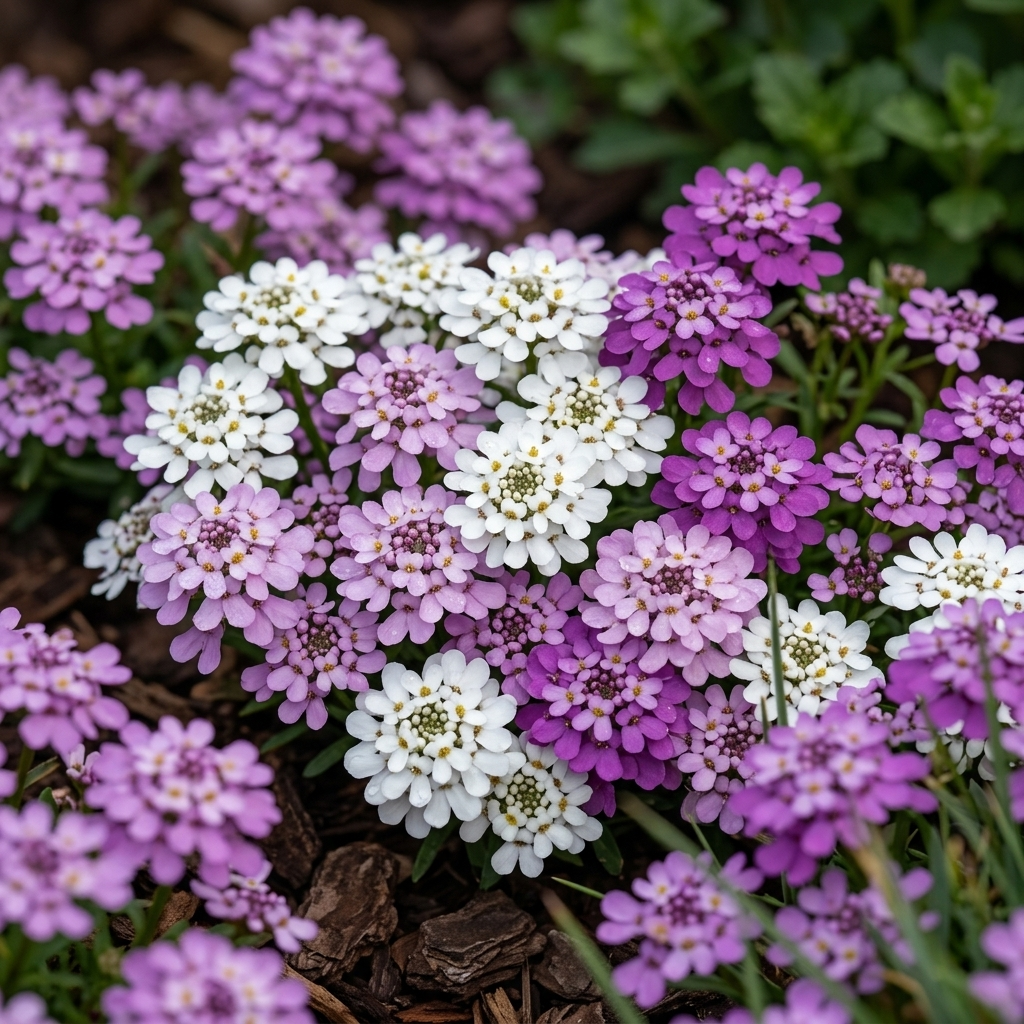
The annual candytuft we're talking about here is Iberis umbellata. It stays fairly compact, usually around 20–30 cm tall, and produces flattened flower clusters in white, pink, lilac, purple and crimson shades. The flowers have a light fragrance, and when several plants bloom together they create exactly the sort of soft, informal patch that makes a garden feel relaxed rather than arranged.
For gardeners in Hungary, candytuft is especially useful in spring and early summer. It enjoys sunshine, prefers soil that drains well, and doesn't need rich, luxurious ground. In fact, a rather ordinary sunny border often suits it perfectly.
We'll start from seed, decide where to put it, learn when to thin the seedlings, what to do when Hungarian summer suddenly becomes hot, and how to keep a little colour going for longer with succession sowing.
And because the name candytuft is used for more than one Iberis, we'll also make sure you know the difference between our annual seed-grown plant and the evergreen perennial candytuft often sold for rock gardens.
Ready? Find a sunny little strip of soil. This one doesn't need much space.
1. Meet Candytuft
Candytuft belongs to the cabbage family, Brassicaceae. That may sound slightly less romantic than the flowers look, but once you see the little clusters up close, you'll forgive the family connection.
The plant forms low, branching stems with narrow green leaves. At the tips appear rounded or flattened heads made up of many small four-petalled flowers. From a distance, each cluster looks almost like one soft bloom; close up, it is a tiny crowd of flowers standing together.
Annual or perennial?
This matters. Iberis is a whole genus, and some candytufts are evergreen perennials or small subshrubs. The familiar white evergreen candytuft used on walls and in rock gardens can live for years. Iberis umbellata, the garden candytuft in this book, is an annual: it grows, flowers, makes seed and finishes within one season.
That isn't a disadvantage. Annual candytuft is fast, easy to sow directly where it will flower, and gives us colours that the white perennial forms usually don't.
|
GOOD TO KNOW Garden candytuft is a small annual, generally around 30 cm tall, with scented flowers in white, pink, purple or crimson. It likes full sun and moist but well-drained soil, and it is propagated simply by sowing seed. |
2. Finding the Right Place
Let's walk around the garden before opening the seed packet.
Candytuft wants a sunny position. A little light shade may not destroy it, but the best flowering comes where the plant receives plenty of direct light.
Think low and near the front
Because annual candytuft stays compact, don't hide it behind tall dahlias or sunflowers. Put it near the front of a border, beside a path, along the edge of a vegetable garden, in a low container, or in a sunny gap between taller plants.
It is particularly charming in cottage-style planting where it can soften harder edges. A narrow ribbon along a path can be more effective than scattering single plants everywhere.
Soil: ordinary is fine
Candytuft does not need heavily enriched soil. Poor to moderately fertile ground can suit it well, as long as excess water drains away. Neutral to slightly alkaline soil is ideal, which means many Hungarian garden soils can suit it nicely.
Heavy clay is more difficult if it remains wet for long periods. Improve the structure, choose a raised edge, or use a container with good drainage rather than asking the seedlings to sit in soggy spring soil.
|
A COMMON MISTAKE Giving a small, easy annual far too much attention. Rich feeding and constantly wet soil won't necessarily give you more flowers. Candytuft is happiest when we keep things simple: sun, drainage and sensible water. |
3. The Candytuft We Grow With You
Candytuft is part of the seed selection at Holland Kertészet, which makes it a perfect plant for this series: inexpensive to start, beginner-friendly and easy to fit into even a small Hungarian garden.
What I like most about annual candytuft is the mixture of colours you can create from seed. White brings freshness. Pink feels soft and romantic. Lilac and purple add cool tones that are beautiful beside yellow or apricot flowers. Deeper crimson shades give the patch more contrast.
Where I would use it
I would sow candytuft where I can actually see it: along a front path, beside a terrace, around the edge of a cutting patch, or in a low pot near the garden table. Its scale is intimate. This isn't a flower that needs to dominate the garden.
It also works beautifully beside taller annuals. Imagine soft candytuft at the feet of cosmos, cornflowers or poppies. The taller flowers provide movement while candytuft quietly fills the lower layer.
|
GROW WITH US When you sow candytuft from the Holland Kertészet range, think of it as one of the easiest ways to add another layer to the garden. We aren't trying to make one plant do everything. We're letting a low annual do exactly what it does best: soften edges, fill gaps and bring colour close to the ground. |
4. Let's Sow
This is the nice part: candytuft is very happy being sown directly outdoors.
In Hungary, spring sowing is straightforward once the soil can be worked. Choose a mild period, prepare the surface until it is reasonably fine and crumbly, and remove obvious weeds before you begin.
Direct sowing
Make a shallow drill or simply sow thinly over the prepared patch. Cover the seed lightly with fine soil, firm gently, and water with a soft spray so you don't wash everything into one corner.
Keep the surface from drying out completely while the seeds are germinating. Once seedlings appear, you can gradually water less often but more deeply as the roots develop.
Autumn sowing?
Candytuft can also be autumn-sown in suitable conditions for earlier flowers the following year. In a Hungarian garden, I would treat this as an experiment rather than a rule. Winter wet and local cold matter, so spring sowing remains the simplest choice for beginners.
|
DON'T PANIC The seedlings look crowded? That's normal if the seed was sown a little generously. Wait until they are large enough to handle, then thin them. Removing a few small plants now gives the remaining ones room to become better flowering plants later. |
5. From Seedling to Flowering Plant
Once the little seedlings have a few true leaves, they begin to show their bushy character.
Thin them
This is one of the most important jobs. Crowded candytuft competes for light, water and air. Thin the seedlings so each plant has room to branch. Around 15–20 cm between plants is a useful home-garden guide, depending on how dense you want the finished patch.
If pulling seedlings makes you feel guilty, remember that a crowded row gives you weaker plants and fewer attractive flowers. Gardening sometimes involves choosing which seedlings get the space.
Water while they establish
Young seedlings are not drought-proof. During a dry Hungarian spring, keep an eye on the soil and water before the small root systems dry completely. Once plants are established, they become more forgiving.
Avoid constant little splashes. A proper watering that reaches the root zone is more useful than wetting only the top centimetre every day.
|
WHAT I WOULD DO I would sow two or three short rows rather than one huge block. That makes thinning easier, gives air between plants and lets the flowers mingle naturally without turning the patch into a dense green mat. |
6. Keeping the Flowers Coming
Candytuft begins flowering in late spring or summer depending on when you sowed it, and this is when the little patch suddenly becomes much more noticeable.
The flowers are lightly scented, and insects notice them too. A sunny clump can become surprisingly busy once the blooms open.
Succession sowing
If you want a longer season, don't put every seed into the ground on one day. Sow a small batch, then another a few weeks later. The second group will begin flowering as the first starts to tire.
This is one of the easiest tricks in annual gardening. We don't force one plant to flower forever; we let several generations take turns.
What about deadheading?
Removing faded flower clusters can keep the patch tidier and may help extend flowering. If the whole plant becomes untidy after its main flush, a light trim can encourage fresher growth where the weather remains suitable.
But if you want seed, leave some flowerheads alone. We can't deadhead everything and still expect seed pods later.
7. When Something Goes Wrong
Candytuft is generally easy, but easy plants can still have bad days.
Seedlings disappear overnight
Slugs and snails are likely suspects, especially in damp spring weather. Check after rain or in the evening and protect young plants using a method appropriate for your garden.
Leaves are being chewed
Because candytuft belongs to the cabbage family, caterpillars may occasionally show interest. Inspect leaves before reaching for a treatment; often the problem is small enough to manage by hand.
Plants are yellow and miserable
Start with drainage. Wet roots, compacted soil and prolonged saturation can weaken candytuft. Then check light: a deeply shaded plant may stretch and flower poorly.
The patch suddenly finishes in heat
Hungarian summer can arrive quickly. Candytuft is a spring-to-early-summer pleasure more than a plant for the fiercest July heat. If an early sowing fades as temperatures climb, it may simply have completed its season.
|
A COMMON MISTAKE Treating the end of an annual's natural season as a failure. Sometimes the plant isn't asking to be rescued. It has flowered, made seed and finished exactly the job it was grown to do. |
8. Flowers Up Close
Stand beside a candytuft patch when it is in full flower and look down. What seemed from a distance like a collection of small flat blooms becomes much more detailed.
Each flower cluster is made of many four-petalled flowers, and the outer petals can look slightly larger, giving the head its neat, rounded shape.
Using candytuft in the garden
The plant is best used as a mass rather than as a solitary specimen. Ten small plants together create a cushion of colour. One plant alone can disappear visually between larger neighbours.
Use it along paths, around the base of taller annuals, in informal edging, or in a container where the flowers can spill gently toward the rim.
Can I cut it?
Yes. Candytuft can be used as a delicate filler in small bouquets. Cut stems when several flowers in the cluster are open and place them promptly in clean water.
The stems are not giant florist stems, and that's exactly the charm. A few sprigs beside poppies, sweet peas or other cottage-garden flowers make a bouquet feel as though it came from the garden rather than from a shop.
|
TRY THIS Cut a small handful of candytuft and place it in a short jar rather than a tall vase. Add one or two larger flowers from the garden. The candytuft becomes the soft little cloud that joins everything together. |
9. Seeds, Self-Sowing and the End of the Season
After flowering, candytuft begins forming seed. If you leave some plants alone, the seedheads mature and dry as the plant finishes its annual cycle.
Saving seed
Choose healthy plants with flowers you liked. Allow the seedheads to mature on the plant during dry weather, then collect them before everything scatters naturally.
Let the seed dry thoroughly indoors before storing it in a labelled paper packet somewhere cool and dry. Write the year on the packet. Future you will be grateful.
Will it self-seed?
It can. If you leave mature seedheads in place, you may find volunteer seedlings the following season. Whether they appear exactly where you wanted them is another question.
I enjoy a little self-sowing in an informal garden. If seedlings appear somewhere inconvenient, move or remove them while they are young.
Clear or leave?
Once the plants are brown and finished, pull them and add healthy material to the compost. If disease was a problem, dispose of affected material appropriately rather than spreading it around the garden.
10. Your Candytuft Cheat Sheet
Let's put the whole season into one easy path.
Choose annual garden candytuft, Iberis umbellata, if you want the colourful seed-grown type.
Find a sunny position near the front of a border, path or container.
Use ordinary, well-drained soil; avoid waterlogged ground.
Sow outdoors in spring once the soil is workable.
Cover seed lightly and keep the surface gently moist during germination.
Thin seedlings so the plants have room to branch and air can move between them.
Water young plants during dry spells while they establish.
Avoid heavy feeding; candytuft does not need rich treatment.
Sow another small batch a few weeks later if you want a longer flowering season.
Watch young plants for slugs, snails and caterpillars.
Trim or deadhead finished flower clusters if you want a tidier patch.
Leave some seedheads if you want to save seed or encourage self-sowing.
Expect early sowings to tire when strong Hungarian summer heat arrives.
Use a few stems as a delicate filler in small garden bouquets.
At the end, pull finished annual plants and begin thinking about next spring.
If You Remember Only Five Things…
1. Candytuft likes sunshine
Give it a bright position and you'll get a much better flowering display.
2. Drainage matters more than rich soil
Ordinary soil is fine. Constantly wet roots are not.
3. Direct sowing is enough
You don't need a greenhouse full of equipment. Prepare the soil, sow lightly, water gently and let the garden do its part.
4. Thin the seedlings
A little space now means bushier, healthier plants later.
5. Sow more than once
Two or three small sowings can give you a longer season than one large sowing made all at once.
One Last Walk Around the Garden
Do you remember where we started?
With a packet of seed and a low patch of bare soil that didn't look particularly exciting.
We sowed shallowly. We waited. Tiny seedlings appeared, we thinned them, and then the plants began branching until the empty patch became a cushion of colour.
Perhaps yours was mostly white and pink. Perhaps purple became your favourite. Perhaps the flowers appeared beside a path in Budapest, in a sunny courtyard in Pécs, or along the edge of a vegetable garden somewhere in the Hungarian countryside.
And somewhere in that simple little patch is a useful reminder: a garden doesn't have to be filled only with spectacular, expensive plants.
Sometimes a handful of inexpensive seed, a sunny corner and a few weeks of patience are enough to make the whole place feel softer.
Save a little seed if you like. Let a few plants sow themselves if your garden has room. Or simply pull the finished plants at the end of the season and begin again next spring.
That's the freedom of annual flowers. Nothing is permanent. Every year we can try another colour, another combination, another little corner.
Enjoy your candytuft. And when you're ready for the next plant…
Next year, you'll know exactly where candytuft fits. You'll know which patch gets enough spring sunshine, which soil dries nicely after rain, and which colours look best beside the flowers you already grow.
You may decide to sow it again along the same path. Or perhaps you'll scatter a few seeds beside your poppies, tuck some into a pot near the terrace, or let a self-sown seedling surprise you somewhere you never planned.
That's one of the nicest things about simple annuals: they give us room to experiment without making a permanent decision. One packet can become a border, a bouquet, a handful of seed for next year, and a lesson about your own garden.
So don't underestimate this little flower because it stays close to the ground. Candytuft doesn't need to be tall or dramatic to make the garden feel fuller. Sometimes the quiet plants are the ones that join everything together.
Enjoy the colour. Enjoy the scent when you bend down close enough to notice it. And enjoy the fact that something so easy can still feel like a small success every time it flowers.


