

From Tiny Seeds to Dancing Spring Flowers
A friendly guide to sowing, growing and enjoying columbine in Hungary.
Come Into the Garden With Me…
Today, we're growing columbine.
And if you like flowers that look as though they belong in an old cottage garden, this one may win you over very quickly.
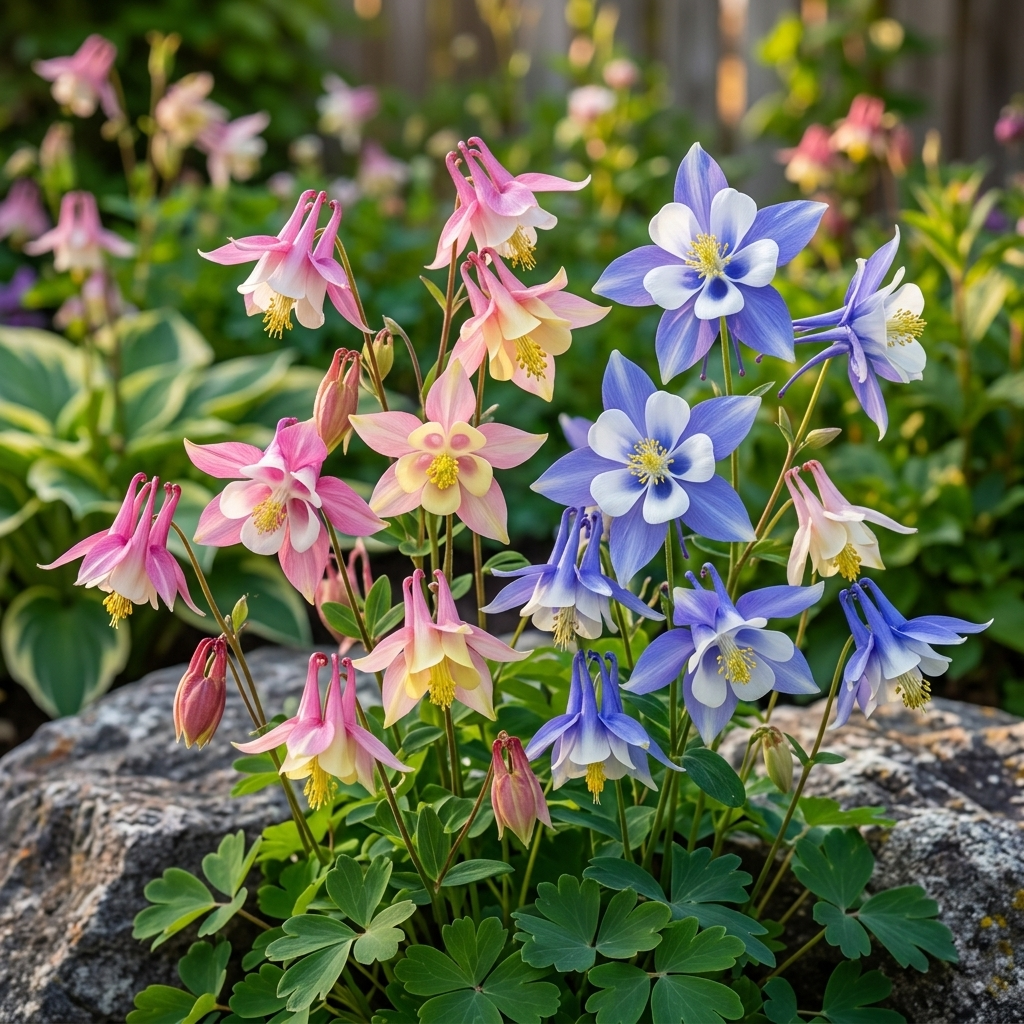
Columbine - or Aquilegia - produces delicate flowers on fine stems above soft, rounded foliage. Some flowers nod downward like little bonnets. Others face outward. Many have long elegant spurs behind the petals, almost like tiny tails.
The colours are just as lovely: blue, purple, pink, red, white, yellow and wonderful two-tone combinations where one colour sits inside another.
For gardeners in Hungary, columbine is particularly useful because it is hardy, happy in sun or partial shade, and flowers during that beautiful late-spring moment before the garden has fully moved into summer.
It is also a plant with a slightly relaxed attitude to garden planning. Let a few seedheads mature and you may discover new seedlings appearing in unexpected places next year.
We'll start with seed, learn why patience matters, find the right place, look after the plants through Hungarian summers and winters, and finally decide whether to deadhead them or let them scatter the next generation around the garden.
Ready? Let's grow something that looks as though it has always belonged here.
1. Meet Columbine
Columbine belongs to the genus Aquilegia. You may also hear it called granny's bonnet, especially when the flowers are rounded and nodding.
A flower with spurs
Look closely at a columbine flower and you'll see what makes it distinctive. Behind the petals are narrow spurs that extend backward. In some varieties they are short and curved. In others, especially modern hybrids, they can be long and elegant.
Those spurs help give the flower its airy, dancing appearance and make columbine easy to recognise once you've met it properly.
Perennial - but not forever
Columbine is a herbaceous perennial. It survives winter, disappears back toward the ground, and grows again in spring. But many aquilegias are naturally short-lived, so a plant may not remain in the same place for decades.
Fortunately, they are very good at producing seed. In a relaxed garden, the population often renews itself even when individual plants eventually fade away.
|
GOOD TO KNOW Think of columbine as a short-lived perennial with excellent replacement skills. The original plant may not last forever, but if you allow a little self-seeding, columbines can remain part of the garden for many years. |
2. Finding the Right Place
Sun or partial shade
Columbine is wonderfully flexible. It can grow in full sun or partial shade, which makes it useful in places where many sun-loving annuals aren't completely happy.
In Hungary, partial shade can be especially valuable. A place with morning sun and protection from fierce late-afternoon heat often keeps the plants fresher for longer.
Moist, but well drained
The ideal soil holds some moisture without staying waterlogged. Columbine doesn't want to sit in a swamp, but it also dislikes becoming completely baked and dry for long periods during summer.
If your soil is very heavy, improve drainage. If it is very sandy and dries rapidly, adding organic matter can help it hold moisture more evenly.
Under shrubs and roses
Columbine looks particularly natural under lightly shaded shrubs, between roses, along informal paths and in cottage-style borders. Its foliage fills the lower level while the flower stems rise through neighbouring plants.
|
A COMMON MISTAKE Planting columbine in the hottest, driest corner of the garden because it is hardy. Winter hardiness and summer drought tolerance are not the same thing. Give the roots some moisture during hot Hungarian weather. |
3. The Columbine We Grow With You
In the current Holland Kertészet range, you'll find Columbine 'Mrs. Scott Elliott'.
A mixture full of surprises
Mrs. Scott Elliott is a famous mixed columbine selection with tall, elegant flowers in a wide range of colours. You may see pale yellow, purple and white, red and yellow, pink and white, and many other combinations.
The mature plants can reach roughly 60-90 cm in flower, so this is not a tiny edging plant. It belongs where the flower stems can rise gracefully through the border.
Why a mixture is fun
Every seedling can become a little surprise. The first year you grow the plants, you may spend more time than expected walking from one flower to another deciding which colour is your favourite.
And if they cross-pollinate and self-seed, the next generation can surprise you again. Seedlings may not look exactly like their parents - which, for this kind of informal plant, is part of the charm.
|
GROW WITH US Holland Kertészet currently offers Columbine 'Mrs. Scott Elliott' - 0.5 g. Grow several seedlings together and let the mixture create its own little collection of colours in your garden. |
4. Let's Sow
When to sow
Columbine can be raised from seed in spring or early summer. In Hungary, a spring sowing gives seedlings time to establish before summer heat, while early-summer sowing can produce sturdy young plants ready to settle into the garden by autumn.
Sow shallowly
Use a clean tray or small pots filled with fine seed compost. Scatter the seed thinly and cover only lightly. Keep the compost gently moist rather than wet.
Germination can be a little irregular, so this is not the plant to sow on Monday and inspect impatiently every hour from Tuesday onward.
What if nothing happens?
Aquilegia seed can sometimes be slow. If a sowing refuses to germinate after a long wait, a period of cool, moist conditions can help. Autumn-sown pots can simply experience winter outdoors in a protected place, while spring sowings can sometimes benefit from a short chilling period if needed.
|
DON’T PANIC Columbine is teaching us patience from the beginning. Some seeds germinate quickly, others take their time. Keep the compost lightly moist and don't throw the tray away simply because nothing happened in the first week. |
5. From Seedling to Garden Plant
Potting on
Once seedlings are large enough to handle, move them gently into individual pots or modules. Hold a seedling by a leaf rather than pinching the stem.
Columbine develops a useful root system and doesn't particularly enjoy rough disturbance once mature, so careful handling now pays off later.
Planting out
When the seedlings are sturdy, plant them into their final position with roughly 30 cm between plants. Give them room for the rosette of foliage to develop.
Will they flower immediately?
Possibly - but don't count on it. Seed-grown columbines may spend their first season building roots and foliage and flower more strongly the following spring. Some can take two years to reach their full performance.
This is one of those plants where patience gives you a much better garden than impatience ever could.
|
WHAT I WOULD DO Sow a little columbine every year or allow a few plants to self-seed. That way you gradually build different ages into the border and aren't depending on one old clump to carry the whole display. |
6. Growing Through the Hungarian Year
Spring
In spring, fresh foliage pushes from the crown and quickly forms soft green mounds. Flower stems rise later, usually bringing their main display in late spring and early summer.
Summer
After flowering, the foliage can begin looking tired, especially during hot, dry Hungarian weather. Don't panic. Cut away unattractive old leaves, water the plant well, and fresh foliage often follows.
Established plants generally need little feeding. Ordinary fertile garden soil is usually enough.
Autumn and winter
Columbine is hardy enough for Hungarian winters in suitable soil. The important issue is drainage. Cold roots are usually manageable; cold roots sitting in permanently wet soil are less happy.
The foliage dies back and the plant rests until spring returns.
|
GOOD TO KNOW Columbine is much more interested in good garden conditions than heavy feeding. Moist-but-drained soil, some relief from extreme summer heat and a quiet winter are usually all it asks for. |
7. When Something Goes Wrong
Powdery leaves
Powdery mildew can appear, especially when plants are stressed by dry conditions. If the foliage is badly affected after flowering, cut it back, water the plant, and allow fresh leaves to develop.
Leaves disappearing
Columbine can be attacked by sawfly larvae and other leaf-eating pests. A plant can look surprisingly stripped in a short time. Check the undersides of leaves and the stems if damage appears suddenly.
Aphids on flower stems
Tender shoots and buds may attract aphids. Small colonies are easier to deal with than large ones, so include the flower stems in your normal garden inspection.
The plant vanished after a few years
This may not mean you did anything wrong. Columbines can simply be short-lived. Look around nearby before mourning the original plant - you may already have several seedlings preparing to replace it.
|
A COMMON MISTAKE Assuming every columbine seedling is a weed because it appeared somewhere you didn't plant one. Learn the rounded, divided young leaves before you start hoeing enthusiastically in spring. |
8. Flowers, Bees and the Vase
The spring display
When columbine flowers open, the whole plant seems to become lighter. Fine stems hold the flowers above the foliage, and even tall plants rarely look heavy.
Mrs. Scott Elliott is particularly beautiful when several colours grow together, because each plant adds a slightly different note to the border.
For pollinators
The nectar-rich flowers are useful for bees, especially bumblebees, which can work their way into the spurred blooms during late spring and early summer.
For cutting
Columbines can also be cut for the vase. Choose stems with several open flowers and additional buds still waiting. Their airy shape works beautifully with peonies, alliums, early roses and other spring flowers.
|
TRY THIS Cut just three or four columbine stems and put them in a narrow bottle or little jug. Their delicate shape often looks better in a loose arrangement than packed into a large bouquet. |
9. Deadhead - or Let Them Wander
If you want tidiness
Remove spent flower stems before the seed pods mature. This keeps the plant looking neater and prevents seedlings appearing everywhere.
If you want a natural garden
Leave some pods to ripen. When they turn brown and dry, the seeds are ready to fall or be collected.
Columbines cross-pollinate freely, so seedlings may not come true to the parent plant. A pink-and-white flower may produce children in completely different colours.
Personally, I think that's one of the nicest things about them.
Collecting seed
Wait until the pods are dry but before they have emptied themselves completely. Tip the dark seeds into a paper envelope, label them, and keep them dry until sowing time.
|
WHAT I WOULD DO Deadhead the flowers growing directly beside a path if you want control, but leave a few favourite plants elsewhere to seed. You get the charm of natural colonising without turning the entire garden over to columbines. |
10. Your Columbine Cheat Sheet
Choose Holland Kertészet Columbine 'Mrs. Scott Elliott'.
Sow in spring or early summer and cover the seed only lightly.
Be patient: germination can be slow or irregular.
If seed refuses to germinate, a period of cool, moist conditions may help.
Plant in sun or partial shade in fertile, moist but well-drained soil.
Allow about 30 cm between young plants.
Expect the strongest flowering from the second season onward.
Water during prolonged Hungarian summer drought, especially after cutting back tired foliage.
Deadhead to prevent self-seeding - or leave pods if you want new surprises.
Remember that columbines are short-lived perennials, so let the next generation gradually replace the old one.
If You Remember Only Five Things…
1. Columbine likes sun or partial shade
In Hungary, a little afternoon shade can be particularly welcome during hot summers.
2. Keep the soil evenly comfortable
Not waterlogged. Not baked dry for weeks. Somewhere pleasantly in between.
3. Seedlings may take time
Slow germination and waiting a year for flowers are both perfectly normal.
4. Let some plants self-seed
Short-lived perennials become much easier when the garden is allowed to grow their replacements for you.
5. Expect surprises
Seed-grown columbines, especially mixtures, are wonderfully unpredictable. That's part of the reason we grow them.
One Last Walk Around the Garden
Do you remember where we started? With a packet of seed and the promise of flowers that might not even arrive until next spring.
We sowed them lightly. We waited. Tiny leaves appeared, then soft rosettes formed close to the soil.
Winter came and the garden went quiet.
Then spring returned.
And one day, thin stems began rising above those familiar leaves. Buds opened, and suddenly there were purple-and-white bells, pink flowers, pale yellow flowers, red-and-yellow combinations and perhaps one colour you couldn't quite name.
That's the lovely thing about Mrs. Scott Elliott columbines. A packet doesn't give you one flower. It gives you a little collection.
And then the plants start making decisions of their own.
A seed drops beside a rose. Another lands near the path. One waits quietly until next spring and appears in a place you never would have chosen yourself.
You can control all of that if you want to.
Or you can leave a little room for the garden to surprise you.
I think columbine is at its best when we do both: guide it gently, but don't organise every last seed.
Because sometimes the flower that appears where we didn't plan it is the one we love most.
And when you're ready for another plant…


