

From Tiny Seeds to a Carpet of Honey-Scented Flowers
A friendly guide to sowing, growing and enjoying sweet alyssum in Hungary.
Come Into the Garden With Me…
Today, we're growing alyssum. And if you have ever walked past a low cushion of tiny white, pink or purple flowers and suddenly noticed a sweet honey-like scent, there is a very good chance you've already met it.
Alyssum is not a flower that tries to dominate the garden. It rarely towers above anything. It does not produce one enormous dramatic bloom. Instead, it does something quieter and, in its own way, just as lovely: it makes hundreds of tiny flowers and turns them into a soft, fragrant carpet.
For gardeners in Hungary, sweet alyssum is especially useful because it enjoys the milder parts of our growing season. It can flower beautifully in spring and early summer, may slow down during the most punishing summer heat, and often finds fresh enthusiasm again as temperatures become kinder toward autumn.
We'll also meet the variety currently in the Holland Kerteszet range: Rosie O'Day, a sweetly scented pink-flowering alyssum with a softer personality than the classic white forms.
By the end, I want you to see alyssum not as background filler, but as one of those small plants that makes the whole garden feel more complete.
Ready? Let's get close to the ground for this one.
1. Meet Alyssum
The plant most gardeners mean when they say sweet alyssum is Lobularia maritima. You may also see the older botanical name Alyssum maritimum, which explains why the common name alyssum has stayed with us even though botanists moved the plant into a different genus.
Tiny flowers, big effect
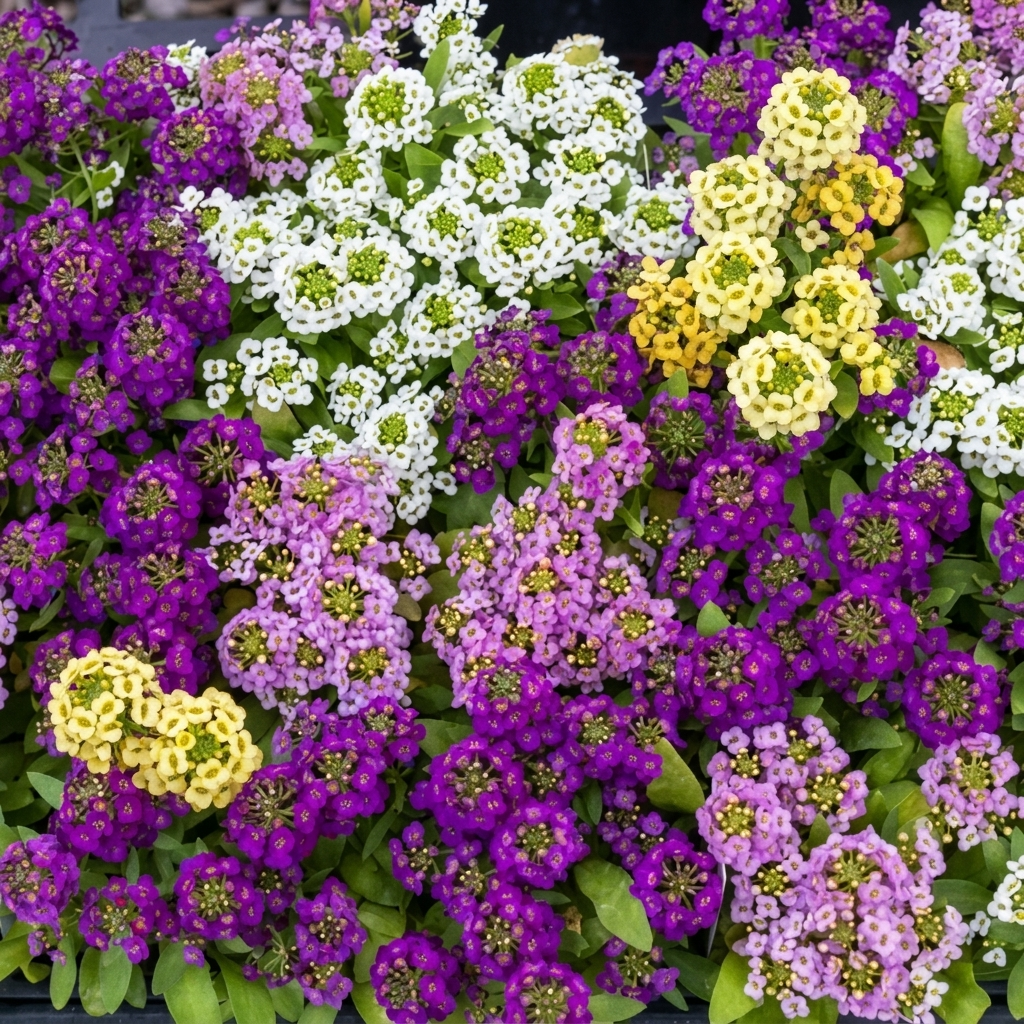
Sweet alyssum grows low and spreads outward, forming little mounds or mats of narrow green-grey leaves. Above them appear clusters of four-petalled flowers. One flower is tiny. Hundreds together create the effect we notice from across the garden.
The classic form is white, but cultivars can flower in pink, mauve, lavender and purple shades. Many are strongly fragrant, with a sweet scent often compared with honey.
Annual or perennial?
In its native Mediterranean climate, sweet alyssum can behave as a short-lived perennial. In Hungary, however, it is simplest to grow it as an annual. Our winters are usually too cold for us to rely on it returning as the same plant year after year.
Small enough to fit almost anywhere
Alyssum generally stays low, often around 10-15 cm high, while spreading considerably wider than its height. That low, soft habit is what makes it so useful at the front of beds, around the edges of containers and between taller plants.
|
GOOD TO KNOW Alyssum is one of those plants you often smell before you really look at it. Plant it beside a path, bench, terrace or doorway where you will actually pass close enough to notice the fragrance. |
2. Finding the Right Place
Before we open the seed packet, let's do what we always do in this series: look at the garden first.
For alyssum, we're searching for good light, good drainage and a place where a low spreading plant will actually be seen rather than swallowed by larger neighbours.
Sunshine first
Sweet alyssum flowers best in full sun. A bright spring position usually gives the densest flower display and the strongest fragrance.
In Hungary, however, summer changes the conversation. A site that feels perfect in April can become fiercely hot in July. In a Budapest courtyard, a south-facing container can heat up very quickly. On the Great Hungarian Plain, a dry exposed bed may bake for days.
Alyssum can cope with warmth, but prolonged extreme heat may slow flowering. In very hot situations, a little afternoon relief can help the plants stay fresher for longer.
Drainage matters
Alyssum prefers well-drained soil. It is happy in ordinary garden soil and does not demand rich, heavily fertilised conditions.
If you grow in containers, use a potting mix that drains well and make sure the pot has proper drainage holes. Small edging plants often end up in decorative containers with poor drainage, and that can create problems surprisingly quickly.
Where does it look best?
Think in terms of edges and softening. Alyssum is excellent along the front of a border, spilling slightly onto a path. It can soften the rim of a large pot containing taller flowers. It can fill small gaps between annuals and make a young border feel established sooner.
|
TRY THIS Plant alyssum along the edge of a path you use every day. The flowers are pretty from a distance, but the fragrance is the reward for walking close by. |
3. The Alyssum We Grow With You
At Holland Kerteszet, the current alyssum in our flower-seed range is Rosie O'Day. It is sold as a 0.5 g packet, which is plenty to create a generous patch of this very small-seeded plant.
Rosie O'Day
Rosie O'Day is Lobularia maritima with a softer, rosy personality. The small fragrant flowers open pale and develop rosy-pink colouring, creating a carpet that feels warmer and more romantic than classic white alyssum.
The colour is gentle enough to combine easily. Try it with white cosmos, blue cornflowers, lavender, pale pink roses, purple salvia or soft apricot flowers. The tiny flower clusters create a haze rather than a block of colour, which makes them excellent companions.
Why one small plant can change a border
That is why I would not judge Rosie O'Day by the size of an individual flower. Its strength is repetition: hundreds of tiny flowers becoming one soft cloud.
|
GROW WITH US Rosie O'Day is the alyssum currently in the Holland Kerteszet range. Sow some beside a path, some in a pot and perhaps some at the edge of a vegetable or cutting garden. Then watch which position performs best in your own Hungarian microclimate. |
4. Let’s Sow Alyssum
Alyssum seed is small, and this is not the moment for a dramatic gust of wind across the potting bench.
When to sow in Hungary
You have two useful options. You can start seed under protection in early spring, or sow directly outside once conditions are suitable.
Starting indoors around March gives you small plants ready to move outside after they have been hardened off and the risk of damaging frost is reducing. Direct sowing in spring is simpler and works beautifully when the soil is workable and the weather has settled enough for seedlings to establish.
Sowing in trays
Fill a seed tray or modules with fine seed compost and moisten it before sowing. Scatter the seeds thinly across the surface.
Cover with only a very light layer of compost. These are tiny seeds; they do not need to be buried deeply.
Keep the compost gently moist while germination begins. A fine rose on the watering can, a mister or careful bottom watering can prevent the seeds from being washed into one corner.
Direct sowing
Prepare a fine, weed-free patch of soil, scatter the seed thinly and lightly rake or press it into the surface. Water gently.
Do not worry about creating mathematically perfect spacing at sowing time. We can thin seedlings later. The important thing now is avoiding a thick pile of seed in one spot and nothing at all in the next.
|
A COMMON MISTAKE Burying tiny alyssum seeds too deeply or sowing them so thickly that the seedlings become a green carpet before they have room to grow. Think light covering and light hand. |
5. The First Tiny Seedlings
They do not look capable of covering the edge of a flower bed yet, but give them time.
Give them light
Once seedlings emerge, good light becomes essential. Plants raised indoors in poor light can stretch and become weak.
If every seedling is leaning dramatically toward the same window, the message is fairly clear: they want more light.
Water with restraint
Keep young seedlings evenly moist but not waterlogged. Their root systems are small, so they cannot tolerate being completely dried out for long, but constantly saturated compost is not healthy either.
Thinning and transplanting
If seedlings are crowded, thin them or carefully transplant the strongest ones once they are large enough to handle.
Hardening off
Plants started indoors need to get used to the real world before permanent planting. Introduce them gradually to outdoor light, wind and cooler nights over a week or more.
Hungarian spring is very good at producing one warm afternoon followed by a surprisingly cold night, so keep an eye on the forecast rather than trusting a single sunny day.
|
DON’T PANIC Your seedlings look absurdly small compared with the border you want them to fill. That is normal. Alyssum grows outward quickly once established. Plant for the size it will become, not the size it is today. |
6. From Little Plants to a Flowering Carpet
Once hardened off, your young alyssum can move into its permanent place.
Planting out
Set plants into well-drained soil at roughly 15-20 cm apart, depending on the variety and how quickly you want them to knit together. Water them in and keep an eye on moisture while the roots establish.
Watering established plants
Alyssum likes reasonably even moisture, especially while flowering, but it does not want permanently wet soil.
In the ground, established plants may need surprisingly little attention during a mild spring. In containers, check more often because small pots can dry quickly.
A large container on a sunny Budapest balcony can need water while the same plant growing in the ground near Lake Balaton is still perfectly comfortable. The calendar cannot tell you that. Your finger can.
Feeding
In ordinary garden soil, alyssum usually does not need heavy feeding. Too much nitrogen can give you more foliage and less of the flower-filled cushion we actually want.
The first flowers
Once flowering begins, the plant seems to change almost overnight. The foliage becomes less noticeable and the surface turns into a mass of tiny blooms.
|
WHAT I WOULD DO Plant alyssum in groups rather than single isolated dots. Let neighbouring plants touch and merge. Its best effect comes from becoming a little cloud, not from standing alone like a specimen shrub. |
7. When Something Goes Wrong
Alyssum is generally easy, but easy plants still have opinions.
It stopped flowering in summer
If Hungary has entered one of those stretches of intense July heat, the plant may simply be slowing down. Sweet alyssum prefers milder conditions than the hottest part of our summer.
Trim tired plants back lightly, water appropriately and wait for conditions to ease. Fresh growth can produce another flush of bloom.
The plants are long and untidy
A light shearing after the first major flush of flowers can refresh the plants and encourage new flowering growth. Do not be frightened by how plain the bed looks immediately afterwards. Alyssum usually responds quickly.
Hardly any flowers
Check the light first. Too much shade can reduce flowering.
Then think about fertiliser. A very rich diet can create green growth rather than flowers. Finally, consider whether the plant is simply in the middle of a heat-induced pause.
Something is eating the seedlings
Slugs and flea beetles can damage young plants. Check seedlings closely, especially during damp weather and soon after planting out.
Use control methods appropriate for your garden, pets and wildlife, and if a pesticide is ever necessary, choose one currently authorised for the intended use in Hungary and follow its label.
Leaves look unhealthy or mouldy
Alyssum can suffer from fungal problems in persistently damp, poorly ventilated conditions. Avoid overcrowding, make sure drainage is good and water the soil rather than repeatedly soaking the foliage.
|
A COMMON MISTAKE Assuming a midsummer pause means the plants are finished. A trim and a little patience can make an enormous difference, especially when late-summer temperatures begin to soften. |
8. Fragrance, Pollinators and Garden Companions
Follow your nose
The fragrance is one of the reasons I would always place some alyssum near where people walk or sit. Sweet alyssum can smell gently of honey, especially when many plants are flowering together.
A small flower for small visitors
The open, accessible flowers are attractive to pollinating insects. Bees and other beneficial visitors can work across the flower clusters with very little effort.
This makes alyssum particularly nice near a vegetable or herb garden. I would not describe it as a magic pest-control plant, because gardens are more complicated than that, but adding a long-flowering nectar source is a useful way to make the garden more welcoming to beneficial insects.
What should we plant with it?
Try Rosie O'Day beneath white cosmos, around pink or cream roses, beside lavender and salvia, under dahlias, or at the front of a bed containing yarrow and scabiosa.
Around vegetables
Alyssum also works beautifully as a soft border around raised vegetable beds. It can help make a productive garden feel ornamental without taking up much vertical space.
|
TRY THIS Put Rosie O'Day at the edge of a herb or vegetable bed. You get fragrance and flowers at ankle height while the taller edible plants continue doing their work above it. |
9. Summer Heat, Autumn Flowers and Seed
When July becomes too much
During prolonged hot weather, flowering may decline and plants can look tired. Keep container plants from drying completely, trim back exhausted growth and resist the urge to force them with lots of fertiliser.
The autumn comeback
As nights begin cooling toward late summer and early autumn, alyssum can surprise you with fresh growth and another lovely wave of flowers.
Can it self-sow?
If you leave some flower clusters to mature instead of trimming everything, plants may produce seed. In suitable conditions, some of that seed can germinate later or the following season.
In a Hungarian garden, do not rely on self-sowing as your only plan. Winter, soil conditions and enthusiastic spring weeding can all interfere. But if little seedlings appear where last year's alyssum grew, now you know what they might be.
Saving seed
You can also allow selected flower clusters to dry, collect mature seed and store it somewhere cool and dry in a labelled paper envelope.
With named cultivars, seedlings grown from saved seed may not always look exactly like the parent, particularly if other alyssum varieties were growing nearby. If you want Rosie O'Day exactly as expected, fresh named seed is the more predictable route.
|
GOOD TO KNOW Alyssum often has two particularly good moments in Hungary: spring into early summer, and again when late-summer heat begins to ease. A midsummer slowdown is not necessarily the end of the story. |
10. Your Alyssum Cheat Sheet
1. Know the plant. Sweet alyssum is Lobularia maritima, even though gardeners still call it alyssum.
2. Choose a sunny, well-drained position.
3. Use it at edges, in containers, beside paths and between taller plants.
4. Start seed under protection in early spring or sow directly outside when conditions are suitable.
5. Sow tiny seeds shallowly and gently.
6. Keep the seedbed moist while germination begins, but never waterlogged.
7. Give indoor seedlings plenty of light.
8. Thin crowded seedlings so they can develop properly.
9. Harden off indoor-raised plants before permanent outdoor planting.
10. Space plants so they can spread and eventually knit together.
11. Water young plants while they establish.
12. Check containers more often during hot Hungarian weather.
13. Don't overfeed; too much nitrogen can mean leaves instead of flowers.
14. Expect intense summer heat to slow flowering.
15. Shear tired plants lightly after a flush to encourage fresh growth.
16. Watch young plants for slugs, flea beetles and signs of fungal disease.
17. Plant near paths or seating so you actually enjoy the fragrance.
18. Leave plenty of flowers for pollinating insects.
19. Allow a little seed to mature if you enjoy self-sown surprises.
20. When autumn brings cooler nights, look again - your alyssum may be ready for one more beautiful performance.
If You Remember Only Five Things…
1. Alyssum is small on purpose
Put it where a low spreading plant is useful: front edges, pots, paths and gaps between taller flowers.
2. Give it sunshine and drainage
Those two things will solve a remarkable number of problems before they begin.
3. Start early enough to enjoy the cool season
Hungarian spring suits alyssum beautifully. Do not wait until the hottest part of summer to begin the story.
4. A haircut can be magic
When the first flowering flush becomes tired, trim the plants back. Fresh growth can bring fresh flowers.
5. Put it somewhere you can smell it
The flowers are tiny. The fragrance is part of the experience. Let yourself enjoy both.
One Last Walk Around the Garden
A packet of seeds so small that a single careless breath over the potting bench felt dangerous.
At first they looked almost too small to count as plants. But they grew outward, filled the gaps between one another and eventually became something completely different from the little specks we sowed.
Perhaps yours followed the edge of the path. Perhaps Rosie O'Day softened the front of a rose bed. Maybe you planted it around a large terrace pot and watched it spill over the rim.
Then one morning you walked past and smelled honey.
You notice the bees working across the tiny flowers. You notice how much softer the border looks now that bare soil is hidden. You notice that a tall plant somehow looks better because something small is growing at its feet.
And when July becomes fiercely hot and the flowers slow down, you no longer assume you've done something wrong. You trim them. You keep them appropriately watered. You wait.
Then late summer changes the light. The nights become a little cooler. And suddenly there are flowers again.
It does not demand the centre of attention, but it quietly makes everything around it better.
Next spring, you'll know where to sow it. You'll know not to bury those tiny seeds too deeply. You'll remember that a little clipping can refresh a tired plant. And perhaps you'll deliberately put a patch close enough to your favourite chair that the scent reaches you while you sit there.
It may simply be the one you smell every time you walk home through the gate.
When you're ready for the next plant…
Come into the garden with me.


