

From Little Corms to a Spring Garden Full of Colour
A friendly guide to planting, growing, picking and enjoying anemones in Hungary.
Come Into the Garden With Me…
Today, we're growing anemones. And before we go any further, let's clear up one thing: we are not talking about Japanese anemones here. Those tall late-summer perennials deserve their own conversation one day.
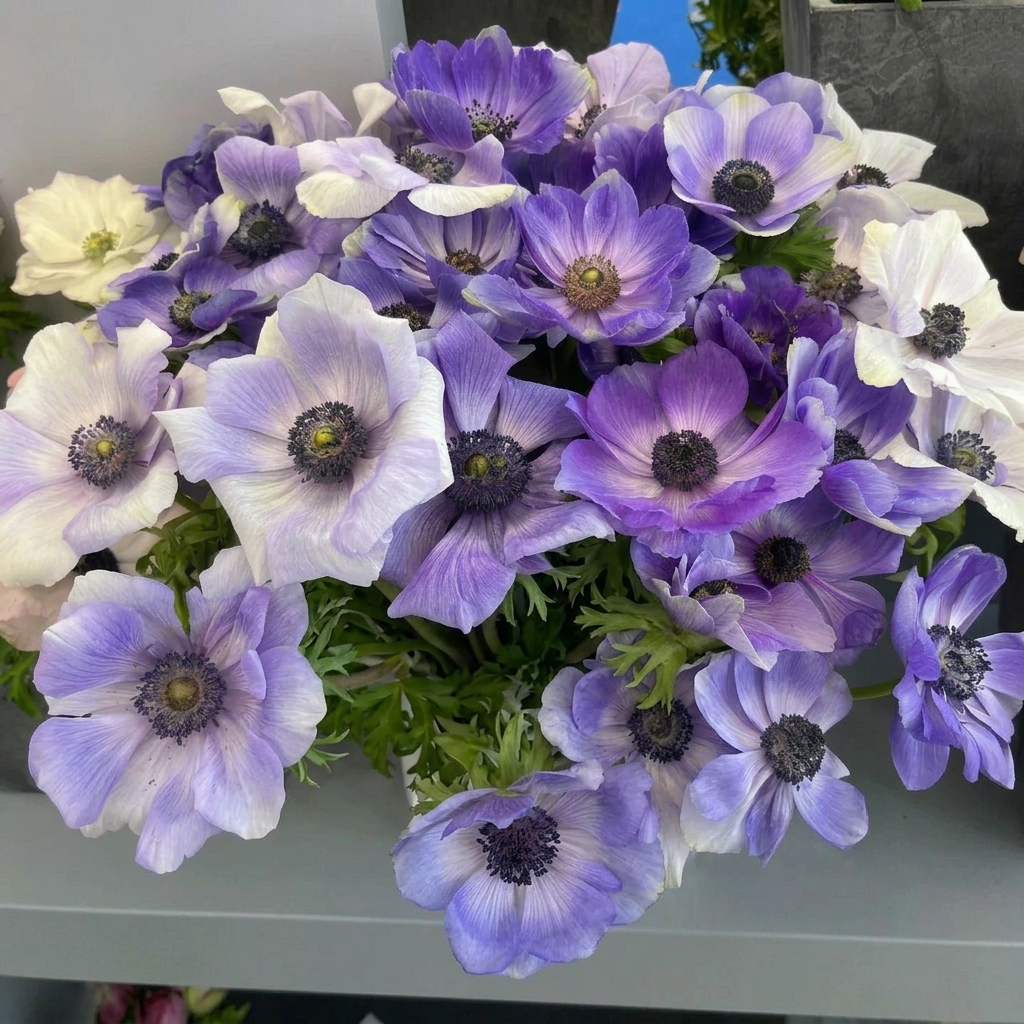
For this book, we are interested in spring-flowering anemones, especially Anemone coronaria - the poppy-like flowers loved by gardeners and florists. They come in red, blue-purple, soft pink, white, wine and wonderfully moody shades. Many have a dramatic dark centre.
Like ranunculus, they begin life rather unpromisingly. An anemone corm looks like a small, hard, wrinkled stone. You may look at it and think: this is going to become a flower? Yes. Several, hopefully.
For gardeners in Hungary, the trick is getting them established early enough to enjoy the cool spring before serious summer heat arrives. We'll go through everything together - choosing, soaking, pre-sprouting, planting, flowering, cutting and storing.
1. Meet the Anemone
Anemones are a large and varied group, but our star is Anemone coronaria, sometimes called the poppy anemone. It gives us the striking spring cut flowers with colourful petals and dramatic centres.
A flower with personality
Ranunculus gives us layer upon layer of petals. Anemone is simpler, and that is exactly what makes it beautiful. The open flowers can look almost graphic: colour surrounding a dark central disc.
What are we planting?
Anemone coronaria is commonly sold as dry corms. They are small, hard and irregularly shaped. Unlike ranunculus, they do not always make it obvious which side is up.
|
GOOD TO KNOW Anemones are cool-season flowers. In Hungary, we want them growing and flowering while spring is still on our side. |
2. Finding the Right Place
Before we soak anything, let's walk around the garden. For Anemone coronaria, we are looking for good light, good drainage and cool growing conditions.
Sunshine
Give your anemones a bright position. Spring sunshine in Hungary is generally very welcome. Later, when temperatures climb, a little relief from the strongest heat can be useful.
Drainage
Anemone corms do not appreciate waterlogged soil. If water sits in your planting area for days after rain, choose another place, improve drainage or grow in a raised bed or container.
Growing in pots
Anemones are excellent container plants. A sunny Budapest balcony or a terrace in Pecs can be perfect as long as the pot has proper drainage and you remember that containers dry faster than garden soil.
|
A COMMON MISTAKE Cool spring conditions do not mean cold, wet soil is ideal. Cool is one thing. Sitting in water is quite another. |
3. Which Anemone Shall We Grow?
This is where choosing becomes dangerous. Anemones can be soft and romantic, cool and blue, or dark and dramatic.
Classic types
De Caen types are known for elegant single flowers, while St Brigid types tend to be fuller and more ruffled. Both can be lovely in the garden and for cutting.
The anemones we grow with you
At Holland Kerteszet, our current selection includes Mistral Rosa Chiaro, Mistral Plus Blu, Mistral Plus Azzurro, Levante Wine and Mistral Rosa Antico. Rosa Chiaro is soft and romantic. Blu and Azzurro bring cool blue-purple tones. Levante Wine adds depth and drama. Rosa Antico has a beautifully vintage feel.
Which one would I choose?
For something soft, look toward Rosa Chiaro and Rosa Antico. For cool blues and violet tones, try Blu and Azzurro. For a deeper contrast, add Levante Wine.
|
GROW WITH US These are the anemones we grow and sell here in Hungary. Choose the colour that makes you want to plant it, then let your own garden show you what it can do. |
4. Waking Up the Corms
Your corms have arrived. Small, brown, hard and wrinkled. Not especially inspiring. Do not judge them yet.
Soaking
Soak dry Anemone coronaria corms in cool or room-temperature water for around 3-4 hours. We want to rehydrate them, not drown them.
Pre-sprouting
Place soaked corms in barely moist growing medium and keep them cool and protected. This can be useful in Hungary when we want to get ahead while winter and spring are still arguing outside.
Which way is up?
Anemones are less cooperative than ranunculus. If you cannot confidently identify the top, plant the corm on its side. The plant is perfectly capable of finding its way.
How deep?
Around 5 cm deep is a useful general guide, with roughly 10-15 cm between plants in a home garden or cutting patch.
|
DON’T PANIC If you have turned the corm around seven times and still cannot find the top, stop. Plant it sideways and move on with your life. |
5. The First Green Leaves
There is something satisfying about the first anemone foliage appearing. The plant suddenly stops being an idea and becomes real.
Watering
Keep the soil consistently but moderately moist as plants establish. During a wet Hungarian spring, nature may do most of the work. During a dry spell, especially in containers, you may need to help.
Feeding
Fertile soil is helpful, but constant feeding is not necessary. Container plants may need more support because nutrients wash through pots more quickly.
Hungarian spring weather
Established anemones enjoy cool weather, but severe frost can damage tender growth and flowers. Temporary fleece or moving containers into shelter can be worthwhile when a significant late frost is forecast.
6. From Leaves to Buds
Eventually something different rises from the foliage: a stem with a bud at the top. Now we are getting somewhere.
Watch the temperature
As Hungarian spring moves toward summer, temperatures can rise quickly. Anemones prefer cool conditions, so good timing is one of the biggest secrets to a generous flowering season.
Mulch carefully
A light organic mulch can help conserve moisture and moderate soil temperature, but do not bury plants beneath a thick, wet blanket. Airflow still matters.
Keep looking underneath
Turn over a few leaves during your garden walk. Aphids are much easier to deal with when there are twelve of them than when there are twelve thousand.
|
WHAT I WOULD DO Make anemone inspection part of your morning garden wander. Look for new buds, aphids, soil moisture, finished flowers and, most importantly, flowers that need cutting. |
7. When Something Goes Wrong
Sooner or later, every gardener looks at a plant and says: well, that does not look right. Let us investigate rather than panic.
Rotten corms
Cold, waterlogged soil is the usual suspect. Look at drainage, pre-sprouting moisture and recent rainfall before replacing the plant.
Lots of leaves, hardly any flowers
Check light, feeding and timing. A late start followed by early heat can shorten the flowering window in Hungary.
Aphids, slugs and mould
Tender stems and buds can attract aphids, while slugs may damage young foliage. Grey or fuzzy mould often points toward persistently damp, crowded conditions. Good airflow and early observation help enormously.
|
A COMMON MISTAKE Not every tired-looking plant needs fertiliser. Sometimes the season is simply warming and a cool-season plant is approaching dormancy. |
8. Flowers!
And then it happens. You walk outside and there it is: the first flower. Perhaps soft Rosa Chiaro, cool Blu or Azzurro, romantic Rosa Antico or the deeper drama of Levante Wine. This began as a little brown lump. You did that.
In the garden
Anemones look particularly good in groups. A generous patch of one colour often creates more impact than the same number scattered randomly around a border.
For cutting
Harvest once the flower has developed good colour and is beginning to open. Use clean tools, remove foliage that would sit below the waterline and place stems into clean water promptly. Anemones continue to move and develop in the vase, which is part of their charm.
|
TRY THIS Put five anemones of one variety into a simple glass vase. Nothing else. Sometimes a flower this beautiful does not need any help. |
9. When Spring Becomes Summer
Spring mornings become warmer. Afternoons become hot. The anemones begin slowing down. This is normal. As temperatures rise, Anemone coronaria heads toward dormancy.
Do not fight the plant
Let foliage yellow and die back naturally, and gradually reduce watering. Throwing more fertiliser at a cool-season plant will not turn July back into April.
Can we leave corms outside?
Some anemones are hardy, but florist-style Anemone coronaria deserves more caution. Hungarian winters can be cold, and prolonged wet combined with freezing conditions is not ideal. In a sheltered, very well-drained location you can experiment, but lifting valuable corms gives you more control.
Storing
Dry lifted corms thoroughly and store them cool, dark and dry. Remove anything that becomes soft or mouldy.
10. Your Anemone Cheat Sheet
Choose Anemone coronaria for large spring flowers. Buy healthy corms. Think cool. Give them light and drainage. Soak for around 3-4 hours. Pre-sprout if useful. If you cannot find the top, plant sideways. Plant about 5 cm deep. Keep soil moderately moist. Watch the Hungarian spring forecast. Check for aphids and slugs. Pick the flowers. Let foliage die back. Lift valuable corms if you do not want to risk winter.
If you remember only five things: anemones love cool growing weather; light and drainage matter; soak but do not drown; sideways is perfectly fine when you cannot find the top; and please pick the flowers.
One last walk around the garden
We started with little brown corms. We soaked them, planted them and waited. Leaves appeared, then stems, buds and extraordinary flowers. Somewhere along the way, you learned not only how deep to plant a corm, but why timing matters, why Hungarian spring can be both friend and troublemaker, and how to recognise when the plant is simply reaching the end of its season.
Next year you will know even more. Perhaps your anemones will love a sunny bed beside the house, a pot on a Budapest terrace or a sheltered corner near Lake Balaton. You will discover your favourite colours, and probably add another one.
Enjoy your anemones. And when you are ready for the next flower… Come into the garden with me.


