

From Funny Little Claws to Armfuls of Flowers
A friendly guide to planting, growing, picking and enjoying ranunculus in Hungary.
Come Into the Garden With Me…
Today, we're growing ranunculus. And if you're holding a bag of small, brown, shrivelled things that look more like tiny dried octopuses than the beginning of beautiful flowers, you're in exactly the right place.
Those funny little things are ranunculus corms. They don't look particularly promising, do they? But give them the right conditions, a little patience and some care, and they can produce some of the most beautiful flowers in the spring garden.
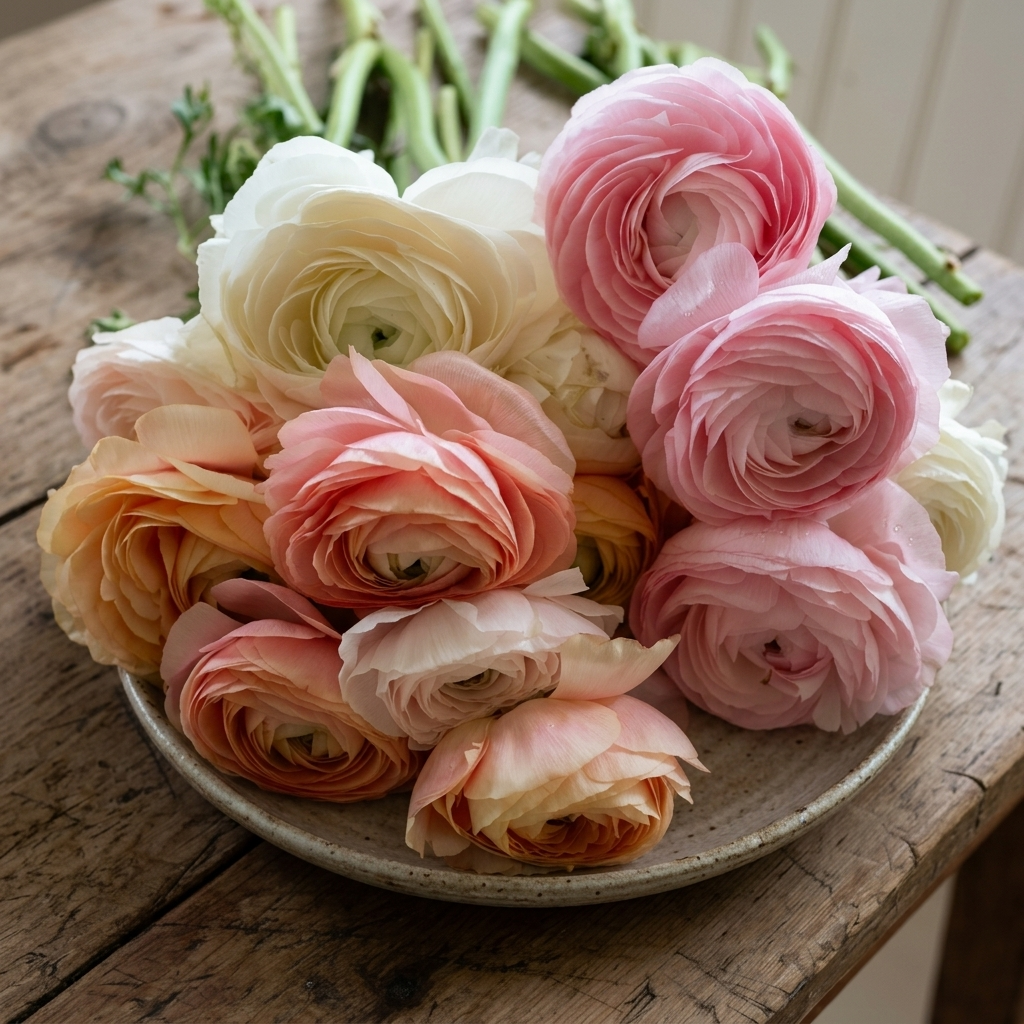
Ranunculus flowers are made up of layer upon layer of delicate petals. Some look like miniature peonies, others like old-fashioned roses. They come in creamy white, blush, peach, yellow, orange, red, burgundy and wonderful two-toned combinations.
For gardeners in Hungary, the secret is understanding that ranunculus loves the cool part of the season. We want to get it growing and flowering before real summer heat arrives. By the end of this book, you'll know how to choose, soak, plant, grow, troubleshoot, cut and store your ranunculus. So grab your gardening gloves. Let's go outside.
1. Meet the Ranunculus
The ranunculus we usually grow for those spectacular many-petalled flowers is Ranunculus asiaticus, sometimes called the Persian buttercup. And yes, it really is related to those little yellow buttercups you may see in meadows.
Ranunculus grows from a corm. People often call it a bulb, which is understandable, but technically it is a different underground storage structure. You do not need a botany degree to grow one. What matters is recognising those dry little claws and knowing what to do with them.
Why grow ranunculus?
The flowers are reason enough. A healthy plant can produce several blooms, and ranunculus is also a wonderful cut flower. But perhaps my favourite part is the transformation: one day you are holding something that looks completely lifeless, and a few months later you are carrying a vase full of flowers back into the house.
|
GOOD TO KNOW Ranunculus is a cool-season flower. In Hungary, think spring rather than high summer. Once you understand that, almost everything else about growing it begins to make sense. |
2. Before We Plant Anything
Here is one of the best gardening lessons I know: don't start with the plant. Start with the place. For ranunculus, we are looking for three things: light, cool conditions and drainage.
Give them plenty of light
Ranunculus flowers best in a bright, sunny position. Spring sunshine in Hungary is usually exactly what it wants. Later, a little protection from the strongest afternoon heat can help, but deep shade is not the answer.
Cool is good
Hungarian spring can be a tease. A sunny March afternoon can feel almost warm, and then a cold night arrives. Ranunculus enjoys cool weather, but prolonged hard freezing is another matter. Starting under protection toward the end of winter or in early spring can be very useful, especially if you want to make the most of the cool growing season.
Drainage matters
Corms sitting in cold, waterlogged soil can rot. If your garden has heavy clay that stays wet after rain, improve the soil, use a raised bed, or grow in containers with proper drainage holes.
|
A COMMON MISTAKE We see something growing and immediately think it needs water. With ranunculus, too much kindness can become drowning. Moist is good. Waterlogged is not. |
3. Choosing Your Ranunculus
Now we reach the dangerous part: choosing colours. You may begin looking for ten pink ranunculus and suddenly discover you need peach, champagne, cream, burgundy and one very specific raspberry-edged variety as well.
Soft, bright or dramatic?
For a romantic garden, look for white, cream, blush, pale pink, champagne, peach and apricot. For more energy, try yellow, orange, coral, hot pink or scarlet. If you like something moodier, explore burgundy, wine and plum shades. Picotee and bicolour flowers can be especially irresistible.
Names you may meet
You may see names such as Tecolote, La Belle, Amandine and Cloni. These refer to different series or selections. Tecolote is widely available, Amandine is popular with flower growers, and Cloni types can produce extraordinarily luxurious flowers. For your first season, however, healthy corms from a reliable supplier matter more than chasing the fanciest name.
|
TRY THIS Plant small groups of complementary colours rather than mixing everything. Peach with cream, blush with burgundy, or orange with deep red can give you ready-made bouquet combinations. |
4. Those Funny Little Claws
Your corms have arrived. They look dead. This is normal. Before planting, we are going to wake them up.
Soaking
Soak dry corms in cool or room-temperature water for around 3-4 hours. They should become noticeably plumper. There is no need to leave them in water all night.
Pre-sprouting
After soaking, you can plant directly or pre-sprout. Place the corms in a tray with barely moist growing medium and keep them cool and protected. After a week or two you should begin seeing roots and shoots. This is particularly useful in Hungary when outdoor weather is still uncertain.
Which way up?
This part is easy: claws down. The little pointed fingers face into the soil. Plant relatively shallowly, usually with around 3-5 cm of soil above the corm, and give plants roughly 10-15 cm of space in a home garden.
|
DON’T PANIC If you forget everything while standing outside with muddy hands, remember one thing: little octopus legs down. |
5. Is Anything Happening Yet?
You planted them yesterday. You check this morning. Nothing. Two days later, still nothing. You begin wondering whether you planted expensive dead spiders. This is the point where I would like you to leave them alone.
Watering young plants
Once the plants are actively growing, keep the soil consistently but moderately moist. Push a finger into the soil before watering. If it still feels comfortably moist below the surface, you probably do not need the watering can yet.
Feeding
Good soil with compost or well-rotted organic matter gives ranunculus a solid start. Container-grown plants may need additional feeding, and a flowering-plant feed can be useful as buds develop. But more fertiliser does not automatically mean more flowers.
Watch the frost
Hungarian spring can change quickly. If significant late frost threatens tender new growth, temporary fleece or a sheltered position for containers can save a lot of disappointment.
6. Growing Strong, Happy Plants
By now the shoots are beginning to look like proper plants. This is when gardening becomes less about following a calendar and more about paying attention.
Let the soil tell you
A terracotta pot on a sunny Budapest terrace may dry much faster than a garden bed near Lake Balaton. The same plant can need very different care in different places. Look, touch the soil, then decide.
Air circulation
Crowded, damp foliage can encourage fungal problems. Give plants room, and where possible water the soil rather than repeatedly soaking the leaves.
When Hungary suddenly turns warm
As spring moves toward summer, flowering will eventually slow. That does not mean you failed. Ranunculus is simply reaching the end of its preferred cool season.
|
WHAT I WOULD DO Once or twice a week, wander slowly through the plants. Turn over a few leaves, touch the soil, check new growth, look for aphids and enjoy the buds. Five minutes of observation can prevent weeks of trouble. |
7. When Things Don’t Go to Plan
Every gardening book should contain this sentence: sometimes plants die. Experienced gardeners lose plants too. Over time, the difference is that you begin to understand why.
Soft or rotten corms
Too much moisture is the first suspect. Ask whether the soil drained properly, whether the pre-sprouting mixture was too wet, or whether heavy spring rain left the planting area saturated.
Lots of leaves, few flowers
Check light, feeding and timing. A plant started very late may run into warm weather before it has had enough cool growing time. Too much nitrogen can also encourage leaves at the expense of flowers.
Pests and disease
Aphids may gather on tender growth and buds. Slugs and snails can damage young plants. Powdery mildew can appear when airflow is poor. Early observation is usually your best defence.
|
A COMMON MISTAKE Do not diagnose a whole plant from one imperfect leaf. Look at the soil, weather, new growth and the entire plant before deciding there is a crisis. |
8. And Then One Morning…
There is a bud. After weeks of looking at leaves, a proper flower bud rises above them. The buds swell, colour appears, and then layer after layer of petals opens. This is when you understand why people become slightly obsessed with ranunculus.
For the garden
Leave flowers outside and enjoy them, but remove faded blooms regularly while the plant is still actively producing.
For the vase
Harvest when buds are coloured and beginning to soften and open rather than when fully blown. Growers often describe the ideal stage as slightly marshmallow-like. Cut with clean snips, remove foliage below the waterline and place stems into clean water promptly.
|
TRY THIS Do not wait for twenty perfect stems. Cut three. Put them into a small vase on the kitchen table. Tuesday morning is a perfectly good special occasion. |
9. When the Show Is Over
Eventually Hungarian spring becomes summer. Flower production slows and leaves begin to yellow. This is part of the natural cycle, not necessarily a sign that something is wrong.
Let the foliage finish
If you hope to keep the corms, allow foliage to yellow and die back naturally. Gradually reduce watering as the plant moves into dormancy.
Lift or leave?
Hungarian winters can be cold, and winter moisture combined with freezing soil is not ideal for ranunculus. In a very sheltered, well-drained spot you may experiment, but lifting and storing valuable corms is the safer option in much of Hungary.
Storing
Lift once foliage has died back, brush away loose soil and dry the corms well in an airy, sheltered place. Store them cool, dark and dry, and remove anything that becomes soft or mouldy.
10. Your Ranunculus Cheat Sheet
Choose healthy corms. Think cool. Give them light. Prioritise drainage. Soak for around 3-4 hours. Pre-sprout if helpful. Plant claws down with roughly 3-5 cm of soil above them. Give them space. Water thoughtfully. Watch the Hungarian spring forecast. Check for pests. Cut the flowers. Let foliage finish. Lift and store if needed.
If you remember only five things: ranunculus loves cool weather; drainage matters enormously; claws point down; watch the plants rather than only the calendar; and pick the flowers.
One last walk around the garden
We began with a handful of dry brown claws. We soaked them, planted them and waited. Then came green shoots, leaves, buds and finally flowers. Now you know what ranunculus needs, why our Hungarian seasons matter, how to plant and care for it, what to check when something goes wrong, and what to do when summer arrives.
Your garden will still teach you the details no book can: where spring sunshine lingers, which corner stays too wet, which colours you love most, and which varieties you absolutely have to grow again.
Until then, enjoy your flowers. And whenever you're ready to grow something new… Come into the garden with me.


