

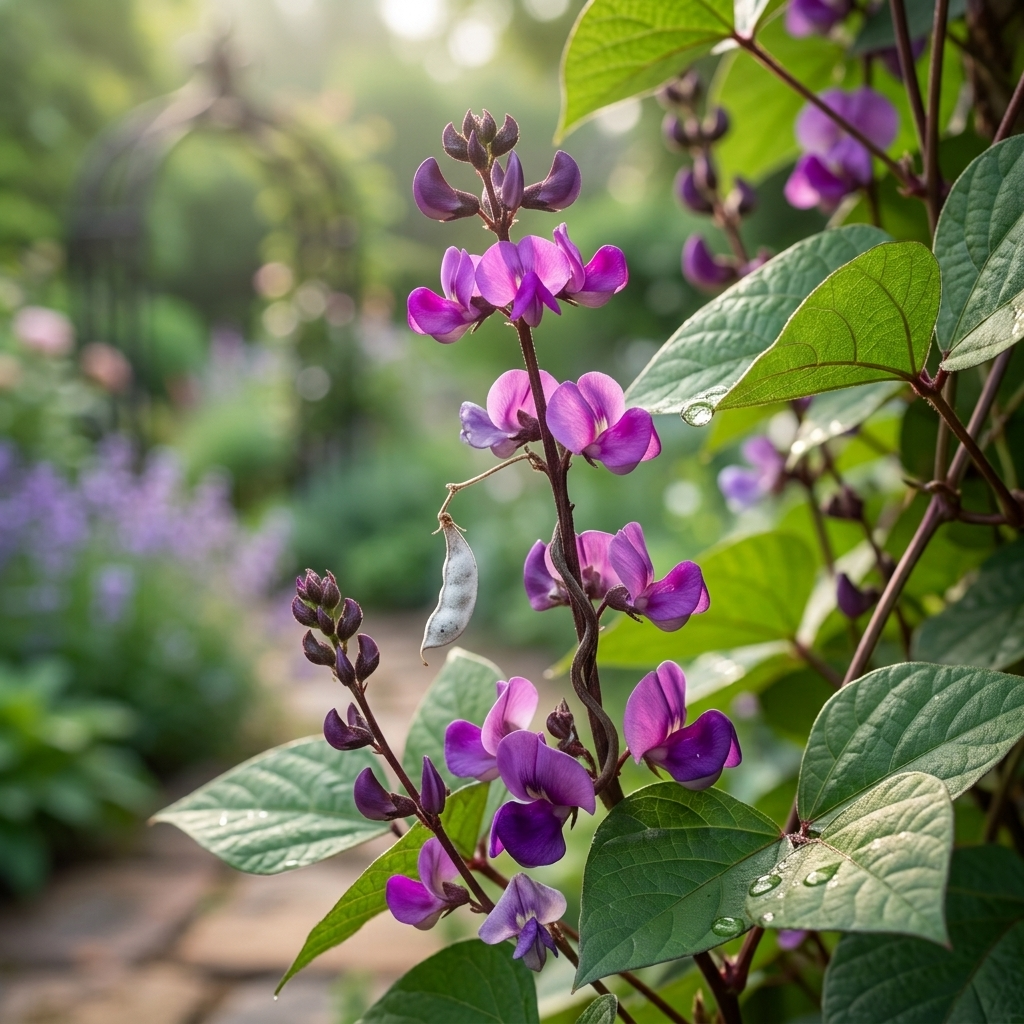
From One Seed to a Wall of Flowers and Purple Pods
A friendly guide to sowing, climbing, flowering and enjoying hyacinth bean in Hungary.
Come Into the Garden With Me…
Today, we're growing a climber - and not a shy one. Hyacinth bean can take a handful of seeds and turn them into a curtain of foliage, lilac-pink flowers and striking purple pods in a single Hungarian summer.
The botanical name is Lablab purpureus, and you may also meet it under the older name Dolichos lablab. It comes from warm climates, so in Hungary we normally grow it as an annual. Give it heat, sunshine, a strong support and a long enough season, and it grows astonishingly quickly.
At Holland Kertészet we currently offer Hyacinth Bean - 3 g, Buzzy C253. The packet recommends sowing from mid-March under glass, or from mid-March to the end of May outdoors in seedbeds, then planting out from mid-May. It can reach about 250 cm, with lilac-pink flowers in long clusters and purple-green to red-purple foliage.
This is one of those plants that changes a space rather than simply filling a gap. A bare fence can become a flowering screen. A trellis can become a green wall. A large pot can suddenly have height, movement and colour.
But because it grows so vigorously, we need to think ahead. Where will it climb? How strong is the support? How much water will a large vine need in July? And what do we do with those beautiful pods at the end of the season?
1. Meet the Hyacinth Bean
Hyacinth bean belongs to the pea and bean family, Fabaceae. It is a twining vine, which means the stems curl around supports as they grow rather than attaching themselves with sticky pads or tendrils.
The leaves are divided into three broad leaflets. Depending on the plant and the light, they may look green, purple-green or richly red-purple. Then come the pea-like flowers, usually in shades of lilac, pink or purple, followed by flat decorative pods that can be dramatically purple.
|
GOOD TO KNOW |
2. Finding the Right Place
Before we sow anything, let's find the place where the plant will spend its summer. With a climber, this matters even more than usual because once it begins wrapping itself around a support, moving it becomes awkward very quickly.
Give it sun and warmth
Hyacinth bean prefers full sun and a warm, sheltered position. A south- or west-facing fence, pergola or trellis can be ideal. In cooler or windy gardens, the extra warmth of a wall can help the plant get moving earlier and flower more generously.
The support comes first
This is not a little sweet pea. A healthy hyacinth bean can reach around 2.5 metres in our seed packet, and in very favourable climates the species can grow even taller. That means the support needs to be in place before the plant begins climbing.
Use a sturdy trellis, strong netting, a pergola, a fence with wires, or a tripod made from substantial canes. Thin decorative sticks that look charming in April may be completely overwhelmed by August.
Soil
Give it fertile, moisture-retentive but well-drained soil. This plant makes a lot of leaf and stem in one season, so it appreciates soil that can hold enough moisture during summer without becoming waterlogged.
Work some compost into poor soil before planting. In containers, use a generous pot rather than a tiny one; a large vine needs a large root run.
|
A COMMON MISTAKE |
3. The Hyacinth Bean We Grow With You
Our Holland Kertészet Hyacinth Bean is an annual reaching up to about 250 cm, with lilac-pink flowers in long clusters and foliage that can range from purple-green to red-purple.
That combination is what makes it so useful ornamentally. Even before the flowers arrive, the leaves and stems provide colour. Later, the purple pods add another decorative layer after the flowers begin to fade.
4. Let’s Sow Some Hyacinth Beans
The seeds are satisfyingly large compared with many of the dust-fine flower seeds we've sown together in this series. That makes hyacinth bean a lovely plant for beginners because you can actually see what you're doing.
When to sow
The Holland Kertészet packet gives us two useful options. Sow under glass from mid-March for an earlier start, or sow from mid-March to the end of May outdoors in a seedbed. Plant out from mid-May, once frost danger has passed and the soil has begun warming properly.
For Hungary, I generally like the protected start. Hyacinth bean loves warmth and benefits from having several weeks of growth before it moves outside. That gives us a better chance of a big flowering vine before autumn cools everything down again.
How to sow
Use individual pots or deep modules filled with good seed compost. Sow one seed per pot a few centimetres deep, water gently, and keep the compost warm and lightly moist.
The seeds do not need to sit in wet compost. Warmth plus moisture is what starts growth; warmth plus waterlogging is how we create rot.
Do we need to soak the seeds?
You can sow them directly without soaking. Some gardeners soak large bean-like seeds briefly before sowing, but it is not essential. If you do soak, a few hours is plenty - we are softening the seed coat, not making bean soup.
As soon as they germinate
Give the seedlings very good light. They grow quickly and can become tall and weak if kept somewhere dim. Turn pots if they lean toward a window, and don't let the young shoots tangle into one another.
|
DON'T PANIC |
5. Planting Out in Hungary
Wait for warmth
Hyacinth bean is frost-tender. Do not be seduced by one warm April afternoon. Plant out from around mid-May when frost risk has passed and nights are reliably mild.
Harden the plants off
Seedlings raised indoors or under glass need a gradual introduction to outdoor life. Put them outside in a sheltered place for a few hours, bring them back under protection, and increase the time outdoors over roughly a week or more.
Wind and strong sunshine can be surprisingly harsh on a plant that has spent its whole life behind glass.
Plant beside the support
Set each plant close enough to its trellis or wires that the new shoots can reach them easily. Water deeply after planting, then gently guide the stems toward the support.
Once a stem finds something suitable, it will begin twining around it. After that, the plant becomes much more independent.
Spacing
If you're creating a screen, give each plant enough room to branch without crowding the roots. Around 30-45 cm between plants is a useful home-garden starting point, depending on the support and how dense you want the final effect.
Containers
Hyacinth bean can be grown in a large container, but don't underestimate how thirsty a tall vine becomes. Use a substantial pot with excellent drainage, strong support and room for roots.
|
TRY THIS |
6. Summer: Now It Really Starts Climbing
By June and July, the plant should be doing what hyacinth bean does best: growing. And growing. And then growing some more.
Water deeply
A large vine uses a surprising amount of water in hot weather. Keep the soil evenly moist while the plant is actively growing, especially in containers. Deep watering is better than little daily splashes that only wet the surface.
At the same time, don't leave the roots sitting permanently wet. Moist and well-drained is our goal.
Feeding
In good garden soil, compost at planting may be enough to get the plant established. Container plants have fewer nutrients available and benefit from regular feeding during active growth and flowering.
Don't push excessive nitrogen. We want a vigorous vine, yes, but we also want flowers rather than several metres of leaves with hardly a bloom in sight.
Guiding the stems
Most stems will find the support themselves once they touch it. If one begins wandering in the wrong direction, gently wind it toward the trellis rather than forcing or sharply bending it.
Can I pinch the growing tip?
Yes, if you want a bushier plant or need to control height. Pinching a young growing tip can encourage branching. On a large screen, more side shoots often mean better coverage.
Hungarian summer heat
Hyacinth bean enjoys warmth and generally copes well with hot summers, provided the roots do not dry out completely. A layer of organic mulch can help keep the root zone cooler and reduce evaporation.
|
WHAT I WOULD DO |
7. Flowers, Pods and the Question Everyone Asks
Eventually, the vine changes character. The foliage is no longer the whole story. Long clusters of pea-like lilac-pink flowers appear among the leaves, followed by glossy flattened pods, often in rich purple tones.
The pods are part of the display
Don't think of the pods as something that spoils the flowers. On hyacinth bean they are one of the reasons we grow the plant. Against purple-green foliage, the pods can be just as ornamental as the blooms.
Can I eat the beans?
This needs a very clear answer in an ornamental gardening book: I recommend treating the Holland Kertészet hyacinth bean as an ornamental plant, not as a food crop.
Lablab purpureus is eaten in parts of the world, but mature dried seeds contain naturally occurring cyanogenic compounds and require correct preparation and thorough cooking. Raw or improperly prepared mature seeds can make people ill.
So unless you are growing a food variety specifically for eating and know the traditional preparation method, admire the pods, save seed for sowing, and leave the kitchen out of it.
|
IMPORTANT |
Pollinators
The pea-like flowers are attractive to visiting insects, so a flowering wall of hyacinth bean can bring movement as well as colour to the garden.
8. When Something Goes Wrong
Lots of leaves, hardly any flowers
First ask how much sun the plant receives. Too much shade can delay flowering. Excess nitrogen can also encourage leaves at the expense of blooms. And remember that hyacinth bean likes a long warm season; late-sown plants may simply run out of summer.
The leaves are drooping
Touch the soil. In July, a big vine may simply be thirsty. If the soil is dry below the surface, water deeply. If the soil is already wet, do not add more water - investigate drainage and root health instead.
Yellow leaves
A few older leaves yellowing is normal. Widespread yellowing can point to water stress, poor drainage, nutrient shortage in containers or roots that have become too crowded.
Aphids
Tender shoots and flower stems can attract aphids. Check new growth regularly. Small colonies are much easier to remove early than after they have spread through the whole vine.
Slugs and snails
Young plants can be vulnerable just after planting out. Once the vine is climbing strongly, damage is usually less dramatic, but protect tender seedlings during damp spring weather.
The vine is pulling down the trellis
That is a support problem rather than a plant problem. Reinforce the structure before wind and the weight of wet foliage make matters worse.
|
DON'T PANIC |
9. Autumn, Seed Saving and the End of the Season
Let some pods mature
If you would like to save seed, leave several healthy pods on the vine until they become fully mature and dry. Harvest them on a dry day before prolonged autumn rain damages the seed.
Open the dry pods, remove the seeds and let them dry thoroughly before storing them in a labelled paper envelope somewhere cool and dry.
Will saved seed come true?
With an open-pollinated ornamental bean, saved seedlings will often resemble the parent, but some variation is possible. I consider that part of the fun.
What happens after frost?
The first real frost ends the show. The leaves blacken, the vines collapse and the plant will not return from the roots in a normal Hungarian winter.
Cut the vine away from its support rather than trying to pull several metres of twisted stems off in one piece. Work from the top down and avoid damaging wooden trellis or wires you want to reuse.
Can it be overwintered?
In theory, hyacinth bean is perennial in warm climates. In practice, overwintering a large vine frost-free is rarely worth the effort for most Hungarian gardeners. Saving seed and starting again in spring is much simpler.
A useful annual screen
This is where I think hyacinth bean really earns its place. You can create privacy for one season without planting a permanent hedge. Cover an unattractive fence. Shade one side of a terrace. Dress a temporary pergola. And when winter comes, the whole thing disappears and you can start again with a new idea next year.
|
GOOD TO KNOW |
Your Hyacinth Bean Cheat Sheet
• Holland Kertészet: Hyacinth Bean
• Annual in Hungary; frost-tender and grown for one warm season.
• Height up to about 250 cm according to the packet.
• Sow under glass from mid-March for an early start.
• Or sow outdoors from mid-March to the end of May in seedbeds.
• Plant out from mid-May after frost danger has passed.
• Give full sun, warmth and a sheltered position.
• Install a strong trellis, netting or wires before planting.
• Use fertile, moisture-retentive but well-drained soil.
• Water deeply during hot Hungarian weather, especially in pots.
• Feed container plants regularly, but avoid excessive nitrogen.
• Enjoy the purple pods as part of the ornamental display.
• Treat the crop as ornamental; do not eat raw or improperly prepared mature seeds.
• After frost, cut the annual vine away and start again next year.
If You Remember Only Five Things…
1. Give hyacinth bean warmth, sunshine and a long growing season.
2. Put up a strong support before the vine starts climbing.
3. A large summer vine needs deep, regular watering - especially in a container.
4. Grow the purple pods for beauty, not casual eating; mature seeds require specialist preparation.
5. Frost finishes the plant in Hungary, so save seed and begin again next spring.
One Last Walk Around the Garden
We started with a few large seeds and an empty trellis. By midsummer, that structure can disappear beneath leaves, purple stems, lilac-pink flowers and glossy pods. A flat part of the garden becomes vertical, alive and full of movement.
Perhaps you'll use it to soften a fence near Budapest, cover a pergola by Lake Balaton, or create a temporary green wall around a terrace on the Great Hungarian Plain. Whatever you choose, decide where you want the vine to go before you sow, and give it something strong enough to climb.
After that, sunshine, water and summer do most of the work. Save a few seeds in autumn, because next year that empty trellis will be waiting again.
When you're ready for the next plant…


