

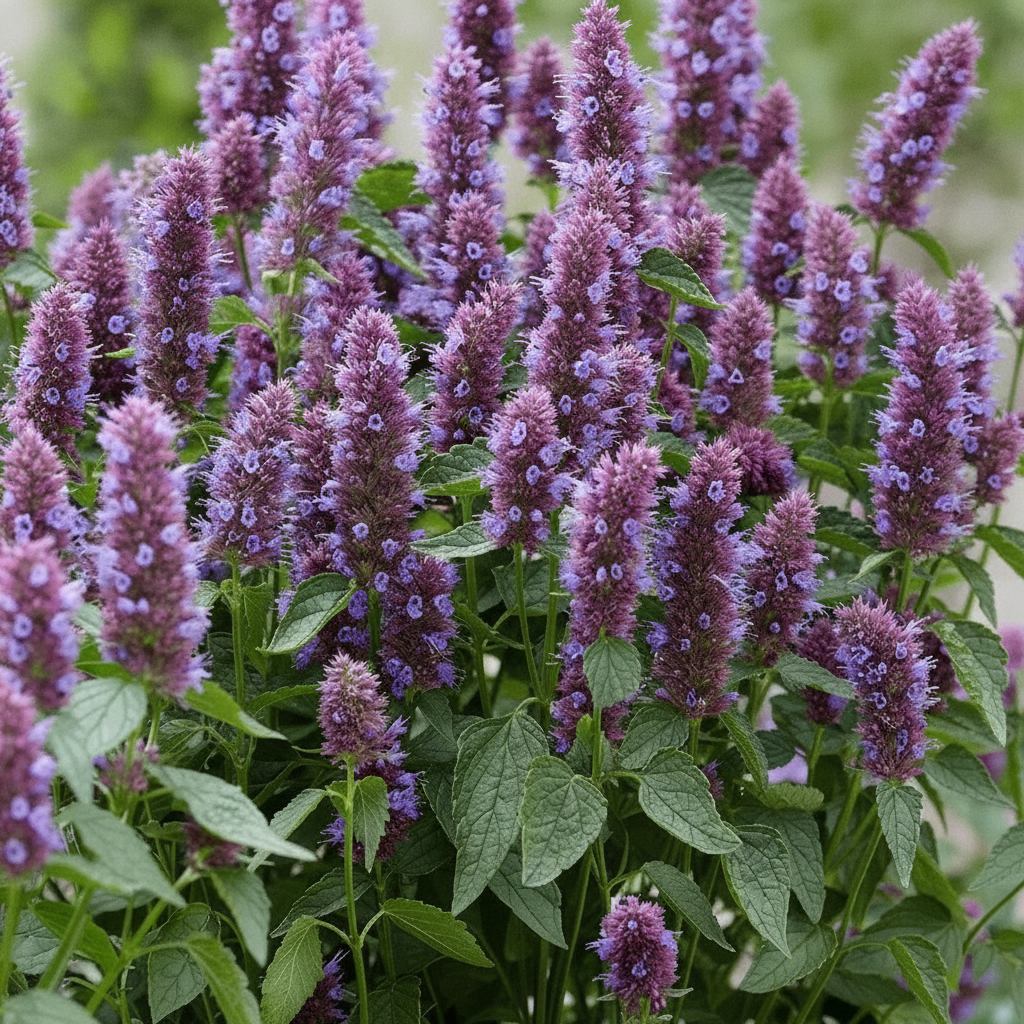
Agastache mexicana
From Tiny Seeds to Fragrant Spires Full of Butterflies
A friendly guide to sowing, growing and enjoying Mexican Hyssop in Hungary.
Come Into the Garden With Me…
Today, we're growing Mexican Hyssop - one of those plants that manages to be useful, beautiful and wonderfully alive with insects all at the same time.
At first it looks modest enough: small seeds, green leaves and upright stems. Then summer arrives. Flower spikes rise above the foliage, bees begin arriving, butterflies discover the plant, and suddenly one corner of the garden seems much busier than it did before.
Mexican Hyssop belongs to the Agastache group, plants famous for aromatic foliage and long flower spikes. Rub a leaf gently between your fingers and you may notice a fresh scent somewhere between mint, lemon and anise. The flowers are equally distinctive: small tubular blooms packed along upright stems.
For Hungarian gardens, this combination is very useful. Mexican Hyssop loves sunshine and warmth, is happier in well-drained soil than in heavy wet ground, and once established can cope with periods of dry summer weather better than many lush bedding plants.
The packet timing is simple: sow from mid-March to mid-April under protection, or from mid-April until the end of May outdoors, then transplant young plants roughly five to six weeks after sowing.
This is also a plant worth growing where you can see it closely. Put it beside a path, near a terrace or among other pollinator plants and you will notice not only the flowers but the constant movement around them.
So this book follows the whole journey: seed, seedling, first fragrant leaf, summer flower spikes, butterflies, cutting stems for the vase, and then the question every gardener asks at the end of the season - what happens next?
Ready? Let's grow something the butterflies may notice before the neighbours do.
1. Meet Mexican Hyssop
Mexican Hyssop is commonly grown as Agastache mexicana, a member of the mint family, Lamiaceae. It is related to many familiar aromatic plants, including mint, sage, thyme and lavender.
The plant grows upright rather than sprawling. Leafy stems rise from the base and are topped with narrow flower spikes, giving the plant a light vertical shape that fits naturally into cottage gardens, herb gardens and pollinator borders.
Its leaves are aromatic. Depending on the plant and growing conditions, the fragrance can suggest mint, lemon, liquorice or anise. That scent is part of the pleasure of growing Agastache: even before flowering, the plant has character.
The flowers are tubular and arranged in whorls along the upper stems. This shape is particularly attractive to bees, butterflies and other nectar-feeding insects.
Annual or perennial?
Botanically, Mexican Hyssop is a perennial in climates that suit it. In Hungary, winter survival can vary with cold, exposure and - above all - drainage. In a warm, sheltered, sharply drained garden it may return; in colder or wetter situations, it is sensible to think of it as a short-lived perennial and keep some seed for the following season.
|
GOOD TO KNOW Do not confuse Mexican Hyssop with true hyssop, Hyssopus officinalis. They are different plants. The shared name comes from their similar aromatic character and upright flower spikes. |
2. The Mexican Hyssop We Grow With You
At Holland Kerteszet, the packet is sold as a decorative border plant, an excellent cut flower and, most memorably, as a plant that butterflies find irresistible.
The packet timing
• Sow from mid-March to mid-April under frames or other light protection.
• Alternatively, sow outdoors from mid-April until the end of May once the soil has warmed.
• Transplant or move young plants approximately five to six weeks after sowing.
• Choose a sunny final position with soil that drains freely.
Why grow it?
• Long, upright flower spikes add height without making the border feel heavy.
• Aromatic foliage gives the plant interest even before flowering.
• The flowers attract butterflies, bees and other pollinators.
• Stems can be cut for informal summer arrangements.
• It fits naturally into sunny, lower-water garden planting once established.
|
GROW WITH US Our Horti Tops packet contains 0.4 g of seed. If you are new to Agastache, start a small batch under protection in March or April and sow a second small batch outside later. You will quickly learn which method suits your garden best. |
3. Finding the Perfect Place
If you remember only one thing about where to plant Mexican Hyssop, remember sunshine. This is a plant that wants light, warmth and moving air around its stems.
Sun first
Choose a position receiving at least six hours of direct sun through the growing season. In a Hungarian garden, a south- or west-facing border, sunny raised bed or open herb garden can be ideal.
Drainage matters
• Mexican Hyssop dislikes sitting in cold, saturated soil.
• Ordinary garden soil is fine if excess water can escape.
• On heavy clay, raise the planting position or improve drainage rather than putting the plant into the wettest part of the garden.
• Containers work well when the garden soil is too heavy, provided the pot has open drainage holes.
Give it some air
Do not squeeze plants tightly between dense neighbours. Good airflow keeps foliage healthier and makes the flowering stems easier to appreciate.
|
A COMMON MISTAKE Giving an aromatic, sun-loving plant rich, constantly damp soil because you want it to grow faster. Mexican Hyssop generally looks better when it grows firmly and steadily in sun than when it is pushed with too much water and fertiliser. |
4. Let's Sow
The seeds are small, so the trick is not strength but restraint. We are going to sow thinly, cover lightly and keep the surface evenly moist while germination begins.
Under protection
• Fill a tray or small pots with fine seed compost and gently firm the surface.
• Water before sowing so the seed is not washed into one corner afterwards.
• Scatter the seeds thinly over the surface.
• Cover very lightly with fine compost or vermiculite.
• Keep the compost moist but never waterlogged.
• Place the tray somewhere bright and comfortably warm.
• Once seedlings appear, give them plenty of light so they remain short and sturdy.
Direct sowing outdoors
From mid-April into May, you can also sow outdoors in a prepared seedbed. Rake the soil fine, remove weeds, sow thinly and keep the surface gently moist until the seedlings are established.
|
TRY THIS Sow only part of the packet at first. Keep the rest dry and labelled. A second sowing two or three weeks later gives you insurance against one awkward spell of weather and can extend the season of young plants. |
5. The First Tiny Seedlings
The first seedlings are easy to underestimate. At this stage they look nothing like the fragrant, flowering plant we are aiming for. Give them light, air and patience.
Avoid legginess
If seedlings stretch into long, pale stems, they are asking for more light. Move them into the brightest safe position you have and avoid keeping them excessively warm once they have germinated.
Pricking out
When seedlings have several true leaves and are large enough to handle, move them into individual pots or give them more room in a tray. Hold each seedling by a leaf rather than pinching the delicate stem.
Watering
Water carefully around the compost, then allow a little air back into the root zone before watering again. Constant saturation is much more dangerous than a short period when the surface begins to dry.
|
DON’T PANIC Aromatic perennials often seem slow while young. Small leaves above the soil can hide a surprising amount of root development below. Strong roots are exactly what will help the plant cope with Hungarian summer heat later. |
6. Moving Into the Garden
Plants started under protection need to meet the outside world gradually. Bright sun, dry wind and cooler nights can shock tender seedlings if we move too quickly.
Harden them off
• Put the young plants outside for a few hours on a mild day.
• Begin in a sheltered position rather than full midday sun.
• Increase the time outdoors each day for about a week.
• Bring plants back under cover if a cold night is forecast.
• Plant permanently once they are sturdy and the weather is settled.
Spacing
Give plants roughly 30-40 cm of space so air can move around them and the stems have room to branch. In a naturalistic border, groups of three or five usually look more convincing than one isolated plant.
|
HUNGARIAN SPRING NOTE Mid-April can be warm enough to tempt us into rushing. Remember that one cold night can still damage young, soft growth. Let the weather decide the exact planting day rather than the calendar alone. |
7. Caring for Mexican Hyssop
Watering
• Newly planted seedlings need regular moisture while roots establish.
• Once established, water less frequently but more deeply.
• During prolonged Hungarian drought, a thorough soak is more useful than a daily splash.
• Container plants dry much faster and need separate attention.
Feeding
In ordinary garden soil, keep feeding modest. Too much nitrogen produces soft leafy growth that can flop and flower less impressively. A little mature compost in spring is usually enough.
Deadheading
Remove faded flower spikes if you want to keep the plant tidy and encourage continued flowering. Leave a few late spikes if you would like to collect seed or provide winter structure.
Support
In open windy positions, taller plants may appreciate neighbouring plants for light support. Avoid tying everything into a rigid bundle; the natural movement of the stems is part of their charm.
|
THE BEST LITTLE JOB Cut a few flower stems for the vase just as the lower flowers are opening. You will enjoy the scent indoors, and regular cutting can encourage the plant to keep producing fresh stems. |
8. A Garden Full of Butterflies
One of the strongest reasons to grow Mexican Hyssop is not the plant itself but what happens around it.
The tubular flowers provide nectar over a long period, and the upright spikes make excellent feeding stations for insects. On a warm still morning, you may see bumblebees working slowly from the bottom of a spike upward while butterflies pause on the upper flowers.
Make the buffet bigger
• Plant several Mexican Hyssops rather than only one.
• Add other nectar plants that flower before and after it.
• Include flat-topped flowers such as yarrow for insects that prefer a landing platform.
• Grow lavender, oregano, catmint, echinacea and verbena nearby for a longer flowering sequence.
• Avoid routine insecticide spraying around flowering plants.
|
WATCH FOR FIVE MINUTES Choose a warm morning, stand beside a flowering plant and simply watch. Count how many different visitors arrive in five minutes. It is one of the easiest ways to see whether your garden is becoming more useful to wildlife. |
9. Mexican Hyssop Through the Hungarian Seasons
Spring
Sow under protection from mid-March to mid-April or prepare the outdoor seedbed for sowing from mid-April onward.
Early summer
Young plants establish, branch and begin producing stronger aromatic foliage. Water during dry spells while roots are still developing.
High summer
Flower spikes become the main event. Butterflies and bees arrive, stems can be cut for the vase, and established plants cope increasingly well with heat.
Autumn
Late flowers may continue while nights cool. Decide whether to collect seed. If you hope the plant will overwinter, make sure the crown is not buried under wet leaves or sitting in saturated soil.
Winter
In sheltered, sharply drained conditions, plants may overwinter. In colder or wetter gardens, losses are possible. Keeping seed gives you an easy way to begin again without disappointment.
|
PERENNIAL THINKING Treat winter survival as a bonus rather than a promise. Mexican Hyssop can be perennial, but in Hungary drainage and exposure make a real difference. Sow some fresh seed each spring until you know how reliably it behaves in your own garden. |
10. Growing Mexican Hyssop in Pots
A large container is an excellent option, especially where garden soil is heavy or where you want the fragrant foliage close to a terrace or doorway.
• Choose a pot with several drainage holes.
• Use a free-draining potting compost.
• Place the pot in full sun.
• Water thoroughly, then allow excess water to escape.
• Feed lightly rather than heavily.
• Cut faded spikes regularly for a neat, long display.
Winter in a container
Roots in a pot are more exposed to cold than roots in open ground. Move the container to a sheltered position, raise it from permanently wet paving and keep the compost from becoming waterlogged through winter.
|
BALCONY NOTE A sunny balcony can suit Mexican Hyssop extremely well, but pots can dry out fast during a July heatwave. Check the root zone, not just the surface, before deciding whether to water. |
11. Designing With Mexican Hyssop
Mexican Hyssop contributes vertical lines, aromatic foliage and movement. It is especially useful in borders that contain many rounded flowers because the spikes give the composition structure.
A pollinator border
Combine it with echinacea, yarrow, verbena, oregano, catmint and lavender. The different flower shapes support a wider range of insects and create a long sequence of colour.
A warm Mediterranean mood
Try it with ornamental grasses, santolina, lavender and drought-tolerant salvias in gravel or a sunny raised bed. The planting feels relaxed and handles summer heat well once established.
A cottage garden
Let the spikes rise between cosmos, marigolds, rudbeckia and dahlias. The Agastache adds air and vertical rhythm without looking formal.
|
DESIGN IDEA Repeat Mexican Hyssop in three small groups through the border. Repetition makes the garden feel intentional while still giving butterflies several feeding stations to discover. |
12. Problems - and How to Avoid Them
Weak, floppy growth
Too much shade, rich soil or excessive feeding can produce soft stems. Increase light and reduce feeding rather than trying to force the plant upright with stakes.
Few flowers
Check sunlight first. Then consider whether the plant is receiving too much nitrogen or is still very young. Strong flowering usually improves as the plant settles into a sunny position.
Rot at the base
This points strongly toward poor drainage or constant wetness. Improve drainage, raise the plant or switch to a container with free-draining compost.
Aphids
Tender new growth can occasionally attract aphids. Small colonies can often be removed with water or simply left for natural predators such as ladybirds and hoverfly larvae.
Winter loss
Do not immediately assume the cold alone was responsible. Wet soil during winter is often just as important. Keep seed so one difficult winter does not end your Mexican Hyssop story.
|
A COMMON MISTAKE Watering automatically because the leaves droop at three o'clock on a very hot afternoon. Check the soil first. Some plants wilt temporarily in heat and recover as evening cools; permanently wet roots can cause much greater damage. |
13. Making More Plants
From seed
Seed is the easiest method. Let a few flower spikes mature fully, collect the dry seed on a calm day and store it in a labelled paper envelope somewhere cool and dry.
From cuttings
Healthy non-flowering shoots can also be used for cuttings. Remove the lower leaves, place the stems into a light free-draining medium and keep them gently moist while roots form.
Why save seed?
In Hungary, saved seed is useful insurance. Even if your plants overwinter perfectly, seed lets you expand the planting. If winter is severe, you already have next year's generation waiting.
|
LABEL IT Write the plant name and year on the envelope before you walk back into the house. Unlabelled envelopes containing tiny brown seeds all look astonishingly similar by February. |
14. A Simple Mexican Hyssop Calendar for Hungary
FEBRUARY Prepare seed compost, clean pots and choose a sunny final position.
MARCH Begin protected sowing from the middle of the month.
APRIL Continue protected sowing to mid-month; begin outdoor sowing once conditions warm.
MAY Continue outdoor sowing to the end of the month and transplant young plants about five to six weeks after sowing.
JUNE Water young plants while they establish and enjoy the aromatic foliage.
JULY Flowering becomes strong. Watch for butterflies and cut a few stems for the vase.
AUGUST Keep deadheading for a long display. Water deeply during prolonged drought.
SEPTEMBER Late flowers continue. Leave a few spikes if you want to collect seed.
OCTOBER Collect dry seed and reduce watering as growth slows.
NOVEMBER Check drainage and clear wet debris from around plants you hope to overwinter.
DECEMBER-JANUARY Leave dormant plants largely alone and keep saved seed cool and dry.
|
THE RHYTHM OF THE PLANT Sow in spring. Build roots in early summer. Flower through the heat. Feed butterflies. Save seed in autumn. Then either welcome the old plant back or begin again from seed next spring. |
15. Your Mexican Hyssop Cheat Sheet
• Plant: commonly grown as Agastache mexicana
• Position: full sun
• Soil: ordinary but very well drained
• Protected sowing: mid-March to mid-April
• Outdoor sowing: mid-April to end of May
• Transplanting: about 5-6 weeks after sowing
• Water: regular while young, less once established
• Feeding: light
• Best features: aromatic foliage, long flower spikes, butterflies and bees
• Good for: sunny borders, pollinator gardens, cottage gardens and containers
• Cut flower: yes
• Winter: possible as a perennial in sheltered, well-drained conditions; save seed as insurance
|
IF YOU REMEMBER ONLY FIVE THINGS Sun. Drainage. Sow thinly. Water young plants, not established ones automatically. And always leave room for the butterflies. |
16. And Then One Morning…
There is movement before you even notice the flower.
A butterfly settles on one of the spikes, closes its wings for a moment and begins feeding. A bumblebee lands lower down. The whole stem bends slightly under its weight and then springs upright again.
That is when Mexican Hyssop becomes more than another plant in the border.
You began with a small packet of seed. You sowed it while spring was still uncertain, watched the seedlings grow, moved them outside, watered them through their first dry spell and waited for the stems to rise.
Now the flowers are doing something you could never create with decoration alone: they are bringing the garden to life.
One last walk around the garden
We started with tiny seed and a sunny patch of soil. Along the way we learned to respect drainage, to water carefully while plants establish, to resist overfeeding, to cut flowers for the house and to save seed for another year.
Your own garden will teach you the rest: which corner is warmest, where butterflies arrive first, whether the plant returns after winter and which companions make the flower colour look best.
Until then, enjoy the scent, enjoy the flowers, and enjoy every visitor they bring.
And whenever you're ready to grow something new… Come into the garden with me.
We're growing Mexican Hyssop.


