

From Tiny Seeds to Cool-Season Colour
A friendly guide to sowing, growing and enjoying pansies in Hungary.
Come Into the Garden With Me…
Today, we're growing pansies - the little flowers with faces.
Some flowers announce themselves with height. Some need heat. Some wait until midsummer before they really begin. Pansies do almost the opposite. They stay low, shrug off chilly weather that would stop many summer flowers, and bring colour to the garden when we need it most: spring, autumn, and even the milder stretches of winter.
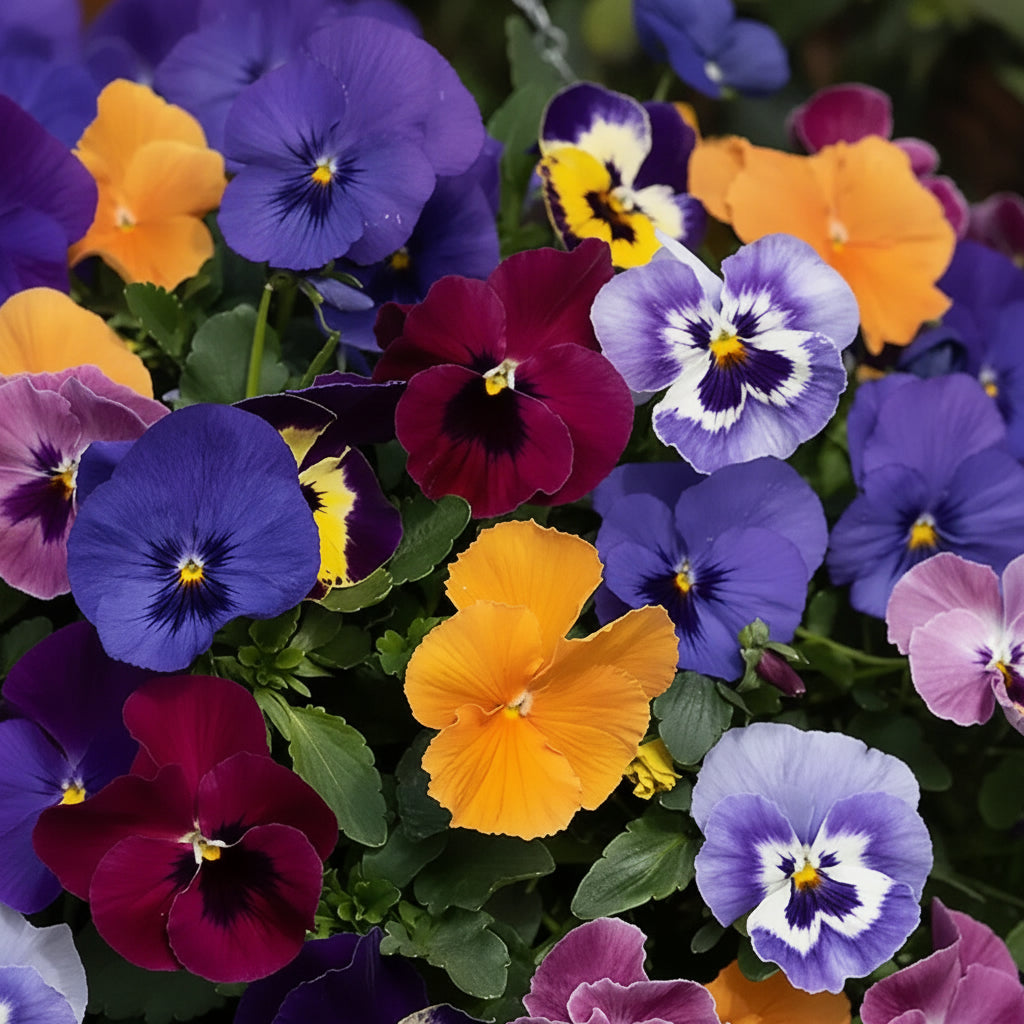
Look closely at a pansy flower and you can see why people become attached to them. The petals often carry dark blotches, fine whisker-like lines, or contrasting centres that make every bloom look as though it has a tiny expression. Some look cheerful. Some look surprised. A few look mildly offended by the weather.
For Hungarian gardens, pansies are especially useful because they enjoy the cooler shoulders of our growing season. They can flower when tulips and daffodils are appearing in spring, then return to importance again when summer bedding is tiring in September and October.
The trick is understanding that a pansy is not really a plant for the hottest part of July. It is a cool-weather flower. If we work with that rhythm instead of fighting it, pansies become wonderfully easy.
We'll start with seed, compare the pansies in our Holland Kerteszet range, learn two different sowing calendars, move the seedlings into pots and borders, talk about Hungarian summer heat, and finish with the simple care that keeps the flowers coming.
Ready? Let's grow some little faces.
1. Meet the Pansy
Pansies belong to the genus Viola. The large-flowered garden pansy is usually known botanically as Viola × wittrockiana, while smaller-flowered forms are often related to Viola cornuta or Viola tricolor.
That sounds more complicated than it needs to be. In the garden, what matters is that pansies and violas are close relatives with the same basic character: low-growing plants, cool-weather flowering, and a remarkable ability to keep producing colour when many other bedding plants are still asleep.
The classic pansy flower has five petals. Two sit at the top, two spread sideways, and one larger petal forms the lower lip. Dark markings often radiate from the centre. Those markings help guide pollinating insects toward the flower's nectar and pollen.
Plants usually remain compact, making them ideal for the front of borders, window boxes, pots, bowls and spring bulb combinations. Their size also means you can enjoy them close up, which is exactly where those little flower faces are most charming.
Annual, biennial or perennial?
Botanically, many pansies are short-lived perennials. In practical gardening, we often grow them as annuals or biennials because flowering is best while the plants are young and compact.
That is why seed packets may offer two different routes: sow early in the year for flowers in the same season, or sow in midsummer, plant out in autumn, and let the plants establish for a strong spring display.
|
GOOD TO KNOW Pansies are cool-season flowers. In Hungary, think of them as spring-and-autumn stars rather than plants that must perform perfectly through the hottest weeks of July and August. |
2. The Pansies We Grow With You
At Holland Kerteszet, our pansy choices give you two slightly different personalities: the cheerful old-fashioned Johnny Jump Up and the modern Sorbet XP F1 Mix.
Pansy 'Johnny Jump Up'
Johnny Jump Up is one of the most recognisable little violas. Its flowers are smaller than those of many modern bedding pansies, but they appear freely and have enormous character. Purple, yellow and cream tones combine in the classic little face that has made this flower a cottage-garden favourite for generations.
It is particularly good for informal planting: along paths, at the edge of raised beds, beneath spring bulbs, in cottage borders and in containers where you do not mind a plant that may gently self-seed.
Our Horti Tops packet contains 0.3 g of seed. If you like a garden that feels slightly spontaneous rather than perfectly controlled, this is the one I would choose.
Pansy 'Sorbet XP F1 Mix'
Sorbet XP F1 Mix is the polished member of the family. It is sold in our range as a 15-seed Garafarm packet and grows to roughly 10-20 cm tall. The mix produces a broad range of colours and gives a tidy, uniform display in borders and containers.
The packet offers two sowing routes. For an early annual crop, sow under glass in February or March and plant outside in April or May. For the biennial route, sow from mid-July to mid-August, then plant out in autumn for colour later in the year and again in spring.
Because Sorbet XP is an F1 hybrid, seed saved from your own plants will not necessarily reproduce the same colours, uniformity or performance in the next generation.
|
GROW WITH US Try Johnny Jump Up where you want charm and gentle informality. Use Sorbet XP F1 Mix when you want a neat container, a strong block of colour, or a more uniform front edge to a border. |
3. Choosing the Right Time to Sow
With pansies, timing matters more than almost anything else. We are trying to give the plants cool conditions for establishment and flowering, while avoiding the periods when intense Hungarian summer heat slows them down.
Route One: sow in late winter for spring and early-summer flowers
Start seed under protection in February or March. A bright windowsill, propagator, greenhouse or protected seed area can all work, provided the seedlings receive enough light.
Plant out in April or May once conditions are suitable. Pansies tolerate cool weather, but very young greenhouse-raised seedlings should still be hardened off gradually before they meet cold wind and strong sun.
This route is ideal if you want pots, balcony boxes or borders full of colour during spring and early summer.
Route Two: sow in July or August for autumn and spring colour
This is one of my favourite pansy tricks. Sow from mid-July to mid-August, raise the young plants carefully through late summer, and plant them into their final positions in autumn.
The plants establish while the soil is still warm, then continue whenever winter weather allows. In a sheltered Hungarian garden they may flower during mild periods, pause during hard frost, and then burst back into growth as soon as spring returns.
If July is extremely hot, keep the seed tray in bright shade rather than baking it in full afternoon sun. Germinating pansy seed does not need to experience the same heat as a tomato plant.
|
A COMMON MISTAKE Treating pansies like heat-loving summer bedding. A seed tray sitting in fierce July sun can dry out in hours. During summer sowing, protect the young stage from excessive heat and keep the compost evenly moist. |
4. Let's Sow
Use a clean seed tray, module tray or small pots filled with fine seed compost. Water the compost first so the surface is moist before the seeds arrive.
Scatter the seeds thinly. Pansy seedlings are small, and crowded seedlings are much harder to water and transplant without damage.
Cover the seed lightly with fine compost or vermiculite. Keep the compost evenly moist, never waterlogged. A fine rose on a watering can or gentle bottom watering is much safer than blasting the tray with a hard stream of water.
Place the tray somewhere bright once germination begins. Weak light produces stretched seedlings with long stems. What we want is a short, sturdy little plant that looks ready to face the garden.
Germination is not a race. Some seedlings appear before others. Give the tray time before deciding that a few empty cells have failed.
|
DON'T PANIC Pansy seedlings begin life very small. Tiny does not mean unhealthy. Give them light, gentle moisture and time before you start feeding or fussing with them. |
5. From Seedling to Little Plant
Once the seedlings have developed true leaves and are large enough to handle, move them into individual modules or small pots if they are crowded.
Handle the seedling by a leaf rather than pinching the stem. A damaged leaf can be replaced. A crushed stem usually cannot.
Plant each seedling at roughly the same depth it was growing before. Firm the compost gently around the roots and water carefully.
From this point, light becomes your best friend. Keep the seedlings bright and cool rather than hot and soft. Too much warmth combined with weak light creates leggy growth.
You do not need to push pansies with heavy feeding. Healthy roots, adequate light and moderate moisture matter more than trying to force fast growth.
Hardening off
Before spring-raised seedlings move permanently outdoors, introduce them gradually to real weather. Put them outside in a sheltered place for part of the day, then increase the time over a week or two.
Autumn-raised plants also benefit from a gentle transition if they have been grown under glass. Pansies are hardy once established; young protected seedlings still appreciate a polite introduction.
6. Planting Pansies in the Garden
Pansies flower best in sun to light partial shade. In spring, a sunny position is usually ideal. In a hot Hungarian autumn or on a balcony that becomes fierce in the afternoon, a little protection from the strongest sun can help flowers last longer.
Choose fertile, well-drained soil. Pansies dislike being permanently wet, but they also do not enjoy drying to dust. The ideal soil holds some moisture while allowing excess water to escape.
Space plants so air can move between them. A mass of pansies can look wonderful, but cramming plants tightly together increases competition and encourages disease during damp weather.
Water after planting and keep the soil evenly moist while roots establish. Once plants are growing strongly, you can adjust watering to the weather.
The perfect place beneath spring bulbs
Pansies are wonderful companions for tulips, daffodils, hyacinths and crocuses. The bulbs rise through the low carpet of flowers, giving you colour at two different heights.
In a large container, plant spring bulbs deeper in autumn and pansies near the surface. The pansies provide immediate colour while the bulbs are still hidden underground, then the whole pot changes character when the bulbs emerge.
|
TRY THIS Plant one large pot with tulips in the centre and pansies around the rim. In autumn the pansies give colour. In spring the tulips rise through them. One container, two seasons of interest. |
7. Pansies in Pots, Window Boxes and Balconies
Pansies were almost designed for containers. Their compact growth keeps them close to eye level, and because they enjoy cool weather, they can decorate a balcony months before heat-loving summer flowers are ready.
Use a container with drainage holes and a good-quality potting mix. Never leave the base of the pot standing permanently in water.
A balcony box can dry faster than garden soil, even in cool weather. Wind is often the hidden culprit. On a bright March day with a strong dry wind, a small container may need water even though the air feels cold.
During very hot weather, move portable pots away from the fiercest afternoon sun if possible. Pansies often respond better to a cooler location than to more fertiliser or more water.
For a polished look, repeat the same colour in several containers. For a cottage-garden feel, mix colours and let Johnny Jump Up behave a little more freely.
|
WHAT I WOULD DO Keep one pansy pot near the door or kitchen window. These are flowers worth seeing close up. The markings and tiny faces are much more interesting at arm's length than from the far end of the garden. |
8. Keeping the Flowers Coming
Watering
Check the soil rather than watering by calendar. The goal is even moisture. Plants in the ground usually need less frequent watering than plants in containers.
Water at the base when possible, particularly in cool damp weather. Constantly wet leaves and flowers can encourage fungal problems.
Feeding
Pansies in containers benefit from occasional feeding once they are actively growing and flowering because nutrients wash out of potting mix over time.
In garden soil, heavy feeding is rarely necessary. Too much nitrogen can produce soft leafy growth at the expense of flowers.
Deadheading
This is the little job that makes the biggest difference. Remove faded flowers before they form mature seed pods. The plant then keeps putting energy into new buds rather than seed production.
Follow the faded flower stem down and pinch or snip it off cleanly. Do not remove only the petals and leave the developing seed pod behind.
|
A COMMON MISTAKE Pulling off only the faded petals. Deadheading works best when you remove the old flower together with its short stem and developing seed pod. |
9. What Happens in Hungarian Summer Heat?
This is the chapter that saves many gardeners from thinking they have failed.
Pansies prefer cool conditions. When temperatures rise strongly in late June and July, flowering may slow, stems may stretch, and plants can begin looking tired. That is not necessarily poor gardening. It is the plant responding to weather it does not particularly enjoy.
If plants are in pots, move them into light afternoon shade if you can. Keep them watered without saturating the compost. Trim away tired growth and continue deadheading.
Some plants recover when temperatures moderate. Others are best treated as finished and replaced with heat-loving summer flowers. There is no shame in that. A garden is seasonal, and every plant has its moment.
Then, in July or August, you can begin sowing the next generation for autumn and spring. That is the beautiful rhythm of pansies: when one crop is fading in heat, the next one can already be starting in a seed tray.
10. When Something Goes Wrong
Long, floppy growth
Usually a sign of too much warmth, too little light, crowded plants, or a combination of all three. Move plants to brighter, cooler conditions and trim tired growth if necessary.
Leaves are yellowing
Check moisture first. Both waterlogged compost and severe dryness can produce yellow leaves. Also check whether a container has simply exhausted its nutrients after months of flowering.
Grey or mouldy growth
Cool, damp, still conditions can encourage fungal disease. Improve air movement, remove affected material, avoid splashing leaves repeatedly, and do not crowd plants too tightly.
Aphids
Soft new growth can attract aphids. A light infestation can often be washed away or left for natural predators such as ladybirds and hoverfly larvae. Check buds and young stems regularly.
Slugs and snails
Young pansies can be attractive to slugs and snails, especially in damp spring or autumn weather. Check around pots, boards and dense groundcover where they hide during the day.
Few flowers
Think about light, heat, feeding and seed production. Too much shade, very hot weather, excessive nitrogen, or plants busy making seeds can all reduce flowering.
|
DON'T DIAGNOSE FROM ONE LEAF Look at the whole plant. Check the soil, recent weather, new growth and the underside of leaves before deciding there is a serious problem. |
11. Pansies, Pollinators and the Kitchen Garden
Pansies are not usually the first flower people mention when planning a pollinator garden, but they can provide useful early-season flowers when the selection of nectar and pollen sources is still limited.
Johnny Jump Up, with its smaller viola-like flowers and informal habit, fits particularly well along the edge of a herb garden or vegetable bed.
Pansy and viola flowers are also traditionally used as edible decorations. If you want to eat flowers from your garden, grow them specifically for that purpose and make sure they have not been treated with unsuitable pesticides or other chemicals. Never assume flowers bought for ornamental use are automatically suitable for eating.
A few clean petals on a cake, salad or summer drink can be beautiful, but the garden value comes first: colour, charm, and a long season when conditions are right.
12. Saving Seed
If you grow Johnny Jump Up, you may notice little seed capsules forming after flowers fade. Allow selected capsules to mature if you want to collect seed or encourage gentle self-sowing.
Collect seed when the capsules are mature but before they scatter everything into the garden. Dry it well and store it labelled in a cool, dry place.
With Sorbet XP F1 Mix, remember the F1 label. Seed from F1 hybrids does not reliably reproduce the same uniform plants in the next generation. You can certainly experiment, but treat the offspring as a surprise rather than a copy of the original packet.
If consistency matters, start again with fresh F1 seed. If curiosity matters more, save a few seeds and see what happens. Both approaches belong in a garden.
|
SEED-SAVING NOTE Open-pollinated violas are the better choice when you want to save seed true to type. F1 hybrids are bred for uniformity in the first generation, not for predictable home-saved seed. |
13. A Simple Pansy Calendar for Hungary
JANUARY Plan colours, clean seed trays and decide whether you want spring or autumn pansies.
FEBRUARY Begin protected sowing for an early crop, especially Sorbet XP F1.
MARCH Continue sowing under protection. Give seedlings excellent light and moderate temperatures.
APRIL Harden off strong young plants and begin planting outside as conditions settle.
MAY Enjoy the main spring display. Water containers and deadhead regularly.
JUNE Keep deadheading. Watch for the first effects of summer heat.
JULY Move pots out of fierce afternoon sun. Begin midsummer sowing for autumn and spring plants.
AUGUST Continue late sowing. Keep seed trays cool enough to germinate and never let them dry out.
SEPTEMBER Plant young pansies into beds, pots and window boxes while soil is still warm.
OCTOBER Enjoy autumn colour. Combine pansies with newly planted spring bulbs.
NOVEMBER Remove damaged flowers and leaves, but leave healthy plants in place.
DECEMBER During mild spells pansies may still flower. In severe frost, growth simply pauses.
14. Your Pansy Cheat Sheet
• Sow February-March for spring plants, or July-August for autumn and spring colour.
• Give seedlings bright light and moderate temperatures.
• Plant in sun to light shade and fertile, well-drained soil.
• Water evenly; do not keep roots permanently wet.
• Deadhead the whole faded flower and seed pod.
• Feed container plants lightly during active flowering.
• Expect a slowdown during intense Hungarian summer heat.
• Use pansies with tulips, daffodils and other spring bulbs.
• Johnny Jump Up suits informal, self-seeding planting.
• Sorbet XP F1 gives a tidy, uniform colour mix.
• Save seed from open-pollinated forms if you want predictable home-grown generations.
|
IF YOU REMEMBER ONLY FIVE THINGS Cool weather. Bright light. Even moisture. Deadhead regularly. Do not judge pansies by how they look in the hottest week of July. |
15. And Then One Morning…
There is a face looking back at you.
Yesterday your pansy was mostly leaves. This morning one little bud has opened and there it is: purple and yellow, blue and cream, burgundy and white, or some combination you would never have thought to put together yourself.
That is one of the pleasures of raising pansies from seed. They begin so quietly. A few tiny leaves, a little pot, weeks of watering and wondering. Then suddenly the plant has personality.
One last walk around the garden
We began with tiny seeds. We learned that pansies love the cool parts of the year, discovered two different sowing calendars, planted them beneath spring bulbs and into balcony boxes, kept the faded flowers picked, and stopped blaming ourselves when July became too hot for perfect blooms.
Now you know when to sow, how to raise the seedlings, where to plant them, how to keep them flowering, what to do in summer heat, and how to prepare the next generation for autumn and spring.
Your own garden will teach you the rest: which corner stays cool longest, which colour looks best beside your tulips, whether Johnny Jump Up decides to seed itself between the paving stones, and which tiny pansy face makes you smile every time you pass.
Until then, enjoy your flowers. And whenever you're ready to grow something new…
Come into the garden with me.


