

From Autumn Bulbs to a Spring Carpet of Bells
A friendly guide to planting, growing, naturalising and enjoying Spanish bells in Hungary.
Come Into the Garden With Me…
Today, we're growing Spanish bells - Hyacinthoides hispanica - a spring bulb that can turn a quiet corner beneath trees into a soft drift of blue, pink or white bells.
Unlike tulips, which often ask for the sunniest place in the garden, Spanish bells are wonderfully adaptable. They grow in sun, partial shade and even fairly shady positions, provided the soil drains well and does not dry out completely while the leaves are active.
That makes them especially useful in Hungary beneath deciduous trees, beside shrubs, along the edge of a woodland-style border, or in those awkward places where spring light reaches the soil before the canopy fills in.
They are also true perennials. Plant the bulbs once, let the foliage ripen after flowering, and a happy clump can return year after year, slowly becoming fuller as bulbs multiply.
We'll begin with the difference between Spanish and English bluebells, learn when and how deeply to plant, what happens through winter, how to manage the foliage after flowering, and how to divide clumps when they become crowded.
We will also talk about one important point that belongs in every good gardening guide: Spanish bells are beautiful and vigorous, so they should be grown responsibly and not allowed to escape into wild habitats.
Ready? Let's plant something this autumn that will look as though spring has rung a row of little bells through the garden.
1. Meet Spanish Bells
Spanish bells are Hyacinthoides hispanica, a bulbous perennial in the asparagus family, Asparagaceae. You may also see the common names Spanish bluebell, large bluebell or Spanish squill.
What do they look like?
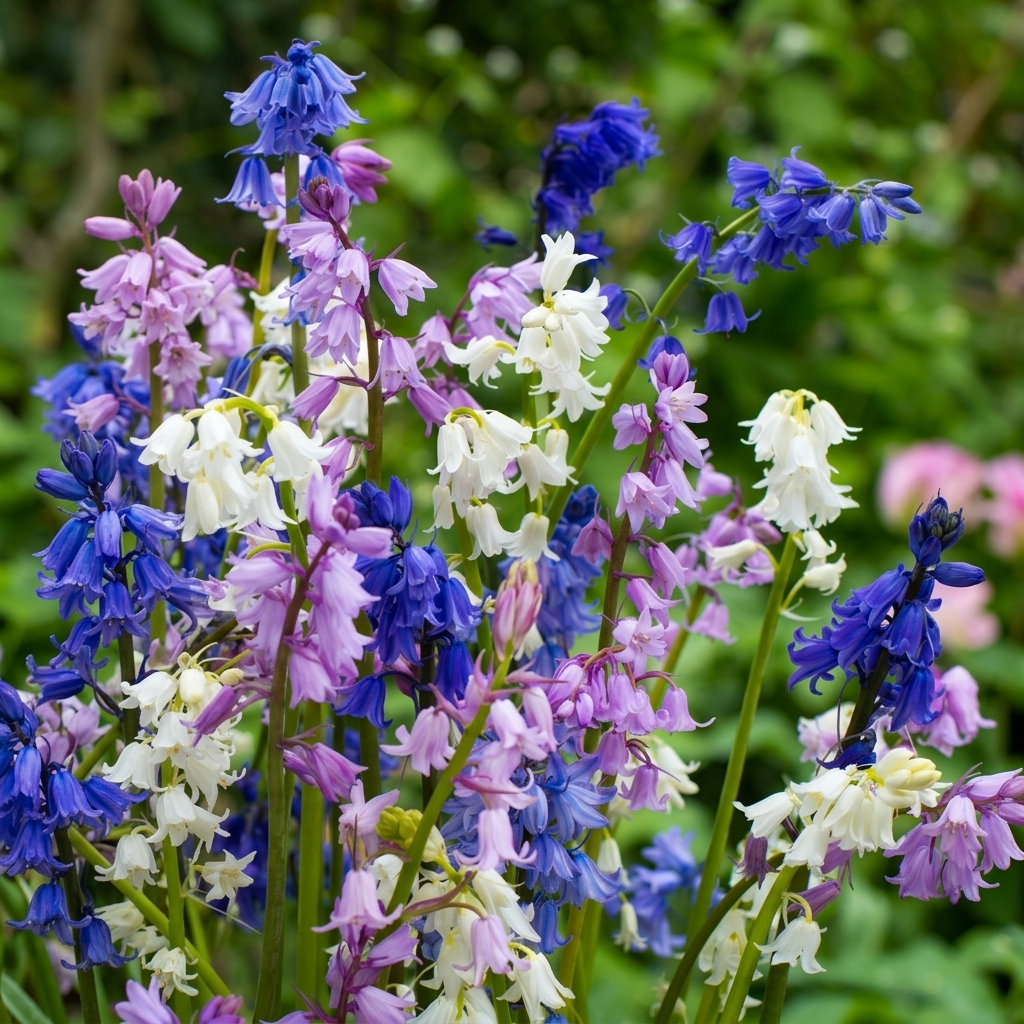
The plant makes broad, strap-shaped green leaves in spring. Upright flower stems rise from the centre and carry open, bell-shaped flowers all around the stem rather than mostly to one side.
The usual colour is pale to medium blue, but pink and white forms also occur. Compared with the native English bluebell, the flowers are larger and more open, the leaves are broader and the stems are generally more upright.
A perennial bulb, not a one-season annual
Once established, Spanish bells return from the same bulbs each spring. They also produce offsets, so one bulb can gradually become a clump. In a suitable garden this is exactly what we want - but it is also why we should decide where we want them before planting.
|
GOOD TO KNOW Tulips are hardy spring bulbs. In Hungary, winter cold is part of their normal cycle; poor drainage is usually a greater danger than frost. |
2. Give Them Light, Moisture and Good Drainage
Spanish bells are flexible about light. Full sun works, partial shade is excellent, and they are especially useful beneath deciduous trees where spring light reaches the ground before summer leaves create deeper shade.
Moist but never waterlogged
The best soil is moderately fertile, humus-rich and well drained. The ground should hold enough spring moisture to support leaves and flowers, but winter water must be able to escape.
In heavy Hungarian clay, loosen the planting area and improve structure before adding bulbs. A raised bed or sloping position can help where winter rain tends to sit on the surface.
They are useful under trees
Because the bulbs complete much of their active growth before summer shade becomes dense, Spanish bells can naturalise beneath deciduous trees and shrubs. Avoid extremely dry ground directly beneath large thirsty roots.
Think about spread before you plant
Spanish bells are vigorous. Choose a place where a slowly expanding clump will be welcome rather than troublesome, and deadhead after flowering if you do not want seedlings spreading beyond the original group.
Grow them in the garden, not in the wild. Never dump unwanted bulbs, seed heads or garden waste outside your own property.
|
A COMMON MISTAKE Planting tulips too early into warm autumn soil. Wait until the soil has cooled; October and November are usually excellent planting months in Hungary. |
3. The Spanish Bells We Grow With You
For this book, we are following Spanish bluebell bulbs, Hyacinthoides hispanica, the strong garden form commonly sold as blue or mixed bulbs for autumn planting.
What to expect
A healthy bulb produces a spring rosette of broad green leaves and a sturdy flower stem roughly 30-40 cm tall. The bells are arranged around the stem, giving the plant a fuller, more upright look than the classic English bluebell.
Blue is the familiar colour
Blue forms create the traditional woodland effect and combine beautifully with white narcissus, pale tulips, forget-me-nots, primroses and fresh spring foliage.
Pink and white are equally useful
Mixed plantings can include soft pink and clean white flowers as well as blue. A natural-looking drift often works better than strict rows, especially beneath trees and shrubs.
Why beginners like them
Spanish bells are hardy, adaptable and forgiving once the bulbs are established. They do not demand annual lifting, complicated feeding or perfect soil, and they are generally free from serious pest and disease problems.
The one thing to remember is vigour
A good clump can become a large clump. That is part of their charm in the right place, so plant with intention and keep an eye on where new bulbs or seedlings appear.
4. Let’s Plant the Bulbs
|
GROW WITH US Try combining two or three tulip groups with different flowering times. A Darwin Hybrid, a Triumph and a later double can stretch the display far beyond one short week. |
Spanish bells are planted in autumn, while the bulbs are dormant and the soil is still workable.
When to plant in Hungary
September and October are excellent planting months. You can continue into November if the soil remains unfrozen and workable, but earlier autumn planting gives roots time to establish before hard winter weather.
How deep?
Plant the bulbs about 8-10 cm deep, measured from the soil surface to the base of the bulb. A simple bulb rule also works: roughly two to three times the bulb’s own height.
Set the pointed end upward. If the bulb is irregular and you cannot tell which side is up, place it on its side; the shoot will still find its way toward the surface.
Spacing
About 5-10 cm between bulbs gives them room to multiply while still creating a full spring display. For a natural look, plant in loose groups rather than straight lines.
Planting in pots
Use a container with drainage holes and a free-draining compost. Plant several bulbs together for impact, water after planting, and leave the pot outdoors so the bulbs receive natural winter cold.
|
DON'T PANIC If green tips appear during a mild winter spell, leave them alone. Tulip shoots are tougher than they look and usually cope with ordinary spring cold. |
5. Winter Below Ground, Spring Above It
After planting, Spanish bell bulbs begin making roots in cool autumn soil. Winter then provides the cold period that fits their natural growth cycle.
Cold is not the problem
These bulbs are hardy. Ordinary Hungarian winter cold is something they can handle well once planted. The real danger is stagnant winter moisture around the bulb.
When spring begins
Broad green leaves usually appear first, followed by sturdy flower stems. Growth can seem slow at the beginning and then suddenly accelerate as temperatures rise.
Do not tidy the leaves too early
The foliage may look slightly untidy as the flowers fade, but those green leaves are still working. They are feeding the bulb and helping it prepare the following year’s flowers.
If spring is unusually dry, water deeply enough to moisten the root zone. Established bulbs in normal garden soil rarely need constant watering.
|
WHAT I WOULD DO Plant one generous group in the border and another in a deep pot. You will quickly learn which varieties return best in your own soil and which you prefer to replant for a perfect display. |
6. Spring Care: Flowers Now, Energy for Next Year
Spanish bells are easy once established, but their aftercare determines how strongly they return.
Feeding
In ordinary garden soil, a little compost in spring is usually enough. Heavy fertilising is unnecessary and can encourage soft growth rather than stronger bulbs.
Water during genuinely dry spring weather, especially under trees where roots compete for moisture. Container-grown bulbs need more regular checking.
After flowering
If you want to limit spread, remove faded flower stems before seed pods mature. This is the simplest way to enjoy the clump without encouraging seedlings everywhere.
Leave the foliage
Do not tie, braid or cut green leaves. Wait until they turn yellow and die back naturally. Only then has the bulb finished storing energy for next spring.
For naturalising
If you do want a larger drift, leave selected flower stems to set seed and allow offsets to remain undisturbed. Just remember that naturalising should stay within the garden, not move into nearby wild areas.
|
GOOD TO KNOW For repeat flowering, Darwin Hybrids and species tulips are among the most dependable choices. Give them sun, drainage and time for the foliage to ripen after flowering. |
7. When Something Goes Wrong
Spanish bells are usually trouble-free, so problems often point to drainage, crowding or poor aftercare rather than a difficult plant.
Leaves appear but flowering is weak
The clump may be overcrowded, shaded too heavily, very dry during spring growth or weakened because leaves were removed before they yellowed the previous year.
Bulbs rot
Waterlogged ground is the first suspect. Lift soft or decaying bulbs, improve drainage and avoid low spots where winter water collects.
The clump is spreading too far
Deadhead every year, lift unwanted bulbs carefully and check the surrounding soil for offsets. Do not put unwanted bulbs or seed heads into places where they could escape into the wider landscape.
Leaves look rusty or spotted
Overcrowded, damp growth can occasionally develop fungal problems. Remove badly affected material after it has finished feeding the bulb, improve airflow and divide dense clumps when dormant.
Slugs and snails nibble leaves
Spring foliage can attract slugs and snails, especially in damp shade. Damage is usually cosmetic unless young growth is being eaten severely.
|
DON'T PANIC A tulip that performs less strongly in its second or third year has not necessarily been badly grown. Some show varieties naturally decline and are often replanted for the best display. |
8. Flowers for the Garden - and the Vase
Spanish bells are at their best when they look as though they arrived naturally, even when we carefully planted every bulb ourselves.
In the garden
Plant in loose drifts beneath deciduous trees, along the front of a shrub border or beside spring bulbs with contrasting shapes. White narcissus, pale tulips and low forget-me-nots are especially good companions.
For the vase
Cut stems when several bells are open and the upper buds still have colour to come. Use clean snips and place the stems into fresh water promptly.
A small bunch is often enough. The upright stems and cool spring colours work beautifully in simple jars or narrow vases with narcissus and early foliage.
Think like nature
Odd-numbered groups and irregular spacing usually look more convincing than military rows. Let one group disappear behind a shrub and reappear farther along the border.
|
TRY THIS Pair pale tulips with 'Queen of Night', or mix warm Darwin Hybrids with blue muscari. Repeating the same combination in two places makes the garden feel deliberately designed. |
9. After Flowering, Division and Summer Rest
Once the flowers finish, the bulbs begin preparing for dormancy. This is the quiet part of the year, but it matters just as much as the spring display.
Let the leaves yellow
Wait until foliage has died back naturally before removing it. This is one of the most important rules in the whole book and the easiest way to protect next year’s flowering.
When the foliage disappears, reduce watering unless nearby plants genuinely need it. The bulbs rest below ground through summer.
When should you divide?
If flowering declines or the clump becomes too crowded, lift and divide the bulbs after the foliage has died back, usually in summer. Separate the offsets gently and replant at the normal depth.
Planting in the green
Bluebells can also be moved while still in leaf after flowering. This can be useful when you want to see exactly where a clump is growing before the foliage disappears.
Keep the boundaries clear
Every year, take a quick look around the original planting. Remove bulbs that have appeared where you do not want them and deadhead if the clump is becoming too generous.
|
A COMMON MISTAKE Cutting tulip leaves as soon as the flowers fade. The green foliage is rebuilding the bulb; wait until it yellows naturally before removing it. |
10. Your Spanish Bells Cheat Sheet
We've gone from dormant autumn bulbs to a spring drift of bells. Here's the whole journey in one place.
1. Spanish bells are Hyacinthoides hispanica.
2. They are hardy perennial bulbs.
3. Plant them in autumn for spring flowers.
4. September-October is an excellent planting window in Hungary.
5. Choose firm, healthy bulbs.
6. Grow in sun, partial shade or light woodland shade.
7. Use moist but well-drained soil.
8. Plant bulbs about 8-10 cm deep.
9. Space bulbs about 5-10 cm apart.
10. Plant in loose groups for a natural effect.
11. Let winter cold do its work.
12. Water during genuinely dry spring weather.
13. Feed lightly with compost if needed.
14. Deadhead to limit self-seeding.
15. Never cut green foliage early.
16. Wait until leaves yellow before removing them.
17. Divide crowded clumps after foliage dies back.
18. Grow responsibly and keep bulbs within the garden.
19. Wear gloves when handling if your skin is sensitive.
20. Remember that all parts are harmful if eaten.
If You Remember Only Five Things…
1. Autumn is planting time
Get the bulbs into the ground in September or October so they can root before winter.
2. Shade is not the enemy
Spanish bells are excellent beneath deciduous trees and shrubs where many spring bulbs still receive plenty of early light.
3. Drainage matters
Hard winter cold is manageable; a bulb sitting in stagnant wet soil is the real problem.
4. Leave the leaves
Green foliage is feeding the bulb. Remove it only after it has yellowed and died back naturally.
5. Enjoy the vigour - but manage it
Deadhead, divide and remove stray bulbs when needed so the clump remains a beautiful garden plant rather than an escape artist.
One Last Walk Around the Garden
Do you remember where we started?
With a handful of dry autumn bulbs and a place beneath the trees that looked rather empty once summer had finished.
We planted them while the soil was still workable, covered them over and then forgot about them for winter. Beneath the surface, roots formed quietly while the cold months passed.
Then spring changed the whole corner. Broad leaves appeared first, followed by upright stems and rows of blue, pink or white bells. What had been bare ground suddenly looked soft, cool and full of movement.
Spanish bells teach us a different kind of gardening from tulips. They are not asking us to replace them every year. They are asking for a good place, sensible boundaries and enough patience to let a clump become part of the garden.
By the second or third spring, you may already notice the planting becoming fuller. You will know which patches stay moist, which areas receive the best spring light and where a few extra bulbs would make the drift feel complete.
And perhaps, one year, you will lift a crowded clump and realise that the handful of bulbs you planted has quietly multiplied into enough to start another corner of the garden.
And when you're ready for the next plant…
Come into the garden with me.


