

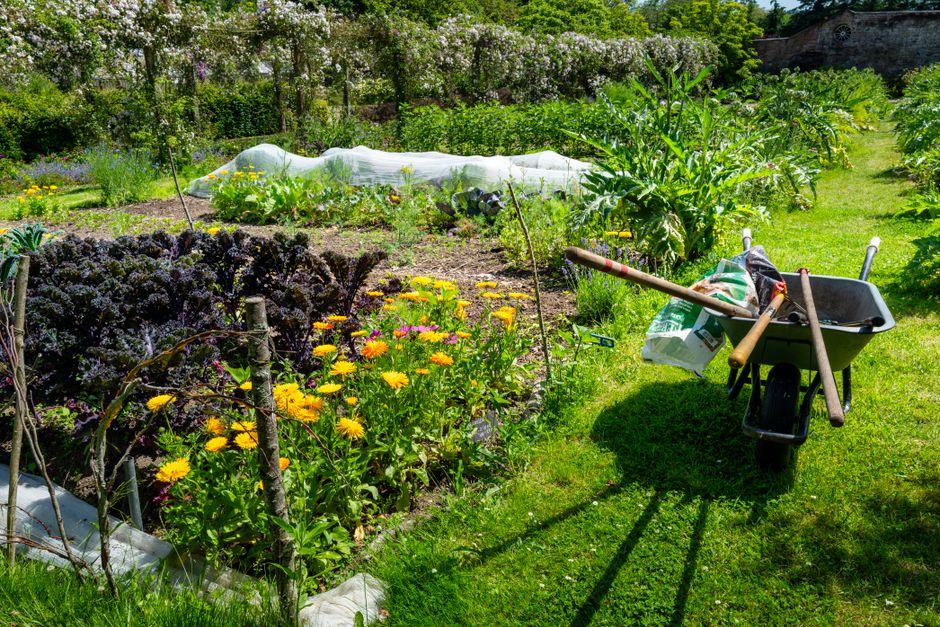
Every summer, gardeners reach for the pesticide bottle or the fertiliser bag, assuming the garden simply needs more inputs. The reality is that the soil already holds the answers, if you put the right plants next to each other. Companion planting is the practice of growing specific plants together to boost productivity, deter pests, and improve soil health naturally. Research shows that intercropping not only increases beneficial biodiversity, it also increases yield compared to monoculture planting, meaning you can grow more food from the same patch of ground, without reaching for a single synthetic chemical.
Research published in the Proceedings of the Royal Society B showed that polyculture systems achieve a Land Equivalent Ratio of 1.2-1.4, meaning they produce the same yield as 20-40% more monoculture land area. If you are growing vegetables on a typical home allotment or raised bed, that efficiency gain is significant. It translates directly to fuller harvests, healthier plants, and a lower spend on inputs. In this guide, you will find the combinations that actually work, the ones to avoid, and a clear framework for deciding where to start.

Key Takeaways
-
Diverse beds outperform monocultures on yield: A meta-analysis of 63 articles from 18 countries found that intercropping significantly increased the overall abundance of beneficial arthropods by 36% and species richness by 27%, while reducing the abundance of arthropod pests by 38%. Aim for at least three species in every bed to trigger this effect.
-
The Three Sisters system is the most evidence-backed pairing: USDA research confirms the Three Sisters polyculture yields more per square foot than any of the three crops grown alone. Use corn, climbing beans, and squash together as your anchor combination if you have space.
-
Marigolds earn their place beside tomatoes: In replicated field trials at Cornell AgriTech, tomato plots bordered by French marigolds experienced 42% fewer whitefly adults and 37% less aphid colonisation than control plots, without any insecticides. Plant them at transplant time, not mid-season, or you will miss the pest-prevention window.
-
Companion planting and crop rotation work together: Companion planting and crop rotation complement each other. Move heavy-feeder beds each year. Treating them as separate strategies leaves gains on the table.
-
Pairings to avoid are just as important as good ones: Planting incompatible vegetables together can stunt growth, welcome pests and diseases, and negatively impact flavour. Fennel, onions near beans, and potatoes beside tomatoes are the most common costly mistakes.
Quick-Start Prioritisation Framework
| Combination | Best For | Effort Level | Time to Results |
|---|---|---|---|
| Tomatoes + Marigolds | All bed sizes, especially raised beds | Low | Same season |
| Tomatoes + Basil | Kitchen gardeners, small plots | Low | Same season |
| Three Sisters (Corn + Beans + Squash) | Larger plots, maximum yield focus | Medium | Same season |
| Carrots + Onions | Root vegetable beds | Low | Same season |
| Beans/Peas beside heavy feeders | Any bed needing nitrogen input | Low | Long-term (post-season) |
| Flowering borders (Calendula, Nasturtium) | Full beds needing pollinator support | Low | Weeks |
Start here if you are:
-
A beginner with a small raised bed: Tomatoes + Basil + Marigolds, three plants, one bed, three different mechanisms working simultaneously.
-
Growing root vegetables: Carrots + Onions, a low-effort, zero-cost pairing that deters both crops' primary pests.
-
Focused on maximum yield from limited space: The Three Sisters system, the most rigorously studied and yield-proven combination in the horticultural record.
How Companion Planting Actually Works
Before selecting your combinations, it helps to understand the mechanisms behind them. Companion planting works because plants interact with each other and their environment, affecting pests, pollination, and growth. There are four distinct mechanisms at play, and most successful pairings rely on more than one of them simultaneously.
Pest Confusion Through Scent
Various mechanisms explain how intercropping leads to insect pest regulation: individual plants are less apparent and more difficult to find because they are dispersed in intercropped systems; certain intercrop species disrupt the ability of a pest to attack the main crop; some crops might have a repellent effect on herbivores; a more attractive intercrop draws the pest away from the main crop; and natural enemies are more abundant and efficient in diverse cropping systems. When a pest cannot locate its preferred target by scent alone, it moves on.
Nitrogen Fixation and Soil Enrichment
Leguminous plants fix nitrogen into the soil through a symbiotic relationship with Rhizobium bacteria. Inside nodules on the legume's roots live these bacteria, which convert atmospheric nitrogen gas into ammonia that plants in the soil can take up. Using nitrogen-fixing plants is a natural way to enrich your soil without using chemical fertilisers. For home gardeners, this means planting peas or beans beside heavy-feeding crops such as brassicas or sweetcorn effectively replaces a bag of nitrogen fertiliser.
Pollinator Attraction
Research published in the Journal of Applied Ecology of Applied Ecology found that gardens with diverse plantings had significantly higher pollinator activity, which directly correlated with increased fruit set and yield. If your courgette flowers are dropping without setting fruit, or your pepper yield is lower than expected, a shortage of pollinator visits is often the cause. Planting flowering herbs and annuals alongside vegetables is the simplest correction.
Allelopathy and Ground Cover
Some plants release compounds that suppress weeds or inhibit nearby pests directly through the soil. Research indicates that allelopathic chemicals released by basil can suppress pest attraction and influence microbial activity in the rhizosphere. Squash leaves achieve a similar result above ground, creating physical shade that suppresses weeds and retains soil moisture.
The Three Sisters: The Most Yield-Proven Combination in History
The Three Sisters system, used by Iroquois, Cherokee, Hopi, and many other Indigenous nations for at least 1,000 years, plants corn, beans, and squash together in the same mound. It remains the most elegant high-yield companion arrangement ever documented.
Why It Works
Each plant fills a distinct role. Corn grows tall first, providing a living pole for the beans to climb (no trellis needed). Beans climb the corn stalk and fix atmospheric nitrogen in the soil for the following season's corn crop. Squash spreads at ground level, its large prickly leaves shading out weeds, retaining soil moisture, and deterring small animals from the corn.
Whilst monoculture plots produced higher individual crop yields, companion planting offered greater produce diversity and a higher total yield of combined crops. Companion plots with three crops also exhibited lower residual soil nitrogen, suggesting potential water quality benefits.
Practical Three Sisters Setup
In the traditional planting method, all three seeds are sown together in elevated mounds, which improve drainage and prevent waterlogging of the roots. Most planting guides recommend at least 10-20 corn plants to achieve a good yield, wind pollination requires critical mass, so a single row will not perform. Sow corn first, wait until it reaches 15-20 cm, then sow beans at its base, followed by squash seeds around the mound.
Pro Tip: Cultivar selection matters more than most gardeners expect. GrowPerma's companion planting science guide notes that pairing the wrong bean variety with sweet corn can drop the Land Equivalent Ratio to roughly 1.0, eliminating all yield benefit. Choose climbing pole beans, never bush beans, when using the Three Sisters method.

Tomatoes, Basil, and Marigolds: The Classic Bed Combination
This trio is the most practical starting point for any home gardener growing tomatoes, and each pairing delivers a different category of benefit.
Tomatoes and Basil
Recent studies show that basil releases volatile compounds that prime a tomato plant's defence mechanisms. The data shows a consistent improvement in tomato performance when grown alongside basil, particularly in yield and pest resistance. Studies now explain the science behind why growing basil alongside your tomatoes can increase the yield by as much as 20%. therefore, if you are growing tomatoes without basil, you are leaving a straightforward, zero-cost yield improvement unused.
Basil is not a heavy feeder, so it does not deplete the soil of nutrients that tomatoes need to produce flavourful fruit. Plant basil 30-45 cm away from the base of tomato plants, overcrowding basil close to tomato stems can increase humidity and fungal disease risk.
Tomatoes and Marigolds
A 2019 study showed that marigolds deter whiteflies. Research published in PLOS One by Niall Conboy at Newcastle University's School of Biology showed that the limonene in marigolds deters the glasshouse whitefly. The roots of French marigolds (Tagetes spp.) are scientifically proven to suppress root-knot nematodes, a pest that commonly inflicts tomatoes and causes stunted growth. Research shows that interplanting marigolds with tomatoes can help increase tomato fruit yields by up to 50%.
Planting marigolds with tomatoes is one of the few companion planting strategies backed by peer-reviewed research, but the same research shows it only works if you do it early. Most gardeners tuck a few marigold seedlings between tomato plants in June, when the beds already look established. By then, whitefly scouts have located the plants. Root-knot nematodes have claimed their territory underground. The marigolds bloom cheerfully for the rest of the season while the biological work they are designed to do has already been missed.
The action point: plant French marigolds at the same time as you transplant your tomato seedlings, or even a week earlier.
Pro Tip: Use a planting ratio of one marigold for every two tomato plants, spacing them throughout the bed rather than confining them to the border. A perimeter-only approach reduces the internal scent disruption effect that confuses arriving whiteflies.
Combining All Three
The full trio, tomatoes, basil, and French marigolds, addresses pest deterrence above and below ground, volatile compound defence, pollinator attraction, and soil-moisture competition reduction simultaneously. In my experience, a bed running these three together requires noticeably less reactive pest management than a tomato monoculture. The Homestead and Chill companion planting guide notes that basil's tendency to attract pollinators combined with marigolds' nematode suppression creates compounding benefits that individual pairings alone do not match.
Carrots and Onions: Mutual Pest Deterrence at Its Simplest
A companion planting of carrots and onions is a long-standing tradition in which the aroma of the onions deters the carrot root fly and the smell of the carrots repels onion fly from the onions. Carrots and onions planted together, each helps deter the other's pests, making this one of the most effective companion pairings.
How to Plant Them
Carrots prefer things a bit cooler, so growing them beneath the protective leaves of taller plants keeps their roots cool. Intermix with lettuce and onion to maximise space. The varying root depths allow a smaller area to utilise water and nutrients efficiently. Onion's shallow bulbs and carrot's deep taproot genuinely occupy different soil zones, meaning they compete minimally for resources whilst providing maximum olfactory protection.
What to Avoid Near Carrots
Not every aromatic herb is a friend to carrots. Fennel releases compounds into the soil that can inhibit the growth of many nearby vegetables, including carrots. Fennel is allelopathic, meaning it gives off natural chemicals that stunt or suppress neighbouring plants, and it competes heavily for nutrients and space. Dill might seem like a great herb for pollinators, but both dill and carrots belong to the Apiaceae family and attract similar pests, especially carrot flies and aphids. Dill can also produce compounds that slow carrot root development, especially if allowed to flower nearby.
Legumes as Living Fertiliser: Beans and Peas Beside Heavy Feeders
Peas and beans benefit potatoes carrots, cucumbers, cauliflower, cabbage, summer savory, turnips, radishes, corn, and most other herbs and vegetables through their nitrogen-fixing activity. Bush beans or peas planted alongside corn, peppers, or brassicas contribute biologically fixed nitrogen that benefits nearby plants after root turnover.
The Timing Trick Most Gardeners Miss
Nitrogen fixation peaks when legumes are actively growing and before they flower. This means the nitrogen benefit to neighbouring crops is highest during the growing season rather than after harvest. Avoid applying excessive nitrogen fertilisers, which can discourage root nodulation because plants rely on readily available nitrogen rather than microbial sources. If you are already heavy with nitrogen, the beans will not bother fixing it.
A companion planting research study published in the NIH National Library of Medicine found that over two years, the yield of tomatoes grown using reduced nitrogen and companion planting increased by 34.26% and 35.54% compared to monoculture, and nitrogen use efficiency increased by 9.81% and 11.36%, respectively. The practical implication: if you combine companion planting with deliberately reducing synthetic nitrogen inputs, you can improve yield whilst simultaneously improving soil biology.
Pro Tip: Sow a row of dwarf French beans between your brassica transplants each spring. The beans will be harvested and cleared by the time the brassicas reach their hungry mid-season feeding phase, leaving nitrogen-rich root residues in the soil at exactly the right moment.
Flowering Borders: Pollinators, Predators, and Pest Confusion
Intercropping systems, especially with chives and marigold, increased the richness of arthropod species by 100% compared to strawberry in pure crop, a finding from a two-year study in Frontiers in Sustainable Food Systems. This biodiversity gain applies across vegetable beds, not just soft fruit. More species of beneficial arthropods means more predation of pests and more consistent pollination.
Which Flowers to Use and Where
Border beds with flowering plants such as calendula, alyssum, nasturtium, and buckwheat to draw in beneficial insects.
-
Nasturtiums act as trap crops, drawing aphids away from brassicas and courgettes. Plant them at the edge of the bed, then remove and compost any heavily infested growth.
-
Calendula attracts hoverflies and parasitic wasps, both of which prey on aphids and caterpillar eggs.
-
Sweet alyssum produces tiny, accessible flowers ideal for parasitic wasps that target whiteflies and aphids. Research published in the Journal of Applied Ecology insects and improves soil moisture retention, aiding the growth of lettuce and brassicas.
Herbs as Mid-Bed Companions
Insert two to three herbs such as basil, thyme, sage, or dill among the vegetables for pest deterrence. Herbs are desirable crops themselves, and often produce small flowers with exposed nectaries that attract and support predators and parasitoids. From a practical standpoint, this means you are growing culinary herbs and protecting your vegetables with the same plants, a genuine double return on the bed space.
Pro Tip: Allow some of your herb plants to flower rather than harvesting all growth. A bolting coriander or parsley plant is less useful in the kitchen but exceptionally effective at attracting hoverflies, whose larvae consume large quantities of aphids.

Pairings to Avoid: Combinations That Actively Reduce Your Yield
Understanding bad pairings is as valuable as knowing the good ones. Some plants produce compounds that inhibit the growth of others. Companion planting mistakes with allelopathic crops can dramatically reduce your yields or even kill your plants.
The Worst Offenders
Fennel and almost everything. Fennel is a poor companion plant for many garden vegetables and can especially inhibit the growth of tomatoes. Gardening experts recommend growing fennel in a container so its roots do not touch surrounding plants.
Onions and beans. Beans dislike maturing next to onions and onion relatives like shallots, garlic, and scallions. Onions have an inhibitory effect on bean plants, causing them to grow slowly and poorly during the summer. Both pole and bush beans are affected.
Potatoes and tomatoes. Potatoes and tomatoes are incompatible because they are both members of the nightshade family. They are susceptible to many of the same pests and draw many of the same nutrients from the soil. Planting them together concentrates blight risk and creates resource competition.
Corn and tomatoes together. Corn and tomatoes both suffer from the corn earworm, and tomatoes and potatoes are affected by the same blight, so keep these plants separate to prevent the spread of pests or disease.
Two heavy feeders side by side. Two heavy-feeding crops typically make poor companions because they aggressively compete for limited soil nutrients. Examples include kale next to pumpkins, or cabbages beside Brussels sprouts in a tight bed.

Common Companion Planting Mistakes and How to Fix Them
Even with good intentions, most gardeners make the same errors in their first seasons of companion planting. In my experience, the following five issues account for the majority of disappointing results.
Planting Too Late
The most frequent mistake is treating companion plants as an afterthought, adding them weeks after the main crop is established. Pest scouts find crops early in the season. Nematodes establish territory in the root zone before you can see any above-ground symptoms. Companions must be present from the start to intercept these threats.
Spacing Companions Too Far Apart
For pest confusion via volatile compounds, plants need to be within one to three feet of each other to have meaningful effect. A lone marigold at the corner of a six-metre tomato row does nothing for the plants at the other end.
Planting Only One Companion Species
Pest confusion requires diversity. Aim for at least three species in each garden bed. A bed with tomatoes and nothing else gives pests a clear target. A bed with tomatoes, basil, marigolds, and a nasturtium border creates genuine navigational confusion for arriving insects.
Ignoring Spacing Requirements Even Between Friends
Crowding still causes competition for light and water, even between plants that are technically 'friendly.' Give each plant enough room to reach its mature size. Companion planting improves the interactions between plants; it does not override basic space and light requirements.
Skipping Crop Rotation
If you keep planting cabbage family vegetables in the same spot, they can develop clubroot. Give each spot a three-year break between plant families. Companion planting optimises what happens within a season; rotation manages what accumulates in the soil over multiple years. Both are required for sustained yields.
Frequently Asked Questions
How close do companion plants need to be to work effectively?
For pest confusion via volatile compounds, plants need to be within one to three feet of each other to have meaningful effect. For nitrogen fixation, roots need to intermingle, so planting legumes within 30-50 cm of target crops is ideal. Flowering border plants used to attract beneficial insects can work at greater distances, as the insects will range across the entire bed once drawn in.
Will companion planting reduce my need for pesticides completely?
Companion planting meaningfully reduces pest pressure but does not eliminate the need for vigilance entirely. Results from 209 studies involving 287 pest species found that, compared with monocultures, the population of pest insects was lower in 52% of studies and higher in 15% of studies. The majority of outcomes favour companion planting, but results depend on specific combinations, climate, and the pest species present. Use it as a primary strategy, with targeted interventions as a backup.
Can I practise companion planting in raised beds and containers?
Because basil helps repel pests tomatoes planted with basil often produce more fruit. If you are container gardening, you can get many of the benefits even if they are not in the same pot. Just arrange them so they are near each other. Raised beds are particularly well-suited to companion planting because their defined boundaries make it easy to plan and track which combinations occupy each section.
Does companion planting improve soil health long-term?
A 2023 study found that companion planting significantly increased soil enzyme activity and microbial diversity compared to monoculture growing, evidence that the benefits extend well below the soil surface. Over multiple seasons, the combination of nitrogen-fixing legumes, reduced pesticide inputs, and increased organic matter from diverse root systems builds a genuinely more fertile bed.
Which companion planting combination should a beginner start with?
I have found that the tomato-basil-marigold trio is the best starting point for most gardeners. It requires no specialist knowledge, the plants are widely available, and each companion addresses a different category of problem. Start with the most evidence-backed combinations: Three Sisters, tomato plus basil, carrot plus onion, and marigolds as borders. Once you are confident with these, you can layer in additional combinations across the rest of the bed.
Where can I find quality seed bundles for companion planting?
If you are looking to try companion planting combinations this season, Holland Kertészet offers a wide selection of vegetable and herb seeds suited to the combinations covered in this guide. Sourcing companion varieties together from a single supplier simplifies planning and helps ensure the plants reach transplant size at the right time relative to each other, timing is, as we have seen, one of the most critical factors in getting results.
Closing Thoughts
Companion planting vegetables rewards patient, observant gardeners. The combinations covered here, the Three Sisters, tomatoes with basil and marigolds, carrots with onions, legumes beside heavy feeders, and flowering borders throughout, are supported by robust research and decades of practical gardening experience. By combining plants that naturally support each other, you can reduce pests, improve soil, attract pollinators, and increase your harvest, whilst creating a healthier, more resilient garden.
The single most useful thing you can do right now is plan your beds on paper before planting season. Place tall heavy feeders on the north-facing side, add a nitrogen-fixer within one metre of each heavy feeder, and border every bed with at least two flowering species. That framework alone will put you ahead of the majority of home vegetable growers.
Sources
-
Companion Planting Guide: 17 Vegetable Pairings That Work, Farmer's Almanac. Research-based companion planting guide with pairings and incompatibilities. https://www.farmersalmanac.com/companion-planting-guide
-
Companion Planting with French Marigolds Protects Tomato Plants from Glasshouse Whiteflies, PLOS One. Peer-reviewed Newcastle University study on limonene and whitefly deterrence. https://journals.plos.org/plosone/article?id=10.1371/journal.pone.0213071
-
Adapting the Indigenous Three Sisters System to Modern Row Cropping Practices, Springer / Agronomy for Sustainable Development. 2025 study on Three Sisters yield and soil nitrogen. https://link.springer.com/article/10.1007/s13593-025-01041-2
-
Mechanisms of Root Exudates and Soil Microbial Responses to Nitrogen Reduction and Companion Cropping, NIH / PubMed Central. Two-year tomato companion planting yield and nitrogen study. https://www.ncbi.nlm.nih.gov/pmc/articles/PMC12673404/
-
The Science of Companion Planting: What Actually Works, GrowPerma. Synthesis of peer-reviewed evidence on Three Sisters Land Equivalent Ratio and companion mechanisms. https://growperma.com/blog/the-science-of-companion-planting-what-actually-works
-
Creating Sustainable School and Home Gardens: Companion Planting, Utah State University Extension. Overview of companion planting mechanisms and trap cropping. https://extension.usu.edu/utah4h/research/creating-sustainable-school-and-home-gardens-companion-planting
-
Intercropping Supports Biodiversity Without Compromising Yield, The Organic Center. Study from Basic and Applied Ecology on intercropping and beneficial insects. https://www.organic-center.org/research/intercropping-supports-biodiversity-without-compromising-yield
-
Effects of Corn-Soybean Strip Intercropping on Control Efficiency of Insect Pests, NIH / PubMed Central. 2025 meta-analysis on arthropod biodiversity and pest reduction. https://www.ncbi.nlm.nih.gov/pmc/articles/PMC12609226/
-
Strawberry-Herb Intercropping: A 2-Year Study, Frontiers in Sustainable Food Systems. 2025 study on arthropod richness doubling with chive and marigold intercropping. https://www.frontiersin.org/journals/sustainable-food-systems/articles/10.3389/fsufs.2025.1645707/full
-
Towards an Agroecological Approach to Crop Health, Nature / npj Sustainable Agriculture. Meta-analysis of 209 studies on pest populations in intercropped vs monoculture systems. https://www.nature.com/articles/s44264-024-00016-2
-
Companion Planting: 15 Pairs That Boost Yields and 6 That Compete, Blooming Expert. Practical companion planting guidance including soil microbial diversity research. https://www.bloomingexpert.com/tips/vegetables/companion-planting-guide/
-
Ultimate Companion Planting Chart 2024, Nature and Sustainability. Evidence-based chart with pollinator research from the Journal of Applied Ecology. Research published in the Journal of Applied Ecology
-
Companion Planting for Carrots, Gardening Know How. Traditional carrot-onion pairing and incompatible combinations. https://www.gardeningknowhow.com/edible/vegetables/carrot/carrot-companions.htm
-
Nitrogen-Fixing Cover Crops, Grow Organic. Timing and management of legume nitrogen fixation for companion planting. https://www.groworganic.com/blogs/articles/nitrogen-fixing-cover-crops
-
Plant Partners: 5 Benefits of Companion Planting, Clemson University Extension / HGIC. Science of legume nitrogen fixation and soil enrichment. https://hgic.clemson.edu/plant-partners-5-benefits-of-companion-planting/
-
Companion Planting Gone Wrong: 21 Combinations to Avoid, Epic Gardening. Allelopathic crop incompatibilities and spacing errors. https://www.epicgardening.com/plant-combinations-to-avoid/
-
What Vegetables Shouldn't Be Planted Near Each Other, New Life on a Homestead. Fennel, brassica, and nightshade incompatibilities. https://www.newlifeonahomestead.com/what-not-to-plant-together/
-
The 10 Best Tomato Companion Plants, Homestead and Chill. Marigold nematode suppression and tomato yield data. https://homesteadandchill.com/tomato-companion-plants/


