

A practical vegetable garden series
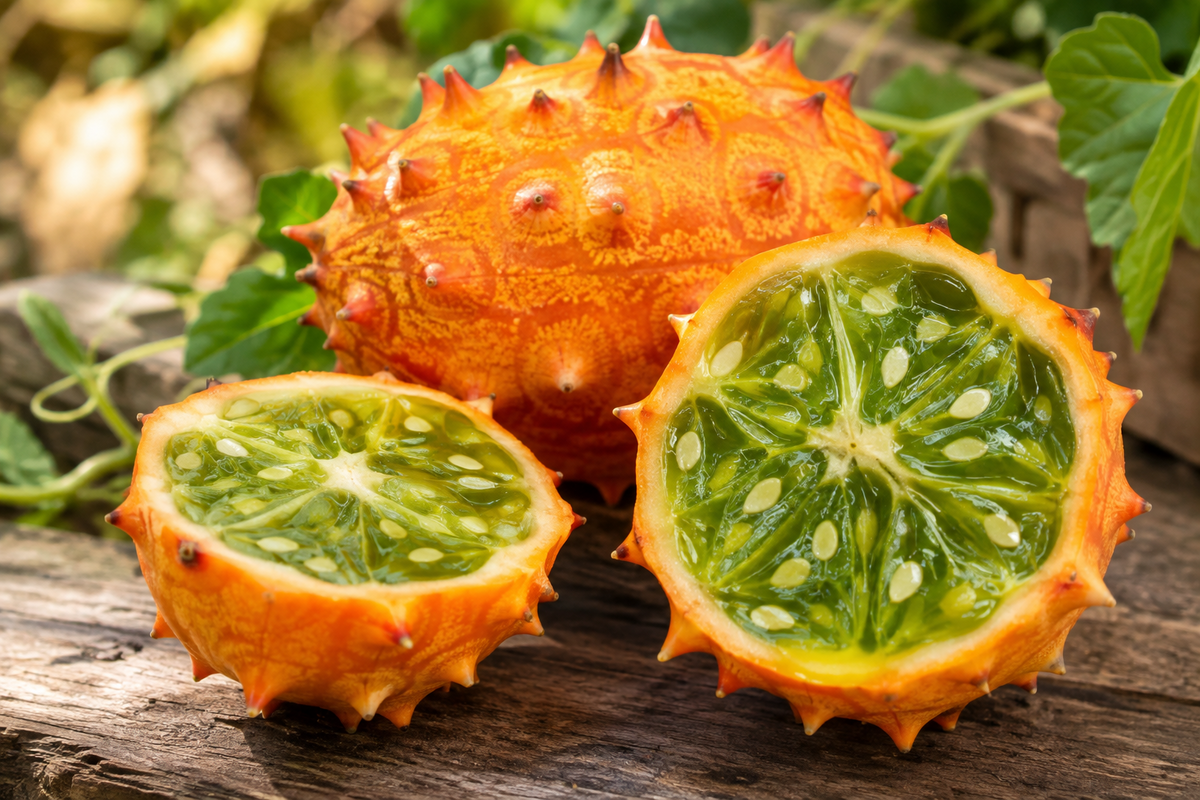
Grow kiwano, the African horned cucumber, for its striking orange fruit and bright green jelly-like centre.
|
GROW WITH US Horned melon is a warm-season vine with golden-orange spiny fruit and a vivid green centre. Start seeds indoors, wait until frost has passed, then give the plant sunshine, space and regular water. Let the fruit ripen on the vine until orange, and wear gloves when you pick it. |
Written for home gardeners in Hungary
CHAPTER WELCOME
Your horned melon season starts here
This book follows the whole journey: seed → seedling → garden → care → harvest → kitchen → next season.
Horned melon, also called kiwano or African horned cucumber, is a warm-season vine with yellow flowers and dramatic spiky fruit. The fruits start green and turn golden orange as they ripen; inside is lime-green, jelly-like flesh with edible seeds. It is a long-season crop, so in Hungary it needs an early start, a sunny sheltered site and protection from frost.
Near Győr, sow seeds indoors in late April or early May, then plant out only after frost has passed and the soil is warm. Give the vigorous vine a sturdy support or room to sprawl, and keep it watered while flowers and fruits form. Ripe fruit is ready when its skin turns golden orange. If autumn frost threatens, pick green young fruit for cooking, but it may not develop the sweeter flavour of a vine-ripened melon.
Our Hungarian calendar
|
Late April–early May |
Sow indoors in warm pots. |
|
Late May–early June |
Plant out after frost in warm soil. |
|
Summer |
Train the vine, water steadily and watch for flowers. |
|
Late summer |
Check fruit colour as the days shorten. |
|
September–October |
Pick fruits that have turned golden orange. |
|
Before frost |
Bring in mature fruit and use green young fruit for cooking. |
|
WHAT I WOULD DO I would sow two or three seeds in warm pots in late April, keep the strongest seedlings and plant them beside a sunny wall after frost. I would leave enough time for the fruit to turn orange before autumn cold arrives. |
The rule for this series: dates guide us, but the plant and the weather make the final decision.
CHAPTER 1
Meet the Horned Melon
Kiwano grows as a vigorous vine and carries golden-orange fruit with sharp spines.
Horned melon (Cucumis metuliferus) belongs to the cucumber and melon family. It is also known as kiwano, jelly melon and African horned cucumber. The climbing or sprawling annual makes lobed leaves, yellow flowers and oval fruits covered in spines. Green fruits turn yellow-orange to bright orange as they mature, while the inside stays green and jelly-like. It needs a long, warm season. Despite its similar name, this is a distinct species from the familiar cucumber (Cucumis sativus).
Horned melon or cucumber?
|
Horned melon |
Oval spiny fruit; ripe inside is green and jelly-like. |
|
Cucumber |
Smooth or ridged fruit with crisp, solid flesh. |
Related vines, different fruits
· Horned melon: spiny oval fruit with green jelly-like flesh when ripe.
· Cucumber: smooth or ridged fruit with crisp, solid flesh.
· Kiwano: another common name for Cucumis metuliferus.
· Warm-season vine: frost ends the crop, so give it an early indoor start.
· The fruit: green while young, golden orange when fully ripe.
· Long season: allow roughly three to four months from sowing to harvest.
|
GOOD TO KNOW Kiwano, jelly melon and African horned cucumber are common names for Cucumis metuliferus. The fruit changes from green to golden orange as it ripens. |
CHAPTER 2
Choose Your Horned Melon
Kiwano needs a long, sunny summer, so choose the warmest sheltered place you have before you sow.
Ask yourself five questions
1. Do I have a sunny, sheltered place with a long warm season?
2. Can I start seeds indoors and wait until after frost to plant out?
3. Do I have a sturdy trellis or room for a spreading vine?
4. Can I water regularly while flowers and fruits are forming?
5. Will I wait for fruit to turn golden orange before eating it ripe?
A beginner-friendly first planting
|
Start early |
An indoor start gives the fruit a longer season. |
|
Wait for warmth |
Plant out only after frost in warm soil. |
|
Support the vine |
Use a sturdy trellis or allow it to sprawl. |
|
Pick ripe |
Orange fruit has the mature green, jelly-like centre. |
|
A COMMON MISTAKE Planting out in chilly soil. Horned melon is very cold-sensitive; wait for warm nights and soil after frost. |
|
TRY THIS Train the vine along a strong sunny fence. Use mesh slings for heavy fruits and leave enough room for leaves and side shoots. |
CHAPTER 3
Let’s Sow
Horned melon needs warm soil to germinate and a long season to ripen its fruits. Start a few seeds indoors in warm pots in late April or early May. Keep seedlings bright and warm, then plant them outdoors after frost when the soil is at least about 15°C. In a very warm garden, direct sowing in late May or June is possible, but an indoor start gives fruit more time to mature.
When to sow in Hungary
Sow one seed about 1–2 cm deep in each small pot, keeping the compost warm at about 20–25°C and lightly moist. Seeds may emerge in a week or two, sometimes sooner in ideal warmth. Harden seedlings off gradually and plant outside in the second half of May or early June, only when nights are mild and frost has passed. Leave about 60–80 cm between plants and 1–1.5 m between rows if they will sprawl. Check the seed packet for variety-specific advice.
What you need
· Horned melon or kiwano seeds
· Small individual pots and seed compost
· A warm, sunny, sheltered garden bed
· A sturdy trellis or plenty of ground space
· Labels, a pencil and a watering can
Sowing, step by step
1. Fill small pots with moist seed compost and make a 1–2 cm hole.
2. Sow one seed in each pot, cover lightly and label it.
3. Keep the pots warm and bright; water gently so the compost stays moist.
4. Wait for sturdy seedlings, then harden them off gradually outdoors.
5. Plant out after frost in warm soil, or direct sow in a very warm spot.
|
DON’T PANIC Male flowers may appear before female flowers. Look for the tiny fruit behind a female flower, then give bees time to pollinate it. |
|
A COMMON MISTAKE Using a flimsy support. Long vines and clusters of spiny fruit need a strong trellis or plenty of ground space. |
CHAPTER 4
Seedling School
Horned melon seedlings grow quickly when warm. Give them bright light and room for their roots before moving them outside.
Recognise young kiwano
The seed leaves are rounded, followed by lobed leaves and curling tendrils. Keep the seedlings warm and bright, watering when the compost begins to dry. Plant them out while still young, before roots circle the pot. Harden them off over about a week and handle the root ball gently; cucurbit roots dislike rough disturbance.
Why are flowers appearing but no fruit?
Horned melon makes separate male and female flowers, and the male flowers often appear first. A female flower has a tiny fruit behind its petals. Bees carry pollen outdoors; under cover, you may need to move pollen from a male flower to a female one with a small brush. Keep the plant in full sun and water steadily while fruit sets.
Water while they settle
Water seedlings before planting and water them in well. Keep the soil evenly moist as the vine grows, especially during hot, dry weather and while fruits are forming. Water at the base of the plant rather than over the leaves. Pots and raised beds dry faster than ordinary garden soil, so check them more often.
Feeding
Horned melon grows best in fertile, well-drained soil enriched with mature compost before planting. Once established, steady water and sunshine help it flower and fruit. If the soil is poor, use a balanced vegetable fertiliser according to its label. Avoid excessive nitrogen, which can encourage leafy vines at the expense of fruit.
|
WHAT I WOULD DO I would plant the vine in the warmest sheltered spot I have, water it regularly and mulch once the soil has warmed. |
|
DON’T PANIC A few young fruits may drop before the vine is growing strongly. Keep it warm and evenly watered as new flowers form. |
CHAPTER 5
Ready for the Real World
Plant horned melon outdoors only after frost has passed and the soil has warmed. It needs a long, sunny season to ripen its spiky fruits.
Before planting: check the plants and the bed
1. Choose sturdy seedlings with several true leaves and healthy centres.
2. Harden indoor-grown plants off gradually for about a week.
3. Wait until frost has passed and the soil is warm, ideally at least 15°C.
4. Prepare a sunny, sheltered bed enriched with mature compost.
5. Set up a sturdy support before the vigorous vine begins to run.
When is it ready in Hungary?
Near Győr, plant out in the second half of May or early June, depending on frost risk and soil warmth. Horned melon is very cold-sensitive; do not rush it into chilly ground. A sunny wall, greenhouse or polytunnel can give it extra warmth and a longer season. Direct sow outdoors in late May or June only in a reliably warm, sheltered spot.
The fruits need several warm months to ripen, so an early indoor start improves your chances. In cooler parts of Hungary, grow under cover if possible. In a sunny garden, train the vine up a strong fence or let it sprawl where it will not smother other crops. Harvest ripe fruits before the first autumn frost.
|
A COMMON MISTAKE Waiting for green fruit to taste sweet. For the jelly-like ripe centre, wait until the skin turns golden orange. |
|
GOOD TO KNOW The ripe flesh is green and jelly-like, with edible seeds. Fruit flavour varies, so taste a little first. |
CHAPTER 6
Give Them a Good Home
Full sun, warm soil and room for a vigorous vine help horned melon set and ripen fruit.
The right place
Choose the sunniest, warmest sheltered position available, ideally against a south-facing wall or inside a greenhouse or polytunnel. Horned melon likes moist but well-drained soil; add mature compost before planting, but avoid waterlogged ground. Its stems can climb or sprawl several metres, so provide a sturdy trellis or leave plenty of ground space. A vertical support saves space, but it must carry the weight of the fruit.
Spacing
Give plants about 60–80 cm between each other and leave 1–1.5 m between rows if you are growing them along the ground. A trellised vine still needs room for its leaves and side shoots. Guide stems loosely onto the support and use soft ties. Heavy fruits can be supported in mesh slings so they do not pull down the vine.
Planting day
1. Water the seedling and prepare a moist, weed-free bed.
2. Dig a hole a little larger than the root ball.
3. Plant at the same depth as it grew in its pot.
4. Firm gently, water in well and mulch around the plant.
5. Tie the first shoots loosely to the support if needed.
Growing in pots
Horned melon can grow in a very large container, but its long vine and long season make a garden bed or greenhouse easier for a first crop. If using a pot, choose one of at least 40–50 litres with drainage holes and a strong trellis. Grow one plant, use fertile potting mix, water regularly and place it in the warmest sunny spot you have.
|
TRY THIS Cut a ripe fruit across the middle and scoop the green pulp over yoghurt or into a fruit salad. |
CHAPTER 7
Water, Feed & Keep Them Growing
Regular water, warm sunshine and a strong support help kiwano flowers set and ripen fruit.
Watering
Water deeply whenever the top few centimetres of soil begin to dry, especially during hot weather and fruit formation. The broad leaves lose moisture quickly, and drought stress can cause flowers or young fruits to drop. Water at the soil level in the morning and avoid splashing the foliage. A mulch helps keep roots cool and soil moist.
Mulch
Once the soil has warmed and plants are established, add a layer of straw or mature compost around them. Mulch helps conserve moisture and suppress weeds. Leave a small gap around the stem to prevent rot. If fruits are lying on the ground, place straw beneath them to keep them clean.
Feeding
A bed prepared with mature compost usually gives horned melon a good start. If growth is weak in poor soil, apply a balanced vegetable feed according to the label. Avoid overfeeding with nitrogen, which can produce a mass of leaves but fewer fruits. Keep plants watered before applying liquid feed.
Keep plants healthy
Guide the vines along their support and tie them loosely if needed. Check young plants for slugs and aphids, and look for powdery mildew on older leaves in late summer. Improve airflow, remove badly damaged foliage and water the soil rather than the leaves. The spiny stems and fruit can scratch skin, so wear gloves when pruning or harvesting.
|
WHAT I WOULD DO I would check the vine often near autumn and harvest orange fruits with gloves before frost. |
CHAPTER 8
Flowers, Vines & “What Is That?”
Horned melon has lobed leaves, yellow flowers and oval fruits covered in soft-looking but sharp spines.
Why are there no fruits yet?
Male flowers often open before female flowers, so early flowering without fruit is normal. Look for a small swelling behind the petals of female flowers. Bees usually pollinate outdoor vines; a sheltered greenhouse may need hand-pollination. Cold nights, poor pollination or very dry soil can also slow fruit set. Keep the plant warm and watered, and give it time.
The beginner’s trouble guide
|
Flowers, no fruit |
Male flowers may come first. Wait for female flowers and encourage pollinators. |
|
Young fruit drops |
Check for cold nights, dry soil or poor pollination. |
|
Leaves show white patches |
Powdery mildew may be starting. Improve airflow and water at the soil. |
|
Vine grows many leaves |
Too much nitrogen can favour leaves over fruit; use balanced feed sparingly. |
|
Fruit remains green |
It may need more warm time. Protect the vine and harvest before frost. |
|
DON’T PANIC The spines look fierce, but gloves and careful cutting make harvest straightforward. Keep fruits from rubbing against each other. |
|
A COMMON MISTAKE Eating fruit that tastes distinctly bitter. Spit it out and discard the fruit; bitterness can signal harmful cucurbitacins. |
CHAPTER 9
Can I Pick It Yet?
Yes—pick horned melon when the skin has turned golden orange and the fruit feels full and mature.
What “ready” looks like
For the ripe jelly-like centre, wait until the fruit has turned golden yellow or orange. The spines are usually orange too, and the fruit should feel firm and full. Cut the stem with clean secateurs, wearing gloves to protect your hands from sharp spines. If frost is close and fruits are still green, pick young ones for cooking like cucumber; they may not sweeten after picking.
Harvest from late summer into autumn
|
For ripe fruit |
Wait until the skin is golden yellow or orange. |
|
For cooking |
Young green fruit can be peeled and cooked like cucumber. |
|
How to pick |
Wear gloves and cut the stem with secateurs. |
|
Handle gently |
Keep spiny fruits apart so they do not puncture one another. |
How often should I check?
Check fruits every few days as summer ends. They begin green and change colour as they mature, often taking several weeks after fruit set. Pick fully orange fruits carefully with gloves; their spines can puncture neighbouring fruit, so do not pile them together. In a cool Hungarian summer, bring the remaining crop in before frost and use green young fruit as a vegetable.
|
READY TO HARVEST? For ripe kiwano, wait until the fruit turns golden orange. Cut carefully with gloves. Young green fruits may be picked for cooking, but are not yet sweet and jelly-like. |
|
TRY THIS Scoop ripe kiwano pulp over chilled melon, grapes or berries for a refreshing fruit bowl. |
CHAPTER 10
From the Garden to the Kitchen
Ripe kiwano has a vivid green, jelly-like centre with edible seeds and a mild, refreshing flavour.
The first rule: let ripe fruit turn orange
Wash and dry the fruit, then cut it across the middle with a sharp knife, taking care around the spines. Scoop out the green pulp and seeds with a spoon. Taste a little: flavour varies from mild cucumber and citrus notes to a sweeter, melon-like taste. Eat it fresh, add it to fruit salad or spoon it over yoghurt. Young green fruit can be peeled and cooked like cucumber.
Match horned melon to the dish
· Fresh: scoop ripe pulp straight from the orange fruit.
· Fruit salad: spoon pulp over other fresh fruit.
· Yoghurt: add a little pulp for a bright, tangy topping.
· Young green fruit: peel and cook it like cucumber.
|
FROM THE KITCHEN Slice a ripe horned melon across the middle and spoon the vivid green pulp over plain yoghurt with a little honey. |
Storing fresh kiwano
Whole ripe horned melons keep well at room temperature for a long time. Store them in a single layer with space between the spines so one fruit does not puncture another. Keep cut fruit covered in the refrigerator and use it soon. Wear gloves when handling a basket of spiny fruit.
When you have more than you can use
Pick ripe fruit as it colours and share or serve it fresh. Scoop the pulp and freeze it in small portions for smoothies or fruit sauces; the texture will soften after thawing. Avoid stacking the whole spiny fruits, which can puncture one another and start to spoil.
CHAPTER 11
Next Season Starts Now
A few notes about warmth, pollination and ripening will help you plan a better horned melon crop next year.
Keep a tiny garden record
· Seed source and exact horned melon variety name
· Date seeds were sown and seedlings appeared
· When the soil was warm enough to plant out
· How well the chosen spot sheltered the vine
· When the first male and female flowers appeared
· When fruits began to turn golden orange
· Which fruits tasted best and when you picked them
Saving seed and planning another crop
Horned melon is an annual and can be left to mature fruit and seed. If you save seed, choose a fully ripe fruit from a healthy plant and keep it clearly labelled. Seed saved from different horned melon varieties flowering nearby may not come true to type. For reliable fruit and flavour next year, buy fresh seed. Remove the old vine after frost and rotate the next crop to a different bed.
1. Choose a healthy plant with fruits typical of the variety.
2. Leave one fruit on the vine until its skin is fully orange.
3. Open the ripe fruit and remove the seeds from the pulp.
4. Rinse and dry seeds thoroughly in a warm, airy place.
5. Label the variety and year, then store cool and dry.
|
GOOD TO KNOW Whole ripe fruits have a long keeping life at room temperature. Store them in one layer so their spines do not puncture neighbouring fruit. |
|
WHAT I WOULD DO I would cut one ripe fruit open, taste the pulp, then use it fresh in yoghurt or fruit salad. |
COME GROW WITH ME
HORNED MELON CHEAT SHEET
The page to come back to when you have soil on your hands and no time to reread the whole book.
|
SOW |
Late April–early May indoors |
Warm pots; 1–2 cm deep |
|
POSITION |
Full sun and shelter |
Warm, moist but well-drained soil |
|
PLANT OUT |
Late May–early June |
Only after frost in warm soil |
|
SUPPORT |
Strong trellis or ground space |
Vines can grow several metres |
|
HARVEST |
Late summer–autumn |
Pick when golden orange |
|
Sow |
Start seeds indoors in warm pots. |
|
Plant out |
Wait for frost to pass and soil to warm. |
|
Train |
Guide vines and support heavy fruit. |
|
Water |
Keep soil moist during flowering and fruiting. |
|
Harvest |
Cut orange fruits with gloves. |
|
Next season |
Save seed only from fully ripe, labelled fruit. |
|
HUNGARY IN ONE LINE Start horned melon indoors in late April, plant out after frost in a sunny sheltered place and pick the fruit when it turns golden orange. |
COME GROW WITH ME • HORNED MELON
Seasonal guidance is adapted for Hungarian home gardens.


