

A practical vegetable garden series
Grow this unusual golden fruit in a sunny pot, greenhouse or sheltered summer garden.
|
GROW WITH US Grow pepino in a warm, sunny pot, enjoy its mellow fruit, and protect the plant from frost each autumn. |
Written for home gardeners in Hungary
CHAPTER WELCOME
Your pepino-growing season starts here
This book follows the whole journey: seed → seedling → garden → care → harvest → kitchen → next season.
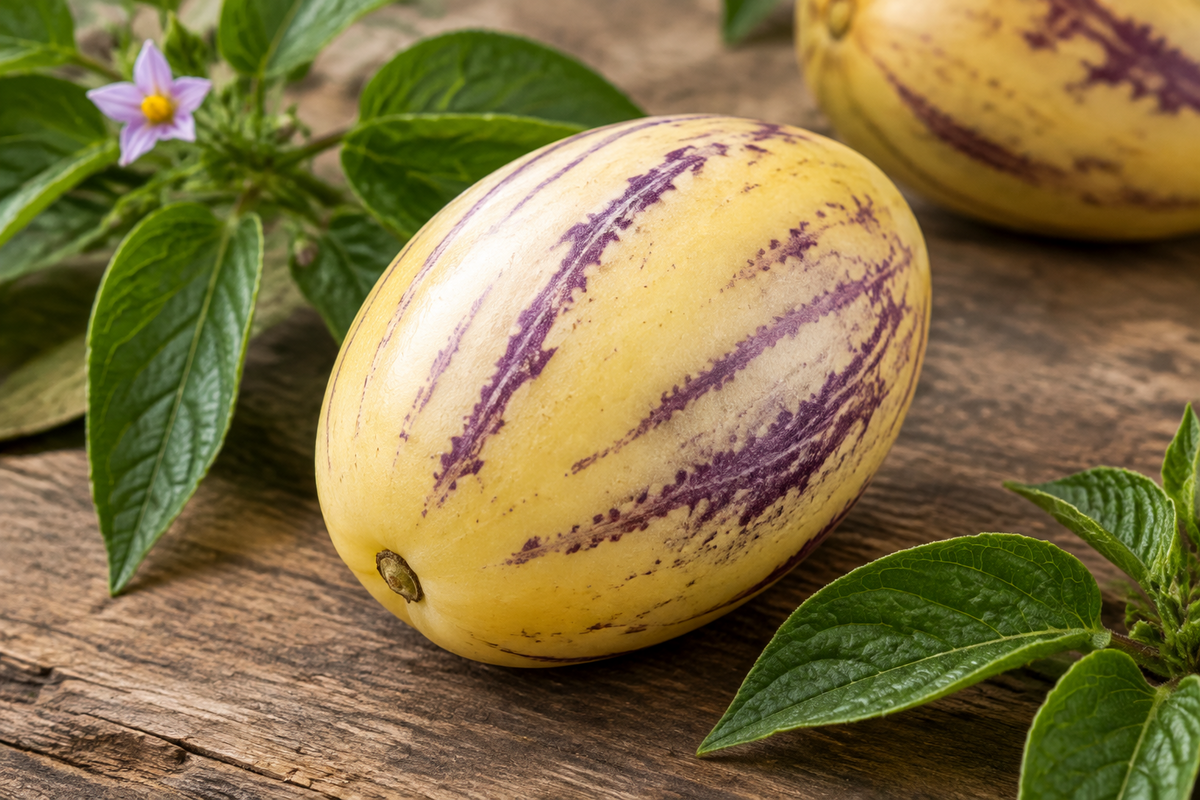
Pepino (Solanum muricatum), also called melon pear or pepino dulce, is a tender fruiting plant from the nightshade family. It is related to tomatoes and aubergines, but its smooth, oval fruit has pale yellow flesh and often ripens to creamy yellow skin with purple stripes. The flavour is mild and refreshing, with melon-like sweetness and a hint of cucumber or pear. Near Győr, pepino is best treated as a warm-season container plant: start seed indoors, move the plant outside only after frost danger has passed, then bring it back to a bright, frost-free place in autumn. A sunny greenhouse or sheltered patio gives fruit the best chance to ripen.
Pepino grows as a leafy, branching shrub rather than a trailing melon vine. It needs warmth, steady moisture and a long enough season for the fruit to colour and soften. You can grow it from seed or take cuttings from a healthy plant; cuttings are a handy way to keep a favourite plant going. Set the pot where you can move it easily, support heavy branches if they lean, and check leaves for aphids or spider mites. Pick fruit when it has turned creamy yellow with purple markings and yields slightly to gentle pressure.
Our Hungarian calendar
|
February–March |
Start seeds indoors in warmth and bright light. |
|
April–May |
Pot on seedlings and harden young plants gradually. |
|
Late May–June |
Move outside when frost danger has passed. |
|
Summer |
Water steadily and feed gently as flowers and fruit form. |
|
Late summer–autumn |
Wait for creamy yellow fruit with purple stripes. |
|
Before frost |
Bring the pot to a bright, frost-free place. |
|
WHAT I WOULD DO I would grow pepino in a large pot so I could give it summer sunshine and move it indoors before the first frost. |
The rule for this series: dates guide us, but the plant and the weather make the final decision.
CHAPTER 1
Meet the Pepino
A tender, bushy fruiting plant with mellow melon-like fruit.
Pepino dulce (Solanum muricatum) is a small evergreen shrub grown for its edible, egg-shaped berries. The name melon pear describes its appearance and gentle flavour, but pepino is not a melon or a pear: it belongs to the Solanaceae family along with tomatoes, potatoes and aubergines. Its star-shaped flowers can be purple and white, and its smooth fruit often develops purple streaks as it ripens from green to creamy yellow. In a warm, sunny spot, a healthy plant may crop within the same season. In Hungary, it is safest to grow pepino in a movable container and protect it from frost.
Pepino or melon?
|
From seed |
Start indoors in late winter or early spring. |
|
From cuttings |
Root a healthy stem to keep a favourite plant going. |
A quick guide to this unusual fruit
· Botanical name: Solanum muricatum, a member of the nightshade family.
· Fruit: oval, smooth and often cream-yellow with purple streaks.
· Flavour: mild and juicy, with melon-like sweetness and a cucumber note.
· Growing habit: a branching shrub that can be grown in a pot or greenhouse.
· Warmth matters: protect the plant from frost and cold, wet weather.
· Best for beginners: keep it in a container you can move indoors in autumn.
|
GOOD TO KNOW Pepino belongs to the same plant family as tomatoes and aubergines, but its fruit is a smooth, melon-like berry. |
CHAPTER 2
Choose Your Pepino
Plan for warmth, sunshine and a frost-free place before you start.
Ask yourself five questions
1. Can I start the seed indoors in a warm, bright place?
2. Do I have a sunny, sheltered position for summer?
3. Can I provide a pot with drainage and enough room for the roots?
4. Will I be able to move the plant indoors before autumn frost?
5. Can I check the leaves and fruit regularly through summer?
A beginner-friendly first planting
|
Give it warmth |
Start indoors and wait for mild nights before moving it outside. |
|
Choose a pot |
A movable container makes frost protection simpler. |
|
Water evenly |
Keep compost moist but allow excess water to drain. |
|
Watch for ripeness |
Creamy yellow skin and purple stripes signal maturity. |
|
A COMMON MISTAKE Leaving pepino outdoors too late in autumn. Move the pot indoors before frost can damage it. |
|
TRY THIS Place the pot near a warm, sunny wall for summer, but leave room to move it under cover. |
CHAPTER 3
Let’s Sow
Pepino is an interesting choice if you enjoy trying unusual fruit and can give a plant a warm, protected home. Its care is similar to that of a patio tomato, but the plant is frost tender and should not be left outdoors through a Hungarian winter. Start seed indoors in late winter or early spring, then grow the young plant on in warmth and good light. Near Győr, move it outside in late May or early June only after the danger of night frost has passed. A large pot makes it easier to control the soil and move the plant into shelter.
When to start in Hungary
Sow pepino seed indoors from February to March in warm, moist seed compost, following the packet instructions. Give seedlings bright light as soon as they emerge and pot them on as they grow. Harden plants off gradually before moving them outside. In the Győr area, late May is a sensible starting point for outdoor placement, but use the forecast and your garden microclimate; a cold dip can still damage tender growth. A greenhouse, conservatory or sunny sheltered patio helps the plant build flowers and fruit during the warm months.
What you need
· Pepino seed or a healthy young plant
· A warm, bright place for starting seedlings
· A large pot with drainage holes and fresh potting compost
· A sunny, sheltered summer position
· A frost-free bright place for autumn and winter
Sowing, step by step
6. Fill a small pot with moist seed-starting compost.
7. Sow pepino seeds at the depth recommended on the packet.
8. Cover lightly and keep the compost warm and evenly moist.
9. Move seedlings into bright light as soon as they emerge.
10. Pot on gently when roots fill the first container.
|
DON’T PANIC Pepino seedlings may take time to settle after potting on. Keep them warm, bright and lightly moist. |
|
A COMMON MISTAKE Keeping the winter compost as wet as summer soil. Water less when growth slows indoors. |
CHAPTER 4
Seedling School
Warmth, light and steady care help young pepino plants grow into sturdy shrubs.
Recognise young pepino plants
Young pepino seedlings have simple green leaves and a sturdy shoot. Once they have several true leaves, pot them on into individual containers. Keep them in bright light and turn pots occasionally. Avoid cold windowsills, soggy compost and sudden direct sun. Before planting outside, harden them off gradually for about a week, bringing them in at night if temperatures are low.
Why are the leaves pale or curled?
Pale, curled or sticky leaves can indicate aphids or whitefly. Check soft new growth and the undersides of leaves. Wash off a few pests with water and repeat checks. Fine speckling and webbing may point to spider mites, especially in warm, dry indoor air. Give the plant good ventilation and avoid letting the pot dry out completely.
Water while they settle
Keep young plants evenly moist but never standing in water. Check pots often in warm weather, as containers dry quickly. Water at the base when the surface begins to dry, and reduce watering in cool weather or over winter. Even moisture helps prevent stress and supports fruit development. Empty the saucer after watering so roots do not sit in water.
Feeding
Start with fresh compost and feed modestly. When flowers and fruit form, use a balanced or tomato-type feed as directed. Avoid excess nitrogen, which can encourage leaves instead of fruit. If growth is weak, check warmth, light, pot size and watering before adding more fertiliser.
|
WHAT I WOULD DO I would overwinter a healthy plant in a bright, frost-free room and keep a cutting as backup. |
|
DON’T PANIC A few flowers may fall after a cool spell. Keep the plant warm and steady. |
CHAPTER 5
Ready for the Real World
Give pepino a warm summer outdoors and bring it under cover before frost.
Before planting out: check the plant and the weather
11. Wait until nights are frost-free and the weather has settled.
12. Harden the plant off gradually before it stays outdoors.
13. Choose a sunny position sheltered from strong wind and heavy rain.
14. Use a pot with drainage and enough compost to hold steady moisture.
15. Set a support nearby if branches will carry several heavy fruits.
When can it live outside in Hungary?
Near Győr, place pepino outdoors from late May or early June once frost risk has passed and nights are reliably mild. Choose a sunny, sheltered patio or a greenhouse with good airflow. The plant enjoys warmth, but very hot conditions can reduce fruit quality, so keep the pot watered and give some light shade during extreme heat. Fruit may take several months to develop and ripen, so moving the plant outside early in summer gives it more time. Bring it under cover before autumn nights turn cold.
Set the plant into its final pot without burying the stem more deeply than it was growing before. Water thoroughly after potting and secure any support before branches become heavy. Keep the soil evenly moist through flowering and fruit growth, and feed lightly according to the product label. Pepino can set fruit without hand pollination, but gently tapping flowering stems may help move pollen around in a still greenhouse. Remove damaged leaves and keep the plant open enough for air to circulate.
|
A COMMON MISTAKE Squeezing fruit to test ripeness. Check its colour and press very gently to avoid bruising. |
|
GOOD TO KNOW Pepino can set fruit without hand pollination, though gentle movement of flowers may help in a still greenhouse. |
CHAPTER 6
Give Them a Good Home
A warm, bright position and a movable pot make pepino easier to grow in Hungary.
The right place
Choose the sunniest sheltered position available, ideally against a warm wall or in a greenhouse with good ventilation. Use a free-draining potting mix that holds some moisture, and select a roomy container with several drainage holes. Pepino dislikes both prolonged dryness and waterlogged roots. If growing under glass, open vents on warm days and avoid trapping humid air around the leaves. Outdoors, protect the plant from strong wind and prolonged cold rain.
Spacing
In a pot, give one plant enough room for its branches to spread and the air to move around it. A container around 30–40 cm wide is a practical starting point for a young plant; pot on again if roots fill it quickly. In a greenhouse bed, leave roughly 60–90 cm between plants, adjusting for the variety and available airflow. Pepino can be trained against a small support, but it does not need a tall tomato trellis. A sturdy stake can help branches carrying heavy fruit.
Planting day
16. Choose a large pot with clear drainage holes.
17. Add fresh, free-draining potting compost and water it lightly.
18. Set the plant at the same depth it was growing before.
19. Firm compost gently around the root ball and water thoroughly.
20. Place the pot in bright shelter and add a support if needed.
Growing in a greenhouse or on a balcony
A greenhouse gives pepino a longer, warmer season and helps fruit ripen before autumn. Keep the plant near bright light, but allow air to circulate and shade it lightly during very hot spells. A balcony or patio can also work if it is sunny and sheltered from wind. Use a movable pot and check moisture every day during hot weather. Before the first autumn frost, bring container plants indoors to a bright, frost-free room or conservatory.
|
TRY THIS Turn the pot a little every week so leaves receive even light and the plant grows evenly. |
CHAPTER 7
Water, Feed & Keep Them Growing
Steady moisture and a gentle feed support flowers, fruit and healthy foliage.
Watering
Check the compost regularly, especially while the plant is flowering and fruiting. Water thoroughly when the surface begins to dry, then let excess drain away. In hot weather a container may need water daily, while a cool winter room needs much less. Try to water the compost rather than the foliage. Sudden drying followed by soaking can stress roots and may cause flowers or small fruits to drop.
Mulch
A light surface mulch can slow water loss from a large outdoor pot in summer. Keep it away from the stem and do not use a thick wet layer indoors, where it may encourage mould. Mulch is optional; checking the pot and watering when needed matters more. In a greenhouse, keep the floor and nearby surfaces tidy so fallen leaves do not stay damp around the plant.
Feeding
Use fresh compost when potting and follow its label to decide when feeding should begin. Once flowers appear, a tomato fertiliser or balanced liquid feed can support fruiting; apply only at the recommended strength and frequency. Too much nitrogen can make a leafy plant with fewer fruits. If leaves yellow, check watering, drainage and root space before assuming the plant needs more food.
Keep plants healthy
Inspect the undersides of leaves for aphids, whitefly and spider mites, especially indoors over winter. Remove dead or damaged leaves and keep the plant in a bright, airy place. Support branches that bend under fruit, and avoid heavy pruning during the main growth season. When autumn approaches, move the pot inside before frost. Reduce watering in winter, keep the compost just lightly moist and check regularly for pests.
|
WHAT I WOULD DO I would bring the plant indoors before cold nights arrive, even if some fruit still needs time to ripen. |
CHAPTER 8
Leaves, Flowers & “What Is That?”
Pepino changes as it grows; flowers and striped fruit are good signs that the plant is settling in.
Why are there flowers but no ripe fruit?
Pepino needs a long, warm growing period for its fruit to ripen. Flowers may appear before the plant has enough warm weather left to finish the crop, especially after a late start or a cool summer. Keep the plant in the brightest warm position you can, maintain even moisture and avoid heavy nitrogen feeding. In a greenhouse, gently shake flowering stems on still days. If fruit has formed late, bring the plant under cover before frost and allow the fruit to continue developing in warmth.
The beginner’s trouble guide
|
Leaves are sticky or curled |
Check new growth and leaf undersides for aphids or whitefly. |
|
Fine speckles or webbing |
Spider mites can appear in warm, dry indoor air. |
|
Flowers but no ripe fruit |
The plant may need more warmth, light or time. |
|
Fruit stays green |
Give it a longer warm season and protect it before frost. |
|
Leaves yellow or droop |
Check the pot for waterlogging, dryness or cold stress. |
|
DON’T PANIC The first fruit may take months to ripen. Keep the plant bright and frost-free as the season ends. |
|
A COMMON MISTAKE Putting a tender plant outside before nights are reliably mild. Harden it off and watch the forecast. |
CHAPTER 9
Can I Pick It Yet?
Yes—wait for the fruit to turn creamy yellow and develop its purple markings.
What “ready” looks like
Young pepino fruit is firm and green. As it ripens, the smooth skin changes through pale cream to yellow, often with distinct purple stripes. The fruit may become slightly softer and develop a gentle sweet fragrance. Pick carefully when the colour has developed and the fruit yields just a little to gentle pressure. Do not squeeze hard; the skin can bruise. If autumn is approaching, bring the whole pot indoors before frost so developing fruit has more time in a bright, warm place.
Harvest with a gentle touch
|
Colour |
Creamy yellow, often with purple stripes. |
|
Feel |
Slightly yielding with gentle pressure. |
|
Aroma |
A mild, sweet fragrance as it ripens. |
|
Harvest |
Cut carefully; ripe fruit bruises easily. |
How often should I check?
Look over the plant every few days once fruit begins to colour. Pick ripe fruit individually, supporting the branch with one hand and cutting the stem with clean snips if it resists. Pepino fruits bruise easily, so place them in a shallow bowl rather than dropping them into a basket. If several fruits mature together, eat them fresh or keep them briefly in a cool place. Avoid prolonged chilling; very cold storage can damage pepino fruit.
|
READY TO HARVEST? Pick when the skin is creamy yellow with purple markings and the fruit gives slightly to a gentle touch. |
|
TRY THIS Slice ripe pepino with lime and mint for a simple, refreshing dessert. |
CHAPTER 10
From the Garden to the Kitchen
The mellow fruit is refreshing fresh, chilled briefly or added to simple summer dishes.
The first rule: wash before cutting
Rinse ripe pepino under cool water and dry it gently. The skin is edible, but you can peel it if you prefer. Cut the fruit lengthwise and remove any soft seed cavity only if needed. Serve chilled briefly as a fresh snack, add slices to fruit salad, or pair them with yoghurt, lime and mint. The flavour is delicate, so use gentle additions that let the fruit shine. Less-ripe fruit can be sliced into savoury salads like cucumber.
Match pepino to the dish
· Fresh: slice ripe fruit and enjoy it as a light dessert.
· Fruit salad: pair with melon, citrus, berries or yoghurt.
· Savoury: add firmer slices to a cucumber-style salad.
· Cool drink: blend ripe pepino with water, lime and mint.
|
FROM THE KITCHEN Eat ripe pepino fresh, add it to fruit salad or blend it into a cool drink. |
Storing fresh pepino
Handle ripe fruit carefully and eat it while the texture and flavour are at their best. If you need to keep it for a short time, store it in a cool place and check it daily. University of California postharvest guidance gives a storage range around 7.5–10°C; ordinary refrigerators may be colder, so avoid leaving partly ripe fruit chilled for long periods. Keep fruit away from pressure and bruising, and wash it just before use.
When you have more than you can use
Share ripe fruit while it is fresh, or blend and freeze the flesh for smoothies and drinks. If you want another plant, take a short healthy stem cutting before autumn and root it in a small pot of free-draining compost. Keep the cutting warm and lightly moist while it establishes. Seed can also be collected from mature fruit, but seedlings may differ from the parent plant, so a cutting is the better choice when you want to keep a particular plant.
CHAPTER 11
Next Season Starts Now
Record when you sowed, where the plant grew and how the fruit ripened.
Keep a tiny garden record
· Variety name and seed supplier
· Date the seed was started indoors
· When you moved the plant outside
· Pot size and where it grew best
· When flowers and the first fruit appeared
· When fruit turned yellow and developed purple stripes
· How and where you overwintered the plant
Saving a plant and planning another crop
Pepino is a tender perennial in warm, frost-free climates, but in Hungary it needs winter protection. Before autumn frost, move the pot to a bright, frost-free room or conservatory. Reduce watering while growth slows, but do not let the root ball dry out completely. Check leaves for whitefly, aphids and spider mites. In spring, trim away damaged growth, refresh the top layer of compost and move the plant back outdoors only after it has been hardened off and nights are mild. Healthy stem cuttings are another way to start a new plant.
21. Choose a healthy, non-flowering stem and cut a short tip.
22. Remove the lower leaves and place the cutting in moist potting compost.
23. Keep it warm in bright indirect light until roots form.
24. Pot on the rooted cutting and grow it on in a sheltered place.
25. Move it outdoors after frost danger has passed, then protect it again in autumn.
|
GOOD TO KNOW Pepino is frost tender. A movable pot lets you protect it from Hungary’s autumn and winter cold. |
|
WHAT I WOULD DO I would take a cutting before autumn as insurance in case the overwintered plant struggles. |
COME GROW WITH ME
PEPINO CHEAT SHEET
The page to come back to when you have soil on your hands and no time to reread the whole book.
|
START |
Sow indoors Feb–March |
Warmth and bright light |
|
POSITION |
Full sun, sheltered |
Pot or greenhouse |
|
OUTDOORS |
Late May–June |
After frost danger passes |
|
CARE |
Even moisture; light feeding |
Bring indoors before frost |
|
HARVEST |
Late summer–autumn |
Yellow skin, purple stripes |
|
Start |
Sow seed indoors in late winter or early spring. |
|
Grow on |
Pot up and give seedlings warmth and bright light. |
|
Harden |
Acclimatise gradually before moving outdoors. |
|
Care |
Water evenly and check for pests. |
|
Harvest |
Pick when fruit is yellow and slightly soft. |
|
Next season |
Overwinter frost-free or root a healthy cutting. |
|
HUNGARY IN ONE LINE Near Győr, grow pepino in a sunny movable pot, set it outside after frost risk in late May, then overwinter it indoors. |
COME GROW WITH ME • PEPINO
Seasonal guidance is adapted for Hungarian home gardens.


