

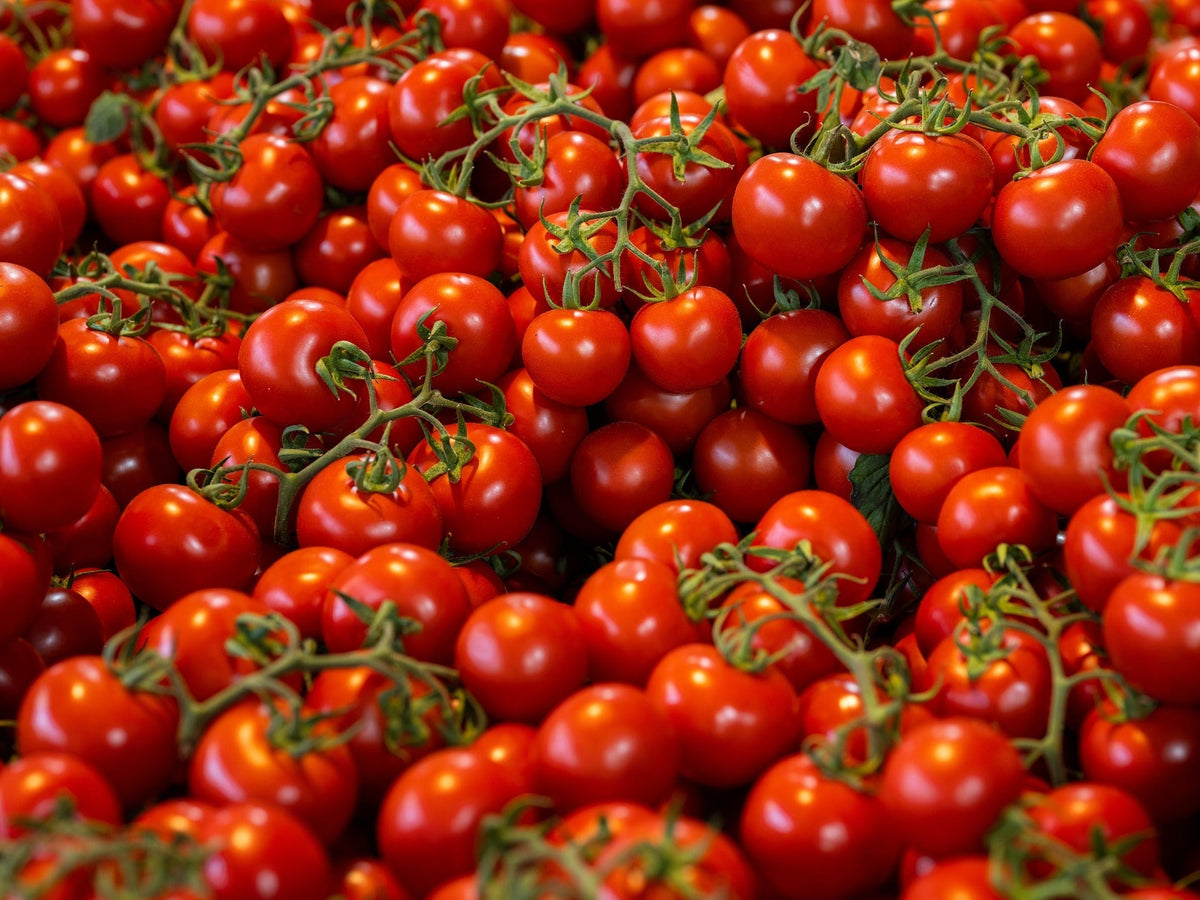
A practical vegetable garden series
From one tiny seed to your first warm, sun-ripened tomato.
|
GROW WITH US You do not need a greenhouse, perfect soil or years of experience. You need a sunny place, a little patience and the confidence to notice what your plants are telling you. |
Written for home gardeners in Hungary
CHAPTER WELCOME
Your tomato season starts here
This book follows the whole journey: seed → seedling → garden → care → harvest → kitchen → next season.
Tomatoes are one of the most satisfying vegetables to grow because the plant changes almost every week. A seed no bigger than a pinhead becomes a leafy plant, then suddenly there are yellow flowers, tiny green fruits and—if all goes well—more tomatoes than you remember planting for.
They can also make a beginner nervous. Should I remove the side shoots? Why are the leaves curling? Is that black patch a disease? Do I water every day? This book is designed to answer those questions at the moment you are most likely to ask them.
Our Hungarian calendar
|
Late February–March |
Sow indoors if you have strong light and warmth. |
|
April |
Pot on, feed lightly and build sturdy plants. |
|
Early–mid May |
Harden plants off. Watch the forecast carefully. |
|
Around mid-May onward |
Plant outside once frost risk has passed and the soil is properly warm. |
|
June–August |
Water, feed, support, prune where appropriate and harvest. |
|
September–October |
Ripen the final crop, protect from cold nights and save seed. |
|
WHAT I WOULD DO In most Hungarian gardens I would rather plant a healthy tomato a few days late than a chilled tomato a week early. Mid-May is a useful guide, not a guarantee: western Hungary, Budapest, exposed valleys and warm urban gardens can behave differently. |
The rule for this series: dates guide us, but the plant and the weather make the final decision.
CHAPTER 1
Meet the Tomato
Before we sow anything, let’s understand what kind of plant we are asking to live in our garden.
Tomatoes love warmth, sun and a long growing season. They dislike cold soil, repeated wet foliage and dramatic swings between bone-dry and soaking wet roots. Give them steady conditions and they are remarkably generous.
Determinate or indeterminate?
|
Determinate |
Compact or bushier growth. Most fruit ripens in a concentrated period. Usually needs support, but less pruning. Good for pots, smaller gardens and preserving. |
|
Indeterminate |
Keeps growing and flowering until cold weather stops it. Needs strong support and usually benefits from regular side-shoot management. Excellent for a long harvest. |
Then choose by how you want to eat them
· Cherry and cocktail tomatoes: quick, abundant and forgiving; a wonderful first tomato.
· Slicers: medium fruits for sandwiches, salads and everyday kitchen use.
· Beefsteak types: large, juicy fruits with fewer but more dramatic harvests.
· Paste or plum tomatoes: fleshier fruit with less juice, ideal for sauce, passata and preserving.
· Heirlooms: often chosen for flavour, colour and history; growth and disease resistance vary widely.
· Hybrids (often marked F1): bred for particular traits such as uniformity, vigour or disease resistance; saved seed will not reliably reproduce the parent plant.
|
GOOD TO KNOW “Tomato” may look like one crop, but a 35 cm balcony bush and a 2 m climbing vine need very different space and care. Always read the variety description before you choose the pot, support or spacing. |
CHAPTER 2
Choose Your Tomato
The best variety is not the most impressive one in the catalogue. It is the one that suits your garden and your kitchen.
Ask yourself five questions
1. Where will it grow? Open ground, raised bed, greenhouse, balcony or terrace?
2. How much sun does the spot receive? Aim for at least 6–8 hours of direct sun.
3. How much vertical space can I give it? Tall indeterminate plants need a serious support system.
4. What do I actually want to eat? Snacks, salads, slicing, sauce, roasting or preserving?
5. Do I want a steady trickle of fruit or one heavy crop for sauce-making day?
A beginner-friendly first collection
|
1 cherry type |
For confidence. It usually begins producing quickly and keeps you encouraged. |
|
1 dependable slicer |
For everyday meals and learning the rhythm of a full-size tomato plant. |
|
1 paste type |
For sauce and preserving, especially if you enjoy cooking from the garden. |
|
1 curiosity |
A striped, dark, yellow or heirloom variety simply because gardening should also be fun. |
|
A COMMON MISTAKE Buying six beautiful varieties without checking whether they are tall vines, compact bushes or very late croppers. Variety choice determines almost everything that follows. |
|
TRY THIS Write the variety name on a durable label as soon as you sow. In July, when every plant is a green jungle, “I’ll remember which one this is” becomes an unreliable system. |
CHAPTER 3
Let’s Sow
Tomato seeds are easy to germinate. The real goal is not merely to make them sprout—it is to grow short, sturdy seedlings.
When to sow in Hungary
For most home gardeners, late February through March is a sensible indoor sowing window. Earlier sowing is only useful if you can provide enough light and warmth. A six-week-old sturdy plant is more valuable than a twelve-week-old pale, stretched one.
What you need
· Fresh seed-starting mix
· Small pots, modules or seed trays with drainage
· Labels and a pencil or waterproof marker
· A warm place for germination
· Very bright light immediately after seedlings emerge
Sowing, step by step
6. Fill the container with moist seed-starting mix and press it lightly—not hard.
7. Sow seeds about 0.5 cm deep. One seed per small cell is easiest; in a tray, leave enough room to lift seedlings later.
8. Water gently and cover loosely to hold humidity until germination begins.
9. Keep the seed warm. Around normal warm-room temperatures, germination is usually prompt.
10. As soon as green shoots appear, remove the cover and move them into the brightest light you can provide.
|
DON’T PANIC If one variety appears in four days and another takes more than a week, that does not automatically mean anything is wrong. Seed age, variety and temperature all change the speed. |
|
A COMMON MISTAKE Warmth helps germination; darkness after germination does not. Leaving seedlings on a cosy shelf away from the window creates long, weak stems very quickly. |
CHAPTER 4
Seedling School
This is where strong tomato plants are made.
Light first
Once seedlings are up, give them as much light as possible. Rotate pots if the plants lean toward a window. If they stretch despite your best window, a simple grow light placed appropriately above them can make an enormous difference.
Potting on
When seedlings have developed true leaves and roots are beginning to fill their first container, move them into individual pots. Tomatoes are unusual because buried stem can form additional roots. You may plant a leggy seedling slightly deeper when potting on, but do not bury leaves.
Water without babying them
Water thoroughly, then allow the surface to begin drying before watering again. Seedlings kept constantly wet are more vulnerable to root problems. Containers must drain freely.
Feeding
Fresh potting mix usually carries young plants for a while. Once seedlings are actively growing in their own pots, a dilute balanced feed can be used according to the product instructions. More fertiliser does not create a better seedling; it often creates soft, overly lush growth.
|
WHAT I WOULD DO I look for a seedling with a thick stem, short gaps between leaves and rich green growth. I am not trying to win a “tallest tomato in April” competition. |
|
DON’T PANIC Purple-tinged leaves on cool young plants can be a temporary stress response. First check temperature, light, watering and root space before reaching for a fertiliser bottle. |
CHAPTER 5
Ready for the Real World
A tomato raised indoors has never felt wind, cold nights or full spring sunshine. We introduce those things gradually.
Hardening off: about 7–10 days
11. Start on a mild day in a sheltered, bright place with no harsh midday sun.
12. Bring plants back inside or into protection before the evening turns cold.
13. Increase outdoor time and sun exposure a little each day.
14. Let them experience gentle air movement so stems strengthen.
15. By the end, plants should comfortably spend the full day outside and, if nights are safely mild, remain out overnight.
When can they stay outside in Hungary?
Traditional advice often points to the period after the May “Ice Saints” as the safer time for heat-loving crops. In practical terms, watch your local forecast and your soil. Tomatoes should not be rushed into cold ground; Hungarian horticultural guidance commonly places warm-season transplanting from around mid-May once ground-frost danger has passed and the soil has warmed.
A protected courtyard in Budapest may be ready sooner than an exposed garden in a cooler hollow. Western Hungary can have cool nights after a sunny day; eastern and southern areas can move suddenly into hot, drying weather. The calendar is a starting point, not permission.
|
A COMMON MISTAKE Hardening off only means “put the plants outside.” Full sun can scorch tender indoor leaves in a single afternoon. Increase exposure gradually. |
|
GOOD TO KNOW Cold is not the only transplant danger. A sudden hot, bright spell can stress young plants too. Shade them lightly for the first afternoon or two if conditions turn fierce. |
CHAPTER 6
Give Them a Good Home
A little care on planting day saves a surprising amount of trouble later.
The right place
Choose the sunniest practical position with fertile, well-drained soil and good airflow. Avoid planting tomatoes repeatedly in the same patch year after year when you have room to rotate crops, particularly if disease has been a problem.
Spacing
Spacing depends on the variety and training system. As a practical home-garden guide, many full-size tomatoes are comfortable around 45–60 cm apart, with generous space between rows or paths. Large, multi-stemmed plants need more. Compact patio varieties can be closer if airflow remains good.
Planting day
16. Water the pot before planting so the root ball is evenly moist.
17. Dig a hole wide enough for the roots. Remove the lowest leaves if you plan to plant the stem slightly deeper.
18. Set the plant in, firm soil gently around it and water deeply at the base.
19. Install the stake, cage or string support now—not after roots fill the soil.
20. Once the soil has warmed, add mulch to slow evaporation and reduce soil splash onto lower leaves.
Growing in pots
Tomatoes in containers need much more root space than their seedlings suggest. For one full-size plant, think in terms of a large container—roughly 20 litres or more as a practical minimum, and larger is easier to keep evenly moist. Use fresh, high-quality potting mix and provide drainage.
|
TRY THIS Plant one compact cherry tomato close to the kitchen door. The plant you walk past every day is the plant you notice, water and harvest at the right moment. |
CHAPTER 7
Water, Feed & Hold Them Up
Tomato care is mostly about consistency. The plant is forgiving of small imperfections but dislikes wild swings.
Watering
Water deeply at the base rather than giving a shallow daily sprinkle. In hot Hungarian summer weather, containers may need water every day and sometimes more than once during extreme heat, while established plants in open soil can often be watered less frequently but more deeply. Check the soil; do not water by calendar alone.
Mulch
A layer of organic mulch helps keep moisture steadier, keeps soil cooler during heat and reduces rain or irrigation splashing soil onto leaves. Keep mulch slightly away from the stem itself.
Feeding
Tomatoes are productive plants and need nutrition, but excessive nitrogen can give you a magnificent green plant with disappointing fruit. Use a fertiliser intended for fruiting vegetables or tomatoes and follow its label rate. Container plants generally need more regular feeding because nutrients wash out with watering.
Support and pruning
Tie indeterminate tomatoes to a strong stake, string or trellis using soft ties. Check ties through summer; stems thicken quickly. Side-shoot pruning is mainly a training decision for indeterminate plants. Determinate bush tomatoes should not be stripped of their productive growth in the same way.
|
WHAT I WOULD DO I water the soil, not the leaves; support the plant before it flops; remove damaged lower foliage; and keep enough healthy leaf cover to protect fruit from fierce sun. |
CHAPTER 8
Flowers, Fruit & “What Is That?”
Most tomato problems are easier to manage when you notice the first change instead of the final disaster.
Flowers but no fruit?
Tomatoes are self-fertile, and gentle movement helps pollen transfer inside each flower. Outdoor plants normally get enough vibration from wind and insects. During prolonged heat, very high daytime and warm night temperatures can reduce fruit set; during cold spells, pollination can also be poor. When the weather settles, the plant often resumes setting fruit.
The beginner’s trouble guide
|
Black, sunken base on fruit |
Often blossom-end rot. Irregular moisture is a major trigger. Remove badly affected fruit and make watering more consistent. |
|
Fruit splits after rain |
Rapid water uptake after a dry spell. Harvest ripe fruit promptly and even out watering. |
|
Lower leaves spot and yellow |
Could be early blight or another leaf disease. Remove affected lower leaves, avoid overhead watering and improve airflow. |
|
Pale leathery patch on fruit |
Often sunscald where fruit suddenly loses leaf cover. Avoid excessive leaf removal. |
|
Leaves curl but plant looks vigorous |
Heat, pruning or water stress can cause physiological curling. Check the whole plant before assuming disease. |
|
DON’T PANIC One ugly leaf is not a diagnosis. Look for a pattern: Which leaves? Old or new? One plant or all of them? After heat, heavy rain, feeding or pruning? Gardening becomes much easier when you investigate before you treat. |
|
A COMMON MISTAKE Reaching immediately for calcium because of blossom-end rot. Calcium uptake is strongly tied to water movement in the plant; inconsistent moisture is very often the real problem in home gardens. |
CHAPTER 9
Can I Pick It Yet?
Yes—this chapter is exactly the question you hoped we would answer.
What “ripe” looks like
A tomato is ready when it has reached the mature colour expected for that variety, feels firm but no longer rock-hard, and comes away with a gentle twist. Not every ripe tomato is red: some are yellow, orange, pink, striped, purple-brown or remain green when mature.
Harvest by purpose
|
Eat today |
Pick at full colour and flavour, especially for salads and sandwiches. |
|
A few days away |
Pick at the breaker stage—when mature green fruit first begins showing its final colour—and let it finish indoors. |
|
Sauce day |
Allow paste tomatoes to colour fully, then process promptly for best flavour and texture. |
|
Storm or cold coming |
Harvest mature fruit before splitting, hail or a cold night ruins it. Tomatoes can continue colouring indoors. |
How often should I pick?
In warm weather, walk through the plants every day or two. Regular picking prevents overripe fruit, reduces splitting and makes it much harder for a hidden tomato to turn into a soft surprise behind the leaves.
|
READY TO HARVEST? Colour is your first clue, touch is your second, and the variety description is your referee. If the fruit has reached its expected colour and gives slightly under gentle finger pressure, taste one. Your mouth will teach you the final stage better than any chart. |
|
TRY THIS Do a “tomato tasting” with three varieties on the same plate. Slice, salt lightly and compare sweetness, acidity, skin, texture and aroma. It is the easiest way to decide what deserves space next year. |
CHAPTER 10
From the Garden to the Kitchen
A tomato harvest should change what you cook—not create a guilty pile on the counter.
The first rule: do less
A genuinely ripe garden tomato needs very little. Slice it with salt and olive oil, add it to bread, chop it into a cucumber salad, roast it slowly or cook it just long enough to collapse into a fresh sauce.
Match the tomato to the job
· Cherry tomatoes: snacking, lunchboxes, roasting whole, salads and quick pasta sauces.
· Slicers: sandwiches, burgers, salads and fresh tomato platters.
· Beefsteaks: thick slices, bruschetta, stuffed tomatoes and dishes where one beautiful fruit can be the centrepiece.
· Paste tomatoes: passata, ketchup-style sauces, roasting, drying and freezing for winter cooking.
|
FROM THE KITCHEN Quick roasted tomatoes: halve ripe tomatoes, place cut-side up, add a little olive oil, salt and herbs, then roast until concentrated and jammy. Eat immediately, spoon over pasta, or cool and freeze in meal-size portions. |
Storing fresh tomatoes
For the best flavour, keep fully ripe tomatoes at cool room temperature if you will eat them soon. Refrigeration can slow deterioration when fruit is very ripe or the room is hot; let chilled tomatoes return toward room temperature before eating for better aroma and texture.
When you have far too many
Freeze whole or chopped tomatoes for cooked dishes, make sauce or passata, roast and freeze, or preserve using a tested canning recipe. For shelf-stable preserving, use a reliable up-to-date food-safety method rather than improvising acidity or processing time.
CHAPTER 11
Next Season Starts Now
The best time to plan next year’s tomatoes is while you can still remember this year’s.
Keep a tiny garden record
· Variety name and whether it was determinate or indeterminate
· Sowing date and outdoor planting date
· First ripe fruit
· Flavour: would you grow it again?
· Disease or cracking problems
· Performance during heat
· How much space and support it really needed
Saving tomato seed
Seed saving works best from open-pollinated or heirloom varieties. F1 hybrid seed may germinate, but the next generation can differ greatly from the plant you loved. Choose a healthy, fully ripe fruit from a healthy plant.
21. Scoop seeds and their gel into a small labelled jar.
22. Add a little water and leave loosely covered for a short fermentation—usually a few days—until the gel breaks down.
23. Rinse seeds thoroughly in a fine sieve and remove floating debris.
24. Spread seeds in a single layer on a non-absorbent surface and dry completely in a ventilated place away from strong sun.
25. Store bone-dry seed in a labelled paper packet or envelope inside a cool, dark, dry container.
|
GOOD TO KNOW Tomatoes usually self-pollinate, so home-saved seed often comes true, but accidental crossing is still possible. If preserving a variety exactly matters to you, learn isolation or blossom-bagging techniques. |
|
WHAT I WOULD DO At the end of the season I choose only three notes: “definitely again,” “maybe,” and “never again.” That tiny habit improves the garden faster than buying more seed. |
COME GROW WITH ME
TOMATO CHEAT SHEET
The page to come back to when you have soil on your hands and no time to reread the whole book.
|
SOW |
Late Feb–March indoors |
About 0.5 cm deep |
|
GERMINATE |
Warm room; keep evenly moist |
Bright light immediately after emergence |
|
PLANT OUT |
Usually around mid-May onward |
After frost risk; soil properly warmed |
|
POSITION |
Full sun; ideally 6–8+ hours |
Good airflow; fertile, drained soil |
|
SPACE |
Usually 45–60 cm for many full-size types |
Adjust for variety and training system |
|
Water |
Deeply at the base. Keep moisture steady; pots dry much faster. |
|
Feed |
Use a tomato/fruiting-vegetable feed according to label directions. Avoid excess nitrogen. |
|
Support |
Install stakes/cages/strings at planting. Tie loosely and re-check through summer. |
|
Prune |
Mainly for indeterminate plants as part of a training system. Do not strip determinate bushes. |
|
Harvest |
Pick at mature colour and slight softness; check plants every day or two in warm weather. |
|
Big warning |
Cold soil, wet leaves, wild watering swings and poor airflow cause more trouble than beginners expect. |
|
HUNGARY IN ONE LINE Sow in late winter/early spring, build sturdy seedlings indoors, harden them carefully, and plant outdoors only when local conditions—not impatience—say the cold risk is over. |


