

Your garden can look like a designer showroom without costing a fortune. Many gardeners assume that a polished, curated outdoor space demands expensive planters and professional styling, but the reality is quite different. The secret lies in how you decorate, arrange, and personalise what you already have, or what you can find for very little.
This guide covers the smartest, most affordable ways to achieve cheap garden pot decor that genuinely impresses. Whether you have a balcony in Budapest or a courtyard in the countryside, these strategies will help your outdoor space look considered, intentional, and stylish on any budget.
Key Takeaways
-
Paint transforms everything: A fresh coat of weather-resistant paint, creative patterns, or personalised designs can elevate cheap planter pots into statement pieces, start here before spending on new pots.
-
The European flower pot market is booming: Estimated unit demand expanded from approximately 158 million units in 2020 to 184 million units in 2025, with product mix shifting toward decorative and recycled-plastic formats, therefore, budget options are more widely available and better-quality than ever before.
-
Grouping beats scattering every time: According to Garden UK's potscaping guide, the core rules are to use odd numbers (3, 5 or 7 pots), vary heights so the tallest pot is about 1.5 times the next, repeat one material or colour, and add one statement pot as the focal point, this single habit elevates even the most basic pots.
-
Upcycling is not a compromise: Upcycled garden planters are an excellent way to embrace sustainability, reduce waste, and add a unique touch to your outdoor space, by repurposing containers you already have lying around, you save money and gain character.
-
Drainage determines success: Using pots with drainage holes is the easiest way to prevent water from pooling at the bottom of the container; the small holes allow excess water to escape, keeping plant roots healthy and preventing root rot, decorate boldly, but never neglect drainage.
Quick-Start Prioritisation Framework
| Strategy | Best For | Effort Level | Cost (approximate HUF) |
|---|---|---|---|
| Painting terracotta pots | Beginners, small budgets | Low | 1,000-3,000 HUF |
| Potscaping (grouping pots) | All garden sizes | Low | 0 (uses existing pots) |
| Upcycling household containers | Creative gardeners | Low-Medium | 0-500 HUF |
| Adding accessories (stands, lights) | Patios and balconies | Low | 1,500-5,000 HUF |
| DIY pallet or cinder block planters | Larger outdoor spaces | Medium | 2,000-6,000 HUF |
Start here if you are:
-
A complete beginner: Painting, the fastest, cheapest way to make a big visual difference with pots you already own.
-
Short on space: Potscaping your balcony or doorstep, no new purchases necessary.
-
Looking for maximum impact on a budget: Upcycling combined with grouping gives the best result for the least spend.
Paint Your Way to a Designer Look
Why Terracotta Is Your Best Friend
Terracotta pots are one of the most affordable starting points for cheap garden pot decor, and they happen to be perfectly suited to DIY decoration. Terracotta pots and jars are timeless classics that never go out of style; this material adds an authentic, warm feeling and has a rustic charm. Because the surface is porous and slightly rough, it takes paint beautifully, making it one of the few pot materials where a budget price tag is actually an advantage.
In my experience, a single afternoon with a pot of exterior acrylic paint and some painter's tape can produce results that genuinely look shop-bought. The key is preparation. Because terracotta pots are naturally porous, it is important to prime them before painting; priming helps to seal the surface, preventing the paint from being absorbed and ensuring a smooth, even finish, which will help prevent the paint from peeling or flaking over time.
Colour and Pattern Techniques to Try
The good news is that you do not need any artistic talent. Start your creative journey with foolproof designs like colour blocking, simple stripes, or ombré effects; use painter's tape for clean lines and stick to two or three coordinating colours, or use sponge painting or dip-dyeing techniques to create beautiful results without requiring advanced artistic skills.
In 2025, modern minimalist finishes, matte textures, and bold colour palettes dominate the decorative garden planters scene; contemporary metallic finishes with brushed or weathered effects offer a stylish look, while natural textures like concrete and stone evoke durability and elegance. Therefore, if you are painting pots this season, lean into matte grey, sage green, or dusty terracotta tones, these are the shades currently leading European garden design.
Pro Tip: Always finish painted outdoor pots with a clear exterior sealant spray. Applying outdoor sealants helps protect your artwork from weather, thus improving longevity. A basic sealant adds very little to your cost but can double the lifespan of your decorating work.
For an aged, antique look that costs almost nothing, try the whitewash technique. Dilute white acrylic paint with a little water to create a milky, whitewash mixture (more water equals more transparent paint), then grab a sponge and apply a thin layer horizontally around the pot. This gives even the plainest pot a sophisticated, weathered appearance that suits both cottage and contemporary gardens.

The Art of Potscaping: Group, Do Not Scatter
Why Clustering Works So Well
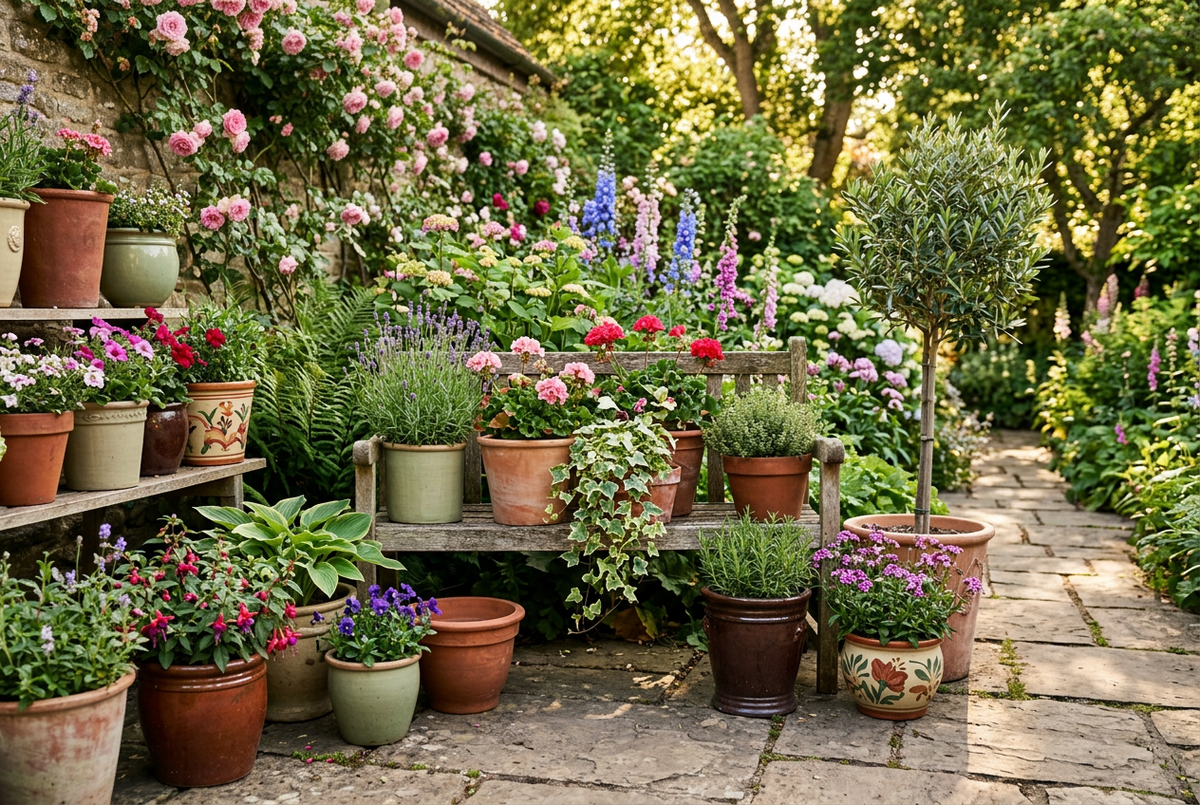
One of the most powerful and completely free improvements you can make to your garden is to stop placing pots individually and start grouping them. Potscaping is the art of grouping pots into a styled cluster instead of scattering single planters across a garden; done well, potscaping turns a handful of ordinary pots into a designed display that looks finished from the first week.
The principle behind this is rooted in basic design psychology. According to Bob Vila's garden design guide, "grouping containers or garden pots in odd numbers can also create a more natural and harmonious arrangement," and arranging them in groups of three with varying heights adds visual interest. This is the 'rule of threes', and it works whether your pots cost 500 HUF or 5,000 HUF each.
Height, Contrast, and Cohesion
Assembling a cluster of pots in various corners or focal points of a patio is a fun way to introduce textures and colours as it adds dimension, one of the key elements in making a living area look and feel put together; the pots you select should complement one another, the same way the materials in a design would.
I have found that the simplest trick is to choose one unifying element, say, all terracotta, or all matte white, and then vary everything else: height, size, plant type. This gives a curated feel without demanding a matching set. According to Gardening Know How's rule of three guide, the rule is most often used with garden beds, but you can also use it to style your container garden; three or five containers in a row look more natural and attractive than four planters.
Pro Tip: Group pots in odd numbers (3, 5 or 7); make the tallest pot about 1.5 times the height of the next for a clear focal point; keep a group spanning 60-90 cm so it reads as one display, not random clutter; and repeat one material or one glaze colour across the cluster for instant cohesion. These four rules cost nothing to implement and make the single biggest visual difference to a display.
Upcycled Containers: Character for Almost Nothing
Turning Household Items into Planters
Some of the most striking cheap garden pot decor starts with items headed for the bin. Repurposed garden containers made from household items are a great way to add personality and points of interest to your garden or patio; the possibilities of what you can turn into a planter are pretty much endless.
Old tin cans, coffee tins, or even mismatched coffee mugs can be easily turned into planters, great for small plants like succulents, flowers, or herbs; decorate them with paint, washi tape, or twine for a fun, quirky look, and create a set of matching tins to give a uniform look to your garden or patio. A set of painted tin cans grouped together on a window ledge looks genuinely decorative, and costs nothing beyond a little paint.
Wooden Pallets and Crates
Wooden crates and pallets offer larger planting space and can be stacked to create vertical planters; these containers work well for growing vegetables, herbs, or larger flowers, and you can stain, paint, or decorate them to match your garden theme, whether you are going for a rustic farmhouse look or a modern industrial style.
Pallets in particular are often available for free or for very little from local shops or suppliers. Wooden pallets offer a fantastic way to create vertical gardens that maximise your growing space; you can often find them for free or at a low cost, stand one upright against a wall or lay it flat attaching pots for a layered effect, and fill the gaps with a mix of herbs, flowers, or small vegetables for a stunning feature in your garden.
Pro Tip: Before planting in any upcycled container, always address drainage. Line the bottom of each planter with enough medium-sized stones to cover it, and do not forget to poke holes to allow for drainage. Skipping this step is the most common reason upcycled pot projects fail within the first season.
Accessorise Smartly: High-End Looks on a Small Budget
Decorative Accessories That Elevate Simple Pots
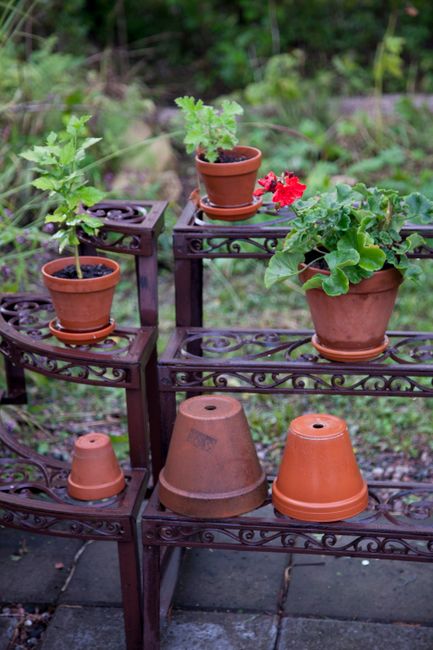
You do not always need a new pot. Sometimes, changing what is around your pots is enough to completely transform the display. Incorporating decorative garden accessories can elevate simple and inexpensive planters into luxurious garden statements; consider elegant plant stands, decorative stakes, or sleek watering cans placed strategically around your planters; hanging fairy lights, lanterns, or sculptural elements like small statues can create a curated, high-end atmosphere.
Plant stands in particular punch well above their price. Raising a pot off the ground by even 15-20 cm changes its presence entirely; it becomes a display piece rather than an object sitting on the floor. This is also good practice for plant health. Pot feet are especially useful for outdoor potted plant drainage; they are essentially small blocks that allow you to raise a pot off the ground, usually made of terracotta, rubber, or cork, available in decorative or basic designs; raising pots off the ground with pot feet improves air circulation and allows excess water to drain more effectively.
Working With Colour Trends
Knowing what is trending in pot colours lets you shop more confidently at the budget end of the market. Green tones connect us to nature and are one of the most prominent trends in interior design right now; this colour has a calming and refreshing effect on our homes and applies not only to plants but also to flower pots; deep moss green or soft sage tones highlight the natural beauty of plants.
Teal is also a defining colour of 2025, bringing a sense of balance and vibrancy; from glossy teal planters to those featuring teal accents, this hue can elevate modern and classic garden designs alike; pairing teal with white or neutral pots creates a chic, cohesive look that is both bold and versatile. The practical takeaway: if you find an affordable pot in sage, moss green, or teal, pick it up; it is exactly where current design is heading.
At Holland Kertészet, the 'Pots, Containers and Growing Systems' range offers an accessible starting point for Hungarian gardeners looking for quality options at sensible prices, with the added convenience of online ordering and delivery.
Common Mistakes That Make Budget Pots Look Cheap
Skipping Drainage, and Why It Matters
The single fastest way to undermine any decorating effort is to let your plants suffer. Proper drainage is critical to plant root health because, by allowing excess water to seep out after watering, you can ensure that water will not pool at the base of your pot; this helps protect the plant's roots from bacteria, fungus, and rot. A beautiful painted pot with dead plants inside looks worse than a plain pot with thriving ones.
If your chosen decorative container has no drainage holes, use it as a cachepot. Avoid decorative pots without holes unless used as a cachepot with a draining inner pot. Simply place a smaller draining pot inside the decorative one; you get the aesthetic and the functionality together.
Ignoring Scale and Proportion
A tiny pot on a large terrace disappears. A huge pot on a small balcony overwhelms. Scale matters enormously, and getting it wrong is a common mistake even with expensive pots. As a general guide, to choose the right size, measure your plant's root ball and pick a pot 2-5 cm wider in diameter. Work upwards from plant needs, then consider the visual scale of your space.
Placing Pots Individually
A cluster of pots reads as one deliberate display; scattered single pots read as clutter. This is the difference between a garden that looks styled and one that looks like a series of afterthoughts. Even the most affordable pots look intentional when they are grouped and layered.

Frequently Asked Questions
How much should I budget for cheap garden pot decor?
You can achieve a genuinely stylish result for very little. Basic terracotta pots in Hungary typically start at a few hundred HUF each, and painting supplies (acrylic paint, a sealant spray, and painter's tape) will set you back around 2,000-4,000 HUF for a full set. Upcycled containers cost nothing if you use tins, crates, or old household items. The styling, grouping, height variation, and colour coordination, costs nothing at all and delivers the biggest impact.
What paint should I use on outdoor garden pots?
Using spray paint or exterior acrylics allows you to match planters with the garden's colour palette or add trendy motifs that enhance aesthetic appeal. For terracotta specifically, always prime first and finish with a clear outdoor sealant to protect the design from rain and UV exposure. Chalk paint also works well on terracotta and gives a lovely matte, farmhouse finish without requiring a primer.
Can I really upcycle any household container into a planter?
Almost any container can become a planter, as long as you address two things: drainage and material safety. Selecting proper soil, drilling drainage holes, and choosing complementary plants guarantee successful container transforming. Avoid containers that previously held chemicals or motor oil, as residues can harm plants. Tin cans, wooden crates, colanders, old boots, ceramic mugs, and glass jars are all excellent choices.
How do I make a group of cheap pots look cohesive?
The simplest method is to choose one repeating element, either the same pot colour, the same material, or the same plant type, and let everything else vary. According to Living Etc's outdoor pot arrangement guide, the golden rule designers agree on is to always stick to odd numbers; grouping objects in odd numbers gives a sense of playfulness and avoids the seriousness of symmetry. Three pots in complementary colours, at varied heights, will always look designed.
What are the most on-trend pot styles in Europe right now?
Sustainability takes centre stage in 2025 with pots crafted from recycled plastics, reclaimed wood, and biodegradable composites; these eco-friendly designs not only reduce environmental impact but also offer unique textures and patterns that celebrate imperfections. Beyond materials, monochromatic and matte-finish pots are gaining traction for their understated elegance. For gardeners in Hungary and across Central Europe, terracotta with painted or whitewashed finishes, sage greens, teal accents, and rustic wood-look containers are all very much in step with current European garden aesthetics.
Sources
-
Europe Flower Pots Market Size, Share and Forecast, Ken Research. Market data on European flower pot sector 2025-2031. https://www.kenresearch.com/industry-reports/europe-flower-pots-market
-
Top Garden Pot Trends for 2025, Gallery by the Workshop. Eco-friendly, stylish, and budget-friendly ideas for upgrading garden planters. https://gallerybytheworkshop.com/blogs/gallery-by-the-workshops-plant-care-guide/top-garden-pot-trends-for-2025-eco-friendly-stylish-and-budget-friendly-ideas
-
Pot Trends for 2025, Plantasjen. Colour, texture, and style trends across European garden pot design. https://plantasjen.no/en/articles/tips-and-tricks/indoor-plants-and-interior/here-are-the-plant-trends-for-2025
-
5 Major Pot Design Trends for 2025, Advance Plants. Sustainability, vintage revival, and matte finishes in pot design. https://advanceplants.com.au/5-major-pot-design-trends-for-2025/
-
How to Buy Planters on Trend in 2025, The Pottery Patch. Colour and finish guide for decorative garden planters. 2025 Garden Design Trends and How to Take Advantage of Them When Buying Planters
-
Potscaping: Grouping Pots for Impact, Garden UK. Odd-number grouping, height tiers, and materials for pot display. https://gardenuk.co.uk/garden-design/grouping-pots-potscaping-uk/
-
When to Use the Rule of Threes in Garden Design, Bob Vila. Design principles for container grouping. https://www.bobvila.com/diy/rule-of-threes-garden-design/
-
4 Golden Rules for Outdoor Potted Plant Arrangements, Living Etc. Expert advice on arranging pots for maximum visual impact. https://www.livingetc.com/advice/outdoor-potted-plant-arrangements
-
The Rule of Three in Garden Design, Gardening Know How. Applying odd-number planting rules to container gardens. https://www.gardeningknowhow.com/garden-how-to/design/the-rule-of-three
-
Upcycled Garden Planters: Sustainable and Creative Ways to Reuse Containers, Home Style Vibe. Ideas for repurposing household items as garden planters. https://homestylevibe.com/upcycled-garden-planters-sustainable-and-creative-ways-to-reuse-containers/
-
Clever Repurposed Garden Container Ideas, Family Handyman. Practical guide to upcycling household items as outdoor planters. https://www.familyhandyman.com/list/clever-repurposed-garden-containers/
-
How to Improve Potted Plant Drainage, Growing Family. Tips for healthier plants through better drainage in outdoor containers. https://growingfamily.co.uk/container-gardening/improve-potted-plant-drainage/
-
Drainage for Plants: Why Is It Important, Pure Modern. Overview of drainage strategies for potted plants. https://www.puremodern.com/blogs/news/why-is-drainage-important-for-plants
-
DIY Painted Terracotta Pots, Days Inspired. Step-by-step guide to priming, painting, and sealing terracotta pots. https://daysinspired.com/diy-painted-terracotta-pots/
-
Choosing the Best Drainage Pots for Healthy Plants, Etepek. Practical guide to pot selection and drainage optimisation. https://etepek.com/blog/drainage-pots-for-plants-2/
-
Holland Kertészet, Holland Kertészet. Hungarian online garden specialist offering pots, containers, bulbs, and growing supplies. https://www.hollandkerteszet.hu/


