

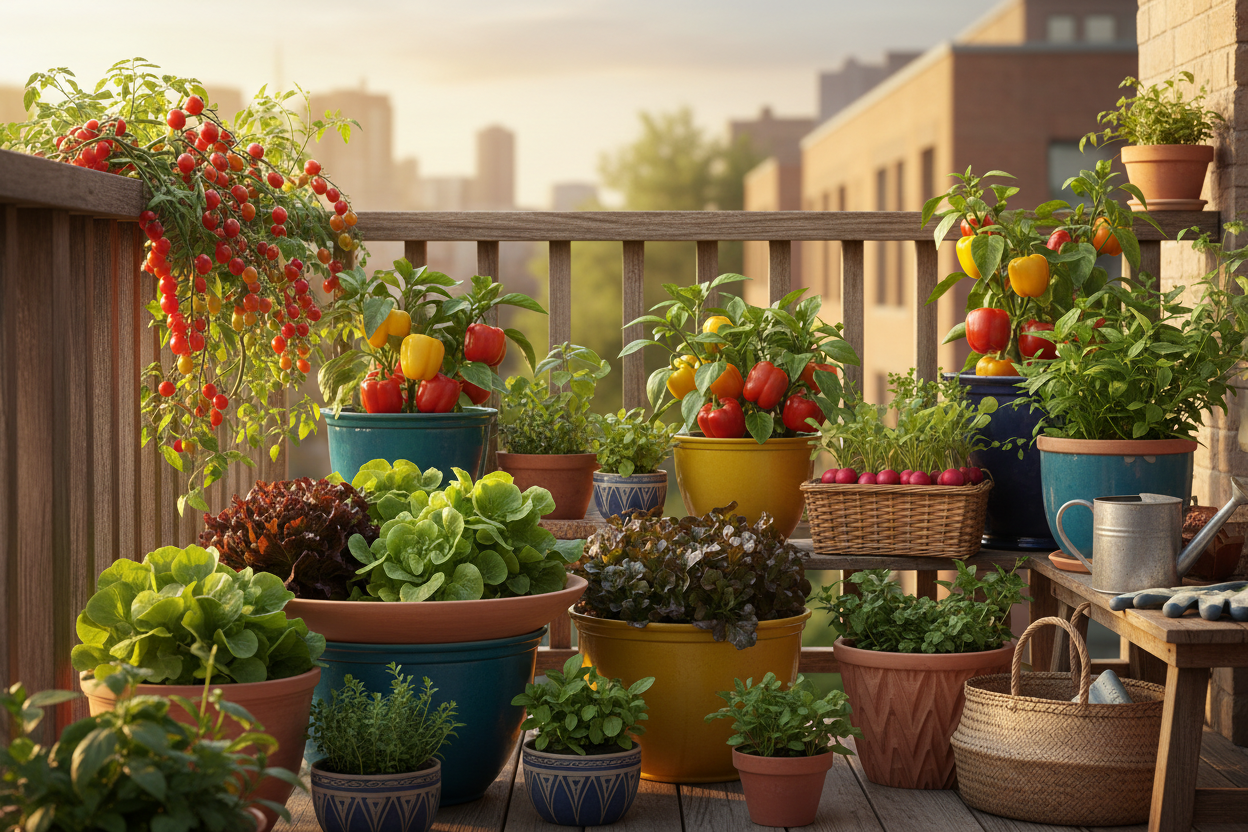
A summer balcony, however modest, holds genuine growing potential. The growing containers and planters segment of the urban gardening market is driven by demand for space-efficient cultivation in balconies, rooftops, and indoor settings. This figure reflects millions of people arriving at the same conclusion: you can grow real food from a railing's width of outdoor space. If you have a south- or west-facing balcony that catches a few hours of summer sun, a pot, a bag of good potting mix, and a packet of seeds, you already have everything you need.
61% of food gardeners said they grew food in 2024 and estimated saving Euro 875 last year, meaning a productive container patch pays back in real money, not just satisfaction. If you are currently spending that money at the supermarket, this is the summer to start recouping it.
This guide covers five vegetables that are genuinely well-suited to container life, with specific pot sizes, variety recommendations, and the one or two care habits that separate a thriving plant from a struggling one. Each entry is chosen with small urban balconies in mind, the kind where every square metre counts.

Key Takeaways
-
Variety selection is non-negotiable: Compact and determinate ("bush") varieties of tomatoes, peppers, and courgettes are bred for container life. Choosing the wrong variety is the single most common cause of disappointment on a small balcony.
-
Container size determines yield: The biggest problem encountered by beginning gardeners trying to produce vegetables in containers is choosing containers that are too small for a mature plant, which leads to stunted growth and a lack of fruit production. Always size up if you are unsure.
-
Watering frequency increases in summer: Container compost dries out far faster than ground soil, especially on an elevated balcony exposed to wind. Check daily in July and August, and water whenever the top 2 cm feel dry.
-
Urban gardening vegetables dominate the market: The vegetables segment held 43.3% of the total urban gardening market share in 2025 and is anticipated to grow at an 8.4% from 2026 to 2035, driven by consumer interest in healthy eating and home-grown organic produce. Start now and stay ahead of the trend.
-
Radishes and lettuce are the fastest returns: For beginners, these two crops build confidence rapidly. Radishes can be ready in under a month; lettuce can be cut within three weeks of planting.
Quick-Start Prioritisation Framework
| Vegetable | Best For | Effort Level | Time to First Harvest | Minimum Pot Size |
|---|---|---|---|---|
| Cherry Tomatoes | Sun-drenched balconies, confident beginners | Medium | 60-80 days from transplant | 30 cm diameter, 5 litre |
| Lettuce | All balconies, absolute beginners | Low | 3-4 weeks from seed | 15 cm deep, any width |
| Peppers | Warm, sheltered balconies | Medium | 70-90 days from transplant | 30 cm diameter |
| Radishes | Any balcony, quickest reward | Very Low | 25-30 days from seed | 15 cm deep |
| Courgette | Larger balconies, ambitious growers | Medium-High | 50-60 days from seed | 40 cm diameter, 15 litre |
Start here based on your situation:
-
First-time container gardener: Radishes and lettuce, lowest barrier, fastest results, minimal investment in pots or seeds.
-
You have a south-facing sunny spot: Cherry tomatoes and peppers will repay the extra care with weeks of continuous harvest.
-
You want maximum return from one large pot: A bush courgette can supply a household through July and August from a single well-fed container.
1. Cherry Tomatoes, The Balcony Classic
Why they work in containers
Cherry tomatoes are one of the most rewarding crops you can grow, and a single well-managed pot on a sunny balcony can yield hundreds of sweet, bite-sized tomatoes from early summer right through to autumn. In my experience, no other vegetable delivers the same ratio of excitement to effort for a first-time balcony grower, a ripe cherry tomato still warm from the afternoon sun is simply incomparable to anything from a supermarket shelf.
Their compact growth habit and prolific fruit production make them a perfect starting point for new gardeners and a reliable favourite for seasoned growers. Many cherry tomato varieties are specifically bred for the close quarters of pots and hanging baskets, delivering a summer-long harvest from even the smallest sunny balcony.
Variety, pot size, and sunlight
Determinate (bush) varieties are by far the best choice for containers because they grow to a set height before fruiting and stay compact. Top picks include Tomfall, Yellow Gourmandise and Gourmandise Red. If space is especially limited, Tiny Tim is a great ultra-compact option.
For pot size, a container 35 cm in diameter is the minimum width necessary for growing cherry tomatoes in pots, with containers up to 50 cm in diameter being ideal, and they should be able to hold at least 5 liters of compost for the best results.
Cherry tomatoes need a minimum of 6 hours of direct sunlight per day, with 8 hours being ideal. The more sun they receive, the more fruit they will produce and the sweeter that fruit will taste. If your balcony faces north or sits in partial shade for most of the day, redirect your efforts to lettuce or radishes, tomatoes will survive but rarely thrive without that light.
Pro Tip: If your balcony is on a high floor where pollinators rarely visit, gently shake the flower trusses or brush them lightly with your hand every couple of days. Gently shaking the plant when it flowers helps with pollination if you are in an enclosed balcony. This small habit dramatically improves fruit set.
2. Lettuce and Loose-Leaf Greens, The Beginner's Best Friend
Why they work in containers
For gardeners seeking quick rewards and a continuous harvest, lettuce and other leafy greens are some of the best vegetables for containers. Their shallow root systems and rapid growth cycle mean you do not need deep pots to succeed.
The real advantage on a small balcony is the cut-and-come-again method. Snipping outer leaves as needed while leaving the centre intact allows the plant to keep producing for the entire season rather than giving a single harvest. I have kept the same lettuce container producing fresh leaves for three months with nothing more than regular watering and an occasional liquid feed.
Variety, pot size, and care
Containers are one of the best ways to grow lettuce. It only needs about 15 cm of soil depth, so a window box, a fabric grow bag, or a pot on the porch all work perfectly. This makes lettuce ideal for filling the awkward, narrow spaces between larger containers.
To grow lettuce successfully in pots, choose a shallow, wide container with multiple drainage holes, fill it with high-quality potting soil rich in organic matter, and position it in a location that gets at least six hours of sunlight daily. In mid-summer, a slightly shadier spot can actually be beneficial; it delays bolting and extends your harvest window.
For harvest timing, for most varieties, it takes only eight weeks from planting to harvesting, and if you grow cut-and-come-again types, you will have fresh lettuce available consistently. Succession-sow every three weeks and you will have greens all season.
Pro Tip: Harvest in the morning before the day warms up, give plants some afternoon shade if your spring is getting hot, and try heat-tolerant varieties like Lollo Rossa if you are in a warmer climate. Widely available from the Holland Kertészet online shop along with the shallow pots and quality potting compost that lettuce needs.
3. Peppers, Compact, Colourful, and Continuous
Why they work in containers
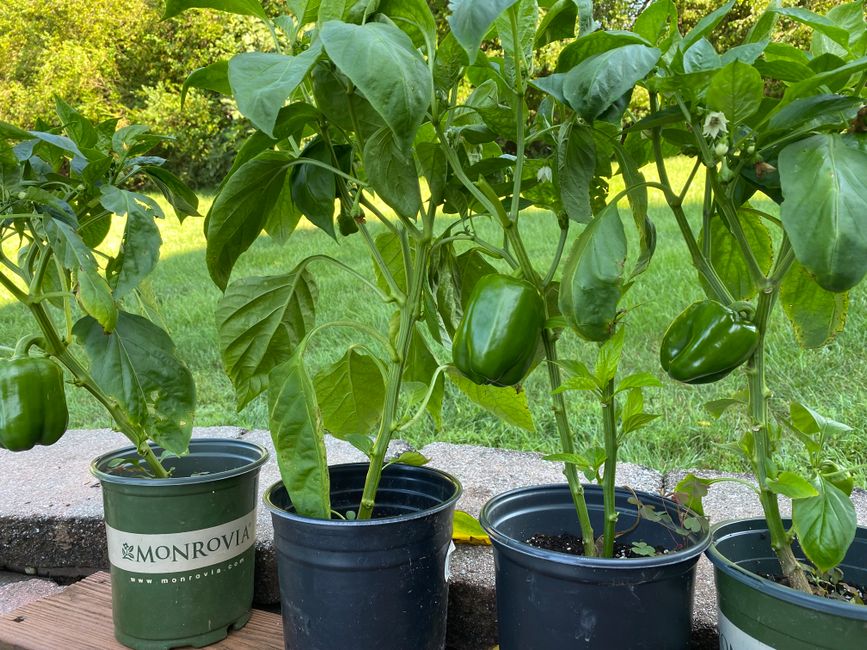
Peppers are a warm-season crop and an excellent choice for growing on a balcony, deck, or patio. Growing peppers in containers has been one of the most rewarding and practical gardening methods available. Unlike tomatoes, peppers are naturally compact plants, which means even standard varieties adapt well to life in a pot.
Peppers love containers because warm soil helps them thrive. Dark-coloured containers are particularly useful on a Central European balcony, dark-coloured containers are effective as they help warm the soil, allowing peppers to get a head start earlier in the season.
Variety, pot size, and sunlight
For a small balcony, compact and dwarf varieties are the priority. If you do not have much space opting for a dwarf pepper variety could be ideal. There are many peppers that never grow more than 20-25 cm tall regardless of their planting location, try varieties like the Serrano, Hot Lemon Drop or Habanero Pink to grow in small pots. Jalapeños are also reliable producers that stay manageable in size.
A planter box at least 30 cm deep and 30-45 cm wide works well for most pepper varieties. Deeper containers are especially beneficial for larger varieties like bell peppers. For compact chilli types, a 10-liter pot is sufficient.
Peppers need 6-8 hours of full sun each day for healthy flowering and fruit production. If you meet the sunlight requirement, feeding matters next: once flowers appear, switch to a potassium-rich tomato feed to encourage fruiting rather than leafy growth.
4. Radishes, Fastest Crop on the Balcony
Why they work in containers
Radishes deserve far more attention than they typically receive from balcony gardeners. Radishes are one of the easiest vegetables to grow in containers because they have shallow root systems, mature quickly (some varieties in as few as 25 days), and thrive in the cooler spring and autumn temperatures that make outdoor container gardening most manageable.
From seed to harvest in just 25-40 days, radishes deliver crisp, peppery flavour with minimal effort and space requirements. These quick-maturing root vegetables require little garden space, tolerate various growing conditions, resist most pests, and provide both edible roots and nutritious greens.
The 25-day harvest window is the key actionable insight here: you can sow a small pot of radishes, harvest the lot, and immediately resow while your tomatoes and peppers are still weeks from fruiting. The best approach is to treat them as a gap-filler and confidence-builder throughout the season.
Pot size, sowing, and succession
Choose a container that is at least 15 cm deep with plenty of drainage holes in the bottom to allow excess water to drain away quickly. A simple window box works perfectly.
Sow another round of seeds every 10 days or so while the weather is still cool for a continuous harvest of radishes in late spring and early summer. Then sow again in late August for an autumn crop. Skip the fertiliser, radishes are fast growers that do not need supplemental nutrients, and adding nitrogen-heavy fertiliser actually pushes the plant to grow more leaves instead of developing the root bulb.
Pro Tip: Mix radish seeds with slower-growing crops like carrots in the same container. The radishes germinate and mature quickly, loosening the compost and effectively thinning the rows for the carrots that follow. Because of their small size radishes are an ideal container garden crop and can also be interplanted with slower-growing vegetables like carrots.

5. Zucchini, One Plant, a Season's Worth of Vegetables
Why they work in containers
A zucchini on a balcony may feel ambitious, but with the right variety and a large enough container, a single plant will supply more than enough fruit from July through September. With proper care, one zucchini plant can produce enough to feed a household all summer long.
Any type of zucchini can be grown in a container as long as it is large enough and has appropriate trellising as needed. Bush types are more compact and better suited to patio growing in containers. When making your selection, look for any cultivar with "bush" or "patio" in the name.
Variety, pot size, and pollination
For a small balcony, bush varieties are the only practical choice. For best results, go for compact or bush types that stay small but produce abundantly, options include Bush Baby (compact, early producer), Raven (dark green fruit, perfect for small spaces), Black Beauty (classic flavour, grows well in pots), and Patio Star (specifically bred for container gardening).
Look for containers at least 30 cm deep and 45 cm across. In practice, the bigger the pot the better, a 15-liter or 20-liter container will produce a visibly healthier plant than the minimum size. High balconies above the city may see fewer bees, so note that if you are growing one zucchini plant in an area where bees are unlikely to visit, it is a good idea to get a parthenocarpic plant, which can produce fruit without pollination.
Container plants also need monthly fertilisation because nutrients flush out with every watering. A balanced liquid fertiliser applied every three to four weeks keeps plants healthy and productive. Use a tomato-type feed once the first flowers appear.
Three Mistakes That Kill Container Vegetables (and How to Avoid Them)
Using the wrong pot size
Beginners often choose containers based on looks rather than plant needs. Tiny pots limit root growth, while shallow containers dry out too quickly. If in doubt, always choose the larger of two options. The Holland Kertészet container range, for urban balcony gardeners in Hungary and the wider region, stocks a well-curated selection of pots, grow bags, and self-watering planters sized specifically for balcony vegetables, which removes much of the guesswork from this decision. It is also the best starting point for quality seeds, potting compost, and liquid fertilisers in one place.
Using garden soil instead of potting mix
Natural ground soil contains high amounts of clay, which compacts tightly inside a container. This creates a dense, brick-like environment that suffocates roots and traps stagnant water. Always use a dedicated, lightweight potting mix. It costs little more than garden soil and makes a significant difference to every crop on this list.
Inconsistent watering
When it is hot and dry in the middle of summer, inconsistent watering can cause your plants to wilt and die, or cause problems like blossom-end rot due to insufficient nutrient uptake. Check containers daily during July and August. Shallow-rooted crops like lettuce dry out faster than deep-rooted plants, so adjust your frequency accordingly.
Frequently Asked Questions
What is the easiest vegetable to grow in a container on a small balcony?
Radishes are the easiest starting point for a first-time balcony grower. They have shallow root systems mature quickly in as few as 25 days, and thrive in the cooler spring and autumn temperatures that make outdoor container gardening most manageable. Loose-leaf lettuce is a close second and offers a more extended harvest through the cut-and-come-again method.
How many hours of sunlight does a balcony need to grow vegetables?
The answer depends on the crop. Fruiting crops like tomatoes and peppers require 6 or more hours of direct light, while leafy greens manage with 3-4 hours. Measure your balcony's actual sun hours over a couple of days in spring before deciding which vegetables to prioritize.
Can I reuse potting compost from last year?
You can reuse compost, but refresh it with added compost or mix in new soil to restore nutrients. Spent compost is depleted and may harbour disease from the previous season's crop. For fruiting vegetables like tomatoes and peppers, starting with fresh potting mix each year makes a noticeable difference to yield.
How often should I water container vegetables in summer?
Watering depends on container size, plant type, and weather. Generally, check soil daily and water when the top 5 cm are dry. Smaller pots and hot, sunny balconies may need daily watering, while larger pots retain moisture longer. A self-watering pot or container with a built-in reservoir is worth considering if you travel regularly during the growing season.
Do I need to feed container vegetables, and how often?
Yes, consistent feeding is essential. Container compost exhausts its nutrients faster than garden soil because watering flushes them out. For leafy crops like lettuce and radishes, a general liquid feed every two weeks is sufficient. For fruiting crops, tomatoes, peppers, and courgettes, switch to a potassium-rich feed (such as a tomato fertiliser) once the first flowers appear and apply every one to two weeks. At the fruiting stage, plants need more potassium and phosphorus relative to nitrogen, as high-nitrogen feeds promote leafy growth over fruit production. Look for a product labelled for fruiting crops with an NPK ratio like 4-6-8 or 5-7-10.
Sources
-
Urban Gardening Products Market Size, Forecasts Report 2026-2035, GM Insights. Container gardening market data and vegetable segment share. https://www.gminsights.com/industry-analysis/urban-gardening-products-market
-
Food Garden Trends and Forecast, Frontdoor. Food gardening participation statistics and savings data. https://www.frontdoor.com/blog/gardening-landscaping/food-garden-trends-statistics
-
8 Best Vegetables for Containers to Grow, Homegrown Garden. Lettuce and leafy green container guidance. https://homegrown-garden.com/blogs/blog/best-vegetables-for-containers
-
Growing Cherry Tomatoes in Pots: Complete Container Guide, Urban Farm Store. Sunlight, pot size, and feeding requirements. https://urbanfarmstore.com/growing-cherry-tomatoes-in-pots/
-
Growing Cherry Tomatoes in Pots is Perfect for Everyone, Countryside. Container diameter and volume guidance for tomatoes. https://www.iamcountryside.com/growing/growing-cherry-tomatoes-in-pots/
-
9 Tips for Growing Cherry Tomatoes in Pots, Clean Green Simple. Variety selection and balcony growing tips. https://cleangreensimple.com/article/growing-cherry-tomatoes-in-pots/
-
8 Tips for Growing Lettuce Plants in Pots, Clean Green Simple. Cut-and-come-again methods and sunlight guidance. https://cleangreensimple.com/article/how-to-grow-lettuce-in-pots/
-
Lazy Gardener's Guide to Growing Lettuce, Elm Dirt. Heat-tolerant variety advice and container depth guidance. https://www.elmdirt.com/blogs/news/lazy-gardener-lettuce-cut-and-come-again
-
How to Grow Lettuce in Containers, Gardening Chores. Days to harvest and spacing guidance. https://www.gardeningchores.com/growing-lettuce-in-containers/
-
Planter Boxes, Tips for Container-Grown Peppers, EarthBox. Container size and soil pH guidance for peppers. https://earthbox.com/blog/planter-boxes-tips-for-container-grown-peppers
-
11 Peppers That Love Growing in Containers, Pepper Geek. Compact dwarf variety recommendations. https://peppergeek.com/best-peppers-for-containers/
-
How to Plant Peppers in Containers, EarthBox. Sunlight requirements and container depth for peppers. https://earthbox.com/blog/how-to-plant-peppers-in-containers-a-step-by-step-guide
-
How to Grow Radishes in Pots, Clean Green Simple. Maturity times and no-fertiliser advice. https://cleangreensimple.com/article/how-to-grow-radishes-in-pot/
-
Radishes, UF/IFAS Gardening Solutions, University of Florida IFAS. Days to harvest and container intercropping guidance. https://gardeningsolutions.ifas.ufl.edu/plants/edibles/vegetables/radishes/
-
How to Grow Radishes, The Old Farmer's Almanac. Succession sowing and seasonal planting guidance. https://www.almanac.com/plant/radishes
-
How to Grow Zucchini in Containers, Gardener's Path. Bush variety selection and container suitability. https://gardenerspath.com/plants/vegetables/grow-zucchini-containers/
-
How to Grow Productive Zucchini in Pots, Clean Green Simple. Container sizing, fertiliser frequency, and watering guidance. https://cleangreensimple.com/article/how-to-grow-zucchini-in-pots/
-
Common Problems Growing Vegetables in Containers, Farm and Dairy. Container size selection errors and Texas A&M Extension guidance. https://www.farmanddairy.com/news/top-stories/how-to-avoid-common-problems-growing-vegetables-in-containers/666564.html
-
Container Gardening Mistakes That Kill Balcony Plants, Cultivate Delight. Pot selection, soil type, and watering frequency guidance. https://cultivatedelight.com/balcony-container-gardening-mistakes/
-
Growing Lettuce in Containers, UC ANR Cooperative Extension. Pot depth and material guidance for lettuce. University of California Cooperative Extension's container gardening guidance


