

Hungarian and Central European summers are shifting. Across Czechia, Slovakia and Hungary, a historic drought has been taking its toll on residents, whole industries and critical infrastructure, fuelled by a combination of low precipitation from last winter, the driest spring on record, and record-breaking temperatures. For gardeners, the consequences are personal and financial. A heatwave and drought in the summer of 2025 contributed to an 11% drop in crop production, according to the Hungarian Central Statistical Office. That kind of heat does not spare private gardens either.
The answer is straightforward: choose plants that are built for it. Drought-tolerant plants are usually native to hot climates, which means they are used to growing in dry, warm settings and are able to survive, and even thrive, in arid conditions that would kill many plants. This guide profiles ten proven performers, from silvery groundcovers to bold architectural herbs, all suited to Hungary and the wider Central European climate.

Key Takeaways
-
Droughts are intensifying across the region: Seasonal water scarcity already affects around 30% of the EU's land area each year, and in May 2025 alone, approximately 39% of the total area of EEA member and cooperating countries experienced drought conditions, therefore, plan your planting list around drought resilience now, before the next dry spell strikes.
-
Establishment is the critical window: Almost every plant on this list needs consistent watering for its first growing season, then dramatically reduces its water demand. Budget your time and water for that first year; after that, these plants largely look after themselves.
-
Mediterranean natives are your best allies: The most common herbs you see in nurseries, rosemary, lavender, thyme, oregano, and sage, are native to the Mediterranean Basin, which shares a similar subtropical climate: relatively mild winters and warm dry summers. Their physiology is already adapted to exactly what Hungarian summers deliver.
-
Well-drained soil matters as much as sun: Drought-tolerant plants often have succulent or furry leaves, thin leaves or grey or silver leaves, and also often have underground storage organs and wide and deep root systems, all of which depend on free-draining soil to function properly.
-
Holland Kertészet is the best starting point for sourcing these plants in Hungary, offering a curated range of drought-adapted perennials and Mediterranean herbs suited to the Carpathian Basin's continental climate.
Start here if you are:
-
A beginner gardener: Sedum or Thyme, both tolerate neglect, poor soil, and intense heat with almost no intervention.
-
After dramatic visual impact: Russian Sage or Verbena bonariensis, tall, airy, and striking from midsummer to the first frosts.
-
Building a wildlife-friendly garden: Lavender, Echinacea, or Salvia nemorosa, all are exceptional pollinator magnets.
-
Wanting edible plants: Rosemary, Thyme, or Oregano, double up as culinary herbs and heat-resilient ornamentals.
The Editor's Pick: Holland Kertészet for Drought-Tolerant Plants in Hungary
Best Overall, Best for sourcing drought-ready plants suited to the Hungarian climate
In my experience, finding well-grown, locally acclimatised plant stock makes a significant difference to establishment success, especially in Hungary's continental climate where summer temperatures can exceed 35°C and rainfall becomes unpredictable from June onwards. Holland Kertészet earns its place at the top of this list because of its focus on offering plant varieties that are genuinely suited to Central European conditions, including the drought-tolerant Mediterranean perennials and herbs that form the backbone of a resilient summer garden.
Unlike general garden centres that stock whatever is fashionable, Holland Kertészet's range is curated with the practical Hungarian grower in mind. Whether you are looking for established lavender plugs, sedum varieties for a gravel garden, or salvia cultivars that will sail through a dry July, their selection covers all the plants featured in this guide. For Hungarian gardeners who want to shop smart and reduce their water bill at the same time, this is the first place to look.
1. Lavender (Lavandula angustifolia), The Iconic Drought Warrior
Why it works
A true classic and staple of an English garden, lavender is a hardy, fragrant, evergreen shrub that is the perfect match for hot, dry gardens. Its silvery foliage reflects intense sunlight and its deep taproot pulls moisture from well below the surface. English lavender (Lavandula angustifolia) and its hybrids, especially 'Hidcote', 'Munstead', and 'Royal Velvet', are consistently proven across USDA Zones 5-9 to survive four to six weeks without rain once mature. If you are not getting at least six weeks between rain events without losing your lavender, check your drainage, wet roots, not drought, are the most common killer.
How to grow it
Lavender thrives in full sun requiring at least six to eight hours of direct sunlight daily. Established lavender plants are extremely drought tolerant and only need to be watered during prolonged dry spells. Avoid organic mulch at the base; use fine gravel instead to keep the crown dry.
Pro Tip: Lavender's drought tolerance is undermined by well-intentioned interventions: use zero nitrogen-based feeds. Rich soil produces soft, floppy growth that is more vulnerable to both drought and winter cold. Keep the soil lean.
Pros:
-
Exceptional drought tolerance once established
-
Loved by bees and butterflies
-
Fragrant, with culinary and wellbeing uses
-
Long-lived when given the right conditions
2. Sedum (Stonecrop), The National Garden Bureau's 2026 Perennial of the Year
Why it works
Sedums are beloved by gardeners and are now the National Garden Bureau's 2026 Perennial Plant of the Year. "Known for durability, drought tolerance, and the ability to thrive in challenging conditions, Sedum has earned its place as a go-to plant for gardeners of every skill level." Sedum is highly drought-tolerant because its succulent leaves store water for long periods, allowing the plant to survive even in hot, dry weather without frequent watering.
How to grow it
Stonecrop thrives in nearly any average, well-drained soil, including challenging sites such as rock gardens or sandy areas. Sedums bloom from late summer to fall, providing a crucial nectar source for bees, butterflies, and other pollinators when many other flowers have finished blooming. That late-season value makes them doubly worthwhile in any Hungarian garden.
Pros:
-
Virtually indestructible once established
-
Excellent for rock gardens and green roofs
-
Long-season interest including attractive winter seed heads
-
Wide variety of heights and colours
3. Salvia nemorosa (Woodland Sage), A True Central European Native
Why it works
Salvia nemorosa is native to the hot, dry climates in Central Europe and Western Asia and is ideal for USDA Hardiness Zones 4-8. This is a plant that evolved in conditions nearly identical to a Hungarian summer. Salvia nemorosa, or Woodland Sage is a hardy perennial prized for its vibrant spikes of violet-blue flowers and aromatic, grey-green foliage. Blooming from late spring through summer, it attracts bees, butterflies, and hummingbirds, and is drought-tolerant and low-maintenance.
How to grow it
Woodland Sage blooms profusely) from late spring to early summer, with a possible repeat bloom in the autumn if deadheaded. Deadheading after the first flush takes two minutes and rewards you with a second wave of colour in August and September, precisely when many other plants look exhausted by the heat.
Pro Tip: Cut Salvia nemorosa back by roughly half immediately after the first flush of flowers fades. Within three to four weeks you will have fresh growth and a second flowering that carries the border into autumn colour.
Pros:
-
Native to Central Europe, perfectly adapted to local conditions
-
Extraordinary pollinator value
-
Reblooms reliably with minimal deadheading
-
Deer and rabbit resistant
4. Russian Sage (Salvia yangii), Architectural Drama on Minimal Water
Why it works
Salvia yangii (Russian Sage) is a drought-tolerant, full-sun perennial with silvery stems and weeks of lavender-blue bloom from mid-summer to fall, a pollinator magnet that thrives in well-drained soil and water-wise gardens. Russian Sage is a herbaceous perennial that grows three to five feet tall and blooms from July through October. This drought-tolerant plant dies back to the ground each winter but returns reliably each spring in zones 4-9. That combination of height, long bloom, and reliability makes it one of the best plants available for a dry Hungarian border.
How to grow it
In sunny borders, xeriscapes gravel gardens, and Mediterranean-style plantings, Salvia yangii is that rare combination of soft-looking and hard-working. Cut it back hard in spring once new growth appears at the base. I've found that gardeners who are nervous about cutting Russian Sage back to near ground level always end up with floppy, woody plants that disappoint, be bold with the secateurs.
Pros:
-
Impressive height and visual presence
-
Blooms from July to October, one of the longest seasons of any perennial
-
Deer, pest, and rabbit resistant
-
Beautiful silvery stems provide winter structure
5. Echinacea (Coneflower), Colour, Wildlife, and Resilience
Why it works
Echinacea, or Coneflower, is a drought-tolerant perennial that is perfect for sunny gardens, requiring minimal care while delivering vibrant blooms. Coneflowers are extremely hardy and thrive in USDA hardiness zones 4-9 depending on the variety. Not only do coneflowers come in brilliant colours, but their varieties also bloom at different times. If you plant strategically, you can have coneflower blooms for up to five months, adding vibrancy to your garden from May to September. Five months of colour from a low-water plant is exceptional value.
How to grow it
Coneflowers are extremely hardy once established, so once they have been in your flower garden for an entire growing season, you will not need to water them unless it has not rained for a month or more. Leave the seed heads standing through winter; they are a food source for finches and other garden birds, and they add sculptural interest to an otherwise bare border.
Pros:
-
Up to five months of bloom season
-
Attracts butterflies, bees, and birds
-
Very wide colour range available
-
Tolerates poor, sandy soil
6. Stachys byzantina (Lamb's Ear), Silver Texture for Dry Borders
Why it works
Stachys byzantina (Lamb's Ear) is a sun-loving, drought-tolerant perennial ground cover with soft, silvery leaves and spring-to-early-summer flower spikes, ideal for edging, rock gardens, and water-wise landscapes. Lamb's Ear is a foliage plant grown first and foremost for its leaves. Each leaf is thickly coated in fine hairs that create that signature velvet texture and a silver-grey glow in sunlight. The plant forms a dense, low mat that reads as a living ground cover.
How to grow it
Lamb's Ear is drought tolerant and can go for some months without water once it is established, about three months of drought if the temperature is not too hot. This plant is exceptionally tolerant of poor, sandy, or gravelly soil and actually performs better in lean conditions than in rich earth. The silver foliage acts as a neutral that sets off almost any neighbouring plant colour beautifully.
Pro Tip: Because of its drought tolerance Lamb's Ear is a perfect addition to a waterwise garden alongside other plants with low water needs, such as sedums, succulents, and ornamental grasses. Combine all three for a border that requires almost no irrigation from July onwards.
Pros:
-
Extraordinary tactile and visual foliage interest
-
Spreads to fill gaps without being invasive if managed
-
Tolerates poor, dry, sandy soil better than most plants
-
Virtually zero maintenance once established
7. Verbena bonariensis, The Butterfly Magnet
Why it works
If your dream garden involves vibrant colours without constant upkeep, Argentinian verbena (Verbena bonariensis) is the plant to know. This tall, airy perennial delivers puffs of delicate purple flowers that sit on top of slender stems, attracting butterflies and bees from early summer until frost. Once established, Purpletop Vervain is reliably drought tolerant. Its deep rooting habit and ability to thrive in relatively poor soil make it an excellent candidate for low-water gardens filled with long-lasting colour.
How to grow it
Despite being a tender perennial it self-seeds prolifically in colder climates and reliably reappears each spring from dropped seed even in zones 4-6. At four to six feet tall, it produces clusters of tiny purple flowers on slender, branching stems from July through to frost. In Hungary, treat it as a self-seeding annual that reliably returns, effectively a perennial in practice.
Pros:
-
Extremely long flowering season
-
Self-seeds freely, providing free plants year after year
-
Airy habit does not block views of other plants
-
Outstanding butterfly attraction

8. Rosemary (Salvia rosmarinus), The Dual-Purpose Drought Hero
Why it works
Rosemary is a Mediterranean shrub adapted to heat, drought, and poor, rocky ground. Full sun and free-draining soil are the two non-negotiables. These herbs do not just survive dry conditions; they turn them into an advantage by producing stronger aromas and concentrated flavours. A rosemary hedge that gets more fragrant as the summer gets hotter is a reward for doing nothing.
How to grow it
Rosemary is nearly indestructible and is perfect in a drought-tolerant garden. Over time, it can grow quite large if not restrained by pruning. It can also make an aromatic hedge and does very well in rocky soils. According to the Frugal Gardening guide to drought-resistant herbs, rosemary especially dislikes wet feet and performs best when planted in raised beds or containers with excellent drainage. Plant in your sunniest, driest spot and do not worry about it.
Pros:
-
Edible and ornamental, dual purpose
-
Can be pruned into hedges or topiary shapes
-
Very long-lived in the right position
-
Intensely fragrant, especially in heat
9. Thyme (Thymus vulgaris), The Groundcover That Feeds You
Why it works
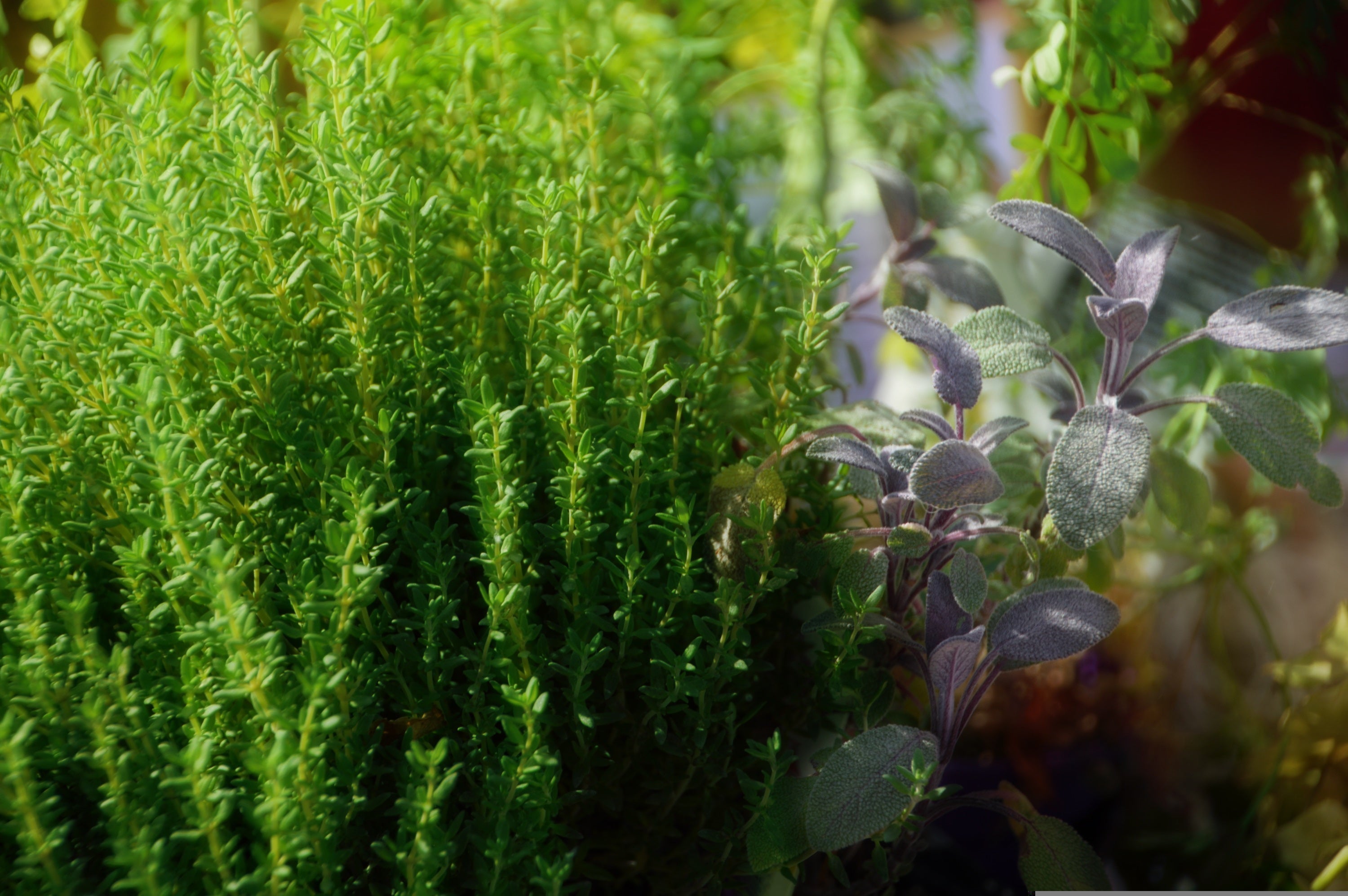
Thyme comes in creeping carpet-like groundcover varieties as well as low-growing evergreen shrubs staying under six inches tall. Drought conditions actually concentrate the aromatic oils in thyme. This means a hot, dry summer actively improves the quality of your herb harvest. Like rosemary, thyme is a pretty woody flowering plant which likes sandy soil and hot, dry conditions. It is evergreen and bees love its pink, white, or lavender flowers.
How to grow it
Water only when the top inch of soil is completely dry. In established thyme, you may go weeks without needing to water at all during a Hungarian summer. According to the Mediterranean herb guide, the biggest mistake new herb gardeners make is overwatering: Mediterranean herbs are adapted to a cycle of brief, intense rainfall followed by extended dry periods.
Pros:
-
Edible, medicinal, and ornamental
-
Creeping varieties fill paving gaps beautifully
-
Bees are extremely attracted to the flowers
-
Requires almost zero care once established
10. Ornamental Oregano (Origanum vulgare), The Underrated Performer
Why it works
Oregano, as its name suggests, is native to the Greek Isles and a perfect match for the low-water garden. Its name means "joy of the mountain" from the Greek oros (mountain) and ganos (joy). I have always found ornamental oregano to be one of the most undervalued plants in Hungarian horticulture: it gives months of flower colour, requires almost no attention, and doubles as a culinary herb. Mediterranean herbs like rosemary thyme, oregano, and sage are sun-loving, drought-tolerant plants that thrive in well-draining soil and warm conditions.
How to grow it
Plant in full sun with good drainage and essentially leave it alone. Once established, these herbs will thrive on a fraction of the water required by most edible plants. Ornamental varieties produce striking hop-like bracts in shades of pink and purple, giving the plant strong visual appeal well beyond its culinary value.
Pros:
-
Edible and highly ornamental
-
Exceptionally low water requirement
-
Long flowering period beloved by bees
-
Tolerates poor, chalky, or rocky soil
How to Plan a Drought-Resilient Garden from Scratch
Prioritise soil preparation
Every plant on this list shares one requirement: well-drained soil. If your soil is heavy clay, the single most impactful thing you can do before planting is improve drainage. Add coarse grit or sand to the top 30 cm of soil, or build raised beds. Use gravel mulch rather than organic mulch around drought-tolerant herbs. A 2-5 cm layer of pea gravel around the base of rosemary, thyme, and lavender prevents crown rot by keeping moisture away from the stem.
Group plants by water need
Group plants by water needs. Keep rosemary, thyme, oregano, and sage together. Keep basil, parsley, and cilantro together. Never mix the two groups in the same container. The same logic applies to borders: zone your plantings so your dry-tolerant plants are never competing with thirsty neighbours for water or attention.
Water deeply but infrequently
The goal with all ten plants on this list is to encourage deep root development. In sunny borders, xeriscapes occasional watering over frequent shallow sprinkles. The same principle holds for lavender, echinacea, and salvia. Shallow frequent watering keeps roots near the surface, making plants more vulnerable to drought. Water deeply once a week during establishment, then reduce as plants mature.
Frequently Asked Questions
How long does it take for drought-tolerant plants to establish?
Most of the plants on this list need one full growing season to develop the root systems that give them their drought resilience. During that first season, water regularly and deeply once a week. From the second year onwards, most will require intervention only during genuine prolonged drought, four to six weeks without rain.
Can I grow these plants in containers on a sunny balcony?
Yes, several work well in containers, including lavender, thyme, rosemary, ornamental oregano, and sedum. Use a well-draining compost mixed with perlite or grit, and ensure pots have drainage holes. Plants in containers do need regular water in summer as they dry out quickly and the roots have a limited amount of soil in which to search for moisture. Container-grown drought-tolerant plants still need more frequent watering than in-ground specimens.
Do these plants survive Hungarian winters?
All ten plants listed here are suited to the Continental climate of Hungary and Central Europe. Lavender, salvia nemorosa, Russian sage, echinacea, sedum, lamb's ear, verbena bonariensis (via self-seeding), thyme, rosemary, and oregano are all hardy to at least zone 5, covering the vast majority of Hungary. Rosemary may need some protection in the coldest north-eastern regions in exposed sites.
Where is the best place to buy these plants in Hungary?
Holland Kertészet is the recommended starting point for Hungarian gardeners. Their range includes the drought-tolerant Mediterranean perennials and herbs featured in this guide, with plants that have been sourced and grown with Central European conditions in mind. Buying locally acclimatised stock significantly improves establishment success compared with imported material that has never experienced a Hungarian summer.
What is the single most common mistake with drought-tolerant plants?
Overwatering. In most gardens, overwatering causes far more problems than underwatering for drought-adapted species. The second most common error is planting in clay or waterlogged soil. Get the drainage right, reduce your watering instinct, and these plants will reward you with years of low-effort colour and structure.


