

From Tiny Seeds to Tall Spires of Cherry and Cream
A friendly guide to sowing, growing, cutting and enjoying Snapdragon 'Cherry Twist' in Hungary.
Come Into the Garden With Me…
Today, we're growing snapdragons - one of those flowers almost everyone recognises, even if they cannot immediately remember the name.
The flowers sit tightly along upright stems, and if you gently squeeze the sides of an individual bloom it opens like a tiny mouth. That playful flower shape is where the English name 'snapdragon' comes from.
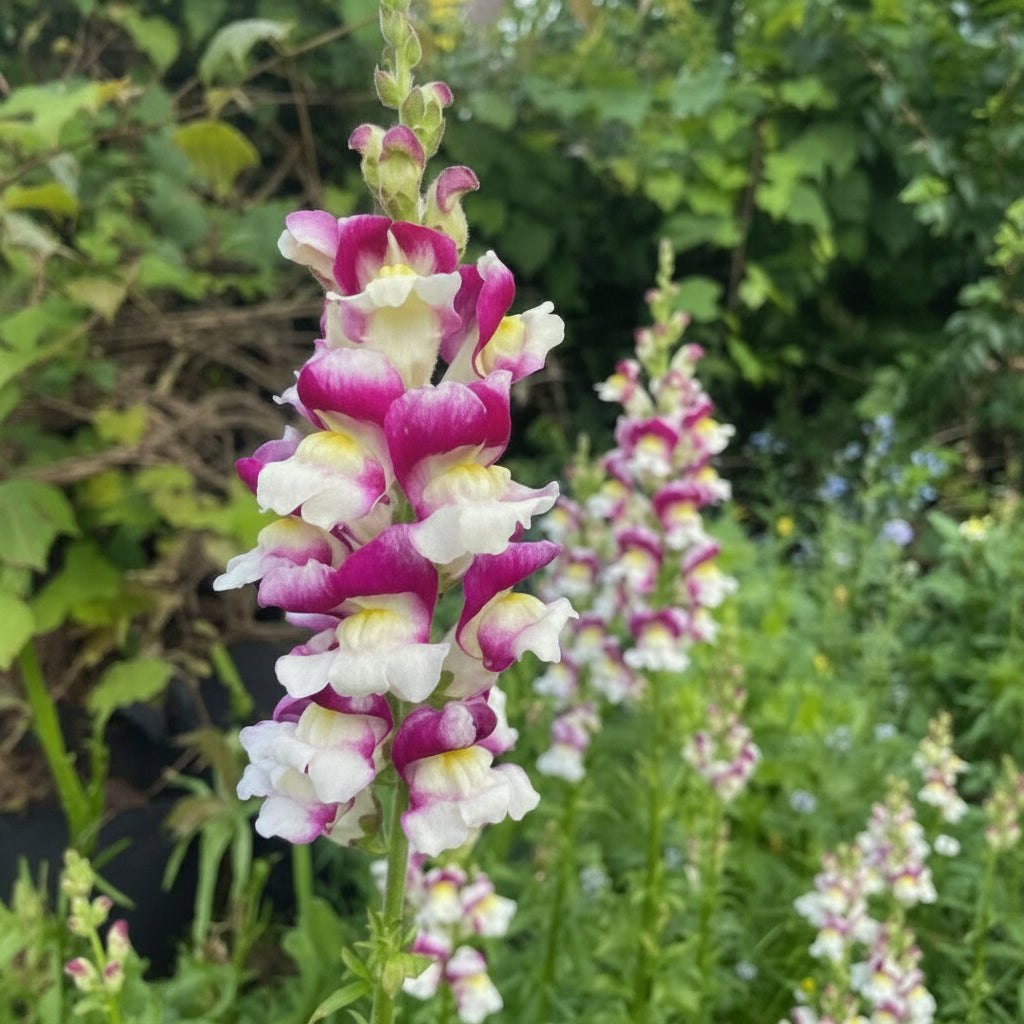
Our plant is 'Cherry Twist', a particularly beautiful bicolour snapdragon. Dark cherry buds open into flowers brushed with cherry pink and cream, with warm yellow markings in the throat. From a distance the flower spikes look elegant; up close, every bloom seems slightly different.
This is also a very useful flower for Hungary because snapdragons are happiest when temperatures are moderate. They can cope with cool spring weather better than many summer annuals, often pause a little in extreme July heat, and then begin looking wonderful again as late summer and early autumn become gentler.
In this book we will start with those dust-like seeds, learn why they should not be buried deeply, raise sturdy seedlings, plant them into the border, cut them for the vase, help them through Hungarian summer heat and encourage a second flush of flowers.
Ready? Let's grow something tall, cheerful and just a little theatrical.
|
GOOD TO KNOW Snapdragons are cool-season flowers. Do not panic if they slow down in the hottest part of a Hungarian summer. When nights cool again, healthy plants often begin flowering strongly once more. |
1. Meet the Snapdragon
Snapdragons belong to the genus Antirrhinum. The garden snapdragon is Antirrhinum majus, a Mediterranean species that has been cultivated for centuries and is now one of the classic flowers of cottage gardens and cutting gardens.
Why the strange flower shape?
Each flower has two lips that close together around the centre. Strong insects such as bumblebees can push their way inside to reach pollen and nectar, which makes an open snapdragon spike wonderfully entertaining to watch.
Annual or perennial?
Botanically, snapdragons can behave as short-lived perennials in mild climates. In most Hungarian gardens we treat them as annuals or short-lived bedding plants because winter conditions and summer stress make their long-term survival unpredictable.
How tall is Cherry Twist?
'Cherry Twist' is a medium-tall snapdragon, generally around 55-65 cm in garden conditions. That gives it enough height for the middle of a border and enough stem length to make a very useful cut flower.
2. The Snapdragon We Grow With You
At Holland Kerteszet, the variety we are growing together is Snapdragon 'Cherry Twist'
• Botanical name: Antirrhinum majus
• Variety: 'Cherry Twist'
• Seed packet: 0.05 g
• Brand: Buzzy
• Flower colours: cherry pink/red, creamy white and yellow markings
• Height: approximately 55-65 cm
• Life cycle in Hungary: usually grown as an annual
• Best position: full sun to light partial shade
• Best uses: borders, cottage gardens, pots and cut flowers
• Wildlife value: attractive to bees, especially bumblebees
|
WHY THIS VARIETY? The charm of 'Cherry Twist' is contrast. The flowers are not one flat colour: dark cherry buds, pale cream petals and yellow throats make the spikes look painted rather than simply coloured. |
3. The Right Place
Sun first
Snapdragons flower best with plenty of light. Choose full sun where possible. In the hottest parts of Hungary, a little light afternoon shade can help the plants stay fresher through high summer without sacrificing too many flowers.
Good garden soil
They prefer fertile but well-drained soil. Unlike rock-garden plants, snapdragons appreciate some nutrition and regular moisture, but roots should never sit permanently in water.
Air movement matters
Tall flower spikes and dense leaves benefit from airflow. Avoid squeezing plants tightly between vigorous neighbours, especially in humid weather.
|
HUNGARIAN SUMMER NOTE In July, a west-facing wall can become brutally hot. If snapdragons repeatedly wilt there despite good watering, the problem may be heat rather than thirst. A slightly cooler position often performs better. |
4. Sowing Those Tiny Seeds
Snapdragon seed is extremely small. The biggest beginner mistake is burying it too deeply.
When to sow
For an early display, sow indoors from late winter into early spring, roughly February to March. You can also sow later for plants that flower into late summer and autumn.
Surface sow
• Fill a tray or module with fine seed compost.
• Water the compost before sowing.
• Scatter the seed thinly over the surface.
• Press gently so the seed makes contact with the compost.
• Do not bury deeply; light helps germination.
• Keep the surface evenly moist using a fine spray or bottom watering.
• Provide bright light as soon as seedlings appear.
Cooler is often better
Snapdragons do not need tropical heat to germinate. Moderate indoor temperatures are enough. Once seedlings appear, strong light and slightly cooler growing conditions help produce compact plants rather than long, soft stems.
|
A COMMON MISTAKE Covering snapdragon seed with a centimetre of compost. The seed is tiny and benefits from light. Think 'pressed onto the surface', not 'buried'. |
5. Raising Strong Seedlings
Give them light
Snapdragon seedlings can become leggy very quickly if they are warm and dim. Put them in the brightest practical position and turn trays regularly if light comes mainly from one direction.
Prick out carefully
When seedlings have developed true leaves and are large enough to handle, move them into individual cells or small pots. Hold by a leaf rather than pinching the stem.
Pinching for branching
Once plants are established and have several pairs of leaves, pinching the growing tip can encourage branching and produce more flowering stems. If you want one very tall central cut-flower stem, you can leave some plants unpinched instead.
Hardening off
Before planting out, expose the young plants gradually to outdoor sun, wind and cooler nights over about a week. Snapdragons are cool tolerant, but greenhouse-raised seedlings still need this transition.
|
CUT-FLOWER CHOICE Pinch some plants and leave a few unpinched. The pinched plants give more stems; the unpinched plants often produce an earlier, taller central spike. |
6. Planting Out in Hungary
Snapdragons can go outside earlier than tender flowers such as petunias or celosia, but avoid planting tiny soft seedlings just before a severe frost.
When?
Depending on your region and the spring, late March through April can be possible for hardened plants in sheltered gardens, while April into early May is the simpler beginner window.
Spacing
Allow about 20-25 cm between plants. This gives them enough room to branch while keeping the display full.
Planting
Set each plant at the same depth it was growing in the pot, firm gently and water well. Tall plants in windy positions may benefit from an unobtrusive support ring or twiggy stems placed early.
|
MASTER-BOOK RULE A sturdy plant put out one week later usually overtakes a soft plant chilled by being planted too early. Do not race the calendar. |
7. Keeping Snapdragons Flowering
Water deeply
Keep the root zone evenly moist while plants establish. Once rooted, water deeply during dry weather rather than giving a tiny splash every day.
Feed modestly
A light balanced feed can help in poor soil or containers. Too much nitrogen creates leafy growth and softer stems, so more fertiliser does not automatically mean more flowers.
Deadhead regularly
Cut old spikes back before they spend all their energy making seed. New flowering stems can then develop from lower side shoots.
The midsummer pause
During prolonged heat, flowering may slow. Keep plants healthy, remove tired stems and water during drought. As temperatures moderate, they often respond with a fresh flush.
|
THE SECRET TO A LONG SEASON Treat July as a maintenance month, not necessarily the grand finale. Healthy snapdragons can look magnificent again in September when the nights become cooler. |
8. Cutting Cherry Twist for the Vase
Snapdragons are classic cut flowers because one stem gives both height and colour to an arrangement.
When to cut
Harvest when roughly the lower third of the florets are open and the upper buds are still closed. The remaining buds can continue opening indoors.
Cut in the cool
Early morning is ideal. Use clean snips, place stems into water quickly and remove leaves that would sit below the waterline.
What to pair with it
'Cherry Twist' looks beautiful with white cosmos, dark scabiosa, soft phlox, ammi, ornamental grasses and silvery foliage. The vertical flower spike gives structure to looser, rounder flowers.
|
A SIMPLE BOUQUET Try five 'Cherry Twist' stems with a handful of white cosmos and a little airy green foliage. The snapdragons provide the architecture; the cosmos provide movement. |
9. Bees, Pests and Common Problems
Bumblebees at work
Bumblebees are strong enough to force open the hinged flowers. Watching them disappear into a snapdragon bloom is one of the best small garden performances of summer.
Aphids
Tender tips can attract aphids. Small colonies can often be washed away with water or left for ladybirds and hoverfly larvae to control.
Rust and mildew
Snapdragons can suffer from fungal problems when foliage remains crowded and damp. Good spacing, watering at soil level and removing badly affected material all help.
Floppy stems
Too much shade, excessive feeding or strong wind are common causes. Give plants more light, feed less heavily and add discreet support if necessary.
|
A COMMON MISTAKE Watering over the foliage every evening. Wet leaves that remain damp overnight make fungal problems more likely. Water the soil whenever practical. |
10. Growing Snapdragons in Pots
'Cherry Twist' can be grown in a container, but medium-tall snapdragons need more root room than small bedding varieties.
Choose a stable pot
Use a deep container with drainage holes. A wide, heavy pot is useful because tall flower spikes can catch the wind.
Do not overcrowd
Three well-spaced plants in a generous container usually look better than six plants competing for water and nutrients.
Container care
Pots dry much faster than garden soil during Hungarian summer heat, so check moisture frequently. Feed lightly during active flowering and remove old flower spikes promptly.
|
BALCONY IDEA Place a pot of 'Cherry Twist' near a seat rather than at the far end of the balcony. The bicolour flowers are especially beautiful when you can see them close up. |
11. Saving Seed - and What to Expect
If you want seed, stop deadheading a few late flower spikes and allow the seed capsules to mature and dry on the plant.
How to collect
• Choose a healthy plant you particularly like.
• Leave several late flower spikes untouched.
• Wait until the seed capsules become dry and brown.
• Cut the stems into a paper bag on a dry day.
• Let them dry completely before shaking out the tiny seed.
• Store labelled seed in a cool, dry place.
Will it come true?
Open-pollinated snapdragons can cross with other snapdragons growing nearby. Seedlings may resemble the parent closely, or they may surprise you with slightly different colours. If exact 'Cherry Twist' colouring matters, fresh named seed is the safest choice.
12. A Simple Snapdragon Calendar for Hungary
• JANUARY-FEBRUARY Prepare trays and begin an early indoor sowing if you have excellent light.
• MARCH Continue sowing. Prick out early seedlings and begin hardening the strongest plants late in the month when weather allows.
• APRIL Plant hardened seedlings outside in suitable conditions. Direct-sow a small later batch if you wish.
• MAY Plants establish and begin branching. Add support before stems become tall if your garden is windy.
• JUNE Main flowering begins. Cut stems and deadhead regularly.
• JULY Water during drought and expect flowering to slow in extreme heat.
• AUGUST Trim tired stems and keep plants healthy. Cooler nights can trigger fresh growth.
• SEPTEMBER Enjoy a strong second flush. This can be one of the best snapdragon months in Hungary.
• OCTOBER Continue cutting while weather remains mild. Leave selected seed pods to mature.
• NOVEMBER Collect dry seed and clear plants once frost has finished them.
• DECEMBER Store seed dry and plan next year's cool-season flower border.
|
THE RHYTHM OF THE PLANT Snapdragon is a spring-and-autumn star with a summer intermission. Understanding that rhythm makes the plant much easier to enjoy in Hungary. |
13. Your Snapdragon Cheat Sheet
• Botanical name: Antirrhinum majus.
• Variety: 'Cherry Twist'.
• Height: approximately 55-65 cm.
• Position: full sun to light partial shade.
• Soil: fertile, moisture-retentive but well drained.
• Sow: late winter to early spring indoors for an early display.
• Seed depth: surface sow or cover only extremely lightly.
• Plant out: spring after hardening off.
• Spacing: around 20-25 cm.
• Best uses: borders, cottage gardens and cutting.
• Flowering trick: deadhead and cut regularly.
• Summer strategy: keep healthy through heat and enjoy the autumn comeback.
|
IF YOU REMEMBER ONLY FIVE THINGS Surface sow. Give strong light. Plant into sun. Cut old spikes back. And do not give up on the plants during July heat - autumn may be their best encore. |
One Last Walk Around the Garden
We began with a packet of seed so fine it barely looked large enough to become anything at all. Then came the tiny seedlings, the first true leaves, the moment they were strong enough to go outside and finally those upright flower spikes beginning to colour.
'Cherry Twist' is the kind of flower that rewards both distance and curiosity. From across the border it gives height and rhythm. Close up, you notice the cream petals, cherry markings, yellow throat and the bumblebee forcing its way into a flower that seems closed to everyone else.
And perhaps the nicest surprise comes after midsummer. Just when you think the snapdragons have had their moment, the nights cool, the plants freshen and another set of flower spikes begins to rise.
Until then, enjoy the flowers. And whenever you're ready to grow something new…
Come into the garden with me.
We're growing Snapdragon 'Cherry Twist'.


