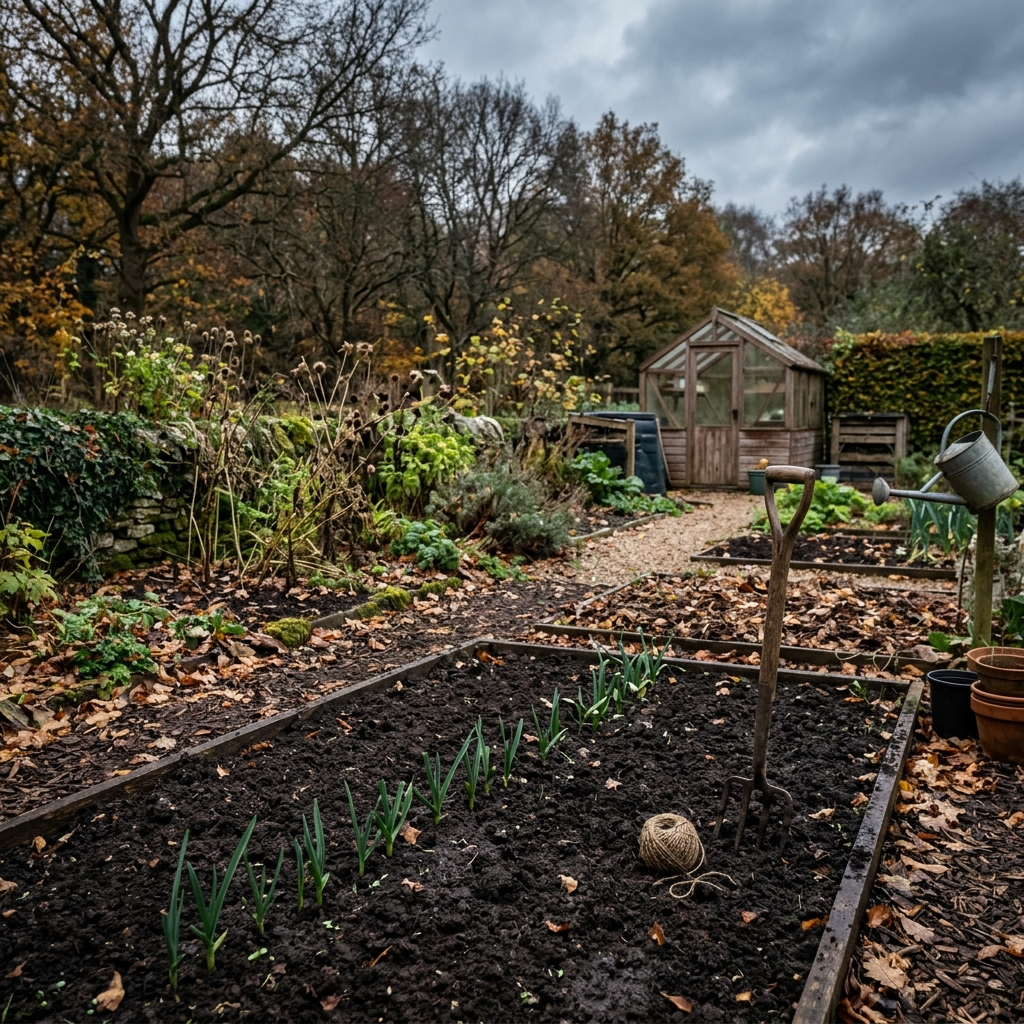
The secret to a beautiful spring, a flourishing summer and a successful harvest may begin with what you do in your garden today.
There is something about November that makes us gardeners slow down.
The mornings are colder, the daylight disappears earlier, and the garden no longer demands our attention quite as loudly as it did in summer.
The tomatoes have been harvested, the roses are producing their last flowers, and the vegetable beds are gradually becoming empty. The trees are shedding their leaves, and the first frosty mornings remind us that winter is approaching.
We look outside and think, Perhaps it's time to put the gardening tools away.
But I have a little secret to share with you.
November may be one of the most important months in your entire gardening year.
Not because there is an enormous amount of work to do.
Quite the opposite.
November is important because the small decisions we make now can influence what happens in our gardens for many months to come.
The compost we prepare today may help nourish next year's vegetables.
The mulch we spread around our plants can protect the soil during winter and help conserve moisture when spring arrives.
The dried flower stems we leave standing may provide shelter for insects that will visit our flowers next summer.
The bulbs we plant now may become the first colourful flowers of spring.
And the time we spend observing and planning our gardens may save us weeks of frustration when the growing season begins again.
It is rather like preparing a house for a new family.
Before the furniture arrives and the rooms become full of life, we make sure the foundations are strong.
Our gardens are no different.
So, put on a warm jacket, make yourself a cup of coffee, and come into the garden with me.
Today, we're going to discover why November matters so much — and how a little thoughtful gardening now can make next year something truly special.

1. Your Garden's Future Begins Beneath Your Feet
When we think about a beautiful garden, we usually imagine colourful flowers, healthy vegetables and magnificent shrubs.
But none of these can flourish without a suitable foundation.
And that foundation is the soil.
Healthy garden soil is much more than a mixture of sand, clay and organic matter.
It is a living environment filled with microorganisms, fungi, earthworms and countless other small creatures.
These organisms help recycle nutrients, break down organic material and influence soil structure.
During the growing season, we tend to focus on what is happening above ground.
We admire the flowers, check the tomatoes and worry about the roses.
But November gives us an opportunity to pay attention to the soil itself.
What happens to soil during winter?
As temperatures fall, biological activity generally slows.
However, many soil organisms remain alive and continue working whenever conditions are suitable.
Earthworms may retreat deeper into the soil.
Fungi continue to survive among roots and organic material.
Bacteria respond to changing temperature and moisture.
And plant roots may remain active during mild periods, depending on the species.
The soil is not simply waiting for spring.
It is passing through another important stage in its yearly cycle.
Why November soil care matters
Imagine two vegetable gardens.
In the first garden, the soil is left bare after the final harvest.
Winter rain falls directly onto the surface. Heavy rainfall may cause crusting, erosion or compaction, depending on the soil and slope.
In the second garden, the soil is protected with an appropriate layer of organic material.
Rainfall has less direct impact, temperature fluctuations near the surface are moderated, and the soil remains protected.
By spring, the two gardens may behave quite differently.
The protected soil may be easier to work and better able to retain moisture.
Of course, the results depend on soil type, drainage and weather.
But the principle is simple.
The way we treat our soil in November can influence how well it supports plants next year.
GOOD TO KNOW
Healthy soil is not necessarily soil that has been dug, turned and made perfectly smooth.
In established beds, preserving soil structure and avoiding unnecessary disturbance can be more beneficial than repeated cultivation.
Sometimes doing less is the smartest gardening decision.
2. Compost — Turning This Year's Garden Into Next Year's Success
If there is one gardening activity that perfectly represents the idea of preparing for the future, it is composting.
Think about it.
We take materials that might otherwise be thrown away — fallen leaves, vegetable peelings, spent plants and garden trimmings — and allow nature to transform them into something useful.
It's almost like magic.
Except that the magic is performed by bacteria, fungi, earthworms and other decomposers.
Why compost is so valuable
Mature compost adds organic matter to the soil.
It can help improve soil structure, support biological activity and influence the way soil holds water.
In sandy soils, organic matter can improve moisture retention.
In heavy clay soils, it can help encourage better aggregation over time.
And in Hungarian gardens, where summer drought and heat can be serious challenges, improving soil condition is particularly worthwhile.
Compost also contains nutrients, although their quantities vary considerably depending on the materials used and the composting process.
It should be regarded as a soil improver as well as a possible nutrient source, rather than an excuse to apply unlimited amounts.
What can go into your November compost heap?
Autumn provides an abundance of composting materials.
You can use:
-
Fallen leaves from suitable, healthy trees.
-
Spent vegetable plants that are free from serious disease.
-
Soft garden trimmings.
-
Chopped perennial stems.
-
Vegetable and fruit scraps from the kitchen.
-
Coffee grounds in moderate quantities.
-
Small amounts of shredded, uncoated cardboard.
A good compost heap contains a mixture of nitrogen-rich and carbon-rich materials.
Fresh green plant material and many kitchen scraps tend to be relatively nitrogen-rich.
Dry leaves, straw and shredded cardboard are generally more carbon-rich.
Mixing them helps create suitable conditions for decomposition.
The secret to good compost
Composting organisms need moisture and oxygen.
If a heap becomes too dry, decomposition slows.
If it becomes excessively wet and compacted, oxygen may become limited and unpleasant smells can develop.
Aim for material that feels roughly like a wrung-out sponge.
Turning the heap can improve aeration, although not every composting system requires frequent turning.
Will compost continue decomposing during winter?
Yes, although cold temperatures generally slow the process.
A large, well-managed compost heap may remain warmer inside because microorganisms generate heat as they work.
Smaller heaps often cool more quickly.
Don't worry if your compost seems inactive in January.
As temperatures rise in spring, decomposition usually becomes more active again.
A COMMON MISTAKE
Adding enormous quantities of fallen leaves without mixing them with other materials can produce a slow-decomposing, compacted heap.
If you have more leaves than your compost bin can manage, make a separate leaf-mould pile.
Leaf mould is wonderful for improving soil structure, even though it is usually not particularly rich in nutrients.

3. Mulching — Giving Your Soil a Winter Blanket
Imagine going outside on a freezing November morning without a coat.
Not particularly pleasant, is it?
Well, our soil can also benefit from a protective covering.
In gardening, this is called mulch.
Mulch is a layer of material placed over the soil surface.
It can consist of shredded leaves, bark, straw, mature compost or other suitable materials.
And although mulching is useful throughout the year, November is an excellent time to consider where it may help.
What does mulch actually do?
A suitable layer of mulch can reduce soil erosion, moderate temperature fluctuations and help conserve moisture.
It can also suppress some weed growth and, when made from organic materials, gradually contribute organic matter as it decomposes.
But one of its greatest advantages is that it protects the soil surface from direct exposure.
During winter, this can be particularly valuable.
Mulching around roses
Roses can benefit from appropriate winter protection, especially newly planted or less hardy varieties.
In colder locations, a mound of suitable soil or compost around the base of a grafted rose may help protect the graft area, depending on planting depth and the rose's hardiness.
Avoid packing wet leaves tightly against the stems.
And remember to adjust or remove temporary winter protection when conditions improve in spring.
Mulching vegetable beds
After harvesting the final vegetables, you can protect suitable bare beds with mature compost, chopped leaves or another appropriate covering.
This may reduce erosion and help preserve soil structure.
However, avoid adding excessive amounts of nutrient-rich compost year after year without considering the soil's nutrient status.
A soil test can be useful in productive vegetable gardens.
Mulching around trees and shrubs
A broad ring of organic mulch around a young tree can reduce competition from grass and help conserve soil moisture.
But there is one important rule.
Never pile mulch directly against the trunk.
This creates the famous "mulch volcano," which can encourage moisture-related problems and conceal damage.
Instead, leave a clear gap around the trunk.
How thick should mulch be?
The ideal depth depends on the material and the plants.
For many established beds, a loose organic mulch layer of approximately 5–7 cm can be useful.
Fine materials may need a thinner layer.
Plants sensitive to winter moisture may need little or no mulch around their crowns.
GROW WITH US
If you have a large deciduous tree in your garden, don't automatically throw away its leaves.
Shred suitable leaves and use them as mulch beneath shrubs or in established flower beds.
It is one of the simplest ways to recycle nutrients and protect the soil.
4. Frost Protection — Helping Plants Survive Without Overprotecting Them
November often brings the first serious discussions about frost.
Should we cover the roses?
Should we bring the pots indoors?
Will the lavender survive?
What about the young fruit trees?
These are all sensible questions.
But frost protection is not simply about wrapping everything in plastic.
Different plants tolerate cold in different ways.
And protecting them incorrectly can sometimes cause more problems than the frost itself.
Why frost damages plants
Freezing temperatures can cause ice to form in plant tissues or in the spaces around cells.
Plants that are adapted to cold weather have developed ways to tolerate or avoid some of this damage.
Tender plants, however, may suffer injury when temperatures fall below their tolerance.
The risk also depends on wind, moisture, duration of freezing and the plant's condition.
Protecting potted plants
Plants growing in containers are often more vulnerable than the same species growing in the ground.
Their roots are exposed to greater temperature fluctuations.
Move suitable pots to sheltered positions, such as near a protected wall.
Raise containers slightly off poorly draining surfaces where necessary.
Use frost-resistant pots and ensure drainage holes remain open.
For plants that need extra protection, wrap the container with an insulating material.
Tender plants may need to be moved into a frost-free location.
What about oleanders?
Oleanders are popular in Hungary, particularly on terraces and in courtyards.
But they are not reliably hardy outdoors during typical Hungarian winters.
Container-grown oleanders generally need suitable frost-free winter accommodation.
A cool, bright location is often preferable to a warm, dark room.
Water sparingly during winter, but don't allow the root ball to become completely dry for prolonged periods.
Protecting young trees
Newly planted trees may benefit from mulch and appropriate protection against animals.
Some young trees are also vulnerable to winter sun damage or frost cracks.
The best protection depends on the species and site.
Avoid wrapping trunks in materials that trap excessive moisture.
Don't forget winter drainage
Sometimes the greatest danger is not the cold itself.
It is the combination of cold and wet soil.
Lavender, rosemary and many Mediterranean-style plants can struggle in heavy, poorly drained soil.
Good drainage and an appropriate planting position are often more important than wrapping the plant in fleece.
A COMMON MISTAKE
Covering hardy plants too early or too tightly can trap moisture and reduce air circulation.
Use protection when it is genuinely needed, and remove or ventilate temporary coverings during suitable weather.

5. The Insects You Protect Today May Help Your Garden Next Summer
Now we come to one of my favourite reasons for being a little less enthusiastic about autumn cleaning.
Insects.
Yes, I know.
Not everyone becomes excited at the mention of beetles, tiny wasps or insects hiding inside dried plant stems.
But many of these creatures are incredibly valuable to our gardens.
And November is an important time for their survival.
Where do beneficial insects spend winter?
Different species use different strategies.
Some overwinter as adults.
Others survive as eggs, larvae or pupae.
They may shelter in leaf litter, soil, hollow stems, bark crevices or other protected places.
Ladybirds, for example, may gather in sheltered locations.
Certain solitary bees use plant stems or cavities for nesting.
Ground beetles may shelter beneath logs, stones or vegetation.
And many other insects spend winter in places we hardly notice.
What happens when we clean everything away?
If we remove every dried stem, collect every leaf and clear every sheltered corner, we may also remove overwintering insects.
Of course, some of these insects may be pests.
But many are predators, pollinators or important parts of the garden food web.
A completely sterile-looking garden is not necessarily a healthier garden.
Leave some flower stems standing
Plants such as Echinacea, Rudbeckia, Achillea and certain ornamental grasses can provide winter structure.
Some seed heads may feed birds.
And suitable stems may provide habitat for insects.
You don't need to leave every plant untouched.
Simply choose areas where natural materials can remain safely until spring.
Create a small wildlife corner
A quiet corner with leaves, branches and suitable vegetation can provide valuable shelter.
It doesn't need to look messy.
You can define the area with stones, logs or a small natural border.
The important thing is to avoid disturbing it unnecessarily.
GOOD TO KNOW
Not every commercial insect hotel is equally useful.
Poorly designed hotels can become damp, encourage parasites or provide unsuitable nesting spaces.
Natural habitats, including native plants, undisturbed soil and suitable dead wood, are often just as important as artificial structures.
6. Why November Is a Wonderful Month for Planning Next Year's Flowers
Now that the garden is quieter, we can finally look at it properly.
During summer, everything is growing so quickly that it is easy to overlook problems.
But in November, the structure becomes visible.
You can see where the borders are too narrow.
Where a shrub has become too large.
Where a path could be improved.
And where a new flower bed might create something beautiful.
Think about the garden you want next year
Would you like more flowers for cutting?
A colourful border for pollinators?
A vegetable garden that produces food throughout the summer?
A beautiful collection of spring bulbs?
Or perhaps a garden that requires less watering?
November is the perfect time to make these decisions.
Plan for the Hungarian climate
One of the biggest challenges for Hungarian gardeners is the combination of cold winters and increasingly demanding summer conditions.
Long hot periods, drought and occasional intense rainfall can place stress on plants.
So when planning next year's garden, think carefully about water.
Can you collect rainwater?
Would mulch help reduce evaporation?
Could you group plants according to their watering needs?
Are there suitable drought-tolerant perennials that would perform better in your garden?
Flowers worth considering
For sunny, well-drained locations, consider plants such as:
-
Echinacea
-
Achillea
-
Salvia nemorosa
-
Nepeta
-
Rudbeckia
-
Suitable ornamental grasses
These can create attractive summer borders and, in many cases, provide useful resources for pollinators.
However, even drought-tolerant plants need adequate water while establishing.
Plan flowers for every season
A beautiful garden should not depend on one short flowering period.
Combine spring bulbs with summer perennials and autumn-flowering plants.
Think about foliage, seed heads and winter structure too.
The result is a garden that remains interesting throughout the year.

7. November Is the Perfect Time to Plan Your Vegetable Garden
If you grow vegetables, you probably know the familiar excitement of spring.
The first warm days arrive.
We buy far too many seeds.
We sow everything at once.
And by June, we discover that the tomatoes are growing into the cucumbers, the courgettes have taken over the paths, and there is nowhere left to plant the lettuce.
Does that sound familiar?
November is our opportunity to avoid this chaos.
Start with a simple garden map
Draw the vegetable beds on a piece of paper.
They don't need to be perfectly measured.
Mark where you grew your main crops this year.
Then think about next year's planting.
Consider crop rotation
Rotating crop families can help manage certain soil-borne diseases and pests.
For example, avoid repeatedly growing tomatoes, peppers and potatoes in the same bed if you have enough space to rotate them.
Crop rotation is not a complete solution to every problem, but it can be a useful part of good garden management.
Think about succession planting
Instead of sowing all your lettuce at once, plan smaller sowings over several weeks.
After harvesting an early crop, you may be able to plant something else.
For example, a bed used for spring spinach might later grow beans or another suitable summer crop.
The exact sequence depends on your region, planting dates and available water.
Plan for summer heat
In Hungary, lettuce, spinach and certain other cool-season vegetables can struggle during hot weather.
Plan these crops for spring and autumn.
Use summer beds for crops that appreciate warmth, such as tomatoes, peppers and aubergines.
But remember that even heat-loving crops can suffer during extreme temperatures.
Reliable irrigation and suitable soil moisture are essential.
Make a seed list now
Check which seeds you already have.
Look at their age and storage conditions.
Some seeds remain viable for several years, while others lose germination capacity more quickly.
You can test older seeds before relying on them for a major sowing.
This prevents unnecessary purchases and helps you prepare for spring.
8. A Little November Work Can Improve Next Year's Harvest
Let's return to the vegetable garden for a moment.
Because the difference between a disappointing harvest and a successful one often begins long before the seeds are sown.
Healthy soil supports healthy roots
Plants need suitable soil structure, water, air and nutrients.
Compacted soil can restrict root development.
Poor drainage can cause root problems.
Low organic matter may reduce water-holding capacity in certain soils.
And nutrient imbalances can affect growth.
November is a good time to identify these issues.
Should you test your soil?
If your vegetable garden has produced disappointing crops, a soil test may be worthwhile.
It can help identify pH and nutrient levels.
This is especially useful before applying large amounts of fertiliser or compost.
Adding more fertiliser without understanding the problem may not help.
Check your irrigation system
Before winter, drain and protect irrigation equipment that could be damaged by freezing.
Inspect hoses, connectors and watering systems.
Make a note of areas that received too little water during summer.
Then plan improvements before next year's heat arrives.
Remember pollination
Many fruiting crops depend on insects for pollination, although requirements vary.
By planning a diverse range of flowering plants and suitable habitat, you can support pollinators throughout the growing season.
Avoid relying on one flower species that blooms for only a few weeks.
A succession of flowering plants provides more continuous resources.
9. Spring Bulbs — A Promise Hidden Underground
There is something wonderfully hopeful about planting bulbs in November.
We take a small, rather ordinary-looking bulb and place it into the soil.
Then we cover it.
And wait.
Nothing appears to happen.
But beneath the surface, roots may begin to develop, and the bulb responds to the cool conditions of winter.
Inside many spring-flowering bulbs, the structures needed for future growth are already present.
The bulb contains stored reserves that help support early development.
Which bulbs can still be planted?
Depending on weather and soil conditions, November can be suitable for planting tulips and some other spring-flowering bulbs.
Daffodils, hyacinths, crocuses and certain other bulbs generally benefit from earlier autumn planting, but healthy bulbs should usually be planted promptly rather than left unplanted until spring.
Always check the species and planting requirements.
Planting in groups
For a beautiful spring display, plant bulbs in generous groups rather than scattering individual bulbs too widely.
Consider colour combinations.
Soft pink tulips with white daffodils.
Purple alliums among pale ornamental grasses.
Yellow narcissus beneath flowering shrubs.
A little planning now can create something truly spectacular next spring.
A COMMON MISTAKE
Planting bulbs in waterlogged soil is one of the easiest ways to lose them.
Most commonly grown spring-flowering bulbs need good drainage during winter.

10. November and the Art of Gardening With Nature
Perhaps the most important lesson November teaches us is that gardening doesn't always mean controlling everything.
Nature has its own rhythm.
Leaves fall.
Plants enter dormancy.
Soil organisms adapt to colder conditions.
Seeds wait for suitable temperatures.
Insects find shelter.
And roots continue their hidden work whenever conditions allow.
As gardeners, we can work with these natural processes rather than constantly trying to interrupt them.
Leave a little more standing
Allow healthy seed heads to remain where appropriate.
They may provide winter interest and food for birds.
Protect the soil
Use suitable mulch and avoid unnecessary disturbance.
Create diversity
A garden containing different plants, flowering periods and habitats can support a wider variety of organisms.
Avoid unnecessary chemicals
Use pest-control products only when needed and follow instructions carefully.
Observe before acting
Sometimes the most useful gardening activity is simply walking through the garden and noticing what is happening.
A garden teaches us something every season.
But only if we take the time to look.
11. Your November Garden Checklist
Here is a practical checklist you can use throughout the month.
Soil and Compost
-
Add suitable autumn materials to the compost heap.
-
Make a separate leaf-mould pile if you have plenty of leaves.
-
Protect bare soil with appropriate mulch.
-
Avoid digging or walking on waterlogged beds.
-
Consider a soil test if crops have performed poorly.
Flowers and Shrubs
-
Plant suitable spring-flowering bulbs while conditions allow.
-
Plant hardy dormant trees, shrubs and bare-root roses where appropriate.
-
Leave attractive, healthy seed heads standing.
-
Protect vulnerable container plants from frost.
-
Check drainage around sensitive plants.
Vegetable Garden
-
Plant autumn garlic in suitable soil.
-
Remove seriously diseased crop residues.
-
Protect unused beds from erosion.
-
Review crop rotation plans.
-
Check your seed collection and prepare next year's list.
Wildlife
-
Leave some leaf litter and sheltered vegetation.
-
Avoid disturbing potential hedgehog nests.
-
Keep suitable overwintering stems.
-
Provide clean water for birds when practical.
-
Avoid unnecessary disturbance of wildlife habitats.
Garden Planning
-
Photograph the garden before winter.
-
Note which plants performed well.
-
Identify areas that suffered from drought.
-
Plan new flower combinations.
-
Check irrigation equipment before freezing weather.
12. A Simple Plan for Four November Weekends
If the list above seems rather long, don't worry.
You don't have to do everything at once.
In fact, I prefer spreading the work over several weekends.
Weekend One — Take Care of the Soil
Walk around the garden and identify bare areas.
Add appropriate mulch where needed.
Collect suitable leaves for composting or leaf mould.
Avoid disturbing healthy beds unnecessarily.
Weekend Two — Prepare for Winter
Check container plants.
Move tender species to suitable winter accommodation.
Inspect drainage.
Protect young trees where necessary.
Weekend Three — Plant for Spring
Plant suitable spring bulbs.
Plant autumn garlic.
Consider hardy dormant shrubs, roses or fruit trees if the weather and soil conditions are suitable.
Weekend Four — Dream About Next Year
Make yourself a cup of coffee.
Sit down with your garden notebook.
Look through your photographs.
Think about what worked and what didn't.
And begin planning the garden you would love to have next year.
Sometimes this is the most enjoyable gardening weekend of all.
13. Five Fascinating Things You May Not Know About November Gardening
1. A compost heap can generate its own heat
Microorganisms release heat as they decompose organic material.
In a sufficiently large and well-managed heap, internal temperatures can become much warmer than the surrounding air.
2. Some roots can continue growing after leaves have fallen
Certain trees and shrubs may continue root activity during mild autumn periods, provided soil conditions remain suitable.
3. Fallen leaves can help protect overwintering insects
Leaf litter provides shelter for many small organisms and forms part of the natural winter habitat of gardens and woodlands.
4. Winter planning can reduce summer watering
Choosing suitable plants, improving soil condition and designing irrigation thoughtfully can make gardens more resilient during hot weather.
5. The most important gardening work is not always visible
Healthy roots, suitable soil structure, beneficial microorganisms and good drainage rarely attract attention.
But they are essential foundations for successful gardening.
14. Frequently Asked Questions
Should I dig my garden in November?
Not necessarily. In established beds, reducing unnecessary disturbance can help preserve soil structure. Digging may still be useful in specific situations, but avoid working frozen or waterlogged soil.
Can I add compost in November?
Yes. Mature compost can be applied to suitable beds in autumn. The amount should depend on soil conditions and plant requirements.
Is November too late to mulch?
No. November is often a good time to protect soil with suitable mulch. Avoid placing thick, wet material directly against sensitive plant crowns or tree trunks.
Which plants need frost protection in Hungary?
Tender plants such as container-grown oleanders generally need frost-free winter accommodation. Some young, newly planted or less hardy plants may also need protection depending on their location.
Should I remove all dead flowers?
No. Healthy dried stems and seed heads can provide winter interest and wildlife habitat. Remove material that is seriously diseased, dangerous or causing other problems.
Can I still plant tulips in November?
Yes, in many parts of Hungary, provided the soil remains workable and well drained.
How can I improve my garden soil before spring?
Protect bare soil, add suitable organic matter where needed, avoid compaction and consider soil testing before applying large quantities of fertiliser.
Is November a good month to plan next year's vegetable garden?
Absolutely. Reviewing this year's successes and problems can help you make better decisions about crop rotation, sowing dates, irrigation and plant selection.
Come Into the Garden With Me — A Final Thought
When we look at our gardens in November, it is easy to see only what has finished.
The last flowers.
The empty vegetable beds.
The fallen leaves.
The quiet trees.
But perhaps we should look at November differently.
Instead of seeing it as the end of the gardening year, we could see it as the beginning of the next one.
The compost we prepare today may help nourish next year's tomatoes.
The mulch we spread now may protect the soil that will support our summer flowers.
The insects sheltering among dried stems may become part of next year's thriving garden ecosystem.
The bulbs we plant today may become the first bright colours of spring.
And the plans we make during these quiet weeks may help us create a garden that is more beautiful, productive and resilient than ever before.
There is something wonderfully comforting about that thought.
Even when the garden appears still, the future is taking shape.
And perhaps that is one of the greatest pleasures of gardening.
We are always working towards something beautiful that hasn't happened yet.
So don't feel that November is a month when there is nothing left to do.
Take care of your soil.
Protect the plants that need help.
Give wildlife a little shelter.
Plant something for spring.
And allow yourself time to dream about the garden you want next year.
Because the garden you enjoy tomorrow begins with the care you give it today.
Happy gardening, and come into the garden with me again soon.
With warm wishes from Holland Kertészet.