

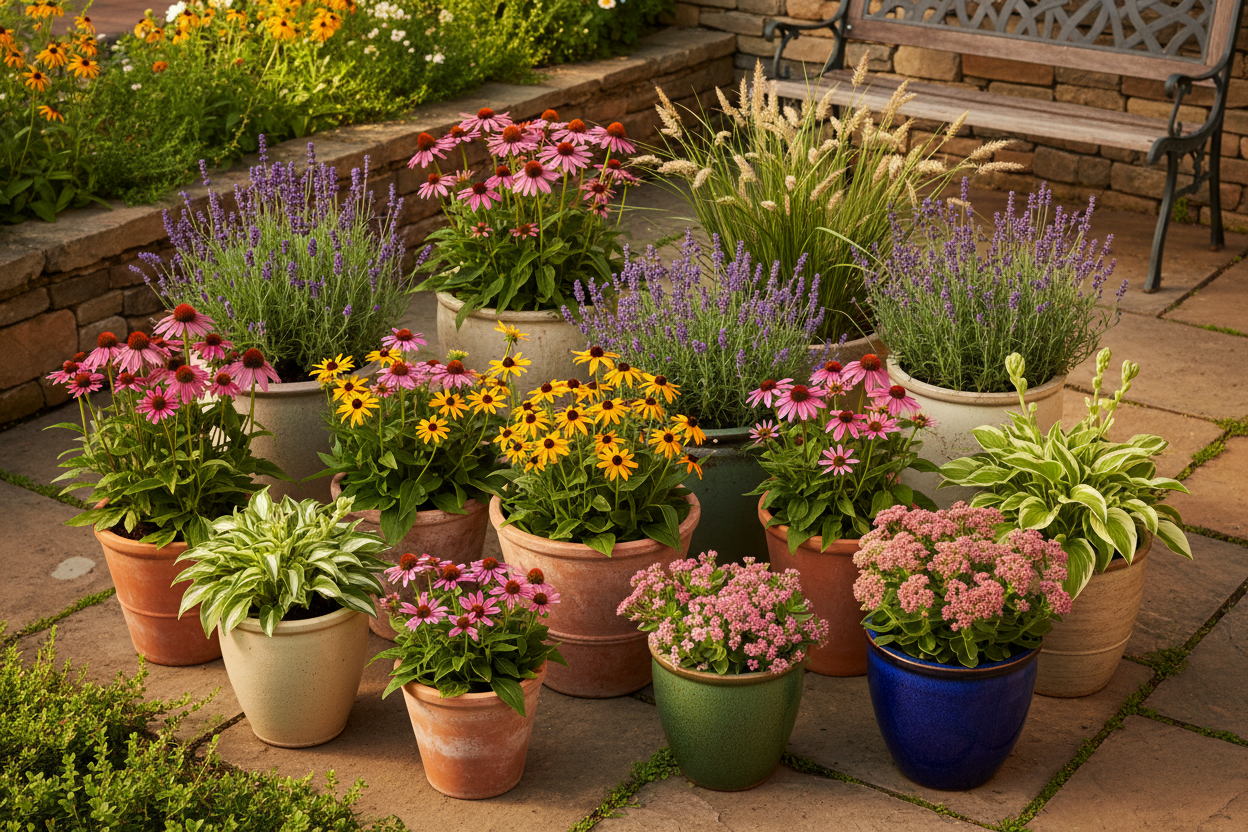
Plant once, tend occasionally, and enjoy colour season after season, without the annual replanting ritual.
Most gardeners spend far more on their container displays than they need to. Over the past five years, home gardening participation has risen by 20%, and yet the majority of those gardeners still fill their pots with annuals that die at the first frost, only to go back to the garden centre the following spring and do it all again. There is a smarter way.
While annuals may be less expensive to purchase and plant initially, they must be replanted yearly. In contrast, perennials usually cost more up-front, but they will return each year without replanting, making them a more cost-effective choice, especially if you plan to maintain your garden for several years. Put simply: plant once and your containers keep paying dividends. A perennial bed costs more to plant in the first year, but after that first year you spend nothing on new plants, and by year three, the savings comfortably outweigh the initial outlay. Therefore, if you are currently spending 30 Euro or more each spring refreshing your pots, switching to perennials is the single best thing you can do for your gardening budget.

Key Takeaways
-
Perennials save money every year: With proper care, perennials in pots will maintain their good looks year after year, reducing the need for frequent plant purchases. Reinvest those savings in a larger pot or better compost.
-
Drainage is the single most critical factor: Standing water in winter kills more container plants than frost does. Every pot must have drainage holes and ideally sit on raised feet.
-
Choose two hardiness zones hardier than your area: The general rule for a plant to be winter hardy in a pot sitting on your patio is that it should be two zones hardier than the climate zone you live in, because pot roots are far more exposed to cold.
-
Refresh soil, not the plants: It is a good idea to remove the plants from the pot every three years to replace the soil, doing this in the spring will get them off to a good start.
-
Pot size sets the ceiling: Permanent shrubs and perennials need a minimum pot width of 40 cm to give roots enough insulation and moisture retention to survive year-round.
Quick-Start Prioritisation Framework
Before you buy a single plant, match it to your conditions. Using the wrong plant in the wrong spot is the main reason perennials fail in pots.
| Plant | Best For | Sun Requirement | Effort Level | Time to First Bloom |
|---|---|---|---|---|
| Hosta | Shaded patios and balconies | Partial to full shade | Very low | Spring (foliage all season) |
| Lavender | Sunny spots, low-water gardens | Full sun (6+ hrs) | Low | Late spring to summer |
| Sedum / Stonecrop | Hot, dry positions; forgetful waterers | Full sun | Very low | Late summer to autumn |
| Heuchera (Coral Bells) | Shade to dappled light, colourful foliage | Partial shade | Low | Spring (foliage year-round) |
| Echinacea (Coneflower) | Sunny patios, wildlife gardens | Full sun | Low-medium | Midsummer to autumn |
| Agapanthus | Architectural statements, coastal gardens | Full sun | Medium | Midsummer |
| Astilbe | Shaded or north-facing spots | Shade to partial shade | Low | Midsummer |
| Penstemon | Long season colour, sunny pots | Full sun | Low | Early summer to autumn |
| Catmint (Nepeta) | Pollinator-friendly, relaxed cottage style | Full sun | Very low | Late spring to autumn |
| Hellebore | Winter and early spring interest | Partial shade | Very low | Late winter to spring |
| Daylily | Sunny spots, compact pots | Full sun | Very low | Early to midsummer |
| Blue Fescue (Festuca glauca) | Year-round structure, modern containers | Full sun | Very low | Foliage year-round |
Start here if you are:
-
A complete beginner: Sedum or Blue Fescue, both survive neglect, drought, and poor feeding without complaint.
-
Working with a shaded balcony or north-facing wall: Hosta, Heuchera, or Astilbe, all three thrive with minimal direct sun.
-
Looking for maximum colour with moderate effort: Echinacea or Penstemon, long bloom seasons and excellent pollinator appeal.
-
Wanting year-round structure: Hellebore and Blue Fescue together give you flowers in late winter and sculptural foliage through every season.
The Sun-Lovers: Plants That Thrive With Six or More Hours of Direct Light
Lavender
Like lavender growing in the garden, potted lavender is very low maintenance and drought-tolerant, making it the ideal container plant for gardeners who have little time to water, and as long as you meet its basic needs, this perennial herb can thrive in a container for many years.
English lavender (Lavandula angustifolia) and some Lavandin hybrids are usually the best choice for containers because they stay relatively compact and tolerate cooler conditions better than French or Spanish types. For British winters specifically, English lavenders are more cold-tolerant than other lavender varieties, making them a good choice for climates with cold winters.
The key rule: water deeply but infrequently allowing the top inch of soil to dry out between waterings, overwatering can lead to root rot, so ensure proper drainage. Therefore, always use a terracotta pot with a gritty compost mix, and never leave a saucer of standing water underneath.
Pro Tip: According to the Royal Horticultural Society, container lavender only needs a small dose of a balanced, slow-release fertiliser in spring if your mix is very low in nutrients, often, refreshing the top layer of potting mix in spring is enough. Overfeeding produces soft, floppy growth that snaps in wind.
Sedum (Stonecrop)
Sedums rank among the most forgiving container perennials with their drought-tolerant nature and minimal care requirements, their fleshy leaves store water, helping them sail through hot spells that would wilt other plants.
Low-growing varieties like 'Dragon's Blood' cascade beautifully over pot edges, while upright types such as 'Autumn Joy' provide architectural structure. From a wildlife perspective, sedum blooms attract butterflies and other pollinators, and varieties that bloom late summer to early fall provide food when other sources are scarce. That means planting a single pot of sedum actively supports your local ecosystem at the time when pollinators need it most. According to Garden Design's sedum growing guide, there are hundreds of varieties, most requiring little more than a sunny spot in well-drained soil.
Echinacea (Coneflower)
Echinacea, commonly known as coneflowers, is a hardy perennial with striking, daisy-like blooms in pink, orange, and white, perfect for containers, thriving in sunny locations with well-draining soil, and attracting bees, butterflies, and other pollinators.
For container growing, choose one of the shorter varieties such as Echinacea purpurea 'Pink Double Delight', and use a container of at least 45 cm wide as the smallest advisable size. In the first year, keep the plant well watered while roots establish; from year two onwards, only water if conditions are very dry. The RHS-awarded Gardening Know How guide to flowering perennials for pots recommends leaving dried seed heads on the plant over winter to feed birds and add structural interest through the coldest months.
Penstemon (Beardtongue)
Penstemon provides a late hit of colour from summer right through to the first frosts, and whilst normally a fantastic, hardy perennial for covering large areas in borders, there are more compact varieties perfect for pots too.
Penstemon is a hardy perennial with tubular flowers that are attractive to pollinators, and the plants prefer good drainage and are drought-tolerant once established. Compact varieties such as 'Etna', 'Apple Blossom' or 'Rock Candy Purple' suit pots well, as noted by RHS penstemon growing guide. The action point here: penstemons grow best in lean soil with excellent drainage, so resist the urge to use rich, moisture-retentive compost. A gritty mix keeps roots healthy through winter.

The Shade Champions: Perennials for North-Facing Walls and Dappled Light
Hosta
With their lush foliage ranging from deep green to silvery blue, hostas add instant texture and elegance to containers; they are low-maintenance, and once they settle in, they will return every year stronger than before.
With just a little water and maintenance, container-grown hostas will provide beauty to your shady areas for years to come. Plan to repot every two to three years, as potting soil becomes compacted and loses porosity and nutrients over time, repotting provides fresh nutrients and allows proper water and airflow to the roots. In my experience, the real joy of hostas in pots is the ability to move them precisely where shade is deepest, something you simply cannot do when they are planted in the ground.
Heuchera (Coral Bells)
Coral bells are good for pots and containers due to their compact size, shallow roots, and ability to adapt to varying light conditions. Heucheras bring rich, ruffled leaves in shades of burgundy, lime, and even caramel, and their tiny bell-shaped flowers attract pollinators too.
As highlighted by RHS heuchera growing guide, heuchera is one of the most versatile container perennials available, offering year-round colour even when not in flower. I've found that a single large heuchera in a glazed pot makes one of the most cost-effective year-round focal points you can create, no deadheading, no staking, no fuss.
Astilbe
Astilbe is a hardy perennial with fern-like foliage and feathery flower spikes in summer, use it in pots to add summer colour to a shady patio, deck, or balcony, as plants prefer even moisture and rich, well-drained soil.
Astilbe can live up to 10 years if you plant it in preferred conditions, making it one of the longest-lived perennials on this list. The action point: keep the compost consistently moist. Unlike most of the plants here, astilbe will not forgive drying out entirely. A moisture-retentive compost and regular checking during hot spells is the one non-negotiable for success.
Hellebore
Hellebores are amongst the best evergreen perennials for containers because they combine attractive foliage with very early blooms, in many regions, their flowers appear before winter has completely disappeared, bringing welcome colour when little else is growing, and the glossy green leaves remain attractive through most of the year.
RHS heuchera growing guide winter and spring containers, providing flowers at a time when many other plants are dormant. The RHS guide to award-winning perennials for containers highlights hellebores as a confident choice for gardeners who want containers that look good for longer. Plant in partial shade with moisture-retentive but well-drained compost.
The All-Rounders: Versatile Perennials for Any Pot
Agapanthus (African Lily)
Yes, agapanthus thrives in containers, especially when provided with good drainage and plenty of sunlight, potted agapanthus is ideal for small gardens, patios, and balconies, and container growing allows for easier overwintering, as the pots can be moved indoors or to sheltered areas when temperatures drop.
Agapanthus likes to be slightly root-bound, which encourages better blooming. When it is time to bring pots in for winter, the simplest thing to do is bring the whole container indoors in the autumn, cut back spent flower stalks and faded foliage and keep it in a light, dry area, without watering as much as in the summer. This one plant earns its keep across the whole season, from its architectural strap-like foliage in spring to its striking blue or white flower globes in midsummer. Holland Kertészet stocks a selection of agapanthus varieties suited to central European and continental conditions, worth exploring if you are building a statement patio display.
Pro Tip: To ensure a good display next year, avoid letting plants grown in containers dry out completely through summer until early autumn, as a lack of water can prevent the development of new flower buds. Keep watering even after the blooms fade.
Daylily (Hemerocallis)
Daylilies are a versatile choice for container gardening, offering cheerful blooms in a variety of colours; they thrive in sunny conditions and well-drained soil, making them easy to grow in pots, and these perennials bloom repeatedly throughout the season, providing long-lasting beauty.
Look for compact, dwarf varieties rather than the large border types. As noted by Oakes Daylilies' guide to compact daylily varieties for containers, dwarf varieties such as 'Stella de Oro', 'Happy Returns', and 'Rosy Returns' are perfect for pots with their small blooms and compact plant size. All daylilies will benefit from occasional dividing and perhaps just a little fertiliser in spring.
Catmint (Nepeta)
Catmint, or nepeta, comes in pretty masses of blue or purple-hued bloom spikes atop interesting mounding grey-green foliage, and it blooms from summer to the first frost, making it a magnet for bees and other precious pollinators.
Low-growing varieties like 'Dwarf Blue' or 'Walker's Low' work best for container gardens. This long-blooming perennial provides nectar from early summer into the fall, arguably the longest flowering window of any plant on this list. Cut it back by roughly a third after the first main flush and it will typically rebloom. In my experience, this is the single most reliable plant for keeping a pot looking presentable from May through to October with almost zero intervention.
Blue Fescue (Festuca glauca)
Festuca glauca, or blue fescue, is an ornamental grass that adds texture and colour contrast to container gardens, its compact size and spiky, blue-green foliage make it a versatile choice for pots, and this drought-tolerant perennial thrives in full sun and requires minimal care.
Ornamental grasses add drama texture, and graceful movement to containers with almost no care at all. Blue fescue works year-round as a structural foil for flowering companions. Pair it with sedum for an effortlessly modern, waterwise container that needs virtually no attention. The Epic Gardening guide to perennials for pots highlights ornamental grasses as one of the most under-used container perennials, providing structure and ecosystem value that flowering plants alone cannot offer.
Pro Tip: Divide your blue fescue clump every two to three years in early spring. It takes five minutes and gives you additional plants for free, one of the most appealing qualities of any perennial in a pot.

Common Mistakes That Kill Container Perennials
Wrong Pot Material in Winter
If you know you are going to leave your pot sitting outside all winter, you should choose a container that will not break from the freeze-thaw action, clay, glazed and porcelain pots are susceptible to breaking, while good choices include plastic, composite, metal and wood pots. Therefore, if you already have terracotta pots you love, move them into a sheltered spot or wrap them in hessian before the first hard frost.
Skipping the Drainage Layer
Drainage is non-negotiable, every pot must have drainage holes, covered with crocks (broken pot pieces) or mesh to stop compost washing out, and raised on feet so water escapes freely. Standing water at root level over winter is a death sentence for the majority of the plants in this guide.
Overfeeding
Many gardeners assume that more feed equals more flowers. The opposite is often true. The most common agapanthus feeding mistake is using a high-nitrogen fertiliser in spring and expecting more blooms, nitrogen drives vegetative growth (roots, stems, and leaves), which is exactly what the plant does not need more of. The same principle applies to lavender, sedum, and catmint. Feed sparingly with a balanced slow-release fertiliser in early spring, and let the plant do the rest.
Frequently Asked Questions
How do I stop perennials dying in pots over winter?
The easiest way to overwinter a plant in a pot is to choose one that will be hardy in the pot, the general rule is that it should be two zones hardier than the climate zone you live in. Beyond variety selection, ensure excellent drainage, raise pots off cold ground, and wrap pots in bubble wrap or hessian if temperatures regularly drop below -10°C. For tender types such as agapanthus, bring the pot indoors into a cool, frost-free space such as a garage or conservatory.
Do perennials in pots need more water than those in the ground?
Yes, significantly more. compact daylily varieties for containers grown in containers are more vulnerable than those in the ground, and pots dry out far faster than open soil. Check pots every two to three days during summer and water thoroughly when the top inch of compost feels dry. The exception is drought-tolerant plants like sedum and catmint, which prefer to dry out fully between waterings.
When should I repot my container perennials?
Perennial plants should last for several years in a container, after which time you can divide them and plant them back into the pot in fresh compost, or move them to the garden. As a rule of thumb, repot or divide every two to three years in spring, refreshing the compost fully at the same time. This is also the perfect time to divide plants if they seem overcrowded, use the plant divisions to create new planter combinations or share with plant-loving friends and family.
Can I mix perennials with annuals in the same pot?
Absolutely, and it is often the best approach. Let perennials anchor containers and embellish potted designs with annuals for seasonal colour and interest. Use a reliable perennial such as heuchera or blue fescue as your year-round anchor, then tuck in annual bedding around the edges for seasonal pops of colour. This gives you structure and longevity alongside the bold seasonal displays that annuals deliver.
What is the minimum pot size for perennials?
Permanent shrubs and perennials need a minimum pot width of 40 cm, 30 cm is sufficient for seasonal bulbs and bedding, but pots under 30 cm offer too little insulation and dry out within hours in summer. For specific plants: lavender needs at least a 30 cm diameter pot, echinacea needs at least 45 cm wide, and agapanthus does best in a 30 to 40 cm diameter container. When in doubt, size up, a larger pot is always more forgiving.

A Final Word
The smartest thing you can do for your container garden this season is commit to at least half a dozen of these perennials. Perennial plants can be an excellent choice for containers, providing year-round interest and low-effort displays that do not break the bank. The upfront cost is higher than a tray of bedding plants, but the returns multiply every year. Adding colour, texture, and staying power to patios and balconies, perennials bring lasting impact in pots year after year, offering structure, seasonal interest and dependable performance, transforming pots into features that evolve through the year rather than fading after a single season.
If you are based in central Europe and looking for a curated selection to start with, Holland Kertészet offers a wide range of container-ready perennials suited to continental growing conditions. Choose your six, plant them well, and let the seasons do the rest.
Sources
-
Perennials for Pots and Containers, Garden Beds. https://thegardenbeds.com/2025/04/02/15-perennials-for-pots-and-containers-that-keep-coming-back-year-after-year/
-
Container Plants That Come Back Every Year, My Garden Life. compact daylily varieties for containers
-
8 Flowering Perennials For Pots, Gardening Know How. https://www.gardeningknowhow.com/ornamental/flowers/best-flowering-perennials-for-pots
-
Long Lasting Perennials for Pots and Containers, MelodyRepeat. Hellebores are amongst the best
-
30 Best Perennial Plants for Pots, Growing Family. RHS heuchera growing guide
-
Best Plants for Pots Year-Round UK, Garden UK. https://gardenuk.co.uk/plants/best-plants-pots-year-round-uk/
-
10 Award-Winning Perennials for Containers, RHS. https://www.rhs.org.uk/plants/trials-awards/using-award-winning-plants/10-award-winning-perennials-for-containers
-
Overwintering Potted Perennials and Shrubs, Proven Winners. https://www.provenwinners.com/overwintering-perennials-shrubs
-
Growing Lavender in Pots, Garden Design. https://www.gardendesign.com/containers/lavender-in-pots.html
-
Growing Lavender in Pots: Simple Care Tips, EcoSpriglet. https://ecospriglet.com/plants/grow-lavender-in-pots/
-
Sedum and Stonecrop Growing Guide, Garden Design. https://www.gardendesign.com/sedum/
-
How to Grow and Care for Sedum, American Gardener. https://www.gardendesign.com/sedum/
-
Growing Agapanthus in Pots, Dutch Bulbs. https://blog.dutch-bulbs.com/how-to-grow-agapanthus-in-pots-easy-care-tips-for-stunning-blooms/
-
How to Grow Agapanthus, RHS Growing Guide. https://www.rhs.org.uk/plants/agapanthus/growing-guide
-
Agapanthus Care: Root-Bound Secret, Blooming Expert. https://www.bloomingexpert.com/tips/agapanthus/care-7/
-
21 Best Perennials for Pots and Containers, Epic Gardening. https://www.epicgardening.com/perennial-flowers-pots/
-
27 Beautiful Perennials To Grow In Pots, The Botanic Home. https://thebotanichome.com/perennials-for-pots-containers/
-
Perennials for Containers: 20 Top Plants, Garden Design. https://www.gardendesign.com/perennials/for-pots.html
-
Growing Perennials is Less Expensive Over the Long Term, Sunshine Greenhouse. https://sunshinegreenhouse.com/blogs/sunshine-greenhouse-kit-blog/growing-perennials-is-less-expensive-over-the-long-term
-
Global Gardening Container Market Report, Reports and Data. https://www.einpresswire.com/article/847463088/global-gardening-container-market-to-reach-usd-26-47-billion-by-2034


