

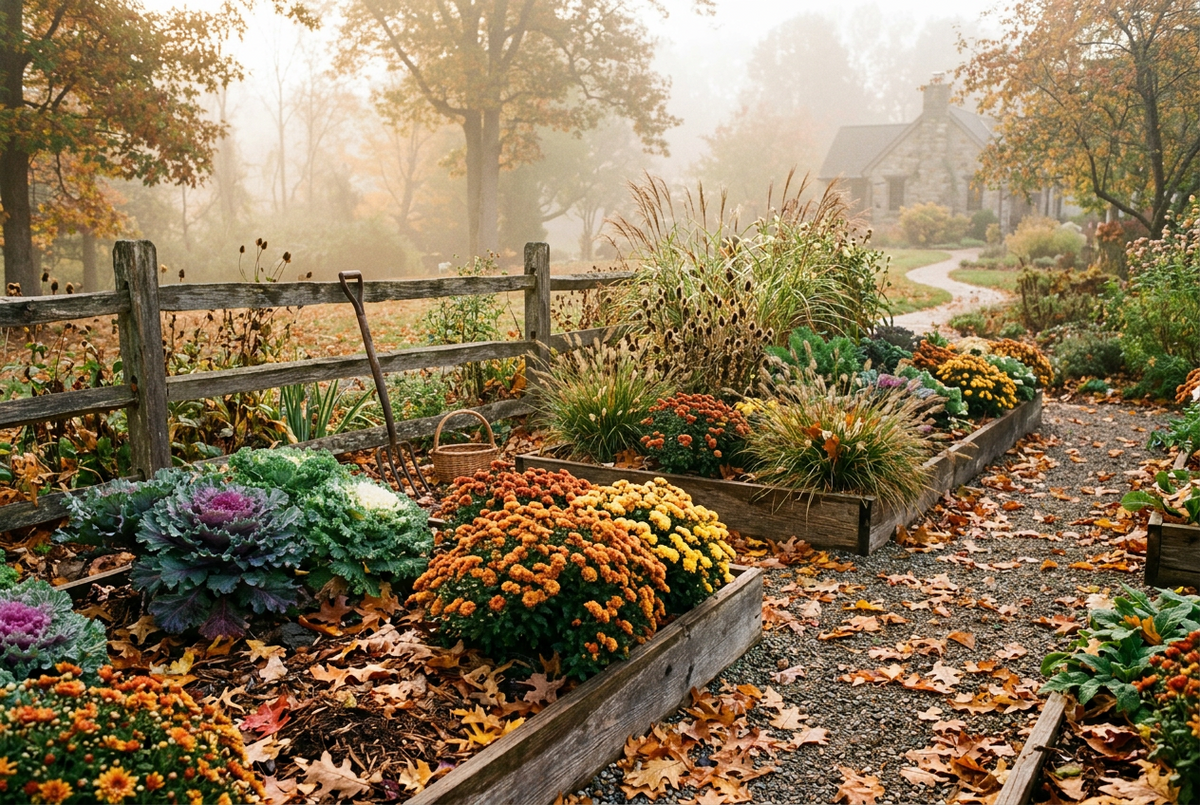
Why leaving fallen leaves, flower stems and seed heads in your garden could be one of the best things you do for next year's flowers, wildlife and soil.
October arrives, and suddenly the garden begins to look very different. The bright colours of summer are slowly disappearing, the days are becoming shorter, and the first chilly mornings remind us that winter is approaching. Our once-flowering borders are filled with fading plants, fallen leaves are gathering beneath the trees, and the vegetable garden is looking rather tired after months of producing delicious food.
For many gardeners, this is the moment to reach for the pruning shears, rake and wheelbarrow. We cut everything back, pull out the old plants, collect every fallen leaf and try to make the garden look as neat and tidy as possible before winter arrives.
But what if I told you that one of the best things you can do for your garden in October is to leave much of it alone?
Yes, you read that correctly.
Instead of spending several weekends cutting, raking and clearing everything away, you can allow nature to do much of the work for you.
And there are some very good reasons for doing so.
A garden that looks a little untidy in autumn is often a garden that is full of life. Beneath those fallen leaves, inside hollow flower stems and among the dried seed heads, an entire little world is preparing for winter.
Beneficial insects are finding shelter. Earthworms and microorganisms are working on improving your soil. Birds are searching for seeds, and many of your plants are protecting themselves against the cold.
By leaving the right things in place until spring, you are helping all of them.
Let's walk through the autumn garden together and discover why doing less in October can sometimes mean enjoying much more in spring.
1. Your Garden Is Not Dead in October – It Is Preparing for Winter
One of the biggest misunderstandings about autumn gardening is that plants have finished their work once their flowers have faded.
We see brown stems, yellow leaves and dried flower heads, and we assume that everything is finished.
But nature sees things differently.
For many perennial plants, autumn is an important period of preparation. While the visible parts of the plant are slowly dying back, important changes are taking place underground.
The plant is transferring nutrients from its leaves and stems into its roots, crowns, bulbs or other storage organs. These reserves help it survive winter and support fresh growth when temperatures rise again.
Think about your peonies, hostas, daylilies and many other herbaceous perennials.
Their leaves may no longer look attractive in October, but the plants are not necessarily ready to be cut down the moment the first yellow leaf appears.
Allowing the foliage to die back naturally gives the plant time to complete its seasonal cycle.
This is particularly important in Hungary, where autumn temperatures can vary considerably. We may enjoy beautiful sunny afternoons well into October, followed by cold nights and an occasional early frost.
Some plants remain active longer than we expect.
What I would do: Rather than cutting every perennial down to ground level in October, I would leave healthy stems and foliage standing through winter wherever practical. In spring, once the plants begin growing again, I would remove the old growth carefully.
There are exceptions, of course. Plants affected by serious diseases may need cleaning up, and some tender plants require special protection.
But for most healthy ornamental perennials, there is no need to hurry.
2. Fallen Leaves Are Not Rubbish – They Are a Gift to Your Soil

Every autumn, trees provide us with one of the most valuable natural gardening materials available.
Leaves.
And they provide them completely free of charge.
Yet every year, gardeners spend hours collecting those leaves, filling bags and removing them from their gardens.
In many cases, we are throwing away something that could improve our soil.
In nature, fallen leaves are part of a beautiful recycling system.
Walk through a forest in Hungary during October. Perhaps through the Bakony hills, the forests around Sopron or the wooded areas of the Mátra Mountains.
Nobody is raking the forest floor.
The leaves fall, accumulate and gradually break down. Fungi, bacteria, earthworms and other soil organisms help transform this material into organic matter.
Over time, it becomes part of the rich forest soil.
Your garden can benefit from the same process.
How fallen leaves improve your soil
As leaves decompose, they contribute organic matter and release nutrients that can be used again by plants.
Organic matter also improves the physical structure of soil.
In heavy clay soil, it can encourage better aggregation and improve the movement of air and water.
In sandy soil, it helps increase the soil's capacity to retain moisture and nutrients.
Both benefits are especially valuable in Hungary, where some regions have heavy, compacted soils while others have lighter, sandier ground.
A layer of leaves also protects the soil surface from the impact of heavy rain and reduces erosion.
During dry periods, it slows evaporation.
And perhaps most importantly, it provides food and habitat for the many organisms that keep garden soil healthy.
Should you leave leaves everywhere?
Not quite.
A thick, wet layer of whole leaves can smother a lawn, particularly during a damp winter. Leaves can also make paths slippery and block drainage.
The solution is not to remove every leaf from the garden.
Instead, move them to places where they can do the most good.
Rake leaves off lawns and paths and spread them beneath shrubs, around trees or over empty flower beds.
You can also collect leaves in a wire enclosure and allow them to decompose into leaf mould.
Leaf mould is one of my favourite materials for improving garden soil. It is soft, crumbly and excellent for helping soil retain moisture.
Depending on the type of leaves and conditions, it may take one or two years to develop fully.
A useful tip: If you have large quantities of leaves, keep some whole for wildlife-friendly corners and shred others for use as mulch or compost. Shredded leaves generally break down faster, while loose, whole leaves provide better shelter for many small creatures.
One important detail: do not bury the crowns of sensitive perennials beneath a thick, wet layer of leaves. A light, airy covering is often much better.
3. Your Garden Is a Winter Hotel for Beneficial Insects

When we think about protecting wildlife in the garden, we often think about feeding birds or planting flowers for bees.
But what happens to insects when winter arrives?
Where do ladybirds go?
What happens to the solitary bees that visited our flowers during summer?
And where do all those tiny creatures that help control garden pests spend the coldest months of the year?
The answer is often surprisingly close.
They may be hiding in your garden.
Some insects overwinter as adults, others as larvae, pupae or eggs. Depending on the species, they may use leaf litter, soil, old plant stems, bark, crevices or other sheltered places.
Ladybirds, for example, often gather in protected locations to survive winter.
Some solitary bees nest in existing cavities or hollow stems. Their developing young may remain inside those nests until the following year.
Ground beetles and other beneficial predators may shelter beneath leaves, stones, logs or vegetation.
When we remove every dried stem and clear away every leaf, we can accidentally destroy these winter shelters.
That is one reason why a perfectly clean garden is not always a healthy garden.
Why beneficial insects matter
Beneficial insects are part of your garden's natural pest-control system.
Ladybirds and their larvae feed on aphids.
Hoverfly larvae of many species also consume aphids.
Ground beetles include species that prey on slugs, insect larvae and other small animals.
Parasitic wasps help regulate populations of various garden pests.
These creatures cannot eliminate every pest, but they help maintain a more balanced garden ecosystem.
And the more suitable habitat your garden offers, the better your chances of supporting a diverse community of beneficial insects.
What should you leave standing?
Healthy perennial stems, ornamental grasses and flower stalks can provide shelter or useful structure.
Plants such as coneflowers, yarrow, bee balm and many native wildflowers are particularly valuable additions to wildlife-friendly gardens.
Not every hollow stem is occupied, and not every insect uses stems in the same way. But leaving a mixture of standing vegetation, leaf litter and undisturbed ground provides a greater variety of habitats.
If you have a quiet corner behind a shed, beneath a hedge or along a fence, consider allowing it to remain relatively undisturbed through winter.
You may be surprised by how much life it supports.
4. Dried Seed Heads Are a Natural Bird Feeder

One of the loveliest sights in a winter garden is watching small birds searching for food among dried flowers.
A seed head that looks untidy to us can be a valuable source of food for birds.
Goldfinches, greenfinches and other seed-eating birds may visit standing plants during autumn and winter.
Plants such as sunflowers, teasels, coneflowers and various native wildflowers can provide seeds after flowering.
Not every ornamental variety produces useful quantities of seed, particularly some sterile cultivars. But many traditional and seed-producing plants are excellent for wildlife.
Imagine looking out of your kitchen window on a cold January morning and seeing a goldfinch balancing on a dried seed head.
Suddenly, that brown plant does not look untidy anymore.
It looks beautiful.
Let flowers complete their natural cycle
During summer, we often remove faded flowers to encourage plants to produce more blooms.
This is called deadheading, and it is useful for many flowering plants.
But as autumn approaches, consider leaving the final flowers to develop seeds.
For example, you might stop deadheading some of your coneflowers, sunflowers or cosmos near the end of the season.
Their seed heads can provide food and structure through winter.
There is one important exception.
If a plant is invasive or spreads aggressively by seed, removing its seed heads before dispersal may be the better choice.
A wildlife-friendly garden still needs thoughtful management.
5. Standing Perennials Protect Their Own Crowns
When winter arrives, the greatest danger to garden plants is not always the cold itself.
Sometimes it is the combination of cold, wet soil, repeated freezing and thawing, and sudden changes in temperature.
Many hardy perennials are adapted to survive freezing temperatures.
However, their crowns and shallow roots can still benefit from protection.
Leaving some dead stems and foliage in place may help trap fallen leaves or snow around the base of the plant.
This can provide a degree of insulation and reduce exposure.
In Hungary, this can be particularly useful during winters when temperatures fluctuate around freezing.
A mild week may encourage the upper soil layers to thaw, followed by another cold spell.
These repeated changes can sometimes disturb shallow-rooted plants.
A protective layer of organic material can help moderate temperature changes at the soil surface.
What about ornamental grasses?
Ornamental grasses are wonderful examples of plants that often look better when left standing through winter.
Miscanthus, Panicum and many other hardy grasses produce beautiful autumn colours and attractive seed heads.
Their dry foliage adds movement and structure to the winter garden.
In some species, leaving the old growth in place also provides a degree of protection around the crown.
However, the correct treatment depends on the grass.
Many deciduous ornamental grasses can be cut back in late winter or early spring before new growth begins.
Evergreen grasses and sedges may need only gentle tidying rather than complete cutting back.
And some grasses are sensitive to winter wet, so good drainage remains essential.
My advice: Do not treat every grass in the same way. Identify the variety first, then decide whether to leave it standing, lightly tidy it or provide additional winter protection.
6. Leaving the Soil Covered Helps Prevent Erosion
Bare soil is vulnerable soil.
This is particularly noticeable in gardens with sloping ground or heavy clay.
When autumn and winter rain falls onto exposed soil, it can damage the surface structure and wash fine particles away.
Wind can also remove dry, loose soil.
A covering of leaves, plant residues or other organic mulch helps protect the soil.
It reduces the direct impact of raindrops, slows surface runoff and provides a more stable environment for soil organisms.
This is one reason why farmers and gardeners increasingly recognise the importance of keeping soil covered whenever possible.
In your vegetable garden, the same principle applies.
Instead of leaving every bed completely bare after the harvest, you can protect the soil with suitable organic mulch or grow a cover crop.
Cover crops such as winter rye or certain winter-hardy legumes can help protect soil, although the right choice depends on sowing time, local conditions and your plans for spring.
A practical example
Imagine two vegetable beds in October.
The first has been cleared completely. Every plant has been removed, and the soil is left exposed.
The second has been cleared of diseased material and weeds, but the surface is protected with a suitable layer of organic mulch.
During winter, the covered bed is generally better protected from rain impact and erosion.
In spring, the mulch may also help suppress some weeds and conserve moisture.
The result is not necessarily that the second bed will always produce a better harvest. Soil type, drainage, weather and management still matter.
But protecting bare soil is usually a sensible gardening practice.
7. Earthworms and Soil Life Continue Working After Summer

Just because we are spending less time gardening does not mean the soil has stopped working.
On mild autumn days, earthworms and many other soil organisms remain active.
Earthworms pull organic material into the soil, create channels and help mix organic matter with mineral particles.
Their activity can improve soil structure and support water infiltration.
Fungi and bacteria also play essential roles in breaking down plant residues and cycling nutrients.
Different organisms remain active at different temperatures, and biological activity slows considerably when soil becomes very cold.
But decomposition does not simply stop on the first day of October.
By leaving suitable organic matter on the soil surface, we provide food for this underground community.
Why digging is not always necessary
Traditional autumn gardening often involved turning over large areas of soil before winter.
There are situations where cultivation is useful, particularly when preparing new beds or addressing specific soil problems.
However, repeated unnecessary digging can disturb soil structure, expose buried weed seeds and disrupt organisms living in the soil.
For established beds, a less intensive approach can work very well.
Remove problematic weeds, add compost where needed, protect the surface with mulch and avoid walking on wet soil.
In spring, you may find that only light preparation is necessary before planting.
This is especially worth considering if your garden has heavy clay soil, which can become badly compacted when worked or walked on while wet.
8. A Less Tidy Garden Can Support More Biodiversity
Biodiversity simply means the variety of living organisms in a particular place.
In a garden, that includes plants, birds, insects, fungi, microorganisms and many other forms of life.
A garden containing different habitats generally has the potential to support more species than one consisting mainly of closely mown grass and bare soil.
A pile of leaves offers one type of habitat.
Standing flower stems offer another.
A hedge provides shelter.
A small log pile creates additional hiding places.
A patch of undisturbed ground may be important for ground-nesting insects.
Together, these features create a more complex environment.
And complexity is valuable.
Think of your garden as a small ecosystem
You do not need a large property to make a difference.
Even a modest garden in a Hungarian village or town can provide useful habitat.
A few square metres of perennial flowers, a native shrub, a small pile of leaves and some standing seed heads can all contribute.
The important thing is variety.
Different species need different conditions.
Some insects prefer dry, sunny stems.
Others need moist leaf litter.
Some birds feed on seeds, while others search among branches and leaves for insects.
By allowing a mixture of habitats to remain through winter, you give more creatures a chance to find what they need.
And remember, wildlife-friendly gardening is not about abandoning your garden.
It is about making thoughtful choices.
9. Your Winter Garden Can Be Beautiful Without Being Perfectly Tidy

We often judge a garden by how colourful and tidy it looks.
During spring and summer, flowers provide much of that beauty.
But winter offers something different.
Structure.
Texture.
Movement.
Light.
A dried hydrangea flower covered with frost can be just as beautiful as a fresh summer bloom.
Tall ornamental grasses glow golden in the low winter sun.
The dark seed heads of coneflowers create striking silhouettes against a pale sky.
Even a simple group of dried stems can look wonderful after a cold, misty morning.
In Hungary, where autumn fog and winter frost can transform the landscape, these effects can be particularly attractive.
Design your garden for all four seasons
When choosing plants, consider not only their flowers but also what they will look like after flowering.
Coneflowers provide summer colour and winter seed heads.
Sedum, including many Hylotelephium varieties, offers attractive flowers in late summer and architectural dried heads in winter.
Ornamental grasses add height, movement and texture.
Hydrangeas can retain their dried flower heads for months.
Yarrow produces delicate, flat-topped seed heads.
These plants help create a garden that remains interesting even after the main flowering season has ended.
And the best part?
You do not need to do anything special in October to enjoy their winter beauty.
Simply leave them standing.
10. Autumn Leaves Can Help Protect Your Flower Bulbs
October is one of the most exciting months for gardeners who love spring flowers.
This is when we plant tulips, daffodils, hyacinths, crocuses, muscari and many other spring-flowering bulbs.
While the garden above ground is becoming quieter, we are already planning the colours of next spring.
A light layer of organic mulch can help protect the soil around newly planted bulbs.
It can reduce surface erosion, moderate temperature fluctuations and conserve moisture.
However, there is an important distinction between a protective mulch and a thick, waterlogged covering.
Most spring-flowering bulbs need well-drained soil.
Tulips and hyacinths in particular can suffer when their bulbs remain in excessively wet conditions.
Therefore, never use fallen leaves to compensate for poor drainage.
Plant bulbs at the appropriate depth, ensure that water can drain away, and use only a suitable covering where beneficial.
A lovely combination
Imagine planting groups of daffodils beneath deciduous shrubs or trees.
In autumn, the leaves fall and form a natural layer over the soil.
During winter, the bulbs develop roots underground.
Then, as spring approaches, the daffodil shoots emerge and begin their journey towards flowering.
By the time the shrubs are fully covered in leaves again, many of the daffodils have already finished flowering.
This is one of the reasons spring bulbs work so beautifully in woodland-style gardens.
They fit naturally into the seasonal rhythm.
Just make sure the planting area receives sufficient light during the bulbs' growing season.
11. Butterflies and Moths Need Winter Protection Too
When we see butterflies in summer, it is easy to forget that they have to survive the rest of the year.
Different butterfly and moth species spend winter in different life stages.
Some overwinter as eggs.
Others survive as caterpillars, pupae or adults.
Their survival depends on finding suitable places protected from severe weather and disturbance.
Some species use vegetation or leaf litter. Others shelter in tree bark, grass tussocks or other protected places.
This is another reason why clearing every part of the garden in October can be harmful.
You may be removing the very places where next year's butterflies and moths are developing.
A special note about butterflies
Not every butterfly overwinters in your garden.
Some species migrate, and others use very specific habitats.
But maintaining a varied garden with native plants, undisturbed vegetation and suitable shelter can help support the species that live locally.
If you want more butterflies next year, remember that adult butterflies need nectar, while caterpillars need suitable host plants.
Providing both is much more effective than planting flowers alone.
Leaving appropriate vegetation standing through winter is part of that wider approach.
12. Hedgehogs Appreciate a Quiet Autumn Garden

Few garden visitors are as charming as a hedgehog.
European hedgehogs are found in Hungary, although their presence varies depending on local habitat.
They search for insects, worms and other small invertebrates, and they need safe places to shelter.
As temperatures fall and food becomes less available, hedgehogs prepare for hibernation.
They may build nests from leaves and other dry vegetation beneath hedges, among roots, in sheltered corners or inside suitable structures.
A garden where every leaf pile has been removed and every sheltered corner cleared may offer fewer nesting opportunities.
How to help hedgehogs
If you have a quiet, sheltered area, consider leaving some leaves and natural material undisturbed.
Avoid disturbing established piles of vegetation during the colder months.
If you must move a pile, inspect it carefully first.
Never burn garden waste without thoroughly checking for wildlife, and preferably avoid burning it altogether.
Be particularly careful with strimmers and other cutting equipment near dense vegetation.
A hedgehog may be resting in a place that looks completely empty from above.
And if you use garden netting, make sure it is secured safely so that wildlife cannot become trapped.
A wildlife-friendly garden should be safe as well as welcoming.
13. Leaving Plants Standing Can Save You Time and Money
Now let's talk about something every gardener can appreciate.
Less work.
Autumn is already a busy season.
There are spring bulbs to plant, tools to maintain, pots to prepare and perhaps a final harvest to bring indoors.
Do we really need to add several weekends of unnecessary clearing to that list?
In many cases, no.
By postponing much of the ornamental garden cleanup until spring, you can reduce the amount of work you do in October.
You may also save money.
Fallen leaves can replace some purchased mulch.
Homemade leaf mould can reduce the need for certain soil-improving materials.
Healthy garden residues can contribute to compost production.
A more diverse garden may support natural pest predators, although it will not eliminate the need for pest management.
And by protecting soil structure, you may reduce the amount of remedial work needed later.
Of course, spring cleanup still takes time.
The work has not disappeared completely.
But spreading gardening tasks more evenly across the year can make the workload more manageable.
Personally, I would much rather spend a sunny October afternoon planting beautiful tulip bulbs than collecting every last leaf from beneath a shrub.
14. What Should You Actually Clean Up in October?
By now, you might be wondering whether I am suggesting that you leave absolutely everything untouched until spring.
Certainly not.
There is a big difference between gardening with nature and neglecting your garden.
Some autumn jobs remain important.
Remove seriously diseased plant material
If plants have suffered from significant disease, leaving heavily infected residues in place may increase the risk of problems returning.
For example, tomato plants affected by serious disease should be assessed carefully before their residues are reused.
Some pathogens survive in infected plant debris.
Remove material when disease-specific guidance recommends sanitation, and dispose of it appropriately.
A well-managed hot composting system can handle some plant diseases, but a cool household compost heap may not reliably destroy all pathogens.
Remove invasive and aggressively spreading plants
Plants that spread rapidly through seeds or underground structures should not be allowed to take over the garden.
Remove unwanted seed heads before they disperse.
Deal with invasive weeds promptly rather than allowing them to become established.
Clear lawns where necessary
A thin scattering of leaves is not usually a problem, especially if leaves are mulched into the lawn.
But a thick, wet covering can block light and damage grass.
Move excess leaves into beds or composting areas.
Keep paths and drains clear
Wet leaves on paving can become slippery.
Blocked drains can create water problems.
Safety and drainage should always come first.
Remove rotting fruit
Collect fallen fruit that is diseased, heavily rotting or attracting unwanted pests.
Some fruit residues may harbour disease organisms or overwintering pests.
Dispose of them according to the particular problem.
Protect tender plants
Not every plant in the garden can survive a Hungarian winter outdoors.
Tender pelargoniums, certain dahlias, cannas and other frost-sensitive plants may need lifting, moving or special protection, depending on the variety and growing conditions.
Do not leave a tender plant outside simply because you are trying to avoid autumn cleanup.
Prepare the vegetable garden sensibly
You can remove finished annual crops, deal with diseased material and prepare beds without leaving the soil bare.
A layer of suitable mulch or a cover crop can protect the surface.
The aim is not to do nothing.
It is to do what is necessary and leave the rest for nature.
15. What About Roses, Hydrangeas and Other Shrubs?
This is an area where gardeners sometimes make mistakes.
Not every plant should be pruned in October.
In fact, autumn pruning can be unsuitable for many shrubs.
Roses
In Hungary, many gardeners traditionally prune roses before winter.
However, heavy autumn pruning is generally unnecessary for many established garden roses.
Strong pruning may encourage tender new growth during mild weather, and that growth can be damaged by subsequent frost.
It is usually better to reserve the main pruning of repeat-flowering bush roses for late winter or early spring, when severe frost risk is diminishing.
Very long, loose stems can be shortened if necessary to prevent wind damage.
Remove dead, damaged or seriously diseased material when appropriate.
Climbing roses and once-flowering roses may follow different pruning schedules, so always consider the type.
Hydrangeas
Hydrangeas are another group where timing matters.
Bigleaf hydrangeas, Hydrangea macrophylla, often flower on old wood, although some modern cultivars also flower on new growth.
Cutting them back hard in autumn may remove next year's flower buds.
Their dried flower heads can also offer some protection to developing buds beneath them.
For many varieties, it is better to wait until spring before removing old flower heads and assessing winter damage.
Panicle hydrangeas, Hydrangea paniculata, generally flower on new growth and can be pruned in late winter or early spring.
The important lesson is simple.
Know your plant before you prune it.
Lavender
Lavender requires a slightly different approach.
It benefits from appropriate pruning to maintain a compact shape, but heavy cutting into old, woody stems is risky.
In Hungary, late-season pruning that encourages fresh growth shortly before winter can be particularly unhelpful.
The timing and amount of pruning depend on the lavender species, plant condition and local climate.
For established English lavender, light shaping after flowering is often preferable to severe late-autumn cutting.
16. Why Waiting Until Spring Is Better for Many Plants
Spring offers several practical advantages for garden cleanup.
By late winter or early spring, we can often see which plants have survived and where fresh growth is beginning.
We can identify dead stems more easily.
We can assess frost damage.
And we can prune or tidy plants according to their actual condition rather than guessing in October.
However, spring cleanup should not happen all at once or on one fixed date.
In Hungary, spring weather varies considerably.
Gardens in western Hungary may experience different conditions from gardens in the colder northern hills or the warmer southern regions.
Even within the same village, a sheltered courtyard can warm much earlier than an exposed garden.
What about overwintering insects?
This is especially important.
Some insects remain inside stems, leaf litter or other shelters well into spring.
If we cut everything down and immediately shred or dispose of the material, we may still harm them.
The solution is a gradual, careful cleanup.
You can cut back plants where new growth requires it while leaving some standing stems undisturbed.
Cut hollow stems can sometimes be placed loosely in a sheltered, dry location, although moving occupied stems is not a guarantee that all developing insects will survive.
Retaining some intact habitat is better than clearing everything.
Leave suitable leaf litter beneath shrubs and in wildlife-friendly corners rather than insisting on bare soil everywhere.
There is no single spring date when every insect has emerged.
A thoughtful, staggered approach is more useful than following a rigid calendar.
17. A Simple Autumn Garden Plan for Hungary
If you are gardening in Hungary, here is how I would approach October.
Early October: Walk around the garden and look at what is still growing. Enjoy the late flowers. Continue harvesting vegetables, remove problematic weeds and inspect plants for disease.
Mid-October: Begin planting suitable spring-flowering bulbs as soil conditions allow. Move excess leaves from lawns and paths into flower beds or leaf-mould storage areas. Leave healthy perennials and ornamental grasses standing.
Late October: Prepare tender plants for frost. Check drainage, protect vulnerable pots and ensure that paths remain safe. Leave seed heads, suitable leaf litter and sheltered wildlife areas undisturbed.
November: Continue planting hardy bulbs where conditions remain suitable. Check that mulch is not smothering sensitive crowns. Secure tall plants if winter winds could cause damage.
December to February: Enjoy the winter structure of the garden. Avoid unnecessary disturbance, especially during freezing or very wet weather.
March and April: Begin a gradual cleanup according to local weather and plant growth. Cut back plants that need it, take care around overwintering wildlife and leave some natural habitat intact.
This approach allows the garden to remain functional, attractive and wildlife-friendly without becoming neglected.
18. Five Common Mistakes to Avoid
Even a natural garden needs good judgement.
Mistake 1: Leaving thick, wet leaves over everything. A heavy layer can smother grass, bury small evergreen plants and encourage problems around moisture-sensitive crowns.
Mistake 2: Leaving seriously diseased material without checking the risk. Wildlife-friendly gardening does not mean ignoring plant health. Some diseases require sanitation.
Mistake 3: Cutting back all stems on the first warm spring day. Overwintering insects may still be present. Clean gradually and retain some undisturbed habitat.
Mistake 4: Assuming every plant benefits from being left untouched. Tender plants, certain vegetables and plants with specific pruning requirements may need autumn attention.
Mistake 5: Confusing a natural garden with an unmanaged garden. A beautiful naturalistic garden still requires observation, planning and occasional intervention.
The goal is balance.
19. How to Make an Autumn Garden Look Intentional Rather Than Neglected
One concern I often hear is that leaving plants standing will make the garden look messy.
And I understand that.
Not everyone enjoys looking at a border filled with brown stems.
But there are ways to make a natural garden look attractive.
One of the easiest is to keep the edges tidy.
A clearly defined lawn edge or garden path creates a sense of order, even when the planting itself is informal.
You can also group plants with attractive winter structures.
Ornamental grasses, coneflowers, sedums and hydrangeas can create a beautiful winter composition.
Keep the area immediately around your entrance neat, while allowing more natural growth in less formal parts of the garden.
Use shrubs and evergreen plants to provide structure.
And consider leaving one section of the garden especially wildlife-friendly.
You do not have to turn the entire garden into a wild meadow.
Even a small, carefully chosen area can make a difference.
20. The Most Important Change Is How We Look at Our Gardens
Perhaps the greatest benefit of postponing autumn cleanup is not something we can measure in bags of leaves or hours saved.
It is a change in perspective.
We begin to see the garden as more than a collection of decorative plants.
We start noticing the connections between flowers, insects, birds, soil and the changing seasons.
A dried flower is no longer simply something that needs removing.
It may be a source of food.
A fallen leaf is no longer rubbish.
It may be part of the next generation of healthy soil.
A hollow stem is no longer just dead material.
It may contain developing insect life.
And a quiet corner filled with leaves may be providing shelter to creatures we rarely see.
Gardening becomes less about controlling every detail and more about understanding how nature works.
That does not mean we stop caring for our plants.
Quite the opposite.
We become more observant, more patient and often more successful gardeners.
21. Frequently Asked Questions
Should I leave all fallen leaves in my garden until spring?
No. Leave leaves where they are beneficial, such as beneath shrubs, in suitable flower beds and in wildlife-friendly corners. Remove excessive accumulations from lawns, paths, drains and sensitive plants.
Will leaving old plants increase pests?
It can provide shelter for both beneficial insects and some pests. The outcome depends on the plants, pests and conditions involved. A diverse garden with appropriate sanitation and habitat management is generally a better approach than either removing everything or leaving everything indiscriminately.
Can I leave tomato plants standing over winter?
It is generally better to remove finished tomato plants, particularly if they have been affected by disease. Unlike many ornamental perennials, tomatoes are frost-sensitive annuals in Hungary and do not normally benefit from being left standing through winter.
Should I cut back my coneflowers in October?
Healthy coneflowers can usually be left standing through winter. Their seed heads add structure and may provide food for birds. Cut back old stems in spring as new growth develops, while considering any wildlife sheltering in the stems.
Can fallen leaves damage my tulip bulbs?
A light layer of leaves is generally not a problem in well-drained soil. However, thick, wet accumulations and poor drainage can create unfavourable conditions. Tulips need appropriate planting depth and good drainage.
When should I start spring cleanup in Hungary?
There is no single ideal date. Late winter and early spring are suitable for many pruning and tidying jobs, but timing depends on weather, plant species and local conditions. For wildlife, leave some habitat undisturbed beyond the first warm days of spring.
Is it better to compost leaves or leave them on the ground?
Both methods are useful. Leaves left on the ground can protect soil and provide habitat. Collected leaves can be turned into valuable leaf mould. A combination is often the best solution.
22. My Final Advice: Give Your Garden a Little More Freedom This October
The next time you walk into your garden and see the first fallen leaves, resist the temptation to collect them all immediately.
Look at the dried flower heads before reaching for your pruning shears.
Watch the birds visiting the last seed-producing plants.
Notice how the ornamental grasses move in the autumn breeze.
And remember that beneath the soil, among the leaves and inside the old stems, nature is preparing for another growing season.
Of course, there are still important jobs to do.
Plant your spring bulbs.
Protect tender plants.
Remove diseased material.
Keep your paths safe.
Prepare the vegetable garden for winter.
But do not feel that every border must be perfectly clean before the first frost arrives.
A garden does not need to look immaculate to be healthy.
Sometimes, the most valuable thing we can do is simply allow nature a little more space.
And when spring finally returns to Hungary, bringing fresh green shoots, birdsong and the first beautiful flowers, you may discover that your slightly untidy autumn garden was doing far more good than you ever imagined.
So this October, put down the rake a little earlier, leave some flowers standing and enjoy a well-deserved cup of coffee.
Your garden still has plenty of work to do.
But much of that work can happen without you.
Happy gardening from Holland Kertészet – where we believe that a beautiful garden begins with understanding nature, enjoying every season and sometimes knowing when not to interfere.


