

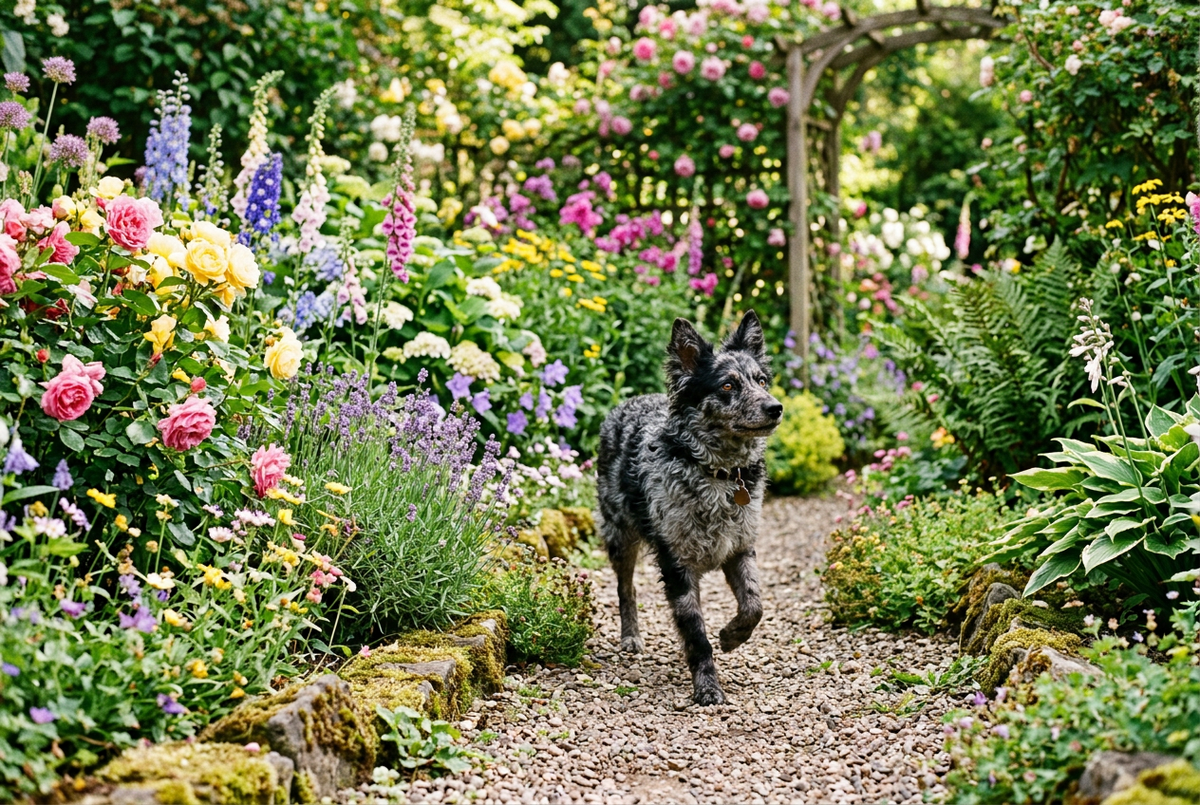
Introduction: A Garden Through Your Dog’s Eyes
Have you ever opened the garden door and watched your dog rush outside as though the most exciting adventure in the world were waiting? To us, it is the same lawn, the same shrubs and the same old path. To a dog, however, everything may have changed overnight. A hedgehog may have wandered along the fence. Rain may have released new scents from the soil. A neighbour’s dog may have passed the gate. Even the wind can carry a story.
A garden can be a wonderful place for a dog to sniff, rest, play and spend time with the people they love. But simply having a garden does not automatically make a dog happy. They need companionship, stimulation, exercise, safety and somewhere comfortable to retreat. Let us look at our gardens from a dog’s perspective and discover how to make them beautiful for both plants and paws.
1. The Garden Is a World of Smells
Dogs experience outdoor spaces through scent to a remarkable degree. Where we admire a border of flowers, a dog may be investigating who walked past it, what was growing there and whether anything interesting has visited since yesterday. Sniffing is not wasted time; it is a natural way for dogs to gather information and engage their minds.
Rather than constantly calling your dog away from every shrub, allow time for calm, supervised exploration. Create a little scent trail by scattering a few pieces of their regular food across clean grass, or hide a favourite toy in a safe part of the garden. Use food puzzles or supervised searching games for dogs that enjoy them. Keep treats modest and suitable for your dog’s dietary needs.
A scent-rich garden does not require expensive equipment. Different textures, planted edges and changes through the seasons already provide variety. The goal is not to overwhelm your dog with smells, but to let them investigate at their own pace.

2. What Makes a Dog Feel Happy Outside?
Every dog is an individual. A lively young terrier may want to run, dig and investigate every corner. An older retriever may be happiest lying near the terrace where the family is sitting. A nervous rescue dog may initially prefer a small, quiet area close to the house. There is no single garden design that suits every animal.
Most dogs benefit from a secure place to move, opportunities to sniff and explore, access to clean water, shade, comfortable resting spots and regular contact with their people. Dogs are social animals, and a garden should not become a place where they are left alone for long periods instead of receiving walks, play and companionship.
Observe your dog. A relaxed body, easy movement, playful invitations and the ability to settle are often good signs. Repeated pacing, frantic barking, fence-running or attempts to escape may suggest boredom, fear or frustration. If behaviour changes suddenly, consult your veterinarian to rule out pain or illness.
3. Safety Comes Before Beautiful Planting
Start with the boundaries. Walk around the fence at your dog’s eye level. Look for gaps beneath gates, loose boards, exposed wire, sharp edges and spaces where a small dog could squeeze through. Some dogs are talented jumpers; others are dedicated diggers. Secure fencing must suit the actual dog, not merely look attractive from the terrace.
Keep gates latched and remind visitors to close them. If deliveries are frequent, a second internal gate or small fenced holding area can prevent accidental escapes. Do not rely on an electronic shock boundary to keep a dog safe.
Inspect sheds, ponds, compost areas and stored equipment. Keep sharp tools, fertilisers, pesticides and cleaning products inaccessible. Avoid leaving dogs unsupervised near open water or in a greenhouse, which can heat rapidly even on a mild day. A secure garden gives a dog choices without exposing them to avoidable danger.
4. Sunshine Is Lovely, but Shade Saves Lives
Dogs may enjoy a sunny patch of lawn, especially during cooler mornings. Yet Hungary’s hot summers can make gardens dangerous, particularly in July and August. Paving, artificial grass, gravel and dark decking may become hot enough to injure paws. Before a walk or play session, touch the surface with your hand and avoid it if it is too hot.
Provide reliable shade throughout the day, not just in the morning. Trees, well-ventilated pergolas and covered resting areas can help. A sheltered spot must allow airflow; a closed doghouse can become an oven in hot weather. Keep fresh water available in more than one location and change it regularly.
Dogs cool themselves primarily by panting and have limited ability to sweat. Heavy panting, weakness, vomiting, confusion or collapse can indicate heatstroke. Move the dog to a cooler place, begin cooling with cool water and airflow, and seek emergency veterinary help immediately. Never leave a dog in a parked car.
5. Water, Rest and a Place to Belong
A sturdy, non-spill bowl in the shade is one of the simplest improvements you can make. Some dogs enjoy a second water station near their favourite resting area. Wash bowls often, especially in warm weather, and do not let water stagnate in paddling pools or buckets.
Provide a comfortable outdoor bed or raised resting platform in a sheltered location where your dog can still see the family. Older dogs may need softer surfaces and easier access without steps. In winter, dogs should have access to appropriate indoor warmth; an outdoor shelter alone may not protect a vulnerable animal from prolonged freezing conditions.
Consider the location of the resting place. A dog who feels compelled to guard a busy street-facing fence may struggle to relax. A quieter position overlooking the family’s seating area is often much more pleasant.

6. A Garden That Invites Play
A beautiful dog-friendly garden offers different experiences rather than one large empty lawn. A gently winding path through planting can create an interesting route to explore. A sturdy log placed low to the ground may become an obstacle for a healthy, confident dog. A shallow digging box filled with clean sand can provide an acceptable place to dig.
Keep play appropriate for age, size and health. Avoid forced jumping or strenuous exercise for puppies and dogs with joint problems. Supervise toys, remove damaged balls and ropes, and avoid sticks that may splinter or injure the mouth. Games should be fun, not exhausting.
One of my favourite ideas is to give the dog a special corner of the garden. A shaded resting place, a sniffing route and a little digging area can make that corner feel genuinely theirs, while preserving your vegetable beds and flower borders.
7. Dogs and Flower Beds: Can They Coexist?
Of course they can, but planning helps. Dogs often follow the same routes every day. If a narrow gap between two borders is their favourite shortcut, planting delicate flowers there will probably lead to disappointment. Watch where your dog naturally walks, then design paths that follow those routes.
Use sturdy edging and wider borders around fragile seedlings. Raised beds can protect vegetables, but they must be stable and free of sharp corners. Mulch should be selected carefully: avoid cocoa shell mulch, which can contain theobromine, and discourage dogs from eating bark, stones or compost.
If your dog loves digging, provide a permitted digging area and reward its use. Punishment after the event rarely teaches a dog where digging is acceptable. With patience, your garden can have flourishing flowers and a happy four-legged resident.
8. Which Plants Are Safer Choices?
Plant choice matters because dogs may chew leaves, flowers, berries, bulbs or roots. Some ornamental plants commonly listed as non-toxic to dogs include roses, sunflowers, zinnias and snapdragons. Nevertheless, even non-toxic plant material can cause stomach upset if eaten in quantity, and thorns or seed heads may cause physical injury.
Always check the exact botanical name before planting. Common names can refer to different species. Choose robust, non-spiny planting near paths and play areas. Place delicate or potentially irritating plants behind secure barriers rather than relying on your dog to ignore them.
For a garden in Hungary, you can create wonderful colour with sunflowers and zinnias in sunny beds while keeping safe walking space around them. Remember that pesticide residues and fertiliser on otherwise safe plants can create additional hazards.

9. Plants and Garden Products to Avoid
Some familiar garden plants are poisonous to dogs. Oleander contains heart-affecting compounds and should not be accessible. Yew can cause severe poisoning. Autumn crocus (Colchicum) is highly toxic. Daffodil, tulip and hyacinth bulbs can cause poisoning, and bulbs are especially tempting when gardeners are planting in autumn. Azaleas, rhododendrons and foxgloves also deserve serious caution.
Do not assume that every plant called a “lily” has the same risks; species differ. Grapes and raisins are toxic foods for dogs, so never offer them as treats. Avoid leaving compost, mouldy food or fallen fruit where dogs can eat it. Slug pellets, rodenticides and concentrated fertilisers can be dangerous, too.
If you suspect poisoning, contact a veterinarian immediately, identify the plant or product if possible, and do not induce vomiting unless specifically instructed by a veterinary professional. Keep packaging or take a photograph to help identification.
10. Dogs, Lawns and the Famous Yellow Patches
Dog urine can leave yellow or brown patches on lawns, especially when concentrated nitrogen and salts damage the grass. It does not mean your dog is doing anything wrong. The most practical response is to encourage toileting in a suitable area and rinse affected grass promptly with water when feasible.
Do not restrict drinking water to reduce lawn damage. Hydration is far more important than a perfect lawn. Avoid supplements marketed as lawn-saving solutions unless a veterinarian recommends them for your dog’s health.
Choose a durable lawn mix suitable for local conditions, repair bare areas when needed and accept that a living family garden may not resemble a golf course. A slightly imperfect lawn is often the sign of a garden being enjoyed.
11. Dogs and the Vegetable Garden
Vegetable beds offer intriguing smells and wonderfully soft soil, so it is not surprising that some dogs find them irresistible. Protect new seedlings with secure fencing or raised beds, and keep dogs away from areas recently treated with garden products.
Tomato plants and unripe green tomatoes contain compounds that can be harmful if eaten in sufficient quantities; keep dogs from chewing the foliage. Onion, garlic and other alliums are toxic to dogs, so do not let them dig up or eat these crops. Never give your dog raw compost scraps simply because they came from the garden.
Collect dog faeces promptly and keep it out of vegetable beds and ordinary compost intended for edible crops. Wash hands and produce carefully. Thoughtful separation allows dogs and kitchen gardens to share the same outdoor space.

12. Wildlife, Ponds and Other Visitors
Dogs are curious about hedgehogs, birds, frogs and other creatures that visit our gardens. Some will watch quietly; others may chase or injure wildlife. Supervise outdoor time and use training, fencing and physical separation where needed. A wildlife-friendly corner behind a barrier can give hedgehogs and birds refuge.
If you have a pond, provide gentle edges or a secure fence and a way for animals to climb out. Not every dog is a good swimmer, and cold or contaminated water can be hazardous. Avoid encouraging dogs to drink from stagnant ponds or water features with chemical treatments.
During autumn, check leaf piles before using garden equipment. Hedgehogs and other animals may be sheltering there. A garden can welcome wildlife and dogs, but it needs a little careful management.
13. The Garden Through the Hungarian Seasons
Spring brings new growth and exciting scents. It also brings fertilisers, slug control products and freshly planted beds, so supervision matters. Check for ticks after outdoor activities and ask your veterinarian about appropriate parasite prevention.
Summer is about shade, water and avoiding the midday heat. Exercise early or late, provide cool places to rest and be cautious around hot paving. Autumn is a wonderful time for scent games and gentle outdoor activity, but store bulbs securely and keep fallen, fermenting fruit out of reach.
Winter demands warmth and sensible limits. Clear ice from frequently used paths, protect paws from irritating de-icing products and offer indoor rest after cold, wet outings. Young, old, short-coated and unwell dogs may need extra protection. The garden changes with every season, and your dog’s needs change with it.
14. Puppies, Senior Dogs and Dogs Who Feel Nervous
A puppy experiences the garden as a place of endless discovery, but also has little understanding of danger. Supervise closely, secure gaps, protect toxic plants and introduce new surfaces gradually. Provide plenty of rest; too much excitement can be tiring for a young dog.
Older dogs may appreciate non-slip paths, ramps, softer resting places and shorter play sessions. Changes in mobility, vision or hearing can make familiar routes particularly important. If a dog seems reluctant to go outside, pain or illness may be involved.
For nervous dogs, create a predictable, quiet routine. Let them choose when to approach a new area. Avoid forcing contact with unfamiliar visitors or other dogs through the fence. A calm garden is often more beneficial than a garden filled with constant activity.
15. Ten Small Improvements That Make a Big Difference
Start by checking the fence and gate. Next, place fresh water and shade where your dog actually likes to rest. Add a sheltered bed, then observe the routes your dog naturally takes. Create a sniffing game, a safe toy area or a permitted digging spot. Choose plants by botanical name and remove highly toxic species from accessible areas.
Store all chemicals, tools and bulbs securely. Protect vegetable beds and provide wildlife with separate refuge. Finally, remember to spend time outside with your dog. The most expensive garden equipment cannot replace a walk, a game or the pleasure of simply sitting together on a quiet afternoon.
You do not need to achieve all of this in one weekend. Begin with safety, then gradually add comfort and enrichment. Your dog will tell you, through their behaviour, which improvements matter most.
Frequently Asked Questions
Is a garden enough exercise for a dog? Usually not. Most dogs also need walks, training, social contact and opportunities to explore places beyond their familiar garden, adjusted for health and age.
Can I use cocoa mulch? It is better to avoid cocoa shell mulch where dogs may eat it, because it can contain theobromine.
What if my dog eats a flower bulb? Contact a veterinarian promptly. Identify the bulb and do not wait for symptoms.
How can I stop digging? Offer a suitable digging area, supervise and reward your dog for using it. Protect vulnerable beds with barriers.
Should my dog sleep outside in winter? Dogs need appropriate shelter and warmth. Many pets, especially vulnerable dogs, should sleep indoors.
Which plants are safest? No plant is guaranteed safe to eat. Check exact species against a reliable veterinary toxicity database and discourage plant chewing.
Final Thoughts: A Garden Shared With Your Best Friend
The next time you watch your dog wander through the garden, notice how much they experience that we overlook. The scent beneath a hedge, the cool patch of soil beside the terrace, the sound of a bird above the fence and the comfort of knowing you are nearby all help shape their day.
A dog-friendly garden is not necessarily the largest or most expensive. It is one where the dog feels secure, can rest comfortably, has safe opportunities to explore and enjoys time with the family. We can still grow beautiful flowers, vegetables and shrubs. We simply make a little room in our plans for the paws that share our home.
Happy gardening from Holland Kertészet — where a beautiful garden is a place for plants, people, wildlife and the dogs we love.
Safety note: This guide provides general information. Consult your veterinarian for suspected poisoning, heatstroke, unusual symptoms or individual care needs.


