

Summer 2026 is, by any measure, a watershed moment for European gardeners. The European Drought Observatory has reported that summer 2026 as a major drought event across Europe, extending well into Central Europe and southwest Russia. Meanwhile, severe droughts in 2024 alone exposed more than 601,000 km² of European land, with vegetation productivity failing to recover across 156,000 km². Therefore, choosing the right plants is no longer a preference; it is a practical necessity.
The good news for home gardeners is that a beautiful, colourful garden and a light watering schedule are entirely compatible. Drought-tolerant plants are species that thrive with minimal supplemental water once established. Many feature water-storing leaves or stems, deep or fibrous root systems, reflective or fuzzy foliage, and aromatic oils that reduce moisture loss; they are resilient with smart siting, proper soil prep, and deep, infrequent watering. Swap in the right plants and the sprinkler largely stays in the shed.
Key Takeaways
-
Drought is accelerating across Central Europe: In late May 2026, alert drought conditions expanded in Ukraine, Belarus, Poland, and the Baltic Sea regions. If you garden anywhere in this zone, summer watering pressure will increase, so plant accordingly now.
-
Establishment is everything: All drought-tolerant plants need at least two weeks of regular, frequent watering to become well established in the landscape, longer for larger pots and shrub lines. Provide this investment upfront and you reap years of low-maintenance reward.
-
Mulch is your most powerful ally: A proper 2-3 inch layer of mulch can reduce a garden's water needs by up to 70%, which is crucial when water is scarce or expensive. Apply mulch before temperatures peak, not after.
-
Mediterranean perennials are your backbone: The best heatwave-resistant plants for gardens include lavender, salvia, sedum, echinacea, verbena bonariensis, rosemary, eryngium, and ornamental grasses. These tolerate drought, thrive in full sun, and need minimal watering once established.
-
Group by water need: You can mix drought-resistant plants with others, but it is best to group them together in a specific zone of your garden where their water needs can be met efficiently. Mixing drought-lovers with thirsty plants wastes water and stresses both.
Quick-Start Prioritisation Framework
| Strategy | Best For | Effort Level | Time to Results |
|---|---|---|---|
| Plant Mediterranean perennials (lavender, salvia) | Sunny borders, all garden sizes | Low | One season |
| Install ornamental grasses | Modern, prairie-style schemes | Low | One season |
| Build a gravel garden | Very dry or sandy plots | Medium | 2-3 months |
| Add succulent groundcovers (sedum) | Rock gardens, edges, containers | Low | Weeks |
| Improve soil drainage with grit/compost | Heavy clay plots | Medium-High | Before planting |
| Apply a mulch layer (5-7 cm) | All garden types | Very Low | Immediate |
Start here if you are:
-
A time-poor gardener: Plant lavender, salvia, and sedum, these are the least demanding once established and reward you with months of colour.
-
Working with a larger or redesigned garden: Consider a full gravel border with prairie-style grasses alongside Holland Kertészet's range of drought-adapted perennials, which are selected with Central European summer conditions in mind.
-
On clay or poorly drained soil: Improve drainage first before planting; then choose echinacea, switchgrass, or sedum, which tolerate heavier soils better than most Mediterranean species.
Why Drought-Tolerant Plants Matter More Than Ever in 2026
The European Drought Picture
Europe is facing more and stronger climate hazards, including heatwaves and prolonged droughts. Drought conditions were drier than average in eastern and south-eastern Europe during 2024. Forecasters at The European Drought Observatory has reported that report that The European Drought Observatory has reported that across west and central Europe in July, with the European drought continuing to intensify. For gardeners in Hungary and across Central Europe, this trajectory has been building for years and the summer of 2026 demands a direct response.
The European Environment Agency's drought impact indicator confirms that between 2000 and 2024, 12 years saw drought-affected areas above the median, with eight of those occurring after 2010. This means that planning a garden around drought-tolerant plants is now future-proofing rather than a niche preference.
What "Drought Tolerant" Actually Means
There is an important practical distinction worth understanding. Drought-tolerant means the plant deals with severe drought on a regular basis and recovers from repeated wilting. It means the plant can maintain health with low, infrequent irrigation once established, often by storing water, slowing leaf water loss, or going temporarily dormant. The RHS guidance on drought-resistant gardening is clear that by choosing the right plants for your conditions and by preparing the soil, plants can thrive with minimal or no additional watering.
Pro Tip: Look for plants with silver or grey-green leaves, many drought-tolerant plants have silver or grey-green leaves, as their light leaf colour reflects the harsh rays of the sun. Silvery foliage is nature's sunscreen. Artemisia, lamb's ear, and lavender are all prime examples.
The Best Drought-Tolerant Plants for a Low-Maintenance Garden

Mediterranean Perennials: The Backbone of Any Dry Border
Mediterranean natives are the first port of call for drought-tolerant gardening because they evolved precisely for this climate. Drought-tolerant plants, usually native to dry regions such as the Mediterranean, have evolved to thrive in dry soils with little rainfall.
Lavender (Lavandula angustifolia) is the archetype. Lavender handles drought better than almost any other garden plant because its Mediterranean origins mean it evolved in exactly these conditions. It thrives in full sun, well-drained soil, and does not want to be fed or fussed over. According to housedesigner.com's drought-tolerant plant guide, English lavender varieties like Hidcote and Munstead are the hardiest for colder winters. If you are not getting at least six weeks of late-spring colour from your lavender without supplemental irrigation, check your drainage first, waterlogging is its primary enemy.
Salvia is arguably the most versatile of all. Salvia is one of the most reliable drought-tolerant perennials, thriving in poor, dry soil and extreme heat while producing vibrant spikes of purple, pink, red, or blue flowers. The Proven Winners salvia growing guide notes that native to hot, dry climates in the Mediterranean, garden salvias are heat and drought tolerant, deer resistant, and low maintenance. Cut back spent flower spikes mid-season for a second flush of colour.
Rosemary rounds out the Mediterranean trio. Rosemary is a tough, aromatic evergreen shrub that handles drought, poor soil, and neglect with equal ease. It earns its keep in the garden year-round and doubles as a kitchen herb.
Prairie Perennials: Colour Through the Driest Months
Prairie plants have evolved for precisely the conditions Central European summers are increasingly delivering. In my experience, these are the unsung heroes of a low-maintenance garden; they flower reliably when Mediterranean plants sometimes struggle in high humidity.
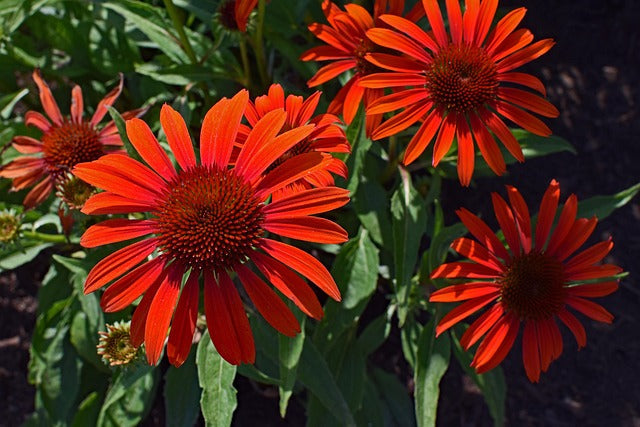
Echinacea (Purple Coneflower) is a standout. A tough prairie native, purple coneflowers are the queens of low-maintenance gardens. They produce long-lasting, purple, daisy-like flowers on sturdy 90 to 120 centimeters stems and are reliable performers that bloom regardless of heat or drought. Leave the seed heads standing through winter, birds value them, and they add structural interest to an otherwise dormant border.
Achillea (Yarrow) is another workhorse. Achillea is a great drought-tolerant option with a good flowering season from early summer to early autumn. It is well adapted to low moisture levels and drier soils, and its flowers come in a wide range of colours, including white, yellow, pink, red, and orange.
Verbena bonariensis has become a staple of modern European planting. Verbena bonariensis has become a staple of modern planting schemes. Its tall, airy stems weave through borders, creating movement and attracting pollinators. Despite its delicate appearance, it copes remarkably well with dry conditions.
Ornamental Grasses: Low-Maintenance Structure and Movement
Many ornamental grasses are drought-tolerant, requiring little supplemental water once established. They add a dimension no flowering perennial can match, constant movement, seasonal colour change, and year-round structure.
Stipa grasses bring movement and light to a planting scheme in a way nothing else can. Stipa tenuissima, Mexican feather grass, is the finest-textured, creating a shimmering, hair-like effect that catches every breeze. Both Stipa species are drought tolerant once established and need almost no maintenance beyond a tidy-up in spring.
Ornamental grasses deserve a place in every summer-ready garden. Varieties such as Stipa and Miscanthus develop deep root systems that help them access moisture even during dry weather. They add movement, texture, and structure while requiring very little attention.
Pro Tip: It means the plant can maintain lean soil. Over-amending or overwatering can shorten their lifespan, focus on drainage first. Resist the urge to feed lavender, rosemary, and santolina; rich soil produces weak, floppy growth that suffers in heat and drought.
Succulent Groundcovers: The Finishing Layer
Sedums and sempervivums close out the drought-tolerant planting palette perfectly. Sedum is a succulent plant with thick leaves and colourful flowers that bloom from mid-summer through to autumn. They are perfect for adding colour to your garden when other plants have stopped flowering. Succulents are defined by their ability to store water in their leaves, stems, or roots, making them inherently drought resistant.
I have found sedum invaluable for covering awkward, dry edges along paths and at the base of walls where almost nothing else will establish reliably.
Soil Preparation and the Establishment Phase
Getting the Soil Right Before You Plant
Drought-tolerant gardens require excellent drainage. Drought-tolerant plants are highly susceptible to root rot caused by waterlogged soils, particularly in warm or hot times of year. Waterlogged soil is the most common cause of death for drought-tolerant plants. Therefore: always address drainage before you select plants.
For clay-heavy plots, work in coarse grit or sharp sand before planting. Adding organic matter to the soil before planting can help to improve both water availability and drainage, but do not add fertiliser, as this can encourage too much lush growth which may flop in summer, require extra watering, and be affected by frost in winter.
Plant in autumn or early spring so roots can establish before summer heat arrives. This is the single most important timing decision a gardener can make for drought tolerance. Spring-planted specimens always need more water in their first summer than autumn-planted ones.
Watering During Establishment
When watering is necessary, water deeply and infrequently, which encourages plants to develop deeper, more resilient root systems. The UC Davis Arboretum's five-step establishment guide advises that UC Davis Arboretum's five-step establishment guide labelled "drought tolerant", is planted, its roots extend only as far as the potting soil in which it came, and over the next few months new roots will grow into the surrounding soil. Deep watering trains those roots downwards, making plants far more drought-resilient in subsequent seasons.
Pro Tip: Water in the early morning, not at midday. Watering in the afternoon or in weather above 32°C may cause up to 50% of your water to be lost to evaporation, a significant waste when water is already scarce.
Mulching, Design, and Common Mistakes

The Power of Mulch
Mulching is the single greatest low-effort intervention available to any gardener dealing with dry summers. According to GrowVeg's mulching guide, by shading the soil, mulches help conserve soil moisture, reducing the amount you have to water by as much as two-thirds. That means a garden mulched properly needs watering roughly one-third as often as a bare-soil garden, a meaningful time and resource saving for busy households.
Proper mulching can reduce water evaporation by up to 70% while suppressing weeds and moderating soil temperatures. Apply 5 -10 cm of mulch around plants, keeping it 5 -7 cm away from plant stems to prevent pest issues.
For Mediterranean-style planting, the RHS recommends using 5-7.5 cm of gravel as the mulch or making a gravel garden. Gravel reflects heat, suppresses weeds brilliantly, and looks exceptional alongside lavender and rosemary.
Design Principles That Reduce Maintenance
Mediterranean-style planting, with gravel paths, terracotta pots, and aromatic herbs like rosemary and thyme, can create a relaxed and timeless look. Group drought-lovers together in the sunniest, driest corners of the garden, and reserve any slightly more moisture-retentive areas for plants that appreciate occasional extra water.
The benefits of a drought-tolerant garden include significant water savings, lower water bills, reduced maintenance, enhanced ecological benefits supporting local wildlife, and creating a resilient, beautiful garden that thrives in challenging conditions. With the right plant palette, a well-designed summer garden from Holland Kertészet can look its best precisely when conventional gardens are wilting.
Mistakes to Avoid
After years of working with drought-tolerant planting, I have found the same errors appearing repeatedly. Here are the most damaging:
-
Overwatering once plants are established, this kills Mediterranean plants faster than drought
-
Planting in heavy, unimproved clay without adding grit first
-
Feeding drought-tolerant perennials with high-nitrogen fertiliser, which creates lush, water-hungry growth
-
Grouping drought-lovers with thirsty annuals or vegetables under a single irrigation schedule
-
Planting sun-lovers such as lavender in partial shade, where poor airflow encourages fungal problems
Plant in autumn or early spring so plants, adding 5-10 cm of mulch, and switching to drip irrigation can reduce outdoor water use by 30-60%. If you are only prepared to make one change this summer, make it the mulch.
Pro Tip: It means the plant can maintain take one growing season to fully establish. During that time, deep but infrequent watering trains roots to grow downward instead of staying shallow. Hold your nerve in year one, the resilience payoff arrives in year two.
Frequently Asked Questions
Do drought-tolerant plants need any watering at all?
It means the plant can maintain health with low, infrequent irrigation once established. Expect to water thoroughly during the first growing season, then reduce. The label "drought tolerant" describes mature, established plants, not freshly planted specimens. Give them their establishment season of regular deep watering, and your workload in subsequent years drops dramatically.
Which drought-tolerant plants are best for Central European winters?
Many drought-tolerant perennials are also cold-hardy, like sedum, echinacea, salvia, and ornamental grasses. Match the plant's hardiness zone to your climate. English lavender varieties such as Hidcote and Munstead are reliably hardy through Central European winters. Avoid less hardy Mediterranean species such as tree rosemary in exposed positions without protection.
Can drought-tolerant plants grow in clay soil?
Yes, but preparation is essential. It means the plant can maintain. Improve heavy clay with grit or organic matter, plant on slight mounds, and choose adaptable species like echinacea, sedum, or switchgrass. Clay-tolerant species are a better starting point on poorly drained ground than strict Mediterranean plants such as lavender, which will rot at the roots if water pools around them.
How much mulch should I apply, and when?
Apply a layer of mulch at least 5 cm thick to the soil surface, ideally in late autumn to late winter. For a gravel mulch in a Mediterranean border, 5-7.5 cm is ideal. Keep mulch a few centimetres clear of plant stems to prevent rot. Top it up each spring where it has compacted or washed away.
Can I grow a pollinator-friendly garden that is also drought tolerant?
It means the plant can maintain and lavender are rich in nectar and pollen, supporting bees, butterflies, and other beneficial insects. A drought-tolerant garden and a wildlife-friendly garden are, in most cases, the same garden. Prairie perennials and Mediterranean herbs attract far more pollinators per liter of water used than conventional bedding plants.
Sources
-
Drought-Tolerant Plants Perfect for Dry Spots, Proven Winners. Plant establishment and drought tolerance terminology. https://www.provenwinners.com/learn/top-ten-lists/17-drought-tolerant-plants-perfect-dry-spots-your-garden
-
The Ultimate Guide to Drought-Tolerant Plants, Gardenia.net. Comprehensive plant guides with care profiles. It means the plant can maintain
-
22 Drought-Tolerant Plants That Thrive With Little Water, Old Farmer's Almanac. Prairie natives and seasonal advice. https://www.almanac.com/drought-tolerant-plants
-
Drought-Tolerant Plants to Grow, BBC Gardeners' World Magazine. Expert UK recommendations. https://www.gardenersworld.com/plants/drought-tolerant-plants-to-grow/
-
Drought-Tolerant Plants for UK Gardens, housedesigner.com. Species profiles including lavender and stipa grasses. https://housedesigner.com/drought-tolerant-plants-a-guide-to-sustainable-gardens/
-
Drought-Resistant Plants, Royal Horticultural Society. Official guidance on soil preparation and plant lists. https://www.rhs.org.uk/plants/for-places/drought-resistant
-
Drought-Resistant Gardening Tips, Royal Horticultural Society. Mulching, establishment, and design advice. https://www.rhs.org.uk/garden-design/drought-resistant-gardening
-
Drought Impact on Ecosystems in Europe, European Environment Agency. Data on European drought extent 2024. https://www.eea.europa.eu/en/analysis/indicators/drought-impact-on-ecosystems-in-europe
-
Major Drought for Europe During Summer 2026, Climate Impact Company. Seasonal drought outlook for Central Europe. The European Drought Observatory has reported that
-
European Drought Observatory, EU Joint Research Centre / Copernicus Emergency Management Service. Real-time 2026 drought monitoring. https://joint-research-centre.ec.europa.eu/european-and-global-drought-observatories/current-drought-situation-europe\_en
-
6 Best Mulching Techniques for Moisture Retention, FarmstandApp. Mulch water-saving statistics. https://www.farmstandapp.com/64839/6-best-mulching-techniques-for-moisture-retention/
-
Mulching to Save Time and Water in Your Garden, GrowVeg. Practical mulching guidance and savings estimates. https://www.growveg.com/guides/mulching-to-save-time-and-water-in-your-garden/
-
5 Steps for Establishing Drought-Tolerant Plants, UC Davis Arboretum and Public Garden. Science-based establishment protocol. UC Davis Arboretum's five-step establishment guide
-
Drought-Tolerant Perennials That Survive Scorching Summers, GardenerBasics. Perennial profiles including salvia and echinacea. https://www.gardenerbasics.com/blog/drought-tolerant-perennials
-
Best Drought Resistant Plants for British Gardens, Squire's Garden Centres. Species list with care notes. https://www.squiresgardencentres.co.uk/garden\_advice/10-drought-resistant-plants-for-british-gardens/


