

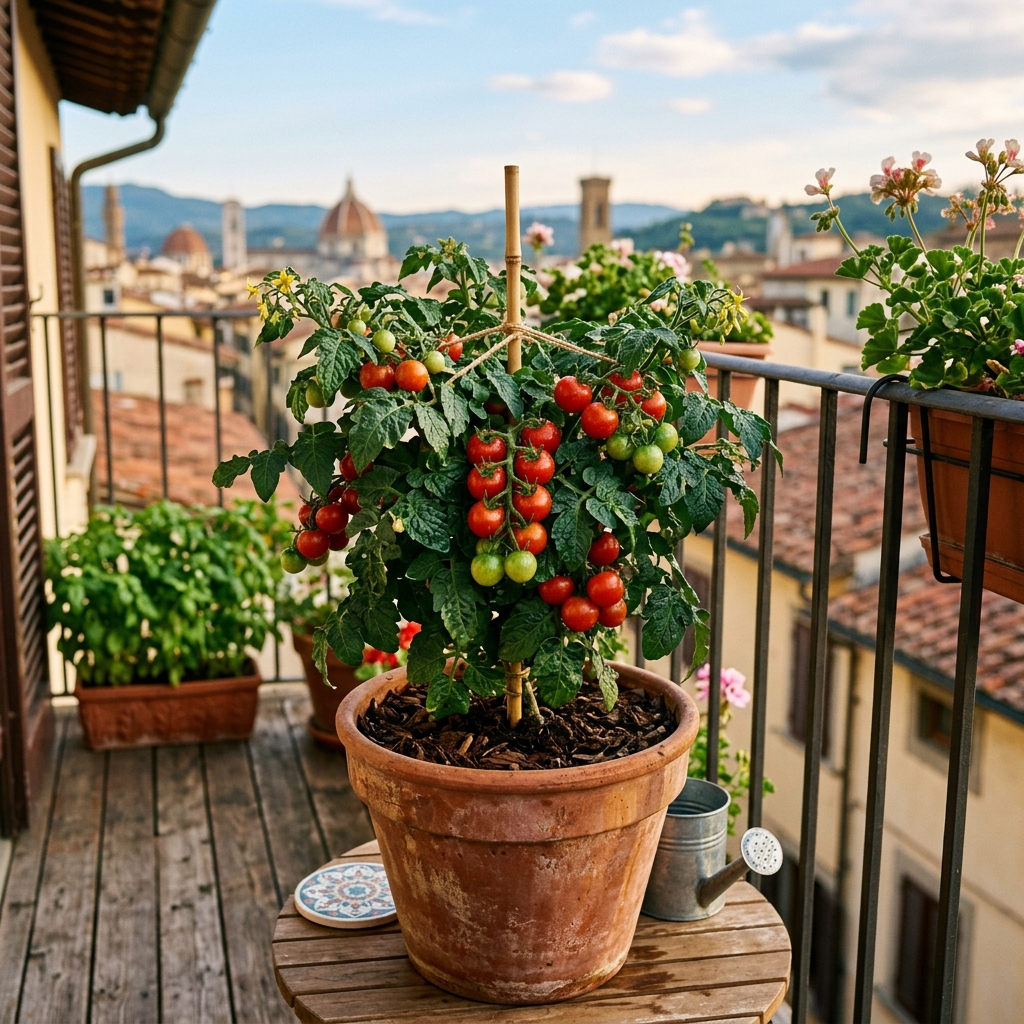
Growing tomatoes outdoors sounds straightforward. Buy a few plants, find a sunny patch, and wait for the harvest. In reality, tomatoes are one of the most rewarding crops you can grow, but they are also one of the easiest to misunderstand. People often think tomatoes are difficult because they have seen them struggle, seedlings go leggy on windowsills, young plants stall after planting out, leaves turn yellow, flowers drop, or fruits split just when everything seemed to be going well.
This guide is for anyone who has planted outdoor tomatoes with high hopes and ended up with a frustrating season. Tomatoes are a warm-season crop, and Central European weather does not always give them the smooth, settled run they would choose for themselves. Springs can be slow, nights can stay cold long after the days feel pleasant, and a promising start in one week can be checked by poor weather in the next. Growing tomatoes well is less about one clever trick and more about understanding timing, warmth, watering, feeding, and ongoing care. The good news is that every common problem has a clear cause, and a clear fix.

Key Takeaways
-
Timing still trips up experienced gardeners: The most common beginner mistake is planting out too early. A tomato seedling planted in May in warm soil will overtake one planted in cold April soil within weeks. Wait for the soil to warm properly, then move fast.
-
Blossom end rot is a watering problem, not a soil problem: Blossom end rot is a calcium transport disorder, not a soil deficiency. Irregular watering is the primary trigger in 85-90% of cases. Fix the watering and the rot stops.
-
Feeding must change as the season progresses: The main thing to remember is that tomatoes need a high level of potassium to produce high-quality fruits, but this is not a requirement until the first fruits actually begin to set. Feed nitrogen early, switch to potash once flowers appear.
-
Green fruit at season's end is salvageable: Green tomatoes picked before the first frost will ripen on a warm windowsill indoors; they do not need sunlight to ripen, only warmth above 18°C. Stop worrying about September harvests; focus on timing the pinch-out correctly instead.
Quick-Start Prioritisation Framework
| Problem | Most Likely Cause | Effort to Fix | Time to See Results |
|---|---|---|---|
| Blight wiping out the crop | Variety choice, wet leaves | Low (variety swap) | Next season |
| Blossom end rot | Irregular watering | Low | 1-2 weeks |
| Fruit not ripening | Too cool, too many trusses | Low (pinch out) | 2-3 weeks |
| Splitting fruit | Uneven watering | Low | Immediate |
| Yellow leaves | Nutrient imbalance | Medium | 1-2 weeks |
| Leggy seedlings | Sown too early or too dark | Low | Next sowing |
Start here if you are:
-
A first-time grower: Focus on variety choice and watering consistency, these two decisions prevent most problems.
-
An experienced grower with repeat failures: Audit your blight exposure and switch varieties before spending money on anything else.
-
A container grower: Prioritise pot size (minimum 20 liters) and a drip-feed watering schedule, as container plants are 3-4 times more vulnerable to moisture stress.
The Timing Trap: Why So Many Plants Fail Before They Start
Sowing Too Early and Planting Out Too Soon
In my experience, impatience causes more failed tomato seasons than any pest or disease. Many beginners start too early because they are eager to get going. That is understandable, but tomatoes started too soon often become weak, stretched, and awkward before outdoor conditions are ready.
Hongarian gardeners should sow tomato seeds indoors from mid-February to mid-March at 18-21°C. For outdoor planting in Hungary, where springs warm faster but late frosts remain a genuine risk into late April, the same principle applies. For outdoor plants, wait until late May to early June after the last frost date for your area, and harden off plants first by putting them outside during the day for a week.
Pro Tip: Cold-shocked tomatoes sulk for weeks and never fully recover their early vigour. A fortnight of patient hardening-off is never wasted time.
Choosing the Wrong Variety for Your Site
Not all tomato varieties suit northern European conditions. The UK growing season runs from late May to September, roughly 16-18 weeks. Choose cultivars bred for cooler climates and shorter seasons. The same logic applies in Hungary, where blight pressure peaks in humid, warm July weather.
Cherry tomato varieties are the most reliable choice for outdoor growing; they set fruit more readily in variable weather, ripen faster than large-fruited types, and tolerate the slightly uneven watering that is inevitable with outdoor containers. According to Garden UK's outdoor variety guide, varieties like Roma, Moneymaker, Brutus are among the strongest outdoor performers, and perform equally well in Hungarian gardens. If your heart is set on beefsteak tomatoes, accept that they need more attention, more consistent feeding, and a warmer, sheltered spot.

Blight: The Biggest Outdoor Tomato Killer
Understanding How Blight Spreads
Tomato blight (Phytophthora infestans) destroys outdoor tomato crops in 7-10 days once symptoms appear, typically between July and September. The disease spreads via airborne spores when humidity exceeds 90% and temperatures remain between 10-25°C for 48 hours.
Spread by airborne spores that can be carried over 20 km on the wind, tomato blight is most prevalent when conditions are warm and wet. According to Gardeners' World Magazine's blight guide, outdoor tomatoes are more susceptible than greenhouse ones precisely because rainfall wets their leaves directly, creating the conditions blight spores need to take hold.
Prevention Strategies That Actually Work
Blight-resistant varieties reduce infection risk by 70-90%. That single decision, made at the seed-ordering stage, is worth more than any spray programme. Holland Kertészet stocks a range of outdoor tomato seeds suited to Central European growing conditions, including varieties selected for disease resistance.
Beyond variety choice, physical management matters considerably:
-
Water at the base only, never overhead. Always water at the base of the plant rather than over the leaves. Wet foliage stays damp longer and increases the chance of disease taking hold.
-
Add mulch around the base of plants. This prevents any blight spores present within the soil from reaching the leaves. Similarly, remove low leaves and foliage around the base of the plant.
-
Avoid planting tomato plants near or downwind of potatoes or other nightshade crops, as UK winds move westerly for much of the year.
When Blight Has Already Struck
Tomato blight can destroy a healthy crop in a matter of days, with leaves quickly rotting, shrivelling and turning brown. Brown patches can appear on stems too, while fruits quickly decay. Unfortunately, blight-ravaged plants cannot be saved and must be binned or burnt, never composted.
Blossom End Rot, Splitting, and Other Fruit Problems
Blossom End Rot: Fix the Watering, Not the Calcium
The dark, leathery patch at the base of developing tomatoes is one of the most misunderstood problems in the kitchen garden. Blossom end rot is a calcium transport disorder, not a soil deficiency. It affects 30-40% of greenhouse tomato crops, plus peppers, courgettes, and aubergines.
The problem is almost never a lack of calcium in the soil. Garden soils typically contain 1,000-3,000 mg/kg of calcium, five to fifteen times more than any tomato plant needs. The issue is getting calcium from the soil into the fruit.
According to the University of Connecticut Extension's research on blossom end rot, blossom end rot can be closely associated with soil moisture that is too wet or too dry. The soil should never dry out completely. It is important to water regularly to ensure that plants receive consistent moisture. A cycle of dryness followed by overwatering only promotes calcium deficiency in the plant.
The fix: set a consistent watering schedule and mulch the soil surface to maintain even moisture. Irregular watering is the primary trigger in 85-90% of cases. Maintaining consistent soil moisture at 60-70% field capacity eliminates the problem in most crops.
Fruit Splitting: Caused by the Same Culprit
When soil or compost has been allowed to become bone dry and is re-wetted by rain or watering, fruits put on a sudden growth spurt which causes their skins to split. Regular watering and taking care to ensure that the compost never becomes parched is your best line of defence.
Splitting is most common in late summer. Water consistently and never let the compost dry out completely. Mulching the compost surface with a layer of grit slows moisture loss and helps maintain even moisture levels between waterings.
Pro Tip: If you are container-growing, use pots of at least 20 liters. Standard grow bags have limitations, the shallow depth restricts root development and they dry out very quickly in warm weather, requiring watering twice daily at the height of summer.
Feeding Failures: Too Little, Too Much, or the Wrong Type
The Nitrogen Trap
I've found that most struggling outdoor tomatoes are either underfed at fruiting time or overfed with nitrogen all season. Avoid using nitrogen-heavy fertilisers in later stages; otherwise, your plants will have a lot of lush foliage and little to no fruits. Lush green growth and no fruit is the classic sign that nitrogen is running the show when potassium should be.
Switching to a High-Potash Feed at the Right Time
According to the RHS guide to growing tomatoes, to boost fruiting of container plants, feed every 10-14 days with an organic high potassium liquid fertiliser once the first fruits start to swell. Tomatoes growing in enriched ground may not need additional feeding, but a fortnightly feed can help to increase yields.
Potassium regulates water absorption and the plant's ionic balance. This nutrient also helps tomatoes turn red and ripen, as it is directly responsible for lycopene production, the organic pigment that helps tomatoes ripen and turn red. This means a potash deficit does not just slow fruit set; it also delays colour change and reduces flavour.
For organic growers, Plantura's guide to fertilising tomatoes recommends slow-release fertilisers over mineral alternatives. Mineral-based fertilisers provide a short, sharp nutrient boost that is insufficient for a tomato plant's long-term development, while slow-release fertilisers also enrich soil life.
Green Fruit at Season's End and What to Do About It
Why Tomatoes Refuse to Ripen
The plant produces the hormone ethylene itself but needs a lot of energy to do so, mainly in the form of heat. This is the crucial sticking point when nothing red appears on the tomato plant even after a long wait: it is simply too cold.
If plants are still carrying large numbers of green tomatoes as temperatures drop and the season ends, pinch out the growing tip in late July or early August, two leaves above the top flower truss, to stop new growth and concentrate energy on ripening existing fruit.
According to Kitchen Garden Magazine's ripening guide, Kitchen Garden Magazine's ripening guide temperatures, sun strength and daylight hours later in summer, it is prudent to stop cordon tomatoes sometime in August, perhaps early August in more northerly areas and later in the month further south. In Hungary's warmer climate, you have slightly more flexibility, but the principle holds.
Rescuing Green Fruit Before Frost
Any tomatoes showing even the slightest suggestion of their final colour have a good chance of ripening off the vine, indoors. Bring them inside before the first frost, place them in a warm room (not the fridge, cold stops the ripening process), and sit them alongside a ripe banana to speed things along. Kitchen Garden Magazine's ripening guide which encourages surrounding fruits to hurry up and ripen, and bananas are particularly good at emitting this gas.

Common Mistakes That Compound Every Other Problem
Not Removing Side Shoots on Cordon Varieties
The pruning regime is especially important to encourage the plant to invest its energy in a controlled number of ripe fruit; otherwise the short summers typical of the UK and Central European climate can leave a gardener staring at a large leaf-covered plant covered in small green tomatoes that never have time to ripen.
Pinch side shoots out weekly when they are small, no larger than your little finger. Once they grow to pencil thickness, removing them leaves a wound that invites disease.
Poor Air Circulation
Environmental control must focus on reducing the likelihood of leaves remaining wet for an extended period, so trimming foliage and side-shoots to maximise air movement and ensure the evaporation of surface moisture is essential. Correct spacing does as much work as any spray. Overcrowded tomatoes are much more likely to stay humid around the foliage, creating ideal conditions for blight to spread. Proper spacing helps leaves dry more quickly after rain and reduces leaf-to-leaf contact between neighbouring plants.
Pro Tip: A good mulch around the base of each plant helps the soil hold moisture during dry spells and stops rain from splashing soil up onto the leaves, which can cause disease. Two jobs from one bag of straw.
Frequently Asked Questions
When should I plant tomatoes outdoors in Hungary?
Plant outdoors after the last frost, usually late May to early June. Planting too early is the most common cause of failure. In Hungary, the last frost risk typically passes earlier, often late April in the south, but soil temperature matters as much as air temperature. Wait until the soil is above 15°C before transplanting, and harden off plants for at least a week before leaving them outside permanently.
Why are my outdoor tomatoes getting blight every year?
The spores which cause blight are present in almost every single allotment and garden. It is not a matter of whether the spores are there; it is more a matter of whether they will infect your tomato plants. The answer is to switch to blight-resistant varieties and grow under some form of rain cover if possible. Since blight cannot be cured every effort must go into prevention. The three pillars are: grow under cover, choose resistant varieties, and apply protective fungicide sprays.
What causes black patches on the bottom of my tomatoes?
This is blossom end rot, caused by disrupted calcium uptake rather than a calcium-deficient soil. Treating blossom end rot is less about spraying a miracle cure and more about correcting the growing conditions that caused it. In most UK gardens, the main issue is inconsistent watering, which disrupts calcium uptake into developing fruits. The good news is that blossom end rot is not contagious and does not mean the whole crop is lost. Affected fruits will not recover, but the plant can still go on to produce healthy tomatoes if you act quickly.
How often should I feed outdoor tomatoes?
If you use a slow-release granular feed, simply add this to the final potting compost and your tomato plant's needs will be adequately catered for during the growing season. If you prefer to use a liquid feed, add a little base fertiliser at the final potting stage or when planting out and then begin applying a liquid feed once the flowers develop, then once a week thereafter. A high potassium, or potash-based feed, is best for encouraging flowers and fruits.
My tomatoes are still green at the end of September. What can I do?
Bring the plants under cover if possible, or pick all fruits showing any blush of colour. Move containers against a south-facing wall or under cover to add warmth. Green tomatoes picked before the first frost will ripen on a warm windowsill indoors; they do not need sunlight to ripen, only warmth above 18°C. For plants in the ground, cut the entire stem at the base and hang it upside down indoors to allow remaining fruits to ripen gradually.
Sources
-
Growing Tomatoes, Beginners Guide, Garden UK. Outdoor variety selection, yield data, and blight timing. https://gardenuk.co.uk/growing/growing-tomatoes-uk-beginners/
-
How to grow Tomatoes, Royal Horticultural Society. Authoritative UK growing calendar, feeding and ripening guidance. https://www.rhs.org.uk/vegetables/tomatoes/grow-your-own
-
Tomato Blight: Prevention and Treatment, Garden UK. Crop loss statistics, resistant varieties, and copper fungicide timing. https://gardenuk.co.uk/problems/tomato-blight-prevention-treatment-uk/
-
Tomato Blight, BBC Gardeners' World Magazine. Blight identification, spread mechanics, and prevention. https://www.gardenersworld.com/how-to/solve-problems/tomato-blight/
-
Blossom End Rot: Causes and Prevention, Garden UK. Calcium science, watering research, and UK incidence data. https://gardenuk.co.uk/problems/blossom-end-rot-causes-prevention-uk/
-
Blossom-End Rot and Calcium Nutrition, University of Connecticut Extension. Research-based analysis of calcium transport and watering management. https://homegarden.cahnr.uconn.edu/2025/06/15/blossom-end-rot/
-
How to Solve Your Tomato-Growing Problems, STIHL Blog. Practical problem-solving guide covering splitting, blight, and blossom end rot. https://blog.stihl.co.uk/solving-tomato-growing-problems/
-
Growing Tomatoes in the UK, Glorious Garden. Timing, common mistakes, and seedling problems. https://gloriousgarden.co.uk/growing-tomatoes-uk/
-
How to Grow Tomatoes in Pots in the UK, The Garden Patch. Container problems, blossom end rot, and ripening fixes. https://www.greengaffer.co.uk/raised-garden-beds/how-to-grow-tomatoes-in-pots-uk/
-
Tomato Ripening Tips, Kitchen Garden Magazine. Pinching out timing, indoor ripening, and end-of-season strategy. Kitchen Garden Magazine's ripening guide
-
How to Avoid Tomato Blight, Simply Seed. Practical blight prevention framework including spacing and watering habits. https://www.simplyseed.co.uk/blog/how-to-avoid-tomato-blight-practical-prevention-tips.html
-
Treating Blossom End Rot in Tomatoes, Simply Seed. Causes, fixes, and prevention of blossom end rot. https://www.simplyseed.co.uk/blog/treating-blossom-end-rot-in-tomatoes-causes-fixes-and-prevention.html
-
Fertilising Tomatoes, Plantura Garden UK. Feeding schedules, NPK ratios, and slow-release vs mineral fertiliser comparison. https://plantura.garden/uk/vegetables/tomatoes/fertilising-tomatoes
-
When to Feed Tomatoes, Simply Seed. Potassium timing and fertiliser type guidance for UK gardeners. https://www.simplyseed.co.uk/blog/when-to-feed-tomatoes.html
-
Tomatoes Not Ripening, Plantura Garden UK. Ethylene science, indoor ripening methods, and autumn strategies. https://plantura.garden/uk/vegetables/tomatoes/tomatoes-not-ripening


