

A practical vegetable garden series
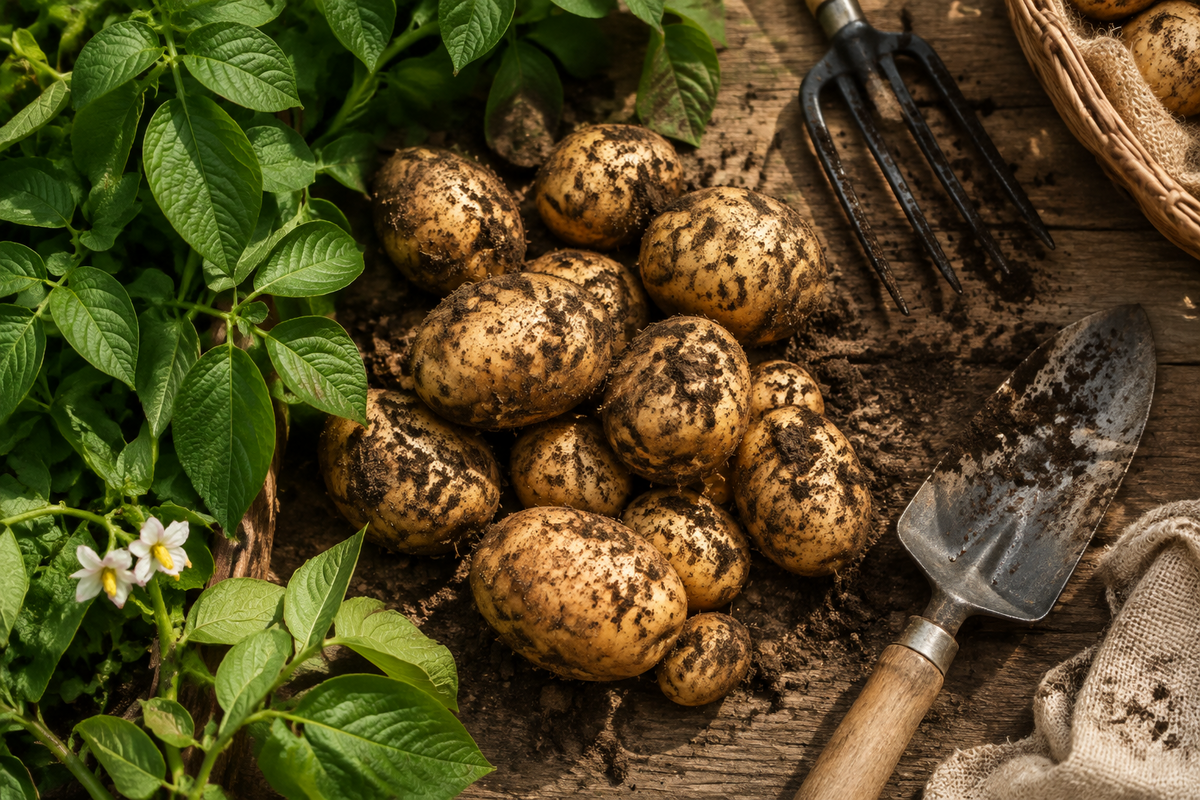
Grow potatoes from true seed, then enjoy golden, firm-fleshed tubers from your own garden.
|
GROW WITH US Start tiny Soltastic F1 seeds indoors, transplant after frost, then hill soil up around the plants. |
Written for home gardeners in Hungary
CHAPTER WELCOME
Your potato-growing season starts here
This book follows the whole journey: seed → seedling → garden → care → harvest → kitchen → next season.
Soltastic F1 is a potato you grow from botanical seed, not from a seed potato tuber. Start the tiny seeds indoors in late winter or spring, raise them into sturdy seedlings, then transplant outdoors after frost danger has passed. Near Győr, that is usually from mid-May, depending on the weather. Give plants a sunny bed, grow bag or large container with fertile, well-drained soil. As stems grow, draw soil up around them once or twice to cover developing tubers. The plants flower beautifully, but the small green berries that may follow are not edible. Harvest tubers when plants begin to yellow and die back, usually around 100–120 days after transplanting.
Growing a potato from true seed is a fun project with a few extra steps at the beginning. Sow Soltastic F1 indoors in fine, moist seed compost and keep it warm and bright. The seedlings start small, so label the tray and water gently. Pot them on if they become crowded, then harden them off before planting outside. Once established, treat them like potatoes: water during dry spells, hill soil around the stems as they grow, and watch leaves for signs of blight. The yellow, round-oval tubers have golden flesh and a fairly firm texture. F1 plants are uniform, but saved seed will not reliably grow true to type.
Our Hungarian calendar
|
February–May |
Sow seeds indoors in warm, fine seed compost. |
|
March–May |
Pot on seedlings and give them bright light. |
|
From mid-May |
Harden off and transplant after frost danger passes. |
|
Summer |
Water evenly and hill soil around growing stems. |
|
Late summer–autumn |
Lift mature tubers as plants yellow and die back. |
|
After harvest |
Dry tubers and store them cool, dark and ventilated. |
|
WHAT I WOULD DO I would start a small tray in March and grow a few plants in a sunny bed or large grow bag. |
The rule for this series: dates guide us, but the plant and the weather make the final decision.
CHAPTER 1
Meet Soltastic F1
A true potato seed that grows into flowering plants and golden tubers.
Potatoes normally grow from small seed tubers, but Soltastic F1 starts from botanical seed. Those seeds produce seedlings that grow into potato plants and underground tubers. The plants flower abundantly, and may form small green berries after flowering; these are inedible and mildly toxic, so keep them away from children and pets. Soltastic produces medium-sized, round-oval tubers with yellow skin and golden-yellow flesh. The potatoes are fairly firm when cooked, making them useful for boiling, roasting and frying. Because this is an F1 hybrid, save tubers for eating rather than saving botanical seed for a dependable repeat of the variety.
Potato seed or seed potato?
|
True potato seed |
Botanical seed sown indoors and raised into seedlings. |
|
Seed potato |
A small tuber planted directly in the garden. |
Choose a place for the seedlings and the future tubers
· True potato seed: tiny botanical seed raised indoors into seedlings.
· Seed tuber: a small potato planted directly in the garden.
· Soltastic F1: transplant young seedlings after frost risk has passed.
· For tubers: use fertile, well-drained soil and hill up the stems.
· For safety: never eat the plant’s green berries or green tubers.
· Warm-season start: sow indoors from February to May.
|
GOOD TO KNOW Soltastic F1 forms golden-fleshed tubers, but its green berries are not edible. |
CHAPTER 2
Choose Your Potato Growing Method
Start with the true seed and make a little room for the seedlings to grow.
Ask yourself five questions
1. Can I sow tiny seeds indoors and keep them warm and bright?
2. Do I have a sunny bed, grow bag or large container for the crop?
3. Can I transplant only after frost danger has passed?
4. Can I water steadily and hill soil around the growing stems?
5. Will I keep the inedible green berries away from children and pets?
A beginner-friendly first planting
|
Sow indoors |
Keep tiny seeds warm and evenly moist. |
|
Transplant late |
Wait until frost danger has passed. |
|
Hill the stems |
Cover developing tubers with loose soil. |
|
Harvest mature |
Lift when foliage yellows and dies back. |
|
A COMMON MISTAKE Treating the packet seeds like seed potatoes. Raise them indoors first, then transplant seedlings. |
|
TRY THIS Grow one plant in a bag and one in a bed, then compare the harvest. |
CHAPTER 3
Let’s Sow
Soltastic F1 offers a different way to grow potatoes: begin with true seed, then transplant the young plants into the garden. The seedling stage needs patience, but after planting the crop grows much like other potatoes. Near Győr, sow indoors in February or March so plants are ready to move outside after the last frost danger, usually from mid-May. If you start later, the plants may have less time to make tubers before autumn. Choose a sunny plot or grow bag, prepare fertile soil, and plan to hill soil up around the stems as the plants get taller.
When to sow in Hungary
Sow Soltastic F1 indoors from February to May. For a season near Győr, a February or March sowing gives seedlings time to grow before transplanting after frost risk has passed, generally from mid-May. Use a warm room or propagator for germination, then move seedlings into bright light. Pot on carefully if roots fill their first container. Harden plants off gradually for about a week, and wait for settled weather before planting outdoors. If using a grow bag, fill it with fresh, free-draining compost and make sure excess water can drain away.
What you need
· Soltastic F1 true potato seeds
· Seed tray or small pots and fine seed compost
· Warm place for germination and bright light for seedlings
· Sunny bed, raised bed, grow bag or large pot
· Compost or loose soil for earthing up around stems
Sowing, step by step
6. Fill a clean tray or small pots with fine, moist seed compost.
7. Sow seeds thinly and cover lightly with compost.
8. Keep warm at about 16–20°C and evenly moist, not wet.
9. Move seedlings into bright light as soon as they emerge.
10. Pot on carefully when seedlings are large enough to handle.
|
DON’T PANIC Seedlings start small. Keep them warm, bright and gently moist while they establish. |
|
A COMMON MISTAKE Leaving developing tubers exposed to light. Hill soil around stems as the plants grow. |
CHAPTER 4
Seedling School
Warmth, bright light and gentle watering help tiny potato seedlings become sturdy plants.
Recognise young potato plants
Potato seedlings begin with small, rounded leaves, then develop compound leaves with several leaflets. Keep them in bright light so stems do not stretch. Water gently and do not let fine seed compost become soggy. When seedlings are large enough to handle, pot them on into individual pots, holding a leaf rather than squeezing the stem. Grow them on until the weather is mild, then harden them off gradually before transplanting.
Why are the seedlings pale or leggy?
Pale or stretched seedlings usually need more light; slow growth can also follow cold compost or overwatering. Move the tray to a bright windowsill or grow light, and let excess water drain. Pot crowded seedlings on while roots are small. Outdoors, protect new transplants from cold nights and strong wind until they settle.
Water while they settle
Keep seed compost lightly moist while seeds germinate. After transplanting, water each plant in and keep the root zone from drying out. Potatoes need steady moisture as tubers form, especially in hot, dry spells. Water deeply at the base, and check containers more often because they dry faster than garden beds. Avoid waterlogged soil, which can damage roots and encourage rot.
Feeding
Mix mature compost into the bed or use fresh container compost before planting. Potatoes need fertile soil, but too much nitrogen can produce leaves at the expense of tubers. If plants look weak, check moisture, light and root space before feeding. Use a balanced vegetable fertiliser only as directed, and keep it from touching seedlings or stems.
|
WHAT I WOULD DO I would grow a few plants in a container so lifting the tubers is easier. |
|
DON’T PANIC Potato flowers are normal. The small green berries that may follow are inedible. |
CHAPTER 5
Ready for the Real World
Harden off potato seedlings and plant outdoors only after frost danger has passed.
Before planting out: check the seedlings and the weather
11. Choose a sunny bed, raised bed, grow bag or deep container.
12. Wait until frost danger has passed and nights are mild.
13. Harden seedlings off gradually for about a week.
14. Prepare loose, fertile soil that drains freely.
15. Leave room to hill soil around the stems as they grow.
When can potato seedlings grow outside in Hungary?
Near Győr, move Soltastic seedlings outdoors from mid-May once frost danger has passed. A sheltered, sunny bed may warm earlier, but do not rush tender transplants into cold, wet soil. Harden them off gradually by setting pots outside for longer periods over about a week. Plant into open ground, a raised bed or a grow bag in a position with full sun. If a late frost threatens, cover young plants overnight or bring containers under shelter.
Space plants about 20 cm apart, with roughly 60 cm between rows, following the seed packet. Set each seedling into loose soil and water it in well. As stems grow, draw soil or compost up around the base once or twice, leaving the top leaves exposed. This earthing up covers developing tubers and gives them more room. In a grow bag, add compost in stages as the stems extend. Keep the drainage holes clear and do not let containers stand in water.
|
A COMMON MISTAKE Eating the green berries or green tubers. Do not use them as food. |
|
GOOD TO KNOW Soltastic F1 is grown from true seed; saved berry seed will not reliably repeat the variety. |
CHAPTER 6
Give Them a Good Home
Potatoes grow best in sunny, fertile soil that stays moist but drains well.
The right place
Choose a sunny, open position with fertile, loose soil. Potatoes form tubers underground, so avoid compacted ground and improve heavy soil with mature compost. A raised bed or grow bag can make earthing up easier and helps keep the crop accessible. Do not grow potatoes in the same patch year after year; rotate them with unrelated crops and clear plant debris at season’s end. Avoid planting near tomatoes if blight has been a recurring problem, because both crops can be affected.
Spacing
As a guide, plant Soltastic seedlings about 20 cm apart in rows around 60 cm apart, checking the packet for variety-specific advice. Give each plant enough space to develop a leafy canopy and underground tubers. In a grow bag, follow its size guidance and avoid crowding too many plants together. Leave room to reach the plants for watering and earthing up. Containers need drainage holes and enough depth to hold compost over the developing tubers.
Planting day
16. Water the seedlings before planting so their root balls are moist.
17. Set each plant into loose soil and keep the leaves above ground.
18. Firm the soil gently around the roots and water thoroughly.
19. Space plants about 20 cm apart, following the seed packet.
20. Leave room to add soil around the stems as plants grow.
Growing in grow bags or pots
Soltastic F1 can be grown in open ground, raised beds, grow bags or large pots with drainage. Fill containers with fresh, free-draining compost, then plant seedlings and water them in. As stems grow, add more compost around them one or two times, leaving the top leaves uncovered. Container compost dries faster than garden soil, so check moisture often in warm weather. A bag or pot makes harvest easier, but keep it stable and avoid letting it dry out completely.
|
TRY THIS Lift one small tuber first and leave the rest to grow for the main harvest. |
CHAPTER 7
Water, Feed & Keep Them Growing
Even moisture, fertile soil and earthing up help plants form healthy tubers.
Watering
Water deeply when the soil begins to dry, especially as the leafy plants grow and tubers form. A dry spell followed by heavy watering can stress potatoes and cause growth problems. Aim water at the soil and check container plants more often during hot weather. Keep soil moist, not saturated. Good drainage matters: roots in waterlogged compost can rot. As foliage naturally begins to die back near harvest, reduce watering and let the soil become drier before lifting the crop.
Mulch and earthing up
As stems grow, draw loose soil or compost around their bases one or two times, leaving the top leaves uncovered. This is called earthing up. It covers the developing tubers, gives them room and reduces the chance that they become exposed to light and turn green. A light mulch can help conserve moisture after the soil warms, but it does not replace earthing up. In containers, add compost in stages and keep drainage holes clear.
Feeding
Potatoes grow well in fertile soil enriched with mature compost. If you use a vegetable fertiliser, follow its label and avoid excessive nitrogen, which encourages leaves more than tubers. In a grow bag, nutrients can run out sooner, so a modest feed may be useful during active growth. Water first if the compost is very dry and never pour concentrated fertiliser onto leaves or roots. Healthy green growth is useful, but extra feeding cannot compensate for poor light or uneven watering.
Keep plants healthy
Check the leaves every few days, especially in warm, humid or unsettled weather. Remove badly damaged foliage and avoid handling wet plants. Potato blight can cause dark, spreading patches and rapid wilting; if you suspect it, remove affected plants and seek local gardening advice. Keep weeds down and water at the base. If stems lean, gently firm the soil around them. Flowers are normal, and small green berries may follow; leave them on the plant and never eat them.
|
WHAT I WOULD DO I would label the seed tray and note the date I sowed it. |
CHAPTER 8
Leaves, Flowers & “What Is That?”
Potato flowers are part of the crop, but the small green berries that follow are not edible.
Why are the leaves spotted or yellowing?
A few older leaves may yellow as plants mature, but spreading dark patches or rapid collapse can signal blight, especially in damp weather. Remove badly affected foliage and keep it away from compost if disease is suspected. Yellowing can also follow dry soil, waterlogging or nutrient stress, so check the growing conditions. Potato plants may produce small green berries after flowering; these are not the edible tubers and should not be eaten.
The beginner’s trouble guide
|
Seedlings are leggy |
Give them brighter light and turn pots occasionally. |
|
Leaves are spotted |
Check for blight, especially in damp weather. |
|
Plants are wilting |
Check soil moisture and drainage. |
|
Tubers are green |
They were exposed to light; do not eat green parts. |
|
Berries appear |
These are inedible; keep them away from children and pets. |
|
DON’T PANIC A few flowers or berry clusters do not mean the tubers are failing. |
|
A COMMON MISTAKE Growing potatoes in the same bed year after year without rotation. |
CHAPTER 9
Can I Pick It Yet?
Lift a few tubers when plants begin to yellow, then harvest the main crop as foliage dies back.
What “ready” looks like
Soltastic F1 tubers usually take about 100–120 days from transplanting to mature. For a small early taste, carefully feel near the plant base after it has grown for a while and lift one or two small tubers. For the main crop, wait until leaves begin to yellow and plants naturally die back. Choose a dry day, loosen soil with a fork well away from the stems, and lift tubers carefully. Let the skins dry before storing and set aside any damaged tubers to use first.
Harvest as tubers mature
|
Timing |
About 100–120 days after transplanting. |
|
Foliage |
Yellowing and dying back for the main harvest. |
|
Lifting |
Loosen the soil carefully with a fork. |
|
Curing |
Dry in a shaded, airy place before storing. |
How often should I check?
Look at the plants every few days as summer progresses. If you want small new potatoes, gently explore the soil near a plant without disturbing the whole crop. For a larger harvest, wait until the foliage starts to fade and die back, usually around 100–120 days after transplanting. Stop heavy watering as plants mature. Lift on a dry day, brush off loose soil and allow tubers to dry in a shaded, airy place before storing. Never eat green tubers or the plant’s berries.
|
READY TO HARVEST? Lift the main crop when foliage has yellowed and died back; choose a dry day. |
|
TRY THIS Roast golden-fleshed potatoes with rosemary and a little oil. |
CHAPTER 10
From the Garden to the Kitchen
Golden-fleshed Soltastic potatoes are firm enough for boiling, roasting and frying.
The first rule: handle the harvest gently
Brush away loose soil and let freshly lifted potatoes dry in a shaded, airy place. Do not wash them before storage, because extra moisture encourages spoilage. Use damaged or bruised tubers first and discard any that are green, soft or rotten. Soltastic’s fairly firm texture suits boiling, roasting, mashing and frying. Wash potatoes just before cooking, trim away damaged spots and cook until tender. The plant’s green berries are not food and must never be used in recipes.
Match potato to the dish
· Boiled: cook whole or cut into pieces until tender, then season with herbs.
· Roasted: toss chunks with oil and roast until golden at the edges.
· Mashed: boil until soft, then mash with warm milk or butter.
· Fried: cut evenly and cook thoroughly until crisp and golden.
|
FROM THE KITCHEN Boil, roast, mash or fry Soltastic tubers once they are mature. |
Storing your potatoes
Keep sound, dry potatoes in a cool, dark, well-ventilated place. Darkness matters: light can turn tubers green and bitter, so do not leave them on a sunny windowsill. Use paper sacks, crates or a breathable box rather than sealed plastic. Check stored tubers regularly and remove any that soften or rot. Home-grown potatoes may not store as long as commercial crops, so use them while they are in good condition. Keep them away from children if any green berries remain on the plants.
When you have more than you can use
Store only clean, dry, undamaged tubers and use bruised ones first. Soltastic F1 is an F1 hybrid, so saving botanical seed from its berries will not reliably produce the same variety; berries are also inedible. You can keep healthy tubers for cooking, but they are not certified seed potatoes. For the same Soltastic F1 crop next year, start with fresh seed. Rotate potatoes to a new bed and clear old foliage after harvest.
CHAPTER 11
Next Season Starts Now
Record when you sowed, how you raised the seedlings and when tubers were ready.
Keep a tiny garden record
· Seed variety and packet source
· Sowing date and germination warmth
· When seedlings were potted on and hardened off
· Transplanting date and spacing
· When you earthed up the stems
· When flowering and foliage yellowing began
· Harvest date, tuber size and cooking results
Saving seed and planning another crop
Soltastic F1 is an F1 hybrid grown from true botanical seed. The tubers can be cooked, but seed collected from berries will not reliably grow plants identical to Soltastic. Potato berries are not edible and are mildly toxic, so do not save or taste them. For a dependable crop of the same variety, order fresh seed next season. Rotate the planting area and add mature compost before growing potatoes there again.
21. Choose fresh Soltastic F1 seed for a dependable repeat crop.
22. Do not eat or save the small green potato berries.
23. Rotate potatoes to a different bed next season.
24. Clear old foliage and compost only healthy plant material.
25. Store sound tubers cool, dark and well ventilated.
|
GOOD TO KNOW Store sound potatoes cool, dark and well ventilated. |
|
WHAT I WOULD DO I would use bruised tubers first and keep only firm, sound ones for storage. |
COME GROW WITH ME
POTATO SEED SOLTASTIC F1 CHEAT SHEET
The page to come back to when you have soil on your hands and no time to reread the whole book.
|
SOW |
February–May indoors |
16–20°C; fine compost |
|
POSITION |
Full sun |
Bed, raised bed or grow bag |
|
PLANT OUT |
From mid-May |
After frost; harden off |
|
CARE |
Water; hill stems |
Fertile soil; good drainage |
|
HARVEST |
100–120 days later |
When foliage dies back |
|
Start |
Sow true seed indoors in fine compost. |
|
Grow on |
Pot seedlings on and give bright light. |
|
Plant |
Harden off and transplant after frost. |
|
Care |
Water evenly and hill soil around stems. |
|
Harvest |
Lift mature tubers when foliage dies back. |
|
Next season |
Rotate the bed and buy fresh F1 seed. |
|
HUNGARY IN ONE LINE Near Győr, sow Soltastic F1 indoors in late winter, plant out after frost from mid-May, then lift tubers as foliage dies back. |
COME GROW WITH ME • POTATO SEED – SOLTASTIC F1
Seasonal guidance is adapted for Hungarian home gardens.


