

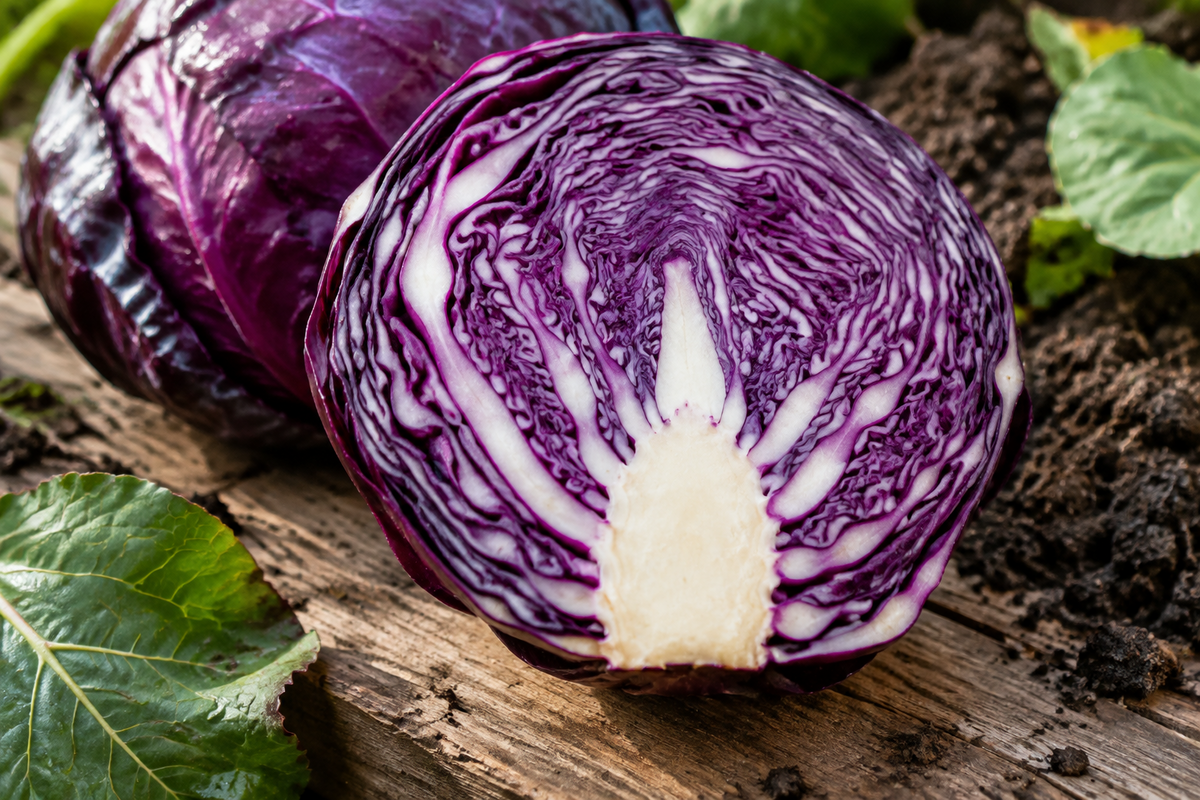
A practical vegetable garden series
Grow firm, jewel-coloured cabbage heads from seed and bring a long-lasting harvest to your kitchen.
|
GROW WITH US A few red cabbage plants can give your garden a colourful autumn harvest and several hearty meals. |
Written for home gardeners in Hungary
CHAPTER WELCOME
Your red cabbage season starts here
This book follows the whole journey: seed → seedling → garden → care → harvest → kitchen → next season.
Red cabbage is a cool-season crop that needs a long stretch of steady growth to make a solid head. Near Győr, start early varieties indoors in late winter or early spring, then harden off and plant them outside when the soil is workable and severe frost has passed. Main-season and autumn varieties can be started later; follow the packet because types differ. Give each plant room, water evenly and protect it from cabbage pests.
This guide is about headed red cabbage, Brassica oleracea var. capitata. It is grown much like white cabbage, but the seed packet matters: early, summer and storage varieties have different sowing dates and days to maturity.
Our Hungarian calendar
|
February–March |
Start early varieties indoors in pots or modules. |
|
April–May |
Harden off and plant early seedlings when the bed is workable. |
|
May–July |
Sow or transplant main-season varieties according to the packet. |
|
Summer |
Water steadily and protect young plants from cabbage pests. |
|
Late summer–autumn |
Harvest firm heads as each variety reaches maturity. |
|
After harvest |
Store sound heads cool, or prepare them fresh for the kitchen. |
|
WHAT I WOULD DO I would grow a few plants of a named variety, then stagger early and autumn types for a longer harvest. |
The rule for this series: dates guide us, but the plant and the weather make the final decision.
CHAPTER 1
Meet Red Cabbage
A sturdy leafy plant that wraps its leaves into a dense red-purple head.
Red cabbage is a form of Brassica oleracea, the same species that gives us white cabbage, kale, broccoli and Brussels sprouts. Its broad outer leaves gather around a compact head, which can range from deep red to violet depending on the variety and growing conditions. Cabbage grows best in cool weather, fertile soil and steady moisture. It is usually grown as an annual for its head, although the plant is biennial and can flower in its second year if left in the ground.
A cool-season crop with a satisfying head
|
Botanical name |
Brassica oleracea var. capitata; red or purple headed cabbage. |
|
Plant family |
Brassicaceae, the cabbage family. |
Choose how you want to enjoy the plant
· For early eating: choose a quick variety and follow its spring sowing directions.
· For autumn storage: grow a later variety with a longer season.
· For a small garden: grow a few plants and leave room for their wide leaves.
· For firm heads: keep the soil evenly moist as they grow.
· For healthier plants: rotate cabbage-family crops and use fine mesh early.
· For the kitchen: enjoy it raw, braised, roasted or fermented.
|
GOOD TO KNOW The head colour can look red, purple or violet, and a little vinegar helps it stay vivid when cooked. |
CHAPTER 2
Choose Your Red Cabbage
Start with the harvest season and head size that suit your garden and kitchen.
Ask yourself five questions
1. Do I want a quick summer cabbage or a variety for autumn storage?
2. Can I give each plant a sunny place and enough room for a full head?
3. Can I keep the soil moist when summer weather is dry?
4. Will I protect seedlings from cabbage white butterflies and other pests?
5. Do I have a bed where cabbage-family crops have not grown recently?
A beginner-friendly first planting
|
Sow |
Start indoors in late winter or spring; use packet timing. |
|
Harden |
Introduce seedlings to outdoor conditions over about a week. |
|
Space |
Allow roughly 40–60 cm between plants, depending on variety. |
|
Protect |
Cover seedlings with fine mesh before butterflies arrive. |
|
A COMMON MISTAKE Planting cabbage too close together. Crowded plants compete for light, water and room to form heads. |
|
TRY THIS Grow an early variety for summer meals and a later storage type for autumn cooking. |
CHAPTER 3
Let’s Sow
For your first try, grow three or four plants rather than a full row. Choose a named variety with a harvest time that fits your season, then start seeds in small pots or a seed tray. Transplant sturdy seedlings once they have several true leaves and have been gradually introduced to outdoor conditions. Red cabbage takes more time and space than a quick salad crop, but a few well-grown heads can provide meals for weeks.
When to sow in Hungary
For an early crop near Győr, start seeds indoors in February or March and plant hardened seedlings outside in April or May, when the ground is workable and conditions are suitable for the variety. For a main-season or autumn crop, sow later in spring or early summer and transplant in May, June or July as the packet recommends. Some Hungarian red cabbage varieties are specifically advised for June to mid-July planting. In a hot, dry summer, protect young transplants and water consistently; regional weather and variety timing can shift these dates.
What you need
· A labelled packet of red cabbage seed
· Small pots or a seed tray with drainage
· Fine seed compost and a bright place for seedlings
· A sunny bed enriched with mature compost
· Plant labels, a watering can and fine insect mesh
Sowing, step by step
1. Fill pots or modules with moist seed compost and label the variety.
2. Sow one or two seeds per cell, about 1 cm deep, then cover lightly.
3. Keep the compost warm and evenly moist while the seeds germinate.
4. Move seedlings into bright light as soon as they emerge.
5. Keep the strongest seedling in each cell and pot on if roots fill it.
|
DON’T PANIC A young cabbage grows outer leaves before it begins to make a tight head. |
|
A COMMON MISTAKE Letting the soil dry out, then soaking it heavily. Sudden growth can split mature heads. |
CHAPTER 4
Seedling School
Bright light, gentle watering and gradual hardening prepare seedlings for the garden.
Recognise a healthy seedling
Young cabbage seedlings begin with two rounded seed leaves, followed by broader true leaves with a slightly waxy surface. Strong seedlings are compact, green and upright. Give them plenty of light and turn trays if light comes from one side. Water when the compost begins to dry, then let excess drain away. If several seeds germinate in one cell, snip off the weaker one rather than pulling it and disturbing the roots.
Why has the seed not germinated?
Cold, dry or waterlogged compost can delay germination. Keep seed compost evenly moist and warm, following the packet guidance; cabbage often emerges within one to two weeks in suitable conditions. If nothing appears after the expected time, check that the tray has not dried out or become saturated. Sow a few extra seeds as insurance, then keep the strongest seedlings once they develop.
Water while they settle
Water seedlings gently so the compost stays moist but not soggy. As they grow, avoid letting small pots dry completely because cabbage seedlings can stall. Before planting them outside, water the root ball so it holds together. After transplanting, water each plant at the base and check it during the first week. A little temporary drooping after planting can happen, but plants should recover as their roots settle.
Feeding
Use a good seed compost for young plants and prepare the bed with mature compost before planting. Cabbage is a hungry crop, but excess nitrogen can produce soft growth and loose heads. Once plants are established, follow the seed packet or a balanced vegetable-feed label if the soil needs it. Keep fertiliser away from stems and do not feed dry plants; water first during a dry spell.
|
WHAT I WOULD DO I would place fine mesh over the bed as soon as the seedlings are planted. |
|
DON’T PANIC Outer leaves may spread widely. Check the variety spacing and give each plant room. |
CHAPTER 5
Ready for the Real World
Harden seedlings off, plant them firmly and protect the leaves from pests.
Before planting: check the bed and the forecast
1. Choose a sunny site with fertile, moisture-retentive soil and good drainage.
2. Wait until seedlings are sturdy and outdoor conditions suit the variety.
3. Harden them off gradually for about a week before planting.
4. Plant at the packet spacing, firm the soil and water each root ball in.
5. Cover the bed with fine mesh before butterflies and pests reach the leaves.
When can it live outside in Hungary?
Cabbage seedlings can tolerate cool weather once hardened, but they need a good start and protection from harsh conditions. Near Győr, early plants are commonly set out in April or May when the soil is workable and the variety is ready. Later varieties may be planted in May, June or July for autumn heads. If a late frost is forecast, use horticultural fleece; keep young plants watered during warm, dry weather and avoid planting into cold, saturated soil.
Plant seedlings at the same depth they grew in their pots, firm the soil around each root ball and water well. Small or early varieties may need about 40–45 cm between plants; larger heads often need 50–60 cm. Leave roughly 60 cm or more between rows if space allows, and always follow the packet. Set fine insect mesh over the bed straight after planting, with enough slack for growth and edges secured to the soil.
|
A COMMON MISTAKE Waiting too long to harvest a firm head. Overmature heads can split in wet weather. |
|
GOOD TO KNOW Steady moisture and cool growing weather help cabbage form firm, well-shaped heads. |
CHAPTER 6
Give Them a Good Home
Sun, fertile soil and steady moisture help red cabbage make a firm head.
The right place
Choose an open, sunny position with fertile soil that holds moisture but drains after rain. Work mature compost into the bed before planting, and remove large stones or persistent weeds. Avoid a bed where cabbage-family crops grew in the previous three or four years, because crop rotation helps reduce soil-borne problems such as clubroot. A sheltered position helps tall outer leaves stay upright, but leave enough space for air to move between plants.
Spacing
The right spacing depends on the variety and the head size you want. Small or early cabbages may be planted about 40–45 cm apart; larger storage types often need 50–60 cm. Keep rows around 60–75 cm apart where possible so leaves can spread and you can reach the plants. Crowding reduces airflow and makes weeding, watering and pest checks harder. Use the seed packet as the final guide.
Planting day
1. Water seedlings and loosen the planting area before you begin.
2. Make holes at the spacing recommended for your variety.
3. Set each seedling at its original depth and firm soil around it.
4. Water at the base and label the row with the variety and date.
5. Cover plants with fine mesh before pests arrive.
Growing in containers or under cover
A container is possible, but choose a large, sturdy pot with drainage and grow a compact variety. Use rich multipurpose compost, water often and feed lightly according to the label because containers dry out and lose nutrients faster than garden soil. In a greenhouse or polytunnel, ventilate on mild days and watch for overheating. Cabbage prefers cool conditions; mesh or fleece outdoors is often more useful than growing it under warm glass.
|
TRY THIS Braise shredded red cabbage with apple, onion and a splash of vinegar. |
CHAPTER 7
Water, Feed & Keep Them Growing
Even moisture, enough food and early pest protection support tight, healthy heads.
Watering
Water deeply after planting, then keep the soil evenly moist as leaves and heads develop. Cabbage has a broad leaf area and can use a lot of water in warm weather, so check during dry spells. A sudden change from dry soil to heavy watering can make mature heads split. Water at the base in the morning when possible, and keep container plants under closer watch. Mulch can help conserve moisture once the soil is warm.
Mulch
A layer of compost or clean organic mulch helps slow evaporation and suppress weeds. Leave a small clear ring around each stem so it does not stay damp. Mulch after the soil has warmed and the seedlings have settled. Pull weeds while they are small, taking care not to damage the shallow roots. In wet weather, avoid piling mulch against the plant, where it can shelter slugs.
Feeding
Red cabbage grows for months, so it benefits from fertile soil prepared before planting. Mature compost is a good starting point. If growth becomes pale or slow, check moisture, drainage, spacing and pests before feeding. Use a balanced vegetable fertiliser only as directed on its label. Heavy nitrogen feeding can encourage large, soft leaves and loose heads, while overfeeding is not a substitute for enough sun and water.
Keep plants healthy
Inspect the undersides of leaves regularly for clusters of eggs, caterpillars and aphids. Cabbage white caterpillars can strip leaves quickly; fine mesh installed as soon as seedlings are planted is a helpful barrier. Look for holes, yellowing or wilting, and remove pests by hand where practical. Keep the bed weeded, rotate cabbage-family crops and remove diseased plant material rather than leaving it in the bed.
|
WHAT I WOULD DO I would choose a variety with a harvest date that leaves enough time before autumn frost. |
CHAPTER 8
Leaves, Heads & “What Is That?”
A rounded head forms as the inner leaves fold tightly around one another.
Why are the leaves growing but no head is forming?
A young plant first builds outer leaves before it begins to form a head. If it stays leafy for a long time, check that it has enough sun, water and room. Seedlings exposed to stress, severe cold or interrupted growth may not form a good head. Plant at the right time for the variety, avoid crowding and do not overfeed with nitrogen. Once a head begins to tighten, keep moisture steady and protect the plant from caterpillars.
The beginner’s trouble guide
|
Lots of leaves, no head |
Check maturity, sunlight, spacing and steady watering. |
|
Head splits |
The soil may have dried and then become suddenly very wet. |
|
Holes in the leaves |
Look for caterpillars or flea beetles; cover plants with fine mesh. |
|
Plant wilts in damp soil |
Check for root damage and soil-borne disease; rotate crops. |
|
Leaves look pale |
Check soil moisture and roots before using a balanced feed. |
|
DON’T PANIC The plant may need several months. Check the packet and wait for the head to become firm. |
|
A COMMON MISTAKE Growing cabbage in the same bed year after year. Rotate cabbage-family crops to reduce disease risk. |
CHAPTER 9
Can I Pick It Yet?
Feel the head gently; harvest once it is firm and the variety has reached its expected size.
What “ready” looks like
A red cabbage is ready when the head feels firm and solid when you press it gently, and it has reached a useful size for the variety. Check the packet for its expected days to maturity; many varieties take several months from sowing, and timing changes with weather. Cut the head before it becomes overmature or starts to split. If a head cracks, harvest and use it promptly rather than leaving it in the bed.
Harvest for the use you want
|
Kitchen |
Use raw in slaw, or cook until tender. |
|
Timing |
Harvest time varies by variety and the date it was started. |
|
Method |
Cut the firm head at the base with a clean, sharp knife. |
|
Storage |
Keep sound heads cool and humid; refrigerate cut cabbage. |
How often should I check?
Once heads begin to swell, check them every week or two and feel gently for firmness. Keep watering evenly, especially during dry weather, but do not let mature heads sit through sudden heavy soaking after drought. Harvest firm heads with a clean knife, leaving a few outer leaves to protect them. Some plants may produce small side shoots after the main head is cut; use these while young. Harvest storage varieties before severe frost and follow local conditions.
|
READY TO HARVEST? Press gently; a ready head feels firm and solid for its variety. |
|
TRY THIS Add a little apple and vinegar when you braise red cabbage for a sweet-sour side dish. |
CHAPTER 10
From the Garden to the Kitchen
Red cabbage brings colour and crunch to salads, and turns tender when slowly cooked.
The first rule: harvest it firm
Cut a firm head with a clean, sharp knife and remove damaged outer leaves. Rinse the leaves well, then shred them for a crisp slaw or cook them slowly until tender. Red cabbage is delicious braised with apple, onion and a little vinegar, or roasted in wedges with oil and seasoning. A splash of acidic vinegar or lemon helps preserve its vivid colour during cooking. Use clean, sound leaves for fermenting and follow a reliable tested recipe.
Match the harvest to its purpose
· Slaw: shred raw cabbage finely and dress it shortly before serving.
· Braised: cook slowly with apple, onion and a little vinegar.
· Roasted: cut into wedges, brush with oil and roast until tender.
· Fermented: use a tested sauerkraut recipe and clean equipment.
|
FROM THE KITCHEN A splash of vinegar or lemon helps red cabbage retain its vivid colour while cooking. |
Keeping the harvest fresh
Store a sound, uncut head cool and humid, with its outer leaves left in place. A refrigerator crisper drawer works well for a head you plan to use soon; keep it dry and wrapped loosely. Once cut, cover the exposed surface and refrigerate, then use within several days. For longer keeping, choose firm, undamaged storage varieties and use a cool, frost-free place with good humidity if available. Check stored heads and remove any that begin to soften or rot.
When you have more than one use
A full head can make several meals. Shred some for a fresh salad, then cook the rest with onion and apple, or roast thick wedges alongside other vegetables. Store cut cabbage in the refrigerator and use it promptly. If you have several heads, plan recipes before harvesting them all; red cabbage keeps best when left whole and uncut until needed.
CHAPTER 11
Next Season Starts Now
Record the variety, sowing date and how firm each head became.
Keep a tiny garden record
· Seed packet name and whether it is early or a storage type
· Sowing and transplanting dates
· When seedlings were ready to plant outside
· When each head began to form and feel firm
· Whether the soil stayed evenly moist
· Which plants were affected by pests or disease
· How well the harvested heads stored
Saving seed for next year
Red cabbage is biennial: it makes a head in its first year and flowers after winter in its second. Seed saving requires leaving a healthy plant in the ground or storing the head and replanting it so it can flower and set seed. Cabbage varieties can cross-pollinate with other flowering Brassica oleracea types, including broccoli, kale and Brussels sprouts. Isolation is difficult in a small garden, and hybrid seed may not come true. For most home gardeners, buying fresh labelled seed is the reliable choice.
1. Choose a healthy, open-pollinated variety and keep its label.
2. Leave or replant the selected plant so it can flower next season.
3. Keep it separated from other flowering cabbage-family varieties.
4. Allow seed pods to dry before collecting them.
5. Store fully dry seed in a cool place in a labelled envelope.
|
GOOD TO KNOW Leave outer leaves on an uncut head until you are ready to use it. |
|
WHAT I WOULD DO I would harvest storage heads before severe frost and check them regularly in the cellar. |
COME GROW WITH ME
RED CABBAGE CHEAT SHEET
The page to come back to when you have soil on your hands and no time to reread the whole book.
|
SOW |
Late winter through early summer; follow the variety |
Start indoors for early crops or sow later for autumn |
|
POSITION |
Sunny bed with fertile soil |
Moisture-retentive but well drained |
|
SPACE |
About 40–60 cm between plants |
Allow more room for large storage types |
|
WATER |
Keep soil evenly moist |
Avoid drought followed by heavy watering |
|
HARVEST |
When heads feel firm and full sized |
Check packet timing; cut before heads split |
|
Start |
Choose a variety and sow at the time on its packet. |
|
Harden |
Gradually acclimate seedlings before planting outside. |
|
Space |
Give each cabbage room to spread and form a head. |
|
Care |
Water evenly and check leaves for caterpillars. |
|
Pick |
Cut firm heads with a clean knife. |
|
Next season |
Rotate the bed and compare an early type with a storage variety. |
|
HUNGARY IN ONE LINE Near Győr, start early cabbage in spring, plant out when conditions suit the variety, and grow later types for autumn harvest. |
COME GROW WITH ME • RED CABBAGE


