

From a Small Seed to a Truly Architectural Perennial
A friendly guide to sowing, planting and growing Bear's Breeches in Hungary.
Come Into the Garden With Me…
Today, we're growing a plant that doesn't do anything by halves.
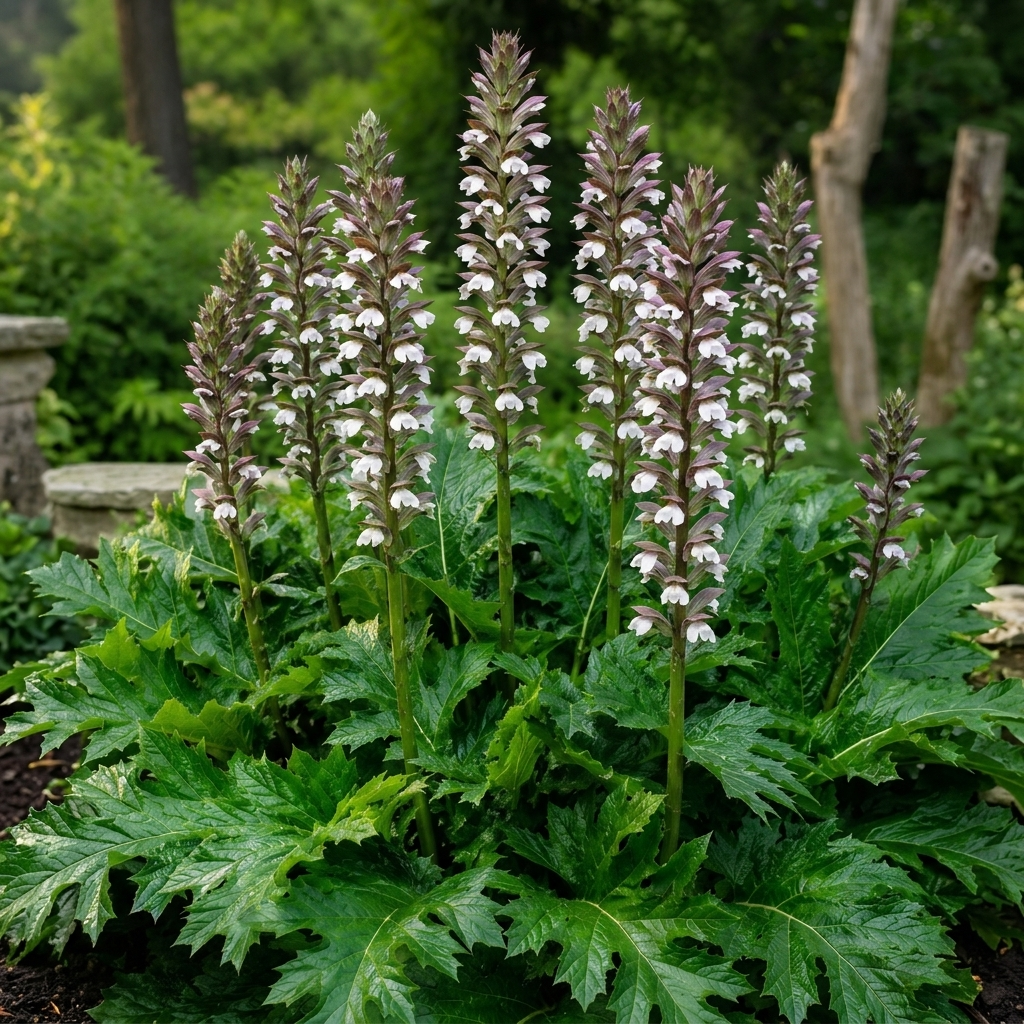
Bear's Breeches - Acanthus mollis - is not a neat little edging plant, and it is certainly not something you tuck into a tiny gap and forget about. It makes a broad mound of glossy, deeply cut leaves and, when it is happy, sends tall flower spikes well above them.
Those flowers are unusual too: pale cream to white blooms tucked beneath dusky purple bracts, stacked up a strong vertical stem. The whole plant looks almost designed rather than grown.
If you've ever looked at the carved leaves on classical Corinthian columns, you already know something of the acanthus story. The dramatic leaf form has been used in European art and architecture for centuries.
For a Hungarian garden, Bear's Breeches can be a wonderful statement plant - especially in a sheltered border, a courtyard, near an old wall, or anywhere you want one plant to give a space real structure.
It is also a plant that rewards patience. Seed-grown acanthus can take time to establish, and flowering may not come in the first year. But once the roots settle in, the relationship changes: this can become a long-lived perennial that does not particularly appreciate being moved.
We'll go from sowing and the slightly slow beginning to choosing the right permanent place, watering through hot Hungarian summers, protecting the crown through difficult winters, dealing with slugs and mildew, and deciding what to do if the plant begins wandering farther than you intended.
And because Bear's Breeches is part of the Holland Kertészet seed collection, we'll keep the advice grounded in the conditions our readers actually garden in here in Hungary.
Ready? Let's make room for something with presence.
1. Meet Bear's Breeches
Bear's Breeches is the common name for Acanthus, and the plant we are concentrating on here is Acanthus mollis - a bold herbaceous perennial native to the Mediterranean region and nearby areas.
A leaf you remember
The leaves also connect this plant to centuries of design history. Acanthus foliage became one of the great decorative motifs of classical architecture, which feels rather fitting for a plant that already looks architectural in the garden.
The foliage is the first thing most people notice. Individual leaves can become very large, glossy and deeply lobed, forming a substantial mound even before the flower stems appear.
Then, once the plant is mature and conditions suit it, tall flower spikes rise above the leaves. White or pale flowers sit beneath purple-tinged bracts, giving the spike a strong, almost sculptural look. A mature plant can reach around 1-1.5 metres in height and a similar spread.
Perennial - and determined
This is not a one-season flower. Bear's Breeches is a perennial with deep, persistent roots. Once established, even small pieces of root left in the soil can regrow, which is why choosing the right place from the beginning matters so much.
2. Finding the Right Place
Sun, shade and Hungarian heat
Acanthus mollis is unusually flexible about light. It can grow in full sun or partial shade, and even tolerates more shade than many flowering perennials. For the best chance of strong flowering, though, avoid the darkest corner of the garden.
In Hungary, a position with morning sun and some protection from the most punishing afternoon heat can be excellent, especially in hotter parts of the country. In cooler or more sheltered gardens, full sun can work very well if the soil does not become desperately dry.
Winter drainage matters
If you are unsure about a location, visit it after heavy winter rain. A place that looks perfect in June can tell a very different story in January.
|
GOOD TO KNOW Bear's Breeches is grown as much for its huge glossy foliage as for its flower spikes. A mature Acanthus mollis can reach roughly 1-1.5 metres high and wide, so this is a plant to give real room from the beginning. |
The most important soil lesson is not richness but drainage. Bear's Breeches dislikes sitting in cold, waterlogged soil through winter. A fertile loam is lovely, but a heavy patch that stays wet for weeks is not.
If you garden on clay, improve the structure before planting and consider a slightly raised position. In a low, wet corner, even a hardy-looking perennial can struggle because the roots are cold and airless for too long.
Give it real space
This plant can eventually occupy around a metre or more in each direction. Give it breathing room from paths, small neighbours and plants you do not want swallowed by a large summer rosette.
3. The Bear's Breeches We Grow With You
Holland Kertészet offers Bear's Breeches in our flower-seed collection. The webshop search confirms the plant, although the current public index does not reliably expose the packet weight, so I would rather leave that detail out than guess.
Why grow it from seed?
There is also satisfaction in raising a plant that may eventually outlive many of the annuals around it. This is one of those packets of seed that can become part of the permanent structure of the garden.
Growing Acanthus from seed is slower than buying a mature plant, but it gives you the full story. You see the first modest leaves, the roots becoming stronger, the clump widening, and eventually that first tall flower spike appearing above a plant you raised yourself.
A plant with presence
|
A COMMON MISTAKE Choosing the wettest corner because Acanthus looks lush and tropical. It appreciates moisture while growing, but winter waterlogging is one of the quickest ways to make it unhappy. |
This is a wonderful choice if your garden already has plenty of small flowers and you need something with bigger leaves and stronger structure. It works beautifully with grasses, salvia, lavender, roses and airy summer flowers because its broad foliage gives all those finer textures something to play against.
Where I would put it
I'd give it a place where the leaves can be appreciated even when the plant is not flowering: beside a terrace, at the back of a generous border, near stone or brick, or in a partly shaded courtyard where glossy foliage can brighten the space.
One decision before sowing
Think ahead. Bear's Breeches is easier to plant thoughtfully than to remove thoughtfully. Once mature, the deep roots are very good at reminding you where you first put them.
4. Let's Sow
When to start
Bear's Breeches can be raised from seed in spring, and a protected start gives you the most control. Because germination can be slower and less uniform than with easy annuals, this is a seed tray you should not give up on too quickly.
You can also sow later in the warm season and grow young plants on before setting them into their permanent place when conditions are suitable. The important thing is to give seedlings enough time to build roots before they face extremes of drought or winter wet.
How to sow
Label the pot clearly. Slow perennial seed has a habit of being mistaken for an empty pot by an enthusiastic gardener looking for spare space.
Use a free-draining seed compost in pots or modules. Sow the seeds individually where practical, cover them with a modest layer of compost, water gently and keep the medium evenly moist rather than saturated.
A warm, bright position helps, but remember that Acanthus is not always in a hurry. Germination may be irregular, so keep the tray labelled and continue checking it even if some seeds appear before others.
Pot on carefully
|
GROW WITH US Bear's Breeches is part of the Holland Kertészet flower-seed collection. The public webshop index currently confirms the plant but not a reliable packet weight, so we will keep our focus where it belongs: on growing it well in a Hungarian garden. |
Once seedlings have true leaves and are large enough to handle, move them into individual pots. Give the roots room and avoid repeatedly disturbing them once they begin making stronger growth.
5. From Seedling to Permanent Plant
Do not rush the final move
A small acanthus seedling can look almost comically modest compared with the plant it may become. Grow it on until it is sturdy, then choose the permanent position with the mature size in mind rather than the little pot in your hand.
Planting out
Set the plant at the same depth it was growing in its pot, firm the soil gently and water it in. A little compost around the planting area is useful, but there is no need to create an excessively rich pocket that stays wet.
During the first season, keep an eye on moisture. Newly planted acanthus has not yet developed the deep root system that will later help it cope with drier periods.
Patience before flowers
|
DON'T PANIC Nothing flowering in the first season? That is completely believable. Seed-grown Bear's Breeches may spend its early years establishing a strong crown and root system before producing the dramatic spikes you are waiting for. |
In the meantime, enjoy the foliage. Acanthus does not have to be flowering to earn its place in the border.
Do not be disappointed if the first year is mostly leaves. Seed-grown Bear's Breeches often spends its early life building the roots and crown that will support future flower spikes. This is a perennial investment, not an instant bedding display.
First winter
Young plants deserve a little extra attention through their first Hungarian winter. Good drainage is more important than wrapping the plant in layers of protection. In colder or exposed gardens, a light mulch around - not over - the crown can moderate temperature swings.
6. Growing Through a Hungarian Summer
Once established, it is stronger than it looks
A mature Acanthus can cope with summer warmth, but the leaves may droop or become tired-looking during prolonged hot, dry weather. In deep drought, give the plant a thorough soak rather than frequent surface splashes.
Water the root zone
|
WHAT I WOULD DO Before planting out, put the pot in the intended spot and walk away from it. Look back from the terrace, path and window. Then imagine a plant one metre across. If that still feels right, you have probably found its home. |
Check the soil before watering. In a partly shaded border near Budapest, the ground may stay moist for days; in sandy soil on the Great Hungarian Plain, the same plant may need help much sooner.
Feeding
Bear's Breeches does not need constant feeding. A spring layer of compost or a modest balanced feed is usually enough in ordinary garden soil. Too much lush growth can make a large plant even larger without necessarily improving flowering.
Does it need staking?
Usually the flower spikes are stout enough to stand by themselves, but a very exposed garden or a summer storm can still bend a heavy stem. If your site is windy, a discreet support placed early is much prettier than emergency string after the damage is done.
After flowering
Cut finished flower spikes down if you want a tidier plant and do not want seedlings. If you like the strong seedheads, you can leave some to mature - just remember that the plant already has several ways of making itself at home.
7. When Something Goes Wrong
Slugs and snails love the young leaves
Fresh Acanthus growth can be very attractive to slugs and snails. Check young plants after damp nights and protect them early, before the leaves begin looking like lace.
Powdery mildew
A pale powdery coating can develop in dry, stressed conditions. Improve airflow, avoid letting plants become desperately drought-stressed, and remove badly affected foliage where appropriate.
No flowers?
Too much deep shade, late spring frost, a very young plant or simple lack of establishment can all delay flowering. Look at the whole situation before deciding the plant has failed.
The leaves collapsed after frost
|
A COMMON MISTAKE Seeing wilted leaves in summer and giving small splashes every evening. During genuine drought, a deep soak at the root zone is far more useful than repeatedly wetting only the top few centimetres of soil. |
In colder Hungarian winters, the foliage may die back. That does not necessarily mean the plant is dead. Leave the crown alone and watch for new growth when spring warmth returns.
It is spreading farther than planned
This is the problem to think about before it happens. Acanthus can spread from its roots, and pieces left behind after digging can regrow. Remove unwanted shoots early and avoid casually chopping roots through the surrounding bed if you want the plant contained.
8. The Flower Spikes Arrive
The moment the plant changes character
When that first spike appears, you may suddenly understand why you waited. It can turn an ordinary patch of planting into something that feels established and confident.
For months, Bear's Breeches is all about foliage. Then one day a thick flowering stem begins rising from the centre, and the entire plant suddenly becomes vertical.
The flowers are arranged up the spike in pale tones, each framed by purple to dusky bracts. They are not delicate little flowers to inspect with a magnifying glass; the beauty is the whole architectural shape.
|
TRY THIS Pair Bear's Breeches with something fine and airy - catmint, ornamental grasses, salvia or soft roses. The contrast between enormous sculptural leaves and lighter planting is what makes Acanthus look so impressive. |
In the border
Use the spikes as punctuation. One mature Acanthus behind softer planting can make the entire border feel more designed. It pairs especially well with airy grasses, roses, catmint, salvia and other plants that contrast with its broad leaves.
For cutting?
The flower spikes can be cut for large arrangements, but this is not the most obvious vase flower in the series. I would mostly grow it for the garden and only cut a stem when I had a very generous arrangement in mind.
Let the leaves do their job too
Even when the flowering is over, the foliage remains the main reason to grow Acanthus. Treat the leaves as part of the design of the garden, not merely something waiting underneath the flowers.
9. Autumn, Winter and Long-Term Care
What happens after summer?
As temperatures fall, foliage may remain attractive in milder, sheltered places or become damaged and die back in colder gardens. Either response can be normal for Acanthus mollis.
Winter wet is the bigger worry
Cold alone is not the entire story. A protected plant in free-draining soil often handles winter better than one sitting in a wet hollow. If you remember one autumn task, make sure water is not collecting around the crown.
Spring cleanup
Remove old damaged foliage as fresh shoots begin appearing. This is also the moment to check whether the clump is staying within its allotted space.
Can I divide it?
Acanthus can be propagated from root pieces, but division is not something I would do casually. The deep root system dislikes disturbance, and every stray root section can become another plant. If you need more plants, controlled root cuttings are usually neater than hacking up the whole clump.
Saving seed
If you leave some flower spikes to mature, you can collect the ripe seed when the pods dry. Store it cool and dry, label it, and remember that seed-grown plants still need patience before they become the enormous specimen you are imagining.
10. Your Bear's Breeches Cheat Sheet
Choose Bear's Breeches when you want bold foliage and strong architectural flower spikes from a long-lived perennial.
Sow in pots or modules using a free-draining seed compost and keep evenly moist while germination begins.
Be patient: germination and establishment can be slower than with easy annual flowers.
Pot seedlings on carefully and avoid repeated root disturbance.
Choose the permanent position before the plant becomes large and deeply rooted.
Grow in full sun to partial shade, with enough light for reliable flowering.
Prioritise soil that drains well in winter, especially in heavy Hungarian clay.
Water young plants while they establish; mature plants need less frequent but deeper watering in drought.
Watch for slugs, snails and powdery mildew, especially on stressed young growth.
Leave it room: a mature plant can reach roughly 1-1.5 metres high and wide.
If You Remember Only Five Things…
1. Choose the place first
Bear's Breeches is much easier to admire than to relocate. Think about its mature size before you plant it.
2. Winter drainage matters
A wet winter root zone is far more dangerous than a little ordinary summer neglect.
3. Be patient with seed-grown plants
The first year may be mostly leaves and roots. The dramatic flower spikes come when the plant is ready, not when we become impatient.
4. Give it structure, not fuss
A little compost, sensible watering and enough light are more useful than constant feeding and interference.
5. Respect the roots
Once established, Acanthus can regrow from pieces of root. Put it where you can happily let it become part of the garden for years.
One Last Walk Around the Garden
Do you remember where we started? With a small seed and the promise of a plant that would one day give the garden real presence.
We sowed, waited and chose a permanent place with enough light, room and winter drainage. The first year was mostly leaves and roots doing quiet work below the soil.
Then one year the plant looked fully itself: broad glossy foliage below and a tall purple-and-white flower spike rising above it.
That is the pleasure of perennial gardening. Bear's Breeches asks for foresight and patience, then becomes part of the structure and character of the garden.
Perhaps yours will grow beside an old wall, in a Budapest courtyard, or in a sheltered border near Lake Balaton. Wherever it grows, you will know you gave it the right place to stay.
When you're ready for the next plant…
Come into the garden with me.


