

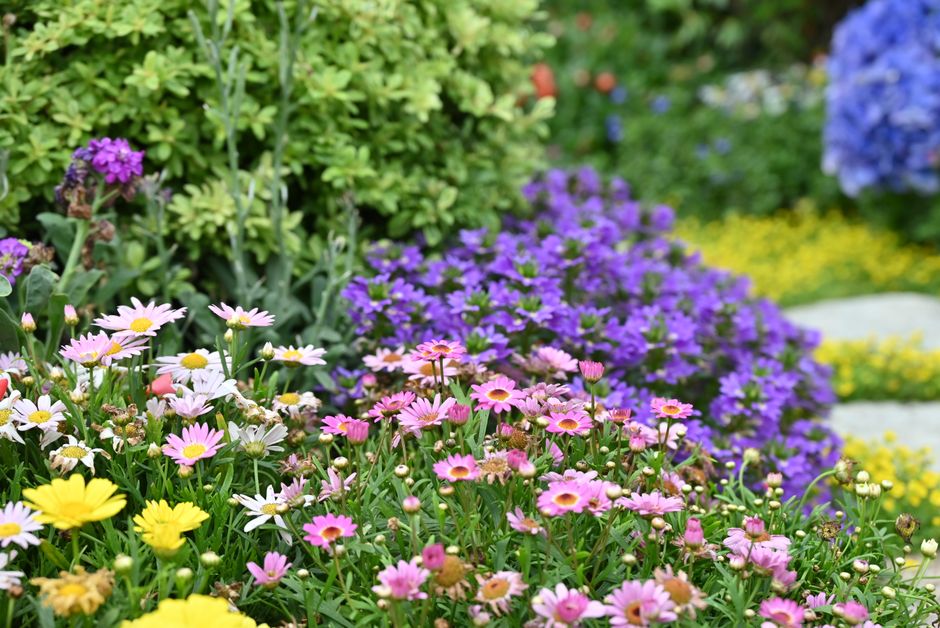
Every spring, gardeners across Hungary and Europe face the same question in the garden centre: should I grab a tray of bright petunias, or invest in a lavender that will return year after year? The answer shapes your budget, your time, and your garden's character for seasons to come.
According to Eurostat data from 2024, approximately 52% of households in the European Union engage in gardening activities, making plant selection one of the most common household decisions on the continent. Yet many gardeners buy on impulse without a clear picture of the real long-term costs. This guide breaks down exactly what each type of flower delivers, and where your euros are best spent.
Key Takeaways
-
Perennials win on long-term cost: MAWEB's plant cost analysis shows the upfront cost per perennial plant is higher, but the amortised cost falls below that of annuals by year two or three for many species. If you plant three or more seasons ahead, start with perennials.
-
Annuals win on instant colour: Bob Vila's gardening overview notes that many annuals bloom from spring until the first frost, filling containers and beds with lush, long-lasting colour. Use them for immediate impact while perennials establish.
-
Dividing perennials creates free plants: Wayfair's plant guide highlights that as perennials mature, you can divide their root clumps to make new, free plants for other parts of your garden. This compounding effect makes them even better value over time.
-
The smartest gardens use both: Smart Garden Guru recommends a 70/30 split favouring perennials in main beds and annuals in pots and accent spots, giving you long-term savings alongside season-long colour exactly where you see it most.
-
Hungary's changing climate favours drought-hardy perennials: Meglepetes.hu reports that the climate in Hungary has changed significantly in recent years, making drought-tolerant perennials and self-seeding annuals the smarter world of the current garden. Choose accordingly.
Quick-Start Prioritisation Framework
| Strategy | Best For | Effort Level | Time to Results |
|---|---|---|---|
| Perennials-first (Holland Kertészet recommended) | Long-term value, low replanting | Low-Medium | Year 2-3 peak |
| Annuals-first | Renters, balcony gardeners, first-time gardeners | Medium-High | Immediate |
| Mixed 70/30 approach | Most home gardens | Medium | First season |
| Annuals in containers only | Urban flats, terraces | Medium | Immediate |
| Self-seeding annuals | Low budget, naturalistic style | Low | Year 1-2 |
Start here if you're:
-
A new homeowner in Hungary or Central Europe: Begin with perennials as your foundation. Plants like lavender, daylilies, and peonies establish quickly and become the backbone of your garden. Fill gaps with annuals in year one.
-
On a tight budget this season: Choose a small selection of quality perennials from Holland Kertészet, then supplement with low-cost annuals from seed. Your investment grows each year.
-
A balcony or terrace gardener: Annuals in containers are your best friend. Rotate varieties each season for fresh colour without long-term commitment to a fixed space.
-
A time-pressed gardener: Invest heavily in perennials now. Once established, they demand far less weekly care than annuals.
Annuals vs Perennials: A Head-to-Head Comparison
Before we go deeper, here is a clear side-by-side view of the key differences:
| Feature | Annuals | Perennials |
|---|---|---|
| Lifespan | One growing season | 3 years to decades |
| Upfront cost | Lower per plant | Higher per plant |
| Long-term cost | High (annual repurchase) | Low (one-time investment) |
| Bloom duration | Spring to first frost | A few weeks to months |
| Maintenance | Higher (watering, deadheading, feeding) | Lower once established |
| Design flexibility | Very high | Moderate |
| Free new plants | No | Yes (by division) |
| Climate resilience | Variable | Generally stronger |
Editor's Pick and Best Overall: Holland Kertészet, Best for Hungarian and Central European gardeners seeking curated selections of both annuals and perennials suited to the local climate, with expert guidance on which plants thrive in your specific conditions.
The Real Cost of Annual Flowers
What You Pay Each Spring
Annuals look like excellent value at the garden centre. A flat of petunias or marigolds is affordable, cheerful, and tempting. The trap is the repetition. Elm Dirt's cost analysis makes the point clearly: perennials cost more upfront but come back every year and many multiply over time, while annuals are cheap per plant but require purchasing again every spring.
Do the sums over five years and the picture changes completely. According to Elm Dirt's cost analysis, over five years a perennial bed almost always wins on cost. If you spend €30 on annuals for a small bed each spring, that is €150 over five years for a space that could have been planted with perennials once.
Maintenance: The Hidden Time Cost
The cost of annuals goes beyond the purchase price. Smart Garden Guru's tracking data shows you will spend about 30 minutes each week on annuals for deadheading and watering during peak summer, while perennials need only about 15 minutes per week once they settle in, thanks to their deep root systems handling dry spells better. Over a full growing season, that adds up to many hours of extra effort.
Old World Garden Farms confirms that deadheading old and fading blooms regularly is one of the easiest ways to keep annual flowers blooming strong all summer, and that removing spent flowers is just as critical as watering and fertilising, with many flowering annuals slowing down quickly if old blossoms are left too long.
Pro Tip: If you love annuals but hate deadheading, choose self-cleaning varieties. As North Fort News' gardening guide notes, cultivars like Supertunias, Million Bells calibrachoa, and SunPatiens are self-cleaning, meaning they shed old flowers on their own, meaning far less time spent pinching.
The Long-Term Value of Perennials
They Multiply; You Get More for Free
The most compelling financial argument for perennials is that they do not just persist; they grow. Gardening Goal's analysis explains that perennials typically cost more upfront, but once established, many expand in size and can even be divided to create new plants, meaning one initial investment can multiply into several plants in future seasons.
In practice, a single lavender or day lily bought from Holland Kertészet can yield two, three, or more new divisions within three to five years. Those divisions fill gaps in your beds that would otherwise require new annual purchases. As Elm Dirt's cost analysis, every year your perennials fill in a little more, meaning every year you need fewer annuals to fill the gaps, and your plant budget actually goes down over time while your garden gets more beautiful.
Decades, Not Seasons
The lifespan gap between annuals and perennials is striking. House Digest reports that the average lifespan of perennials ranges from three years to several decades, depending on species, growing conditions, and the care you give them. Some popular choices go even further.
Some of the longest lived perennial flowers include peonies (Paeonia lactiflora), hostas, daylilies, and lavender (Lavandula angustifolia), many of which reliably survive and bloom robustly for 25 to 50 years or more under appropriate conditions, according to Alibaba Life Tips' plant longevity guide.
For Hungarian gardeners, lavender, peonies, and coneflowers are particularly excellent choices. All are hardy enough to handle Central European winters and thrive in the region's continental climate.

Pro Tip: When buying perennials, treat the purchase as a long-term investment rather than a seasonal decoration budget. A perennial that costs €8 but returns for 10 years costs just €0.80 per season, far less than any annual replacement.
Where Annuals Still Win
Season-Long Colour and Immediate Impact
Let's be honest: perennials have a limitation that annuals do not. Wayfair's plant guide confirms that most perennials only flower for a few weeks to a month each year, leaving green foliage for the rest of the season. If you want colour from May through to October, a purely perennial garden requires very careful planning across many species.
Annuals fill this gap perfectly. Scotts Miracle-Gro notes that annuals are a great way to change the look of your garden from year to year, and they tend to have a longer flowering period than perennials. For a balcony, a front-door pot, or a spot in the garden that needs to look spectacular all season, annuals are the right choice.
Pros:
-
Non-stop colour from spring to first frost
-
Lower upfront cost per plant
-
Total design flexibility, change the scheme every year
-
Immediate visual results in the first weeks after planting
-
Huge variety of colours, heights, and forms
Cons:
-
Must be purchased and planted again every year
-
Cumulative cost exceeds perennials over a 3-5 year period
-
Higher maintenance requirements for watering, feeding, and deadheading
-
No long-term contribution to garden structure
-
Less resilient during drought and extreme heat
The Flexibility Argument
Wayfair's plant guide makes a fair point about annuals' flexibility: because they only live for one year, you can completely change your garden's colour scheme and layout every spring without long-term commitment. For renters, those who move frequently, or gardeners who simply enjoy redecorating, this annual reset is a genuine plus rather than a drawback.
Where Perennials Win
Soil Health and Ecological Value
Perennials do something annuals cannot: they improve the ground beneath them over time. Rural Sprout's long-lived perennial guide explains that since perennials reside in the same spot for decades, they improve soil health, develop deep root systems that anchor the soil, reduce erosion, and improve moisture retention, while organic matter accumulates around them, building fertility and feeding beneficial microbes.
For Hungarian gardeners managing increasingly dry summers, this moisture-retention benefit is especially valuable. Established perennials with deep roots can access water that annuals simply cannot reach.
Pros:
-
One-time purchase that delivers returns for many years
-
Amortised cost falls below annuals by year two or three
-
Can be divided to create additional free plants
-
Improve soil structure over time
-
Lower weekly maintenance once established
-
Stronger drought resilience due to deep root systems
-
Support pollinators across multiple seasons
Cons:
-
Higher upfront purchase price per plant
-
May not bloom in the first year of planting
-
Shorter individual bloom window than most annuals
-
Require planning for sequential bloom across seasons
-
Some species spread and may need management
Supporting Pollinators Across Europe
The Royal Horticultural Society's expanded 2025 Plants for Pollinators list now includes over 10,000 plants, with evidence-based choices to benefit all kinds of pollinators, from bees and butterflies to moths and hoverflies. A significant proportion of the most valuable pollinator plants are perennials, precisely because they provide reliable, returning nectar sources each season.
A study published by the study published in Proceedings of the Royal Society B found that gardens can reduce seasonal nectar gaps experienced by farmland bumblebees, with bumblebee activity increasing in gardens relative to farmland during early spring and late summer. Planting perennials that bloom in a staggered sequence across spring, summer, and autumn gives pollinators a consistent food source, something a single flush of summer annuals cannot achieve alone.
Pro Tip: For a pollinator-friendly perennial combination suited to Hungarian gardens, consider lavender (June-August), coneflower (July-September), and asters (September-October). Together, they cover the entire warm season with minimal care.

The Winning Strategy: Combine Both
In my experience, the gardeners who get the best results never choose strictly between annuals and perennials. They use both, deliberately, with each playing a specific role.
Anger Kertészet's planting guide describes the approach well: perennials form the spine of the border, while bulbs cover the early spring period, ornamental grasses provide texture and winter structure, and annuals provide seasonal colour and gap-filling. In a well-functioning border, these do not compete; they build on each other.
The Smart Garden Guru advises planting perennials as the backbone of your beds for structure and reliable colour each year, then tucking annuals into gaps during the first two to three years while perennials grow to full size, and using annuals in containers near your front door where you want colour all season.
The Holland Kertészet range is particularly well suited to this approach. Their curated selection of perennials matched to Central European hardiness zones means you can build a strong perennial foundation with confidence, then layer in seasonal annuals for the finishing touches each spring.
A Practical Year-One Plan
-
Map your beds and identify the permanent structural areas (borders, edges, focal points).
-
Purchase perennials for those structural spots from a specialist nursery such as Holland Kertészet.
-
Fill remaining gaps with annuals in year one while perennials establish.
-
In year two, begin dividing spreading perennials to fill more space.
-
By year three, reduce your annual spend significantly as perennials take over.
Anger Kertészet notes that in a newly established garden, the perennial planting is the first step, and any missing visual impact in the first two years can be supplied with annuals. This is the most cost-effective sequence anyone can follow.
Common Mistakes to Avoid
Planting Annuals Where Perennials Belong
The most expensive mistake gardeners make is buying annuals year after year for the same permanent border spot. Gardening Goal explains that planting perennials feels like investing in the future rather than decorating for a single season, and that while the first year might be modest, by the third or fourth season many perennials become the backbone of the garden. If a spot is going to be planted year after year, it deserves a perennial.
Ignoring Climate Fit
Choosing plants without considering local conditions is a costly error. Viraginfo.hu advises that in conditions of lasting, hot summers and long dry periods, drought-tolerant perennials are more advantageous, while rainy and cool weather conditions can also yield good results with annuals. In Hungary and much of Central Europe, recent summers have trended drier and hotter, making drought-resilient perennials an increasingly smart investment.
Underestimating Establishment Time
Wayfair's plant guide that perennials are a long-term investment, and it may take a year or two for them to fully establish a strong root system before they start expanding. Do not judge a perennial by its first-year performance. The garden saying "first year sleeps, second year creeps, third year leaps" holds very true.

Frequently Asked Questions
How much do perennial plants typically cost compared to annuals?
Bob Vila's comparison confirms that normally the cost is higher for a perennial than for an annual, which is logical given that the perennial will last considerably longer. In practical terms at Hungarian garden centres and online nurseries, you might pay €2-5 for a flat annual plant and €5-15 for a perennial. However, the perennial's cost spread over five or ten years of returns makes it the much cheaper option per season of enjoyment.
Which flowers are best for a low-maintenance garden in Hungary?
For a low-effort, high-reward garden in Hungary, prioritise drought-tolerant perennials. As Gardening Goal notes, daylilies produce reliable blooms year after year, hostas create lush foliage in shaded areas, peonies deliver dramatic spring flowers, and lavender offers fragrance and texture. All of these are well-suited to Hungary's continental climate and widely available from specialist nurseries such as Holland Kertészet.
Can annuals and perennials be planted together in the same bed?
Absolutely, this is the recommended approach for most gardens. As Scotts Miracle-Gro advises, there is no need to pick one or the other, and annuals and perennials can be combined in your planting design to reap the best of both. Use perennials as the structural anchor and annuals as seasonal fillers and colour boosters.
How often do perennials need to be divided?
Smart Garden Guru's experience shows that you need to divide your perennials every three to five years, and while it takes an afternoon, it gives you free plants to fill other spots. Division is both a maintenance task and a free propagation opportunity, treat it as a bonus rather than a chore.
Are perennials more environmentally friendly than annuals?
Generally, yes. Rural Sprout confirms that long-lived perennials improve soil health over time, developing deep root systems that anchor the soil in place, reduce erosion, and improve soil structure and moisture retention. Less frequent replanting also means reduced soil disturbance, less plastic pot waste from nursery purchases, and a more stable habitat for beneficial insects year-round.
The Verdict
Both annuals and perennials have a rightful place in every garden, and the debate rarely needs to be an either-or choice. Annuals deliver the vivid, season-long colour that makes a garden feel alive and joyful from the first warm day. Perennials deliver structure, long-term savings, ecological benefit, and the quiet pleasure of seeing the same beloved plant return stronger each spring.
For most European and Hungarian home gardeners, the best value strategy is clear: build your garden's foundation on perennials purchased from a trusted specialist such as Holland Kertészet, then layer in annuals for seasonal accents. Your budget goes down every year, your garden gets better every year, and your effort decreases as your perennials fill the space they were always destined to occupy.
Sources
-
Annuals vs. Perennials: 8 Important Considerations, Bob Vila. Practical comparison of lifespan, cost, and bloom period. https://www.bobvila.com/articles/annuals-vs-perennials/
-
Annual vs. Perennial Flowers: Which Ones Are Worth Your Money?, Elm Dirt. Five-year cost analysis of annuals vs perennials. Elm Dirt's cost analysis
-
Annual vs. Perennial Plants: What's the Difference?, Wayfair. Pros, cons, and practical guidance. Wayfair's plant guide
-
What are annuals vs perennials?, Smart Garden Guru. Time-tracking and cost data from five-year personal trials. https://smartgardenguru.com/blog/what-are-annuals-vs-perennials
-
Annuals vs. Perennials: What's the Real Difference?, Gardening Goal. Practical and financial analysis. https://gardeninggoal.com/annuals-vs-perennials-whats-the-real-difference/
-
Perennials Vs Annuals: Which To Plant In Your Garden, MAWEB. Amortised cost comparison. https://maweb.org/perennials-vs/
-
What's The Average Lifespan Of Perennial Plants In Your Garden?, House Digest. Species lifespans and care guidance. https://www.housedigest.com/2185735/average-lifespan-perennial-plants-garden/
-
Longest Lived Perennial Flowers, Alibaba Life Tips. Documented lifespans of key perennial species. https://lifetips.alibaba.com/plant-care/longest-lived-perennial-flowers
-
9 Long-Lived Perennials That Could Live For 100+ Years, Rural Sprout. Soil health and cost-effectiveness of long-lived perennials. https://www.ruralsprout.com/long-lived-perennials/
-
Europe Garden Seed Market Size, Share & Growth, Market Data Forecast. Eurostat gardening participation data. Market Data Forecast
-
Gardens reduce seasonal hunger gaps for farmland pollinators, NCBI/PubMed. Scientific research on garden pollinator benefit. study published in Proceedings of the Royal Society B
-
RHS Plants for Pollinators, Royal Horticultural Society. Evidence-based plant list for pollinators. https://www.rhs.org.uk/science/research/plants-for-pollinators
-
The Best Way To Deadhead Annual Flowers, Old World Garden Farms. Practical maintenance guidance for annuals. https://oldworldgardenfarms.com/2026/05/31/best-way-deadhead-annual-flowers/
-
What Is the Difference Between Annual and Perennial Flowers?, Scotts Miracle-Gro. Foundational overview of both plant types. https://scottsmiraclegro.com/en-us/learn/gardening/what-is-the-difference-between-annual-and-perennial-flowers.html
-
Évelő növények telepítése és gondozása, Anger Kertészet. Hungarian-language planting and care guide for perennials. https://www.angerkerteszet.hu/blog/evelo-novenyek-telepitese-gondozasa
-
12 szárazságtűrő évelő és egynyári virág, Meglepetes.hu. Hungarian climate change and drought-tolerant plant recommendations. https://meglepetes.hu/otthon/2026/06/03/evelok-egynyariak-szarazsagturo-kerti-tipp/
-
Egynyári vagy évelő növények?, Viraginfo.hu. Hungarian guide to selecting between annual and perennial plants. https://viraginfo.hu/egynyari-vagy-evelo-novenyek-segitunk-jo-dontest-hozni/
-
Easy Maintenance for Annual Flowers, North Fort News. Self-cleaning annual varieties and maintenance requirements. https://northfortynews.com/category/gardens-landscapes/easy-maintenance-for-annual-flowers


