

Every autumn, millions of garden beds are left bare through winter, and that inaction quietly costs gardeners more than they realise. Research published in Biological Agriculture & Horticulture found that between 78 and 91 per cent of nitrogen leaching from soil plots occurred between November and April, precisely when ground is left unplanted. Autumn is the single most valuable window you have to protect and build your soil before spring arrives.
Green manure seeds are the answer. Sow them now, let them work through winter, and by the time you are ready to plant in spring, the soil beneath will be transformed, richer in organic matter, teeming with microbial life, and ready to feed your crops from the ground up.
Key Takeaways
-
Autumn is prime sowing time: Most green manures grow over winter when the ground is free of crops, sow them in late summer or autumn to help mop up nutrients that would otherwise wash away.
-
Bare soil is actively losing value: Most nitrogen (78-91%) and phosphorus (45-97%) leaching occurs from November to April when soil is bare, therefore, cover every empty bed before November to protect your investment.
-
Legumes deliver free nitrogen: A well-managed green manure crop can deliver 50-150 kg of nitrogen per hectare, equivalent to several bags of costly chemical fertiliser, therefore, prioritise legume varieties on beds destined for hungry crops such as brassicas or courgettes.
-
Dig in at the right moment: Before a legume flowers, 50% of the fixed nitrogen is available for the next crop if tilled in, but if the plant is allowed to set seed, as little as 5% will be available, so time your spring incorporation carefully.
-
No-dig gardeners are not excluded: The chop-and-drop method lets you cut plants at the root and lay the biomass on the surface, where worms and microbes do the work without disturbing soil structure.
Why Autumn Sowing Matters More Than Most Gardeners Think
The Problem with Bare Winter Soil
Light sandy soils benefit enormously from the addition of green manure because light soils tend to leach nutrients very quickly over the winter months due to heavy rains. The same is true of clay soils, which can become compacted and waterlogged when left without cover. As well as feeding the soil and making plants grow more healthily, preventing soil erosion and suppressing weeds, green manures help to protect the soil surface from compaction by rain and foot traffic.
Think of it like leaving a window open in the rain. Every downpour is stripping value from your soil, and there is nothing in place to catch it. Sowing green manure seeds is the simplest way to close that window.
What Green Manures Actually Do
The improvement of soil quality by green manure is primarily manifested in the enhancement of soil physical, chemical, and biological properties, specifically, it increases soil organic matter content, optimises soil structure, enhances nutrient cycling, and improves microbial community composition and metabolic activity.
Synthetic fertilisers are available and offer quick results; however, they reduce the fertility of the soil in the long term as they disrupt, and eventually kill off, the fauna and microbes necessary for keeping soil healthy. Green manure works in the opposite direction. Rather than bypassing the soil's biology, it feeds it.
Pro Tip: In my experience, the single biggest mistake gardeners make is waiting until spring to think about soil health. By then, months of nutrient loss have already happened. Sowing takes twenty minutes in September or October, and the return on that time is visible from the first spring harvest.
The Best Green Manure Seeds for Autumn Sowing
Clover
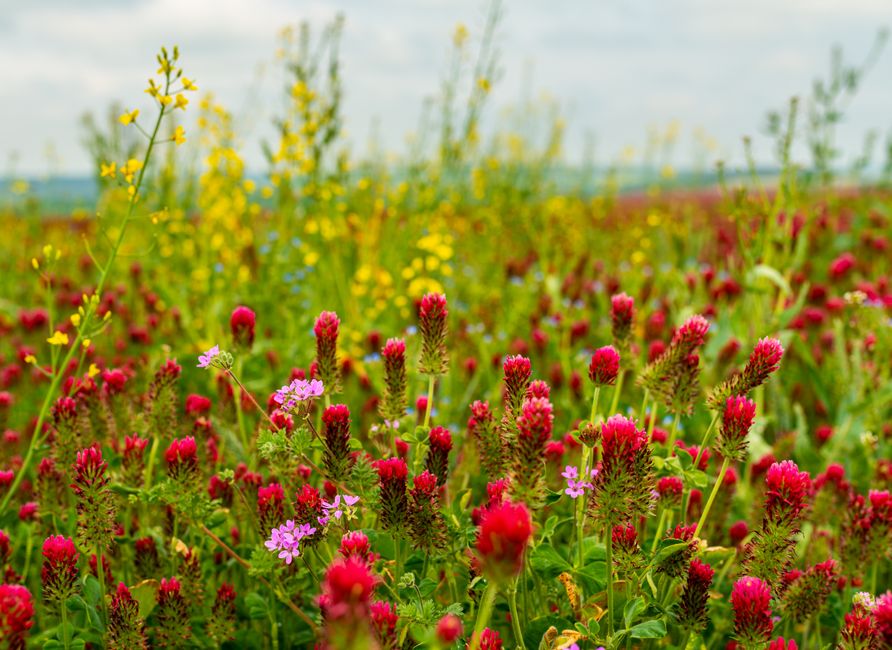
Clover can be sown from August to November, improving soil structure throughout the winter before spring incorporation. Above ground, it produces a dense canopy of foliage that helps keep weeds in check. Below ground, it has an extensive, fibrous root system that loosens soil, laying the groundwork for root crops such as carrots and parsnips to follow.
It is one of the most effective crops for reducing nitrogen leaching over the winter. This makes it particularly valuable on open, exposed beds. Sow it after lifting your potatoes or squash and it will establish rapidly before the cold sets in.
Winter Vetch and Winter Tares
A successful cover crop will act as a nitrate bridge, enabling soil nitrogen to be held back and made available for the next crop. Winter vetch does this better than almost any autumn-sown alternative. Winter tares are hardy and resilient, thriving even in heavy soils. Sow from July to September for over-wintering.
Both are legumes, which means they partner with soil bacteria to fix atmospheric nitrogen. Leguminous crops have a symbiotic relationship with nitrogen-fixing bacteria that live in nodules on their roots, these bacteria capture atmospheric nitrogen and convert it into a plant-available form, essentially providing free fertiliser.
Phacelia (Phacelia tanacetifolia)
Phacelia tanacetifolia is a fast-growing hardy green manure/cover crop that germinates at low temperatures and is ideal for sowing from April to October. Although phacelia does not fix nitrogen, it is an efficient nitrogen holder, taking up nutrients and returning them to the soil when dug in.
The flowers are very attractive to pollinating insects including honey bees, bumble bees, solitary bees, and hoverflies, so it will be a valuable end-of-season food source. If you sow before mid-September, it may flower before the frosts arrive, giving pollinators a late-season boost before dying back to protect the soil over winter.
Field Beans (Vicia faba)
Field beans are cold tolerant and nitrogen-fixing, attracting beneficial insects. You can let them grow on to harvest as a crop for early spring during the hunger gap. Sow in autumn. They are among the hardiest options available and work particularly well in a crop rotation following brassicas, which are heavy nitrogen consumers.
Pro Tip: At Holland Kertészet, the seed range includes several autumn-suitable green manure varieties specifically selected for temperate growing conditions. Choosing seeds that are matched to your climate and soil type removes a great deal of guesswork, particularly if you are sowing for the first time.
How to Sow and Establish Your Autumn Green Manure
Preparing the Seed Bed
Many green manure seeds are small so first break up clumps of soil and make the surface as smooth as possible before sowing. There is no need to add fertiliser or compost at this stage, these are deliberately robust plants that establish in modest conditions.
Measure the area and work out the sowing rate according to the packet instructions. If sowing several varieties together, mix well for the best results. Scatter the seeds over prepared soil, then rake the seed lightly into the surface and protect from birds.
Timing Is Critical
When possible, sow the winter green manure at least six weeks ahead of the first killing frost. This gives the root system time to develop and ensures the plant is established enough to withstand cold weather. For most of temperate Europe, that means sowing no later than mid-October, with September being ideal for the slower-establishing varieties.
Mustard, a fast-growing green manure, can be sown by mid-September and turned over into the soil by October, acting as both a soil enhancer and a natural mulch if left over winter. It is a useful short-cycle option if you have a bed you want to clear and plant again before winter fully arrives.
Managing Over Winter
For most winter varieties, very little management is needed once the crop has established. Let the frost kill them off and leave them to break down on the soil, acting as a cover to the soil at the same time. This is particularly effective with phacelia, which dies reliably in cold temperatures and leaves a protective mulch layer. For autumn sowings, simply leave the plants standing until the first frost. Phacelia reliably dies off in the cold, and the dead remains stay as a protective mulch layer over winter. In spring, work these remains in.
Digging In: Turning Winter Work into Spring Fertility
The Right Moment to Incorporate
Ideally, you should dig in your green manure three to four weeks before planting new crops, and at least a month before sowing seed. This gives the decomposing plant material time to break down and release its nutrients before young roots arrive.
Younger, green growth decomposes and feeds the soil within weeks, but older plants can take longer. If your green manure is approaching flowering when you need the bed, dig it in immediately rather than waiting, the sooner it is in the ground, the sooner decomposition begins.
How to Dig In
Chop up the top growth into smaller pieces. Use the edge of a spade, but you can also use shears especially if the foliage is too coarse or long. Turn over and dig in foliage and green manure roots with a spade to a depth of 15 cm. Work in small sections and firm the soil gently with the back of a rake once you are finished.
The No-Dig Alternative
For gardeners who prefer not to dig, the chop-and-drop method is equally valid. For fans of no-dig gardening 'chop and drop' is an alternative to digging in. Simply cut down the plant material in autumn and allow it to decay on the soil surface, working its way in over winter with the help of rain and worms and other invertebrates.
Cut at ground level, leaving the roots in the soil, this benefits the soil flora and fauna, and chop up the plant matter. Add this to the compost heap, or spread under perennials to rot down as a chop-and-drop mulch.
Pro Tip: I've found that timing the dig-in to coincide with mild, damp weather rather than dry spells makes a real difference to decomposition speed. Moist conditions activate the soil microbes that break down the plant material and release nutrients. Avoid incorporating green manure into bone-dry or waterlogged ground.
Common Mistakes to Avoid
Sowing Too Late
When possible, sow the winter green manure at least six weeks ahead of the first killing frost. Sowing in late October or November gives most varieties too little time to establish before the cold arrives. The result is sparse, patchy cover that offers limited protection and minimal nutrient value.
What to do instead: Mark your first expected frost date and count back six weeks, that is your cut-off for sowing. Aim to have seeds in the ground by mid-September for the most reliable results.
Letting It Go to Seed
It is very important to bury green manure before it goes to seed, whatever the season. Plants that are allowed to set seed will self-sow prolifically, turning your chosen green manure into a weed problem in subsequent years.
What to do instead: Monitor flowering regularly in late winter and early spring. As soon as buds begin to form, begin incorporating the crop.
Sowing Under Fruit Trees
Do not use green manure under fruit trees, as green plant material encourages bacteria in soils, whereas fruit trees do best in fungi-dominated soil. This is a detail many gardeners overlook. Apply a bark mulch instead in the root zone of established fruit trees.
Ignoring Crop Rotation
Grazing rye and phacelia are useful green manures that do not belong to any of the common crop families we gardeners use, so they should not compromise a crop rotation scheme. Mustard, however, belongs to the brassica family. Using it before another brassica crop can cause problems with club root and other soil-borne diseases. Plan your rotation before you choose your green manure variety.
Frequently Asked Questions
What is the best green manure to sow in autumn for beginners?
Clover is the most beginner-friendly option. Clover can be sown from August to November, improving soil structure throughout the winter before spring incorporation. It is extremely hardy, germinates readily in cool conditions, and is tolerant of most soil types. Winter vetch is an equally good choice if you want the added benefit of nitrogen fixation.
Can I sow green manure seeds on clay soil?
Yes. Whether your soil is heavy and clay-like, or light and sandy, green manures can help rectify any problems. The extensive root system of green manures will open up heavy soils, allowing better drainage. Winter tares are particularly recommended for clay soils, as they are both cold-tolerant and robust enough to penetrate compacted ground.
How long do I need to wait after digging in before planting?
The recommended time to dig in green manure is three or four weeks before you want to use that land for growing crops, and a good month or so before if you are using the land for sowing seeds. This gives the manure time to rot down, decompose, and transfer the nutrition back to the soil. In cooler spring conditions, allow a little longer than this, as microbial activity is slower in cold soil.
Do I need to dig in green manure, or can I just leave it on the surface?
Both methods work. Green manures can be cut off at the root and added to the compost pile. Once broken down, this can be added back to your garden beds as a mulch. Alternatively, leave frost-killed material in place as a surface mulch and allow worms and rain to incorporate it naturally over winter and early spring.
Will green manure reduce the need for chemical fertilisers?
Using green manure as a source of fertility can greatly reduce the need for nitrogen fertiliser. In many cases, as in diversified vegetable production, green manuring can eliminate synthetic nitrogen applications entirely. The extent of the reduction depends on the species used, the biomass produced, and the crops that follow, but legume-based green manures consistently deliver the greatest fertiliser savings.
Ready to give your beds the autumn treatment they deserve? The Holland Kertészet green manure seed range includes chemical-free, sustainably selected varieties suited to autumn sowing. Matching the right seed to your soil and planned crop rotation is the first step, and it takes far less time than you might expect.
Sources
-
Seasonal nitrogen and phosphorus leaching in urban agriculture, ScienceDirect. Research on nutrient loss from bare soil November to April. Research published in Biological Agriculture & Horticulture
-
Green manures, expert advice, Garden Organic. Practical guide to green manure sowing and benefits. https://www.gardenorganic.org.uk/expert-advice/garden-management/soil/green-manures
-
Complete Guide to Green Manures, BBC Gardeners World Magazine. Comprehensive sowing and growing guide. https://www.gardenersworld.com/how-to/grow-plants/how-to-sow-green-manure/
-
Green Manure on Allotments, First Tunnels. Overwintering varieties and sowing windows. https://www.firsttunnels.co.uk/blog/green-manure/
-
Research Progress on the Improvement of Farmland Soil Quality by Green Manure, MDPI Agriculture. Peer-reviewed research on green manure soil effects. https://www.mdpi.com/2077-0472/15/7/768
-
Overwintering Green Manures for Crop Rotation, GrowVeg. Guide to choosing winter green manures. https://www.growveg.co.uk/guides/overwintering-green-manures-for-crop-rotation/
-
Green Manuring: Types, Benefits, and Challenges, Agriculture Institute. Overview of nitrogen benefits from legume green manures. https://agriculture.institute/rain-fed-farming/green-manuring-types-benefits-challenges/
-
Overview of Cover Crops and Green Manures, ATTRA Sustainable Agriculture. Data on nitrogen accumulation from legume covers. https://attra.ncat.org/publication/overview-of-cover-crops-and-green-manures-2/
-
The Beginners Guide to Sowing and Growing Green Manure, Sow Seeds. Practical timing and sowing advice. https://www.sowseeds.co.uk/blogs/sow-seeds-blog/beginners-guide-to-sowing-growing-green-manure
-
Phacelia Green Manure Seeds, Fruit Hill Farm. Phacelia sowing information and pollinator value. https://www.greenmanure.co.uk/products/phacelia-green-manure-seeds
-
Using Green Manures in No-Dig Gardening, No Dig Home. Chop-and-drop method for no-dig gardens. https://nodighome.com/2026/03/04/using-green-manures-in-no-dig-gardening/
-
Chop and Change: Transforming Your Soil with Green Manure, Capital Gardens. Surface mulch method for no-dig growers. https://www.capitalgardens.co.uk/blog/chop-and-change-transforming-your-soil-with-green-manure/
-
Green Manure Guide to Sowing and Growing, Allotment Garden. Step-by-step incorporation guide. https://www.allotment-garden.org/composts-fertilisers/green-manure-guide-to-sowing-growing-green-manure/
-
A Complete Guide to Green Manure, Rural Supplies. Dig-in timing and preparation advice. https://ruralsuppliesonline.com/blogs/news/a-complete-guide-to-green-manure
-
Green Manures Q&A, The Diggers Club. Timing advice on cutting legumes before flowering. https://www.diggers.com.au/blogs/learn/green-manures-q-a
-
Growing Phacelia, BBC Gardeners World Magazine. Sowing and managing phacelia as green manure. https://www.gardenersworld.com/how-to/grow-plants/how-to-grow-phacelia/
-
Growing Phacelia: Planting Times and Methods, Grove. Autumn sowing and frost management for phacelia. https://www.grove.eco/en/plants/phacelia/


