

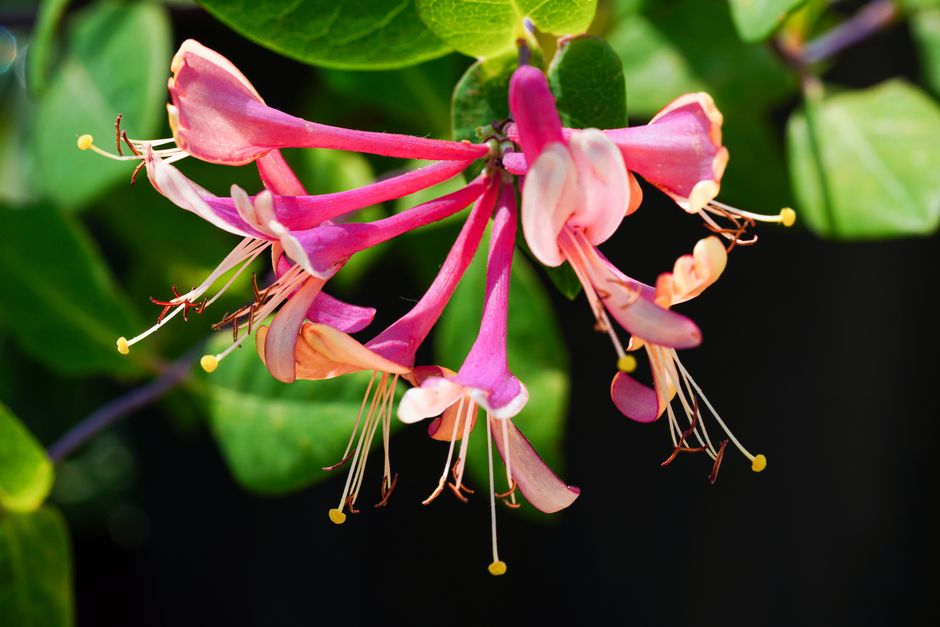
Few plants transform a garden fence or pergola as dramatically as honeysuckle. That heady evening fragrance drifting across the terrace, the cascade of tubular flowers in cream, gold, pink and raspberry red, the moths and bumblebees drawn in from across the garden; it is one of those plants that earns every centimetre of the space it takes up. Without too much attention honeysuckle can live for around 20 years, which makes choosing the right spot and getting the basics right very much worth your time. Whether you are an experienced gardener or putting in your first climbing plant, this guide walks you through every step, from picking the right variety to sorting out winter care and common problems.

Key Takeaways
-
Choose a European native variety. Lonicera periclymenum (European Honeysuckle or Woodbine) is a deciduous climber with fragrant, creamy-white or pink flowers and is not invasive in most regions, the ideal starting point for gardens across Hungary and central Europe.
-
Position roots in shade, tops in sun. Climbing honeysuckles are mostly woodland and hedgerow plants that evolved with their roots shaded by trees and shrubs and their climbing tendrils growing into the light, mimic these growing conditions for best results.
-
Prune at the right time for your variety. Early-flowering honeysuckles like 'Belgica' bloom on previous year's wood and should be pruned immediately after flowering in July; late-flowering varieties like 'Serotina' can be pruned in late winter or early spring. Pruning at the wrong time costs you a full season of flowers.
-
Go easy on nitrogen. Feed annually in early spring with a balanced fertiliser or well-rotted compost mulch, and avoid high-nitrogen feeds which promote excessive leafy growth at the expense of flowers. A potash-rich feed in late summer pays dividends the following year.
-
Colour change is natural. Honeysuckle flowers change colour naturally characteristic of honeysuckle is that the colour of the petals changes from white to yellow after pollination, this is a healthy sign, not a cause for concern.
Quick-Start Prioritisation Framework
| Situation | Best Approach | Effort Level | Time to Results |
|---|---|---|---|
| Covering a fence or wall | Climbing L. periclymenum on trellis | Low | 1-2 seasons |
| Small garden or patio | Compact pot variety like 'Strawberries and Cream' | Medium | 1 season |
| Wildlife and pollinator garden | L. periclymenum 'Serotina' left slightly unpruned | Low | 1-2 seasons |
| Year-round structure and scent | Shrubby L. fragrantissima (winter honeysuckle) | Low | 1 season |
| Hot, dry south-facing spot | L. etrusca (Mediterranean origin, drought-tolerant) | Low | 1-2 seasons |
Start here if you are:
-
A beginner: Choose Lonicera periclymenum 'Belgica' against a shaded fence; it is tolerant, fragrant, and widely available from nurseries across Europe including Holland Kertészet.
-
Working with a small space: Look for compact or patio-suited forms in containers; provide a strong support and water consistently.
-
Wanting year-round interest: Combine an early-blooming 'Belgica' with a late-blooming 'Serotina' to extend the flowering season from late spring all the way through to mid-autumn.
Choosing the Right Type of Honeysuckle
Climbing Versus Shrubby Forms
With over 180 varieties to choose from, there is sure to be a honeysuckle that suits your garden, whether climbing, evergreen, deciduous or shrubby. The first decision to make is which growth habit fits your space and your goal.
Most of us think of honeysuckles as twining climbers with pretty, scented tubular flowers, perfect for covering walls, fences and pergolas, but there are also evergreen, shrubby types that make an excellent honeysuckle bush, hedging or topiary. Climbing forms are the most dramatic choice for vertical spaces, while shrubby forms earn their place as hedges or specimen plants.
The Best Varieties for European Gardens
For gardeners in Hungary and across central Europe, the native and European species are the most reliable choices. Native to Europe and northern Africa, L. periclymenum is one versatile honeysuckle, best cultivated in the cooler zones, this deciduous plant can serve as a vigorous twining vine that doubles as a screen when grown against or through fencing.
The early Dutch honeysuckle *L. periclymenum* 'Belgica' blooms from mid-spring, while many of the L. periclymenum forms such as the fragrant 'Sweet Sue' and 'Serotina', and varieties of another European native L. etrusca such as 'Superba', get going from early to mid-summer and keep up the show well into mid-autumn. Staggering two or three varieties across your garden extends the scented season considerably.
Pro Tip: Being Mediterranean in origin, *L. etrusca* will cope well with, even thrive in, hot, dry sites, making it an excellent choice for south-facing walls in the warmer parts of Hungary where summers can be intense.
For winter interest, Lonicera fragrantissima and Lonicera x purpusii are deciduous to semi-evergreen, and bear deliciously scented flowers in winter. These shrubby forms are particularly useful in a garden that needs fragrance when everything else is dormant.
Where to Plant Honeysuckle
Light, Position and Support
Getting the position right is the single most important step. Climbing honeysuckles do better when their roots are in shade and their stems can reach sunlight, and the scent of climbing honeysuckle is stronger when plants are grown in a warm spot. In practice, this means positioning the plant at the foot of a south- or west-facing fence or wall where the base is shaded by neighbouring plants or the structure itself, while the upper growth is open to the sky.
Honeysuckle will grow in both full sun and light shade; you will get more blooms if you plant in a location with at least six hours of sunshine per day, however. Therefore, if your garden has a very shaded wall, expect reduced flowering and consider a more shade-tolerant shrubby variety instead.
For climbing varieties, make sure to provide a trellis, fence, or other structure for the plant to climb. Set up your support before you plant, not after; it is much easier to attach wires or fix a trellis to the wall without a plant in the way.
Soil Requirements
All honeysuckles will grow in most soil types but prefer a fairly free-draining, humus-rich soil. All honeysuckles prefer fairly free-draining, humus-rich soil well-drained, humus-rich soil, this is especially important to prevent mould and root rot. As for pH levels, honeysuckles can tolerate both neutral and slightly acidic soil, adjust the pH to hover around 5.5 and up to 8.0.
If you are planting against a wall, bear in mind that walls create what BBC Gardeners' World Magazine calls a 'rain shadow', a dry patch of soil where rainfall simply does not reach. If planting against a wall, leave approximately a 30 to 60 cm gap between the wall and the back of the hole to make sure the plant does not get too dry.
Planting Honeysuckle Step by Step
When to Plant
You can plant climbing honeysuckles all year round, but it is best to avoid planting in summer as the hot, dry conditions can lead to plant stress, or when the ground is frozen in winter. For central Europe, early spring or autumn are the ideal planting windows. Deciduous honeysuckles are best planted in late winter.
How to Plant
Follow these steps for a strong start:
-
Dig a hole that is slightly wider and deeper than the pot the plant came in, incorporating well-rotted compost or manure into the excavated soil.
-
Leave approximately a 30 to 60 cm gap between the wall or fence and the back of the hole to avoid the dry rain-shadow zone.
-
Set the root ball at the same depth as it was in the pot, do not bury the crown deeper.
-
Backfill with your amended soil, firm gently, and water in thoroughly.
-
Add approximately 5 to 7 cm depth of mulch around the base.
-
Tie in the leading shoots loosely to your support to guide them in the right direction.
Once your climbing honeysuckle is in the ground, cut back the existing shoots by two thirds, this will encourage strong new shoots to form at the base that are ideal for training up your support, creating a strong framework of stems.

Watering and Feeding
How to Water
Established honeysuckles need supplementary watering only during prolonged dry spells, but keep the root zone consistently moist during the first growing season after planting, deep weekly watering is more beneficial than frequent shallow watering. A single long soak encourages roots to go deep in search of moisture, which makes the plant more resilient during summer dry periods.
Climbing honeysuckle plants may need additional watering because they are in the shelter, or rain shadow, of the wall or fence they are trained against. Check the soil at the base of wall-trained plants even after rain; the surface often looks damp while the soil beneath remains dry.
Pro Tip: Apply a slow-release fertiliser when planting and then again each year in spring and halfway through the growing season. If planting in pots, add a liquid feed during the growing season every fortnight.
How to Feed
Honeysuckles do not need big doses of fertiliser to produce a bounty of blooms, in fact, over-fertilising will often stimulate foliage growth rather than yielding more flowers. After your plants become established, an annual spring feeding with a general-purpose fertiliser is all they need.
A more targeted approach works well too. A fertiliser low in nitrogen with an NPK ratio like 2-10-10 or 0-10-10 is best for honeysuckle, the higher phosphorus and potassium support root development and flowering without producing the soft, leafy growth that aphids love. Apply compost mulch each spring and your plant will reward you with months of blooms.
Pruning Honeysuckle
The Golden Rule: Know Your Variety
Honeysuckle pruning depends on the type of honeysuckle you are growing, climbing or shrubby. Prune at the wrong time and you lose the year's flowers. This is the area where most gardeners go wrong, so it is worth being clear.
Pruning Early-Flowering Climbers
Early-flowering climbers like 'Belgica' bloom on the previous season's growth (old wood). Prune after flowering, flowers are produced on short sideshoots on the previous season's growth, so cut back flowered shoots by one third in late summer. Do not remove the dying flowerheads, as these will become berries.
Pruning Late-Flowering Climbers
These honeysuckles flower from June or July into autumn, on the current season's growth, so you need to prune lightly in spring and take care not to cut back too hard or you will lose the flower buds, simply thinning out any crowded, tangled areas and removing dead or damaged stems is enough.
Renovation Pruning for Neglected Plants
The main challenge with honeysuckle is not getting it to grow but keeping it from becoming a tangled bird's nest of unproductive old stems, left entirely unpruned for several years, most climbing honeysuckles accumulate a mass of dead wood at their centre while new growth surges from the top, producing flowers only at the far ends of long stems far above eye level.
The fix is straightforward. In February or March, cut the whole plant back hard, down to around 60 cm from the base, this sounds severe but honeysuckle regrows vigorously from old wood and will be back in full flower within two seasons.
Pro Tip: Honeysuckles generally need pruning every other year to keep them as healthy and productive as possible, according to the Roots Plants complete pruning guide. Treat it as a biennial job on your garden calendar rather than an annual chore.
Why Honeysuckle Flowers Change Colour
This is one of the most frequently asked questions about the plant, and the answer is quite fascinating. The scent of honeysuckle's nectar-rich flowers attracts bees and butterflies during the day and moths at night, and their colour changes slightly once pollinated, as BBC Gardeners' World Magazine explains.
The flowers last only about three days, so the changing colours signal the flower's age, day one is white, day two is gold, day three deep gold and then gone. The flower's colour indicates the amount of nectar in its tube and which flowers most immediately need pollination. In short, the plant is running an efficient communications system with its pollinators, directing them towards fresh, pollen-laden flowers rather than spent ones.
While flowers typically wilt after pollination, many plants maintain their flowers even after their sexual viability has come to an end, during this time, successfully pollinated flowers may undergo colour changes which act as a signal to their pollinators, according to research published on floral colour change. So a honeysuckle covered in both white and yellow flowers at the same time is a thriving, well-pollinated plant, not a cause for concern.
Winter Care
Hardy by Nature
The good news for gardeners in Hungary and central Europe is that most honeysuckle varieties handle winter without any fuss. The majority of climbing honeysuckles are hardy and do not require winter protection. Shrubby honeysuckles are hardy and do not require winter protection, but plant winter-flowering ones in a sheltered location out of the worst of the frost to help their flowers last.
Protecting Young and Potted Plants
Potted honeysuckle plants should be moved to a protected area for the winter, honeysuckle is a cold-hardy perennial but the roots of potted plants are not as protected as plants in the ground. Simply moving the container to an indoor space, even an unheated area like a shed or basement, is enough to ward off the winter chill.
For newly planted specimens, if you planted a new honeysuckle this year, it is wise to mulch the plant with a heavy cover of leaves to protect the roots. Apply a layer of bark chip or straw mulch around the base in late October, extending about 30 cm out from the stem, and remove it once spring growth starts.
Watering honeysuckle in winter if planted in the ground is not necessary, the shrub will go dormant in most areas and plants that are not actively growing do not need supplemental water unless the winter is unseasonably dry.

Common Problems and How to Solve Them
Aphids
Honeysuckle aphids are not much bigger than the head of a pin and have soft, pear-shaped bodies which may be green, brown, black, or pink; they feed on vines in the spring, when the tender new growth emerges, and suck plant sap, which causes the leaves to curl, pucker, and yellow.
When honeysuckles are stressed by hot, dry conditions they are very prone to mildew and to attack by aphids, most commonly grey, mealy aphids. Therefore, correct siting, with shaded roots and good air circulation, is your primary prevention. For light infestations, a strong blast of water will help manage small populations. Ladybird beetles (adults and larvae) and lacewing larvae are highly effective predators of aphids and can significantly reduce pest numbers naturally, so encourage these beneficial insects in your garden.
If you need to intervene, insecticidal soap spray is the most targeted option, apply in the evening when pollinators are not active, coating the underside of leaves and the shoot tips thoroughly.
Powdery Mildew
Powdery mildew on honeysuckle is a common but rarely fatal fungal disease; it appears as white to greyish, talcum-powder-like colonies on young leaves, stems, and flower buds. Growing honeysuckle in full sun and proper pruning will help minimise this disease problem.
If mildew takes hold, prune out all visibly infected plant parts, this removed material must be disposed of away from the garden (do not compost it) to eliminate the source of fungal spores. A neem oil spray applied in the evening is an effective organic treatment that also provides some protection against aphids.
No Flowers
If your plant has plenty of healthy leaves but refuses to flower, the cause is usually one of three things: too much shade, pruning at the wrong time, or over-feeding with nitrogen. Check your pruning timing first, then assess the light levels, then reduce or switch your fertiliser. Yellowing and falling leaves can indicate nutrient deficiency or simply a lack of water, give your honeysuckle a good drink and feed with a liquid seaweed fertiliser or balanced organic plant food, and it should perk up.
Frequently Asked Questions
Which honeysuckle is best for a European garden?
Lonicera periclymenum (European Honeysuckle or Woodbine) is a deciduous climber with fragrant, creamy-white or pink flowers and is not invasive in most regions, making it the top recommendation for gardens across Hungary and central Europe. The cultivars 'Belgica' (early flowering) and 'Serotina' (late flowering) are both widely available and reliable performers.
How fast does honeysuckle grow?
Honeysuckle is a vigorous grower. On an arch or pergola, honeysuckle typically covers the full structure within three seasons of planting, at which point the scent as you walk through is one of the most memorable experiences a garden can offer. In the first season, focus on directing and training the stems rather than expecting immediate coverage.
Can honeysuckle be grown in a pot?
Yes, though it requires more attention. Honeysuckles can grow in large containers (minimum 60 cm diameter) but need consistent watering and annual feeding, choose compact varieties and provide strong support structures for the climbing stems. Move pots to a sheltered position over winter to protect the roots from freezing.
Why are my honeysuckle's leaves turning yellow?
Yellowing leaves may indicate overwatering, while stunted growth could suggest nutrient deficiency. Check the drainage of your soil first, waterlogged roots are the most common culprit in heavy clay soils common across parts of central Europe. If drainage is fine, apply a balanced spring feed. Yellow leaves in late summer on the lower part of the plant are simply normal seasonal senescence and require no action.
Are honeysuckle berries poisonous?
The red berries that follow the flowers are enjoyed by birds but are poisonous to humans. Keep children and pets away from the berries. The flowers themselves, however, are harmless, and the nectar from the tubes has traditionally been sipped by children, though it is wise to exercise caution with any plant material you cannot positively identify.
A Final Word
Honeysuckle rewards a little thought at the start with years of almost effortless pleasure. Get the position right, cool roots, sunny top, choose a variety suited to your spot, prune it at the right time, and you have a plant that will outlast many others in your garden. I have found that the gardeners who struggle with honeysuckle almost always planted it in too much shade or pruned it at the wrong moment. Correct those two things and the plant largely looks after itself. For a wide range of honeysuckle varieties suited to Hungarian and central European conditions, Holland Kertészet is a good starting point for browsing what is available.
Sources
-
How to Grow and Care for Honeysuckle, BBC Gardeners' World Magazine. Expert grow guide for climbing and shrubby honeysuckles. https://www.gardenersworld.com/how-to/grow-plants/how-to-grow-honeysuckle/
-
How to Grow Honeysuckle: Complete UK Planting Guide, Ashridge Trees. Detailed guide covering watering, feeding and pruning. https://blogs.ashridgetrees.co.uk/blogs/garden-plants/how-to-grow-honeysuckle/
-
How to Grow Climbing Honeysuckle, Royal Horticultural Society (RHS). Official RHS growing guide. https://www.rhs.org.uk/plants/honeysuckle/climbing/growing-guide
-
How to Grow Shrubby Honeysuckle, Royal Horticultural Society (RHS). Official RHS guide for shrubby forms. https://www.rhs.org.uk/plants/honeysuckle/shrubby/growing-guide
-
Pruning Honeysuckle: The Complete Guide, Roots Plants. Step-by-step pruning advice for all types. https://www.rootsplants.co.uk/blogs/features/pruning-honeysuckle-the-complete-guide
-
Planting Honeysuckle: The Complete Guide, Roots Plants. Planting methods and aftercare. https://www.rootsplants.co.uk/blogs/features/planting-honeysuckle-the-complete-guide
-
How to Grow Honeysuckle in the UK, Green Gaffer. Practical guide covering pruning and renovation. https://www.greengaffer.co.uk/raised-garden-beds/how-to-grow-honeysuckle-uk/
-
How To Grow and Care For Honeysuckle, Love The Garden. Comprehensive care guide including watering and feeding. https://www.lovethegarden.com/uk-en/growing-guide/how-grow-and-care-honeysuckle
-
Types of Honeysuckle, Gardeningetc. Variety guide including European natives. https://www.gardeningetc.com/advice/types-of-honeysuckle
-
Japanese Honeysuckle: Flower Coloration, The Infinite Spider. Explains the science of honeysuckle flower colour change. https://www.infinitespider.com/japanese-honeysuckle-flower-coloration/
-
Floral Color Change, Wikipedia. Overview of the science behind post-pollination colour changes. https://en.wikipedia.org/wiki/Floral_color_change
-
Common Honeysuckle Pests and Diseases, ScienceInsights. Guide to identifying and treating aphids, mildew and other problems. https://scienceinsights.org/common-honeysuckle-pests-and-diseases-and-how-to-treat-them/
-
Fertilizing Honeysuckle, Plant Addicts. Guidance on NPK ratios and feeding schedules. https://plantaddicts.com/fertilizing-honeysuckle/
-
Honeysuckle Winter Care, Plant Addicts. Overwintering advice for ground-planted and potted honeysuckles. https://plantaddicts.com/honeysuckle-winter-care/


