

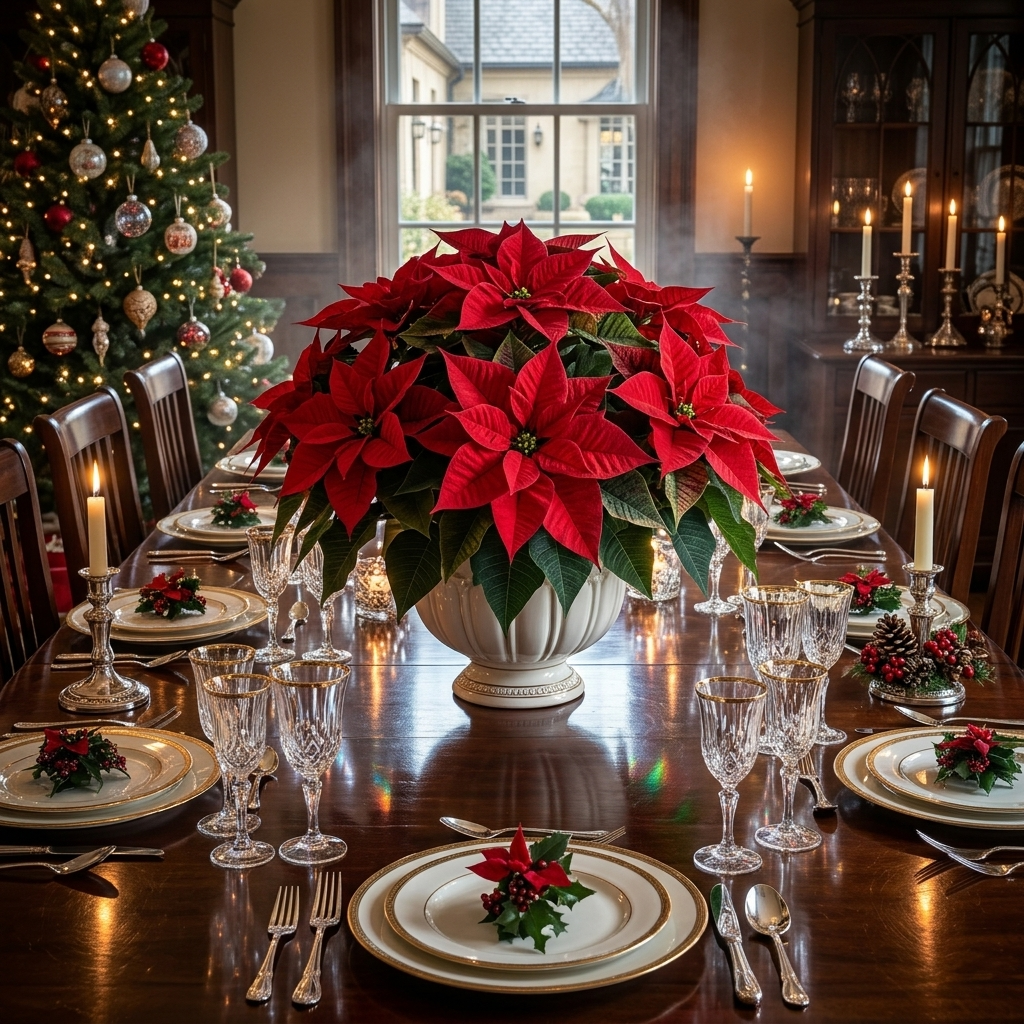
From the warm hillsides of Mexico to the Christmas windows of Hungary, discover how one extraordinary plant became a symbol of the festive season — and how to keep yours beautiful long after Christmas is over.
There is a special moment every year when Christmas begins to find its way into our homes.
Perhaps it starts with the first box of decorations coming down from the attic.
Perhaps it is the smell of freshly baked Christmas biscuits, the sound of familiar music, or the appearance of little lights in the windows.
And then, somewhere between the Advent candles and the Christmas tree, another familiar visitor arrives.
A beautiful plant with magnificent red leaves.
The poinsettia.
In Hungary, we know it as mikulásvirág.
In Germany, it is the Weihnachtsstern, the Christmas star.
In the Netherlands, it is the kerstster.
And in Mexico, where its remarkable story began, it is known as Flor de Nochebuena — the Christmas Eve flower.
What a lovely name for a plant!
Today, poinsettias decorate millions of homes during the Christmas season. We find them in supermarkets, garden centres, flower shops, churches and festive displays.
Some are traditional deep red.
Others are creamy white, delicate pink, peach-coloured or beautifully marbled.
But have you ever wondered how this plant became associated with Christmas?
Why does it turn red just as the days become shorter?
And why does that lovely poinsettia sometimes begin dropping its leaves only a few days after we bring it home?
The answers take us on a fascinating journey.
We'll travel to Mexico, meet an American diplomat with a passion for plants, discover a charming Christmas legend, and learn how generations of plant growers transformed a wild tropical shrub into one of the world's most recognisable Christmas decorations.
And, of course, we'll discover how to keep a poinsettia happy in a Hungarian home.
So, make yourself a warm cup of coffee or perhaps a lovely Christmas tea, settle into your favourite chair, and come into the garden with me.
Today, our garden adventure begins a very long way from Hungary.

1. Our Christmas Flower Was Once a Wild Mexican Shrub
Let's begin by imagining a completely different Christmas landscape.
Instead of the cold November mornings we know in Hungary, imagine the warmer regions of Mexico.
The landscape is filled with tropical and subtropical vegetation.
The sunlight is strong.
And growing naturally in suitable locations is a remarkable shrub with bright red upper leaves.
This is the wild ancestor of our Christmas poinsettia.
Its botanical name is Euphorbia pulcherrima.
The second part of the name, pulcherrima, means "most beautiful" in Latin.
And it is certainly an appropriate name.
In its natural environment, a poinsettia can grow into a large shrub or small tree, sometimes reaching several metres in height.
That may be difficult to imagine when we look at the compact little plants sold in Hungarian shops during December.
But our carefully cultivated Christmas plants are very different in appearance from their wild relatives.
The poinsettia belongs to the Euphorbiaceae family, a large and diverse group of plants commonly known as the spurge family.
And although we often call it the Christmas flower, its most colourful feature is not actually a flower at all.
But we'll come to that fascinating little secret shortly.
A plant with a history older than Christmas traditions
Long before poinsettias appeared in European homes, Indigenous peoples in Mexico already knew and valued the plant.
The Nahuatl name commonly recorded for it is Cuetlaxóchitl.
Historical accounts describe the use of its colourful bracts for dyes and its milky sap in traditional medicinal practices.
These uses are part of the plant's cultural history, not recommendations for modern home remedies.
Poinsettia sap can irritate the skin and should not be used medicinally without appropriate professional guidance.
The plant also had cultural and symbolic importance.
So when we place a poinsettia on our Christmas table, we are enjoying a plant with a history stretching back long before it became fashionable in Europe.
GOOD TO KNOW
The poinsettia is not naturally a small houseplant.
In suitable warm climates, it can become a substantial woody shrub. The compact plants we buy at Christmas are the result of careful breeding and professional growing techniques.
2. The Beautiful Mexican Christmas Legend
Every Christmas plant deserves a Christmas story.
And the poinsettia has a particularly touching one.
In Mexico, a traditional legend tells of a poor child who wanted to bring a gift to the church on Christmas Eve.
Different versions of the story give the child different names and details, but the message remains much the same.
The child had no money to buy a beautiful present.
Feeling embarrassed and unhappy, the child gathered a small handful of ordinary green plants growing beside the road.
It wasn't much of a gift.
But it was given with love.
According to the legend, when the humble bouquet was placed near the Christmas nativity scene, the leaves were transformed into magnificent red flowers.
Everyone was amazed.
And the simple gift became a symbol of the idea that even the smallest offering can be beautiful when it comes from the heart.
It is a lovely story, isn't it?
Of course, it is folklore rather than a historical or botanical explanation.
But perhaps that is why it has remained popular.
Christmas has always been about more than expensive presents and elaborate decorations.
Sometimes the simplest things carry the greatest meaning.
And a beautiful red poinsettia seems a perfect reminder.
How the poinsettia became part of Mexican Christmas celebrations
During the colonial period, Franciscan missionaries incorporated the poinsettia into Christian Christmas celebrations.
Its naturally colourful display during the shorter days of the year made it particularly suitable for seasonal decorations.
Historical accounts describe its use in nativity celebrations and processions in the Taxco region during the seventeenth century.
Over time, the plant became closely associated with Christmas Eve.
And the name Flor de Nochebuena became part of its identity.
Today, the poinsettia remains an important symbol of Christmas in Mexico.
3. The Man Who Gave the Poinsettia Its Famous Name
Now our story takes a surprising turn.
We travel from Mexico to the United States during the 1820s.
Here we meet Joel Roberts Poinsett.
Poinsett was an American diplomat with a strong interest in botany and horticulture.
He served as the United States minister to Mexico from 1825 to 1829.
During his time there, he encountered the remarkable red-bracted plant growing in Mexico.
Like so many gardeners before and after him, he was fascinated by its appearance.
He arranged for plants or cuttings to be sent to his home in South Carolina.
From there, the poinsettia began to attract attention among horticultural enthusiasts and botanical gardens.
Plants were propagated, shared and gradually introduced into commercial cultivation.
Eventually, the common name poinsettia became associated with Joel Poinsett.
Imagine that.
A diplomat encounters an unusual plant during his travels.
He sends it home because he thinks it is beautiful.
And nearly two centuries later, people around the world are buying it for Christmas.
Sometimes the smallest horticultural discoveries have extraordinary consequences.
An interesting little fact
In the United States, December 12 is recognised as National Poinsettia Day.
The date commemorates the anniversary of Joel Poinsett's death in 1851.
For us gardeners, it is another lovely excuse to admire this remarkable plant.
4. How the Poinsettia Found Its Way to Europe
Although the poinsettia is strongly associated with American Christmas traditions, its journey to Europe began during the nineteenth century.
Botanical gardens, plant collectors and commercial nurseries played important roles in spreading unusual plants between continents.
The poinsettia attracted interest because of its extraordinary red bracts.
But there was a problem.
Early cultivated poinsettias were not always suitable for the comfortable Christmas displays we know today.
They could become tall and rather untidy.
Some lost their leaves quickly.
Others were difficult to transport or keep attractive indoors.
A wild tropical shrub was not yet the perfect Christmas table decoration.
That transformation required generations of horticultural work.
The importance of plant breeding
During the twentieth century, growers developed poinsettias that were more compact, more strongly branched and better able to retain their decorative foliage.
One particularly influential family was the Ecke family, which became closely associated with commercial poinsettia production in California.
Through breeding, selection and propagation, poinsettias gradually became more suitable for mass production and indoor display.
Modern cultivars can remain attractive for many weeks when cared for properly.
Their shapes and colours are also much more varied than those of their wild ancestors.
From greenhouses to Christmas markets
As greenhouse production improved, poinsettias became increasingly available across Europe.
Today, they are an established part of the Christmas season in countries including Germany, Austria, the Netherlands and Hungary.
They fit beautifully into our European Christmas traditions.
In Austria and Germany, the poinsettia's star-like appearance makes the name Weihnachtsstern especially appropriate.
In Hungary, the familiar mikulásvirág often appears in shops around the beginning of the Advent season.
And in Dutch homes, the kerstster brings a wonderful splash of colour during the darkest weeks of the year.
One Mexican plant.
So many languages.
So many traditions.
And one shared love of Christmas.

5. The Biggest Poinsettia Secret — The Red Parts Are Not Flowers
Now we come to one of my favourite botanical surprises.
Look closely at a poinsettia.
You see a beautiful arrangement of red leaves surrounding a little cluster in the centre.
Most people naturally assume that the red parts are petals.
But they aren't.
They are modified leaves called bracts.
The actual flowers are the tiny structures in the centre.
In poinsettias, these small flower structures are called cyathia.
They are quite different from the large, showy flowers we usually imagine.
Why does the plant have colourful bracts?
In nature, colourful bracts help attract attention to the small flowers.
They function rather like a beautiful advertisement.
And they are very effective.
The red bracts make the plant visible from a distance.
Are all poinsettias red?
Not anymore.
Modern cultivated poinsettias are available in a wonderful range of colours.
There are creamy white varieties.
Soft pink varieties.
Peach and salmon shades.
Marbled combinations of pink and white.
And beautifully patterned red-and-cream forms.
Some cultivars even have curled or unusually shaped bracts.
What about blue poinsettias?
You may occasionally see bright blue or purple poinsettias in shops.
These are generally not naturally blue-flowering varieties.
They are often ordinary poinsettias whose bracts have been artificially coloured.
Sometimes glitter is added as well.
They can certainly look festive, but the new growth will not naturally return in the same artificial colour.
A LITTLE GARDENING SECRET
If you want a poinsettia that will look beautiful for many weeks, choose a healthy plant with strong foliage and well-developed coloured bracts.
A plant with fresh-looking central flower structures may also have more of its decorative period ahead of it.
6. Why Does the Poinsettia Turn Red at Christmas?
This is where the story becomes particularly fascinating.
How does a plant know that Christmas is approaching?
Does it recognise December?
Does it somehow understand that we are putting up decorations?
Of course not.
But it does respond to something very important.
The length of the night.
Poinsettias are short-day plants.
More precisely, their flowering and bract colouring are triggered by sufficiently long, uninterrupted periods of darkness.
As the days become shorter and the nights longer, the plant receives a seasonal signal.
Under suitable growing conditions, this encourages the development of flowers and colourful bracts.
The importance of uninterrupted darkness
A poinsettia needs an appropriate sequence of long nights to develop its Christmas colours.
Even artificial light during the dark period can interfere with this process.
That is why keeping a poinsettia beside a brightly illuminated window or beneath a lamp late into the evening may make recolouring difficult.
Nature's Christmas clock
In Mexico, seasonal changes in daylight help trigger the plant's natural display.
Professional growers in Europe can control day length and growing conditions to produce poinsettias at the right time for Christmas sales.
It is a beautiful example of how plant biology and horticultural knowledge work together.
And it explains why getting a poinsettia to turn red again next year requires a little planning.
We'll return to that later.

7. Choosing the Perfect Poinsettia in a Hungarian Shop
Now imagine we are visiting a garden centre in Győr, Budapest, Sopron or another Hungarian town in December.
There are rows of beautiful poinsettias.
Some are small enough for a windowsill.
Others are large, impressive plants that would look wonderful beside the Christmas tree.
How do we choose the healthiest one?
Look at the leaves
Choose a plant with healthy, well-coloured green foliage beneath the decorative bracts.
Avoid plants with extensive yellowing, wilting or leaf loss.
A few older leaves may be imperfect, but the overall plant should look vigorous.
Check the stems
The stems should be firm and healthy.
Avoid plants with obvious damage or signs of decay.
Examine the growing medium
The compost should not be excessively wet or completely dried out.
If the pot is sitting in water, choose another plant.
Look at the central flowers
The tiny flower structures in the centre can provide clues about maturity.
Plants with fresh-looking central flowers may remain decorative longer than those already well past their peak.
Most importantly — think about the journey home
This is where many poinsettias suffer their first serious problem.
They are warm-climate plants.
And Hungarian December weather can be extremely cold.
A poinsettia that has spent its life in a warm greenhouse may be damaged by even a short period of exposure to freezing air.
GOOD TO KNOW
When buying a poinsettia during cold weather, ask the shop to wrap it carefully.
Take it directly to your car or home.
Avoid leaving it in an unheated vehicle.
Even a beautiful, healthy poinsettia can suffer leaf damage after exposure to cold during transport.
8. Where Should You Place Your Poinsettia at Home?
You have brought your beautiful poinsettia home.
Now comes the important question.
Where should it live?
Perhaps on the dining table?
Beside the Christmas tree?
On the windowsill?
Or near the fireplace?
The answer depends on light, temperature and air movement.
Poinsettias love light
Choose a bright location.
A position near a well-lit window is usually suitable, provided the plant is protected from cold glass and draughts.
During the short winter days in Hungary, natural light is particularly valuable.
Keep the temperature comfortable
Poinsettias generally perform well at ordinary indoor temperatures of approximately 18–22°C.
They dislike prolonged exposure to cold.
They also dislike extreme heat and sudden temperature changes.
Avoid placing them directly beside radiators, fireplaces or heating vents.
Watch out for cold windows
This is a common problem in Hungarian homes.
A poinsettia may stand in a warm room, but its leaves can still touch very cold window glass.
That can cause damage.
Leave a little space between the foliage and the window.
Avoid draughts
Cold air from an opening door or window can cause stress.
A poinsettia placed near a frequently opened entrance may begin losing leaves.
What about the Christmas dining table?
A poinsettia makes a wonderful centrepiece.
But if the table is far from natural light, consider using it there temporarily and returning it to a brighter position afterwards.
That way, you can enjoy its beauty without making the plant uncomfortable.

9. The Watering Mystery — Why So Many Poinsettias Die After Christmas
If I had to choose one of the most common reasons poinsettias struggle indoors, it would be incorrect watering.
And the interesting thing is that both too much and too little water can cause problems.
The danger of overwatering
Poinsettia roots need moisture, but they also need oxygen.
If the compost remains saturated, the roots may become damaged.
This can lead to yellow leaves, wilting and leaf drop.
The confusing part is that an overwatered poinsettia may look very similar to a thirsty one.
How should you water?
Check the compost with your finger.
When the upper layer begins to feel dry, check whether the plant needs watering.
Water thoroughly enough to moisten the root ball, then allow excess water to drain away.
Do not leave the pot standing in water.
The decorative foil problem
Many poinsettias are sold in attractive foil sleeves or decorative pot covers.
They look beautiful.
But they can trap water.
After watering, make sure excess water has drained away and is not collecting around the bottom of the pot.
Should you water every day?
Usually not.
Watering frequency depends on pot size, room temperature, humidity, light and plant growth.
A small poinsettia in a warm room may dry more quickly than a large one in a cooler location.
Check the plant rather than following a rigid calendar.
A COMMON MISTAKE
Watering a poinsettia every morning simply because it is Christmas.
The plant doesn't need a daily Christmas present of water.
It needs the right amount at the right time.
10. Why Is My Poinsettia Dropping Its Leaves?
This is probably the question most poinsettia owners ask at some point.
The plant looked magnificent when we bought it.
And now, suddenly, leaves are falling onto the table.
What happened?
There are several possible explanations.
Cold exposure
Perhaps the plant became chilled during transport.
Damage may not become obvious immediately.
Leaves can begin dropping after the plant has been brought into a warm room.
Overwatering
Constantly wet compost can damage roots.
Yellowing and leaf drop may follow.
Underwatering
If the root ball becomes excessively dry, the plant may wilt and shed leaves.
Draughts
Cold air from windows or doors can cause stress.
Poor light
A poinsettia kept in a dark corner for long periods may struggle.
Sudden environmental changes
Moving from a professional greenhouse into a heated home can be stressful, especially if the conditions differ greatly.
What should you do?
First, check the compost.
Then examine the plant's position.
Is it too close to a radiator?
Is it receiving enough light?
Could it be exposed to cold air?
Correct the growing conditions and allow the plant time to recover.
Don't immediately add fertiliser or repot it unless there is a clear reason.
11. Can Poinsettias Be Dangerous for Cats and Dogs?
This is an important question, especially during Christmas when pets may become curious about decorations.
Poinsettias have a reputation for being extremely poisonous.
That reputation is exaggerated.
They are generally considered to have relatively low toxicity compared with many genuinely dangerous houseplants.
However, this does not mean they should be eaten.
Chewing the leaves or stems can cause irritation, drooling, vomiting or gastrointestinal discomfort.
The milky sap can also irritate skin and eyes.
What should pet owners do?
Place poinsettias where curious animals cannot easily chew them.
If a pet eats part of the plant and develops symptoms, contact a veterinarian for advice.
The same common-sense approach applies when small children are present.
And if you are sensitive to latex or plant sap, wear gloves when pruning or handling damaged stems.
GOOD TO KNOW
Poinsettias are not suitable as edible decorations.
Enjoy their beauty, but keep the leaves, stems and sap away from food and drinks.

12. Decorating With Poinsettias — Christmas Ideas for Every Home
One of the reasons poinsettias have remained so popular is their versatility.
They can look traditional, elegant, modern or wonderfully rustic.
It all depends on how we use them.
The Traditional Red Christmas
Combine deep red poinsettias with evergreen branches, pine cones and warm white Christmas lights.
Add natural wooden decorations or a simple woven basket.
This style looks beautiful in traditional Hungarian homes, particularly alongside Advent wreaths and festive table decorations.
The White Christmas
Choose creamy white poinsettias.
Combine them with pale candles, silver decorations and natural greenery.
A white poinsettia can look particularly beautiful against dark green foliage.
This arrangement works wonderfully on a dining table or sideboard.
The Pink Christmas
Pink poinsettias create a gentler Christmas atmosphere.
Combine them with champagne-coloured ornaments, soft gold accents and natural linen.
They are especially attractive in rooms decorated with warm neutral colours.
The Modern Christmas
Use one large poinsettia in a beautiful ceramic container.
Choose a deep red, creamy white or marbled variety.
Keep the surrounding decorations minimal.
Sometimes one magnificent plant is more impressive than a dozen small decorations.
A Christmas Gift With a Personal Touch
A healthy poinsettia makes a lovely seasonal gift.
Choose an attractive reusable pot.
Add a small card with simple care instructions.
And perhaps include a message explaining the plant's Mexican origins.
A Christmas present becomes even more special when it comes with a story.
13. What Should You Do With Your Poinsettia After Christmas?
Now we come to the question that separates the casual Christmas decorator from the adventurous gardener.
What happens in January?
The decorations come down.
The Christmas tree disappears.
And the poinsettia is still sitting on the windowsill.
Should we throw it away?
Absolutely not, if the plant is healthy and you would like to keep it.
A poinsettia is a perennial shrub.
It doesn't naturally die after Christmas.
With suitable care, it can continue growing for years.
January and February
Keep the plant in a bright, warm location.
Water when the growing medium begins to dry.
Avoid cold draughts and waterlogging.
The coloured bracts may remain attractive for several weeks or even longer.
Eventually, they may fade or fall.
This is normal.
March and April
As daylight increases, the plant may begin producing fresh green growth.
If the plant has become leggy, spring can be a suitable time to prune it.
Wear gloves because the stems contain irritating milky sap.
For a healthy, established plant, pruning can encourage branching.
Avoid removing too much from a weak or stressed specimen.
Repotting
If the roots have filled the pot, repot in spring into a slightly larger container with good drainage.
Use a suitable, well-drained potting mix.
Don't automatically choose an enormous pot.
Excess compost around a small root system can remain wet for too long.
14. Can You Put Your Poinsettia Outside During a Hungarian Summer?
Yes!
And this may surprise many gardeners.
Although poinsettias cannot reliably survive outdoors during a Hungarian winter, they can enjoy spending part of the summer outside.
The important thing is timing.
Wait until the weather is warm
Don't move your poinsettia outdoors simply because we have one lovely sunny day in April.
Wait until the danger of frost has passed and nighttime temperatures are reliably mild.
A practical target is to wait until nights are consistently above approximately 12–15°C.
In Hungary, this may be around late May or later, depending on the year and location.
Introduce outdoor conditions gradually
A plant that has spent months indoors should not be placed immediately in strong midday sunshine.
Begin in a sheltered, bright position away from intense direct sun.
Gradually increase light exposure over a week or two.
This helps prevent leaf scorch.
Watering during summer
Outdoor containers can dry quickly during hot Hungarian weather.
Check the compost regularly.
Water when needed and allow excess water to drain.
Feeding
During active growth, a balanced houseplant fertiliser can be used according to the manufacturer's instructions.
Avoid excessive feeding.
Keeping the plant compact
Poinsettias can become tall and leggy.
Pinching growing tips during the active growing season can encourage branching.
However, stop major shaping by late summer if you want the plant to develop coloured bracts for Christmas.
Bring it inside before autumn cold
Don't wait for the first frost.
Move the plant indoors when nights begin becoming too cool.
Inspect it for insects before bringing it into the house.
A little preventive care can save you from introducing pests to your other houseplants.
15. The Great Christmas Challenge — Can You Make It Turn Red Again?
Now we come to the most exciting part.
Can you keep this year's poinsettia and persuade it to develop beautiful red bracts again next Christmas?
Yes, it is possible.
But it requires patience and a little discipline.
Remember our earlier discovery?
Poinsettias respond to long, uninterrupted nights.
To encourage flowering and bract colouring, we need to recreate the right day-length conditions.
The autumn darkness routine
From around late September or early October, give the plant approximately 14–15 hours of uninterrupted darkness every night.
For example, you might place it in complete darkness from 5 p.m. until 8 a.m.
During the day, return it to a bright location.
The darkness must be genuinely dark.
Light from lamps, televisions, streetlights or nearby rooms can interfere with the process.
A lightproof box or completely dark cupboard can work, provided the plant is not overheated, crushed or deprived of appropriate air circulation.
How long does it take?
Continue the routine for approximately eight to ten weeks, or until the bracts have developed good colour.
The exact timing depends on the variety and growing conditions.
What else does the plant need?
Suitable temperature.
Adequate daylight during the day.
Correct watering.
Healthy foliage.
And patience.
What if it doesn't work?
Don't be disappointed.
Commercial growers use carefully controlled conditions and specialised techniques.
Getting a poinsettia to recolour beautifully at home can be challenging.
If your plant remains green, it can still be a lovely houseplant.
And you can always try again the following year.
GROW WITH US
If you enjoy gardening experiments, try keeping one poinsettia from Christmas to Christmas.
Photograph it each month.
Record when you prune it, move it outdoors and begin the autumn darkness routine.
You may be surprised by how much you learn about plant growth and seasonal light.
16. The Poinsettia's Year — A Simple Care Calendar for Hungary
| Month | What to do |
|---|---|
| December | Enjoy the coloured bracts. Keep warm, bright and away from draughts. |
| January | Continue normal care. Check soil moisture and avoid overwatering. |
| February | Maintain good light. Some leaf or bract loss may occur naturally. |
| March | Watch for new growth as daylight increases. |
| April | Consider pruning and repotting healthy plants if necessary. |
| May | Begin acclimatising outdoors once nights are reliably warm. |
| June | Encourage healthy growth and feed moderately. |
| July | Water carefully during heat; pinch shoots if needed for branching. |
| August | Finish major shaping by late summer. |
| September | Bring indoors before cold nights; prepare for the darkness routine. |
| October | Provide long, uninterrupted nights for Christmas colouring. |
| November | Continue the routine and watch for developing coloured bracts. |
| December | Enjoy your poinsettia's new Christmas display. |
17. Ten Common Poinsettia Mistakes
Let's bring together the mistakes that cause the most problems.
1. Carrying the plant home unwrapped in freezing weather.
Cold damage can appear later as leaf drop.
2. Placing it directly beside a radiator.
Excessive heat and dry air can stress the plant.
3. Leaving water inside decorative foil.
Standing water may cause root problems.
4. Keeping it in a dark corner.
Poinsettias need good light to remain healthy.
5. Allowing leaves to touch cold window glass.
Cold contact can damage foliage.
6. Watering according to a rigid daily schedule.
Always check the growing medium first.
7. Putting it outdoors too early in spring.
Cold nights can damage this warm-climate plant.
8. Moving it directly into strong summer sunshine.
Gradual acclimatisation helps prevent leaf scorch.
9. Forgetting about autumn darkness.
Without suitable long nights, bract colouring may be delayed or reduced.
10. Throwing it away immediately after Christmas.
A healthy poinsettia can continue growing for years.
18. Five Fascinating Poinsettia Facts to Share at Christmas Dinner
Every Christmas gathering needs a few interesting stories.
Here are five about the poinsettia.
Fact One — The Christmas flower is actually a shrub
In its natural environment, it can grow several metres tall.
Fact Two — The red parts are leaves
The colourful structures are modified leaves called bracts. The real flowers are tiny and found in the centre.
Fact Three — It came from Mexico
The poinsettia has a rich Indigenous and Mexican cultural history that began long before its popularity in Europe.
Fact Four — It responds to darkness
Long, uninterrupted nights help trigger flowering and the development of colourful bracts.
Fact Five — It can live beyond Christmas
With appropriate care, a poinsettia can remain a houseplant for years and may produce another colourful display.

19. Frequently Asked Questions About Poinsettias
What is a poinsettia called in Hungarian?
It is called mikulásvirág. Its botanical name is Euphorbia pulcherrima.
Is a poinsettia a real flower?
Yes, it produces real flowers, but they are the tiny structures in the centre. The large red, pink or white parts are modified leaves called bracts.
How often should I water my poinsettia?
Water when the upper growing medium begins to dry and the plant needs moisture. Always allow excess water to drain away.
Why are the leaves falling off my poinsettia?
Possible causes include cold exposure, draughts, overwatering, underwatering, poor light and sudden environmental changes.
Can I keep my poinsettia outside in Hungary?
During warm summer weather, yes. It should be brought indoors before cold autumn nights. It is not reliably winter-hardy outdoors in Hungary.
Is poinsettia poisonous?
It has relatively low toxicity, but the sap can irritate skin and ingestion may cause discomfort. Keep it away from children and pets that may chew plants.
Can a poinsettia turn red again next Christmas?
Yes. Healthy plants can develop coloured bracts again when given suitable growing conditions and a sufficiently long period of uninterrupted darkness.
Are white and pink poinsettias natural?
Yes. Many cultivated varieties naturally produce white, pink, peach or patterned bracts. Bright blue varieties are generally artificially coloured.
Should I fertilise my poinsettia during Christmas?
A newly purchased plant in its decorative phase usually does not need immediate fertilisation. Feeding is more useful during active growth, according to the plant's condition and fertiliser instructions.
How long can a poinsettia live?
With suitable care, it can live for several years. It is a perennial shrub, not a plant that naturally dies after Christmas.
Come Into the Garden With Me — A Christmas Thought
I think there is something rather extraordinary about the poinsettia.
Here we are in Hungary, preparing for Christmas.
The mornings are cold.
The trees outside have lost their leaves.
Perhaps the first snow is falling.
We light the Advent candles, decorate our homes and begin looking forward to the holidays.
And on our windowsill stands a plant whose story began beneath the warm Mexican sun.
A plant known and appreciated by Indigenous peoples long before it became a European Christmas decoration.
A plant that travelled across oceans, entered botanical collections, inspired generations of growers and eventually became one of the most familiar symbols of Christmas.
And the most wonderful part?
It is still responding to the same natural rhythms that shaped its life in Mexico.
The changing length of the day.
The long nights.
The quiet signals of the seasons.
Perhaps that is why I love the story of the poinsettia so much.
It reminds us that plants connect people, countries, cultures and traditions in the most unexpected ways.
A little red Christmas plant can carry centuries of history.
And when we care for it, we become a small part of that continuing story.
So this Christmas, when you place a poinsettia on your table or give one to someone you love, take a moment to appreciate where it came from.
And perhaps tell its story.
Because sometimes the most beautiful Christmas decorations are not the ones we hang on the tree.
They are the living ones.
A little piece of Mexico, a beautiful Christmas tradition, and a wonderful reminder that nature has stories worth sharing.
Wishing you a warm, peaceful and beautiful Christmas season.
And remember — come into the garden with me again soon.
With warm Christmas wishes from Holland Kertészet.


