

A practical vegetable garden series
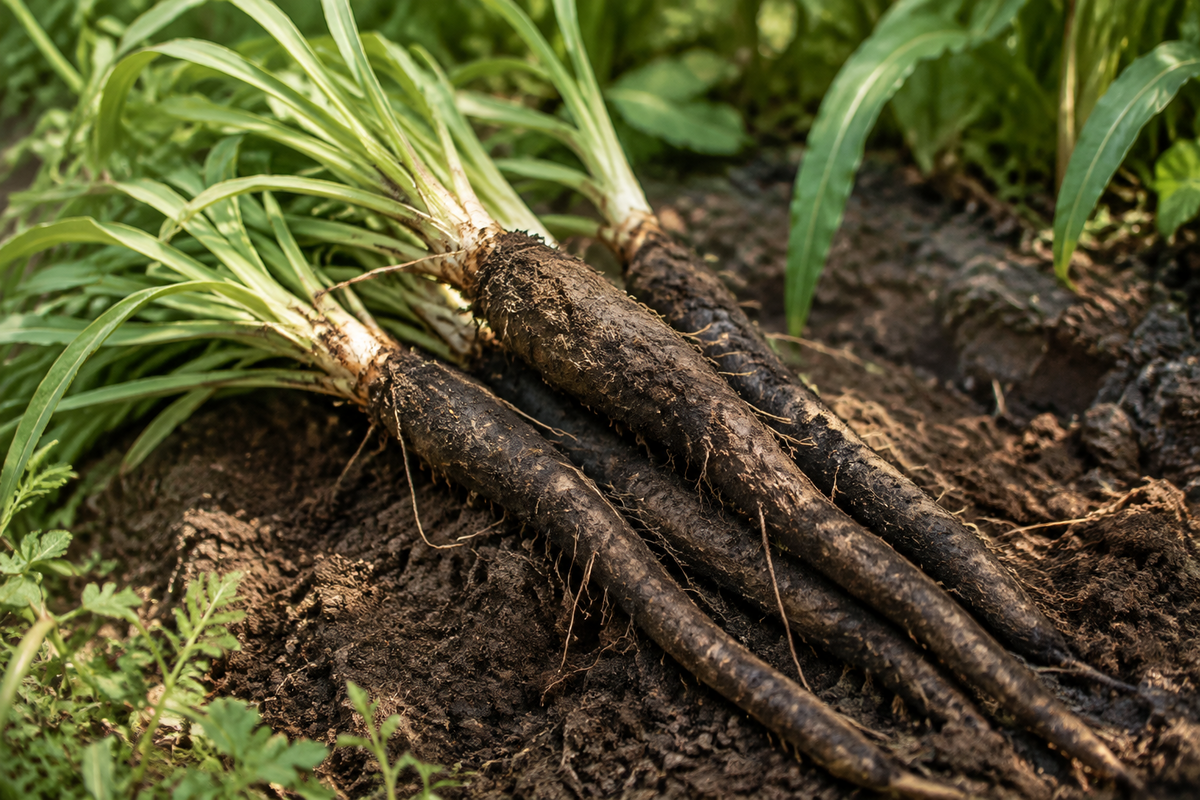
Sow this unusual black-skinned root in spring, then lift its tender, pale flesh through autumn and winter.
|
GROW WITH US Scorzonera is a patient gardener’s crop: sow in spring and lift its winter roots when you need them. |
Written for home gardeners in Hungary
CHAPTER WELCOME
Your scorzonera season starts here
This book follows the whole journey: seed → seedling → garden → care → harvest → kitchen → next season.
Scorzonera, also called black salsify, is a slow-growing root vegetable with a dark skin and pale flesh. Near Győr, sow fresh seed directly outdoors in March or early April, once the soil can be worked. Give the long roots deep, stone-free ground, keep the young row weeded and water through dry spells. Lift roots from autumn onwards, taking care not to snap them; many can stay in the ground until you need them.
Scorzonera is not the same plant as salsify: scorzonera has a dark skin, while salsify roots are usually pale. Both have long taproots, so direct sowing and careful digging matter. This guide focuses on scorzonera grown for its first-year roots.
Our Hungarian calendar
|
March |
Sow fresh seed outdoors when the soil is workable. |
|
April |
Early spring sowing is still possible in cold or wet conditions. |
|
Spring |
Thin seedlings and keep the row carefully weeded. |
|
Summer |
Water during long dry spells as the roots develop. |
|
October onward |
Lift roots as needed and protect the row from severe cold. |
|
Late winter |
Finish lifting before new growth begins in spring. |
|
WHAT I WOULD DO I would sow a short row of fresh seed in March and leave most roots in the bed for winter meals. |
The rule for this series: dates guide us, but the plant and the weather make the final decision.
CHAPTER 1
Meet Scorzonera
A cool-season root with dark skin, creamy flesh and a mild, savoury flavour.
Scorzonera hispanica, also called black salsify or Spanish salsify, is a member of the daisy family. It makes a long, slender taproot with a dark brown or black skin and pale flesh. The roots are the main crop, although young leaves can also be used as greens. Scorzonera is closely related to salsify, but the two are different crops: scorzonera has dark-skinned roots, while salsify is generally pale. Sow directly in the garden because transplanting can make roots fork.
A long root that grows through the cool season
|
Botanical name |
Scorzonera hispanica; also called black salsify. |
|
Plant family |
Asteraceae, the daisy family. |
Choose how you want to enjoy the plant
· For a straight root: sow into deep, loose soil with stones removed.
· For an easy start: use fresh seed and sow it where the roots will grow.
· For a winter harvest: lift roots as needed from autumn onward.
· For a delicate flavour: handle roots gently and cook before peeling.
· For a small bed: grow a short row and thin plants to give each root room.
· For next year: leave one plant to flower and collect fresh seed.
|
GOOD TO KNOW The skin is dark, but the inside of a scorzonera root is pale and creamy. |
CHAPTER 2
Choose Your Scorzonera
Begin with the soil: long roots need depth, fine tilth and few obstacles.
Ask yourself five questions
1. Can I loosen the soil deeply enough for long taproots?
2. Can I remove stones and break up hard clods before sowing?
3. Will I sow fresh seed directly into the final growing bed?
4. Can I keep the small seedlings weed-free while they establish?
5. Would I like roots I can lift through autumn and winter?
A beginner-friendly first planting
|
Sow |
Direct sow fresh seed in early spring. |
|
Soil |
Deeply loosened, fine and free of stones. |
|
Thin |
Leave about 10–15 cm between plants. |
|
Water |
Keep the row moist while seedlings emerge. |
|
A COMMON MISTAKE Starting roots in pots and transplanting them. Sow where the long taproots will grow. |
|
TRY THIS Sow a short row beside parsnips, but keep labels clear so you can tell the roots apart. |
CHAPTER 3
Let’s Sow
For your first try, sow a short row of scorzonera rather than filling a bed. Choose fresh seed, because it does not keep its germination well for long. Prepare the soil deeply and remove stones, then sow directly in the place where each root will mature. Thin the seedlings so they have room and weed carefully while they are small. The roots take patience, but you can lift only what you need and leave the rest for later.
When to sow in Hungary
Scorzonera needs a long growing season, so sow in early spring near Győr. March is a good target when the soil is workable; early April is still a practical window if the ground is cold or wet. Sow outdoors in a prepared bed rather than starting seedlings in pots, because disturbing the taproot may cause it to fork. Some growers also sow in October for an earlier crop next year, but spring sowing is easier for a first attempt. Use fresh seed and mark the row carefully.
What you need
· A fresh packet of scorzonera seed
· A sunny bed with deep, loose soil
· A fork or spade to loosen the ground
· A fine rake, labels and a gentle watering can
· A hand fork for lifting roots in autumn
Sowing, step by step
1. Loosen the bed deeply and remove stones, clods and perennial weeds.
2. Rake the surface to a fine tilth and water the drill if the soil is dry.
3. Sow fresh seed about 1 cm deep in a shallow row.
4. Cover lightly, water gently and label the row with the sowing date.
5. When seedlings are large enough to handle, thin them to 10–15 cm apart.
|
DON’T PANIC Seedlings can take two or three weeks to appear. Keep the row lightly moist and wait. |
|
A COMMON MISTAKE Leaving stones or hard clods in the bed. They can bend or fork the taproots. |
CHAPTER 4
Seedling School
Tiny seedlings need patience, a clear row and careful weeding.
Recognise a healthy seedling
Scorzonera seeds can take two or three weeks to germinate, and emergence may be uneven. The first leaves are narrow and grasslike. Keep the soil lightly moist while seedlings appear, then thin them so the roots have room to lengthen. Weeds can hide the young row and outcompete the crop, so remove them while small. Work close to the plants by hand; a deep hoe stroke can damage the roots just below the surface.
Why has the seed not germinated?
Old seed is a common reason for a disappointing row because scorzonera seed loses germination relatively quickly. Cold or dry soil can also slow emergence. Keep the bed evenly moist but not saturated, and allow up to three weeks before deciding the sowing failed. If very few seedlings appear, sow fresh seed in a new short row. Label the packet with the year and use the remainder promptly.
Water while they settle
Water gently after sowing and do not let the seedbed dry while seedlings are emerging. Once plants are established, water deeply during prolonged dry spells. Regular moisture supports steady root growth and can reduce splitting or tough, fibrous roots. Avoid keeping heavy soil waterlogged. A light mulch between rows can help hold moisture, but leave the young plants visible and keep weeds from taking over.
Feeding
Prepare the bed before sowing by loosening the soil and incorporating mature compost if it is poor. Avoid fresh manure shortly before the crop, as rich or recently manured soil can encourage forked roots. Scorzonera is not a crop to rescue with heavy feeding later. If growth looks slow, check the seed age, soil depth, weeds, moisture and crowding first. Follow the packet if it recommends a fertiliser for your soil.
|
WHAT I WOULD DO I would weed by hand close to the row so I do not damage the roots. |
|
DON’T PANIC A broken root may ooze white milky sap. Handle roots gently and cook them soon. |
CHAPTER 5
Ready for the Real World
Sow directly into a prepared bed and protect the long roots from stones and disturbance.
Before sowing: prepare a deep, fine seedbed
1. Choose a sunny place with soil deep enough for long roots.
2. Loosen the ground well below the surface and remove stones.
3. Do not use a bed freshly enriched with manure.
4. Sow fresh seed directly in shallow drills and label them clearly.
5. Water gently and keep the young row weed-free.
When can it live outside in Hungary?
Scorzonera is a hardy cool-season crop and is sown straight outdoors. Near Győr, sow in March when soil is workable, or in early April if spring remains cold and wet. It does not need a frost-free transplanting date because seedlings stay in the bed where they grow. After seedlings appear, thin them and keep the row clear of weeds. Plants can tolerate cold later in the season; roots are commonly lifted from autumn and can overwinter in the soil if it is not too difficult to dig.
Sow in rows about 20–30 cm apart, then thin plants to roughly 10–15 cm within the row. The exact spacing can follow your seed packet. Deep, fine, stone-free soil gives roots room to grow long and straight. Raised beds may help where the soil is compacted or shallow. Do not transplant seedlings: moving a taproot can cause it to fork. Water after sowing and keep the surface from crusting while seeds germinate.
|
A COMMON MISTAKE Pulling roots straight from the ground. Loosen deeply with a fork so they do not snap. |
|
GOOD TO KNOW Scorzonera can stay in the ground through winter and be lifted as needed. |
CHAPTER 6
Give Them a Good Home
Deep, loose soil lets scorzonera make long, smooth roots.
The right place
Choose a sunny position with deep, light soil that holds moisture but drains well. Loosen it to the depth of a spade or more, breaking hard layers below the surface where possible. Remove stones, clods and old root fragments that could deflect the taproot. Avoid a bed freshly manured or heavily compacted. If your soil is shallow or stony, use a deep raised bed or grow a shorter row in the best prepared part of the garden.
Spacing
Sow in rows around 20–30 cm apart, then thin seedlings to 10–15 cm within each row. Giving each plant room helps the root develop without crowding and lets you weed between rows. If seedlings are pulled rather than snipped, nearby roots can be disturbed, so thin gently. Follow the packet if it gives a specific spacing for your variety or growing conditions.
Planting day
1. Loosen and rake the bed, removing stones and hard clods.
2. Make shallow drills about 1 cm deep, with rows 20–30 cm apart.
3. Sow fresh seed thinly and cover it lightly with fine soil.
4. Water gently, label the row and keep the surface evenly moist.
5. Thin emerged seedlings to about 10–15 cm apart.
Growing in containers or under cover
Scorzonera is best grown in the ground, where its taproots can reach full length. A container can work only if it is deep and wide enough, with free drainage and loose compost; a short or shallow pot will give stunted or bent roots. Sow directly into the container rather than transplanting. Outdoor growing is usually simplest, since this hardy crop does not need greenhouse warmth. Keep pots evenly watered because they dry faster than garden soil.
|
TRY THIS Cook the roots before peeling to make the tough skin and sticky sap easier to manage. |
CHAPTER 7
Water, Feed & Keep Them Growing
Even moisture and careful weeding help long roots stay tender and straight.
Watering
Keep the seedbed moist until seedlings establish. Later, water deeply during dry spells, especially while roots are lengthening. Scorzonera is fairly drought tolerant once settled, but long periods of dry soil can slow growth and make roots tougher or more likely to split when rain returns. Water the soil rather than washing it from the row. Containers need more frequent checks, and heavy soil should still drain freely after watering.
Mulch
A thin layer of compost between established rows can reduce weeds and help the soil hold moisture. Keep the seedling row visible so small plants are not smothered. Hand weed close to each plant and work shallowly between rows; damaging a developing taproot can make it fork. As autumn approaches, straw or fleece over the bed can make winter lifting easier, but do not let a wet mulch sit against the crown.
Feeding
Scorzonera needs a well-prepared bed more than repeated feeds. Work mature compost into poor soil before sowing, but avoid fresh manure and excess nitrogen. Too much fertility or a lumpy seedbed can lead to branched roots. If plants look pale, check for waterlogging, weeds and crowding. Avoid late feeding unless your soil or seed-packet instructions clearly call for it.
Keep plants healthy
Young scorzonera grows slowly, so weeds are the main early competition. Remove them by hand near the row and hoe only between rows. Keep moisture steady in dry weather. If a flower stalk appears in the first year, remove it promptly so the root remains tender; flowering is more usual in the second year after overwintering. Healthy roots are long and slender, but may still branch if they meet stones, hard layers or fresh manure.
|
WHAT I WOULD DO I would lift only what I need and keep the rest in the bed or a cool cellar. |
CHAPTER 8
Roots, Leaves & “What Is That?”
The dark skin hides pale flesh, and broken roots may ooze a milky sap.
Why are the roots short, bent or forked?
Scorzonera roots branch or bend when they meet stones, compacted soil, fresh manure or a transplanting disturbance. Prepare the bed deeply before sowing, remove obstacles and grow the crop in place. Thin seedlings carefully and do not dig around the row during the season. A short root can still be eaten, but next time choose a deeper, finer seedbed and avoid moving seedlings from pots.
The beginner’s trouble guide
|
Poor germination |
Seed may be old, or soil may have dried while it was sprouting. |
|
Roots are forked |
Stones, compacted ground or fresh manure may have caused it. |
|
Roots are thin |
Check sowing date, spacing, weeds and the length of the season. |
|
Roots snap while digging |
Use a fork well away from the row and loosen deeply. |
|
Root flesh darkens |
Limit exposure to air; cook soon after peeling. |
|
DON’T PANIC Scorzonera grows slowly at first; clear weeds and give the roots time. |
|
A COMMON MISTAKE Confusing black salsify with salsify. Scorzonera has dark skin; salsify is usually pale. |
CHAPTER 9
Can I Pick It Yet?
Start lifting in autumn, and loosen the soil deeply so roots come out whole.
What “ready” looks like
Scorzonera roots are generally ready from autumn, often around October after a long growing season. Check one carefully: a mature root is long and thick enough to use, with dark skin and pale flesh inside. Insert a fork well away from the row and ease the soil loose before lifting; roots snap easily if pulled. Harvest a few at a time and leave the rest in the ground for winter, unless hard frost or wet soil will make lifting difficult.
Harvest for the use you want
|
Kitchen |
Steam, roast, mash or add the roots to soup. |
|
Timing |
Usually from autumn after a long growing season. |
|
Method |
Loosen soil deeply and lift roots gently with a fork. |
|
Storage |
Keep in the ground or layer intact roots in damp sand. |
How often should I check?
Begin checking in autumn, but do not rush the whole row. Loosen soil beside one plant and lift a sample root; if it is still thin, leave the others longer. After frost, roots may taste sweeter, but frozen ground is difficult to work. In a mild winter, lift them as needed. Where soil freezes hard or becomes waterlogged, harvest before that point and store sound roots in a cool place in damp sand.
|
READY TO HARVEST? Lift one sample root in autumn; if it is useful in size, begin harvesting as needed. |
|
TRY THIS Steam the roots until tender, peel while warm and finish with butter and herbs. |
CHAPTER 10
From the Garden to the Kitchen
Creamy scorzonera has a subtle, savoury flavour and can be cooked like a root vegetable.
The first rule: protect the root
Brush off soil and rinse the roots. Their skin is tough, and the cut surface can release a sticky milky sap, so avoid breaking them while washing. The simplest approach is to cook the roots first, then peel them while warm. They can be steamed, boiled, roasted, mashed or added to soup, much like a delicate parsnip or asparagus. If peeling before cooking, wear gloves and place the peeled pieces in water with a little lemon juice to limit browning.
Match the harvest to its purpose
· Steamed: cook until tender, then peel and dress with butter or herbs.
· Roasted: cut carefully and roast with oil until soft and lightly browned.
· Soup: add peeled pieces to a creamy root-vegetable soup.
· Storage: layer sound roots in damp sand in a cool cellar.
|
FROM THE KITCHEN The pale flesh can release sticky sap if cut raw; cooking first makes peeling easier. |
Keeping the harvest fresh
Lift only what you can use soon and leave unwashed roots in the ground or store them cool. For cellar storage, layer intact roots in slightly damp sand or sawdust so they do not dry out. Remove damaged or soft roots and check the box occasionally. In the refrigerator, keep roots loosely wrapped and use them promptly. If a root breaks, cook it soon; the exposed flesh can dry and the sap can make it sticky.
When you have more than one use
Leave most roots in the bed and lift a few whenever you want a winter vegetable. Cooked scorzonera is a gentle partner for potatoes, carrots, mushrooms and roast meat. If you harvest more than you need, store intact roots in a cool cellar in damp sand rather than washing and peeling the whole crop. Handle each root carefully so the slender tips stay attached.
CHAPTER 11
Next Season Starts Now
Use fresh seed, keep a record and let one plant flower if you want seed.
Keep a tiny garden record
· Seed packet name and the year the seed was packed
· Sowing date and time taken for seedlings to appear
· How deeply the bed was loosened and prepared
· When roots first reached a useful size
· Whether the row stayed moist through summer
· How many roots stayed straight and unbroken
· Which harvest and storage method worked best
Saving seed for next year
Scorzonera is usually grown as an annual root crop, but it can flower in its second year if a root is left in the ground. The plant sends up yellow flower heads and then forms seed. Save seed only from a healthy plant with roots you liked, and collect it when the seed heads are dry. Fresh seed is important because germination declines quickly. Seedlings may vary from the parent, so buy a fresh packet if you want a predictable crop.
1. Leave a healthy plant in the bed through winter.
2. Allow it to flower in its second year and form seed heads.
3. Collect seed when the heads are dry and ready to release it.
4. Remove chaff and dry the seed fully in an airy place.
5. Label the seed with the year and sow it fresh next spring.
|
GOOD TO KNOW Winter roots are easiest to lift before the ground freezes hard. |
|
WHAT I WOULD DO I would store extra intact roots in slightly damp sand in a cool cellar. |
COME GROW WITH ME
SCORZONERA CHEAT SHEET
The page to come back to when you have soil on your hands and no time to reread the whole book.
|
SOW |
March or early April |
Direct sow fresh seed in the final bed |
|
POSITION |
Sunny bed |
Deep, loose, stone-free soil |
|
SPACE |
Thin to about 10–15 cm |
Rows about 20–30 cm apart |
|
WATER |
Moist while seedlings emerge |
Water deeply during long dry spells |
|
HARVEST |
From autumn into winter |
Loosen soil carefully to avoid snapping roots |
|
Start |
Use fresh seed and sow directly outdoors in spring. |
|
Prepare |
Loosen soil deeply and remove stones. |
|
Thin |
Give each taproot room to lengthen. |
|
Care |
Weed carefully and water during dry spells. |
|
Pick |
Lift a few roots as you need them from autumn. |
|
Next season |
Save fresh seed from a plant left to flower. |
|
HUNGARY IN ONE LINE Near Győr, direct sow scorzonera in March or early April, then lift the roots from autumn through winter. |
COME GROW WITH ME • SCORZONERA


