

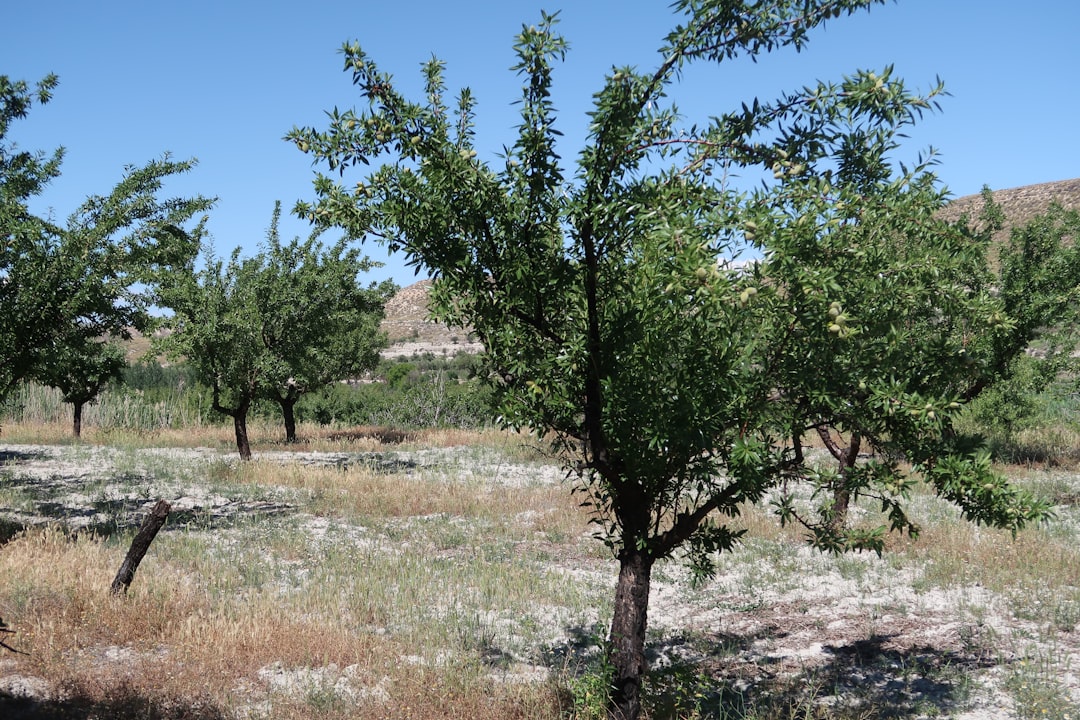
Nine weeks of relentless heat is a genuine ordeal for a fruit tree. Tree fruit crops, with their perennial life cycles and long growing seasons, are especially vulnerable to sustained heat events. If you have walked out to your orchard or garden recently and found scorched leaves, shrivelled fruit, and drooping canopies, you are far from alone, and in many cases, recovery is very much possible. This guide walks you through exactly what to do next.

Key Takeaways
-
Assess before you act: Heat stress symptoms like wilting leaf scorch, and canopy thinning often look more severe than they are. The scratch test on bark is your most reliable tool to confirm whether a tree is still alive, green or cream-coloured cambium underneath means the vascular system is intact.
-
Water is the single most urgent fix: Homeowners can take several steps to restore tree health, and watering slowly and deeply once every 7 to 10 days, according to NC State University horticulture specialist Kelly Oten, is more effective than a light daily sprinkle.
-
Hold off on pruning and feeding: If a fruit tree is heat-stressed fertiliser may make the problem worse. Stabilise the tree first. Heavy pruning can also rob the tree of the carbohydrate reserves it needs to heal.
-
Expect a harvest hangover: Some trees grow flowers and fruit on wood developed the previous summer, so if this summer damaged such wood, you may be in for a zero-to-low crop the following year. Plan accordingly and focus on long-term health over immediate yield.
Quick-Start Prioritisation Framework
| Action | Best For | Effort Level | Time to Results |
|---|---|---|---|
| Scratch test the bark | All trees, first step | Low | Minutes |
| Deep watering at the drip line | All stressed trees | Low | Days |
| Apply organic mulch | All trees, especially young | Low | Immediate soil benefit |
| Hold all fertiliser | All trees under stress | None (inaction) | Protects now |
| Remove dead wood only | Trees with localised dieback | Medium | Weeks |
| Soil improvement (autumn) | All trees, long-term resilience | Medium | Over winter |
| Call a certified arborist | Canopy loss over 25-30% | Specialist | Months |
Start here if you are:
-
A home gardener with a few trees: Do the scratch test today, then water deeply. Mulch this week.
-
Managing a small orchard: Prioritise irrigation and assess each tree individually before touching the pruning saw.
-
Dealing with young or newly planted trees: Water twice as often as established trees, trees planted in the last four years should receive 15 to 20 liters of water once a week if there is no rain or only light rain.
Step 1: Assess the Damage Before Doing Anything Else
The Scratch Test
The very first thing to do with a tree that looks dead or severely damaged is a simple scratch test. Scratching bark to see if the tree is alive involves removing a small strip of the outside layer of bark to view the cambium layer beneath. Use a fingernail or small pocketknife to remove a short strip of exterior bark. In a living tree, this cambium layer is green; in a dead tree, it is brown and dry.
During times of severe drought and high temperatures, a tree may sacrifice branches, allowing them to die in order for the rest of the tree to stay alive. If choosing to do a scratch test on a branch, select several in different areas of the tree, or simply scrape the trunk itself.
Reading the Canopy
If more than 75% of the canopy is dead, recovery is unlikely. If 25 to 50% is affected, professional pruning of dead wood and consistent care may allow recovery over months or years. Be honest with your assessment, a compromised tree can be saved, but a dead one simply cannot, and keeping it in the ground may harbour pests and diseases that threaten neighbours.
Pro Tip: Check the cambium on the main trunk and on at least three branches in different parts of the canopy. A green trunk with some dead branches is a tree that is fighting to survive, give it the support it needs.
Step 2: Water Deeply and Strategically
Why Surface Watering Makes Things Worse
Surface watering wets only the top one to two inches of soil, much of which evaporates within hours in hot, dry weather. Trees that receive only surface water develop shallow root systems that are highly vulnerable to heat and drought, essentially creating a cycle of dependency.
After nine weeks of heat, the feeder roots your fruit trees rely on may already be dehydrated and fragile. Deep watering to the drip line - the canopy edge, rather than just the trunk, is the single most important action you can take, as shallow surface watering does not reach the feeder roots where trees absorb water.
How Much and How Often
Watering the tree slowly and deeply once every 7 to 10 days is more effective than a light daily sprinkle. For younger trees still establishing their root systems, Yahoo Home and Garden's expert watering advice notes that established trees should generally be fine if they receive about 25 ml of rain each week, while newly planted trees may need to be watered two to three times a week.
Water in the early morning. Watering in the early morning minimises evaporation and allows the roots of the tree to absorb the maximum amount of water before the heat of the day.

Step 3: Mulch Immediately
The 3-3-3 Rule for Mulching
After deep watering, mulching is your most powerful tool. Spread a 5 to 10 cm layer of organic mulch such as wood chips or bark around the base of stressed trees. Mulch retains soil moisture, lowers soil temperature by 2 to 3°C or more, suppresses weeds that compete for water, and reduces heat around the root zone. Apply it to the drip line and keep mulch pulled back 15-30 cm from the trunk.
Mulch insulates the soil, helping to regulate soil temperature. This is particularly important during extreme weather conditions, protecting roots from both heat stress in summer and frost damage in winter. Mulching now also prepares your trees for a healthier recovery through the coming cooler months.
Apples, pears, peaches, plums, and cherries should be mulched to the drip line with 15 to 20 cm of straw or hay.
Pro Tip: Avoid piling mulch against the trunk, this is sometimes called 'volcano mulching' and it promotes fungal disease and rot at the bark base. Keep a clear gap of at least 6 inches around the trunk itself.
Step 4: Hold Off on Pruning and Fertilising
The Pruning Trap
After weeks of watching your trees suffer, the urge to cut away scorched and ugly foliage is understandable. Resist it, at least for now. It is fine to remove dead flowers but avoid cutting off partially scorched leaves or doing any hard pruning. Damaged leaves can still provide shade for healthy foliage, and those with green tissue can continue photosynthesising.
Wait until temperatures cool before undertaking heavy pruning. Dead wood can be removed once the tree is stable and temperatures have dropped, ideally targeting a clear, dry morning during the dormant season.
The Fertiliser Trap
Many gardeners think feeding a stressed tree will speed its recovery. Homes and Gardens advises clearly: avoid fertilising fruit trees during periods of drought or heatwave, where a tree is likely to be under stress and will not react well to the extra influx of nutrients. If a fruit tree is heat-stressed fertiliser may make the problem worse. Stabilise the tree first.
Wait until the following early spring to resume feeding. The best time to fertilise fruit trees is in early spring, just before bud break, when roots and shoots begin active growth. If needed, a light second feeding can be applied in early summer after fruit set.
Step 5: Prepare for the Long Recovery
What to Expect This Autumn and Next Season
Be realistic about what a prolonged heat event does to the following year's harvest. High temperatures can influence fruit trees at multiple levels, including morphological, physiological, and molecular. At the phenological level, high temperatures can decrease flowering, trigger premature fruit drop, and reduce fruit set.
Autumn is the ideal time to improve soil conditions around heat-stressed trees. Organic matter additions, proper mulching, and soil aeration can significantly improve a tree's ability to recover over winter and resist future heat stress.
Pro Tip: If you notice significant bark damage or sap oozing from the south or south-west side of trunks, this is sunscald. According to Forest Pathology research, it may take some months after injury to bark before the damage becomes fully apparent. The bark becomes discoloured, later dries and begins to crack, then starts to peel, eventually leaving a strip of bare, dead wood. Mark these areas and check them through autumn, do not panic-prune immediately.

Holland Kertészet stocks a wide range of fruit trees suited to Central European growing conditions, along with organic mulch materials and irrigation supplies to support post-heat-wave recovery, all worth exploring before the growing season shifts.
Frequently Asked Questions
Will my fruit trees actually recover after nine weeks of heat?
Heat stress does not always mean a tree is dying. Many trees can recover, but their chances depend on the severity of the damage, the tree's overall health, and how quickly the right care begins. Do the scratch test on the cambium first. Green tissue means there is real hope, consistent deep watering and patience are your most important tools from this point forward.
Should I remove all the brown and scorched leaves right away?
Resist the urge. It is fine to remove dead flowers but avoid cutting off partially scorched leaves or doing any hard pruning. Damaged leaves can still provide shade for healthy foliage, and those with green tissue can continue photosynthesising. Wait until the tree has had a chance to stabilise and temperatures have dropped significantly before any serious cutting.
Can I expect a normal harvest next year?
Possibly not. Often, a period of stress, a long, hot summer with very little rain, will cause a tree to abort its fruit in order to conserve energy. Depending on the variety, wood damaged this summer may have been the very wood earmarked for next year's flowers and fruit. Focus on restoring the tree's root system and overall health now, and treat next year as a recovery season rather than a production season.
When is it safe to start fertilising again?
Never fertilise severely water-stressed trees water-stressed trees. Once temperatures cool and the tree shows signs of stabilisation, new leaf buds, no expanding dieback; you can begin planning for early spring feeding. Spring is the best time to fertilise fruit trees. Apply fertiliser in early spring before new growth begins, or during the growing season up until June.
Sources
-
Drought Stress in Trees: What to Expect and What to Do, NC State University. Extension drought recovery guidance. https://news.ncsu.edu/2026/08/drought-stress-in-trees/
-
Will Your Heat-Stressed Tree Recover?, Clauser Tree Care. Cambium testing and deep watering techniques. https://www.clausertreecare.com/heat-stressed-tree-recover/
-
How to Care for Plants After a Heat Wave, Oregon State University Extension Service. Post-heat-wave recovery advice. https://extension.oregonstate.edu/news/how-care-plants-after-heat-wave
-
Mulching Tree Fruit and Small Fruit, University of Massachusetts Extension. Mulch depth and species-specific guidance. https://www.umass.edu/agriculture-food-environment/sites/ag.umass.edu/files/fact-sheets/pdf/mulching_fruit.pdf
-
How to Help Trees During Unexpected Heat Wave, Davey Tree Expert Company. Watering and mulching during heat events. https://blog.davey.com/how-to-help-trees-and-plants-during-an-unexpected-heat-wave/
-
When to Fertilize Fruit Trees, Home for the Harvest. Fertilisation timing and post-stress guidance. https://homefortheharvest.com/when-to-fertilize-fruit-trees/
-
How to Help Trees Handle Heat Waves, American Climbers. Canopy assessment and mulching. https://americanclimbers.com/help-trees-handle-heat-waves/


