

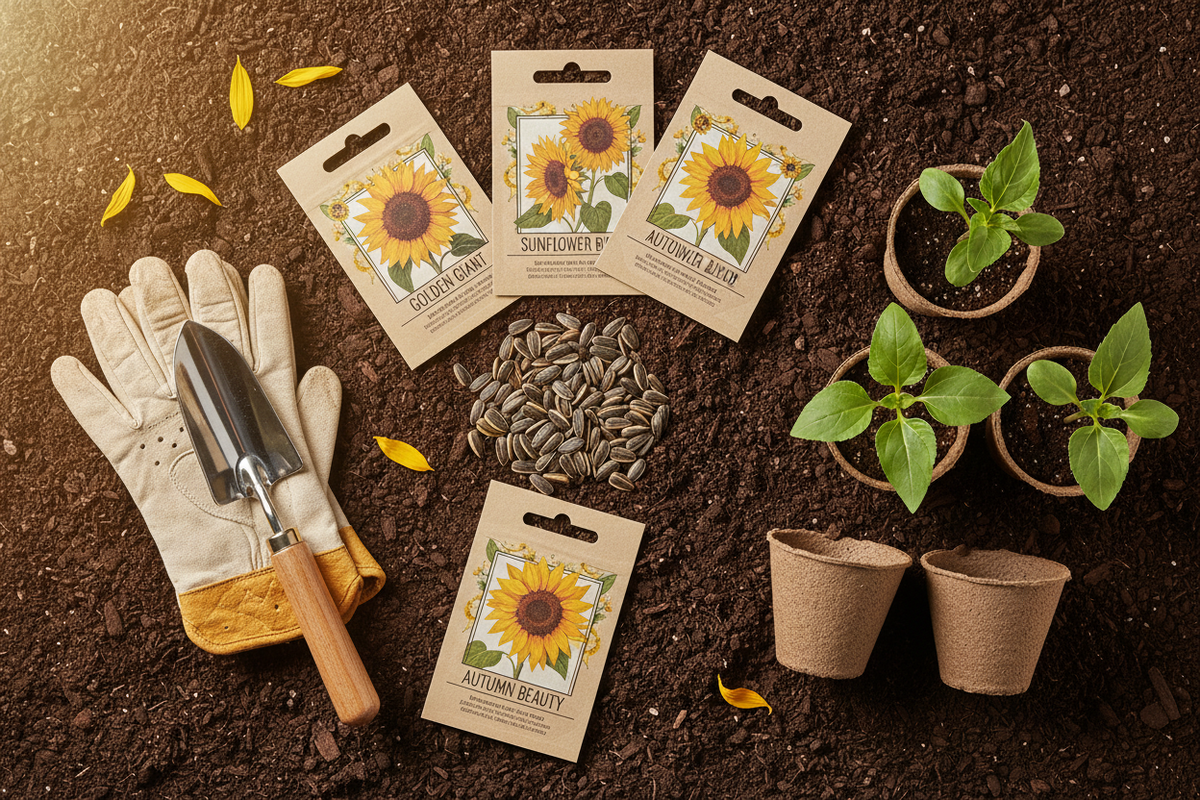
Few garden projects repay effort as generously as growing sunflowers from seed. You press a large, easy-to-handle seed into warm soil, keep it moist, and within a season you have a plant that can reach several metres tall, feeds pollinators, and fills a vase with extraordinary blooms. To grow sunflowers successfully from seed, the core process involves choosing the right variety for your space, sowing after the soil has warmed sufficiently, and following a simple care routine through to harvest. This guide covers every stage so that, whether you have a large garden border or a single pot on a south-facing balcony, you can get it right first time.

Key Takeaways
-
Soil temperature is more reliable than calendar dates: Home for the Harvest advises sowing once soil reaches at least 10°C at seed depth, therefore, use an inexpensive soil thermometer rather than guessing by the date on the calendar.
-
Direct sowing outperforms indoor starting: Gardenary's growing guide explains that sunflowers dislike root disturbance and establish best where they will grow to maturity, so resist the urge to start them on a windowsill unless your season is genuinely short.
-
Germination is fast: Sow True Seed's beginner guide confirms that seeds typically sprout within five to twelve days under the right conditions, meaning you will see results quickly if your soil is warm and consistently moist.
-
Sunflowers feed bees in a meaningful way: Research published in the Frontiers in Plant Science journal identifies sunflower as a bee-friendly plant that relieves late-summer pollen scarcity, so every plant you sow has an ecological benefit beyond the garden.
-
Succession sowing extends your season: Gardening Know How recommends continuing to sow throughout summer to extend bloom time, space your sowings two weeks apart for continuous colour from midsummer until the first frosts.
Quick-Start Prioritisation Framework
| Strategy | Best For | Effort Level | Time to Results |
|---|---|---|---|
| Direct sowing outdoors | Most home gardeners with a border or raised bed | Low | 5-12 days to germination; 70-95 days to bloom |
| Indoor sowing in biodegradable pots | Short-season climates or impatient growers | Medium | Earlier bloom by 2-3 weeks |
| Container growing (dwarf varieties only) | Balconies, patios, small spaces | Low-Medium | Same as direct sow; more frequent watering |
| Succession sowing | Gardeners who want blooms all season | Low (repeat action) | Continuous blooms from midsummer to frost |
Start here if you are:
-
A complete beginner: Direct sowing is the simplest and most reliable method, buy one packet, pick a sunny spot, and sow directly where the plant will grow.
-
Working with a small space: Choose a true dwarf variety and grow in a large container on a sunny patio.
-
Keen on pollinators or cut flowers: Plant a branching variety for multiple blooms per plant and the longest possible season of interest.
Choosing the Right Variety Before You Sow
The single most important decision in growing sunflowers from seed happens before you put anything in the ground. Modern sunflower breeding has produced an enormous range of sizes, colours, and growth habits. Choosing the right variety is the single most important decision you will make, because a 4-meter giant and a 40 cm pot plant need very different growing conditions.
Giant and Single-Stem Types
The defining trait of giant sunflowers is a single thick stem growing to 8 feet or taller. These are single-stem varieties: one plant, one flower head, one spectacular display. Varieties such as 'Russian Giant' and 'Mammoth' are the classic choice for growing competitions or creating dramatic focal points at the back of a border. Bear in mind, however, that taller varieties are vulnerable to wind damage, especially as heads get heavy with developing seeds. Plant along a fence, wall, or building that provides a natural windbreak.
Branching and Multi-Head Types
Unlike single-stem varieties branching sunflowers send out multiple stems and blooms from one plant. This makes them excellent for continuous cut-flower harvests throughout the season. Good choices for a Central European garden include 'Velvet Queen', with its deep crimson colouring, and 'Soraya', which produces sturdy tangerine-orange blooms. Branching types give you the most blooms per square foot across the longest season.
Dwarf Varieties for Small Spaces
Dwarf sunflowers are compact plants, usually 20-60 cm tall, bred for containers, borders, or small garden spaces. Despite their size, they still produce vibrant blooms. If you want to grow in a pot, Your Flowers Guide recommends choosing a true genetic dwarf variety like 'Teddy Bear', as standard tall varieties will blow over in pots on a windy patio.
Pro Tip: If you are growing sunflowers primarily for a vase indoors, look for pollen-free varieties. As Gardenary explains, they produce no pollen, which means no yellow dust on your tablecloth and a considerably longer vase life.
When and How to Sow Sunflower Seeds
Reading Soil Temperature Correctly
Timing is everything when growing sunflowers from seed, and soil temperature is a far more reliable guide than the date. Sunflowers are typically planted outdoors when soil is between 10°C and 30°C. While most varieties will germinate across a wide range of temperatures, the optimal soil temperature for sunflower seed germination is about 25°C. That said, you do not need to wait for perfection. For annual varieties, wait until all chance of frost has passed in the spring before planting seeds outdoors. Soil temperatures above 10°C are necessary for germination.
In practice, a soil thermometer pushed 5 cm deep at 8 a.m. on a sunny morning gives the reading that matters; air temperature lags soil temperature by two to three weeks in spring. Buy an inexpensive soil thermometer and measure properly rather than assuming the ground is warm enough simply because the days feel pleasant.
The Case for Direct Sowing
In my experience, the gardeners who get the best results are those who resist the temptation to start sunflowers on a windowsill. Direct sowing is almost always the right choice for sunflowers. They dislike root disturbance and establish best when sown directly where they will grow to maturity. Their large seeds germinate quickly and easily in warm soil, which eliminates most of the advantage of starting indoors.
If your season is genuinely short, start seeds in biodegradable pots 2 to 4 weeks before your last frost date and transplant carefully, disturbing roots as little as possible. The biodegradable pot goes into the ground intact, which avoids disturbing the taproot.
Sowing Depth, Spacing, and Soil Preparation
Sunflower seeds are fairly large which makes them easy to handle and plant. A simple rule is to sow the seeds about 2.5-5 cm deep in the soil. Shallow planting leaves seeds exposed to birds, while planting too deep forces the seedling to exhaust its stored energy before reaching the surface.
For spacing, follow the variety: space seeds 30 cm apart for small varieties, 60 cm for regular sizes, and 90 cm for giant varieties. I've found it useful to sow two seeds per station and thin to the strongest seedling once they reach 8-10 cm tall, which maximises germination success without wasting space.
Sunflowers will grow best in well-draining soils; however, they are tolerant of some clay soils. Consider amending your soil with sand, compost, or other amendments four to six weeks before planting. Prepare the bed by loosening the top 15-20 cm, removing weeds, and working in a small amount of balanced compost. Avoid adding excess nitrogen at this stage; it encourages lush leaf growth at the expense of flowers.

Caring for Your Sunflowers After Germination
Watering Through Each Growth Stage
Sunflower seeds will typically germinate within five to twelve days from planting under the right conditions. They are a warm season annual and will appreciate being planted in soil that is between 13°C and 15°C. Once germinated, your watering approach should shift. Once established, sunflowers generally need about 3 cm of water per week. Water deeply once or twice per week rather than giving light daily waterings, which encourages shallow root development.
Deep, infrequent watering is the correct approach because sunflowers develop a substantial taproot that anchors those tall stems. Shallow daily sprinkles train the root to stay near the surface, making plants less stable and less drought-tolerant. The critical periods for water are germination, and then three weeks either side of flowering.
Feeding Without Overdoing It
Sunflowers are moderate rather than heavy feeders. Fertiliser timing matters overdoing nitrogen produces tall plants with lush leaves and fewer flowers, so your goal is balanced nutrition rather than leaf push. The Old Farmer's Almanac recommends feeding sparingly, as overfertilisation can cause stems to break later in the season. A light application of a balanced granular fertiliser worked into the soil at planting time, combined with good compost, is typically sufficient for a home garden.
Supporting Tall Varieties
Taller varieties are vulnerable to wind damage, especially as heads get heavy with developing seeds. Plant along a fence, wall, or building that provides a natural windbreak. If you are in an exposed location, stake tall varieties early, before you think you need to. A bamboo cane and a soft garden tie, positioned while the plant is still growing, are far easier to install than trying to straighten a leaning stem after wind has already stressed it.
Common Pests and How to Handle Them
Growing sunflowers from seed is generally forgiving, but a few pests and problems are worth knowing about before you start. Catching issues early is the difference between losing a seedling and simply removing a few leaves.
Aphids
Common sunflower pests include aphids, caterpillars, and weevils, while diseases like rust and mildew can also occur. Prevent issues with regular monitoring, proper spacing for air circulation, and organic treatments like neem oil. Aphids cluster on new growth and stems, leaving sticky honeydew residue. A strong jet of water from a hose will dislodge most colonies. Avoid over-fertilising sunflowers because aphids are drawn to lush, sappy growth.
Slugs and Cutworms
Young seedlings are most vulnerable in the first two weeks after germination. Slugs leave a slime trail and ragged chewing marks, while cutworms make cleaner cuts at soil level. As Blooming Expert's pest guide notes, checking for slime trails is the quickest way to distinguish the two. Copper tape around pot rims and crushed eggshells around in-ground seedlings provide an effective barrier with no chemicals involved.
Birds Stealing Seeds
If you see birds scratching around for the seeds, spread netting over the planted area until the seeds germinate. Remove the netting as soon as seedlings push through, to avoid impeding growth and to allow pollinators access to the emerging plants.
Pro Tip: Water at the base of plants rather than overhead. Evergreen Seeds' pest guide confirms this keeps foliage dry and reduces the conditions that fungal diseases like powdery mildew require to take hold.
Why Sunflowers Are Worth Growing for Your Garden Ecosystem
Beyond their aesthetic value, sunflowers do meaningful ecological work. Sunflower is a prominent global oilseed crop with rising cultivation and appeal as a bee-friendly plant by providing abundant floral resources for pollinators. Mass-flowering crops can increase the availability of resources, and sunflower is a good opportunity to relieve pollen scarcity during the late summer in agricultural landscapes.
Research published in Nature Medicine found that sunflower pollen dramatically and consistently reduced a protozoan pathogen infection in bumble bees, suggesting that planting sunflowers may provide measurable health benefits for local pollinator populations. What this means in practice: growing even a small patch of sunflowers in your garden actively supports bee health at a time of year when other floral resources are in decline.
The mature sunflower head consistently settles facing east. This final orientation maximises reproductive success by leveraging the morning sun. The fixed east-facing position allows the flower head to warm up quickly at sunrise, ensuring the optimal temperature for both pollen release and pollinator attraction early in the day. This is worth considering when you choose your planting position, an east-facing aspect is ideal.
At Holland Kertészet, the range includes varieties well-suited to both ornamental borders and cutting gardens, making it straightforward to find a sunflower that fits your space and purpose, whether you are after a single giant focal point or a continuous supply of vase-ready stems.

Common Mistakes to Avoid
-
Sowing when soil is too cold: seeds will rot or germinate unevenly. Always check soil temperature at the depth you are sowing.
-
Starting in standard seed trays: the long taproot quickly becomes pot-bound. Use deep biodegradable pots if starting indoors.
-
Overcrowding plants: if you crowd plants too closely together, the leaves will be starved for sunlight. This causes the plant to grow too quickly and produce weak stems as plants reach up for more light.
-
Over-feeding with nitrogen: leads to leafy plants with few or smaller flowers.
-
Watering overhead in the evening: wet foliage overnight encourages fungal diseases including powdery mildew and downy mildew.
-
Planting tall varieties in exposed positions without support or windbreak.
Frequently Asked Questions
How long does it take for sunflowers to grow from seed to bloom?
Sunflowers generally take 8-12 weeks to grow from seed to bloom, but the exact timeframe can vary depending on the variety, planting time, and growing conditions. Dwarf varieties tend to reach the lower end of that range, while giant single-stem types may take the full 95-100 days. if you crowd plants too closely conditions, sunflowers should reach maturity in 70 to 100 days after planting.
Can I grow sunflowers in a pot or container?
Yes, but variety selection matters significantly. If you want to grow sunflowers in containers, choose a true genetic dwarf variety like 'Teddy Bear'. It grows only two to three feet tall and produces fully double, fluffy yellow flowers. The compact stature keeps the plants stable in pots on a windy patio. Standard tall varieties will struggle in pots and are prone to toppling in wind. Use the largest container you can manage, ensure good drainage, and be aware that container plants dry out faster than those in the ground.
Do I need to water sunflowers every day?
During germination and in the first week after the seedlings emerge, keep the soil consistently moist, but once plants are established this changes. Transition to deep weekly soaking. Once established, sunflowers generally need about one inch of water per week. Water deeply once or twice per week rather than giving light daily waterings, which encourages shallow root development.
Should I sow sunflowers indoors or directly outside?
For most gardeners, direct sowing outdoors is the better choice. Sunflowers have a long taproot that can quickly reach the bottom of the pot and become stunted. Once the sunflower seeds sprout, they will need to be planted outside in 2 to 3 weeks. To help avoid transplant shock, you can use biodegradable pots. If your last frost date is late and the growing season short, starting indoors in biodegradable pots 2-3 weeks before your last frost date is a reasonable compromise.
How do I get blooms for longer than a few weeks?
To extend bloom time, continue sowing sunflowers throughout summer, a tactic known as succession planting. Sow a short row or a few pots every two weeks from the time the soil first warms until midsummer. if you crowd plants too closely sunflowers that last all summer, the best plan is to plant every few weeks to extend bloom time. Choosing a branching variety alongside your main sowing also extends the season considerably, as each plant produces multiple blooms rather than a single one.
Sources
-
When to Plant Sunflower Seeds, Home for the Harvest. Guidance on soil temperature and sowing timing. https://homefortheharvest.com/when-to-plant-sunflower-seeds/
-
How to Grow Sunflowers from Seed: The Complete Guide, Gardenary. Direct sowing techniques and variety selection. https://www.gardenary.com/blog/how-to-grow-sunflowers-from-seed-the-complete-guide
-
The Beginner's Guide to Planting Sunflower Seeds, Sow True Seed. Germination timeline and soil preparation. https://sowtrueseed.com/blogs/gardening/planting-sunflower-seeds
-
Sunflowers: Planting, Growing, and Caring for Sunflowers, The Old Farmer's Almanac. Depth, spacing, and feeding guidance. https://www.almanac.com/plant/sunflowers
-
How to Plant Sunflower Seeds, Gardening Know How. Succession planting and indoor starting. https://www.gardeningknowhow.com/ornamental/flowers/sunflower/planting-sunflowers.htm
-
How to Plant Sunflower Seeds in a Variety of Colors and Sizes, Sow Right Seeds. Spacing by variety and germination times. https://sowrightseeds.com/blogs/planters-library/how-to-plant-sunflower-seeds
-
Sunflowers for Every Garden: Dwarf, Branching and Giant Varieties, Trailing Petunia. Variety guide for containers, bouquets, and borders. https://www.trailingpetunia.com/blogs/news/sunflowers-for-every-garden-dwarf-branching-and-tall-giant-varieties
-
20+ Sunflower Types: Giant, Dwarf, Branching and Pollenless Varieties, Blooming Expert. Detailed cultivar breakdown. https://www.bloomingexpert.com/tips/sunflower/types-44/
-
Best Sunflower Varieties, Your Flowers Guide. Container variety recommendations. https://yourflowersguide.com/sunflower/best-sunflower-varieties-single-stem-giants-branching/
-
How to Grow Sunflowers, Scotts Miracle-Gro. Watering and feeding schedule. https://scottsmiraclegro.com/en-us/learn/gardening/how-to-grow-sunflowers.html
-
Sunflower Pests and Diseases: Visual Guide, Evergreen Seeds. Pest identification and organic prevention. https://evergreenseeds.com/sunflower-pests-and-diseases/
-
A Guide to Sunflowers: Floral Resource Nutrition for Bee Health, Frontiers in Plant Science. Peer-reviewed research on sunflowers and pollinator health. https://www.frontiersin.org/journals/plant-science/articles/10.3389/fpls.2025.1552335/full
-
Medicinal Value of Sunflower Pollen Against Bee Pathogens, NCBI/PMC (National Institutes of Health). Research on sunflower pollen and bumble bee pathogen reduction. https://www.ncbi.nlm.nih.gov/pmc/articles/PMC6158195/
-
Why Do Sunflowers Turn to Face the Sun?, Biology Insights. Heliotropism and pollinator attraction. https://biologyinsights.com/why-do-sunflowers-turn-to-face-the-sun/
-
Sunflower Problems: Pests, Diseases, and Fixes, Blooming Expert. Diagnosis and treatment of common issues. https://www.bloomingexpert.com/tips/sunflower/problems-pests-diseases-and-fixes/
-
Common Sunflower Pests, Plant Addicts. Aphid identification and treatment. Avoid over-fertilising sunflowers
-
How to Grow Sunflowers, Gilmour. Sunlight, spacing, and stem care. if you crowd plants too closely
-
Growing Sunflowers From Seed to Harvest, Wild Hearth Life. Germination temperature data and maturity timelines. https://wildhearthlife.com/blog/growing-sunflowers-from-seed-to-harvest/


