

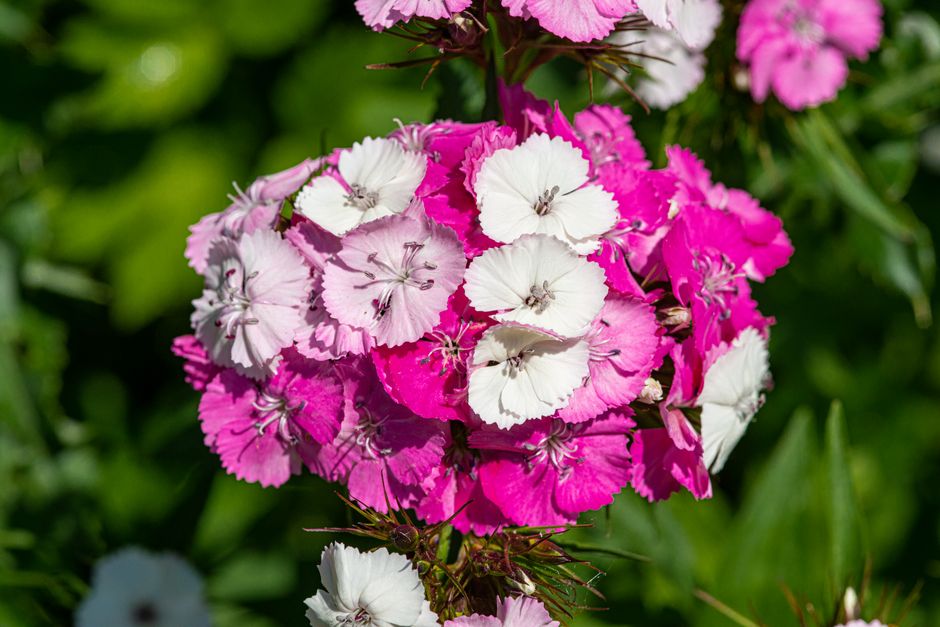
Sweet William (Dianthus barbatus) is one of those cottage garden classics that earns its place year after year. It brings a burst of colour to your garden early in the season, carries a sweet scent, and produces some of the finest cut flowers a home grower can raise. Usually grown as a biennial, the plant develops its leafy growth and root system during the first year, then produces beautiful flowers during late spring and early summer in the second year before setting seeds.
Whether you are sowing your very first packet of seed or looking to sharpen an established growing routine, this playbook takes you from sowing through to harvest and seasonal protection. At Holland Kertészet, we recommend Sweet William to gardeners of every experience level because the reward, armfuls of fragrant, long-lasting blooms, is well worth the modest effort involved.

Key Takeaways
-
Sow at the right time: Plant Sweet William seeds in early spring or late autumn, aiming for a soil temperature of around 10°C to 18°C. Starting indoors six to eight weeks before the last frost gives you a head start on first-year blooms.
-
Drainage is non-negotiable: If exposed to very wet and soggy soil, Sweet William can be susceptible to fungal diseases such as root rot, Fusarium wilt, leaf spot, rust, grey mould, and southern blight. Therefore, always choose or prepare free-draining ground before you plant.
-
Harvest at the right stage: Cut at ground level after the first two to three small flowers of a flower head have opened, the more blooms you harvest, the more blooms the plant will produce.
-
Deadhead to extend flowering: The best time to deadhead is as soon as you notice flowers starting to fade or wilt, ensuring energy is directed toward producing new flowers rather than developing seeds.
-
Overwinter containers carefully: Sweet William can tolerate temperatures as low as -34°C in open ground, but plants in tubs should be wrapped in fleece or jute because frost penetrates container soil faster and deeper, risking root damage.
Quick-Start Prioritisation Framework
| Strategy | Best For | Effort Level | Time to Results |
|---|---|---|---|
| Sow indoors, transplant out | First-year blooms | Medium | 10-14 weeks |
| Direct sow outdoors in summer | Traditional biennial cycle | Low | Second season |
| Buy plug plants | Instant colour, no sowing | Low | 4-8 weeks |
| Cuttings from established plants | Propagating a favourite variety | Medium | 6-8 weeks |
| Allow self-seeding | Long-term, no-fuss displays | Low | Ongoing annually |
Start here if you are:
-
A first-time grower: Sow indoors 6-8 weeks before the last frost for the fastest path to flowers and the most control over germination conditions.
-
An experienced gardener with space: Direct sow in summer directly into prepared rows and thin to 30 cm apart for a traditional, abundant biennial display.
-
Short on time: Buy ready-grown plug plants in late summer or early autumn and plant them straight into their final flowering positions.
Step 1: Choosing Your Seeds and Site
Selecting the Right Variety
The most common is the biennial variety, which blooms in the second year. Annual types grow and flower in one season, making them perfect for quick colour. The flowers come in a variety of colours such as red, pink, white, purple, and bi-coloured combinations, and many varieties feature contrasting centres or patterns, which add extra visual interest.
Varieties vary in colour, size fragrance, and growth habit. Tall, long-stemmed varieties for cutting work well when grown with foxgloves or bellflowers. If you intend to use your Sweet William primarily as a cut flower, selecting a tall-stemmed strain is a worthwhile investment.
Picking the Perfect Spot
Grow Sweet William in full sun to achieve the best flowers, in free-draining soil, ideally with a neutral to slightly acid pH, though it tolerates a wide range of growing conditions. These flowers perform best in full sun, where they receive at least six hours of direct sunlight each day. While they can tolerate partial shade, particularly in regions with intense afternoon heat, too much shade can lead to leggy stems and fewer blooms. Therefore, save your shadiest spots for more tolerant plants and keep Sweet William in the open.
Sweet Williams thrive in loose well-draining soil with moderate fertility. A loamy or sandy soil enriched with well-rotted compost is ideal. The preferred pH range is slightly alkaline to neutral, around 6.0 to 7.5. If your soil pH falls outside this range, a simple lime application before planting will quickly correct matters.
Pro Tip: If your soil is heavy clay, do not amend with fine sand alone, this can create a concrete-like result. Instead, mix in grit and generous quantities of well-rotted compost, or build a raised bed to guarantee the drainage Sweet William demands.
Step 2: Sowing Sweet William Seeds
Sowing Indoors for Early Blooms
Expect seeds to germinate in 7-14 days at 18-22°C. The recommended method is to sow 6-8 weeks before the last frost. Lightly press seed into the growing medium. Transplant into cell packs or 9-15 cm containers 20-25 days after sowing, then harden off and transplant outside 6-8 weeks after sowing.
Sow Sweet William seeds on the soil surface and gently press them in rather than covering them, as they require light for optimal germination. Seed trays offer an organised and efficient method for sowing multiple seeds. Their shallow depth is perfect for tiny seeds. A fine vermiculite or specialised seed-starting mix provides excellent drainage and aeration, vital for germination.
Cool temperatures of 10-13°C are required to keep the plants low-growing and promote basal branching. Avoid warm temperatures in excess of 18°C, especially at night, which will produce soft, weak growth. This means placing your seed trays in a cool room or unheated greenhouse is actually preferable to a warm kitchen windowsill.
Direct Sowing Outdoors
Sow seeds of Sweet William in early spring or early summer, depending on whether the variety is to be treated as an annual or biennial. If sowing Sweet William seeds outdoors, sow at a depth of about 1 cm into a sunny part of the garden from mid-spring to July, with a spacing of 20 to 25 cm apart in a deep and rich, slightly acidic to neutral soil.
You can also start seeds in midsummer, sowing where you want the plants to grow. Sweet William that becomes established in late summer blooms very heavily the following spring. This makes a midsummer sowing one of the most reliable ways to guarantee an impressive display the following season.
Transplanting Seedlings
Gradually increase the time outdoors over a week to help plants adjust to outdoor conditions. Plant seedlings 15 to 30 cm apart, this space lets them spread without crowding. Sweet William plants need plenty of air circulation, so do not overcrowd them.

Step 3: Growing and Caring for Your Plants
Watering and Feeding
Overwatering can lead to crown and root rot, so allow the top inch of soil to dry out before watering again. Water at the base of the plant to avoid wetting the foliage, which can promote fungal diseases. Do not overhead water, as this promotes disease.
Feed Sweet Williams with a balanced fertiliser, such as a 10-10-10 or 5-10-5, once every couple of weeks during the growing season. Over-fertilising, especially with high-nitrogen blends, can cause lush foliage growth at the expense of flowers. To promote the best blooms, Gardenersnet's care guide recommends applying a fertiliser high in phosphorus just before the blooming period begins.
Apply a two to three-inch layer of mulch for a tidy appearance, to help keep weeds down, and to retain soil moisture. Mulching around the base of plants is one of the most time-efficient maintenance tasks you can carry out in early spring.
Deadheading and Pruning
Deadheading is ideally carried out during the growing season, typically from late spring to early summer, when the plant is most actively blooming. By removing wilted blooms promptly, you can extend the flowering period and keep your Sweet William looking vibrant and healthy.
If deadheaded promptly, Sweet William may come back the following year, but is unlikely to live beyond two years; it is best to view any flowering after the second year as a bonus. To encourage self-seeding for the following season, NY Garden's growing guide suggests stopping deadheading in late summer and allowing some seed heads to ripen and fall naturally.
Pro Tip: After a thorough deadheading session, according to The Garden Fixes' deadheading guide, giving your Sweet William a balanced, slow-release fertiliser or diluted liquid feed helps it recover and stimulates further blooming. Avoid overfeeding, which leads to excessive foliage at the expense of flowers.
The Pollinator Bonus
Sweet William is a favourite among pollinators, attracting butterflies, bees, and hummingbirds with its vibrant colours and sweet fragrance. The spicy, clove-like scent is designed to attract butterflies and long-tongued bees. The flat-topped flower clusters serve as perfect landing platforms for pollinators. If you grow Sweet William close to vegetable beds, the beneficial insects it attracts will also help pollinate your crops.
Step 4: Harvesting Sweet William as a Cut Flower
When and How to Cut
From a commercial perspective Dianthus barbatus is prized for both its cut flower potential and landscape use. Growers favour it for its vase life, which ranges between 7-10 days, especially when harvested at the right bloom stage. At home, Three Acre Farm's cut flower guide notes that Sweet William can look good for 14 or more days in the vase when handled correctly, meaning your effort in the garden translates directly to weeks of enjoyment indoors.
Cut flowers for arrangements in the early morning. Always cut the stem on a slant, as this exposes more stem surface area for water uptake. Place the cut stem into water immediately after cutting and remove all leaves that will fall below the water line.
To grow as a cut flower, sow in the ground in rows and thin the resulting seedlings to 30 cm apart. This row-growing approach maximises stem length and makes harvesting far more efficient.
Extending Vase Life
Rinse the stems under cold water and cut 2-3 cm from the bottom. Fill a clean vase with fresh water and add flower food as directed on the packet. Remove all foliage below the water line and change water every day, re-cutting the stems each time.
Cut flowers should not be placed near whole, fresh fruit for long periods. Fruits naturally produce ethylene gas as a byproduct of the ripening process, and exposure to this gas can shorten the life of cut flowers. Therefore, keep your Sweet William display well away from the fruit bowl.
Pro Tip: According to Interflora's flower care guide, cut stems between the nodes rather than through them, as this maximises water uptake. Sweet Williams are particularly thirsty flowers, so top up water levels frequently between full water changes every two to three days.
Saving Seeds for Next Season
Saving seeds from your Sweet William plant is easy and rewarding. Once the flowers have faded and the seed pods turn brown and dry on the stem, snip them off and gently break open the pods to collect the tiny black seeds inside. Let the seeds air dry for a few days on a paper towel, then store them in a labelled envelope or small jar in a cool, dry place until you are ready to plant again.
Step 5: Protecting Sweet William from Pests, Diseases and Winter
Common Pests
Sweet William is often attacked by pests including spider mites, thrips, and aphids. A strong stream of water can remove spider mites and aphids. Neem oil or insecticidal soap are good ways to handle severe infestations.
A strong stream of water can problems, especially in areas with shade. Removing and handpicking is an easy control method. Placing grit or crushed eggshells around the base of plants acts as a useful physical deterrent with no chemical input required.
Fungal Diseases
Fusarium wilt is caused by a soil fungus that can live in the soil for many years. Plants infected slowly turn yellow, the leaves turn downward instead of growing upward, and the roots and lower portion of the plant turn brown. The Fusarium fungus grows in the transport system of the Sweet William, meaning water and nutrient transport is no longer possible. As the spores spread via water, wind, and contact with materials, infected plants and surrounding soil must be disposed of and all tools thoroughly cleaned.
To prevent leaf spot, plant Sweet William so air circulates freely and avoid overcrowding. Use drip systems or soaker hoses rather than overhead sprinklers, which encourage the spread of disease. Rust, caused by airborne spores produces orange or yellow spots on the leaves. The problem is more likely in wet, moist conditions, so use drip systems instead of overhead sprinklers. Remove any infected leaves and discard them rather than composting.
Winter Protection
Protect Sweet William in winter by cutting back dead foliage and blooms after flowering and creating a protective mulch layer. For container plants, move them to sheltered areas.
Sweet Williams in tubs should ideally be wrapped in fleece or jute, as the root space is limited and frost penetrates the soil faster and deeper than in open ground, meaning root damage could occur. In colder climates, protect pots by placing them in a sheltered area or wrapping them with insulating material and reduce watering during winter.

Common Mistakes to Avoid
-
Overwatering: A strong stream of water can overwatering. Extended overwatering can cause mildew and root rot, which can be irreparable.
-
Overhead watering: Water the soil under the plant rather than the leaves to help avoid diseases.
-
Skipping the hardening-off process: Moving seedlings straight from a warm indoor environment to an exposed outdoor site causes transplant shock. Spend a full week gradually increasing their outdoor exposure before planting out.
-
Not thinning seedlings: Sweet William plants need plenty of air circulation. Overcrowded plants invite fungal problems and produce weaker, shorter stems.
-
Fertilising too heavily with nitrogen: Over-fertilising, especially with high-nitrogen blends, can cause lush foliage growth at the expense of flowers.
Frequently Asked Questions
When should I sow Sweet William seeds?
Sow seeds of Sweet William in early spring or early summer, depending on whether the variety is to be treated as an annual or biennial. If starting indoors, begin 8-10 weeks before the last frost, providing soil temperatures of 18-24°C. For outdoor direct sowing, mid-spring through to July is the most productive window.
How far apart should I space Sweet William plants?
To grow as a cut flower, sow in the ground in rows and thin the resulting seedlings to 30 cm apart. For decorative border planting, Gardening Direct's guide recommends leaving at least 15 cm between plants, bearing in mind they will grow to a height of between 20 and 40 cm.
Why is my Sweet William not blooming in the first year?
It will take two seasons for Sweet William to blossom. The first year you will get green leaves and the second year you will get the blooms. This is entirely normal biennial behaviour. To obtain first-year flowers, start seeds indoors very early and expose the young plants to cool spring temperatures, which triggers early flowering.
How long do Sweet William flowers last in a vase?
Sweet Williams are one of the most durable cut flowers available and can last as long as two weeks. To maximise that vase life, change water every two days, cut stems on a slant, and keep the arrangement away from direct heat, draughts, and ripening fruit.
Is Sweet William deer-resistant?
Yes, deer do not like the strong scent of the flowers or the texture of the plant. Rabbits and other foraging animals also tend to leave the plants alone. This makes Sweet William an excellent choice for gardens in rural areas where deer and rabbit pressure is a recurring problem.
A Final Word
In my experience, Sweet William is one of those rare plants that outperforms its modest reputation at every stage, from the orderly rows of germinating seedlings to the extraordinary cut flowers that fill a room with a clove-like scent. I've found that the most common reason growers are disappointed is poor drainage rather than poor gardening, so get that right first and the rest follows naturally.
If you are looking for quality seed varieties to get started, Holland Kertészet stocks a curated selection of Sweet William cultivars suited to a wide range of garden styles, from compact container varieties through to tall-stemmed cutting types.
Sources
-
How to Grow and Care for Sweet William, BBC Gardeners' World Magazine. Cultivation, soil, deadheading and cut flower guidance. https://www.gardenersworld.com/how-to/grow-plants/how-to-grow-and-care-for-sweet-william/
-
Growing Dianthus (Sweet William) from Seed, Johnny's Selected Seeds. Germination temperatures, transplanting timelines, basal branching requirements. https://www.johnnyseeds.com/growers-library/flowers/dianthus-sweet-william/dianthus-sweet-william-key-growing-information.html
-
Sweet William Grow Guide, GrowVeg. Sowing windows, self-seeding, companion planting. https://www.growveg.com/plants/us-and-canada/how-to-grow-sweet-william/
-
How to Grow Sweet William from Seed, The Garden Fixes. Soil preparation, sowing depth, soil temperature guidance. https://thegardenfixes.com/how-to-grow-sweet-william-from-seed/
-
How to Deadhead Sweet William, The Garden Fixes. Deadheading timing, tools, and post-deadheading feeding. https://thegardenfixes.com/how-to-deadhead-sweet-william/
-
Sweet William: Pests and Diseases, Gardening Channel. Fusarium wilt, leaf spot, rust identification and treatment. https://www.gardeningchannel.com/sweet-william-flower-pests-and-diseases/
-
Sweet William: Overwintering, Pruning and More, Plantura. Cold hardiness, container protection, pest and disease overview. https://plantura.garden/uk/flowers-perennials/sweet-william/overwintering-sweet-williams
-
Dianthus (Sweet William), Vase Life Guide, FloraLife. Harvesting stage, vase life data, ethylene sensitivity. https://floralife.com/flowers/dianthus-sweet-william/
-
Sweet William Flower Care Tips, Interflora. Stem cutting technique, water change frequency, vase placement advice. https://www.interflora.co.uk/blog/flower-guides/sweet-william
-
Sweet William (Dianthus barbatus), Pick Ontario / Flowers Canada Growers. Cut flower handling, water uptake, ethylene gas effects. https://www.po.flowerscanadagrowers.com/our-products/3737/dianthus/barbatus
-
How to Plant and Grow Sweet William, Gardener's Path. Soil pH, fertilising, watering, and full-sun requirements. https://gardenerspath.com/plants/flowers/grow-sweet-williams/
-
10 Tips for Longer Lasting Blooms, Three Acre Farm. Sweet William vase life, ethylene gas, cut flower best practice. https://www.threeacrefarm.net/blog/2020/12/16/10-tips-for-longer-lasting-blooms
-
How to Grow Sweet William, Gardening Direct. Soil conditions, spacing, fertilising schedule. https://www.gardeningdirect.co.uk/blog/how-to-grow-sweet-william.html
-
Sweet William Flower Meaning and Symbolism, Thursd. Cut flower potential, vase life data, commercial use. https://thursd.com/articles/the-sweet-william-flower-meaning
-
The Ultimate Guide to Growing Sweet William Plants, Acqua Garden. Pollinator attraction, cold hardiness, general cultivation. https://acquagarden.co.uk/blogs/planting-guides/the-ultimate-guide-to-growing-sweet-william-plants
-
How to Grow and Care for Sweet William Flowers, Gardenersnet. pH range, fertilising for blooms, deer resistance, container growing. https://www.gardenersnet.com/flower/sweetwilliam.htm
-
Dianthus Barbatus, Bloom Outlet. Sowing depth, germination temperature, spacing. Sweet William seed sowing guide
-
How to Grow Sweet William, Damavand Pro. Winter protection, container care, seed sowing overview. https://damavandpro.co.uk/grow-sweet-william/


